Local-Business

Indices up in first hour of stock trading
Indices witnessed an upward trend in both Dhaka and Chattogram stock exchanges during the first hour of trading on Thursday, the last working day of the week, as most companies saw gains in share prices.
On the Dhaka Stock Exchange (DSE), the benchmark index DSEX rose by 44 points, while the Shariah-based index DSES gained 10 points and the blue-chip index DS30 advanced 21 points.
Of the 271 companies traded, prices went up for 150, declined for 64, and remained unchanged for 57.
The turnover at the DSE stood at over Tk 260 crore in the first hour.
Mixed trend in first hour of trading at DSE, CSE
The Chittagong Stock Exchange (CSE) also saw an upward trend, with the overall index gaining 59 points.
Among the 107 issues traded on the CSE, prices advanced for 63, declined for 30, and remained unchanged for 14.
The turnover in the port city bourse crossed Tk 4 crore in the first hour.
5 months ago
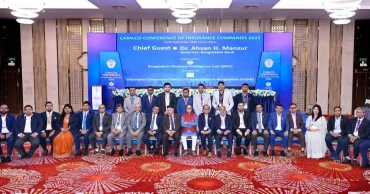
Bangladesh Bank urges insurance sector to fight illicit financial flows
The Bangladesh Financial Intelligence Unit (BFIU) organized the "CAMLCO Conference of Insurance Companies 2025" in Cox's Bazar to raise awareness and ensure a responsible role for insurance companies in preventing money laundering and terrorist financing.
The conference was held at the Long Beach Hotel from September 19-20, 2025.
Bangladesh Bank Governor Dr. Ahsan H. Mansur was the chief guest. Md. Fazlul Haque, a member of the Insurance Development and Regulatory Authority (IDRA), was the special guest. The event was presided over by Md. Mofizur Rahman Khan Chowdhury, acting head of BFIU.
The theme of the conference was 'Building a Robust Compliance Culture against Illicit Financial Flows’, which was held from September 19-20 in a hotel at Cox's Bazar, according to a press release.
Governor Dr. Mansur welcomed the participants and highlighted the insurance market as one of the four pillars of the financial market, alongside money markets, stock markets, and bond markets.
He expressed concern about the banking sector's over-reliance on long-term financing and stated that the insurance sector's development is crucial for sustainable financial growth.
Dr. Mansur identified the lack of public trust and the absence of mandatory insurance schemes (such as for health, cars, or factories) as key obstacles for the sector.
He called for prioritizing the building of trust, strengthening regulatory oversight, implementing mergers, liquidations, or restructurings, setting sustainable premiums, and re-evaluating the investment policies of insurance companies.
He also urged chief executives and anti-money laundering compliance officers to involve top management in ensuring transparency and accountability in the financial sector and to comply with BFIU's anti-money laundering directives.
During the conference, speakers emphasized the importance of strict legal compliance, risk-based supervision, and technology-based solutions to prevent money laundering and terrorist financing in the insurance sector.
The discussions highlighted the need to implement e-KYC in customer verification, automate compliance systems, and establish whistleblowing mechanisms.
Participants also called for developing skilled human resources, conducting training programs, implementing corporate governance policies, and making the sector more transparent and accountable in line with international standards.
Md. Mostakur Rahman, a director at BFIU, presented on the positive and negative aspects of Bancassurance.
He noted that it increases transparency in beneficial ownership and helps structure the flow and distribution of funds.
However, he pointed out that a lack of trust remains a major challenge and stressed the need for robust compliance awareness programs to overcome these hurdles.
A keynote presentation was also delivered by BFIU's Additional Director, Md. Moshiur Rahman.
5 months ago

Remittance inflow crosses $2bn in September
Remittance inflow through banking channels surpassed $2 billion in the first 21 days of September, marking a 24.3 percent year-on-year rise, according to Bangladesh Bank data.
Until September 21, Bangladeshi expatriates sent home $2 billion, compared to $1.63 billion during the same period last year.
On September 21 alone, remittance stood at $128 million, while from September 18 to 20, a total of $133 million came in.
By September 20, the inflow was $1.90 billion, which crossed the $2 billion mark the very next day.
In the current fiscal year (2025-26), Bangladesh has so far received $6.93 billion in remittances, up from $5.77 billion during the same period of the previous year.
In the July–September quarter of FY2024-25, remittance inflow recorded a growth of over 20 percent compared to the previous fiscal.
Remittance has remained on an upward trend since the beginning of 2025, with March witnessing an all-time monthly high of $3.29 billion, the highest ever recorded in the country’s history.
5 months ago

Edible oil prices to go up in Bangladesh
The government has decided to raise the prices of edible oil in response to rising international rates, officials said on Monday.
The move was agreed at a meeting between Commerce Adviser Sk Bashir Uddin and traders at the Secretariat, the officials said.
The prices of both loose and bottled soybean and palm oil have been increased, with traders expected to announce the exact adjustment later.
Traders had been pressing for a revision, citing an 18–20 percent surge in global soybean and palm oil prices.
The Bangladesh Vegetable Oil Refiners and Vanaspati Manufacturers Association said the international price of soybean oil has reached USD 1,200 per tonne.
The latest decision comes after palm oil prices were cut by Tk 19 to Tk 150 per litre on August 12, while soybean oil remained at Tk 189 per litre.
In April, the government set soybean oil at Tk 189 and palm oil at Tk 169 per litre.
5 months ago

Indices mixed in early trading in Bangladesh stock markets
Indices at the country’s two bourses showed a mixed trend in the first hour of trading on Monday, the second working day of the week.
At the Dhaka Stock Exchange (DSE), the benchmark DSEX index advanced by 5 points while the Shariah-based DSES and the blue-chip DS30 gained 1 point and 3 points respectively.
Of the issues traded, prices of 180 advanced, 125 declined and 84 remained unchanged.
Shares and mutual fund units worth over Tk 210 crore were transacted at the DSE during the period.
Indices up in first hour at DSE, CSE
On the other hand, the Chittagong Stock Exchange (CSE) opened lower as its overall index lost 83 points in early trading.
At the CSE, prices of 27 issues advanced, 53 declined and 10 remained unchanged with a turnover of over Tk 6 crore in the first hour.
5 months ago

Bank merger: BB launches special payment scheme to protect depositors
Bangladesh Bank is developing a special payment scheme to protect depositors of five Islamic banks that are set to merge.
According to Bangladesh Bank data, the merging banks hold combined deposits of Tk 1.52 lakh crore, while outstanding loans have exceeded Tk 2.0 lakh crore.
Personal deposits alone total nearly Tk 46,000 crore.
Under the central bank’s plan, deposits of up to Tk 2.0 lakh will be promptly refunded under an insurance scheme.
Deposits exceeding Tk 2.0 lakh will be refunded in a phased manner, although the exact timeline has yet to be determined.
Refunds may carry a 4 percent return, but all existing deposit schemes will be cancelled. If a customer holds multiple accounts across these banks, they will be treated as a single account, and the insurance limit will remain at a maximum of Tk 2.0 lakh.
Institutional depositors, meanwhile, may receive shares in the new bank instead of cash. Borrowers’ terms will remain unchanged, and they must continue their instalment payments as per the previous schedule.
The new merged bank is projected to have assets of approximately Tk 2.2 lakh crore, with a paid-up capital of Tk 350 crore.
Funding for the merger will include Tk 2,000 crore from the government, Tk 1,000 crore from the Deposit Insurance Fund, and Tk 50,000 crore from international development agencies such as the IMF, World Bank, and ADB, which will be delisted after the merger.
Although the Bank Companies Act does not entitle general shareholders to compensation, Bangladesh Bank is considering alternative compensation options based on advice from the Ministry of Finance.
The merger announcement has already caused a major market slump, with the share prices of these five banks falling to less than half their face value of Tk 10. Currently, only about a dozen of the 36 listed banks are trading above their Tk 10 face value.
During the merger process, administrators will be appointed to replace the existing managing directors of the banks. These administrators will assess the banks’ financial health, maintain stability and have the authority to make executive changes, if necessary.
They must be skilled in Sharia-compliant banking or be permitted to hire experts in this field.
5 months ago
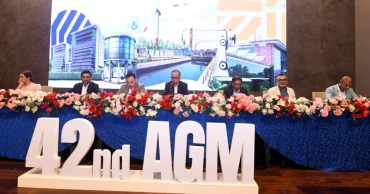
BGMEA holds 42nd AGM
The 42nd Annual General Meeting (AGM) of Bangladesh Garment Manufacturers and Exporters Association (BGMEA) was held at the BGMEA Complex in Uttara of Dhaka on Saturday.
Mahmud Hasan Khan, president of the business organisation, chaired the event.
Current and former vice presidents and board members, members of various standing committees and general members of the organisation attended the meeting.
During the session, the audited financial statements for the fiscal year (FY) 2023-24 were approved and the budget for 2024-25 was presented and endorsed.
Auditors for the FY 2024-25 were also appointed.
President Mahmud highlighted the current state of the garment industry, reviewed initiatives undertaken by the board over the past three months, and outlined future action plans.
BGMEA delegation visits Netherlands to discuss textile waste recycling
Meanwhile, BGMEA Vice President (Finance) Mizanur Rahman presented the financial report for 2023-24 and the budget for the new fiscal year.
The members reaffirmed their commitment to united efforts in addressing industry challenges.
Notably, this AGM was originally scheduled during the previous board’s tenure but delayed due to the government-appointed administrator overseeing BGMEA for nearly eight months prevented it from being held.
The current board organised the meeting promptly after taking office reflecting their commitment to transparency and accountability toward members.
5 months ago

Indices up in first hour at DSE, CSE
The country’s two bourses witnessed an upward trend in indices during the first hour of trading on Sunday, with most companies seeing price gains.
On the Dhaka Stock Exchange (DSE), the benchmark index DSEX advanced by 16 points in the opening hour.
The Shariah-based DSES gained 1 point, while the blue-chip DS30 rose by 2 points.
Out of 387 issues traded during the period, prices went up for 221 companies, declined for 89, and remained unchanged for 77.
The turnover on the DSE crossed Tk 250 crore in the first hour.
Indices up at DSE, CSE in first hour of trading
The Chittagong Stock Exchange (CSE) also opened higher as its overall index gained 56 points.
Of the 99 issues traded, 49 advanced, 28 declined, and 22 remained unchanged.
The turnover on the CSE stood above Tk 7 crore in the opening hour.
5 months ago
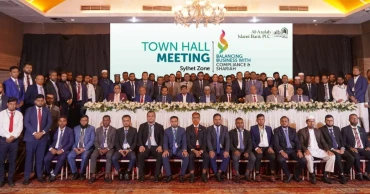
Town Hall Meeting of Al Arafah Islami Bank held in Sylhet
A day-long ‘Town Hall Meeting’ of Al-Arafah Islami Bank (AIBL) Sylhet Zone was held at a hotel in the city on Saturday.
Khwaja Shahriar, Chairman of the Bank, inaugurated the meeting as the Chief Guest, said a media release.
Md Abdul Wadud, Chairman of the Board Executive Committee, attended the event as special guest while the Managing Director (Current Charge), Md. Rafat Ullah Khan, presided over the meeting.
The event was organized under the overall management of Pijush Kumar Sarkar, Regional Head and Senior Vice President of Sylhet, where Managers and Officers from 16 branches of Sylhet Zone actively participated.
AIBL’s Chairman Khwaja Shahriar and Special Guest Md. Abdul Wadud reviewed the overall business performance of Sylhet Zone branches and provided necessary guidance.
Managing Director Rafat Ullah Khan said that everyone associated with the institution is part of one family.
He added that the Town Hall serves as a vital platform to connect, review progress, and chart the future course of action.
“For 2025, we have adopted the tagline ‘Balancing Business with Compliance and Shariah’. This is not just a slogan, but a reflection of our responsibility and commitment.”
“We want each of our branches to enhance the quality of service through Shariah-based banking and to move forward by capitalizing on customer trust. By working together and considering everyone’s opinion, it will be possible to establish a sustainable and modern Islamic bank,” he added.
5 months ago
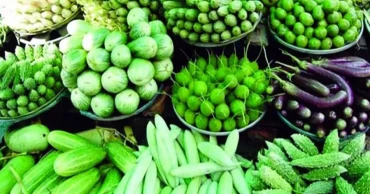
Vegetable prices remain high, consumers forced to buy in small quantities
The prices of vegetables in Dhaka’s kitchen markets have shown no sign of decline throughout the month, forcing consumers to reduce purchases to 250–500 grams instead of one kilogram.
Frustrated buyers say the soaring prices have put additional pressure on their daily expenses.
A visit to several wholesale and retail markets in the capital on Friday revealed that vegetable prices remain unchanged from last week.
Hyacinth bean (shim) is being sold at the highest rate—Tk 200 per kg—while good quality round brinjal is going for Tk 150 a kg. Tomatoes and carrots are also selling for more than Tk 150 per kg.
“One round brinjal weighs more than 250 grams. That means each piece costs Tk 40–50. We cannot afford to buy more than two,” said Sumona Akhter Ruby, a shopper at Uttar Badda kitchen market.
Another consumer, Monsur Ahmed, said, “A quarter kilo of hyacinth bean costs Tk 50. Tomatoes are almost the same. With Tk 500, vegetables don’t last even two days for a family of four.”
Prices of chicken, beef, milk, cucumber, and vegetables increase ahead of Eid
Among other vegetables, yardlong beans (barboti) are selling at Tk 120–80 a kg, while sponge gourd, snake gourd, ridge gourd and okra are priced at Tk 80–100 a kg. Bottle gourd is selling for Tk 100–120 per piece and jali kumra for Tk 50–70 each.
Traders said that previously they did not sell less than half a kilo of vegetables, but due to the high prices, they are now selling in 250-gram portions.
“As wholesale prices are still high and supply is limited, we are forced to buy at higher rates. Sales are also lower now,” said Asadul, a vegetable seller at Motijheel AGB Colony market.
The price of leafy greens has also gone up in line with vegetables. Just a month ago, spinach, water spinach and stem amaranth were Tk 10 per bunch, but now they are Tk 20. Pumpkin leaf, bottle gourd leaf and Malabar spinach (puishak) are being sold for Tk 50 a bunch.
A visit to Karwan Bazar wholesale hub, however, showed that prices have dropped by Tk 10–15 per kg compared to last week, though this decline has not been reflected in the retail markets.
The prices of small fish have also surged. Kachki fish is selling at Tk 600–800 a kg, river shrimp at Tk 1,000–1,200, local koi at Tk 800–1,000, punti at Tk 650–750 and gunchi at Tk 700 a kg.
Despite an abundant supply of hilsa in the market, the prices remain beyond the reach of most middle-income consumers. Large hilsa is selling for Tk 2,200–2,500 a kg, medium-sized for Tk 1,800–2,000, and small ones for Tk 1,200–1,500.
Prices of winter vegetables drop in Khulna, essentials continue to rise
In the meat market, chicken prices remain unchanged—sonali chicken is selling for Tk 300–320 a kg, broiler at Tk 170, and local chicken between Tk 550 and 650 depending on location.
Beef is selling at Tk 750–800 a kg, while mutton is priced at Tk 1,000–1,200 per kg.
Consumers expressed frustration, saying that unless vegetable prices fall, it will be increasingly difficult to manage household expenses as a large portion of their monthly income is being spent on groceries.
5 months ago