Local-Business

Stocks rise at DSE, CSE as indices gain
Trading at Bangladesh’s two stock exchanges opened on a positive note on Tuesday, with major indices climbing and most shares posting gains.
On the third working day of the week, the key DSEX index at the Dhaka Stock Exchange (DSE) rose 43 points within the first hour of trading.
The other two indices also moved higher, with the Shariah-based DSES up 8 points and the blue-chip DS30 increasing by 5 points.
Most stocks on the DSE recorded price appreciation, with 294 issues advancing, 39 declining and 59 remaining unchanged. Turnover on the DSE exceeded Tk 300 crore in the opening hour.
Meanwhile, at the Chittagong Stock Exchange (CSE), the overall index gained 63 points. Of the 127 issues traded, 82 advanced, 31 declined and 14 remained unchanged, with turnover surpassing Tk 3 crore in the first hour.
8 months ago
Central Bank mandates banks to report private sector foreign loans at CIB database
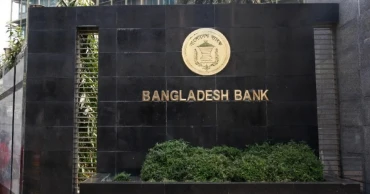
Dhaka, Sep 29 (UNB)-Bangladesh Bank (BB) has made it mandatory for all banks and financial institutions to report private sector foreign loans, including suppliers’ credit, to the central bank's Credit Information Bureau (CIB) database.
The central bank issued a directive on Monday and sent it to the top executives of all commercial banks. The new instruction, aimed at improving financial sector governance, will be effective from November this year.
Currently, foreign loan data is not included in the CIB database. This exclusion means the CIB report does not reflect the borrower's true debt burden, potentially allowing an entity that has failed to repay a foreign loan to still obtain a new local loan.
By including foreign loan information, the BB expects to increase transparency and accountability in the banking sector, improve loan risk management, and allow banks and NBFIs (finance companies) to assess a customer's creditworthiness and risk more efficiently before approving a loan.
Help maintain credit discipline in the financial sector, potentially enhance the nation's international credit rating and strengthen the confidence of foreign investors and international organisations.
The circular outlines several specific reporting requirements for banks to report mandatory information on all foreign loans for individuals/institutions, whether approved by the Bangladesh Investment Development Authority (BIDA) or Bangladesh Bank, must be reported. Foreign credit facilities that do not require BIDA or BB approval but do not create any liability for the bank must also be reported.
The central bank instructed that associated parties’ data must be reported for all interested parties, including directors, shareholders holding more than 20 percent of shares, and guarantors.
The foreign lender and approving authorities’ name, address, and country of the foreign lender, as well as the local approval authority (such as BIDA, BB-FEID, or BB-FEPD), must be reported for every foreign loan.
Besides, all foreign loan information must be reported in the approved foreign currency. Additionally, the outstanding and overdue amounts must also be reported in the equivalent of US dollars.
Data up to October 2025 and all subsequent loan information must be reported every month starting from November 1 this year. Any new loan, adjustment, or change must be reported to the CIB database in ‘Real Time’, as stated in the directive.
8 months ago
Effective branding, compliance key to boosting CMSME exports: DCCI
Effective branding, proper marketing strategies and stronger compliance support are essential for unlocking the export potential of Bangladesh’s cottage, micro, small and medium enterprises (CMSMEs), experts said on Monday.
They came up with their observations while addressing a focus group discussion, titled ‘Branding and Marketing Challenges for CMSMEs: Unlocking Export Potential’.
The Dhaka Chamber of Commerce & Industry (DCCI) organised the discussions.
DCCI President Taskeen Ahmed said CMSMEs contribute nearly 28% to Bangladesh’s GDP, while in countries like Sri Lanka, Vietnam and Cambodia the figure is close to 50%.
“Despite making up about 90% of Bangladesh’s industrial sector and employing around 11.8 million people, CMSMEs are struggling due to limited access to finance, weak infrastructure, shortage of skilled manpower, policy bottlenecks and lack of technology adoption,” he said.
Taskeen Ahmed also pointed out that recent additional tariffs imposed by the USA on Bangladeshi exports, particularly garments, will raise production and export costs.
“Entrepreneurs must embrace innovation, efficiency and technology to reduce costs and stay competitive,” he said.
To strengthen the sector, he urged for policy support including certification and compliance facilitation, training, incentives for sustainable technology, product quality improvement, branding, cluster development, a CMSME database, as well as foreign investment in backward linkage industries.
Md Saiful Islam, Chairman of Bangladesh Small and Cottage Industries Corporation (BSCIC), said despite institutional challenges, BSCIC has been supporting entrepreneurs with industrial parks, low-cost finance and training.
Saiful Islam said efforts are underway to exempt holding tax for industries inside BSCIC parks and called for greater presence of Bangladeshi products on global e-commerce platforms like Amazon, eBay and Alibaba.
He also stressed the need for attractive packaging and international certifications to enhance export opportunities.
Mohammad Hasan Arif, Vice Chairman & CEO of the Export Promotion Bureau (EPB), said local consumer mindset must change first to build a strong national image of Bangladeshi products abroad.
He announced that EPB will soon launch an Export Ecosystem Platform and a CMSME Help Desk to provide entrepreneurs with comprehensive services, including focal points from relevant government agencies. EPB also plans to facilitate bilateral networking during international trade fairs and confirmed Bangladesh’s participation in a fair in Brazil next year.
Muhammad Mustafizur Rahman, Additional Director at Bangladesh Bank’s SME & Special Programmes Department, highlighted the importance of product logos, demand-driven design, promotional campaigns and celebrating success with consumers.
He informed that the central bank has issued a circular allowing entrepreneurs to have access to collateral-free loans of up to Tk 500,000. “As of December last year, 12% of total SME loans were provided without collateral,” he said.
The speakers at the discussion agreed that CMSMEs, with proper branding, technology adoption and compliance, could play a much stronger role in diversifying Bangladesh’s export basket and strengthening the economy.
8 months ago
Indices gain in early trading at DSE, CSE
Indices at Dhaka and Chattogram bourses witnessed a rise in the first hour of trading on Monday, as most company shares saw price hikes.
At the Dhaka Stock Exchange (DSE), the key index DSEX advanced by 8 points during the opening hour of the week’s second trading day.
Of the other two indices, the Shariah-based DSES remained unchanged, while the blue-chip DS30 index dropped by 2 points.
Out of 388 issues traded, prices of 211 advanced, 103 declined and 74 remained unchanged at DSE, with shares and units worth over Tk 185 crore changing hands.
Market slips on week’s first trading day at DSE, CSE
The Chittagong Stock Exchange (CSE) also witnessed a positive trend as its overall index gained 18 points in the first hour.
Among the 72 issues traded at CSE, the prices of 36 advanced, 26 declined and 10 remained unchanged, with the turnover crossing Tk 2 crore.
8 months ago

Walton unveils Dhamaka offer for customers
Country’s tech giant Walton has announced an exciting ‘Double Dhamaka Offer’ for customers purchasing Walton desktops, laptops, all-in-one PCs, tablets, printers, and speakers.
Under this campaign, customers have the chance to win a Walton Takyon Leo e-bike, enjoy up to 50% sure discounts, or receive guaranteed gifts on purchases of Walton IT products and accessories. The offer is available at all Walton Plaza outlets, authorised distributor showrooms, and through the official Walton website across the country.
The announcement was made at a grand launching ceremony titled ‘Walton Computer Double Dhamaka Offer’, held at Walton’s Corporate Office in the capital on Saturday, the company said in a press release issued on Sunday.
According to the release, the offer will remain valid until 31 December 2025.
Walton has turned the concept of ‘Made in Bangladesh’ into a reality in the high-tech sector. With an extensive nationwide distribution network, world-class technical expertise, dedicated research and innovation teams, and a strong commitment to technological advancement, Walton has positioned itself as a leader in the country’s tech industry.
Alongside a wide range of consumer tech products, Walton recently began exporting PCBA (motherboards) to the United States, further strengthening its presence in the global market.
Walton Digi-Tech is currently manufacturing and marketing 44 types of IT products, including laptops, desktops, all-in-one PCs, electric bikes, tablets, projectors, HDMI cables, and converters.
Renowned media personality Adil Hossain Noble, who is also the Managing Director and CEO of Axentec PLC, attended the launch event as the chief guest. Walton Plaza’s Managing Director Mohammad Rayhan was also present.
Speaking at the event, Noble said, “Walton is representing Bangladesh in the global arena. We hope Walton will continue to move forward and elevate Bangladesh’s status as a hub for technology manufacturing.”
Touhidur Rahman Rad, Chief Business Officer of Walton Computer Products, added, “We have already introduced various benefits including exclusive offers, exchange deals, and more. These initiatives have received a tremendous response from customers across the country, enabling them to purchase IT products and accessories at affordable prices.”
8 months ago
Indices up in first hour of stock trading
Indices witnessed an upward trend in both Dhaka and Chattogram stock exchanges during the first hour of trading on Thursday, the last working day of the week, as most companies saw gains in share prices.
On the Dhaka Stock Exchange (DSE), the benchmark index DSEX rose by 44 points, while the Shariah-based index DSES gained 10 points and the blue-chip index DS30 advanced 21 points.
Of the 271 companies traded, prices went up for 150, declined for 64, and remained unchanged for 57.
The turnover at the DSE stood at over Tk 260 crore in the first hour.
Mixed trend in first hour of trading at DSE, CSE
The Chittagong Stock Exchange (CSE) also saw an upward trend, with the overall index gaining 59 points.
Among the 107 issues traded on the CSE, prices advanced for 63, declined for 30, and remained unchanged for 14.
The turnover in the port city bourse crossed Tk 4 crore in the first hour.
8 months ago
Bangladesh Bank urges insurance sector to fight illicit financial flows
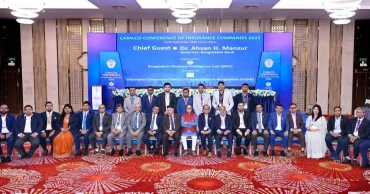
The Bangladesh Financial Intelligence Unit (BFIU) organized the "CAMLCO Conference of Insurance Companies 2025" in Cox's Bazar to raise awareness and ensure a responsible role for insurance companies in preventing money laundering and terrorist financing.
The conference was held at the Long Beach Hotel from September 19-20, 2025.
Bangladesh Bank Governor Dr. Ahsan H. Mansur was the chief guest. Md. Fazlul Haque, a member of the Insurance Development and Regulatory Authority (IDRA), was the special guest. The event was presided over by Md. Mofizur Rahman Khan Chowdhury, acting head of BFIU.
The theme of the conference was 'Building a Robust Compliance Culture against Illicit Financial Flows’, which was held from September 19-20 in a hotel at Cox's Bazar, according to a press release.
Governor Dr. Mansur welcomed the participants and highlighted the insurance market as one of the four pillars of the financial market, alongside money markets, stock markets, and bond markets.
He expressed concern about the banking sector's over-reliance on long-term financing and stated that the insurance sector's development is crucial for sustainable financial growth.
Dr. Mansur identified the lack of public trust and the absence of mandatory insurance schemes (such as for health, cars, or factories) as key obstacles for the sector.
He called for prioritizing the building of trust, strengthening regulatory oversight, implementing mergers, liquidations, or restructurings, setting sustainable premiums, and re-evaluating the investment policies of insurance companies.
He also urged chief executives and anti-money laundering compliance officers to involve top management in ensuring transparency and accountability in the financial sector and to comply with BFIU's anti-money laundering directives.
During the conference, speakers emphasized the importance of strict legal compliance, risk-based supervision, and technology-based solutions to prevent money laundering and terrorist financing in the insurance sector.
The discussions highlighted the need to implement e-KYC in customer verification, automate compliance systems, and establish whistleblowing mechanisms.
Participants also called for developing skilled human resources, conducting training programs, implementing corporate governance policies, and making the sector more transparent and accountable in line with international standards.
Md. Mostakur Rahman, a director at BFIU, presented on the positive and negative aspects of Bancassurance.
He noted that it increases transparency in beneficial ownership and helps structure the flow and distribution of funds.
However, he pointed out that a lack of trust remains a major challenge and stressed the need for robust compliance awareness programs to overcome these hurdles.
A keynote presentation was also delivered by BFIU's Additional Director, Md. Moshiur Rahman.
8 months ago

Remittance inflow crosses $2bn in September
Remittance inflow through banking channels surpassed $2 billion in the first 21 days of September, marking a 24.3 percent year-on-year rise, according to Bangladesh Bank data.
Until September 21, Bangladeshi expatriates sent home $2 billion, compared to $1.63 billion during the same period last year.
On September 21 alone, remittance stood at $128 million, while from September 18 to 20, a total of $133 million came in.
By September 20, the inflow was $1.90 billion, which crossed the $2 billion mark the very next day.
In the current fiscal year (2025-26), Bangladesh has so far received $6.93 billion in remittances, up from $5.77 billion during the same period of the previous year.
In the July–September quarter of FY2024-25, remittance inflow recorded a growth of over 20 percent compared to the previous fiscal.
Remittance has remained on an upward trend since the beginning of 2025, with March witnessing an all-time monthly high of $3.29 billion, the highest ever recorded in the country’s history.
8 months ago

Edible oil prices to go up in Bangladesh
The government has decided to raise the prices of edible oil in response to rising international rates, officials said on Monday.
The move was agreed at a meeting between Commerce Adviser Sk Bashir Uddin and traders at the Secretariat, the officials said.
The prices of both loose and bottled soybean and palm oil have been increased, with traders expected to announce the exact adjustment later.
Traders had been pressing for a revision, citing an 18–20 percent surge in global soybean and palm oil prices.
The Bangladesh Vegetable Oil Refiners and Vanaspati Manufacturers Association said the international price of soybean oil has reached USD 1,200 per tonne.
The latest decision comes after palm oil prices were cut by Tk 19 to Tk 150 per litre on August 12, while soybean oil remained at Tk 189 per litre.
In April, the government set soybean oil at Tk 189 and palm oil at Tk 169 per litre.
8 months ago
Indices mixed in early trading in Bangladesh stock markets
Indices at the country’s two bourses showed a mixed trend in the first hour of trading on Monday, the second working day of the week.
At the Dhaka Stock Exchange (DSE), the benchmark DSEX index advanced by 5 points while the Shariah-based DSES and the blue-chip DS30 gained 1 point and 3 points respectively.
Of the issues traded, prices of 180 advanced, 125 declined and 84 remained unchanged.
Shares and mutual fund units worth over Tk 210 crore were transacted at the DSE during the period.
Indices up in first hour at DSE, CSE
On the other hand, the Chittagong Stock Exchange (CSE) opened lower as its overall index lost 83 points in early trading.
At the CSE, prices of 27 issues advanced, 53 declined and 10 remained unchanged with a turnover of over Tk 6 crore in the first hour.
8 months ago