Local-Business
Bank merger: BB launches special payment scheme to protect depositors
Bangladesh Bank is developing a special payment scheme to protect depositors of five Islamic banks that are set to merge.
According to Bangladesh Bank data, the merging banks hold combined deposits of Tk 1.52 lakh crore, while outstanding loans have exceeded Tk 2.0 lakh crore.
Personal deposits alone total nearly Tk 46,000 crore.
Under the central bank’s plan, deposits of up to Tk 2.0 lakh will be promptly refunded under an insurance scheme.
Deposits exceeding Tk 2.0 lakh will be refunded in a phased manner, although the exact timeline has yet to be determined.
Refunds may carry a 4 percent return, but all existing deposit schemes will be cancelled. If a customer holds multiple accounts across these banks, they will be treated as a single account, and the insurance limit will remain at a maximum of Tk 2.0 lakh.
Institutional depositors, meanwhile, may receive shares in the new bank instead of cash. Borrowers’ terms will remain unchanged, and they must continue their instalment payments as per the previous schedule.
The new merged bank is projected to have assets of approximately Tk 2.2 lakh crore, with a paid-up capital of Tk 350 crore.
Funding for the merger will include Tk 2,000 crore from the government, Tk 1,000 crore from the Deposit Insurance Fund, and Tk 50,000 crore from international development agencies such as the IMF, World Bank, and ADB, which will be delisted after the merger.
Although the Bank Companies Act does not entitle general shareholders to compensation, Bangladesh Bank is considering alternative compensation options based on advice from the Ministry of Finance.
The merger announcement has already caused a major market slump, with the share prices of these five banks falling to less than half their face value of Tk 10. Currently, only about a dozen of the 36 listed banks are trading above their Tk 10 face value.
During the merger process, administrators will be appointed to replace the existing managing directors of the banks. These administrators will assess the banks’ financial health, maintain stability and have the authority to make executive changes, if necessary.
They must be skilled in Sharia-compliant banking or be permitted to hire experts in this field.
8 months ago
BGMEA holds 42nd AGM
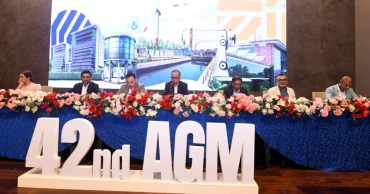
The 42nd Annual General Meeting (AGM) of Bangladesh Garment Manufacturers and Exporters Association (BGMEA) was held at the BGMEA Complex in Uttara of Dhaka on Saturday.
Mahmud Hasan Khan, president of the business organisation, chaired the event.
Current and former vice presidents and board members, members of various standing committees and general members of the organisation attended the meeting.
During the session, the audited financial statements for the fiscal year (FY) 2023-24 were approved and the budget for 2024-25 was presented and endorsed.
Auditors for the FY 2024-25 were also appointed.
President Mahmud highlighted the current state of the garment industry, reviewed initiatives undertaken by the board over the past three months, and outlined future action plans.
BGMEA delegation visits Netherlands to discuss textile waste recycling
Meanwhile, BGMEA Vice President (Finance) Mizanur Rahman presented the financial report for 2023-24 and the budget for the new fiscal year.
The members reaffirmed their commitment to united efforts in addressing industry challenges.
Notably, this AGM was originally scheduled during the previous board’s tenure but delayed due to the government-appointed administrator overseeing BGMEA for nearly eight months prevented it from being held.
The current board organised the meeting promptly after taking office reflecting their commitment to transparency and accountability toward members.
8 months ago

Indices up in first hour at DSE, CSE
The country’s two bourses witnessed an upward trend in indices during the first hour of trading on Sunday, with most companies seeing price gains.
On the Dhaka Stock Exchange (DSE), the benchmark index DSEX advanced by 16 points in the opening hour.
The Shariah-based DSES gained 1 point, while the blue-chip DS30 rose by 2 points.
Out of 387 issues traded during the period, prices went up for 221 companies, declined for 89, and remained unchanged for 77.
The turnover on the DSE crossed Tk 250 crore in the first hour.
Indices up at DSE, CSE in first hour of trading
The Chittagong Stock Exchange (CSE) also opened higher as its overall index gained 56 points.
Of the 99 issues traded, 49 advanced, 28 declined, and 22 remained unchanged.
The turnover on the CSE stood above Tk 7 crore in the opening hour.
8 months ago
Town Hall Meeting of Al Arafah Islami Bank held in Sylhet
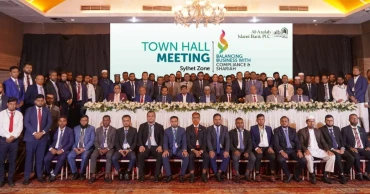
A day-long ‘Town Hall Meeting’ of Al-Arafah Islami Bank (AIBL) Sylhet Zone was held at a hotel in the city on Saturday.
Khwaja Shahriar, Chairman of the Bank, inaugurated the meeting as the Chief Guest, said a media release.
Md Abdul Wadud, Chairman of the Board Executive Committee, attended the event as special guest while the Managing Director (Current Charge), Md. Rafat Ullah Khan, presided over the meeting.
The event was organized under the overall management of Pijush Kumar Sarkar, Regional Head and Senior Vice President of Sylhet, where Managers and Officers from 16 branches of Sylhet Zone actively participated.
AIBL’s Chairman Khwaja Shahriar and Special Guest Md. Abdul Wadud reviewed the overall business performance of Sylhet Zone branches and provided necessary guidance.
Managing Director Rafat Ullah Khan said that everyone associated with the institution is part of one family.
He added that the Town Hall serves as a vital platform to connect, review progress, and chart the future course of action.
“For 2025, we have adopted the tagline ‘Balancing Business with Compliance and Shariah’. This is not just a slogan, but a reflection of our responsibility and commitment.”
“We want each of our branches to enhance the quality of service through Shariah-based banking and to move forward by capitalizing on customer trust. By working together and considering everyone’s opinion, it will be possible to establish a sustainable and modern Islamic bank,” he added.
8 months ago
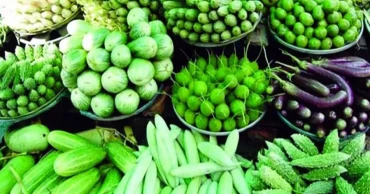
Vegetable prices remain high, consumers forced to buy in small quantities
The prices of vegetables in Dhaka’s kitchen markets have shown no sign of decline throughout the month, forcing consumers to reduce purchases to 250–500 grams instead of one kilogram.
Frustrated buyers say the soaring prices have put additional pressure on their daily expenses.
A visit to several wholesale and retail markets in the capital on Friday revealed that vegetable prices remain unchanged from last week.
Hyacinth bean (shim) is being sold at the highest rate—Tk 200 per kg—while good quality round brinjal is going for Tk 150 a kg. Tomatoes and carrots are also selling for more than Tk 150 per kg.
“One round brinjal weighs more than 250 grams. That means each piece costs Tk 40–50. We cannot afford to buy more than two,” said Sumona Akhter Ruby, a shopper at Uttar Badda kitchen market.
Another consumer, Monsur Ahmed, said, “A quarter kilo of hyacinth bean costs Tk 50. Tomatoes are almost the same. With Tk 500, vegetables don’t last even two days for a family of four.”
Prices of chicken, beef, milk, cucumber, and vegetables increase ahead of Eid
Among other vegetables, yardlong beans (barboti) are selling at Tk 120–80 a kg, while sponge gourd, snake gourd, ridge gourd and okra are priced at Tk 80–100 a kg. Bottle gourd is selling for Tk 100–120 per piece and jali kumra for Tk 50–70 each.
Traders said that previously they did not sell less than half a kilo of vegetables, but due to the high prices, they are now selling in 250-gram portions.
“As wholesale prices are still high and supply is limited, we are forced to buy at higher rates. Sales are also lower now,” said Asadul, a vegetable seller at Motijheel AGB Colony market.
The price of leafy greens has also gone up in line with vegetables. Just a month ago, spinach, water spinach and stem amaranth were Tk 10 per bunch, but now they are Tk 20. Pumpkin leaf, bottle gourd leaf and Malabar spinach (puishak) are being sold for Tk 50 a bunch.
A visit to Karwan Bazar wholesale hub, however, showed that prices have dropped by Tk 10–15 per kg compared to last week, though this decline has not been reflected in the retail markets.
The prices of small fish have also surged. Kachki fish is selling at Tk 600–800 a kg, river shrimp at Tk 1,000–1,200, local koi at Tk 800–1,000, punti at Tk 650–750 and gunchi at Tk 700 a kg.
Despite an abundant supply of hilsa in the market, the prices remain beyond the reach of most middle-income consumers. Large hilsa is selling for Tk 2,200–2,500 a kg, medium-sized for Tk 1,800–2,000, and small ones for Tk 1,200–1,500.
Prices of winter vegetables drop in Khulna, essentials continue to rise
In the meat market, chicken prices remain unchanged—sonali chicken is selling for Tk 300–320 a kg, broiler at Tk 170, and local chicken between Tk 550 and 650 depending on location.
Beef is selling at Tk 750–800 a kg, while mutton is priced at Tk 1,000–1,200 per kg.
Consumers expressed frustration, saying that unless vegetable prices fall, it will be increasingly difficult to manage household expenses as a large portion of their monthly income is being spent on groceries.
8 months ago

Indices up at DSE, CSE in first hour of trading
Both bourses of the country witnessed an upward trend in indices during the first hour of trading on Wednesday, with most companies seeing price gains.
On the fourth trading day of the week, Dhaka Stock Exchange’s (DSE) key index DSEX rose by 11 points, while the Shariah-based index DSES gained 2 points and the blue-chip index DS30 edged up by 1 point.
Out of the 223 companies traded during the period, prices of 223 advanced, 70 declined and 97 remained unchanged.
The turnover at DSE crossed Tk 300 crore in the first hour.
Read: Stock market shows recovery as investors return: DSE chairman
The Chittagong Stock Exchange (CSE) also saw a positive movement, as its overall index advanced by 32 points.
Among the 90 issues traded, 45 gained, 31 lost and 14 remained unchanged, with a turnover of Tk 6 crore in the first hour of trading.
8 months ago
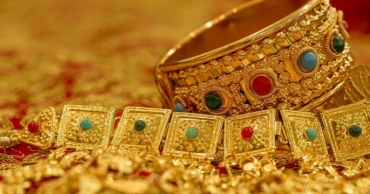
Gold price hits record high in Bangladesh again
The Bangladesh Jewellers Association (BAJUS) has once again raised gold prices in the country, setting a new all-time high.
As per the revised rate, the price of 22-carat gold has been increased by Tk 3,675 per bhori (11.664 grams), reaching Tk 189,622 — the highest in the country’s history.
BAJUS announced the new price in a press release on Tuesday night, saying the rate will come into effect from Wednesday.
According to the statement, the price of pure gold (Tejabi) has increased in the local market. Considering the overall situation, the new price has been set.
Under the new tariff, the price of 21-carat gold has been fixed at Tk 181,002 per bhori, 18-carat gold at Tk 155,143 per bhori, and traditional method gold (Sanatani) at Tk 128,701 per bhori.
Gold price hike in Bangladesh shows no sign of slowing down
BAJUS further said that the selling price of gold must include 5 percent VAT fixed by the government and a minimum making charge of 6 percent set by the association. However, the making charge may vary depending on jewellery design and quality.
Earlier on September 9, BAJUS last adjusted gold prices, raising the price of 22-carat gold by Tk 3,137 per bhori to Tk 185,947.
8 months ago
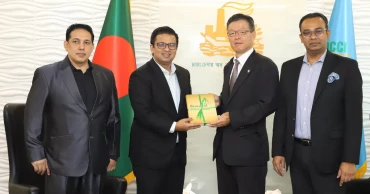
EPA agreement between Bangladesh and Japan to be signed soon: Japanese Ambassador
Japanese Ambassador to Bangladesh Saida Shinichi has expected that an Economic Partnership Agreement (EPA) will be signed soon to expand bilateral trade and investment between Bangladesh and Japan.
The ambassador made the remarks during a bilateral meeting with the President of Dhaka Chamber of Commerce and Industry (DCCI), Taskeen Ahmed, at the DCCI office in Gulshan on Tuesday.
He said, “Seventh meeting between Bangladesh and Japan on the EPA was recently held in Tokyo. The agreement would be signed soon after the necessary dialogue is completed, which would bring new momentum to the economic relationship between the two countries.”
During the meeting, the DCCI President acknowledged Japan's undeniable contribution to Bangladesh's infrastructural development and overall economic progress.
He stated that according to data from the Export Promotion Bureau (EPB), the bilateral trade volume between Bangladesh and Japan stood at US$3.12 billion in fiscal year 2023-24. Of this, imports were $1.81 billion, and exports were $1.31 billion. Currently, Japan is the 12th largest export market for Bangladeshi products.
Labour environment improved in Bangladesh, still room for progress: Japan
Taskeen noted that Japanese investment in various sectors, including construction, textiles, fertilizers, power, gas, and petroleum, has already reached $507 million.
However, with Japan's total foreign investment amounting to $184 billion, there is significant room for Bangladesh to attract more investment, said DCCI President.
He emphasized the importance of Japanese technology and technical assistance in sectors such as automobiles, machinery, agro-processing, information technology, infrastructure, logistics, and human resource development.
He also sought cooperation to expand export markets by enhancing the capacity of the SME sector.
Ambassador Saida Shinichi stated that Bangladesh has immense potential for business and investment.
However, to harness this potential, it is crucial to diversify the industrial sector and ensure efficiency and accountability in government services. Bangladesh's domestic market is expanding, which makes it attractive to Japanese investors, he added.
The ambassador also said that there are employment opportunities in Japan for Bangladesh's skilled workforce in the IT sector.
Japan reaffirms support for Matarbari deep sea port development
DCCI Senior Vice President Rajib H. Chowdhury, Vice President Md. Salim Solaiman, and officials from the Japanese Embassy were also present at the meeting.
8 months ago
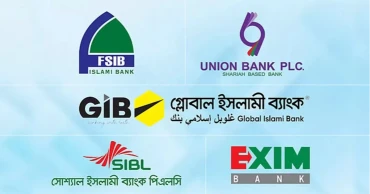
BB to appoint administrators for merger of five troubled Islami banks
Bangladesh Bank has decided to appoint administrators to oversee the merger of five struggling Shariah-based private banks into a single state-owned Islamic bank.
The decision was taken at a special board meeting chaired by Bangladesh Bank Governor Dr Ahsan H Mansur on Tuesday at the central bank headquarters, with other board members present.
A senior central bank official told UNB that office orders will soon be issued to appoint the administrators and dissolve the existing boards of the affected banks.
He said amendments to the Bank Resolution Ordinance and other supporting laws will be introduced as needed to facilitate the process.
Each bank will be assigned an administrator supported by a team of four officers.
The initiative aims to safeguard depositors’ funds and restore public confidence in the banking sector.
According to the government’s plan, First Security Islami Bank, Social Islami Bank, Global Islami Bank, Union Bank, and Exim Bank will be consolidated into a new state-owned entity, provisionally named United Islami Bank.
Bangladesh Bank plans five-bank merger by November
The central bank is expected to issue a licence for the new bank soon.
Bangladesh Bank officials believe the merger will help end long-standing irregularities and corruption in the Islamic banking sector, while restructuring is expected to rebuild customer trust.
Following the merger, the existing boards of directors and managing directors will be dissolved, and the shares of the merged banks declared void.
All assets and liabilities will be transferred to the new entity, which will begin operations as United Islami Bank.
To recover government investment, shares of the new bank will eventually be sold to the private sector. Large depositors may be given the option to convert part of their deposits into shares, while small depositors will face no restrictions on withdrawals.
A forensic audit revealed defaulted loans at the five banks ranging from 48 to 98 percent. The central bank estimates Tk 35,200 crore will be required for the merger, with Tk 20,200 crore to be provided by the government.
Eight-Member committee formed to merge five sharia-based banks
Four of the banks -- First Security, Union, Global, and Social Islami -- have long been under the control of the S. Alam Group, while Exim Bank is owned by Nazrul Islam Majumder, Chairman of the Nassa Group.
8 months ago
Stock market shows recovery as investors return: DSE chairman
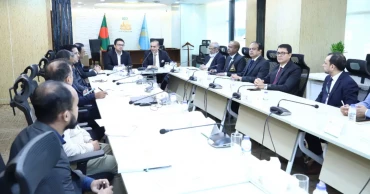
Chairman of the Dhaka Stock Exchange (DSE) Mominul Islam on Tuesday described the country’s stock market outlook as encouraging, saying that the market has begun to recover as investors are gradually returning.
Mominul made the remarks during a discussion at the Dhaka Chamber of Commerce and Industry (DCCI) office on the development of Bangladesh’s capital market, SME company listings, investor confidence, the introduction of new financial products and financing for startups and small and medium enterprises (SMEs).
He praised the interim government for taking unprecedented steps to support the capital market.
Measures in the current budget, including reductions in turnover tax, merchant bank taxes and adjustments in corporate tax rates between listed and unlisted companies, have strengthened market activity, he said.
Mominul also noted that the Bangladesh Securities and Exchange Commission (BSEC) has become more proactive, restoring market discipline through initiatives such as resolving issues related to CC account interest and reducing BO account renewal fees.
These measures, along with limiting unwarranted interventions, have boosted investor confidence.
“Investors are coming back to the market, and institutional investors are becoming more active. We are also digitizing the IPO process and working to bring strong companies to the market quickly through a green channel,” Mominul said.
DSE gains 46 points, CSE up 57 in early trade
He called for closer collaboration between DSE and DCCI to enhance economic growth and strengthen the stock market in a sustainable way, emphasizing the need to develop the bond market alongside the equity market.
During the session, DCCI President Taskeen Ahmed stressed the importance of increasing SME participation in the capital market and boosting investor confidence.
He suggested both long-term and short-term strategies, including revising the dual taxation system and diversifying financial products.
Highlighting the significant contribution of SMEs to the economy, Taskeen noted that only 360 out of more than 200,000 companies in RJSC are listed, emphasizing the need for greater focus on listing government and multinational companies as well.
“We need to enhance SME participation in the stock market and focus on building investor confidence. SMEs contribute significantly to the economy, and the capital market has enormous potential to attract investment from these enterprises,” Taskeen said.
Taskeen also pointed out that Bangladesh’s market capitalization to GDP ratio remains below 20 percent, compared with 40–50 percent in similar economies.
DSE up in first hour, CSE remains flat
He highlighted the potential of the SME sector, which constitutes around 75 percent of the private sector, noting that the capital market could attract substantial investment from these enterprises.
Both DSE and DCCI agreed to organise separate programs in the near future to facilitate SME listings on the SME Board and the Alternative Trading Board (ATB), further strengthening the market’s role in the country’s economic development.
8 months ago