Local-Business
Tourism has immense potential, but challenges persist: TOAB President
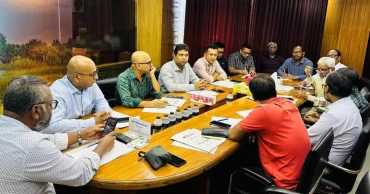
Despite Bangladesh’s immense potential as a tourism destination, the sector continues to face significant challenges, including inadequate infrastructure, a shortage of skilled human resources, weak policy implementation, and concerns over safety and cleanliness, said Mohammed Rafiuzzaman, president of the Tour Operators Association of Bangladesh (TOAB) on Saturday.
He made the remarks while announcing the schedule for the 13th edition of the Bangladesh Travel and Tourism Fair (BTTF) 2025 during a meeting with the executive committee of the Aviation and Tourism Journalists’ Forum of Bangladesh (ATJFB) at the TOAB office in the capital.
The fair will be held from 30 October to 1 November at the Bangladesh-China Friendship Conference Centre (BCFCC) in Dhaka.
Weak market monitoring, extortion in transport sector, propping up price of commodities: Speakers
To address the existing challenges in the tourism sector, Rafiuzzaman stressed the importance of integrated public-private initiatives, internationally standardised training, and targeted destination development. He highlighted TOAB’s continued efforts to boost tourism since the launch of BTTF in 2007.
"The fair has significantly contributed to the growth of the domestic tourism industry and sparked interest from neighbouring and South Asian countries. Participation from foreign delegates has increased steadily over the years," he said.
ATJFB President Tanjim Anwar said BTTF is an important platform for fostering collaboration between local and international tourism stakeholders. “It facilitates investment, policy support, and destination expansion. The growing international presence in this year’s fair is a positive indicator for the sector’s future,” he added.
Govt should fund projects via stock market to build trust: Khosru
This year’s fair will feature 220 stalls, with participants expected from the United Kingdom, European Union countries, Thailand, Malaysia, Singapore, Myanmar, Sri Lanka, India, Nepal, Bhutan, Pakistan, the Philippines, and China.
The event will include B2B meetings, roundtable discussions, seminars, destination presentations, press briefings, and cultural programmes.
All of these will be open to participants. Invitations are also being extended to National Tourism Organisations (NTOs), foreign tour operators, and other international tourism professionals.
ATJFB Vice President Rajiv Ghosh, Joint Secretary Md Shafiullah Sumon, Organising Secretaries Julhas Kabir and Adnan Rahman, Publicity and Publication Secretary Altab Hossain, and Executive Members Masud Rumi, Rashidul Hasan, and Golam Mortuza Antu, TOAB Director (Training and Research) Mohammad Moniruzzaman, Director (Property and Assets) Ziaur Rahman Zakir, and former TOAB President Shiblul Azam Qureshi, were also present.
10 months ago
Weak market monitoring, extortion in transport sector, propping up price of commodities: Speakers
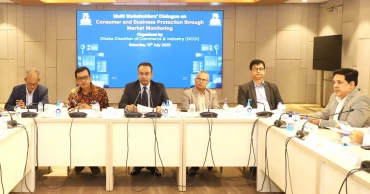
Speakers at a stakeholder dialogue said that unrestrained extortion in the transportation sector and a lack of effective market surveillance are the main reasons behind rising prices of essential commodities in local markets.
They said this while speaking at a dialogue titled "Protecting Consumer and Business Interests Through Effective Market Monitoring," organized by the Dhaka Chamber of Commerce & Industry (DCCI) on Saturday.
Speakers highlighted several key factors of influence in prices, including artificial shortages, substandard products, insecure transportation, complex import procedures, insufficient storage facilities, and a lack of competition in product management.
They further noted that the absence of effective market surveillance, the prevalence of middlemen, extortion, insecurity, and a lack of coordination among regulatory bodies are the primary causes of market instability.
Vegetable prices soar in Khulna’s post-Eid markets
Rajib H. Chowdhury, Acting President of DCCI, said that the soaring prices of daily necessities pose a significant challenge for both consumers and honest businesses.
He identified artificial scarcity, low-quality goods, complex import processes, a lack of competition, and administrative inefficiencies as factors contributing to disarray in the market system.
Rajib called for the establishment of a coordinated, accountable, and effective market monitoring framework.
Mohammad Alim Akter Khan, Director General of the National Consumer Rights Protection Directorate, revealed that due to a severe shortage of personnel, their operations are limited to only 19 of the 64 districts, which is insufficient for effective market oversight.
He underscored the importance of legal coordination, policy transparency, and increased public engagement.
Md. Shahjahan Mia, Administrator of Dhaka South City Corporation, attributed the high prices of essential goods, particularly, to the influence of middlemen in product transportation and market management.
Adviser Farida emphasises national policy for fair milk prices
He lamented that the reputation of the vast private sector is being tarnished by a small number of dishonest traders, urging honest businesspeople at all levels to step forward and curb these illicit activities.
Professor Dr. Mohammad Shoaib, Member (Food Industry & Production) of the Bangladesh Food Safety Authority, stated that while regular operations are conducted to ensure food quality, a more robust market monitoring system, leveraging technology and improved coordination, is crucial.
Dr. Md. Akhtaruzzaman Talukder, Member of the Bangladesh Competition Commission, asserted that a lack of fair competition in the market leads to increased prices and irregularities.
He suggested that research and data-driven planning would be instrumental in addressing these issues.
Industry Voices
The dialogue also featured insights from Mohammad Golam Mawla, General Secretary of Moulvibazar Traders Association; Khandaker Monir Ahmed of the Poultry Industries Association, Abul Hashem of the Sugar and Oil Traders Association, and Md. Zakir Hossain of the Supermarket Owners Association and Mirza Golam Sarwar from the Patents and Trademarks Department.
Fuel prices to remain unchanged in July
They collectively pointed to a shortage of storage facilities, import complexities, excessive profit-taking at the retail level, the closure of government sugar mills, and the absence of fair pricing mechanisms as factors contributing to market instability.
10 months ago

US cotton eyed as strategic solution for Bangladesh's apparel exports amid tariff concerns
Bangladeshi apparel entrepreneurs and a USA-based corporation, AmeriBangla, in a strategic discussion on Thursday highlighted the significant potential of utilizing US cotton as raw material in clothing production for American buyers. The potential move is seen as a robust opportunity to counter ongoing tariff challenges.
The discussion, held on Thursday at a Gulshan hotel, emphasized that direct cotton purchases from US farmers could offer highly affordable prices and popularize "Made in Bangladesh" products among US consumers.
The event drew prominent leaders from Bangladesh's Ready-Made Garment (RMG) sector, senior association representatives, and logistics company executives.
Aswar Rahman, CEO of AmeriBangla Corporation, presented an overview of US cotton production, underscoring the eagerness of US farmers to sell cotton directly to Bangladeshi buyers.
He also proposed the establishment of cotton warehouses in Dhaka or Chattogram to facilitate this trade.
Aswar pointed out that while tariff issues present challenges, they also create an opportunity for Bangladesh. He stressed that increasing the import and use of US materials, including cotton, is a crucial early step to popularize "Made in Bangladesh" in the USA and grow business with America.
Textile industry seeks immediate withdrawal of 2% AIT; threatens cotton import halt
This timely private event comes amidst growing concern within Bangladesh’s RMG sector as government-to-government trade negotiations have yet to secure terms that adequately protect the country's vital export industry.
In response, AmeriBangla has launched an initiative to foster direct commercial partnerships between Bangladeshi garment exporters and American cotton farmers and processors.
"As a facilitator of cross-border partnerships, AmeriBangla Corporation is committed to building a strong and competitive US-Bangladesh trade relationship by building transparent, long-lasting and high-impact partnerships," stated Aswar Rahman.
BTMA seeks duty-free access to US market for its cotton-based productsRepresentatives from various prominent groups, including Hamim Group, Jamuna Group, True Group, Saad Group, Divine Group, RPM Group, Marubini Group, and BKME, as well as Brigadier General (Rtd.) Ali Ahmed Khan, were among those who spoke at the event.
10 months ago

Islami Bank Chairman Obayed Ullah-Al Masud resigns amid graft allegations
Obayed Ullah-Al Masud on Thursday stepped down as chairman of Islami Bank, the country’s largest private sector bank, amid probe into his alleged corruption, authorities said.
His resignation came after reports about his involvement in corruption and his connection to controversial businessman S Alam. He submitted the resignation letter to the bank’s Board of Directors, which was formed by Bangladesh Bank following the country's political change last year.
Professor Zubaidur Rahman, the independent director of the Board of Directors of Islami Bank Bangladesh, is likely to be appointed as the new Chairman. The process of his appointment is underway, according to sources at the central bank.
After the Bangladesh Financial Intelligence Unit (BFIU), central bank's financial intelligence agency, sought bank account details of Masud, and five members of his family on July 14, he failed to meet the central bank governor. After that, Masud was preparing to resign.
The BFIU letter instructs banks to provide details of all accounts (including account opening forms and updated statements), savings certificates, bonds, lockers, credit cards, student files, pre-paid cards, gift cards, and vouchers for transactions of Tk 5 lakh or more related to Masud and his family members, or any entity in which they have an interest, by July 15.
BKTCC and IBBL arrange discussion on sending remittances through legal channels
This development comes amid serious allegations of financial irregularities and money laundering linked to a 1320MW coal-fired SS Power Plant project in Banshkhali, Chittagong. Approximately US$815.78 million was allegedly siphoned out of Bangladesh by just two Letters of Credit (LCs) for this project, implemented as a joint venture between S. Alam Group's subsidiary SS Power Limited and Chinese partner SEPCO. This vast sum was reportedly sent abroad for 'capital machinery imports,' even though not a single piece of machinery arrived in the country, according to a Bangladesh Bank investigation.
Sources indicate that 184 invoices were submitted against these two LCs, opened through Rupali Bank, but most were fraudulent or issued with future dates. Some invoices even used the names and export documents of other companies. Crucially, there is no import data for SS Power on the servers of the National Board of Revenue (NBR) or Bangladesh Bank, despite foreign currency being released, said the sources of the central bank.
At the time of these alleged irregularities, Masud was the Managing Director of Rupali Bank.
10 months ago
Govt should fund projects via stock market to build trust: Khosru
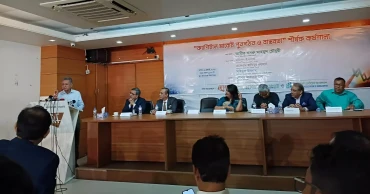
Former Commerce Minister and standing committee member of BNP Amir Khosru Mahmud Chowdhury on Monday said the capital market will only truly gain the trust of stakeholders when government projects begin sourcing funds directly from the stock market.
Speaking at a workshop titled ‘Capital Market Reconstruction and Reality’, organised by the Economic Reporters' Forum (ERF) at its auditorium in Paltan, he said the growth of the capital market goes beyond the mere introduction of a few good companies for Initial Public Offerings (IPOs).
Khosru warned that over-regulation by the relevant bodies, without strong self-regulation mechanisms, is hampering the institutional capacity of the market.
He emphasised the need for the ‘democratisation’ of Bangladesh’s economy to ensure proper growth.
The BNP leader said both domestic and foreign investors are eagerly awaiting opportunities to invest in Bangladesh’s growing economy.
In response to a question, the BNP leader said no major reforms would take place unless the country's political culture is fundamentally changed.
He also reaffirmed BNP’s commitment to capital market investment, saying, “If we are voted to power, I give you a commitment to make the economy and the capital market stronger.”
Mominul Islam, Chairman of the Dhaka Stock Exchange (DSE); AKM Habibur Rahman, Chairman of the Chittagong Stock Exchange (CSE); and the President of the DSE Brokers Association of Bangladesh (DBA) also spoke at the event.
10 months ago

Biman resumes Sylhet-Manchester direct flights after 2 months; expats relieved
After a suspension of over two months, national flag carrier Biman Bangladesh Airlines has resumed its direct flights on the Sylhet-Manchester route.
Biman’s BG-788 flight departed from Sylhet Osmani International Airport for Manchester at 12:50 pm on Monday with 193 passengers on board, said Biman station manager Shakil Ahmed.
The resumption has brought relief among UK-bound expatriates many of whom had feared the route might be permanently discontinued.
Passenger Murtuza Ali, who boarded the flight, expressed his satisfaction saying he had been waiting for this service for a long time. “This has eased a lot of our suffering,” he said.
Biman had earlier announced suspension of flights on this route from May 1 to July 10 to ensure smooth operation of Hajj flights.
Biman’s Dhaka-Narita flight suspension draws flak
The move drew frustration and concern among UK-based expatriates who feared a permanent closure of the route.
Some had even threatened to halt remittance transfers in protest.
KM Abu Taher Chowdhury, UK-based journalist and media director of ‘Voice for Global Bangladeshis,’ welcomed the resumption and said their long-standing campaign had finally paid off.
He also urged for the launch of direct Biman flights between Sylhet and Birmingham, the UK’s second-largest city.
Currently, Biman Bangladesh Airlines is the only carrier operating direct flights on the Sylhet-Manchester route.
Shahnewaz Majumder, Biman’s district manager in Sylhet, said, “The flight suspension was only for the Hajj season. Flights on this route have resumed and will operate regularly twice a week.”
Singapore-bound Biman flight returns to Dhaka, all passengers safe
He said flights will depart from Sylhet to Manchester on Sundays and Tuesdays, while return flights from Manchester to Sylhet will operate on Mondays and Wednesdays.
Biman launched direct flights on the Sylhet-Manchester route on January 6, 2020.
10 months ago

Petrobangla issues warning against fake recruitment letters
Petrobangla (Bangladesh Oil, Gas & Mineral Corporation) on Sunday issued a public warning regarding a fraudulent scheme circulating fake job offer letters using the corporation's name, address, and fabricated memo numbers and signatures.
The state-owned corporation announced that these deceptive letters, printed on plain paper, are an attempt by an unscrupulous group to defraud individuals. Petrobangla has clarified that all its recruitment processes are conducted online.
Currently, the central recruitment process for Petrobangla and its subsidiary companies is underway, with the selection of initially recommended candidates being finalized. Once this process is complete, final appointment letters will be issued and candidates will be notified via official announcements on Petrobangla's website (www.petrobangla.org.bd) and through SMS to their registered mobile numbers.
The corporation strongly advises everyone to be vigilant and refrain from engaging in any financial transactions in response to these fraudulent recruitment offers. For any information related to recruitment, the public is urged to refer to the official Petrobangla website or contact their head office directly, according to a press release.
10 months ago
Benapole Customs House opens on weekend to accelerate trade flow
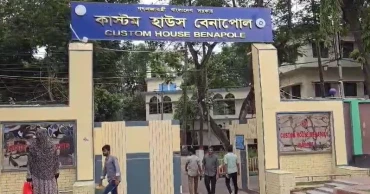
Despite Friday being a weekend, Benapole Customs House opened to ensure uninterrupted import-export operations as per directive from the National Board of Revenue (NBR).
The move comes following a directive from the NBR, which instructed customs houses to remain operational over the weekends to clear backlogs caused by slow performance of the ASYCUDA World System.
Benapole Customs House Additional Commissioner HM Shariful Islam said although the office is open businesses were comparatively low due to the weekend. It will also stay open on Saturday.
On Thursday, NBR issued a circular stating that import and export processes had been disrupted in recent days due to system slowdowns. To mitigate the impact, customs services were instructed to continue through the weekly holidays.
Benapole port resumes trade, cargo operations as NBR shutdown ends
Benapole Port Deputy Director Mamun Kabir Tarafdar said the port remained open on Friday, and imported goods were being unloaded from Indian trucks. “Any importer willing to release their goods will be facilitated accordingly,” he added.
10 months ago
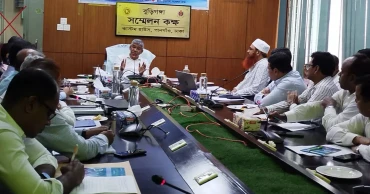
NBR Chairman asks customs officials to speed up clearance of imported goods
National Board of Revenue (NBR) Chairman Md Abdur Rahman Khan on Thursday directed customs officials at Pangaon Customs House to expedite the clearance of imported goods through modern risk management systems and ensure strict compliance with laws and regulations.
"Customs Houses are the centre of trade facilitation," the NBR chief said during his visit to the Pangaon Customs House in Dhaka.
He urged officials to focus on core revenue collection activities, including rapid goods clearance under risk-based management, enforcement, automation, compliance with import policy orders, reduction of legal cases, and enhanced arrears collection.
The chairman observed physical inspection procedures at the container yard and reviewed automated assessment operations in the assessment room. He interacted with officials and staff to assess the performance of ongoing customs activities.
During a meeting with customs officials, port authorities, importers, and clearing and forwarding (C&F) agents, the NBR chairman emphasised prompt disposal of perishable goods and pending auction items through an expedited auction process.
NBR asks Customs Houses to work on Friday and Saturday
Customs House Commissioner Mia Md Abu Obaida reported that since June 23, 100% of revenue has been deposited into the government treasury through the automated a-challan system, a move lauded by the NBR chief.
Khan praised the customs officials for their dedication but reminded them to maintain consistent focus on national interests. He issued directives to accelerate case disposal and strengthen Post Clearance Audit (PCA) processes in line with international practices.
He reiterated that the Revenue Department is one of the most vital organs of the state, and inefficiencies in this sector could result in substantial losses for the country.
"In today’s globalised world, enhancing operational efficiency is essential to compete with developed nations," he added.
Govt has no hand in ACC probe of six NBR officials: Finance Adviser
The NBR chairman concluded his visit by expressing satisfaction over the activities at Pangaon Customs House and instructed all staff to uphold professionalism, compliance, and a service-oriented approach.
10 months ago
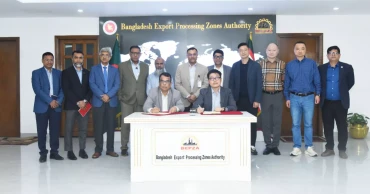
Unifa Accessories to invest US$48.66 million in BEPZA Economic Zone
Unifa Accessories (BD) Co. Ltd., a China–British Virgin Islands owned company, is set to invest US$ 48.66 million to establish a bag and fashion accessories manufacturing industry in the BEPZA Economic Zone (BEPZA EZ) in Mirsharai, Chattogram.
An agreement to this effect was signed on Thursday at the BEPZA Complex, Dhaka, between Bangladesh Export Processing Zones Authority (BEPZA) and Unifa Accessories (BD) Co. Ltd.
In the presence of BEPZA Executive Chairman Major General Abul Kalam Mohammad Ziaur Rahman the agreement was signed by Md. Ashraful Kabir, member (Investment Promotion), on behalf of BEPZA, and Qian Danchu, chairman of Unifa Accessories (BD), on behalf of the company.
BEPZA attracts $480 million investments so far in FY2024-25
The foreign-owned company will annually produce 28 million pieces of various fashion products, including bags, belts, caps, hats, scarves, mufflers, eyewear, and eyeglass frames. This project is expected to generate employment for 2,830 Bangladeshi nationals.
The BEPZA executive chairman welcomed Unifa’s investment in Bangladesh, particularly in the BEPZA EZ. He assured the company of BEPZA’s full cooperation to ensure smooth business operations. He expressed confidence that this Foreign Direct Investment (FDI) would make a significant contribution to the country’s socio-economic development, according to a press release.
10 months ago