Local-Business
NBR asks Customs Houses to work on Friday and Saturday
The National Board of Revenue (NBR) on Thursday asked all Customs houses and relevant departments to remain open on next Friday and Saturday.
In an office order it said that country’s import and export activities have faced disruptions over the past few days due to the slowness of the ASYCUDA World System, a key digital platform used for customs processing.
In view of the situation, relevant authorities have called for urgent steps to ensure uninterrupted trade operations, especially as the weekend approaches.
To mitigate the impact and maintain the momentum of import-export activities, instructions have been issued to keep operations running during the weekly holidays on July 11-12 (Thursday and Friday).
Officials said that the temporary slowdown of the automated customs clearance system has caused delays in the processing of goods at key customs points.
Govt has no hand in ACC probe of six NBR officials: Finance Adviser
The NBR, in coordination with other agencies, has moved to address the technical glitches and streamline clearance procedures as quickly as possible.
Concerned departments have been asked to make necessary manpower and logistical arrangements to keep customs and related services active during the weekend to minimize trade disruption.
10 months ago

Hitachi Launches top load smart washing machines and dishwashers for the first time in Bangladesh
Hitachi, the global leader in home appliances, in collaboration with Transcom Digital, introduces its Top Load Smart Washing Machines and Dishwashers in Bangladesh for the very first time.
This launch marks a significant milestone for Bangladeshi consumers, who can now enjoy international-standard performance, durability, and design from a globally trusted brand.
Hitachi’s Top Load Smart Washing Machines are equipped with Smart Wash, Air Jet Dry system, Auto Balancer, Soaking Function, 19-minute Half Load, 28-minute Speed Wash Programs, soft-close lids, and tempered glass covers — all designed to deliver powerful cleaning with ease and efficiency.
The Dishwashers boast 11 advanced technologies, including Steam Shine Function, Auto Open Door, Surround Wash Technology, Hygiene Care with 99.99% bacteria & virus elimination, and an eco-friendly recycled PET chassis — setting a new benchmark for smart kitchens in Bangladesh.
To celebrate this milestone, Transcom Digital is offering "Double Scratch & Win" campaign on the new Top Load Washing Machines. Customers will get two chances to scratch and win from over 1,000+ rewards, including instant cash vouchers, free gifts, and a chance to win mega travel rewards to Thailand and Nepal. Every buyer will also receive one month of free detergent as an assured gift.
For Dishwashers, customers will enjoy a free one-month supply of dishwashing tablets.
These launch offers are valid until 31st July 2025 across all Transcom Digital showrooms nationwide.
Ritesh Ranjan, Head of Business, Transcom Digital Stated, “We are thrilled to bring Hitachi’s globally acclaimed technology to our customers in an exciting new way. The introduction of Top Load Washing Machines and Dishwashers reflects our commitment to making premium innovation accessible to Bangladeshi households.”
Mr. Tarun Jain, director – Sales, Arcelik Hitachi Home Appliances Sales (Singapore) Pte. Ltd.: Stated, “Bangladesh has always been a promising market for Hitachi. Through this launch, we aim to elevate the lifestyle of modern consumers by offering reliable, smart, and energy-efficient solutions at attractive prices.”
10 months ago

Pathao Pay launches cashback offer, free card to boost digital payments
From July 8, users of Pathao Pay can enjoy cashback of up to Tk 3,000 throughout the month when they pay for regular services like bike rides, car hires, food orders, and parcel deliveries using the platform. The integrated payment system is designed to enhance convenience and add value to everyday transactions within the Pathao ecosystem.
Depending on the payment method, cashback is either credited instantly or on a daily basis. The benefits are automatically applied to eligible purchases made through Pathao Pay.
Pathao hopeful its proposed digital bank can offer one-stop banking solution for digital natives
To further promote its digital finance services, Pathao is also giving away a free physical card, powered by Mastercard, to all new Pathao Pay users. This move marks the company’s broader shift from being solely a mobility and delivery service to becoming a player in digital financial services. By offering added financial incentives, Pathao aims to attract young users who prefer platforms that provide both convenience and tangible rewards.
10 months ago
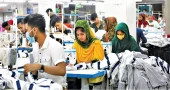
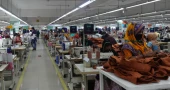
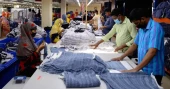
Bangladesh holds 2nd spot in apparel export as Vietnam gains ground
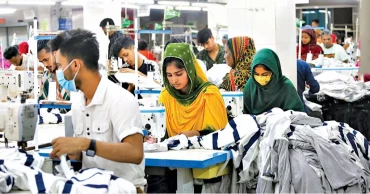
Despite holding its position as the world’s second-largest apparel exporter, Bangladesh faces growing competition from Vietnam, which is emerging as a formidable rival in the global market.
According to the World Trade Organization (WTO) data for 2024, Bangladesh secured $38.48 billion with a growth rate of 0.21%, while Vietnam emerged as a strong contender with a notable growth rate of 9.34%, amounting to $33.94 billion in exports.
The global apparel market has reached a total size of $557.50 billion, showing a 7.08% growth from the previous year's $520.62 billion, according to the WTO data for 2024.
China, leading the market, achieved $165.24 billion in exports, marking a modest growth of 0.30%. Following closely, Bangladesh secured $38.48 billion with a growth rate of 0.21%.
Vietnam emerged as a strong contender with a notable growth rate of 9.34%, amounting to $33.94 billion in exports.
Turkey contributed $17.91 billion to the market, while India, Cambodia, Pakistan, Indonesia, and the USA recorded export figures of $16.36 billion, $9.89 billion, $9.28 billion, $8.73 billion, and $7.00 billion, respectively.
Growth percentages varied across these countries, with figures ranging from 24.19% to -4.42%.
Bangladesh's apparel export to US rose to $7.34 billion in a decade: US Report
Market share analysis reveals China holding the largest share at 29.64%, followed by Bangladesh at 6.90%. Vietnam, Turkey, India, Cambodia, Pakistan, Indonesia, and the USA captured market shares of 6.09%, 3.21%, 2.94%, 1.77%, 1.66%, 1.57%, and 1.26%, respectively.
Despite the challenges posed by the COVID-19 pandemic, the global apparel market has shown signs of recovery and growth. But, new challenges and issues continue to emerge, shaping the dynamics of the industry.
Mohiuddin Rubel, former director, Brand BGMEA and Managing Director, Bangladesh Apparel Exchange told UNB that Bangladesh’s competitors increased in the global market.
Apparel makers highlight importance diplomacy, branding eyeing 100 bln dollar industry
The US tariff imposed for Bangladesh would be increased if the tariff barrier continues, he said.
10 months ago
Taufiq Uddin Ahmed awarded for contributions to aviation and tourism sectors
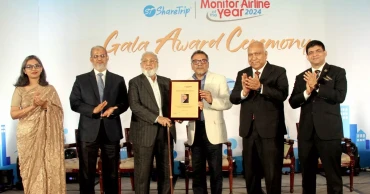
Taufiq Uddin Ahmed, Founder and Chairman of Galaxy Bangladesh, has been honoured with the ‘Lifetime Achievement Award’ at the ‘Share Trip-Monitor Airline of the Year 2024’ for his outstanding contributions to the development of Bangladesh’s travel and tourism industry over more than five decades.
The award was presented at a ceremony held at the Pan Pacific Sonargaon Hotel in Dhaka, where the Jury Committee commended his “visionary leadership and pioneering role in transforming the travel sector in Bangladesh”.
Taufiq Uddin Ahmed began his remarkable journey in 1972, establishing Galaxy Travel International at a time when Bangladesh’s travel industry was in its infancy. Operating from a modest office in Dhaka’s Dilkusha Commercial Area, he laid the foundation for what would become one of the country’s most respected multi-sector service companies.
In the 1970s and 1980s, Taufiq led Galaxy Travel to become Bangladesh’s leading corporate travel provider for government entities, corporate houses, local and foreign banks, MNCs, and NGOs. This established Galaxy’s position at the forefront of the country’s travel and aviation community.
Driven by a lifelong fascination with travel and a desire to connect Bangladesh with the world, Mr. Taufiq guided Galaxy to bring numerous international airlines into the Bangladeshi market. During his tenure, Galaxy became the General Sales Agent (GSA) for several carriers including United Airlines, Ansett Australia, Kingfisher Airlines, Qatar Airways, Thai Airways, SpiceJet, Saudia, Oman Air, Jazeera Airways, and others.
Beyond building a strong corporate portfolio, Taufiq played a pivotal role in advancing the country’s broader travel landscape.
As a founding member of the Association of Travel Agents of Bangladesh (ATAB) and a three-term elected President of the Tour Operators Association of Bangladesh (TOAB), he championed higher industry standards, improved policy frameworks, and collective growth. Under his leadership, Galaxy also began offering visa services in partnership with leading visa service providers like VFS Global, simplifying international travel for countless Bangladeshis.
Reflecting on this honour, Taufiq Uddin Ahmed said that this recognition is not just a personal milestone but a testament to the dedication of our entire Galaxy family.
He also expressed his gratitude for the ongoing support from airline partners, various ministries and government bodies, the Civil Aviation Authority, Biman and other private airlines, the Bangladesh Tourism Board, and the Bangladesh Parjatan Corporation, in putting Bangladesh on the global travel map.
"We remain committed to delivering excellence, nurturing talent, and building a vibrant future for Bangladesh’s aviation, travel, and tourism industry," he added.
On presenting the award to Taufiq, the Jury Committee noted, “This honour is in special recognition of his outstanding contributions to the development and progress of Bangladesh’s travel industry.”
Organisers of the event described Taufiq’s legacy as a source of inspiration for Bangladesh’s aviation and tourism sectors, highlighting his commitment to connecting people, cultures, and destinations, and thereby strengthening the country’s global connectivity.
10 months ago

Gold price drops by Tk 1,575 per bhori in Bangladesh
The price of gold in Bangladesh has been reduced by Tk 1,575 per bhori, with the Bangladesh Jewellers Association (BAJUS) setting the new price of 22-carat gold at Tk 170,551 per bhori.
BAJUS announced the adjustment on Monday, taking into account the overall market situation and a decline in the price of pure gold (tejabi gold) in the local market.
The revised prices will come into effect on Tuesday.
According to the new pricing structure, the price of 22-carat gold has been fixed at Tk 170,551 per bhori (11.664 grams), while the price for 21-carat gold stands at Tk 162,794 per bhori. For 18-carat gold, the new rate is Tk 139,548 per bhori, and gold following the traditional method (sanatan) is priced at Tk 115,392 per bhori.
Gold price surges by Tk 1,890 per bhori in single adjustment
The retail price of gold must include a mandatory 5 percent VAT imposed by the government, along with a minimum making charge of 6 percent set by BAJUS. However, the making charge may vary depending on the design and quality of the jewellery.
The last revision of gold prices in the country took place on July 1, when BAJUS increased the price of 22-carat gold by Tk 1,890 per bhori, setting it at Tk 172,126.
So far this year, gold prices in the domestic market have been adjusted 42 times—rising on 27 occasions and falling 15 times.
10 months ago
Adil Chowdhury takes charge as National Bank MD
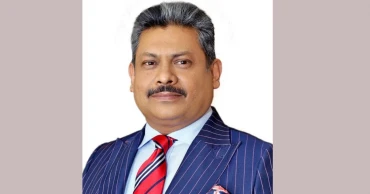
Adil Chowdhury has joined as the Managing Director of National Bank PLC on Monday.
With over 25 years of experience across both domestic and international banking institutions, Adil Chowdhury brings a proven track record of leadership, transformation, and a strong sense of purpose to his new role, according to a press release.
His appointment marks a pivotal moment for NBPLC, the country's first private sector bank fully owned by Bangladeshi nationals, as it seeks to restore its financial stability and regain public trust.
Widely respected in the local banking community, Adil Chowdhury is known for his focus on sustainable business growth, strong ethical standards, and employee development.
He believes in cultivating a culture of work-life balance and accountability, rewarding dedication and performance across all levels of the organization.
Adil Chowdhury joins National Bank following a successful tenure as President & Managing Director of Bank Asia PLC.
Under his leadership, the bank saw record growth in profits and a significant expansion of its digital banking operations.
IFC, Renata PLC partner to boost Bangladesh's pharmaceutical industry
His ability to drive operational efficiency, strengthen governance practices, and recover distressed assets played a key role in making Bank Asia the second most profitable bank in the country by the end of 2022.
His career spans continents. Before returning to Bangladesh in 2020 to join Bank Asia as Deputy Managing Director, Adil Chowdhury spent over 15 years abroad in various leadership roles.
He served as Director at The Bank of Nova Scotia in both Hong Kong and Singapore, overseeing strategic initiatives across Asia-Pacific and the Middle East.
Earlier in his career, he held roles at Credit Agricole Indosuez and American Express Bank in Dhaka, and later built the Treasury Department at Scotiabank’s Dhaka branch.
A significant part of his international portfolio involved managing a US$9 billion funding book while working with central banks and government investment agencies.
His global exposure has equipped him with deep knowledge of international regulatory frameworks, risk management, and enterprise-wide banking operations—expertise he is expected to bring to the transformation efforts at NBPLC.
Adil Chowdhury holds a Bachelor’s degree in Electrical Engineering (VLSI Design) from the University of Texas at Austin and an MBA from the Richard Ivey School of Business, University of Western Ontario in Canada. He has also completed several international certifications in financial markets regulation and practices.
Nagad receives Digital Bank PLC’s licence
Beyond the boardroom, he is known for his collaborative leadership style and his commitment to building organizations that are resilient, transparent, and people-focused.
His appointment as the Managing Director of National Bank comes at a time when the bank is looking for fresh direction and renewed confidence.
10 months ago
Bangladesh’s PMI drops by 5.8 points, signals slower economic expansion
Bangladesh’s overall Purchasing Managers’ Index (PMI) dropped by 5.8 points in June compared to May, reaching 53.1, signalling a slower pace of expansion across key sectors of the economy.
The decline marks a notable shift in economic momentum, driven largely by the first-time contraction in the construction sector, while the agriculture, manufacturing and services sectors all registered slower expansion rates.
Metropolitan Chamber of Commerce and Industry (MCCI), Dhaka and Policy Exchange Bangladesh (PEB) released the Bangladesh Purchasing Managers’ Index (PMI) June report today (Monday).
The PMI is a pioneering initiative that aims to offer timely and accurate insights into the country's economic health to help businesses, investors and policy-makers make informed decisions.
It was developed by MCCI and Policy Exchange, with support from the UK government and technical support from Singapore Institute of Purchasing & Materials Management (SIPMM).
Bangladesh’s PMI drops 8.8 points in April, settles at 52.9
According to the latest PMI data, the agriculture sector continued its expansion for the ninth consecutive month, albeit at a reduced pace.
The sector reported its first-ever contraction in the employment index. However, it saw faster expansion in new business, business activity, input costs, and order backlogs.
The manufacturing sector marked its tenth straight month of expansion, but also at a slower rate. It reported contraction in input purchases, finished goods, imports, and employment.
Meanwhile, new orders, export orders, factory output, input prices and supplier deliveries all recorded slower expansion rates. Notably, order backlogs posted an expansion after 10 months of contraction.
After six months of growth, the construction sector experienced a reversal, entering contraction territory in June.
The sector posted declines in new business, construction activity, employment and order backlogs, while input costs rose at a slower pace. The services sector maintained its expansion for the ninth month in a row but with reduced strength.
The sector posted contraction readings in new business, business activity and order backlogs. On the other hand, employment and input costs saw a faster pace of expansion.
Bangladesh’s PMI jumps to 58.9 in May
In terms of business outlook, the future business index reflected mixed sentiment. Slower expansion expectations were reported in manufacturing and construction, while agriculture and services showed improved optimism for the coming months.
Despite the June downturn, the overall PMI figure above the 50 mark still indicates expansion—though at a more subdued pace—highlighting the need for close monitoring of sectoral dynamics amid shifting economic conditions.
10 months ago
Bangladesh Bank unveils major regulatory policy for banks
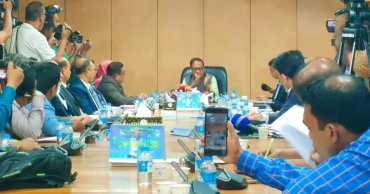
Bangladesh Bank is undertaking a significant restructuring of its regulatory framework for bank supervision, moving to implement a comprehensive Risk Based Supervision (RBS) policy across all scheduled banks starting January 1 next year.
This initiative seeks to bolster efficiency, strengthen oversight, and align with international best practices, though Governor Ahsan H. Mansur highlighted political interference as a substantial risk to financial good governance. The government will take action in reforming the political sector.
Speaking at a press conference on Monday, Mansur underscored political risk as a major impediment, stating, "Political risk is a big risk to maintain good governance in the financial sector, which happened earlier."
He emphasised the need for politicians to be "corrected and aware of the result of political interference" to mitigate this challenge.
The central bank's revamped approach will involve a comprehensive RBS framework, encompassing policy documentation, risk matrix development, and a model supervisory report to manage inherent risks like credit, market, operational, legal & regulatory, and strategic exposures.
BB reserve heist: Court defers probe report submission to July 24
A total 61 banks will be brought under supervision in the new system under 12 groups in the central bank. As a result, real time information of financial risk is possible to monitor from a single umbrella in the central bank.
Already, 20 have been brought under this system, the other banks will come under this system by December 31, 2025.
The governor said that if any trouble is seen in running indepently, then the central will consider it, otherwise they will be brought under state control.
Replying to a query Mansur hints at restructuring the board of some shariah- based banks after reviewing their performance.
Key initiatives underpinning this transformation include:
Organizational Transformation: Restructuring into bank-specific teams and specialized departments such as Supervisory Policy and Coordination, Supervisory Data Management and Analytics, Technology Risk and Digital Banking Supervision, and ML/TF Risk Supervision.
Capacity Building: Conducting targeted training programs for central bank and commercial bank officials, with active collaboration from international partners including the IMF, World Bank, and IFC.
IT Systems Development: Developing a new Rationalized Input Template (RIT) and a centralized supervisory dashboard for data-driven supervision and enhanced analytical capabilities.
BB Governor seeks stronger UK ties on asset recovery
Phased Rollout:Following successful pilot programmes, a full rollout to all 61 scheduled banks is slated to begin by July 2025, leading to the full implementation by January 2026.
Enhanced Supervisory Cycle: Introducing a standardized supervisory process covering risk assessment, planning, engagement, intervention, and follow-up.
This extensive overhaul marks a strategic step towards fostering a more robust culture of compliance, risk awareness, and technological innovation within Bangladesh's banking sector, aspiring to enhance the stability and integrity of the financial system and support sustainable economic growth.
10 months ago
Textile industry seeks immediate withdrawal of 2% AIT; threatens cotton import halt
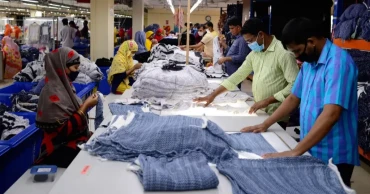
Bangladesh's vital textile sector is teetering on the brink of crisis, with industry leaders vehemently protesting a newly imposed 2 percent Advance Income Tax (AIT) on imported cotton and an increased specific tax on locally produced yarn.
"We cannot bear this additional tax burden," said BTMA President Shawkat Aziz Russell during an emergency press conference held at Gulshan Club on Saturday, highlighting a confluence of challenges already plaguing the industry.
BTMA Directors Khurshed Alam, Abdullah Al-Mamun, Saleuzzama Khan, Badsha Mia, and Mohammad Ayub, along with former President of the Cotton Association Hossain Mahmud, Home Textile Association representative, and BKMEA Vice President Amor Powder, were present at the press conference.
The Bangladesh Textile Mills Association (BTMA) has taken a drastic measure, halting the release of cotton containers from ports and is urging the government to immediately revoke these ‘self-destructive’ policies.
The BTMA leaders raised alarm without the immediate withdrawal of the 2 percent AIT and a reduction of the specific VAT on yarn from Tk 5.0 per kg, domestic textile factories face imminent closure.
Strong hatchery, skilled workforce vital for sustainable growth of poultry sector
He cited soaring bank interest rates (up to 15-16 percent), higher corporate taxes and persistent uncertainty regarding gas and electricity supplies as critical factors undermining their operations.
They also highlighted that this AIT policy will be benefited the neighbour country export yarn to Bangladesh as they (Indian traders) getting incentive to export yarn.
The association emphasised the urgent need to protect local industries and safeguard employment.
They argued that while the government may view these measures as revenue-generating, they will, in reality, plunge the textile sector into deeper distress, ultimately harming the national economy.
The new impositions come at a time when the textile sector is already reeling from a multitude of issues, including:
· Abnormal increases in gas and electricity prices
· Significant reductions in cash incentives for exports
· Uninterrupted energy supply shortages
· Persistent currency devaluation
Garment exports to non-traditional markets mark 6.79pc increase in July-May
Compounding these woes, the Finance Ordinance 2025 for the fiscal year 2025-26 has further exacerbated the situation by increasing the specific tax on locally produced cotton yarn and yarn mixed with artificial and other fibers from Tk 3 to Tk 5 per kilogram at the production stage.
This particular move is expected to severely impact the domestic spinning sector.
10 months ago