local-business

DSE opens week with fresh decline
The Dhaka Stock Exchange (DSE) started the new week with another sharp fall, after ending the previous session 122 points lower, as all key indices slipped in early trading on Sunday (November 16).
In the first half of the session, the benchmark DSEX dropped 45 points, while the Shariah index (DSES) shed 11 points. The blue-chip index DS30 also fell by 18 points.
The turnover at the DSE stood at Tk 130 crore in the first two hours of trading.
Stocks sink on week’s last trading day; DSEX plunges 122 points
Most issues were in the red, with 210 companies declining against 119 gaining, while prices of 42 issues remained unchanged.
The downtrend was mirrored on the Chittagong Stock Exchange (CSE) as well, where the overall index fell by 97 points in early trading.
Turnover crossed Tk 2 crore in the first half of the session.
At the CSE, 61 issues saw price declines, 15 advanced, and seven remained unchanged.
Read more: Trading of five Sharia banks halted at Bangladesh’s stock market
3 months ago
BB orders strict loan data updates to bar defaulters from election race
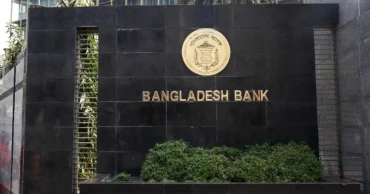
Bangladesh Bank has ordered all scheduled banks to promptly update loan repayment data as prospective MP candidates, many of them business and political figures, scramble to clear defaults and overdue installments to remain eligible for the national polls.
Managing directors of various banks, non-bank financial institutions (NBFIs), and Bangladesh Bank officials said they are receiving a surge in applications for loan regularisation.
In response, the Credit Information Bureau (CIB) of Bangladesh Bank (BB) has issued a strict directive to all banks and financial institutions nationwide, ordering rapid updates of loan-related data to confirm the financial eligibility of potential candidates.
Bangladesh Bank eases SME loan rules for refinance fund amid rising defaults
Bangladesh Bank officials said on Saturday that even if a borrower secures a stay order from a court, financial institutions must report the accurate status of the loan to the CIB without any alteration.
The central bank emphasised that there will be no scope to conceal information or offer ‘arbitrary’ concessions.
A special meeting was held on October 29 with CIB representatives from all banks and NBFIs, where institutions were informed of the government’s firm instruction to complete loan data updates before the election to ensure no loan defaulter can contest.
“The Bangladesh Bank has made it clear that the government will not allow any loan defaulter to become a candidate in the upcoming election,” said a CIB official.
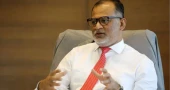
Arif Hossain Khan, Executive Director and spokesperson of Bangladesh Bank, said the central bank is updating customers’ loan statuses as per government instructions.
He added that providing updated credit information to Bangladesh Bank is a routine responsibility of banks.
Govt may compensate investors in 5-bank merger: Bangladesh Bank
The central bank has also directed all institutions to strictly follow existing rules concerning borrowers attempting to reschedule long-overdue defaulted loans ahead of the election. No exceptions, special privileges, or rule violations will be permitted for rescheduling.
All financial institutions, particularly those yet to submit their default data to the CIB, have been ordered to do so immediately. Updated reports detailing the full status of all new and ongoing loans, based on month-end outstanding balances, are mandatory.
Banks have been specifically instructed to update the following information:
Accounts of ongoing and settled loans, along with accurate balances and classification status,
Maturity dates and overdue balances, Number and value of defaulted instalments, and details of installment payments or recoveries.
To ensure round-the-clock verification of loan information for potential candidates, Bangladesh Bank has directed every bank branch to appoint a dedicated officer. Their names and mobile numbers must be submitted to the central bank.
Bangladesh Bank directs MFS providers to halt online gambling transactions
Electoral law clearly states that a candidate will be disqualified if their bank loan status is not classified as ‘regular’ up to seven days before the submission of nomination papers.
Officials concerned believe this rigorous initiative by Bangladesh Bank will play a decisive role in preventing loan defaulters from securing nominations ahead of the election.
3 months ago
Kitchen Market: Onion prices still high, hilsa out of reach
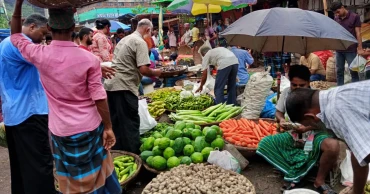
Onion prices in the capital’s retail markets have remained almost unchanged for a week, still selling at Tk 110–115 per kg, while hilsa has become increasingly unaffordable, with prices rising by up to Tk 500 per kg in just seven days.
A visit to several wholesale and retail markets in on Friday showed that although the price of a 5-kg sack of onions has fallen slightly—from Tk 520 to Tk 500–510—the decline has not yet reflected on retail sales.
Vendors said the price is unlikely to come down until new-season onions arrive in the market. The stocks of old onions are nearly exhausted and supplies at wholesale hubs are limited.
Shariful Haque, a wholesaler at Uttar Badda onion market, said a maund (40 kg) of onions costs between Tk 3,600 and Tk 4,000, keeping the wholesale per-kg rate close to Tk 100.
Meanwhile, hilsa prices have soared significantly over the past week. Retail prices have jumped by Tk 500–600 per kg, depending on size.
Govt may allow onion imports if prices remain high this week
In Rampura market, 600–800g hilsa is selling for Tk 1,200–1,600, up from Tk 800–1,000 last week. One-kg fish now cost Tk 3,000–3,200, compared to Tk 2,200–2,500 earlier.
Hilsa weighing over one kg has shot up to Tk 4,500–4,800 per piece, from Tk 3,500–3,800 last week.
Imon, a hilsa seller at Rampura market, said supply at the wholesale level has dropped sharply.
“We aren’t getting fish like before, which pushed up the prices,” he added.
Buyers expressed frustration over the surge. “If a single hilsa costs more than Tk 5,000, how can people afford to buy it?” said shopper Sanzid Hossain. “Not just hilsa—every fish price has gone up.”
Across markets, rui, katla, and kalibaush are selling for Tk 380–450 per kg; shol for Tk 800–1,500 depending on size; poa for Tk 600–1,000; shing and magur for Tk 600–800; and tilapia for Tk 300–350.
Vegetable prices have also increased, particularly for newly arrived winter produce.
Onion prices skyrocket in Dhaka; from Tk 70 to Tk 120 per kg
Tomatoes are selling for Tk 120–150 per kg, cucumbers for Tk 80–120, and carrots for Tk 120–160. Eggplant costs Tk 100–120 per kg, barbatti Tk 80–120, and pointed gourd Tk 60–80.
The prices of most vegetables have risen by Tk 20–50 per kg.
Lemon supply has declined, with a large-sized set of four selling for Tk 50. Green chili prices have also surged from Tk 120–140 per kg last week to Tk 160–190 this week.
Wholesalers said fewer trucks entered the markets on Thursday, disrupting supply chains and causing an immediate price spike in Friday’s market.
3 months ago
Govt to act against those behind financial collapse of merging banks
The government has announced its plan to pursue legal proceedings against those responsible for pushing five Shariah-based banks into financial distress, as authorities move forward with their merger to stabilise the sector.
The Financial Division of the Ministry of Finance sent a letter recently to the Financial Institutions Division (FID) of the same ministry regarding the matter.
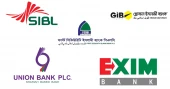
The banks in question are First Security Islami Bank, Social Islami Bank (SIBL), EXIM Bank, Global Islami Bank and Union Bank.
The letter instructs the FID to identify those accountable for the banks' troubles, including owners, members of the board of directors, relevant officials and loan defaulters, and to take legal action against them for overall mismanagement.
Besides, the letter mandates the rapid recovery of the massive volume of non-performing loans (NPLs), investments, and assets of the five banks.
The Financial Division's letter requests the FID to formally ask the Bangladesh Bank (BB) to take the necessary legal measures against the responsible parties.
Arif Hossain Khan, Executive Director and Spokesperson for the Bangladesh Bank, told UNB that the central bank has already taken some initial steps and will take further necessary action upon receiving the formal request from the Financial Institutions Division.
The five banks are being merged to form a new entity, the 'Sammilito Islami Bank' (United Islami Bank), which will be the country's largest bank.
The new bank's paid-up capital will be Taka 35,000 crore, with the government contributing Tk 20,000 crore, and the remaining Tk 15,000 crore being converted from depositors' money into equity shares.
FID Secretary Nazma Mobarek has been selected as the Chairperson of this new bank.
The five banks hold deposits totalling Tk142,000 crore from 75 lakh depositors, against a combined loan portfolio of Tk 193,000 crore. More importantly, a staggering Tk147,000 crore, or 76 percent, of this portfolio is classified as non-performing.
The non-performing loan situation is particularly dire: Union Bank has the highest NPL rate at 98 percent, followed by First Security Islami Bank at 97 percent, Global Islami Bank at 95 percent, SIBL at 62.30 percent, and EXIM Bank at 48.20 percent.
Collectively, these banks operate 760 branches, 698 sub-branches, 511 agent banking outlets and 975 ATM booths nationwide.
3 months ago

Bangladesh Bank eases SME loan rules for refinance fund amid rising defaults
The Bangladesh Bank (BB) has relaxed the eligibility criteria for commercial banks and financial institutions to participate in Tk 25,000 crore refinance schemes for the Cottage, Micro, Small, and Medium Enterprise (CMSME) sector.
The move is a direct response to the banking sector's escalating rate of non-performing loans (NPLs).
The new directive issued by the SME and Special Programs Department said that banks and financial institutions can now access the fund even if their total classified (defaulted) loans reach up to 20 percent of their portfolio.
This is a significant change from the previous condition, which required institutions to maintain a classified loan ratio of less than 10 percent to be eligible for the scheme. The central bank's decision to raise the NPL ceiling comes after the government change last year, which led to the disclosure of a large volume of previously unpublicized defaulted loans across the banking sector.
While the NPL limit has been adjusted, other key guidelines of the original circular remain unchanged. The central bank emphasizes the need to prioritize lending to:
•Women entrepreneurs
•Entrepreneurs with special needs
•Entrepreneurs affected by disasters (such as river erosion, cyclones, floods, fire, or pandemics like COVID-19)
The distribution limits are also strictly defined as production and service sector at least 70 percent, business and trading sector maximum 30 percent, cottage, micro and small entrepreneurs at least 75 percent, medium entrepreneurs maximum 25 percent.
About the Refinance Scheme:
The CMSME Term Loan Refinance Scheme was launched by the Bangladesh Bank in July 2022. The fund, established entirely by the central bank, allows banks and financial institutions to borrow money at a 2 percent interest rate. They are then permitted to lend this money to CMSME entrepreneurs at a maximum interest rate of 7 percent.
The scheme has an announced duration of three years, but loans to customers can have a term of up to five years, including a grace period. The central bank has also noted that the size of the fund may be increased if necessary.
3 months ago

Stocks sink as DSE, CSE see major early decline
Trading at both the Dhaka and Chattogram stock exchanges began Thursday with a steep fall, as most listed companies saw a decline in their share prices.
At the Dhaka Stock Exchange (DSE), the key index DSEX dropped by 57 points, while the Shariah-based DSES and the blue-chip DS30 indices fell by 16 and 22 points, respectively.
Out of all traded issues, prices of 298 companies declined, while 40 advanced and 39 remained unchanged.
DSE ends 10-day losing streak; turnover dips
The DSE recorded transactions worth over Tk 150 crore in the first hour of trading.
The downward trend continued at the Chittagong Stock Exchange (CSE) as well, where the overall index slid by 93 points.
At the CSE, prices of 73 companies fell, while 12 gained and 4 remained unchanged, with total turnover exceeding Tk 5.4 crore in the first half of the session.
3 months ago

Jamaat-e-Islami holds meeting with IMF on economy and tax system
Bangladesh Jamaat-e-Islami and representatives of the International Monetary Fund (IMF) held a meeting at the organization's (Jamaat's) central office on Wednesday (November 12).
The meeting focused on various issues related to Bangladesh's sustainable economy, different financial sectors, the tax system, and the social sector.
The discussions also covered key areas crucial for Bangladesh's economic stability and growth, including policies concerning the tax structure and the overall financial health of the nation.
The IMF delegation was led by Chris Papageorgiou, the Mission Chief's Advisor for Bangladesh. He was accompanied by Maxim Krasko, IMF Resident Representative in Dhaka, Ivo Krezner, Deputy Chief of Mission, and Tawhid Elahi, Economic Analyst.
Representing Bangladesh Jamaat-e-Islami were Mobarak Hossain, Central Executive Council Member, Prominent Academicians Dr. Abdur Rab and Shafiullah.
3 months ago

Denmark’s APM Terminals to make record $550mn investment in Bangladesh
Bangladesh is set to receive a record $550 million in foreign direct investment (FDI) from Denmark’s global terminal operator APM Terminals, marking the largest European investment in the country’s history, according to the Public Private Partnership Authority (PPPA).
Speaking at a press briefing at the Foreign Service Academy on Wednesday afternoon, PPPA Chief Executive Officer Chowdhury Ashik Mahmud Bin Harun said APM will build a world-class container terminal in Laldia, Chattogram, with an investment equivalent to Tk 6,700 crore.
The company will bear the entire project cost.
“This is the biggest-ever single investment from Europe in Bangladesh,” Ashik said, adding that APM will sign the agreement next week. A high-level delegation from APM, along with a Danish minister, is scheduled to visit Dhaka to attend the signing ceremony.
SoftBank sells Nvidia stake for $5.8 billion to boost investments in OpenAI
Upon signing, APM will pay Bangladesh a Tk 250 crore signing bonus, he added.
The Laldia terminal, with the motto ‘Not for Sale – For Success and Growth’, will be capable of handling vessels twice the size of those currently entering Chattogram Port. Its minimum annual capacity will be 800,000 containers.
The construction is expected to begin in 2026 and be completed by 2029.
APM will operate the terminal for 30 years, sharing profits with Bangladesh on a per-container (TEU) basis. After the concession period, the government will review key performance indicators (KPIs) to decide whether to retain the operator or assign it to another entity.
The project is expected to create 500–700 jobs locally, with opportunities for Bangladeshis to work at APM’s other global terminals.
“APM is not investing purely for commercial purposes; their interest in Bangladesh also stems from a broader social commitment,” Ashik said.
Once gets operational, he said, the Laldia Terminal will boost the country’s cargo handling capacity by 40%. The National Board of Revenue (NBR) has already been provided with a roadmap to prepare for the increased trade flow.
To manage higher transport demand, the Roads and Highways Department has prepared a master plan to balance container movement — with 70–80% via road and the rest distributed between river and rail routes.
The government is also working to fully activate the Pangaon Inland Container Terminal.
Ashik said the landmark European investment has been discussed with political parties, all of whom have responded positively.
Once launched, the Laldia Container Terminal will operate 24/7, and Bangladesh’s overall port capacity is expected to grow sixfold within a decade, he added.
3 months ago
Raiding retailers won’t help, real culprits must be caught: Adviser Bashir
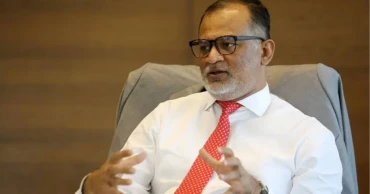
Commerce Adviser Sk Bashir Uddin on Tuesday (11th November 2025) said that raids on retail and mid-level outlets have limited impact, as the main perpetrators behind market irregularities often escape accountability.
“Our goal is to protect consumers’ interests, not to restrict trade,” he said on Tuesday while speaking at a views-exchange meeting with edible oil delivery order (DO) traders at the commerce ministry.
The adviser emphasised that facilitating both domestic and international trade is the ministry’s core function, and it has been working sincerely to achieve that objective.
“As consumers ourselves, it’s only natural that my ministry and I will work in favour of consumer welfare,” he said, urging DO traders to cooperate and provide guidance in stabilising the market.
Warning that decisive measures will be taken to protect consumer rights, Bashir Uddin said such steps would be taken regardless of who they affect.
Read more: Govt working on Tk 100-crore fund to revive jute bags: Adviser Bashir
He said the traditional practice of controlling the edible oil market through raids at retail or mid-level shops has proven largely ineffective.
“The entire supply chain—from producers or importers to DO traders, wholesalers, and retailers—must come under regulatory oversight,” he said, adding that mill owners, DO traders, or both might be responsible for market instability.
“It’s unrealistic to think a small retailer hiding 500 bottles of oil under his counter is causing market chaos. TV channels may show dramatic footage of oil seizures, the public may applaud, but in reality, such drives achieve nothing. The small grocer is blamed while the real manipulators walk free,” the adviser said.
Bashir Uddin said the government will make sure no one can destabilise the edible oil market, and vowed to identify and act against the real offenders.
At the meeting, DO traders complained about not receiving products on time from mill owners and urged the ministry to resolve the issue.
Read more: Vitamin-fortified safe edible oil essential to protect public health: Speakers
3 months ago

bKash achieves 4 accolades at Bangladesh Fintech Award-25 for fostering innovations
bKash has won four awards at the “Bangladesh Fintech Award 2025” for its contribution in ensuring digital financial inclusion and secure transactions through providing innovative technologies and solutions.
This year, in the 3rd edition of the award, bKash clinched ‘Winner’ position in two categories - ‘Digital Lending’ and ‘MFS/DFS’.
Besides, the Mobile Financial Services (MFS) provider has also received ‘Honourable Mention’ in the ‘Payment’ and ‘Financial Inclusion’ categories.
Major General Sheikh Md Monirul Islam (retd), Chief External & Corporate Affairs Officer of bKash received the awards on behalf of the company. Senior officials of bKash were also present at the event.
The ceremony, organised by the Bangladesh Fintech Forum, took place at a hotel in the capital, celebrating organisations that exemplify innovation, impact and leadership in the fintech industry. bKash’s initiatives ‘The bKash Impact’ and ‘Pay Later’ won the Fintech Innovation of the Year awards respectively in MFS/DFS and Digital Lending categories.
bKash users can win foreign trips, enjoy up to Tk 4,000 offers on travel payments
Moreover, the ‘Pay Later’ service in Financial Inclusion category and ‘bKash Merchant App’ in Payment category received Honourable Mentions.
This year’s event, supported by Mastercard and Prime Bank, honoured 14 winners and 12 Honourable Mentions across various categories.
3 months ago