local-business

CSE extends upward momentum, DSE fails to sustain gains
The upward momentum observed in the early trading hours at both the Dhaka Stock Exchange (DSE) and Chittagong Stock Exchange (CSE) did not last, as the DSE ended the day in the red while the CSE managed to sustain its gains.
At the end of Tuesday’s trading session, DSEX, the key index of the DSE, dropped by 22 points.
Among other indices, the Shariah-based DSES declined by 3 points, while the blue-chip DS30 inched up by 3 points.
Most issues traded on the DSE ended lower, with prices falling for 241 companies against 80 gainers, while 72 remained unchanged.
Prices dropped across all three categories — A, B, and Z — with the decline most prominent among the top-performing A-category companies.
Of these, prices fell for 153 firms, while 33 advanced.
DSEX nears 5,000-point mark amid continuous market fall
In the block market, the shares of 31 companies worth Tk 9 crore changed hands, with Simtex Industries PLC leading the board by trading shares worth Tk 3 crore.
The day’s total turnover at the DSE stood at Tk 478 crore, up from Tk 394 crore in the previous session.
Meanwhile, the CSE’s overall index gained 20 points by the end of trading. Despite the rise in the index, most companies there also saw price declines, with 92 issues losing value against 84 gainers, while 29 remained unchanged.
The turnover at the CSE fell to Tk 12 crore from Tk 16 crore the previous day.
The Dacca Dyeing & Mfg. Co. Ltd. topped the gainers’ chart on the CSE with a 10 percent rise, while Apex Footwear Limited hit the bottom, losing over 21 percent.
4 months ago
Exporters estimate $1 billion loss from Dhaka airport cargo village fire
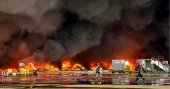
The Exporters Association of Bangladesh (EAB) on Monday said that the fire at the cargo village of Hazrat Shahjalal International Airport (HSIA) has caused an initial estimated loss of $1 billion to the country's export sector.
EAB President Mohammad Hatem disclosed this estimate at a press conference on Monday (October 20) at a city hotel.
He sought great security in key areas like cargo villages and export import ports to ensure the global buyers for shipment of goods in time.
Shawkat Aziz Russell, president of Bangladesh Textile Mills Association, Dr Mohammad Zakir Hossain, vice president of Pharmaceutical and Medicine Industry Association and representatives of all sectors involved in export were present at the press conference.
Fire at Shahjalal Airport destroys garment raw materials, business samples: BGMEA
Hatem strongly criticised the authorities, stating that the incident points to a ‘total failure’ to ensure an effective fire detection and protection system in an infrastructure as vital as the cargo village.
The EAB President emphasised that the total financial impact goes far beyond the value of the goods physically destroyed by the flames. "It is difficult to determine the total extent of the losses for exporters right now," Hatem said.
“There was direct damage as products were burnt, but this is not the only loss. A much greater loss has occurred because finished goods, which were supposed to be produced from the burnt raw materials, cannot be exported," he added.
BTMA President Russel said there is a deep conspiracy of destroying Bangladesh’s goodwill on the international level after settling a tariff deal with the USA. “Political and geopolitical players are working behind to destabilize the manufacturing and export sector of Bangladesh, because of their failure in international trade.”
CAAB designates GSE Maintenance area for storing goods after cargo village fire
He warned that the disruption will severely hamper import-export activities in the coming days, creating a risk of losing market position, erosion of buyer confidence and damaging international trade agreements.
EPB President Hatem stressed that a full and transparent investigation is necessary to ascertain the accurate figure, but based on preliminary reports from members, the association believes the overall loss will be around $1 billion.
Hatem, also the president of BKMEA, highlighted the wide array of essential goods handled at the cargo village, making its security crucial for the entire national economy.
Exporters of the readymade garment (RMG) industry use the village for urgent air shipments of light machinery, spare parts, raw materials, accessories and critical product samples.
The pharmaceutical sector relies on the facility for importing raw materials and exporting highly sensitive medicines.
Exporters of frozen food, agricultural produce, vegetables and fruits are also dependent on the village.
DCCI voices deep concern over HSIA cargo village fire
Hatem said the products could be completely ruined if not shipped on time, as they are highly sensitive. “International courier services also use the facility for handling vital documents and parcels.”
Expressing deep concern over the recurring fire incidents across Bangladesh, Hatem said the recent blaze in an ultra-sensitive area like the airport's cargo section could have a major negative impact on the country's reputation.
"It is a serious concern that foreign buyers may become anxious about the security of Bangladesh's export products upon hearing news of this fire, which could negatively affect the country's economy," he cautioned.
Hatem questioned whether there would be accountability for the negligence, stating, "We believe it is urgent for the government to launch an immediate, transparent, and effective investigation to find the answers to these questions."
Exporters scramble to assess losses after airport fire
He pointed to a recent series of fires in just a few days, including incidents in Ashulia, Mirpur, Chattogram EPZ, and Incepta Pharmaceuticals, as a cause of ‘deep concern and insecurity’ among business entrepreneurs.
Representatives from various member organizations of the EAB and importing firms were present at the press conference.
4 months ago

DSE sees gain, CSE dips in morning trade
The week’s second trading session began with a mixed performance on the country’s two stock exchanges as the Dhaka market opened higher while the Chattogram bourse witnessed a decline.
In the first hour of trading on Monday, the key index of the Dhaka Stock Exchange (DSE), DSEX, advanced by 20 points.
Among other indices, the Shariah-based DSES rose by 5 points and the blue-chip DS-30 gained 6 points.
Most companies saw price increases, with 226 advancing, 90 declining, and 77 remaining unchanged.
The turnover in the first half of the session stood at Tk 140 crore.
DSEX nears 5,000-point mark amid continuous market fall
Meanwhile, the Chittagong Stock Exchange (CSE) opened lower, with its overall index dropping by 78 points.
The prices of most companies on the CSE were down, as 71 issues declined against 27 gainers, while 13 remained unchanged.
The total turnover on the bourse exceeded Tk 4 crore.
4 months ago

Bangladesh Bank amends loan write-off policy, mandates 30-day notice
The Bangladesh Bank (BB) has introduced key amendments to its loan write-off policy, making it mandatory for banks to notify defaulting borrowers before removing bad loans from their balance sheets.
Under the amended rules, banks must ensure that the borrower is notified about the loan write-off decision at least 30 working days before the action is taken.
The Banking Regulation and Policy Department (BRPD) issued a circular in this regard on Sunday. The circular is aimed at aligning the national banking regulations with international best practices.
The central bank's circular revises existing guidelines on loan write-offs and the creation of dedicated recovery units, effective immediately.
This notification is deemed necessary because a borrower whose loan is written off remains classified as a defaulter until the entire outstanding liability is completely settled.
Loan write-offs are an internationally accepted accounting practice used to prevent the long-standing, non-performing accounts from unnecessarily inflating the bank's balance sheet size.
4 months ago

Stocks start week with losses at DSE, CSE
Trading on the country’s two major stock exchanges began the week with losses on Sunday, as key indices and most share prices declined.
At the Dhaka Stock Exchange (DSE), the benchmark index DSEX dropped by 12 points, while the Shariah-based DSES and the blue-chip DS30 indices each fell by 7 points.
The share prices of most companies saw a fall, with 225 issues declining, 97 advancing and 71 remaining unchanged.
The DSE recorded a turnover of over Tk 170 crore in the first half of the session.
A similar downward trend was also seen at the Chittagong Stock Exchange (CSE), where the overall index fell by 69 points.
At the CSE, the prices of 56 companies declined, 23 gained, and 9 remained unchanged, with a total turnover of around Tk 1.7 crore in the first half of trading.
4 months ago
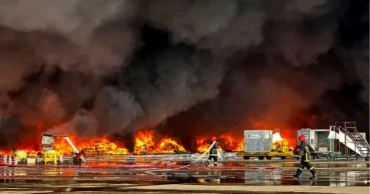
Exporters scramble to assess losses after airport fire
Exporter associations have begun the process of assessing damages caused by the fire at the cargo village of Hazrat Shahjalal International Airport (HSIA).
The organisations have directed their member companies to prepare detailed lists of their damaged goods in a prescribed format.
According to association officials, a clearer estimate of the total volume of affected goods and the extent of financial losses is expected within the next one to two days.
A delegation from the Bangladesh Garment Manufacturers and Exporters Association (BGMEA) will visit the airport’s cargo village today (Sunday) to identify and evaluate the damages.
Masud Karim, Chairman of the BGMEA Public Relations Committee, told UNB that a BGMEA team will visit the site at noon.
Gusty weather hinders firefighting efforts: Fire Service DG
Meanwhile, exporters are expressing increasing concerns over the uncertainty surrounding the resumption of operations at the cargo village.
Business leaders have said that any prolonged suspension of airport activities will have a serious impact not only on passenger transport but also on the country’s crucial export sector.
Key export items transported by air from Bangladesh include ready-made garments (RMG), perishable goods such as vegetables, fruits and betel leaves, along with various other products and important documents handled by international courier services. Businesses in these sectors are considered most at risk.
BGMEA President Mahmud Hasan Khan said, “We do not have any specific information at this moment about the quantity of goods damaged. If it reopens quickly, the losses will be less. If it remains closed for a longer period, the losses will be greater."
S M Jahangir Hossain, President of the Bangladesh Fruits, Vegetables and Allied Products Exporters’ Association (BFVAPEA), said, “Our shipments to various destinations depend on the availability of space on the aircraft.
Fire at Shahjalal Airport's cargo village brought under control after 7 hours
“So, on days when we get more space, we can send more goods. We are currently investigating how much products our members had there today,” he added.
4 months ago
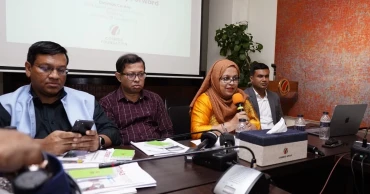
Put bank looters on trial; don’t use public money to bail out banks: Speakers
Effective banking sector reform cannot be achieved without holding accountable those who looted banks during the past Awami League government, particularly after 2017, speakers said at a seminar on Saturday.
The effort to recapitalise failing banks repeats the shameful history in which ordinary people paid for the failure of banks, the salvation of which, after being looted under political protection, required large sums of taxpayers’ money, they said.
The banking sector crisis is owed to systemic problems sustained by years of banking data manipulation by the past AL government, political lending, widespread corruption in the banking sector and bankers’ failure to uphold professional ethics, the speakers said.
“Holding the bank looters accountable is undoubtedly central to the banking sector reform,” said Nurun Nahar, deputy governor, Bangladesh Bank, during her speech as the chief guest at the seminar.
Titled ‘Bangladesh’s Banking Crisis: The Way Forward,’ the seminar was organised by the Cosmos Foundation, the philanthropic arm of the Cosmos Group, with the United News of Bangladesh (UNB) serving as the event’s media partner.
The situation of the banking sector was not so bad before 2017, Nahar said, recalling that the fall started taking place after certain Islamic banks were taken over.
The decision to merge several banks and their recapitalisation came to protect the depositors and prevent a systemic crash, she said.
In response to scathing criticisms over the central bank’s failure to regulate the sector and surrender to political pressure, Nahar wondered what steps could withstand such an assault on the central bank’s independence.
“Yes, one could have resigned under political pressure—but could anyone guarantee that their successor would take the right decision? I don’t know,” he said.
Banks regularly suppressed non-performing loan data, giving a false impression of their financial strength so that they could enjoy dividends, the Deputy Governor said.
“The central bank alone cannot be blamed. Everyone was involved in the process, including directors and those in the management of commercial banks,” she said.
But the situation is improving with a strong accountability mechanism being enforced. The banking sector is regaining strength, enjoying independence and rejecting any biased and unethical practices, she said.
Towfiqul Islam Khan, additional director of the Centre for Policy Dialogue (CPD), said that the banking crisis is “less technical and more political.”
“The central bank is supposed to be an independent entity. Unless it is allowed to act freely and bank looters are punished, crises will keep returning to the banking sector in the future,” he said.
Towfiq offered the alternative to recapitalise failing banks with profits made by the central bank over the last few years.
In the last financial year, he said, the BB posted a profit of Tk 22,000 crore, which is far higher than the most profitable commercial bank, which logged a profit of Tk 700 crore in the same year.
The Bangladesh Bank made similar profits in the two years preceding the last financial year.
If the central bank was responsible for the sector-wide damage, Towfiq said, why should it not use a portion of the profit made to rebuild banks being merged?
The bank merger decision drew strong criticism from the speakers, who likened it to sparing looters and making the victims pay for the crime.
Nehal Ahmed, a professor at the Bangladesh Institute of Bank Management, and MGK Jewel, a consultant at the Asian Development Bank, jointly delivered the keynote paper at the seminar.
Citing examples from other countries, Prof Nehal Ahmed emphasised freeing the central bank from finance ministry influence to establish best practice in the financial sector.
Abdul Mannan, a former executive director of the Bangladesh Bank, said that banks’ defaulted loans rose from T k22,000 crore in 2008 to about Tk 5 lakh crore in 2024.
He blamed the lack of good governance for the bank’s mounting non-performing loans, exacerbated by state agencies’ intervention.
Speakers said that there, however, were instances of failing banks making recoveries with time when they chose to uphold professionalism.
Shahidul Islam Zahid, chairman of the Department of Banking and Insurance at Dhaka University, said that Bangladesh’s banks do not care about ordinary depositors and often serve the interests of oligarchs.
He questioned the validity of the government’s plan to merge five troubled banks by injecting Tk 20,000 crore from the national budget.“Banks have been looted before and recapitalised. What guarantee do we have that it won’t happen again?” he asked.
Muhammad Mahboob Ali, professor of economics at the Bangladesh University of Business and Technology, criticised Bangladesh’s Islamic banking system, calling it one of the worst in the world.
He called for protecting depositors’ interest with an effective insurance policy.
Karmasangsthan Bank director Salahuddin Bablu questioned the practice of adopting monetary policy in light of the national budget, whereas the ideal case should be the opposite. Past bank mergers were not as successful as expected, he said.
He said that the central bank utterly failed to contain inflation, with some of its steps to do so increasing the burden on ordinary people.
Dr M Kamal Uddin Jasim, additional managing director of the Islami Bank Bangladesh, Sheikh Md. Riyaz Uddin, first assistant vice president of the Islami Bank Bangladesh, and business journalist Farhad Hossain Talukder also attended the seminar.
Assuring depositors with five banks due for merger, Deputy Governor Nahar said about 90% of them with deposits below Tk 2 lakh would soon get a refund.
4 months ago
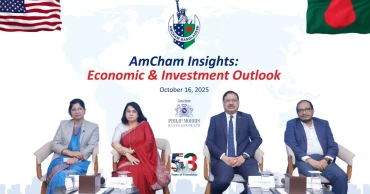
AmCham hosts session on Economic and Investment Outlook in Dhaka
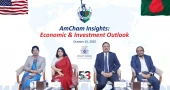
The American Chamber of Commerce in Bangladesh (AmCham) hosted an engagement session on “AmCham Insights: Economic & Investment Outlook”, on Thursday at the Sheraton in Dhaka.
Dr. Fahmida Khatun, Executive Director, Centre for Policy Dialogue (CPD), and Shah Mohammad Mahboob, Executive Member, Bangladesh Investment Development Authority (BIDA) graced the program as guest speakers. The event was supported by Philip Morris Bangladesh Ltd.
Syed Ershad Ahmed, President of AmCham Bangladesh, said that the country is undergoing a transitional phase marked by key reforms, including logistics infrastructure management, the separation of the NBR into two distinct functions, and strengthened banking governance. These efforts, he noted, reflect a strong intent to build a more resilient and investment-friendly economy.
However, to attract greater investment, he emphasized the need to ensure energy security, curb corruption, and maintain long-term policy consistency to reinforce investor confidence.
Dr. Fahmida Khatun, Executive Director of the Centre for Policy Dialogue (CPD), shared her insightful analysis on “Economic Outlook of Bangladesh: Current Trends and Future Prospects,” noting the nation’s critical transition ahead of LDC graduation in 2026.
She observed that GDP growth has slowed to around 4% in fiscal year 2025 though rising remittances and exports are providing some relief amid persistent inflation and stagnant wage growth.
Fahmida Khatun emphasized export diversification, climate resilience, and inclusive employment generation as critical long-term priorities to sustain growth and competitiveness beyond LDC graduation.
Shah Mohammad Mahboob, Executive Member of BIDA, shared enlightening insights on Bangladesh’s investment outlook, highlighting its macroeconomic resilience and reform-driven climate.
He noted inflation’s fall from double to single digits, a 12.5% stock market rally, rising foreign reserves, and FDI more than doubling year-on-year—boosted by successful U.S. tariff talks and growing interest from China and South Korea.
Mustafizur Rahman, Joint Secretary (WTO), Ministry of Commerce, highlighted Bangladesh’s proactive trade diplomacy, including CEPA/FTA negotiations with key Asian partners, including Japan, Korea, and a successful tariff reduction deal with the USTR to safeguard exports post-LDC graduation.
Sultana Yasmin, Joint Secretary, noted that the Ministry of Industries implements the National Industrial Policy 2022, focusing on private-sector growth, exports, and SMEs. Key initiatives include digitization through OSS and online approvals, revision of key sectoral policies, and formulation of the Electric Vehicle and updated Logistics Policies. She stressed strong inter-ministerial coordination to boost investment and trade.
Md Bodruzzaman Munshi, Second Secretary, NBR, shared recent trade facilitation measures such as reduced Advance Tax, policy formation for Free Zone facility, Bank Guarantee Facility, Digital Record-Keeping, Import-Export Hub, and the launch of the Bangladesh Single Window for streamlined cross-border trade and enhanced global competitiveness.
AmCham Treasurer, Al Mamun M Rashel & Managing Director of NATco Bangladesh, and AmCham Executive Committee Member, Rashed Mujib Noman, Managing Director of Augmedix BD Limited, were also present at the event.
4 months ago
BIDA, Home Ministry strengthen coordination to boost foreign investment
Bangladesh Investment Development Authority (BIDA) Executive Chairman Ashik Chowdhury has highlighted the need for stronger coordination between BIDA and the Ministry of Home Affairs to create a seamless, secure and investor-friendly environment for foreign professionals and investors in Bangladesh.
He made the remarks at a high-level sensitization session on investment facilitation and security coordination held at BIDA’s Multipurpose Hall in Agargaon’s Biniyog Bhaban on Wednesday.
The event, organised by BIDA in partnership with the United Nations Development Programme (UNDP) under the TEPP-II project, saw participation from senior officials of the Ministry of Home Affairs, Department of Immigration & Passports and relevant security agencies.
“Our partnership with the Ministry of Home Affairs has come a long way, as we share a joint responsibility to ensure a welcoming and enabling environment for foreigners who choose to invest and work in Bangladesh,” Ashik said.
He noted that a significant portion of the work permit ecosystem, including BIDA’s work permit services and the Home Ministry’s security clearance process, has already been digitalised. “We are now actively working to digitalise the visa application process in partnership with the Department of Immigration.”
Emphasising procedural harmony, he said, “It is critical that investors experience a seamless and harmonised process across institutions. When an investor applies for a work permit, there should be no unreasonable disparity between procedures at BIDA, BEZA, or any other investment promotion agency.”
Speaking at the session, Md Delwar Hossain, Additional Secretary of the Ministry of Home Affairs, said the ministry has successfully shifted the entire security clearance process online in collaboration with BIDA. “We are now working to transition passport and related services to a fully digital platform as well.”
Md Ariful Haque, Director General of BIDA’s International Investment Promotion Wing, called on field-level officers to consistently share on-ground experiences and challenges so that future policy decisions are better informed and service delivery continues to improve.
Under the new online system for obtaining security clearance against work permits, which officially came into effect on 1 October 2025, foreign investors and expatriate employees must submit applications exclusively through BIDA’s One Stop Service (OSS) Portal. Once submitted, if no objections are raised within 21 working days, clearance will automatically be deemed granted. Failure to submit the application within the specified timeframe will render the permit invalid.
BIDA continues to coordinate closely with the Ministry of Home Affairs to simplify procedures, enhance transparency, and further strengthen Bangladesh’s investment service ecosystem.
4 months ago

Bangladesh Bank urges public caution amid fake currency rumours
Bangladesh Bank (BB) on Wednesday issued a public advisory following social media and media reports about a surge of counterfeit currency, reportedly entering the country from India.
The central bank urged citizens not to panic unnecessarily.
In a media release, Bangladesh Bank warned that such reports could create confusion and instability, and reminded the public that manufacturing, carrying, or transacting fake notes is a serious offence under existing law.
The central bank said it is working closely with law enforcement agencies to prevent the circulation of counterfeit money.
Both BB and security forces are “maintaining strict vigilance and taking regular, effective measures to prevent the circulation of counterfeit money” by monitoring the source, flow, and use of fake notes.
The advisory follows a viral Facebook post by a Qatar-based investigative journalist, which prompted Bangladesh Bank and national law enforcement agencies to intensify countermeasures against fake currency.
To safeguard the public, BB advised individuals to verify security features when receiving notes, including watermarks, intaglio print, security threads, colour-shifting ink, and micro-text.
The bank urged the public to conduct all large-scale transactions through formal banking channels and to prefer digital payments over cash wherever possible.
Citizens are also encouraged to report any suspicious notes immediately to the nearest police station or by calling the National Emergency Service 999.
The central bank also reminded the public that detailed information on the security features of genuine notes is available on its website, www.bb.org.bd, and that instructional X-banners and posters are displayed at every bank branch nationwide.
4 months ago