local-business
Govt working on Tk 100-crore fund to revive jute bags: Adviser Bashir
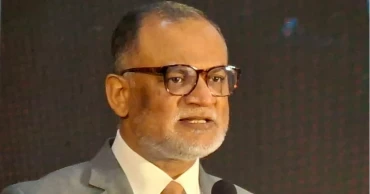
The government is working on a Tk 100-crore fund through the Jute Diversification Promotion Centre (JDPC) to revive the use of jute bags and bring about a cultural shift towards jute-based products, said Commerce Adviser Sk Bashir Uddin on Wednesday.
“We are trying to bring about a cultural change in the market with a fund of nearly Tk 100 crore through JDPC, involving around 1,006 entrepreneurs. Like in the past, we want to see how we can reintroduce jute bags in daily use. There is a vast global market for jute as a wrapping material. Research is needed to expand the jute sector’s square metre coverage, mileage, and scope,” he said.
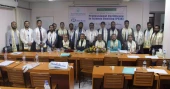
The adviser was addressing a seminar titled ‘The Role of Jute in Sustainable Development – Hafizuddin Ahmed and Fatema Ahmed Trust Lecture 2025’ held at the auditorium of the Bangladesh University of Textiles (BUTEX).
The Department of Yarn Engineering organised the event.
Calling the students as ‘future captains’, Bashir Uddin urged them to adopt innovation and cost-effective production methods to enhance the commercial success of jute products, making them competitive alternatives to plastic.
“You have shown refined character in many areas by saying, ‘I don’t agree’. For jute bags, we need cultural change, not compulsion. Innovation, cost reduction, and enhanced capabilities are essential for the commercial success of jute products. To beat plastic, we need coordinated efforts in policies, actions, and initiatives. Increased productivity leads to more employment opportunities. Wherever you work, strive to make your institution the best,” he said.
In her keynote presentation, Prof Dr Hosne Ara Begum of the Department of Yarn Engineering highlighted the role of jute cultivation and exports in ensuring a sustainable and environment-friendly economy.
She also called for the exclusive use of jute bags at the upcoming trade fair.
Dhaka University’s former professor Rashida Akhtar Khanam, Director General of the Bangladesh Jute Research Institute Dr Nargis Akhtar, IEB Vice-President Engr Khan Manjur Morshed, IETET Convener Engr Ahsanul Karim Kaiser, along with other faculty members and students, attended the event.
4 months ago

Five-Day furniture fair kicks off in Dhaka
The five-day-long 20th National Furniture Fair 2025 begins on Tuesday in the capital at the Rajdarshan Hall of International Convention City Bashundhara (ICCB) in Kuril, Dhaka
The five-day event is being held across Gul Naksha (Hall—1), Pushpa guccha (Hall—2), and Rajdarshan (Hall—3) of the convention center under the slogan “My Country, My Dream—Decorating Homes with Local Furniture.
Organiser said that a total of 48 leading furniture companies are participating in this years fair to showcase their latest designs and innovative products across 278 stalls. Prominent participating brands include Akhtar, Hatil, Brothers, Nadia, Ayoto, Omega, JMG, Navana, Athenas, Partex, Regal, and Legacy.
Sheikh Bashir Uddin, Adviser to the Ministry of Commerce opened the fair while the inaugural ceremony was presided over by Selim H. Rahman, Chairman of the Bangladesh Furniture Industries Owners Association (BFIOA).
Special guests at the opening ceremony included Mohammad Hasan Arif, Vice Chairman and Chief Executive of the Export Promotion Bureau (EPB), Bangladesh, and Dr. K. M. Akhtaruzzaman, President of the Bangladesh Furniture Exporters Association.
During the inauguration ceremony, adviser to the Ministry of Commerce Sheikh Bashir Uddin expressed optimism about the sectors potential and urged entrepreneurs to increase their investments.
He emphasized that Bangladesh could secure a strong position in the global furniture market by utilizing its local opportunities and resources and spoke about plans to use such fairs as a platform to expand export markets and promote more trade exhibitions in the future.
At the same time, vice Chairman and Chief Executive of the Export Promotion Bureau (EPB), Bangladesh Mohammad Hasan Arif statet that export diversification is essential to increase national income as the industry is a promising sector that can reach international standards by utilizing local raw materials, modern technology, and skilled labor.
He mentioned that the government has identified the furniture sector as a potential export industry and that policy support and incentives will continue. Such fairs help entrepreneurs build networks and access global markets. He urged entrepreneurs to focus on innovative design, technology, and quality improvement.
Bangladesh's domestic furniture industry now meets 100 percent of local demand and exports a significant volume of furniture abroad.
On the opening day, a children's art competition was organized, in which 20 children received awards worth a total of 200,000 taka.
The fair is being managed by the Design and Technology Center, and Access Infotech serving as partners.
4 months ago

DSE, CSE end lower despite early gains
Bangladesh’s stock markets ended lower on Tuesday despite a positive start, as most companies saw a decline in share prices by the end of the trading session.
At the end of the day’s trading, the key index of the Dhaka Stock Exchange (DSE), DSEX, lost 30 points.
Among other indices, the Shariah-based DSES dropped 6 points, while the blue-chip DS30 index fell 14 points.
Out of 396 issues traded on the DSE, prices declined for the majority. Share prices advanced for 105 companies, fell for 233 and remained unchanged for 58.
In all three categories — A, B, and Z — most companies ended in the red. Among the top-performing A-category companies that usually offer higher dividends, share prices rose for 69, declined for 119, and remained unchanged for 31 issues.
Stocks open higher with DSEX gaining 38 points in first hour
In the block market, shares worth Tk 19 crore of 30 companies were traded, with BRAC Bank topping the list by trading shares worth Tk 6.9 crore.
The turnover on the DSE increased to Tk 606 crore, compared to Tk 530 crore in the previous session.
Social Islami Bank Ltd topped the gainers’ list with a 10% rise, while Information Services Network Ltd was the day’s worst performer, losing more than 8%.
The Chittagong Stock Exchange (CSE) also witnessed a downturn, with its overall index losing 54 points.
Out of 207 issues traded, prices advanced for 74, declined for 108, and remained unchanged for 25.
Indices rise in early trading at DSE, CSE
The CSE’s daily turnover stood at Tk 15 crore, down from Tk 19 crore in the previous session.
Social Islami Bank also led the gainers on the CSE with over 9% price rise, while Zahintex Industries Ltd suffered the biggest loss, shedding more than 10%.
4 months ago

Five Shariah banks owe Tk 37,332 cr to banks, FIs
Five Shariah banks undergoing a merger are facing a massive collective liability of approximately Tk 37,332 crore in fixed deposits owed to various banks and financial institutions, according to a report of the Bangladesh Bank released on Tuesday.
The report studied the state of the five banks.
Of them, the highest liability of Tk 10,185 crore lies with First Security Islami Bank, while Union Bank has a liability of Tk 8,631 crore. The Exim Bank has a liability of Tk 8,157 crore, followed by the Social Islami Bank with a liability of Tk 5,791 crore and the Global Islami Bank with Tk 4,568 crore.
In addition to the five banks, the Padma Bank is also reportedly failing to return deposits, contributing to a broader liquidity crisis.
BB to appoint administrators for merger of five troubled Islami banks
Arif Hossain Khan, executive director and spokesperson for the BB, told UNB, "Where an institution places its money is its own business policy. The main problem here is corruption, not a lack of policy. These issues will not be resolved unless corruption is stopped.”
Bangladesh Bank’s (BB) latest report exposes the fragile state of the banking sector.
4 months ago

Govt okays price variation for Narayanganj Rice Silo project
The government on Tuesday approved a variation proposal involving the construction of Narayanganj Rice Silo under the Modern Food Storage Facilities Project (4th Revised), being implemented by the Directorate General of Food with financial support from World Bank.
The approval came a meeting of the Advisers Council Committee on Government Purchase held virtually with Finance Adviser Dr Salehuddin Ahmed in the chair.
According to the Food Ministry’s proposal, the variation applies to Package W-23 of the project.
The original contract value was Tk 46.53 crore and USD 3.22 crore, which has now been revised to Tk 42.53 crore and USD 3.24 crore following an adjustment that includes an increase of Tk 4 crore and USD 1.53 lakh.
The contract was awarded to Confidence Infrastructure Limited, Unique Trade Centre (Level 6 & 7), 8 Panthapath, Kawran Bazar, Dhaka, in association with The GSI Group LLC, Illinois, USA.
4 months ago

Enjoy up to Tk 200 off on pizza orders with bKash at 270 outlets nationwide
Customers can enjoy up to Tk 200 discount on pizza orders by paying through bKash at over 270 participating restaurants and cafes across various districts, including Dhaka, Chattogram, Sylhet, Rajshahi, and Khulna.
According to a media statement, the offer aims to promote digital payments and will remain valid until November 1, 2025.
To avail the discount, customers must use the promo code ‘D4’ while making a minimum payment of Tk 250 through the bKash app or by scanning the QR code via the app. Each customer will receive a 10% discount, up to Tk 100 per transaction, and can use the offer once per day, for a maximum of two times during the campaign.
The list of pizza outlets, including their names, districts, and specific addresses, has been added to the bKash website.
Customers can find out nearby restaurants and cafes that are running the offer by checking this link: https://www.bkash.com/page/payment-d4-pizza-fest-outlet-list-oct25.
4 months ago

Mixed trading at Bangladesh stock market in early hours
Bangladesh’s two stock exchanges witnessed mixed trading in the first hour on Monday, with the key index of the Dhaka Stock Exchange (DSE) rising while the Chittagong Stock Exchange (CSE) saw a slight decline.
During the first hour of trading, the DSE’s benchmark index, DSEX, gained 28 points.
Among the other indices, the Shariah-based DSES advanced 5 points, and the blue-chip DS30 index edged up by 10 points.
Out of 257 issues traded on the DSE, prices of 117 companies increased, 65 declined, and 75 remained unchanged.
Indices rise in early trading at DSE, CSE
The turnover stood at over Tk 220 crore in the first hour.
Meanwhile, the overall index of the CSE dropped by 9 points.
Of the 103 issues traded there, 53 advanced, 38 declined, and 12 remained unchanged, with a turnover of over Tk 10 crore during the first hour.
4 months ago
Bank merger: BSEC urges central bank to protect interests of investors
The Bangladesh Securities and Exchange Commission (BSEC), the stock market regulator, has sent a letter to Bangladesh Bank (BB) regarding the planned merger of five commercial banks, urging the central bank to ensure the protection of the interests of general investors.
The letter was sent to the governor of the central bank recently.
While the decision to merge five private banks suffering from weakness and liquidity crises ensures the full protection of depositors, no clear decision has been made regarding the interests of general or small shareholders of these banks.
Later, BSEC sent the letter to secure investor rights.
Sources at Bangladesh Bank indicate that, according to the Bank Resolution Ordinance, 2025, general shareholders may not receive any compensation during the merger process.
The new, merged bank will be listed on the stock market, but the investors of the five existing banks will not have any shares in the new entity, as their shares will be cancelled and new ones issued.
But, market stakeholders argue that the general investors are not responsible for the current state of the five Islamic-focused banks.
They believe the banks' sponsors and directors are the identified culprits, and their assets should be confiscated.
They emphasise that since general investors are not at fault, their shares should not be confiscated, making the protection of their interests crucial during the merger process.
They demand that the government should give the same level of importance to shareholders as it does to depositors.
In its letter to the governor, BSEC stated that general investors are in no way responsible for the current state of the five banks slated for merger-First Security Islami Bank PLC, Global Islami Bank PLC, Union Bank PLC, Social Islami Bank PLC and Exim Bank PLC.
The BSEC asserts that the individuals identified as liable under Section 77 of the Bank Resolution Ordinance-2025 are entirely responsible for the banks' condition, a fact acknowledged in the Ordinance itself.
BSEC highlighted the following points for consideration to protect the interests of general investors during the merger:
Valuation Beyond Balance Sheet: Determining the interest of general investors by valuing the banks' licenses, branch networks, client base, human resource base, service delivery mechanism, and brand value, etc., in addition to the assets displayed on the balance sheets, to arrive at a fair sale price.
Considering Collateral and Confiscated Assets: Determining the general investor's interest by considering the value of collateral against the loans provided by the banks and the collectible funds through the confiscation of movable and immovable properties of the liable persons.
Determining Merger Ratio: Fixing the merger ratio by considering the investment amount made by general shareholders (excluding shares held by the liable persons mentioned in Section 77) as the minimum value of their interest.
No Delisting Before Valuation: BSEC urged the Governor that the five banks should not be delisted from the stock exchange without first determining and announcing the value/ratio of general investors’ interests based on the above evaluations, or without determining and announcing the acquisition price of the shares held by general investors.
4 months ago

DU treasurer upholds vital role of Islamic banking in global economy
Dhaka University Treasurer Professor M. Jahangir Alam Chowdhury on Saturday said Islamic banking and finance continue to play an increasingly vital role in the global economy — not merely for being interest-free, but also for their ethical and socially responsible principles.
He made the remarks while addressing the closing ceremony of the week-long Professional Certificate in Islamic Banking (PCIB) training course, jointly organised by the Bangladesh Institute of Islamic Finance (BIIF) and National Credit and Commerce Bank PLC (NCC Bank PLC), held at the BIIF Training Hall in Motijheel.
Dr. Jahangir Alam Chowdhury said that from the perspective of sustainable development, both responsible borrowers and lenders are essential for ensuring the long-term benefits of Islamic banking.
“Interest-free banking is not only for Muslims or a purely religious matter — it plays an important role in poverty alleviation, job creation, and fostering financial inclusion,” he added.
He noted that operating an Islamic bank requires more than just seeking profit — it demands commitment, dedication, and a sound understanding of Islamic economics.
“The time is now to give greater attention to the Islamic banking sector. I believe BIIF is playing a pioneering role in this regard and will continue to do so in the future,” he said.
The event was presided over by Prof. M. Abdul Aziz, Founder Director of BIIF and Director General of the Bangladesh Institute of Islamic Thought (BIIT).
A.Q.M. Safiullah Arif, Executive Vice President and Head of Islamic Banking Division of NCC Bank PLC, attended the programme as special guest, while Mohammad Ali Kaiyum, Director General of the Institute of Islamic Banking and Insurance (IIBI), London, joined virtually as guest of honour. Aftab Uddin, Deputy Director of Bangladesh Bank, was also present.
Dr. Abdul Aziz said that BIIF, as an independent institution, has been working relentlessly to enhance the professional skills of banking, finance, and business professionals through policy research, publications, training, and consultancy.
“By combining knowledge, skill, and values, BIIF aims to develop world-class human resources equipped to meet future challenges,” he said.
He added that improved collaboration between academia and the financial industry could enable the Islamic banking sector to contribute even more significantly to the country’s economic development.
“Given that over 92 percent of the population in Bangladesh are Muslims, there is immense potential for the further growth of Islamic banking and finance,” Dr. Aziz said.
NCC Bank’s A.Q.M. Safiullah Arif noted that there is strong demand in Bangladesh for fully Shariah-compliant banking.
“Since interest-based banking contradicts religious values, the profit-and-loss-sharing system of Islamic banking has gained wide acceptance,” he said.
“NCC Bank is committed to developing its human resources in this area. This training, conducted through BIIF, marks the beginning of that journey for our first batch of 35 officials.”
Participants Nasrin Afrin Juma and Md. Sohel Parvez praised BIIF’s efforts in research, publication, and training, saying the course was highly beneficial in clarifying misconceptions about Islamic banking and reinforcing its importance for individuals, families, and institutions alike.
The course covered 24 sessions on Islamic economics, Shariah-based banking structures, Islamic contracts, Islamic money markets, risk management, and regulatory frameworks. Leading bankers, economists, and current and former officials of Bangladesh Bank served as trainers.
The Professional Certificate in Islamic Banking (PCIB) is internationally recognised by the Institute of Islamic Banking and Insurance (IIBI), UK, and is regarded as a globally standard professional programme for Islamic banking practitioners.
4 months ago

Bangladesh embassy and SEWA jointly host annual SEWA Bazaar in New Delhi
The Self-Employed Women’s Association (SEWA), in collaboration with the High Commission of Bangladesh in New Delhi, inaugurated the annual SEWA Bazaar on Friday at the Maitree Hall on the High Commission premises.
The three-day event, open to the public from October 10–12, showcases a vibrant collection of regional crafts created by women artisans from across India, said a media release on Friday.
Visitors will have the opportunity to explore and purchase handcrafted products that reflect the diversity and creativity of India’s rich artisan traditions.
This marks the first-ever partnership between the High Commission of Bangladesh and SEWA—an Indian trade union founded in 1972 by Ela Bhatt to empower self-employed women in the informal sector through collective organization, access to finance, social security, and cooperative enterprise development.
Originating from India’s Textile Labour Association, SEWA has grown into a nationwide movement with over 3.2 million members across 18 states, committed to promoting women’s economic independence through its core principles of voice, visibility, and viability.
Speaking at the inauguration, M Riaz Hamidullah, High Commissioner of Bangladesh to India, commended SEWA’s efforts, saying, “The women artisans of SEWA are not just selling products—they are sharing stories of resilience and inspiration. The Bangladesh High Commission is proud to partner in such a remarkable initiative.”
Anuradha Kumra, chief adviser of The Kunj—an initiative of India’s Ministry of Textiles that celebrates craftsmanship—praised SEWA’s work in sustaining traditional creativity among women. “SEWA keeps alive the spirit of craftsmanship while celebrating the diversity of the Indian subcontinent during this festive season,” she noted.
4 months ago