local-business
Tight monetary policy hampering trade, investment: DCCI
The Dhaka Chamber of Commerce and Industry (DCCI) has raised serious concerns over Bangladesh Bank’s continued contractionary monetary policy, warning that high interest rates and declining credit growth are choking trade, investment and industrial activity.
In a statement on Thursday, DCCI said private sector credit growth dropped to 6.4% in June 2025, the lowest in 22 years, reflecting a sharp economic slowdown.
It blamed the downturn on tightened monetary conditions, energy shortages, persistent business uncertainty and law and order concerns.
DCCI also flagged a spike in non-performing loans (NPLs), now at Tk 5.3 lakh crore or 27.09% of total loans, calling it a major risk to financial stability and investor confidence.
Despite weak business sentiment, the central bank has held its policy rate at 10% to control inflation. However, DCCI observed that inflation has eased only slightly while high borrowing costs continue to hurt cottage, micro, small and medium enterprises (CMSMEs) and other key sectors.
DCCI calls for long-term logistics master plan to boost trade competitiveness
The new monetary policy reduces the private sector credit growth target to 7.2% for the next six months, down from 9.8%, further fuelling fears of a credit squeeze. In contrast, public sector credit growth has been raised to 20.4%, which DCCI warns could increase fiscal pressure and crowd out private investment.
To address the crisis, DCCI urged the central bank to lower interest rates, extend loan classification periods by six months for good borrowers, ensure transparent credit allocation, enact financial reforms and maintain adequate liquidity alongside stricter monitoring.
The Chamber called for a more flexible monetary approach aligned with fiscal discipline to revive investor confidence, stimulate economic activity and safeguard long-term macroeconomic stability.
7 months ago
Bangladesh Bank tightens monetary policy further, aims to curb inflation
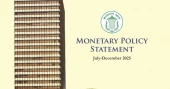
Bangladesh Bank has unveiled a further tightened monetary policy for the first half (H1) of the current fiscal year 2025-26, signalling a continued strong focus on curbing inflation and ensuring macroeconomic stability.
The central bank aims to bring inflation below 7 percent while targeting a Gross Domestic Product (GDP) growth rate of 5.5 percent.
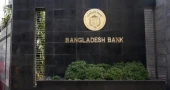
Governor Dr Ahsan H Mansur announced the new Monetary Policy Statement (MPS) at a press conference held at the Bangladesh Bank headquarters in Motijheel today (Thursday).
Addressing the media, Governor Mansur said interest rates could see adjustments downwards in this July-December period, contingent on various economic indicators.
He reiterated the central bank's commitment to maintaining a flexible exchange rate regime, emphasising its role in stabilising the exchange rate, building foreign reserves and mitigating external shocks.
To tackle the persistent challenge of rising non-performing loans (NPLs), Bangladesh Bank has launched significant reform initiatives. These measures are designed to avert a potential crisis and ensure long-term economic stability.
The Governor highlighted that the effective implementation of ongoing initiatives, coupled with forthcoming measures and robust resolutions for distressed banks based on Asset Quality Review (AQR) findings, will be crucial in restoring good governance practices and bolstering stakeholder confidence in the banking system.
Bangladesh Bank likely to ease monetary policy amid interest rate shift
In a key development for banking supervision, Bangladesh Bank is set to roll out a Risk-Based Supervision (RBS) system for banks starting from January 2026.
This initiative aims to bring about qualitative changes in how banks are monitored and regulated, moving away from a traditional compliance-based approach.
While acknowledging a recent downward trend in inflation, Governor Mansur cautioned that it remains above the target level.
He mentioned the uncertainty surrounding the persistence of this deceleration, citing ongoing cost pressures from the nominal depreciation of the Taka, triggered by reciprocal tariff measures from the USA.
Bangladesh Bank set to announce a new monetary policy on Thursday
"Therefore, Bangladesh Bank is likely to maintain its tight monetary policy in H1FY26 to contain inflation below 7 percent, while still supporting productive economic activities," stated the monetary policy statement, underscoring the central bank's balanced approach.
Deputy Governors, Executive Directors and other senior officials of Bangladesh Bank were present at the press conference.
7 months ago

DSE turnover hits Tk 1,063cr as indices soar, but most stocks slip
Dhaka Stock Exchange (DSE) on Thursday wrapped up the week on a high note with turnover crossing the Tk 1,000-crore mark, despite the majority of listed companies witnessing a drop in share prices.
From the opening bell, trading momentum was bullish, with the DSE crossing Tk 500 crore in turnover before noon.
By the end of the session, the total turnover stood at Tk 1,063 crore — one of the highest in recent months.
All three key indices ended higher. The benchmark DSEX surged 91 points, while the Shariah-based DSES added 16 points. The blue-chip DS30 index advanced by 48 points.
Out of the 394 issues traded on the DSE, 150 advanced, 167 declined and 77 remained unchanged. Despite the rise in the benchmark indices, most stocks in the A, B, and Z categories ended in the red.
Stocks open higher in DSE, CSE on week’s last trading day
Within the A-category, which includes fundamentally strong and dividend-paying firms, 101 issues gained while 82 lost value and 37 remained flat.
The block market saw transactions of Tk 30 crore across 36 companies, with Khan Brothers dominating the segment, offloading shares worth Tk 8 crore.
Trust Bank topped the DSE’s gainers’ list with a 9.90% rise, while Midland Bank faced the steepest fall, shedding over 9%.
CSE Follows the Uptrend
The Chittagong Stock Exchange (CSE) also witnessed a positive session, with its main index climbing 281 points.
Of the 229 issues traded, 107 advanced, 87 declined, and 35 remained unchanged. However, turnover dipped to Tk 11 crore from the previous day’s Tk 23 crore.
DBH Finance led the CSE with a 10% gain, while Midland Bank also found itself at the bottom here, losing over 8%.
7 months ago
Bangladesh Bank issues cybersecurity alert for banks, financial institutions
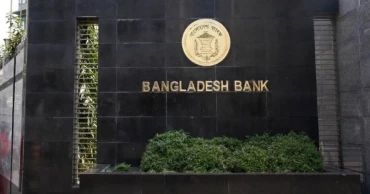
Bangladesh Bank has issued an alert warning banks and financial institutions of possible cyberattacks and urged them to take precautionary measures.
In a press release signed by SM Tofael Ahmad, Additional Director of the central bank’s ICT department, the central bank said that future cyberattacks could disrupt critical information infrastructure (CII), banking and financial services, healthcare as well as public and private sector operations.
Citing various sources, the central bank noted that banks and financial institutions might become targets of cyberattacks. Institutions have been urged to strengthen their systems in advance, particularly against small and mid-level threats.
Bangladesh Bank likely to ease monetary policy amid interest rate shift
In the notification issued on Wednesday, Bangladesh Bank recommended that all banks and financial institutions update patches on their servers, databases and systems.
Additional recommendations include shutting down unnecessary portals, enforcing least privileged access, implementing the 3-2-1 strategy for data backup and restoration and enabling multi-factor authentication (MFA) for critical systems.
The central bank also instructed institutions to act promptly if any irregularities are found in their IT systems.
This involves deploying Security Information and Event Management (SIEM) systems and Network Intrusion Detection Systems (NIDS), among other protective measures.
To detect and prevent threats, Bangladesh Bank advised the use of Endpoint Detection and Response (EDR) antivirus software, along with regular updates of threat signatures. IT teams have been directed to remain vigilant at all times, ensuring they are prepared to respond promptly in the event of a cyberattack.
Trump announces 25% tariffs, penalty on India
The central bank also stressed the need to report any suspicious logins, unauthorised file or data modifications to relevant authorities without delay. Banks have been asked to closely monitor external connections and to restrict and review remote access, VPNs and privileged accounts.
Besides, all banks and financial institutions have been instructed to establish 24/7 monitoring of their Security Operation Centers (SOCs) with adequate manpower.
Emphasising the need for operational resilience, Bangladesh Bank urged institutions to maintain a robust fallback system, including regularly updated Business Continuity Plans (BCP) and Disaster Recovery Plans (DRP).
7 months ago

Stocks finally rebound in DSE-CSE after two-day slump
After two consecutive sessions of losses, the stock markets in Dhaka and Chattogram witnessed a rebound on Wednesday, with most listed companies seeing gains.
At the end of the day’s trading, the benchmark DSEX index of the Dhaka Stock Exchange (DSE) gained 53 points.
The Shariah-based DSES index advanced by 7 points while the blue-chip DS30 index rose by 21 points.
Out of the 398 companies that traded on the DSE, share prices of 253 advanced, 67 declined, and 78 remained unchanged.
Across all categories—A, B, and Z—most companies posted price gains. Notably, in the A-category, which comprises companies with consistent dividend payments, 149 scrips advanced, while 37 declined and 34 remained unchanged.
In the block market, 30 companies saw trades worth Tk 17 crore, with Marico Bangladesh topping the list by selling shares worth Tk 3 crore.
The day’s total turnover on the DSE stood at Tk 743 crore, up from Tk 717 crore in the previous session.
Rahim Textile Mills topped the gainers’ list with a 9.76% rise, while Midland Bank fell the most, shedding over 8%.
CSE also Edges Higher
The Chittagong Stock Exchange (CSE) also ended the day in positive territory, with the overall CASPI index gaining 61 points.
Of the 217 issues traded on the CSE, 107 advanced, 72 declined and 38 remained unchanged.
The total turnover on the port city bourse stood at Tk 23 crore, down from Tk 29 crore in the previous session.
Sandhani Life Insurance was the top gainer on the CSE with a 10% price hike, while Social Islami Bank faced the steepest fall, dropping over 9%.
7 months ago
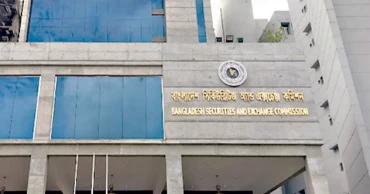
Shibli Rubayat and Sheikh Shamsuddin banned from capital market
Shibli Rubayat-Ul-Islam, former chairman of the Bangladesh Securities and Exchange Commission (BSEC), has been declared 'persona non grata' in the capital market for life, while Sheikh Shamsuddin Ahmed, a former commissioner, has been banned for five years.
This significant decision was made on Wednesday at the 965th board meeting of the BSEC Commission, according to a press release.
The proposal for Bangladesh Export Import Company Limited's (Beximco) Tk3,000 crore, five-year Beximco Secured Convertible or Redeemable Asset-Backed Green Sukuk was approved at the 779th commission meeting held on June 23, 2021.
The proposed Green Sukuk was approved for issuance of Tk 2,250 crore through private placement (Tk 750 crore from existing shareholders and Tk1,500 crore from other investors excluding existing shareholders), and Tk 750 crore through an initial public offering (IPO).
The funds raised through this Sukuk were intended to expand Beximco Limited's textile unit operations and be utilised in two of its subsidiary renewable energy projects: Teesta Solar Limited and Karatoya Solar Limited, for environmental development and conservation.
Each unit of the Sukuk had a face value of Tk 100, and the minimum subscription amount was Tk 5,000.
Beximco served as the originator, Beximco Green Sukuk Al-Istisna'a as the issuer or trust/SPV, Investment Corporation of Bangladesh as the trustee, City Bank Capital Resources Limited and Agrani Equity & Investment Limited as the issue managers, M. J. Abedin & Co., Chartered Accountants as the auditor, and Emerging Credit Rating Limited (ECRL) as the credit rating agency for this Sukuk.
For this purpose, Beximco was granted exemption by the commission from certain rules of the relevant regulations.
However, the application for the issuance of this Sukuk was approved by the commission on June 23, 2021, even before the exemption notification was published in the government gazette.
The Commission then issued a consent letter on July 8, 2021.
Subsequently, the public subscription period for the Sukuk was extended unethically and through abuse of power from August 23, 2021 (the last subscription period according to regulations) to September 30, 2021. An investigation and inquiry into this matter was conducted by the 'Capital Market Inquiry and Investigation Committee,' and its report has been submitted to the Commission.
Considering these relevant issues, the Commission has taken the following decisions:
It has been decided to declare Shibli Rubayat-Ul-Islam, the then chairman of the BSEC, 'persona non grata' in the capital market for life, and Sheikh Shamsuddin Ahmed, the then commissioner, 'persona non grata' for five years.
Furthermore, it has been decided that an additional investigation by the commission will be conducted on the Beximco Secured Convertible or Redeemable Asset-Backed Green Sukuk, building upon the inquiry and investigation already carried out by the 'Capital Market Inquiry and Investigation Committee.' Necessary action will be taken against all involved in the irregularities and rule violations related to the Beximco Secured Convertible or Redeemable Asset-Backed Green Sukuk.
7 months ago
Bangladesh Bank likely to ease monetary policy amid interest rate shift
Bangladesh Bank is expected to revise its long-standing contractionary monetary policy, with an eye towards easing interest rates.
This crucial shift comes in response to lower-than-desired credit growth observed in the previous fiscal year, a direct consequence of the tight monetary stance.
For the past three fiscal years, the central bank has maintained a contractionary policy, primarily aimed at taming persistent inflation and stabilising the volatile foreign exchange market.
The central bank’s Monetary Policy Committee (MPC) now suggests measures to reduce interest rates in a bid to stimulate credit flow and boost employment.
Bangladesh sees sharp drop in bank deposits over scams, mergers: Report
Sources close to the MPC indicate that inflation is on a decreasing trend and has already fallen to a significant level.
This positive development is paving the way for a review of the contractionary policy, which economists and policymakers believe has severely impacted investment, credit growth and overall employment in recent fiscal years.
"The monetary policy significantly affected investment, credit growth and employment in the previous fiscal years. The central bank must now consider these major macroeconomic issues in the new monetary policy," said a prominent economist associated with the MPC.
The forthcoming monetary policy announcement on Thursday will reveal the extent of the central bank's adjustments.
GED projects cautious optimism for Bangladesh economy in FY2026
This move signals a potential shift in focus from solely inflation containment to balancing price stability with economic growth and job creation.
Types of Monetary Policy
Expansionary (Loose) Monetary Policy aims to stimulate economic growth, reduce unemployment and prevent deflation. This involves measures like lowering interest rates, buying government securities and reducing reserve requirements.
Contractionary (Tight) Monetary Policy aims to curb inflation and cool down an overheating economy. This involves measures like raising interest rates, selling government securities, and increasing reserve requirements.
The primary goal of monetary policy is to achieve macroeconomic objectives such as:
Price Stability: Keeping inflation low and stable. This is often the most important objective as high and volatile inflation erodes purchasing power and creates economic uncertainty.
Bangladesh needs to adapt strategically in order to navigate complex challenges of 2025: ICCB
Economic Growth: Promoting sustainable economic expansion and a high rate of employment.
Financial Stability: Ensuring the health and stability of the financial system, including banks and financial markets.
Exchange Rate Stability: Managing the value of the domestic currency in relation to trade with other currencies.
How Monetary Policy Works
Central banks implement monetary policy by adjusting the availability and cost of money in the economy. They do this primarily through various tools that influence interest rates, bank lending and the overall money supply. The mechanism through which these actions affect the economy is known as the monetary transmission mechanism.
Banking sector needs $35 billion for reconstruction as 80% funds embezzled: Finance Advisor
7 months ago

Stocks see gains in early trade on DSE-CSE
Dhaka and Chattogram bourses witnessed an upward trend in the early hours of Tuesday’s trading session, with most company shares advancing.
During the first two hours of trading, the benchmark DSEX index of the Dhaka Stock Exchange (DSE) rose by 21 points.
The Shariah-based DSES index gained 2 points, while the blue-chip DS30 index advanced by 7 points.
Prices increased for 200 companies, while 110 saw a decline and 85 remained unchanged.
The DSE recorded a turnover of Tk 340 crore during the first half of the session.
Trading begins in DSE, CSE on a positive note
The upward momentum was mirrored in the Chittagong Stock Exchange (CSE), where the overall index gained 10 points.
Out of 149 companies traded on the CSE, 53 advanced, 76 declined, and 20 remained unchanged.
The turnover at the CSE stood at Tk 4 crore in the first two hours.
7 months ago

Bangladesh sees sharp drop in bank deposits over scams, mergers: Report
Bangladesh’s banking sector is now witnessing a reversal in deposit growth, as total deposits shrink in the wake of widespread corruption and soaring loan defaults in several banks, according to the latest report from the Bangladesh Bank.
The report says the total amount of deposits in the banking sector stood at Tk 20.18 lakh crore at the end of May 2025.
Public anxiety over potential bank mergers and a history of financial irregularities and loan scams have prompted depositors to withdraw funds, causing deposit growth to fall below 9 percent, said banking sector experts.
While this represents an 8.74 percent increase compared to the same period last year, the growth rate has been consistently declining since March, when it was 9.51 percent.
GED projects cautious optimism for Bangladesh economy in FY2026
The number of banks experiencing a decline in deposits has also risen, from 11 in March to 16 in May.
The report indicates that public panic spread following the exposure of financial distress in several banks after a government change on August 5, 2024.
This led to increased pressure for deposit withdrawals. Although central bank liquidity support somewhat stabilised the situation, renewed uncertainty surrounding mergers of some banks.
The situation has been exacerbated by discussions surrounding the potential mergers of several banks, including EXIM Bank, Social Islami Bank, First Security Islami Bank, Global Islami Bank and Union Bank, along with fears of their true financial conditions being revealed.
Other banks have also experienced increased pressure for deposit withdrawals.
Bangladesh needs to adapt strategically in order to navigate complex challenges of 2025: ICCB
The Eid season typically sees an increase in cash circulation, but this year it reached a record high. Before Eid-ul-Azha on June 5, 2025, the amount of cash in circulation was Tk3.39 lakh crore, the highest in the country's history. This compares to Tk3.17 lakh crore in May and Tk 3.25 lakh crore before Eid-ul-Azha last year.
The managing director of a private bank, who preferred to remain anonymous, told UNB, "If merger or liquidation decisions are not made quickly and clearly, public confidence will erode. This could create a crisis for the banking sector."
Meanwhile, Bangladesh Bank data shows that the total amount of loans in the banking sector stood at Tk17.19 lakh crore at the end of May, a 7.31 percent increase year-on-year.
This places the loan-to-deposit ratio (ADR) at 81.02 percent, though for some distressed banks, this ratio is significantly higher.
Banks experiencing the most significant deposit declined include Basic Bank, Social Islami Bank, EXIM Bank, ICB Islamic Bank, National Bank, First Security Islami Bank, Global Islami Bank, Bangladesh Commerce Bank, Modhumoti Bank, Union Bank and Community Bank.
Banking sector needs $35 billion for reconstruction as 80% funds embezzled: Finance Advisor
Besides, foreign-owned banks such as Alfalah, State Bank of India, Woori, Habib and Standard Chartered Bank have also seen a decrease in deposits.
But, foreign banks typically have lower deposit trends due to their reliance on LC and commission-based business.
Dr Zahid Hussain, a former lead economist for the World Bank's Dhaka office, told UNB that the banking sector is facing a severe crisis of confidence due to a history of irregularities and corruption, large loan disbursements to single groups and a surge in non-performing loans, often fueled by political patronage.
The central bank has already provided approximately Tk 30,000 crore in special loans to troubled banks.
The five banks designated for potential mergers reportedly have a staggering Tk1.47 lakh crore in non-performing loans, accounting for nearly 77 percent of their total loans.
Financial sector 'will never recover' under prevailing judicial system: Ahsan Mansur
Finance Adviser Dr Salehuddin Ahmed recently said Bangladesh's banking sector requires an estimated US$35 billion for its reconstruction.
He said the International Monetary Fund (IMF) had initially estimated $18 billion, but the current assessment suggests more than double that amount is now needed.
Dr Salehuddin highlighted the severity of the economic crisis, stating that when the new government took office last August, such an economic disaster was unprecedented globally.
He revealed that 80 percent of the funds in the banking sector have been embezzled.
As an example, he explained that if a bank has Tk 20,000 crore in outstanding loans, Tk 16,000 crore of that amount has been siphoned off.
7 months ago
GED projects cautious optimism for Bangladesh economy in FY2026
In its latest monthly economic update, the General Economics Division (GED) of the Bangladesh Planning Commission has projected cautious optimism for the country’s economic trajectory in FY2026, highlighting both the encouraging trends and persistent structural challenges.
According to the GED’s assessment, the first month of FY2026 shows early signs of economic rebound, although growth projections remain modest due to ongoing political uncertainty, subdued investment and industrial activity, and global headwinds, including the recent imposition of reciprocal tariffs by the United States.
Multilateral institutions have revised their forecasts downward for the current fiscal.
The World Bank projects growth between 3.3% and 4.1%, while the Asian Development Bank (ADB) estimates it at 3.9%.
A moderate rebound to 5.1%-5.3% is anticipated in FY2026.
The report warns of continued low levels of foreign direct investment (FDI), driven by eroding investor confidence, a tight fiscal space due to poor revenue mobilisation, and limited public investment.
Bangladesh economy falters; growth slows, factories shut, jobs lost
A provisional National Board of Revenue (NBR) estimate indicates a revenue shortfall, compounded in June by temporary work stoppages over the proposed restructuring of the tax authority.
GED underscores that remittance inflows, export performance, and manufacturing growth will be key to supporting GDP.
It, however, flags a number of threats, including low reserves, changing global buyer preferences and inflationary pressures.
Food inflation remains a key concern despite an overall easing trend. Rice prices, particularly medium and coarse varieties, surged in June, with rice alone contributing 50% to food inflation.
The report cites rising input costs, post-harvest losses, transport costs, and speculative hoarding as possible reasons, calling for urgent supply chain scrutiny.
The banking sector also continues to struggle with decelerating deposit and credit growth.
Private sector credit has remained below 8% for six straight months, weighed down by inflation, tight monetary policy, and reduced import financing.
The GED recommends structural reforms, investment incentives, and economic policy reorientation to restore momentum and build resilience in the face of ongoing domestic and global uncertainties.
7 months ago