local-business

Forex reserves stand at $30.3 billion after ACU payment
Bangladesh’s foreign exchange reserves stood at US$30.3 billion on Sunday after the payment of $1.5 billion in import bills of the last two months—July and August—through the Asian Clearing Union (ACU).
In May-June 2025, the central bank paid $2.02 billion in ACU bills.
After the ACU settlement, the central bank's gross foreign exchange reserves stood at $30.30 billion. In the account of the International Monetary Fund, the forex reserves stood at $25.39 billion. The gross reserve at this time last year was $19.46 billion.
ACU is an international transaction settlement system. This system settles transactions between Bangladesh, Bhutan, India, Iran, the Maldives, Myanmar, Nepal, Pakistan, and Sri Lanka. In the system, the central bank of the respective countries pays their import liabilities every two months.
8 months ago

Stock indices edge up in first hour at DSE, CSE
The country’s two stock exchanges witnessed a rise in the first hour of trading with most company shares advancing.
At the Dhaka Stock Exchange (DSE), the benchmark index DSEX gained 4 points in the first hour, while the Shariah-based DSES added 3 points.
The blue-chip DS30, however, slipped 2 points.
Of the issues traded, 213 advanced, 107 declined and 69 remained unchanged.
The turnover at the DSE crossed Tk 400 crore during the period.
Stock indices rise in early trading at DSE, CSE
The Chittagong Stock Exchange (CSE) also saw a modest rise, with its overall index advancing 3 points.
Out of 105 issues traded, prices rose for 51, fell for 45 and remained unchanged for 9.
The turnover at the CSE stood at Tk 2 crore in the first hour.
9 months ago
Dhaka bourse sees highest turnover in 12 months
The Dhaka Stock Exchange (DSE) recorded its highest turnover in a year on Wednesday, surpassing the previous peak seen on August 11, 2024.
On the fourth trading day, shares and units worth Tk 1397 crore changed hands on the DSE, the highest single-day turnover so far in 2025.
Earlier, the highest turnover was Tk 2010 crore recorded on August 11 last year.
The DSE’s key index, DSEX, gained 10 points, while the Shariah-based DSES and the blue-chip DS30 indices closed almost flat.
Of the 396 companies traded, prices rose for 184 issues, declined for 165, and remained unchanged for 47.
Market data showed most ‘A’ category stocks, which generally offer the highest dividends, advanced, while ‘B’ and ‘Z’ category shares saw losses.
In the block market, 28 companies traded shares worth Tk40 crore, with Khan Brothers topping the list with Tk 12 crore in transactions.
Stock indices rise in early trading at DSE, CSE
Intech Limited led the DSE gainers with over 9% rise, while HR Textile declined the most, losing 10%.
The upward momentum was mirrored in the Chittagong Stock Exchange (CSE), where the broad index rose by 78 points.
Among the 242 companies traded on the CSE, prices increased for 123, declined for 94, and remained unchanged for 25.
The turnover on the CSE stood at Tk21 crore, up from Tk14 crore in the previous session.
Intech Limited also topped the CSE gainers with a 10% rise, while Fareast Finance and Investment Ltd slumped 10% to become the worst performer.
9 months ago
Unilever, Nestlé among 10 MNC to enter bourse; DBA lauds BSEC initiative
The Dhaka Stock Exchange Brokers’ Association of Bangladesh (DBA) has appreciated Bangladesh Securities and Exchange Commission’s (BSEC’s) decision to directly list 10 multinational companies, including Unilever and Nestlé, in the country’s capital market.
DBA President Saiful Islam said the move has instilled confidence among investors and market intermediaries regarding the inclusion of large domestic and foreign companies in the market.
“Effective implementation of the commission’s initiative to list domestic and foreign companies in the stock market will increase product availability, meet investor demand, and strengthen our capital market into a more robust and prosperous platform,” Saiful said.
For a long time, he said, no high-quality companies have entered the bourse, which has limited meaningful participation from domestic and foreign investors, leaving the market less stable and sustainable.
“In the greater interest of the capital market, we have actively engaged with relevant government ministries, BSEC, DSE, and other stakeholders through correspondence, meetings, seminars and dialogue sessions to advocate for listing quality domestic and foreign companies. The benefits of these efforts are now coming to fruition,” Saiful added.
The interim government has taken steps to directly list 10 multinational companies, including Unilever, Novartis, Syngenta, and Nestlé Bangladesh, on the stock market.
Stock indices rise in early trading at DSE, CSE
Last month the Ministry of Finance sent letters to the Ministry of Industries, Ministry of Commerce, and the Power and Energy Division to take the necessary measures for implementation.
Sector analysts said the entry of multinational companies into the capital market is expected to have a positive impact on investment and the economy.
It could also reduce government reliance on debt while improving overall market valuation, they said.
9 months ago
BB’s dollar purchases hit $995m in 1.5 months
Bangladesh Bank has bought a total of $995 million from commercial banks over the past one and a half months through eight dollar auctions, as part of its efforts to stabilise the exchange rate and support remittance and export flows.
Bangladesh Bank has purchased $47.5 million from eight commercial banks through a multiple price auction, reinforcing its intervention in the foreign exchange market to stabilise the taka and support remittance and export inflows.
The auction was held on Tuesday, when the central bank bought the greenback at rates ranging between Tk121.70 and Tk121.75, with the cut-off set at Tk121.75, said Bangladesh Bank Executive Director and spokesperson Arief Hossain Khan.
With this, the central bank’s total dollar purchase from commercial banks over the past one and a half months has reached $995 million through eight auctions.
Bangladesh Bank launched the auction mechanism on July 13, when it bought $171 million at Tk121.50. This was followed by $313 million on July 15 at the same rate.
Bangladesh Bank buys $83 million from 11 banks to keep dollar stable at Tk 121.50
On July 23, the central bank bought another $10 million at a higher cut-off of Tk121.95. It purchased $45 million more on August 7 at Tk121.35-121.50, and $83 million on August 10 at Tk121.47-121.50.
Continuing its intervention, the central bank on August 28 bought $149.5 million at a cut-off of Tk121.70.
According to the latest data, Bangladesh’s foreign exchange reserves stood at $31.39 billion in gross terms and $26.40 billion under the BPM6 accounting method as of September 2.
Officials said the central bank’s dollar purchases are aimed at containing volatility in the forex market while ensuring adequate liquidity for banks handling remittance and export settlements.
9 months ago
BB signs deals with 20 banks, FIs to boost startup financing
Bangladesh Bank has signed participation agreements with 16 scheduled banks and four financial institutions under its Tk 500-crore refinance fund to expand low-cost loans and investments for startup entrepreneurs.
Governor Dr Ahsan H Mansur joined the signing ceremony virtually, while Deputy Governor Nurun Nahar and Executive Director Husne Ara Shikha attended it in person at the central bank headquarters on Tuesday.
On behalf of BB, Mohammad Mostafizur Rahman, director of the SME and Special Programs Department, signed the agreements with managing directors of the participating banks and financial institutions.
FSIBL backs BB’s plan to form ‘United Islami Bank’ through merger
As per the central bank’s master circular issued on July 9, entrepreneurs can now avail refinance loans and investments at a maximum interest/profit rate of 4%.
The circular also raised loan ceilings for startups, setting limits between Tk 2 crore and Tk 8 crore.
The meeting also discussed the formation of an equity investment company involving 52 partner banks to strengthen startup financing.
Nagad to be privatised to boost MFS competition: BB Governor
Officials said the initiative comes as startups increasingly drive innovation, create jobs and attract global investment linkages in line with the Sustainable Development Goals.
The central bank hoped that the refinements will ease financing for promising ventures while accelerating the sustainable growth of the startup ecosystem.
9 months ago
NBR to hold monthly ‘Meet-the-Business’ Session from Sept
The National Board of Revenue (NBR) has decided to hold a ‘Meet-the-Business’ session on the second Wednesday of every month to strengthen trade facilitation through direct stakeholder engagement.
The first session will be held on September 10 at 3pm at the NBR headquarters, according to a press release.
The platform will allow business representatives to directly share field-level concerns related to customs, income tax and VAT with the NBR chairman and members.
NBR officials said the discussions will help the board have a better understanding of operational challenges and work out effective solutions to improve revenue administration and trade services.
Business representatives from different sectors are expected to attend and provide inputs on streamlining procedures and addressing sector-specific issues.
9 months ago
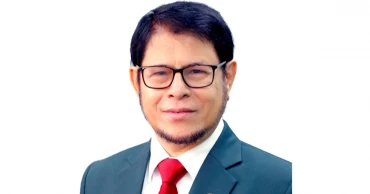
Dr. Kamal Uddin Jasim promoted as AMD of Islami Bank
Dr. M. Kamal Uddin Jasim has been promoted to the position of Additional Managing Director (AMD) of Islami Bank Bangladesh PLC.
Earlier, he also served as Chief Human Resources Officer, CAMLCO, head of operations and development wings and Deputy Managing Director of the bank.
He joined the bank in 1992 as a probationary officer and has since served as head of Dhaka East Zone, head of the Business Promotion & Marketing Division, as well as head of various departments and branches.
Before joining the bank, he was involved in journalism, working with newspapers such as The Bangladesh Observer and Dainik Ajker Kagoj.
He obtained Bachelor’s (Honors) and Master’s degrees in Mass Communication and Journalism from the University of Dhaka, and in 2005, he received a PhD from IBS of the University of Rajshahi.
He is the Treasurer of the Dhaka University Alumni Association and the elected Vice President of the DU Mass Communication and Journalism Alumni Association.
Jasim is also a member of the Asiatic Society of Bangladesh, the Bangladesh Economic Association, and several other national and international social organizations. He has traveled extensively and participated in international training and conferences in the United Kingdom, Australia, New Zealand, Russia, Turkey, China, Singapore, India, Malaysia, Indonesia, Thailand, Saudi Arabia, Oman, the United Arab Emirates, Brunei, Vietnam, the Maldives, Myanmar, Sri Lanka, and other countries, according to a press release.
9 months ago
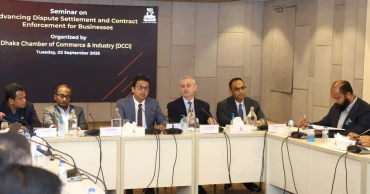
Businesses want special court to dispose 40 lakh commercial disputes pending in courts
Speakers at a seminar highlighted that the delays in resolving trade disputes have significantly impeded foreign and domestic investment in Bangladesh.
They highlighted that the country's lower and higher courts are currently burdened with approximately 40 lakh pending cases, which contributes to a challenging business environment.
Speakers made the remarks while speaking at a seminar on ‘Advancing Dispute Settlement and Contract Enforcement for Businesses’ organized by the Dhaka Chamber of Commerce & Industry (DCCI).
The event, held on Tuesday (September 2), at the DCCI Auditorium, brought together government officials, foreign diplomats, and legal experts to discuss critical reforms needed to improve the business environment.
Commerce Secretary Mahbubur Rahman, the chief guest at the event, said that the legal system's slow pace is making it difficult to attract foreign investment.
“A draft of a new law to create commercial courts is expected to be finalized within the next month. The need for these new courts to be staffed by expert judges to ensure an efficient process,” he added.
The DCCI President, Taskeen Ahmed, stated that as economic activities in the country are growing significantly, disputes related to business contracts, investments, and intellectual property are also increasing.
"Currently, around 40 lakh cases remain unresolved in lower and higher courts. The prolonged judicial processes are hampering both local as well as foreign investment. Although the Arbitration Act was passed in 2001, it has not been implemented effectively,” he said.
He stressed the need for establishing a separate Commercial Court with the appointment of experienced judges and reforming the existing legal framework, which will accelerate the pace of trade and investment.
Michael Miller, Ambassador and Head of Delegation, the European Union in Bangladesh, said that in order to reform the legal process, the EU has been working closely with the government.He expressed that the reform of the legal system will significantly improve the public’s quality of life.
Michael noted that as Bangladesh moves toward LDC graduation and pursues export diversification, the formation of Commercial Courts will be crucial to attract foreign investment. Such courts will facilitate both domestic and foreign investment expansion.
He hoped that the government would prioritize this issue for the greater interest of the economy.
He further stated that strengthening arbitration mechanisms will help reduce the current investment stagnation. He also added that European companies are keen to invest in Bangladesh’s logistics and shipping sectors.
Md. Abdur Rahim Khan, Additional Secretary (Export Wing), Ministry of Commerce & Vice Chairman, Export Promotion Bureau (EPB) said that delays in resolving trade disputes not only hinder FDI attraction but also negatively impact export expansion.
Besides, due to this, Bangladesh is gradually losing its place in global trade, he said. To overcome this, he proposed forming “legal institutions” outside traditional courts to resolve disputes through negotiations in a comparatively shorter time, he said.
Vikna Rajah, Co-Head, South Asia Desk, Rajah and Tann, Singapore, highlighted that due to strong legal structures, skilled human resources, strict law enforcement, and robust commercial dispute settlement mechanisms, Singapore continues to attract high levels of foreign investment.
He stressed the need for comprehensive legal reforms, the establishment of specialized commercial courts, and revision of the Arbitration Act in Bangladesh to attract more foreign investment.Judge Tareque Muajjem Hussain, Special Officer (Additional District Judge), Special Officer to the
Chief Justice of Bangladesh (Additional District Judge), stressed the need to appoint experienced judges specialized in commercial disputes along with proper training, which will ensure smooth and faster dispute resolution.
Barrister Md. Sameer Sattar and Rizwan Rahman, former Presidents of DCCI, Md. Ariful Haque, Director General, Bangladesh Investment Development Authority (BIDA), K A M Majedur Rahman, CEO of Bangladesh International Arbitration Centre (BIAC), Md. Salem Sulaiman, vice president of DCCI, members of the Board of Directors, and stakeholders from relevant sectors were also present at the event.
9 months ago
BSEC cuts BO account maintenance fee
The Bangladesh Securities and Exchange Commission (BSEC) has approved a proposal to reduce the maintenance fee for Beneficiary Owners (BO) accounts of capital market investors.
The approval came at the commission’s 971st meeting held on Tuesday, with BSEC Chairman Khondoker Rashed Maqsood in the chair, according to a press release signed by BSEC Director and Spokesperson Abul Kalam.
As per the new decision, the annual maintenance fee for BO accounts will be Tk 150.
The amount will be equally distributed among the depository, depository participants (DPs) and the commission, with each receiving Tk 50.
The new rate will come into effect for the fiscal year 2025-26 after publication in the official gazette. Investors will, however, continue to pay Tk 450 as per the previous rule for the earlier years.
Meanwhile, the deadline for payment of BO account maintenance fees has been extended again until October 15.
Earlier, following an appeal from Central Depository Bangladesh Limited (CDBL), the deadline had been extended to August 31.
9 months ago