local-business
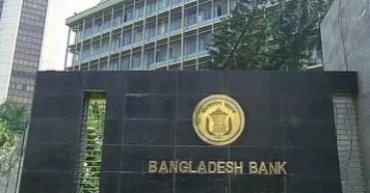
Bank ordinance gazette published keeping provision to take over any bank
To resolve the ongoing crisis in the banking sector, the government has made the ‘Bank Resolution Ordinance 2025’, which has been published as a gazette notification.
The ordinance is empowering Bangladesh Bank, so stricter and more organised steps can be taken to maintain the stability of the banking sector, as stated in the introduction of the ordinance.
Bangladesh Bank can take over any bank, including and financial institutions to bring stability to these institutions.
Bangladesh Bank to release newly designed banknotes ahead of Eid
To this end, the 67-page Bank Resolution Ordinance, 2025 was published in the form of a gazette on Friday (9 May), a holiday. Earlier, on 17 April, the advisery council approved the draft of the ordinance.
The new provision states that the central bank can temporarily take over any scheduled bank or financial institution, including any Islamic banks, under government ownership. For this, Bangladesh Bank can issue an order to transfer one or more shares.
However, the recipient of the shares must be a government-owned institution.
According to the ordinance, if the owner of a bank misuses the bank's assets for personal gain or resorts to fraud, then Bangladesh Bank can take any action against that bank through a resolution.
If necessary, there will be an opportunity to appoint a temporary administrator in the bank, reinvest capital, transfer assets and shares to a third party, and suspend operations partially or completely.
Bridge Bank Concept and Liquidation Process:
As part of the restructuring of a weak bank, an opportunity has been provided for establishing a "bridge bank", which can also be sold at a later date. If it is necessary to completely close the bank's operations, Bangladesh Bank can take the initiative for liquidation through the court.
In this case, a time limit has also been set for the appointment of a liquidator and settlement of liabilities.
Personal liability and fines:
The liability of the persons involved in the failure of the bank has been determined, and it has been said that if the bank suffers losses as a result of the actions or decisions of any person, he will be personally liable.
In addition, a provision has been made for imposing a fine of up to Tk50 lakh and an additional penalty of Tk5,000 for each day of violation of the ordinance.
Inter-institutional Council for Crisis Management:
A seven-member ‘Banking Sector Crisis Management Council’ will be formed to deal with the crisis in the banking sector, headed by the Governor of the Bangladesh Bank. The other members are the Finance Secretary, the Secretary of the Financial Institutions Division, the BSEC Chairman, the Legislative Secretary, and two Deputy Governors of the Bangladesh Bank.
The council will meet every three months and prepare emergency crisis plans.
1 year ago
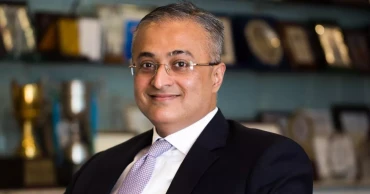
Standard Chartered Bangladesh appoints Enamul Huque as Country Chief Risk Officer
Standard Chartered Bangladesh has appointed Enamul Huque as its Country Chief Risk Officer (CRO).
In his new role, Enam will also concurrently serve as Senior Credit Officer for the Corporate and Institutional Banking (CIB) portfolio.
Enam brings with him over 26 years of extensive leadership experience in the banking industry, according to a press release.
Standard Chartered Bank clinches “Best International Bank in Bangladesh” award
Following professional engagements with globally reputed organisations like HSBC and KPMG, he joined Standard Chartered in 2001.
Since then, Enam has served across multiple key positions within Standard Chartered, encompassing Local Corporates, Commodity Traders and Agribusiness, Global Subsidiaries, and Financial Institutions. Most recently, Enam successfully led Coverage for Corporate Clients.
Standard Chartered Bangladesh launches Freelancer Account
Prior to this, he was instrumental in providing strong leadership to the whole Corporate, Commercial & Institutional Banking segment. Enam significantly contributed to delivering record performances while maintaining low impairment in a dynamic economic environment.
Naser Ezaz Bijoy, Chief Executive Officer, Standard Chartered Bangladesh, said, " His extensive experience in client coverage has provided him with unique insights into client-specific risks and opportunities, making him ideally suited to strengthen our risk management framework.”
1 year ago

Shams Mahmud re-elected BTCCI president
Shams Mahmud has been re-elected president of the Bangladesh-Thai Chamber of Commerce & Industry (BTCCI) for 2025-2027.
He was elected through the 19th Annual General Meeting (AGM) of the organization held at Gulshan Club Ltd on Saturday, said a statement.
Md. Munir Hossain and Hossain A Sikder have been elected as senior vice president and vice president respectively along with Tanvir Ahmed of Sheltech Group, director (administration) and Md. Ahsanuz-zaman of Spectra Hexa, director (finance) for the same period.
The other newly elected directors are Md. Salem Sulaiman of Massons Group, Razzak Sattar of Utha Group, Md. Ashikur Rahman of TAD Sourcing, Anowar Hossain Manik of Textown Group, Chin Phuengsab-chaikul of SCG International, MK Karim Antu of Pentagon Group, Ameer Chowdhury of ABC Group, Mahmud Hasan of Siam City Cement, Sumaiya Noor Chowdhury of KN-Harbour and Hafiz U Biplob of United HVAC Ltd.
Shahjahan Khan re-elected BTCCI President
Shams Mahmud is a leading entrepreneur in the textile and readymade garments sector in Bangladesh. He is the managing director of Shasha Denims Ltd, Shasha Garments and Shasha Textiles and director of EOS Textiles Ltd, Track Innovative Technologies Ltd. and Fly Dhaka Airlines Ltd.
He also holds the post of the secretary general of the Consular Corps Bangladesh (CCB).
The businessman was a former president of the Dhaka Chamber of Commerce & Industry (DCCI), a former Director of BGMEA and Former Vice President of the Bangladesh-Philippines Chamber of Commerce & Industry (BPCCI).
1 year ago
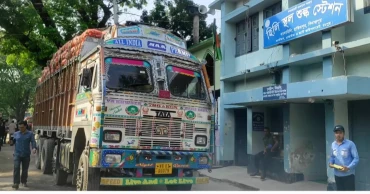
Business activities through Hili port suspended on Buddha Purnima
Export and import activities between Bangladesh and India through the Hili land port in Dinajpur remained suspended on Sunday on the occasion of Buddha Purnima.
But, the movement of travellers with valid documents, including passports, continued as usual.
Md Ferdous Rahman, President of the Hili Customs C&F Agents Association, said traders from both countries decided to halt import and export operations from morning till evening in observance of Buddha Purnima, a public holiday.
Trade through Hili port resumes after Eid holiday
Besides, loading and unloading inside the land port were suspended, he said, adding that business activities would resume on Monday.
Hili Immigration Checkpost officer-in-charge Ariful Islam said the movement of travellers with valid documents remained unaffected.
1 year ago

Gold price decreased by Tk1050 per bhori from Sunday
Bangladesh Jewelers Association (Bajus) has reduced the price of gold by Tk1050 per bhori, to be effective from Sunday.
According to the new price, the price of a bhori of the good quality 22-carat gold will be Tk 1,70,761.
On Saturday, good quality gold was sold for Tk 1,71,811 per bhori.
The Bajus notification stated that the price of pure gold (acid gold) has decreased in the local market. As a result, the new price of gold has been determined considering the overall situation.
According to the new prices, the price of the best quality or 22-carat gold per bhori (11.664 grams) has been fixed at Tk170,761, 21-carat gold per bhori at Tk1,63004 , 18-carat gold per bhori at Tk1 39711 and the price of traditional gold per bhori at Tk115532.
Although the price of gold has increased, the price of silver has remained unchanged.
1 year ago

Mohammad Hatem-led panel wins all director posts of BKMEA election
Mohammad Hatem-led panel was elected in all 35 directors post in the election of Bangladesh Knitwear Manufacturers and Exporters Association (BKMEA).
He led Progressive Knit Alliance in BKMEA election for 2025-27.
BGMEA election to be held May 28
The Election Committee Chairman Shafiullah Chowdhury announced the result tonight. The vote was held at three centres in Narayanganj, Dhaka, and Chattogram.
Newly elected director Fakir Kamruzzaman Nahid, managing director of Fakir Fashions Limited, said, "Tomorrow [11 May], the new board will elect office bearers, including the chairman. As the panel leader, Mohammad Hatem is set to become the chairman.”
Bangladesh's RMG exports show moderate growth, EU remains key market
Among the 38 candidates in total, three independent candidates failed to secure any posts, according to the election results.
1 year ago

Vote to BKMEA Directors held in peaceful atmosphere after 12 years
The vote for the board of directors elections of Bangladesh Knitwear Manufacturers and Exporters Association (BKMEA) for 2025-27 was completed in a peaceful manner in Dhaka and Narayanganj today.
Over a decade, the election of BKMEA was held in a free and fair environment as the Osman Family remained hidden after political change in the country.
Voting for the election began in a festive atmosphere at 9 am today, Saturday. Continuous voting until 5pm.
Voting for this election is underway at two centers in BKMEA's own building at Bangla Motor in the capital Dhaka and Chashara in Narayanganj city.
Earlier, such formal voting was organized for the board of directors election of the organization in 2012.
Young doctors urge to cut cigarette price tiers from four to three to curb consumption
Out of 572 voters in this year's BKMEA election, 272 are in Narayanganj, 224 in Dhaka and 76 in Chittagong. Voters can vote at any center in Dhaka and Narayanganj as per their convenience.
Although there are 38 candidates for 35 director posts in this election, 35 of them are in the same panel. The Progressive Knit Alliance panel is headed by the current president of BKMEA, Mohammad Hatem.
Under his leadership, the Progressive Knit Alliance officially announced a 15-point election manifesto two days ago.
Three candidates are contesting the election independently outside this panel. They are former director of BGMEA and managing director of Young For Ever Textile Limited, Rajib Chowdhury, managing director of Zahin Knitwear Limited, Md. Jamal Uddin Mia, and managing director of JS Style BD Limited, Mohammad Nazrul Islam.
Out of the 35 board members elected in the vote, 9 directors including the president, executive president, and seven vice presidents of BKMEA will be elected later.
Progressive Knit Alliance panel leader Mohammad Hatem said that if he wins the election, the new board of directors will do whatever it takes to remove obstacles to the country's knit export sector.
1 year ago

Zannatul Hoque Shapla vows to restore trust in e-commerce sector
Zannatul Hoque Shapla, CEO of Azure Cuisine and a candidate for the Board of Directors (2025–2027) of the e-Commerce Association of Bangladesh (e-CAB), pledged to ensure equal opportunities and rights for all entrepreneurs in the country’s e-commerce sector.
Speaking at a discussion with ICT journalists on Thursday at the Lakeshore Hotel in Gulshan, Dhaka, she emphasised her longstanding commitment to the industry.
"I have been actively involved in e-commerce for many years, though I did not have the opportunity to step into the spotlight until now, she stated. My goal is to ensure that every entrepreneur can operate their business with confidence, to help restore consumer trust, and to enhance the global branding of Bangladeshi e-commerce," she said.
Highlighting the importance of empowering women entrepreneurs, Shapla said through her platform, Soilir Chowa, she has provided small-scale investments and training to 100 women to help them build expertise in e-commerce and f-commerce. She said she aims to expand this initiative further, supporting women in establishing their presence in international markets.
Shapla outlined several key priorities for implementation: creating a safe and secure environment for entrepreneurs to conduct business, restoring consumer confidence, promoting fair competition, Modernising logistics and digital payment systems, establishing member support and capacity-building centres, launching startup funding opportunities and collaborating with the government to formulate e-commerce-friendly policies.
The e-CAB election for the 2025–2027 term will be held on 31 May. A total of 36 candidates are contesting for 11 director positions.
1 year ago

Medical equipment, health tourism, food and agro expositions kick off in Dhaka
Exhibitions on latest innovation on medical equipment, health tourism, food and agro kicked off in the capital on Thursday.
CEMS Global organised
1 year ago
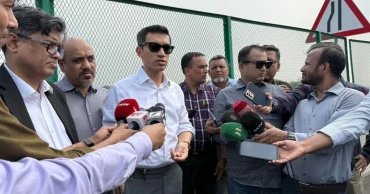
Top global port operators tapped to boost Bangladesh’s infrastructure: BIDA chief
Top international port operators are being brought in to enhance the efficiency and optimal use of Bangladesh’s land and port capacities, said Chowdhury Ashik Mahmud Bin Harun, executive chairman of Bangladesh Investment Development Authority (BIDA) and Bangladesh Economic Zones Authority (BEZA).
He said this while briefing reporters after inspecting Chittagong Port’s operational activities, Laldiar Char Terminal and Bay Terminal project on Thursday.
The BIDA chairman said many ports across the world are operated by leading global operators without compromising their security, Bangladesh can do the same.
“To increase investment and create employment, it is significant to expand and strengthen port operations,” Ashik Chowdhury said, adding that the port and land capabilities of the country will increase several times if the top global operators run those.
Container handling at Ctg Port up 9% in Aug-October: CPA Chairman
Assuring of no safety threats if the foreign operators run the ports, he said, "Our goal is to make Bangladesh a manufacturing hub and for that enhancing port capacity is essential,” said the BIDA chairman.
Regarding the Bay Terminal, he informed that two foreign firms are set to invest around $ 2 billion in phases which will create huge employment opportunities. “Once operational by 2030, the Bay Terminal is expected to bring a major economic transformation across the region,” he hoped.
Rear Admiral SM Moniruzzaman, chairman of Chittagong Port Authority, said the Bay Terminal will be able to accommodate large container vessels (mother vessels) directly and is expected to provide direct employment for 25,000 people alongside creating opportunities for over 100,000 others.
Patenga Container Terminal set to open in June: CPA Chairman
Earlier in the day, the BEZA chairman exchanged views with local business leaders at a hotel and later held a press conference at the Circuit House where he shared the future of port operations and development plans.
1 year ago