local-business

Sonali Bank posts record Tk 8,017 crore operating profit in 2025
State-owned Sonali Bank PLC posted a record Tk 8,017.36 crore in operating profit in 2025, underscoring a sharp turnaround in financial performance driven by higher income, improved governance and lower loan defaults.
The operating profit rose by Tk 2,322.80 crore from Tk 5,694.55 crore a year earlier, Managing Director and Chief Executive Officer Md Shawkat Ali Khan disclosed the figures during a meeting with journalists at the bank’s Motijheel head office on Tuesday.
After provisioning, Sonali Bank expects net profit to exceed Tk 1,500 crore, Khan said, describing the jump in earnings within a single year as a ‘major achievement’ for the country’s largest state-owned lender.
For the first time in years, the bank no longer faces a capital shortfall. Its Capital to Risk-Weighted Assets Ratio (CRAR) has crossed the regulatory minimum of 10 percent, marking what Khan termed a ‘massive victory’ in restoring financial stability.
The bank has also made progress in curbing non-performing loans (NPLs). As of December 25, 2025, the default loan ratio stood at 15.4 percent. Sonali Bank aims to bring NPLs down to 11–12 percent in 2026 and into single digits by 2027.
Read More: Sonali Bank reports Tk5,634 crore operational profit in 2024
Recoveries are already gaining momentum, with Tk 745 crore collected from the bank’s top 20 defaulters, the MD said.
Despite the improved performance, Sonali Bank is still awaiting substantial receivables from government-linked projects. The bank is owed Tk 5,500 crore in letter of credit (LC) commissions related to the Rooppur Nuclear Power Plant project.
Management is also working to reduce loan concentration risks. At present, 37 percent of total loans are concentrated in five branches. Large loan exposures are being redistributed across other branches to minimise institutional risk.
Khan said tighter credit screening and stronger governance have helped prevent major irregularities in recent years, in contrast to past scandals such as the Hallmark loan fraud.
“Public confidence remains high, which is reflected in the steady inflow of deposits,” he said.
Sonali Bank plans to announce new business targets for 2026 soon, with a focus on further boosting income and sustaining performance gains.
1 month ago
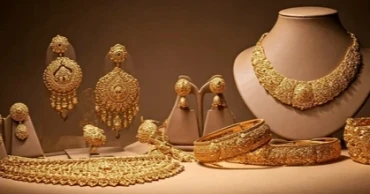
Gold hits record high in Bangladesh as prices jump by Tk4,199 per bhori
Gold prices in Bangladesh soared to an all-time high as the Bangladesh Jewellers Association (BAJUS) raised the price of gold by Tk4,199 per bhori, effective from Tuesday morning.
Under the new rate, the price of 22-carat gold has been set at Tk232,055 per bhori (11.664 grams), the highest level ever recorded in the local market.
BAJUS announced the price hike late Monday night, citing an increase in the price of pure gold (tejabi gold) in the local market. Considering the overall market situation, the association said it has revised gold prices accordingly.
Gold prices in Bangladesh jump nearly Tk 3,000 per bhori in 24 hours
According to the new price structure, 21-carat gold will cost Tk221,499 per bhori, while 18-carat gold has been fixed at Tk189,890 per bhori. The price of gold under the traditional method has been set at Tk156,881 per bhori.
In addition to the announced prices, buyers will have to pay the government-mandated 5 percent VAT and a minimum 6 percent making charge set by BAJUS. However, the making charge may vary depending on the design and quality of jewellery.
BAJUS last revised gold prices on January 10, when it increased the price of 22-carat gold by Tk1,050 per bhori to Tk227,856.
With the latest revision, gold prices have been adjusted six times so far this year, raised on four occasions and reduced twice. In 2025, gold prices were revised a total of 93 times, with hikes on 64 occasions and cuts on 29.
Silver prices have also been increased alongside gold. The price of 22-carat silver has been raised by Tk408 per bhori to Tk5,949.
Man held with 1.3 kg gold at Shahjalal Airport
Under the revised rates, 21-carat silver will sell at Tk5,715 per bhori, 18-carat silver at Tk4,899, and traditional method silver at Tk3,674 per bhori.
This marks the fourth adjustment of silver prices in the local market this year, with prices increased twice and reduced twice. In 2025, silver prices were revised 13 times—upward on 10 occasions and downward three times.
1 month ago

Bangladesh Bank doubles license renewal fee for money changers
Bangladesh Bank has raised the annual license renewal fee for money changers operating nationwide by 100 percent.
Under the new directive from the Foreign Exchange Policy Department-2, the non-refundable fee will increase to Tk 10,000 from the previous Tk 5,000, the central bank said in a circular issued Monday.
The fee hike will take effect on January 15, 2026.
Bangladesh Bank said all other procedures for license renewal remain unchanged.
The circular instructs authorised dealers and licensed money changers to notify their constituents of the change immediately.
1 month ago
Net FDI in Bangladesh jumps over 200 percent in Q3 of 2025: BIDA
Bangladesh recorded a robust surge in net Foreign Direct Investment (FDI) during the July-September quarter of 2025, signaling a significant boost in investor confidence despite global economic uncertainties, said Bangladesh Investment Development Authority (BIDA).
According to the latest data from Bangladesh Bank, net FDI inflows for Q3 (July–September) reached US$315.09 million. This represents a staggering 202 percent year-on-year increase compared to the $104.33 million recorded during the same period in 2024.
The cumulative figures for the year also show a strong upward trend. Total net FDI inflows from January to September 2025 reached $1.41 billion, an 80 percent rise from the $780 million recorded during the first nine months of the previous year.
All major categories of FDI saw marked improvements in the third quarter of 2025-
Equity Investment: Rose by 31.69 percent to $101.12 million (up from $76.79 million).
Reinvested Earnings: Soared by 190.07 percent to $211.47 million (up from $72.90 million).
Intra-Company Loans: Rebounded to a positive $2.49 million, reversing from a negative -$45.36 million in the previous year.
Building on First-Half Momentum
This growth follows a solid performance in the first half of the year. Net FDI in H1 2025 (January–June) increased by more than 61 percent compared to H1 2024. Specifically, the April–June period saw a 11.4 percent year-on-year gain, reaching $303.27 million.
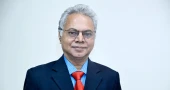
Chowdhury Ashik Mahmud Bin Harun, Executive Chairman of BIDA, noted that these gains reflect a credible pipeline of investment converting into realized inflows.
"These back-to-back quarterly gains highlight that investors are placing their trust in Bangladesh. We expect some moderation in Q4 2025 due to the upcoming elections, but anticipate a rebound post-election, supported by a strong investment pipeline," Shayan said.
Beyond these realized figures, BIDA reported that its dedicated investment pipeline for 2025 has already surpassed $1.5 billion, in addition to traditional registered proposals.
1 month ago
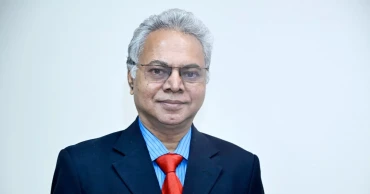
BIBM gets new director general in Dr. Ezazul Islam
Dr Md Ezazul Islam has been appointed Director General of the Bangladesh Institute of Bank Management (BIBM).
The announcement was made on Sunday, marking a significant transition for the country’s premier banking training and research institute.
Dr Islam joins BIBM following an extensive career at Bangladesh Bank spanning over 33 years. Most recently, he served as Executive Director (Grade-1) in charge of the Monetary Policy Department.
During his tenure at the central bank, he was a key member of several high-level committees, including the Monetary Policy Committee, Foreign Exchange Auction Committee and Money Market Operation Committee.
Throughout his three decades of service, Dr Islam has been a central figure in shaping Bangladesh’s financial landscape, said a handout.
He is credited with leading the modernization of the nation’s monetary policy framework and was instrumental in the adoption of the interest rate corridor. His efforts also extended to streamlining money market operations and improving liquidity management.
Dr Islam holds a PhD in Monetary Economics. He has authored more than 35 articles published in peer-reviewed journals both locally and internationally, covering a wide range of topics including debt, exchange rates and macroeconomic issues.
In 2013, his contributions to the financial sector were recognized when he received the Bangladesh Bank Gold Medal Employees’ Recognition Award for outstanding performance.
1 month ago
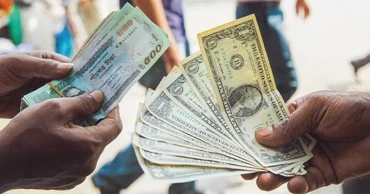
Bangladesh sees $1.12bn in remittances in first 10 days of January
The remittance from Bangladeshi expatriates continued its upward momentum in January, with the country receiving more than US$1.12 billion in the first 10 days of the month.
Bangladesh received $17.39 billion in inward remittances from July to January 10, 2026, in the current fiscal year, FY 2025-26. It was 14.49 billion in the same period of the previous FY2024-25, saw a growth of 20 percent.
Blessings on the remittance, the gross forex reserves of Bangladesh cross $33 billion. As per the IMF standard BPM6, the forex reserves stood at $29 billion plus.
Read more: Remittance inflow exceeds $632 million in first six days of December
Arif Hossain Khan, Executive Director and spokesperson of Bangladesh Bank (BB), said the expatriates have sent $1.12 billion in the first 10 days of January 2026, which was $7.17 million in the same period of January 2025. It means the remittance earnings grew by 57.2 percent in this time.
The growth is attributed to several factors, including incentives offered for sending money through legal banking channels, increased encouragement for using the formal system, and the active role of exchange houses.
In the FY2025-26, Bangladesh received $2.47 billion in remittances in July, $2.42 billion in August, $2.68 billion in September, $2.56 billion in October, $2.88 billion in November, and $3.22 billion in December.
The data showed an average inward remittance of over $2.42 billion in the past six months, prompting Bangladeshi policymakers to favour remittance inflows over borrowing from the IMF with stringent conditions.
Read more: Remittance fighters deserve more than just appreciation: Singer Asif Akbar
1 month ago
NBR links ASYCUDA World with BGMEA e-UD system to modernise bond management
The National Board of Revenue (NBR) has established an electronic interconnection between ASYCUDA World and BGMEA’s e-Utilisation Declaration (e-UD) system, aiming to modernise Bangladesh’s bond management and customs clearance processes.
The integration came into effect on January 11 with a plan to make the bond management system more modern, efficient and technology-driven, while ensuring faster assessment and clearance of bonded raw materials and exported goods, NBR officials said.
They said the initiative is also expected to strengthen transparency, accountability and competitiveness in line with international best practices.
Under the bonded warehouse facility, exporters, particularly those in the readymade garment sector, can import raw materials duty-free against their export commitments.
Previously, verification of Utilisation Declarations (UDs) involved manual processes and reliance on BGMEA’s internal system.
This often resulted in procedural complexities, delays in clearance, and challenges in ensuring effective oversight, revenue protection and accountability.
With the new interconnection, UD verification will now be conducted fully online and on a real-time basis through ASYCUDA World, Bangladesh’s automated customs management system.
According to the NBR officials, the move will significantly reduce paperwork, minimise human intervention and speed up customs procedures for both imports and exports under the bond facility.
The NBR said the initiative would bring several tangible benefits, including faster and more efficient clearance of import-export consignments, reduced dependence on physical documents, and a substantial reduction in revenue risks through improved digital verification.
The integration is also expected to enhance overall risk management and strengthen safeguards against misuse of bonded facilities.
Officials noted that the successful completion of the pilot phase paved the way for the full-scale integration. Following this, the authorities plan to gradually introduce electronic UD write-off procedures, further automating the bond management lifecycle and reducing manual interventions at later stages.
The integration has been implemented as a joint initiative of the NBR and BGMEA, reflecting closer collaboration between the revenue authority and the country’s largest export-oriented trade body.
The readymade garment sector accounts for the bulk of Bangladesh’s export earnings, and efficient bond management is considered critical for maintaining its global competitiveness.
Describing the initiative as a milestone, the NBR said the interconnection is a major step towards establishing a paperless customs system in Bangladesh.
It is expected to play an important role in trade facilitation, reducing transaction costs, and aligning the country’s customs administration with international standards.
The NBR reiterated its commitment to leveraging technology to modernise customs operations, improve ease of doing business and support the country’s export-led growth, while ensuring effective revenue protection and regulatory compliance.
1 month ago

Gold shock for buyers in Bangladesh; prices jump by Tk1,050 per bhori
Gold prices surged sharply in Bangladesh as jewellers announced a fresh hike, pushing the cost of the precious metal to a new high amid continued volatility in the local market.
In a statement issued on Saturday night, Bangladesh Jewellers Association (BAJUS) said the price of 22-carat gold has been increased to Tk227,856 per bhori (11.664 grams), up from the previous rate.
The association cited a rise in the price of tejabi (pure) gold in the local market as the reason behind the latest adjustment, saying the new rates were fixed after reviewing the overall market situation.
Read more: What Does Gold Carat Mean? Decoding Gold Purity Levels
According to the revised price list, 21-carat gold will be sold at Tk217,534 per bhori, while the price of 18-carat gold has been set at Tk186,449 per bhori. Gold made under the traditional method will cost Tk155,423 per bhori.
Gold prices in Bangladesh jump nearly Tk 3,000 per bhori in 24 hours
In addition to the selling price, buyers will have to pay a government-mandated 5 percent VAT and a minimum 6 percent making charge fixed by BAJUS. However, the making charge may vary depending on the design and quality of the jewellery.
BAJUS last adjusted gold prices on January 8, when it reduced the price of 22-carat gold by Tk1,050 per bhori to Tk226,806.
With the latest revision, gold prices have been adjusted five times so far this year—three hikes and two cuts. In 2025, BAJUS revised gold prices a total of 93 times, increasing rates on 64 occasions and cutting them 29 times.
Read more: Gold Investment in Bangladesh in 2026: Safe Haven or Risky Bet?
1 month ago
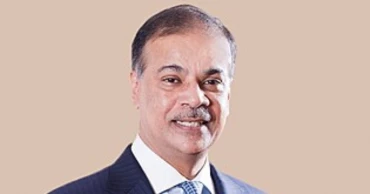
Summit to set up large data centre in Bangladesh within a year, Aziz Khan to Nikkei Asia
Capitalising on the rapidly growing demand for artificial intelligence and cloud services, Summit Group plans to establish a large-scale data centre in Bangladesh within the next year, its Chairman Muhammed Aziz Khan has told Japan-based news portal Nikkei Asia.
In an online interview with Nikkei Asia, Aziz said Summit is preparing to partner with a major global technology company for the venture. As the country’s leading private power producer, Summit Power International will provide the energy backbone for the project, utilising its gas-based infrastructure to ensure uninterrupted, high-uptime power supply required for Tier-1 data centre operations.
“Summit Group’s key focus going forward will be energy and data growth, with the aim of strengthening Bangladesh’s LNG sector and fibre-optic infrastructure,” Aziz said.
According to Nikkei Asia, Summit currently supplies about seven percent of Bangladesh’s total electricity demand through its 10 gas-based plants and five other power plants. In the digital connectivity segment, another concern of the group—Summit Communications—accounts for more than half of the country’s internet supply and is one of the leading fibre-optic service providers.
The Japan International Cooperation Agency (JICA) told Nikkei Asia that the number of internet and smartphone users in Bangladesh is rising steadily, driving increased demand for cloud services, mobile applications and artificial intelligence. In this context, JICA said the establishment of a full-fledged data centre has become essential for the country.
The government promulgated the Personal Data Protection Ordinance in 2024, which restricts the transfer of both personal and aggregate data outside Bangladesh.
However, due to the shortage of domestic data centres, a large volume of data continues to be hosted by foreign companies. JICA noted that setting up local data centres would significantly strengthen Bangladesh’s data protection regime.
JICA also observed that ongoing political uncertainty has made it difficult to attract private investment in data centres. Nevertheless, it believes such projects are feasible if a domestic company takes the lead.
Aziz said Summit is currently looking for a reliable international partner with proven experience in data centre development and strong marketing capabilities.
“We have been in contact with seven major global tech companies—Alphabet, Microsoft, Tesla, Nvidia, Apple, Amazon and Meta Platforms. Some of them have shown interest in working together. Summit will finalise a partnership decision within this year,” he said.
Initially, Summit plans to locate the data centre near one of its gas-based power plants close to Dhaka, operating the facility on its own land, Nikkei Asia reported.
“The three key requirements for a data centre are electricity, fibre and land—and Summit has all three. Although establishing a fully operational data centre will take several years, we aim to open services for customers within 18 months,” Aziz said.
He acknowledged concerns that the high electricity consumption of data centres could pose challenges to Bangladesh’s renewable energy targets. However, he said global realities have changed and Bangladesh must adapt.
Aziz noted that until two years ago, Summit had planned to shut down all hydrocarbon-based power plants by 2050, but current domestic and global conditions have made that goal unfeasible for now.
“We still have major plans to invest in solar and hydropower projects in India, Nepal and Bhutan and import clean energy into Bangladesh. However, strained relations between Bangladesh and India have become a major obstacle to implementing these initiatives,” he said.
Despite challenges ahead of the next national election, Aziz said Summit Group remains committed to continuing its operations in Bangladesh under all circumstances.
He also expressed optimism that operating under an elected government would be positive for the country and would improve the long-term investment climate, he told Nikkei Asia.
1 month ago
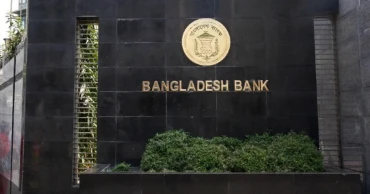
LC openings surge as dollar crisis eases, but settlement remains sluggish: Bangladesh Bank report
Letter of Credit (LC) openings for essential commodities, industrial raw materials, and capital machinery have seen a significant rise as dollar supply increased with a stable exchange rate.
For the first five months (July–November) of FY 2025-26, the overall Letter of Credit (LC) opening for imports was around $29.69 billion, a modest 4.5 percent increase from the previous year.
LC openings for imports totaled approximately $29.69 billion, up slightly from $28.4 billion in the same period of FY25.
However, data shows a mixed trend in LC settlements, with some sectors experiencing a slowdown.
According to the latest report of Bangladesh Bank, LC openings for consumer goods rose by 10.64 percent during the first five months (July-November) of the FY2025-26 compared to the same period last year.
An analysis of the business sector data shows that a different picture emerges in the opening of LCs for industrial raw materials and capital machinery. In the first five months of the FY2025-26, both the opening and settlement of LCs for the import of industrial raw materials achieved a slight growth of 0.42 percent; where the amount of LCs opened was $10.29 billion and the amount of settlements was $9.69 billion.
On the other hand, the biggest change was observed in the import of capital machinery. The number of LCs opened in this sector increased by 32.22 percent to $911 million, indicating the growing interest of entrepreneurs in industrialization.
However, in contrast, the rate of LC settlements decreased significantly. LC settlements for capital machinery decreased by 16.77 percent to $745 million, indicating that despite the increase in new orders, the process of final payment or release of goods is progressing quite slowly because of the higher interest rate.
According to the report, in the first five months of the FY2024-25, LCs for consumer goods were opened at $2.58 billion. In the same period of the current fiscal year, it increased to $2.85 billion. That is, the number of LCs opened for consumer goods increased by $274.4 million.
On the other hand, in the first five months of the last fiscal year, LCs for consumer goods were settled at $2.43 billion. In the same period of the current fiscal year, it decreased to $2.41 billion. As a result, settlements decreased by $20.9 million.
In addition to consumer goods, LCs opened and settled for industrial raw material imports also increased by 0.42 percent.
According to Bangladesh Bank data, in the first five months of the FY2024-25, LCs were opened for industrial raw material imports at $10.25 billion. In the same period of the current fiscal year, it increased to $10.30 billion. That is, LCs opened increased by $40 million.
LC settlements have also increased in this sector. In the first five months of the last fiscal year, LC settlements for industrial raw materials were $9.65 billion. In the same period of the current fiscal year, it increased to $9.69 billion. As a result, settlements increased by $43.6 million.
According to sector stakeholders, during the Awami League government, the import of less important and luxury goods was controlled to maintain foreign exchange reserves. Currently, as expatriate income increases and the dollar crisis eases somewhat, relaxation in LC is needed so that there is no negative impact on the import of daily essentials goods.
According to the central bank, in the first five months of the 2024-25 fiscal year, LCs worth $689 million were opened for the import of capital machinery. In the same period of the current fiscal year, it increased to $911 million. That is, the LC opened in one year increased by 220.2 million dollars.
On the other hand, in the first five months of the FY2024-25, LCs for capital machinery were settled at $895.7 million. In the same period of the current fiscal year, it decreased to $745.5 million. As a result, settlements decreased by 150.2 million dollars.
1 month ago