local-business
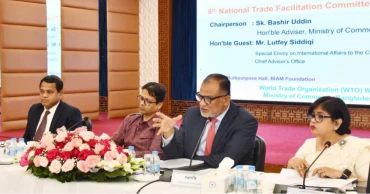
Expedite trade facilitation roadmap implementation for LDC graduation: Sk Bashir
Commerce Adviser Sk Bashir Uddin has emphasised the urgent need to implement the Trade Facilitation Roadmap to address the challenges associated with Bangladesh's graduation from the Least Developed Country (LDC) status.
Speaking at the 8th meeting of the National Trade Facilitation Committee (NTFC) at the BIAM Foundation Multipurpose Hall in Dhaka on Tuesday, the adviser highlighted the critical role of capacity-building and underscored the necessity of enhancing efficiency and fostering a competitive mindset to navigate the post-LDC transition successfully.
The Ministry of Commerce organised the meeting with Sk Bashir Uddin presiding.
Lutfey Siddiqi, the Chief Adviser’s Special Envoy for International Affairs, attended the meeting as a distinguished guest.
“We are set to graduate from LDC status in November 2026. This transition will introduce new regulations affecting our exports. To mitigate the economic impact, enhancing our capacity is crucial. Competitiveness through skill development is our only viable option,” the Commerce Adviser told the meeting.
He said Bangladesh has a timeframe until 2030 to make necessary adjustments. “I believe this is a considerable period. If we graduate in 2026, our working groups must collaborate effectively to establish clear objectives.”
Read: Adviser Bashir calls for innovation in textile sector to face post-LDC challenges
Lutfey Siddiqi echoed the same sentiments, stressing the need for a structured timeline for implementation. “We must strengthen our capabilities while simultaneously streamlining trade operations. Coordination and cooperation are key to achieving our goals,” he said.
Senior officials, including the Senior Secretary of the Ministry of Shipping, the Secretary of the Bridge Division, the Secretary of the Legislative and Parliamentary Affairs Division, the Secretary of the Posts and Telecommunications Division, and the Acting Secretary of the Ministry of Commerce, participated in the meeting.
The Chairman of the Bangladesh Trade and Tariff Commission, the Administrator of the Federation of Bangladesh Chambers of Commerce and Industry (FBCCI), the Chairman of the Land Port Authority, the Chairman of the Chattogram Port Authority, and the Vice Chairman of the Export Promotion Bureau (EPB) were also present.
The Trade Facilitation Agreement (TFA) aims to liberalise trade by reviewing international trade regulations and procedures, thereby accelerating the movement of imports and exports. Under the TFA framework, initiatives have been categorised into three groups: A, B and C.
Bangladesh submitted a notification regarding the implementation of 21 Category A initiatives to the World Trade Organisation (WTO) on 20 February 2018.
Read more: Need to enhance human resources capacity for LDC graduation: Commerce Adviser
The implementation of 18 Category B initiatives has already been completed, with notifications sent to the WTO at different intervals. For Category C, the deadline for implementation is 30 June 2030. Of the 15 initiatives under this category, five have already been implemented and notified to the WTO, while the remaining 10 are in progress.
1 year ago
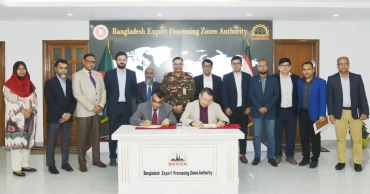
BEPZA signs deal to set up machinery manufacturing industry in EZ
The Bangladesh Export Processing Zones Authority (BEPZA) has signed a lease agreement with Lee’s Tobacco Machinery Company Limited, a UAE and Singapore-owned company, a move to diversify the range of products.
This agreement marks the establishment of the first machinery manufacturing industry in the BEPZA Economic Zone (EZ), further enhancing the zone’s diverse product line, according to a press release.
Md. Ashraful Kabir, Member, investment promotion of BEPZA, and Li Meng, Chairman of Lee’s Tobacco Machinery Company Limited, signed an agreement in presence of BEPZA Executive Chairman, Major General Abul Kalam Mohammad Ziaur Rahman ndc, psc.
The company plans to invest US$ 8.32 million in the project, which will create employment opportunities for 92 Bangladeshi nationals. The factory will produce tobacco and cigarette machinery, a new and diversified product to be manufactured in the EPZs and EZs under BEPZA.
Speaking at the signing ceremony, the Chairman of Lee’s Tobacco Machinery Li Meng, expressed his commitment to focusing on BEPZA’s potential and encouraging other investors to consider the EPZs and EZs.
He assured BEPZA of his company’s dedication to transferring specialized knowledge and expertise in machinery production to Bangladeshi workers.
BEPZA attracted 29 percent of total FDI last fiscal year, says its Chairman
“It will help build a skilled workforce capable of producing machinery that is new to the country’s industrial landscape,” he added.
Li also shared plans to establish two more industries in the BEPZA EZ in the near future, further enhancing the zone’s industrial capabilities.
BEPZA Executive Chairman Ziaur Rahman thanked Lee’s Tobacco Machinery Company Limited for choosing BEPZA’s EZ as their investment destination and assured them of all necessary support to ensure smooth operations.
1 year ago

Taskforce on economy puts forward its recommendations
The Task Force on Re-strategising the Economy has put forward a series of recommendations aimed at fostering economic transformation in Bangladesh.
The proposals include launching pilot projects to develop scalable models for broader reforms, signaling the government’s commitment to urgent economic changes.
The task force’s report, titled “Re-strategising the Economy and Mobilizing Resources for Equitable and Sustainable Development,” provides a strategic framework to guide Bangladesh’s interim government in addressing economic challenges while promoting growth, social progress, and environmental sustainability.
Highlighting inefficiencies in public services and environmental concerns, the task force underscored the need for targeted interventions to drive lasting change.
At a press briefing at the NEC Conference Room in Sher-e-Bangla Nagar, Task Force Chief Dr. KAS Murshid outlined the key recommendations.
The event was attended by Planning Adviser Dr. Wahiduddin Mahmud and other members of the 12-member task force.
The report presents well-researched initiatives selected for their feasibility and public impact. By collaborating with citizens and youth groups, these measures aim to enhance transparency, accountability, and inclusivity.
Dr. Murshid highlighted key proposals, including:
• Public sector reforms: Improving efficiency in public hospitals, rural schools, clinics, and the Bangladesh Road Transport Authority (BRTA).
• Urban development: Revitalizing the Buriganga River and reforming a key ministry.
• Institutional changes: Establishing a Centre of Global Excellence, reassessing Bangladesh Biman, creating the Centre for Social and Behavioural Change Communication and Research (CSBCC&R), setting up a Regulatory Reform Commission (RRC), and forming an NBR Oversight Committee.
• Transport reforms: Implementing automatic traffic signaling and transitioning to a single-operator bus franchise system.
• Investment and trade facilitation: Enhancing the One Stop Service (OSS), attracting FDI in healthcare and vocational education, strengthening economic diplomacy, expanding skilled labor exports, and revitalizing Special Economic Zones (SEZs).
Task force conducts operation against illegal sand extraction in Feni river
Dr. Wahiduddin Mahmud emphasized the importance of restructuring Bangladesh Biman to transform it into a competitive airline. He commended the task force for compiling the report within a short period, ensuring a pragmatic and actionable approach.
Dr. Monzur Hossain, Research Director at BIDS and a task force member, noted the report’s focus on strengthening macroeconomic stability and adopting an accommodative monetary policy.
Former MCCI President Syed Nasim Manzur, participating online, stressed the need for a new Arbitration Act and Bankruptcy Act, along with merging Dhaka’s two municipal authorities.
Dhaka University Professor Dr. Selim Raihan suggested prioritizing the operationalization of a few SEZs rather than rolling out 100 at once. He also recommended improving OSS at BIDA and empowering the Bangladesh Energy Regulatory Commission (BERC).
Economist Dr. Fahmida Khatun called for stricter internal auditing and compliance mechanisms in the banking sector.
BUET Professor Dr. Shamsul Haque stressed the need for greater accountability in feasibility studies for infrastructure projects.
Industrial Security Task Force ensuring stability, safety in key industrial hubs: ISPR
Cross-Cutting Reforms for Economic Transformation
The task force proposed several overarching reforms, including:
• Leveraging digital and AI technology across sectors
• Reducing the digital divide
• Reforming the planning process
• Professionalizing leadership positions
• Combating extortion
• Enhancing government efficiency
• Implementing NID-based open data platforms
• Establishing emergency reserves
• Depoliticizing the banking sector
Additional recommendations include utilizing degraded lands for solar energy, maximizing gas field extraction, regulating sand mining, streamlining public service call centers, launching Dhaka Haat for SMEs, and re-categorizing SMEs.
A Roadmap for Economic Reform
The report, organized into 17 chapters, provides a roadmap for economic transformation, balancing sectoral reforms with cross-cutting strategic initiatives. Part I (Chapters 1-7) focuses on sectoral and sub-sectoral policy challenges, while Part II (Chapters 8-17) addresses economy-wide efficiency and performance.
The report emphasizes that with strong leadership and strategic planning, Bangladesh can transform its challenges into opportunities, ensuring a resilient and equitable future for all.
1 year ago
Stock market shows positive momentum in Dhaka, Chattogram
The stock markets of Dhaka and Chittagong showed a steady rise over the past two days after consecutive declines last week.
The indices of both markets rose and the share prices of the majority of companies also saw an increase.
On Monday, the benchmark index of the Dhaka Stock Exchange (DSE), DSEX, gained 19 points. This followed a 13-point rise the previous day, bringing the main index to 5,145 points.
The other two indices also saw growth.
The Shariah-based DSES rose by 3 points, while the blue-chip index DS-30 gained 1 point.
DSE index declines while CSE sees gains in first hour
Of the 399 companies that were traded, 219 saw an increase in share prices, 113 experienced a decline, and 67 saw no change in their share prices.
Most companies across the three categories (A, B, and Z) saw price increases. In category A, 123 companies’ share prices rose, while 65 fell, and 31 remained unchanged.
In category B, 46 companies' shares rose, 30 declined, and 11 remained stable. For category Z, 47 companies saw price increases, 18 saw decreases, and 24 remained unchanged.
Among the 37 mutual funds traded, 19 saw price increases, 6 experienced declines, and 12 remained unchanged. Out of the 4 corporate bonds issued, 3 remained stable, and one saw a decline in value.
In the block market, a total of 24 companies traded 2.9 million shares worth Tk 140 million. The largest transaction was by Midland Bank, which sold 1.2 million shares worth Tk 32.9 million.
Along with the rise in indices, the overall trading volume in DSE also increased. After seven working days, DSE's transactions crossed the Tk 4 billion mark.
On the day, DSE witnessed a turnover of Tk 4.31 billion, which is Tk 560 million higher than the previous day.
Regarding the market’s positive performance, the Executive Director of the Bangladesh Securities and Exchange Commission (BSEC), Rezaul Karim, said that the Commission's main objective is to allow the market to move at its own pace.
While there may be significant upturns on some days and downturns on others, the Commission is working to stabilise the market and protect it from such volatility.
On market reforms, Rezaul mentioned that the task force is working in full swing.
Focus groups have been formed to identify market issues and take appropriate actions to resolve them.
In Chittagong, despite a dip in the first hour of trading, the market ended on a positive note. The overall index of the Chittagong Stock Exchange (CSE) rose by 31 points by the close of trading.
Of the 206 companies traded, 100 saw price increases, 69 experienced declines, and 37 saw no change in their share prices. A total of 39.4 million BDT worth of shares and units were traded.
In CSE, Intech Limited recorded a 10% price increase, leading the market, while Hamid Fabrics PLC saw a nearly 10% decrease, finishing at the bottom. On the DSE, Prime Finance First Mutual Fund gained 10%, leading the market, while Meghna Cement Mills saw a 6.5% decline, finishing at the bottom.
Weekly Review: DSE plunges as investor confidence wanes; key sectors hit hard
1 year ago

GPH Ispat’s grand event 'GPH Maharaj Darbar' held
Country's one of the leading manufacturers of world-class steel rebar, GPH Ispat Limited, recently organised its grand event, 'GPH Maharaj Darbar-2024.'
Through this flagship event, GPH honoured their channel partners with special recognition based on their annual performance, according to a press release.
At the event, channel partners were recognised in various categories based on their remarkable performance in 2024.
How to Buy Bangladesh Government Treasury Bond: Everything You Need to Know
A total of 185 channel partners spontaneously participated in the event. Among them, the top 10 were awarded the Maharaj honour, and the next best 10 received the Mahaveer honour.
In addition, for the first time, 18 channel partners were honoured with the Birpratap title at the divisional level.
All deserving offspring of the channel partners were awarded GPA-5 honours, and their mothers were recognised with Kriti Ma (Meritorious Mother) honours.
Brac Bank secures Bancassurance business approval
During this two-day event, 'GPH Family Night 2024' was held on the first day, where channel partners’ families were also invited.
The event included various game shows and cultural programmes with the participation of channel partners and their families, and winners and participants of the games were awarded various attractive prizes.
1 year ago
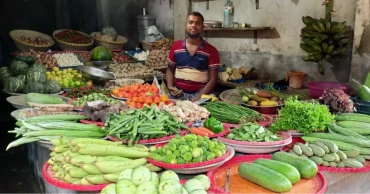
Khulna consumers hit by rising rice and edible oil prices
Like elsewhere in the country, consumers in Khulna are struggling with rising rice and edible oil prices.
However, prices of all varieties of vegetables remain under buying capacity of the consumers.
Buyers alleged that market monitoring by mobile courts to keep prices of commodities under control and hanging the price lists of essentials don’t yield benefits for them.
The prices of commodities are increasing by leaps and bounds regularly as each kilogram of rice went up by Tk six to seven on an average and per litre of soybean oil also marked an increase by Tk three to five, crushing daily life of the low-income and poor people.
The rice prices on all varieties hiked over the past three months, said consumers, blaming the middlemen for this.
Read: Drives conducted in Dhaka’s kitchen markets to monitor prices of essentials
Visiting several markets in Khulna city on Thursday, UNB’s Khulna correspondent found that per kilogram of potato cost Tk 20, local variety of onion prices Tk 40 to 45, garlic at Tk 235 to 240, winter bean at Tk 30, green chili Tk 60, eggplant at Tk 30, sweet pumpkin at Tk 20, and papaya Tk 20.
Besides, a bunch of spinach was charged Tk 15 to 20.
Per kilogram of coarse rice (Swarna) was sold at Tk 54, Atash Balam at Tk 65, Miniket at Tk 75, Miniket (substandard) at Tk 65, Basmati at Tk 75 to 76 and Kalojira at Tk 100.
Edible oil ranks the top on the list of commodities at grocery shops, showing five litre of Fresh, Teer and Bashundara edible oil at Tk 875. Consumers have to count Tk 1758 for per litre of oil.
On the other hand, surprisingly per litre of loose (open) soybean oil was being sold at Tk 195.
Read more: Essentials’ prices up in Khulna kitchen markets
One Md Abu Jafar Sheikh who came to KCC SuperMarket to buy commodities, told this correspondent that the businesspeople have been increasing prices of commodities at their own will.
The price hikes of rice and edible oil can’t be brought under control despite drives, he said.
Echoing buyer Jafar, most consumers urged the government to rein in the commodity market.
1 year ago

Banking Diploma holders to get extra marks in promotion: BB
Bangladesh Bank has issued a new directive for the promotion of officials in non-bank financial institutions (NBFIs), clarifying the requirement for the Banking Professional Diploma.
Under the updated instructions, NBFIs are now required to allocate 10 percent of the promotion marks to officials who have passed the two-phase Banking Professional Exam, formerly known as the Banking Diploma Exam, administered by the Institute of Bankers, Bangladesh (IBB).
Stock markets decline throughout week, investors left disheartened
This follows a similar directive issued on January 16 for banks, which also mandated the passing of the two-phase exam for promotions.
The Financial Institutions and Markets Department of Bangladesh Bank issued the latest instruction on Thursday, ensuring consistency across the banking and financial sectors.
In a significant change, the new rule stipulates that starting January 1, 2026, passing the Banking Professional Exam will be a mandatory requirement for officials seeking promotion to higher positions in banks.
Some weak banks will merge, depositors will get back money: BB Governor
From February 1, 2025, it will be mandatory for officers joining or being promoted to senior officer or equivalent positions to pass this exam before being considered for further promotions.
This condition must be explicitly stated in the promotion or appointment letters moving forward, according to the instructions.
1 year ago
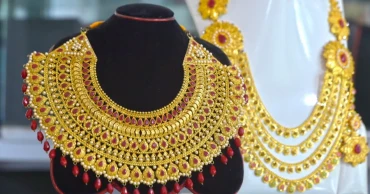
Gold price jumps to Tk 1.56 lakh per bhori, effective from Thursday
Bangladesh Jewelers Association (BAJUS) has announced a third price hike for gold this month. This time, price has increased by Tk 1,365 per bhori.
The new price of 22-carat bhori of gold will be Tk 1,42,791. It was Tk 1,41,426 so far.
According to a press release signed by Masudur Rahman, Chairman of the BAJUS Price Determination and Price Monitoring Standing Committee, on Wednesday, the new price will be effective from Thursday (January 30).
The best quality or 22-carat gold will be sold at Tk 1,42,791 per bhori, 21-carat at Tk 1,36,306 per bhori, 18-carat gold at Tk 1,16,827 per bhori, and Tk 96,018 per bhori gold in the traditional method.
Although the price of gold has been increased, the price of silver remains unchanged.
According to the category, the price of 22-carat silver per bhori is Tk 2,578, 21-carat is Tk 2,449, 18-carat is Tk 2,111 and traditional silver is Tk 1,586.
According to BAJUS, when buying gold and silver, the buyer will have to add 5 percent VAT and 6 percent wages to the fixed price. That is, now if the buyer wants to buy 22-carat gold, it will cost Tk 1,56,983 (gold price is Tk 1,42,791, VAT is Tk 7,140 and wages are Tk 8,667).
1 year ago
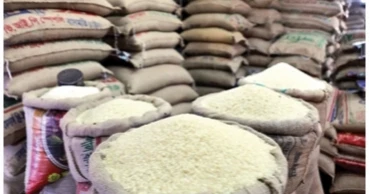
Two ships carrying rice from India and Myanmar reach Ctg port
Two ships carrying a total of 37,000 metric tonnes of rice from India and Myanmar have arrived at Chattogram Port.
Imdad Islam, senior information officer at the Public Relations Office of the Ministry of Food, confirmed the development in a press statement on Wednesday morning.
The Indian vessel MV BMC Pandora docked at the port carrying 15,000 metric tonnes of parboiled rice, imported through an open tender.
Read: 3,320 mts rice imported from India thru Benapole in 25 days
Meanwhile, Myanmar’s MV ATN Victory arrived with 22,000 metric tonnes of Atap rice under a government-to-government (G2G) agreement.
Authorities have taken the necessary steps to begin unloading the consignments promptly.
1 year ago
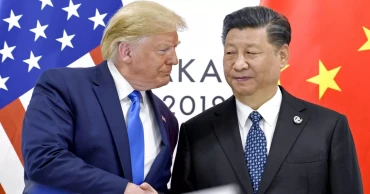
After talking tough during campaign, Trump appears to ease up on China at start of presidency
On the campaign trail last year, President Donald Trump talked tough about imposing tariffs as high as 60% on Chinese goods and threatened to renew the trade war with China that he launched during his first term.
But now that he's back in the White House, Trump appears to be seeking a more nuanced relationship with the country that both Republicans and Democrats have come to see as the gravest foreign policy challenge to the U.S. China is also a major trading partner and an economic powerhouse, and it has one of the world’s largest military forces.
“We look forward to doing very well with China and getting along with China,” Trump said Thursday at the World Economic Forum in Davos, Switzerland, in comments that suggested Beijing could help end the war in Ukraine and reduce nuclear arms.
As he moves forward with plans to impose 25% tariffs on Canada and Mexico on Feb. 1, Trump has not set a firm date for China. He’s only repeated his plan for a much lower 10% tax on Chinese imports in retaliation for China's production of chemicals used in fentanyl. On Tuesday, White House press secretary Karoline Leavitt said Trump was “very much still considering" raising tariffs on China on Feb. 1.
Trump, who spoke with Chinese President Xi Jinping days before taking office, seems to be showing restraint and bowing to a more complicated reality than he described while running for office. Speaking of potential tariffs on China in a recent Fox News interview, he said: “They don’t want them, and I’d rather not have to use it.”
Liu Yawei, senior adviser on China at the Carter Center in Atlanta, said Trump has become “more pragmatic.”
“The signaling, at least from the election to the inauguration, seems to be more positive than has been expected before,” Liu said. “Hopefully, this positive dynamic can be preserved and continued. Being more pragmatic, less ideological will be good for everyone.”
A Chinese expert on American foreign policy acknowledged that there are many “uncertainties and unknowns about the future" of U.S.-China relations. But Da Wei, director of the Center for International Security and Strategy at Tsinghua University in Beijing, also said Trump's recent change in tone offers "encouraging signals.”
In his first term, warm relations were followed by a trade war
When Trump first became president in 2017, Xi and Trump got off to a good start. Xi was invited to Trump's Mar-a-Lago resort in Florida. A few months later, he treated Trump to a personal tour of the Palace Museum in the heart of Beijing, only to see Trump launch the trade war the following year.
Tech stocks slide as Chinese rival threatens AI industry; Nvidia falls 17%
The U.S.-China relationship soured further over the COVID-19 pandemic, and it hardly improved during President Joe Biden's administration, which saw a controversial visit to the self-governing island of Taiwan by then-House Speaker Nancy Pelosi and a Chinese spy balloon aloft over U.S. territory.
Biden kept Trump's tariffs on Chinese goods and intensified the economic and technological rivalry with export controls, investment curbs and alliance building.
Now it will be up to Trump's top diplomat, Secretary of State Marco Rubio, to help chart a new path for the second term.
During his confirmation hearing, Rubio said China has “lied, cheated, hacked and stolen” its way to global superpower status “at our expense." He called China “the most potent and dangerous near-peer adversary this nation has ever confronted.”
Hours after he was sworn in, Rubio met foreign ministers from Australia, Japan and India, sending signals that he would continue to work with the same group of countries that Biden elevated to blunt China’s expanding influence and aggression in the Indo-Pacific region.
Yet Rubio, who was twice sanctioned by Beijing and is known for his hawkish views on the Chinese Communist Party, told the Senate Foreign Relations Committee that the U.S. should engage with China because “it's in the interest of global peace and stability.”
In a Friday phone call, China's veteran foreign minister issued a veiled warning to Rubio, telling him to behave. Wang Yi conveyed the message in their first conversation since Rubio’s confirmation.
“I hope you will act accordingly,” Wang told Rubio, according to a Chinese Foreign Ministry statement that included a Chinese phrase typically used by a teacher or a boss warning a student or employee to be responsible for their actions. Rubio agreed to manage bilateral relations in a “mature and prudent” way, the ministry said.
Members of Congress have noted Trump's seemingly softer attitude toward Beijing.
Rep. Rosa DeLauro, a Democrat from Connecticut, wants to ensure "that Trump does not let China off too easy.” She urged the president to act now on measures that have won broad bipartisan support, including closing a tariff loophole on low-value packages, reviewing outbound investments and setting up a domestic industrial policy agenda.
Beijing seeks opportunities and stays ready to play tough
Beijing is seeking opportunities to create more breathing room in its relations with a U.S. president known for his transactional style. Chinese leaders are betting on engaging with Trump directly when his Cabinet members and advisers appear to hold clashing views.
Trump "is the most important person above all those different voices, and he can at least set the tone of future policy,” Da said.
Asian shares gain after S&P 500 climbs to a record and Bank of Japan raises rate
The Tsinghua professor expects Trump and Xi to meet at some point. Effective communication channels will be crucial, Da said, to keep differences from spiraling out of control, as they did in Trump's first term.
“The two presidents can have a good starting point. That’s very important,” he said. “But then we need to set up some mechanisms to let the cabinet-level members talk to each other.”
That may explain Beijing's friendly overture at the start of the second Trump administration. In response to Trump's inauguration invitation, Xi sent a special representative.
Beijing has also signaled a willingness to be flexible on the future of TikTok, which Trump sought to ban during his first administration. But he has now come to the social media app's rescue, offering more time for its Chinese-based parent company to sell and downplaying TikTok’s national security risks.
After Trump said he preferred not to use tariffs on China, the Chinese Foreign Ministry echoed that trade and economic cooperation between the two countries are mutually beneficial.
But Beijing is also ready to play tough, if necessary, after learning a lesson from Trump's first term.
Over the past several years, Beijing has adopted laws and rules that allow it to retaliate quickly and forcefully to any hostile act from the U.S. In its toolbox are tariffs, import curbs, export controls, sanctions, measures to limit companies from doing business in China and regulatory reviews aimed at inflicting pain on American businesses and the U.S. economy.
Miles Yu, director of the China Center at the Hudson Institute, said Trump is now “more nuanced, and more focused, towards China.”
“He’s keeping his eyes on the prize, which is to maintain U.S. supremacy without risking open and avoidable confrontation with China, while perfectly willing to walk away from the negotiation table and play the hardball,” Yu said.
1 year ago