World-Business

Asian shares mixed as Trump’s tariff deadline looms, while US stocks set records
Asian shares show mixed performances as Trump’s tariff deadline approaches; US markets hit new highs
Asian equity markets ended Friday unevenly after U.S. stocks climbed to fresh record levels amid growing anticipation of President Donald Trump’s July 9 deadline for imposing tariffs.
Japan’s benchmark Nikkei 225 dipped 0.6% to close at 39,762.20, reversing earlier gains, while South Korea’s KOSPI slipped 1.2% to 3,078.31. In Hong Kong, the Hang Seng lost 0.6%, settling at 23,914.44, whereas mainland China’s Shanghai Composite edged up 0.4% to 3,475.24. Australia’s S&P/ASX 200 ticked up 0.1% to 8,609.50, and India’s Sensex rose 0.1% to 83,288.73.
“Asian markets crept into Friday like someone stepping into a dark alley, ever watchful—because although U.S. equities surged on a post-payroll rally, the vibe in Asia was much more cautious. The reason? That familiar jitters whenever Trump nears the tariff trigger,” wrote Stephen Innes, managing partner at SPI Asset Management.
On Wall Street Thursday, a stronger-than-expected U.S. jobs report pushed the S&P 500 up 0.8%, marking its fourth all-time high in five trading days. The Dow Jones Industrial Average gained 344 points (0.8%), and the Nasdaq Composite climbed 1%.
South Korean President says US trade deal uncertain as Trump’s deadline approaches
Most of Trump’s proposed import levies remain on hold but are set to take effect next week unless he negotiates deals to suspend them.
In commodities, U.S. crude oil dipped 19 cents to $68.81 per barrel, while Brent crude eased 30 cents to $68.50 per barrel.
In currency markets, the U.S. dollar weakened to 144.48 Japanese yen from 144.92, and the euro inched up to $1.1771 from $1.1761.
Source: Agency
11 months ago

Bangladesh to make record $2.02 billion ACU payment for May-June imports
Bangladesh is set to make its highest Asian Clearing Union (ACU) import payment in three years, with around US$2.02 billion due for imports made during May and June.
Arif Hossain Khan, Executive Director and spokesperson of Bangladesh Bank, told UNB that the ACU bills are scheduled to be cleared by July 8.
The record payment is expected to reduce the country’s gross foreign exchange reserves to approximately $29.66 billion from the current $31.68 billion.
Arif Hossain said while such payments do not affect the Net International Reserves (NIR) which currently stand at $20.69 billion.
Net reserves are calculated after paying ACU and other external bills, he added.
Indices up in first hour of trading, majority stocks gain at DSE and CSE
Net reserves can change if the central bank sells dollars from reserves or if the government makes payments for foreign investments or projects, the central bank spokesperson said.
According to Bangladesh Bank data, the bi-monthly ACU payments had remained below $1.3 billion throughout 2023. Payments started to rise from September-October 2024, culminating in the latest May-June bill of $2.02 billion—the highest since 2021.
The final reserve figures will be confirmed after the ACU settlement and reconciliation of accounts next week, the central bank said.
The ACU, headquartered in Tehran, facilitates payments for intra-regional trade among its member countries, including Bangladesh, India, Iran, Pakistan, Sri Lanka, Myanmar, Nepal, Bhutan, and the Maldives.
11 months ago

South Korean President says US trade deal uncertain as Trump’s deadline approaches
South Korean President Lee Jae Myung said Thursday that it is still uncertain whether Seoul and Washington will be able to wrap up their ongoing tariff negotiations before the deadline set by U.S. President Donald Trump next week, adding that both sides are still working to clarify their respective positions and find common ground.
During his first news conference since taking office last month, Lee also reaffirmed his commitment to mending severely strained ties with North Korea but acknowledged that the deep-rooted distrust between the two Koreas will take significant time to overcome.
Lee’s administration, only a month old, faces major challenges, including Trump’s tariff hikes and other “America First” policies, North Korea’s advancing nuclear arsenal, and domestic economic difficulties. The liberal leader came to power after winning a snap election triggered by the impeachment and removal of conservative President Yoon Suk Yeol, following Yoon’s controversial imposition of martial law last December.
Asian markets mixed as Wall Street momentum stalls, Tesla drops
Lee described the ongoing trade negotiations with the United States as “clearly not easy,” emphasizing that any agreement must be fair and beneficial to both countries.
“It’s hard to say definitively whether we’ll reach a deal by July 8. We are putting in our best efforts,” Lee said. “What matters is achieving a truly reciprocal outcome that works for both sides, but so far, both parties are still defining their demands.”
Trump’s 90-day suspension of global reciprocal tariffs is set to end on July 9, after which South Korean exports could face tariffs as high as 25%.
In addition, Washington has been pushing for increased tariffs on specific South Korean goods, particularly automobiles and semiconductors, which are critical to South Korea’s export-driven economy. There are also growing concerns that Trump may demand that South Korea significantly raise its financial contributions to support the 28,000 U.S. troops stationed on the Korean Peninsula as a deterrent against North Korea.
Lee has repeatedly called for patience in the tariff talks, warning that rushing into an early agreement could harm South Korea’s national interests. Reports suggest Trade Minister Yeo Han-koo is preparing for a possible visit to Washington for talks with U.S. Trade Representative Jamieson Greer and Commerce Secretary Howard Lutnick.
On the North Korean issue, Lee said he intends to revive long-stalled inter-Korean dialogue, noting that North Korea’s deepening military cooperation with Russia is a growing security concern for the region.
“I believe we need to improve relations with North Korea based on close coordination and consultation between South Korea and the United States,” Lee said. “But I understand this won’t be easy because of the serious level of mutual distrust and hostility.”
Lee had previously faced criticism for allegedly favoring closer ties with North Korea and China over relations with the U.S. and Japan. However, since his election victory, he has repeatedly pledged to pursue pragmatic diplomacy — strengthening South Korea’s alliance with Washington while also seeking improved relations with North Korea, China, and Russia. Critics, however, argue that satisfying all sides will be extremely difficult.
Since taking office, Lee’s administration has taken several trust-building steps toward North Korea, including halting propaganda broadcasts along the border and moving to ban activists from sending anti-Pyongyang leaflets by balloon across the border.
North Korea has not publicly reacted to these overtures from both Trump and Lee. However, officials noted that North Korean propaganda broadcasts have recently stopped in South Korean border regions.
Lee said he has been consulting with national security and intelligence officials about ways to restart dialogue with Pyongyang but did not disclose specific plans.
Canada rescinds tech tax, trade talks with US resume: PM Carney
Trump has also expressed willingness to resume diplomacy with North Korean leader Kim Jong Un, and Lee has pledged his support for Trump’s efforts.
North Korea has refused to engage in talks with the U.S. and South Korea since the collapse of Trump-Kim nuclear negotiations in 2019. Pyongyang has since focused on deepening ties with Russia, supplying troops and weapons to assist Moscow’s war in Ukraine in exchange for economic and military aid.
11 months ago
Asian markets mixed as Wall Street momentum stalls, Tesla drops
Asian shares were mixed on Wednesday, mirroring Wall Street’s lacklustre performance as tech-sector losses, including Tesla’s sharp fall, slowed the market’s recent rally.
U.S. futures inched higher, and oil prices saw little movement.
In Tokyo, the Nikkei pared early losses but still slipped 0.3% to 39,874.33 as concerns grew over stalled trade talks with the U.S. Market jitters intensified after President Donald Trump warned there would be no extension to his tariff pause beyond July 9.
“The negotiating table just turned into a pressure cooker,” said Stephen Innes of SPI Asset Management, noting Trump’s threat of tariffs as high as 35% if Japan does not concede.
Hong Kong’s Hang Seng rose 0.6% to 24,220.65, while the Shanghai Composite was nearly flat at 3,456.51. South Korea’s KOSPI lost 1.2% to 3,053.39 as June inflation climbed, and Australia’s S&P ASX 200 edged up 0.4% to 8,580.70.
On Wall Street, the S&P 500 dipped 0.1% to 6,198.01, snapping a four-day winning streak. The Dow Jones rose 0.9% to 44,494.94, while the Nasdaq fell 0.8% to 20,202.89.
Tesla slid 5.3%, weighed down by the escalating feud between CEO Elon Musk and Trump, which threatens government contracts and subsidies for Musk’s companies. Tesla has now lost over 25% of its value this year.
Canada rescinds tech tax, trade talks with US resume: PM Carney
Other AI-linked tech stocks also weakened, with Nvidia down 3%, dragging on the broader market.
In contrast, casino operators rallied on stronger-than-expected gaming revenue from Macao. Las Vegas Sands jumped 8.9%, Wynn Resorts gained 8.8%, and MGM Resorts rose 7.3%. Automakers also performed well, with General Motors up 5.7% and Ford rising 4.6%.
Despite Wall Street’s rebound from a spring sell-off, risks remain. Trump’s paused tariffs are set to resume in a week, potentially hurting economic growth and pushing inflation higher. Planned tax cuts could further increase U.S. debt, adding to inflation concerns.
Meanwhile, Barclays strategists noted signs of “excess optimism” among investors, reminiscent of past speculative bubbles.
Stocks gain ground and put S&P 500 and Nasdaq on a path for all-time highs
In commodities, U.S. crude edged up to $65.46 a barrel, and Brent crude rose to $67.16. The dollar strengthened to 143.58 yen, while the euro slipped to $1.1798.
Source: Agency
11 months ago

Asian shares are mostly higher, tracking US rally into record heights
Asian shares are mostly higher after U.S. stocks added to their records with the close of a second straight winning month.
U.S. futures and oil prices were lower.
Japan’s Nikkei 225 fell 1.4% to 39,910.83 despite positive results of the central bank's quarterly Tankan survey of large manufacturers, which showed a better than expected improvement in business sentiment.
The Shanghai Composite index added 0.4% to 3,458.56 after China’s official manufacturing purchasing managers index, or PMI, rose to a three-month high of 49.7 in June while the PMI for services and other non-manufacturing businesses also rose to a three-month high of 50.5.
Hong Kong's stock market was closed on Tuesday.
South Korea’s KOSPI Composite Index rose 0.8% to 3,095.67 after the government reported that exports bounced back in June, helped by strong demand for semiconductors, ships and health products.
Australia's S&P/ASX 200 edged up 0.1% to 8,545.10
The PSEi in Manila, Philippines, rose 0.4%. On Monday, Wall Street resumed its upward climb.
The S&P 500 rose 0.5% to 6,204.95. It has staged a stunning recovery from its springtime sell-off of roughly 20%. The Dow Jones Industrial Average added 0.6% to 44,094.77, and the Nasdaq composite gained 0.5% to 20,369.73.
Stocks got a boost after Canada said it would rescind a planned tax on U.S. technology firms and trade talks with the United States resumed. On Friday, U.S. President Donald Trump had said he was suspending those talks to retaliate for the tax, calling it “a direct and blatant attack on our country.”
German minimum wage set to rise by about 14% over the next 18 months
U.S. stocks have bounced back on hopes that Trump will reach deals with other countries to lower his painful high tariffs and avert trade wars that could stifle the economy and send inflation higher.
Many of Trump’s announced tariffs have been postponed and are due to kick back into effect on July 9.
The U.S. stock market recovery could raise the risk Trump will resume escalating tariffs, similar to what happened in 2018-2019, according to strategists at Deutsche Bank led by Parag Thatte and Binky Chadha.
GMS’ stock jumped 11.7% after the supplier of specialty building products said it agreed to sell itself to a Home Depot subsidiary in a deal that would pay $110.00 per share in cash. That would give it a total value of roughly $5.5 billion, including debt.
Less than two weeks ago, another company, QXO, said it was offering to buy GMS for $95.20 per share in cash. After the announcement of the Home Depot bid, QXO’s stock rose 3.9%, and Home Depot’s stock slipped 0.6%.
Hewlett Packard Enterprise rallied 11.1% and Juniper Networks climbed 8.4% after saying they had reached an agreement with the U.S. Department of Justice that could clear the way for their merger go through, subject to court approval. HPE is trying to buy Juniper in a $14 billion deal.
Bank stocks were also solid after the Federal Reserve said on Friday that they are financially strong enough to survive a downturn in the economy. JPMorgan Chase climbed 1%, and Citigroup gained 0.9%.
In the bond market, Treasury yields fell ahead of several major economic reports later in the week. The highlight will be Thursday’s jobs report. It’s often the most anticipated economic data of each month, and it will come a day earlier than usual because of Friday’s Fourth of July holiday.
In other dealings early Tuesday, benchmark U.S. crude oil lost 22 cents to $64.89 per barrel, while Brent crude, the international standard, fell 21 cents per barrel to $66.53.
The U.S. dollar dipped to 143.69 Japanese yen from 144.04 yen. The euro rose to $1.1778 from $1.1787.
11 months ago
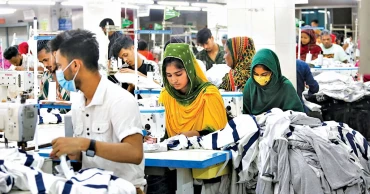
Bangladesh's apparel export to US rose to $7.34 billion in a decade: US Report
Bangladesh’s apparel export to the USA market increased to US $ 7.34 billion from $5.4 billion in a decade, according to the US Government Office of Textiles and Apparel (OTEXA).
The report revealed, apparel imports from Bangladesh to the USA in 2015 were valued at US $5.40 billion, rising to US $7.34 billion by 2024, reflecting a notable 35.94 percent growth over the same period.
Apparel makers highlight importance diplomacy, branding eyeing 100 bln dollar industry
While experiencing a positive trajectory until 2019, the emergence of COVID led to an 11.76 percent decline in 2020 ($5.92 billion was in 2019 and $5.22 billion was in 2020).
Since 2020, Bangladesh has shown impressive growth at 40.45 percent, surpassing the USA's growth rate of 23.72 percent, according to the report.
The OTEXA stated that in 2015, apparel imports to the USA totalled US $85.16 billion, decreasing to US $79.26 billion by 2024, marking a 6.94 percent decline over the decade.
The trend was consistently positive until 2019, but with the onset of COVID, a significant 23.47 percent drop was observed in 2020 ($83.70 billion was in 2019 and $64.06 billion was in 2020).
Despite the USA showing signs of recovery post-COVID, the economic downturn was substantial, failing to meet the import of 2015 even in 2024.
During US recessions, consumer spending reductions notably impact clothing expenditures, reflecting broader economic shifts impacting the apparel market.
Bangladeshi apparel exports to US market grow slightly amid global market pressure
With the USA retail sector heavily reliant on imports (comprising 95 percent of the industry), challenges such as high tariffs (averaging 18.5 percent pre-Trump era), escalating freight costs, and short apparel market lifespans have hindered integration into supply chains.
11 months ago
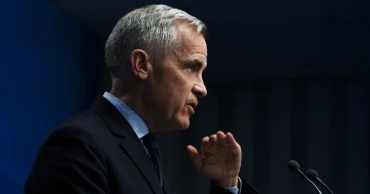
Canada rescinds tech tax, trade talks with US resume: PM Carney
Canadian Prime Minister Mark Carney announced Sunday that trade talks with the United States have resumed after Ottawa withdrew its plan to impose a tax on U.S. technology giants.
U.S. President Donald Trump had suspended negotiations on Friday, calling Canada’s proposed Digital Services Tax “a direct and blatant attack on our country.” The tax, which was scheduled to take effect on Monday, targeted major U.S. firms like Amazon, Google, Meta, Uber, and Airbnb with a 3% levy on revenue generated from Canadian users, including retroactive payments amounting to roughly $2 billion.
However, the Canadian government said it would withdraw the tax “in anticipation” of a broader trade agreement with the United States.
“This decision will allow negotiations to get back on track toward the July 21, 2025, timeline agreed at this month’s G7 Leaders' Summit in Kananaskis,” Carney said in a statement.
Carney had previously visited Trump at the White House in May, holding what was described as a firm but polite meeting. Trump later traveled to Canada for the G7 summit in Alberta, where both leaders set a 30-day deadline to reach a new trade understanding.
Tensions escalated last Friday when Trump, in a post on his social media platform, accused Canada of sticking to its digital tax plan, prompting him to pause trade talks.
Trump halts trade talks with Canada over digital tax on tech firms
Canadian Finance Minister François-Philippe Champagne said rescinding the tax would clear the way for meaningful progress in reshaping the two countries’ economic and security ties.
Trump’s move was the latest twist in the trade dispute with Canada, part of a broader series of economic measures he has rolled out since beginning his second term in January.
Relations between Washington and Ottawa have been strained, with Trump imposing heavy tariffs, including 50% on steel and aluminum, 25% on automobiles, and a 10% tax on most imports, with potential increases looming after July 9—the end of the 90-day negotiating window.
India and Canada to resume diplomatic ties nearly two years after Sikh Separatist killing
Canada and Mexico are also dealing with separate tariffs of up to 25% imposed under the Trump administration’s stated goal of curbing fentanyl trafficking, though some trade protections remain under the U.S.-Mexico-Canada Agreement signed during Trump’s first term.
Source: Agency
11 months ago
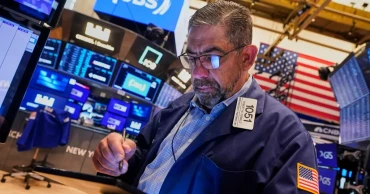
Stocks gain ground and put S&P 500 and Nasdaq on a path for all-time highs
Stocks rose in morning trading Friday and put Wall Street on track to close a strong week at an all-time high.
The S&P 500 rose 0.5% early Friday and is on track to surpass its record set in February. The Nasdaq composite rose 0.5% and is also on track for a record. The Dow Jones Industrial Average rose 0.6%, or 273 points, to 43,657 as of 9:58 am Eastern.
A record for the S&P 500 would mark a sharp turnaround from just three months ago, when the key measure of Wall Street's health fell nearly 20% from the February high on fears that President Donald Trump's trade policy could harm the economy.
The gains on Friday were broad, with nearly every sector within the S&P 500 rising. Nike soared 15.3% for the biggest gain on the market, despite warning of a steep hit from tariffs.
The broader market has seemingly shaken off fears about the Israel-Iran war disrupting the global supply of crude oil and sending oil prices higher. A ceasefire between the two nations is still in place.
The price of crude oil in the US rose 1%, but has broadly fallen back since last week to levels in place before the conflict began.
US, China sign trade deal; Trump hopeful of deal with India
Investors are also monitoring potential progress on trade conflicts between the US and the world, specifically with China. Trump said the US and China have signed a trade deal without providing details.
China’s Commerce Ministry also said that the two sides had “further confirmed the details of the framework” for their trade talks. But its statement did not explicitly mention an agreement to ensure US access to rare earths, materials used in high-tech applications that have been at the center of negotiations.
An update on inflation Friday showed prices ticked higher in May, though the rate mostly matched economists' projections.
Bond yields rose. The yield on the 10-year Treasury rose to 4.28% from 4.24% late Thursday. The two-year Treasury yield, which more closely tracks expectations for what the Federal Reserve will do, rose to 3.75% from 3.72% late Thursday.
Stocks in Europe were mostly higher, while stocks in Asia finished mixed.
11 months ago
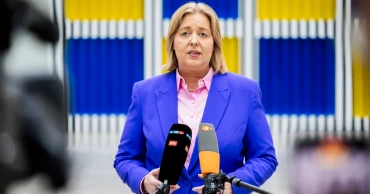
German minimum wage set to rise by about 14% over the next 18 months
Germany's minimum wage is set to rise by about 14% over the next 18 months under an agreement that appears to defuse a potentially divisive issue for the new government.
A commission in which employers and labor unions are represented recommended on Friday that the minimum wage rise from its current 12.82 euros ($15) per hour to 13.90 euros at the beginning of 2026 and 14.60 euros a year later.
The head of the panel, Christiane Schönefeld, said it faced “a particular challenge this year in view of the stagnating economy and the uncertain forecasts.” She said it conducted “very difficult talks, which were complicated further by the expectations expressed in public.”
Germany, which has Europe's biggest economy, has had a national minimum wage since 2015. It was introduced at the insistence of the center-left Social Democrats, who were then — as they are now now — the junior partners in a conservative-led government.
Israel-Iran war exposes Asia’s Middle East energy dependence
It started off at 8.50 euros per hour, but the independent commission reviews its level regularly. There has been one political intervention, however: under then-Chancellor Olaf Scholz, a Social Democrat, the government in 2022 ordered an increase to 12 euros an hour, fulfilling a campaign pledge by Scholz.
In their campaign for this year's election, the Social Democrats called for an increase to 15 euros. New Chancellor Friedrich Merz's conservative bloc strongly opposed another government-ordered raise.
Labor Minister Bärbel Bas, a leading Social Democrat, said she would implement the commission's proposal. She said she “can live well with it.”
“Of course we wanted more for people in this country,” she told reporters. But she praised the panel for reaching consensus on an increase, “because it looked for a long time as though we wouldn't get an agreement at all, and then of course we would have had to talk in the coalition about how to deal with this.”
11 months ago
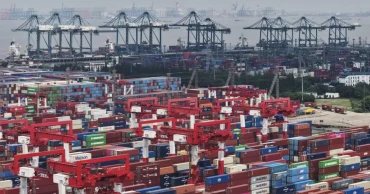
US, China sign trade deal; Trump hopeful of deal with India
President Donald Trump has announced that the United States and China have signed a trade agreement, and expressed optimism about reaching a similar deal with India in the near future.
Speaking late Thursday, Trump confirmed, “We just signed with China the other day,” though he provided no further details.
US Commerce Secretary Howard Lutnick, in an interview with Bloomberg TV, also confirmed the development, stating that the agreement was “signed and sealed” two days ago. However, like Trump, he did not disclose specifics of the deal.
Israel-Iran conflict exposes Asia's oil dependence, slow pace of clean energy transition
The agreement comes after earlier negotiations in Geneva in May, where both countries agreed to postpone significant tariff hikes that threatened to disrupt trade flows. Subsequent talks in London laid the groundwork for a formal agreement, which Trump and Lutnick referenced.
“The president likes to personally close these deals. He's the ultimate dealmaker. We’re going to see one deal after another,” Lutnick added.
Meanwhile, Beijing has not formally confirmed the signing of a new agreement. However, the Chinese government announced earlier this week that it is expediting approvals for rare earth exports—critical materials used in advanced technologies like electric vehicles. Restrictions on rare earth exports have been a major sticking point in US-China trade relations.
The Chinese Commerce Ministry stated on Thursday that authorities are accelerating the review of rare earth export licenses and have already approved a number of qualified applications.
11 months ago