World-Business

Two-day ‘Bangladesh Remittance Fair’ to start on Oct 20 in NY
With theme, ‘New Opportunities, New Markets, New Partnerships,’ the two-day ‘Bangladesh Remittance Fair’ is going to begin on October 20 at the Jamaica Performing Arts Center in New York.
The Bangladesh-American Chamber of Commerce and Industry, Mukti Dhara New York and the US-Bangla Business Link are jointly organising the event powered by Dhaka Bank.
Islamic Bank, National Bank and Bank Asia will be honored as the top remittance-receiving banks.
Expatriates sent $986 million remittance in first 12 days of October
Focusing on promoting legal remittance flows and sustainable growth, the fair aims to explore how to increase these foreign earnings and encourage expatriates to utilise legitimate channels for remittance, thereby further energizing the economy.
Participating institutions include banks, financial institutions, money transfer operators, remittance channel partners, mobile financial services, offshore banking service providers, and expatriate small entrepreneurs.
Over 30 financial institutions from both Bangladesh and the United States including IFIC Bank, Islamic Bank, Standard Bank, Social Islamic Bank Limited, Dhaka Bank, Chevron Express, and Standard Express will take part in the event.
Islami Bank holds views-exchange with foreign banks to strengthen remittance earning
The fair will also feature seminars and symposiums on remittances, along with awards for the top 10 Bangladeshi-American remittance senders.
According to data from Bangladesh Bank, the three top remittance-receiving banks this year have received significant amounts from the United States: Islamic Bank with $663.99 million, National Bank with $379.64 million, and Bank Asia with $212.95 million.
Moreover, awards will be given to the top three money exchange or remittance channel companies.
The fair will remain open from 4pm to 10pm (NY time) on both days at the venue where popular artists Pousali Banerjee and Shah Mahbub will enthrall audiences through performance on October 20.
1 year ago

South Asia’s growth to reach 6.4 pc outpacing expectations: World Bank
Growth in South Asia is expected to increase to 6.4 percent this year, exceeding earlier projections and keeping the region on track to be the fastest growing in the world, according to the World Bank.
The region can grow even faster and achieve its development goals by unlocking untapped potential by increasing women’s participation in the labor force and opening further to global trade and investment, said the World Bank in its twice-yearly regional outlook released on Thursday.
The latest South Asia Development Update, Women, Jobs, and Growth forecast a broad-based upturn in the region, supported by strong domestic demand in India and faster recoveries in most other South Asian countries.
Growth is expected to remain robust at 6.2 percent a year for the next two years, it said.
This forecast is subject to downside risks including extreme weather, debt distress, and social unrest. Policy missteps such as delays in planned reforms could also set the region back. Fragile fiscal and external positions leave little buffer against these risks.
WB to provide USD 3.5 billion to support Bangladesh's reform initiatives: Ajay Banga
“South Asia’s outlook is undoubtedly promising, but the region could do more to realize its full economic potential,” said Martin Raiser, World Bank Vice President for South Asia.
“Key policy reforms to integrate more women into the workforce and remove barriers to global investment and trade can accelerate growth. Our research shows that raising female labor force participation rates in the region to those of men would increase regional GDP by up to 51 percent.”
Female labour force participation in South Asia is among the lowest in the world. Only 32 percent of working-age women were in the labour force in 2023, compared to 77 percent of working-age men in the region. For all South Asian countries except Bhutan, female labour force participation rates in 2023 were 5 to 25 percentage points lower than in countries at similar levels of development. This shortfall in the female labour force is most pronounced after marriage. On average, once married, women in South Asia reduce their participation in the workforce by 12 percentage points, even before they have children.
Bangladesh has the opportunity to implement unaddressed critical reforms: WB Vice President
The shift toward service activities, usually associated with greater demand for female labour, has not yet led to higher levels of female employment in the region, and firms often state an explicit preference for male workers. Supply-side constraints such as childcare access, mobility and safety, legal restrictions, and conservative gender norms are also significant barriers.
“South Asia’s female labor force participation rate of 32 percent is well below the 54 percent average in emerging market and developing economies,” said Franziska Ohnsorge, World Bank Chief Economist for South Asia. “Increasing women’s employment requires action from all stakeholders. Our report recommends a multi-pronged effort where governments, the private sector, communities and households all have a role to play.”
The report’s recommendations include legal reforms to improve gender equality, measures to accelerate job creation, and removal of barriers to women working outside the home such as lack of safe transport and quality child and elder care. Such measures could be more effective if social norms became more accepting of female employment.
Another key area of reform is increasing trade openness. Most countries in South Asia rank among the least open to global trade and investment. This greatly limits the region’s ability to take advantage of the reshaping of global supply chains. Within the region, greater export orientation has been linked to greater female employment. Therefore, increased openness could help the region spur growth as well as boost job creation, especially for women.
1 year ago

Tesla is unveiling its long-awaited robotaxi amid doubts about the technology it runs on
Expectations are high for the long-awaited unveiling of Tesla's robotaxi at a Hollywood studio Thursday night. Too high for some analysts and investors.
The company, which began selling software it calls “Full Self-Driving” nine years ago that still can't drive itself, is expected to show off the so-called “Cybercab” vehicle, which may not have a steering wheel and pedals.
The unveiling comes as CEO Elon Musk tries to persuade investors that his company is more about artificial intelligence and robotics as it struggles to sell its core products, an aging lineup of electric vehicles.
Some analysts are predicting that it will be a historic day for the Austin, Texas, company as it takes a huge step toward a long-awaited robotaxi service powered by AI.
But others who track self-driving vehicles say Musk has yet to demonstrate Tesla's system can travel safely without a human driver ready to step in to prevent crashes.
5th recall for Tesla Cybertruck within a year, the latest due to rearview display
“I don't know why the headlines continue to be ‘What will Tesla announce?’ rather than ‘Why does Tesla think we’re so stupid?'” said Bryant Walker Smith, a University of South Carolina law professor who studies autonomous vehicles.
He doesn't see Tesla having the ability to show off software and hardware that can work without human supervision, even in a limited area that's well-known to the driving system.
“We just haven't seen any indication that that is what Tesla is working toward,” Walker Smith said. “If they were, they would be showcasing this not on a closed lot, but in an actual city or on an actual freeway.”
Without a clear breakthrough in autonomous technology, Tesla will just show off a vehicle with no pedals or steering wheel, which already has been done by numerous other companies, he said.
“The challenge is developing a combination of hardware and software plus the human and digital infrastructure to actually safely drive a vehicle even without a steering wheel on public roads in any conditions,” Walker Smith said. “Tesla has been giving us that demo every year, and it's not reassuring us.”
Many industry analysts aren't expecting much from the event either. While TD Cowen's Jeff Osborne expects Musk to reveal the Cybercab and perhaps the Model 2, a lower-cost electric vehicle, he said he doesn't expect much of a change on self-driving technology.
Safety concerns over Tesla's 'Full Self-Driving' system growing
“We expect the event to be light on details and appeal to the true long-term believers in Tesla,” Osborne wrote in a note. Musk's claims on the readiness of Full Self Driving, though, will be crucial “given past delays and ongoing scrutiny” of the system and of Tesla's less-sophisticated Autopilot driver-assist software.
Tesla's model lineup is struggling and isn't likely to be refreshed until late next year at the earliest, Osborne wrote. Plus, he wrote that in TD Cowen's view the “politicization of Elon” is tarnishing the Tesla brand among Democrat buyers in the U.S.
Musk has endorsed Republican presidential candidate Donald Trump and has pushed many conservative causes. Last weekend he joined Trump at a Pennsylvania rally.
Musk has been saying for more than five years that a fleet of robotaxis is near, allowing Tesla owners to make money by having their cars carry passengers while they're not in use by the owners.
But he has acknowledged that past predictions for the use of autonomous driving proved too optimistic. In 2019, he promised the fleet of autonomous vehicles by the end of 2020.
However, Wedbush analyst Dan Ives, who is bullish on Tesla stock, wrote in an investor note that robotaxi event, dubbed “We, Robot,” by the company, will be a new chapter of growth for Tesla.
Tesla cars performing ‘dance of lights’ to 'Naatu Naatu' goes viral
Ives expects many updates and details from Tesla on the robotaxi, plus breakthroughs in Full Self Driving and artificial intelligence. He also is looking for a phased-in strategy for rolling out the robotaxis within the next year, as well as a Tesla ride-sharing app, and demonstrations of technology “designed to revolutionize urban transportation.”
Ives, whose organization will attend the invitation-only event at the Warner Bros. studio, wrote that he also expects updates on Tesla's Optimus humanoid robot, which the company plans to start selling in 2026.
“We believe this is a pivotal time for Tesla as the company prepares to release its years of Robotaxi R&D shadowed behind the curtains, while Musk & Co. lay out the company’s vision for the future,” Ives wrote.
The announcement comes as U.S. safety regulators are investigating Full Self Driving and Autopilot based on evidence that it has a weak system for making sure human drivers pay attention.
In addition, the U.S. National Highway Traffic Safety Administration forced Tesla to recall Full Self-Driving in February because it allowed speeding and violated other traffic laws, especially near intersections. Tesla was to fix the problems with an online software update.
Last April in Snohomish County, Washington, near Seattle, a Tesla using Full Self-Driving hit and killed a motorcyclist, authorities said. The Tesla driver told authorities that he was using the system while looking at his phone when the car rear-ended the motorcyclist. The motorcyclist was pronounced dead at the scene, authorities said.
NHTSA says it's evaluating information on the fatal crash from Tesla and law enforcement officials.
The Justice Department also has sought information from Tesla about Full Self-Driving and Autopilot, as well as other items.
1 year ago

The head of Boeing's defense and space business is out as company tries to fix troubled contracts
Boeing on Friday replaced the head of its troubled defense and space business, which has struggled with money-losing government contracts and embarrassing setbacks involving its Starliner space capsule.
The company said Theodore “Ted” Colbert III was removed immediately as president and CEO of Boeing Defense, Space & Security and replaced temporarily by the division's chief operating officer, Steve Parker. A search is underway for a permanent replacement.
Colbert spent 15 years at Boeing, serving as chief information officer and leading its global-services business before running the defense unit.
Kelly Ortberg, who took over as Boeing CEO last month, said in a memo announcing Colbert's departure, “At this critical juncture, our priority is to restore the trust of our customers and meet the high standards they expect of us to enable their critical missions around the world. Working together we can and will improve our performance and ensure we deliver on our commitments.”
Boeing is trying to dig out from unprofitable contracts with the Pentagon and NASA, including new Air Force One presidential planes and refueling tankers for the Air Force.
Since the start of 2022, the defense and space division has lost $6 billion, slightly more than Boeing’s airplane business.
The Starliner capsule that Boeing built for NASA suffered problems with thrusters on its first crewed mission to the international space station. NASA decided this month it was too risky for two astronauts to fly home in the capsule, so they will stay in space until February and ride back to Earth on a SpaceX capsule.
1 year ago

Motel 6 sold to Indian hotel operator for $525 million
The budget motel chain Motel 6 is being acquired by the parent company of Oyo, a hotel operator based in India.
The New York-based investment firm Blackstone, which owns Motel 6’s parent company G6 Hospitality, announced Friday that the deal would be an all-cash transaction worth $525 million.
The transaction will also include the sale of the Studio 6 motel brand, which caters to customers seeking extended stays. The deal is expected to close by the end of the year.
Oyo, which launched in India just over a decade ago, has been expanding its footprint in the U.S. over the past few years. The company says it currently operates 320 hotels across 35 states and is aiming to add 250 more this year.
“This acquisition is a significant milestone for a startup company like us to strengthen our international presence,” Gautam Swaroop, OYO’s international division chief, said in a statement.
Blackstone had purchased Motel 6 and Studio 6 in 2012 for $1.9 billion. Since then, the private equity giant says it has heavily invested in the brand and pursued a strategy that converted the chain into a franchise.
“This transaction is a terrific outcome for investors and is the culmination of an ambitious business plan that more than tripled our investors’ capital and generated over $1 billion in profit over our hold period,” Rob Harper, the head of Blackstone Real Estate Asset Management Americas, said in a statement.
Under the deal, Oravel Stays, which owns Oyo, will acquire G6 Hospitality.
1 year ago

Boeing factory workers go on strike after rejecting contract offer
Aircraft assembly workers walked off the job early Friday at Boeing factories near Seattle and elsewhere after union members voted overwhelmingly to go on strike and reject a tentative contract that would have increased wages by 25% over four years.
The strike started at 12:01 a.m. PDT, less than three hours after the local branch of the International Association of Machinists and Aerospace Workers announced 94.6% of voting workers rejected the proposed contract and 96% approved the work stoppage, easily surpassing a two-thirds requirement.
The labor action involves 33,000 Boeing machinists, most of them in Washington state, and is expected to shut down production of the company’s best-selling airline planes. The strike will not affect commercial flights but represents another setback for the aerospace giant, whose reputation and finances have been battered by manufacturing problems and multiple federal investigations this year.
The striking machinists assemble the 737 Max, Boeing’s best-selling airliner, along with the 777, or “triple-seven” jet, and the 767 cargo plane at factories in Renton and Everett, Washington. The walkout likely will not stop production of Boeing 787 Dreamliners, which are built by nonunion workers in South Carolina.
Outside the Renton factory, people stood with signs reading, “Historic contract my ass” and “Have you seen the damn housing prices?” Car horns honked and a boom box played songs such as Twisted Sister’s “We’re Not Gonna Take It” and Taylor Swift’s “Look What You Made Me Do.”
The machinists make $75,608 per year on average, not counting overtime, and that would rise to $106,350 at the end of the four-year contract, according to Boeing.
However, the deal fell short of the union’s initial demand for pay raises of 40% over three years. The union also wanted to restore traditional pensions that were axed a decade ago but settled for an increase in new Boeing contributions of up to $4,160 per worker to employee 401(k) retirement accounts.
Under the rejected contract, workers would have received $3,000 lump sum payments and a reduced share of health care costs. Boeing also had met a key union demand by agreeing to build its next new plane in Washington state.
Several workers said they considered the wage offer inadequate and were upset by a recent company decision to change the criteria on which annual bonuses are paid. Toolmaker John Olson, 45, said he has received a 2% percent raise during his six years at Boeing.
“The last contract we negotiated was 16 years ago and the company is basing the wage increases off of wages from 16 years ago," Olson said. "They don’t even keep up with the cost of inflation that is currently happening right now.”
Boeing responded to the strike announcement by saying it was “ready to get back to the table to reach a new agreement.”
“The message was clear that the tentative agreement we reached with IAM leadership was not acceptable to the members. We remain committed to resetting our relationship with our employees and the union,” the company said in a statement.
Very little has gone right for Boeing this year, from a panel blowing out and leaving a gaping hole in one of its passenger jets in January to NASA leaving two astronauts in space rather sending them home on a problem-plagued Boeing spacecraft.
As long as the strike lasts, it will deprive the company of much-needed cash it gets from delivering new planes to airlines. That will be another challenge for new Boeing CEO Kelly Ortberg, who six weeks ago was given the job of turning around a company that has lost more than $25 billion in the last six years and fallen behind European rival Airbus.
Ortberg made a last-ditch effort to salvage a deal that had unanimous backing from the union’s negotiators. He told machinists Wednesday that “no one wins” in a walkout and a strike would put Boeing’s recovery in jeopardy and raise more doubt about the company in the eyes of its airline customers.
“For Boeing, it is no secret that our business is in a difficult period, in part due to our own mistakes in the past,” he said. “Working together, I know that we can get back on track, but a strike would put our shared recovery in jeopardy, further eroding trust with our customers and hurting our ability to determine our future together.”
The head of the union local, IAM District 751 President Jon Holden, said Ortberg faced a difficult position because machinists were bitter about stagnant wages and concessions they have made since 2008 on pensions and health care to prevent the company from moving jobs elsewhere.
“This is about respect, this is about the past, and this is about fighting for our future,” Holden said in announcing the strike.
The vote also was a rebuke to Holden and union negotiators, who recommended workers approve the contract offer. Holden, who had predicted workers would vote to strike, said the union would survey members to decide which issues they want to stress when negotiations resume.
Depending on how long the strike lasts, suspension of airplane production could prove costly for the beleaguered Boeing. An eight-week strike in 2008, the longest at Boeing since a 10-week walkout in 1995, cost the company about $100 million daily in deferred revenue.
Before the tentative agreement was announced Sunday, Jefferies aerospace analyst Sheila Kahyaoglu estimated a strike would cost the company about $3 billion based on the 2008 strike plus inflation and current airplane-production rates.
Solomon Hammond, 33, another Renton toolmaker, said he was prepared to strike indefinitely to secure a better contract.
Boeing's offer “just doesn’t line up with the current climate. The wages are just too low," Hammond said. "I make $47 an hour and work paycheck to paycheck. Everything costs more.”
1 year ago
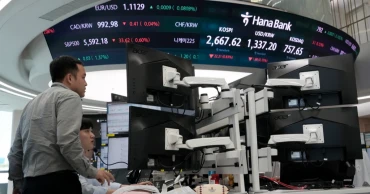
Global benchmarks are mixed in cautious trading ahead of US holiday and jobs report
Global shares were mixed in cautious trading Monday ahead of the Labor Day holiday in the U.S., when stock exchanges are closed.
France's CAC 40 slipped 0.3% in early trading to 7,611.64, while Germany's DAX fell 0.1% to 18,881.14. Britain's FTSE 100 was little changed, down less than 0.1% at 8,370.39. U.S. shares were set to drift lower with Dow futures down 0.1% at 41,613.00. S&P 500 futures fell 0.1% to 5,654.25.
Investors were also looking ahead to the U.S. employment report set for release Friday for an indication of the strength of the American economy.
In Asia, Japan’s Nikkei 225 gained 0.1% to finish at 38,700.87, after the Finance Ministry reported capital spending by Japanese companies in the April-June quarter increased 7.4% from the previous year.
After a period of stagnation, Japan’s economy is showing signs of a recovery. Next week, Japan will release revised gross domestic product, or GDP, data, a measure of the value of a nation’s goods and services. The preliminary data released earlier showed the first growth in two quarters.
Australia’s S&P/ASX 200 rose 0.2% to 8,109.90, while South Korea’s Kospi gained nearly 0.3% to 2,681.00. Hong Kong’s Hang Seng slipped 1.7% to 17,691.97. The Shanghai Composite dipped 1.1% to 2,811.04.
A bit of pessimism rolled in over China’s growth prospects over the weekend, as its National Bureau of Statistics reported that August manufacturing PMI, a barometer of industrial output, fell from 49.4 to 49.1. That was weaker than market forecasts.
Recent reports on the U.S. economy, including inflation, consumer spending and income, have been encouraging. The Commerce Department said its personal consumption and expenditures report showed prices rose 0.2% from June to July, up slightly from the previous month’s 0.1% increase.
That means price rises are slowing down, and that’s likely to lead to the Federal Reserve cutting interest rates for the first time in more than four years. The market expects the Fed will start cutting rates later this month.
In other encouraging news, Friday’s Commerce Department report showed Americans stepped up their spending by 0.5% from June to July and incomes rose 0.3%, faster in July than the previous month.
In energy trading, benchmark U.S. crude rose 5 cents to $73.60 a barrel. Brent crude, the international standard, added 6 cents to $76.99 a barrel.
In currency trading, the U.S. dollar edged up to 146.68 Japanese yen from 146.18 yen. The euro cost $1.1071, up from $1.1053.
1 year ago
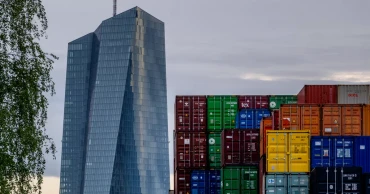
Inflation fell to 2.2% in Europe, clearing the way for a European Central Bank rate cut in September
Inflation in the 20 European Union countries that use the euro fell sharply to 2.2% in August, opening the door for the European Central Bank to cut interest rates as the ECB and the U.S. Federal Reserve prepare to lower borrowing costs to support growth and jobs.
The August figure was down from 2.6% in July, according to figures Friday from European Union statistics agency Eurostat. Energy prices fell in August by 3%, helping lower the overall figure, while inflation fell to 2% in Germany, the eurozone’s largest economy.
The monthly figure is now close to the ECB’s target of 2%, the level considered best for the economy. The central bank is charged with maintaining stable prices under the treaty that set up the European Union. Not all of the EU’s 27 countries use the euro.
Economists expect the ECB to cut its key rate by a quarter point from 3.75% at its Sept. 12 meeting, while the Fed is expected to cut rates from a 23-year high of 5.25%-5.5% at its Sept. 17-18 policy meeting.
The lower German inflation figure “tilts the balance toward a September rate cut,” said Carsten Brzeski, global chief of macro at ING bank. “Fading inflationary pressure combined with fading growth momentum offer an almost perfect macro backdrop for another rate cut.”
Economists caution that the path downward to 2% may yet be a bumpy one. The ECB has said it expects inflation to fluctuate going forward but to fall to its target by the end of next year.
Central banks sharply raised interest rates to counter an outburst of inflation caused by a spike in energy prices following Russia’s invasion of Ukraine, and by clogged supply chains for parts and raw materials as the global economy bounced back from the COVID-19 pandemic.
Higher rates can quell inflation by making it more expensive to borrow and buy things, reducing demand for goods and thus taking pressure off prices. Europe’s inflation has now fallen a long way from the 10.6% it reached in October 2022.
But higher rates can weigh on growth as well, and those concerns have come to the fore in both Europe and the U.S. While unemployment rates remain low in both economies, central bankers are becoming wary of keeping rates too high for too long and seeing people lose their jobs or the economy tip into recession. It is a tricky balance since the impact of rate moves comes only with a delay of months.
The eurozone grew only a modest 0.3% in the second quarter. High rates have killed off a years-long rally in European house prices and dampened loans to consumers and businesses, while complicating financing decisions for new renewable energy projects that are highly rate-sensitive.
Rates that “are too high for too long” would fail to minimize the side effects on economy activity and jobs, which in turn could lead to “chronically below-target inflation,” Philip Lane, a member of the ECB’s six-member executive board that runs the central bank day to day at its Frankfurt headquarters, said Saturday at a Fed conference in Jackson Hole, Wyoming. .
Lane kept the ECB’s options for September open however by saying that a return to the 2% target “is not yet secure.” ECB head Christine Lagarde has said the bank will decide rates meeting by meeting based on incoming data about the economy at the time.
The ECB made a first rate cut in June, then hit pause in July and has since been waiting for confirmation that the coast is clear to make more cuts.
1 year ago

Canada imposes a 100% tariff on imports of Chinese-made electric vehicles, matching the US
Canada’s government on Monday announced it is imposing a 100% tariff on imports of Chinese-made electric vehicles that matches U.S. tariffs and follows similar plans announced by the European Commission.
The announcement came after encouragement by U.S. national security advisor Jake Sullivan during a meeting with Canadian Prime Minister Justin Trudeau and cabinet ministers on Sunday. Sullivan is making his first visit to Beijing on Tuesday.
Trudeau said Canada also will impose a 25% tariff on Chinese steel and aluminum.
“Actors like China have chosen to give themselves an unfair advantage in the global marketplace,” he said.
There was no immediate response from China.
Chinese officials are likely to raise concerns about American tariffs with Sullivan as Beijing continues to repair its economy after the COVID-19 pandemic. U.S. President Joe Biden in May slapped major new tariffs on Chinese electric vehicles, advanced batteries, solar cells, steel, aluminum and medical equipment.
“The U.S. does believe that a united front, a coordinated approach on these issues benefits all of us,” Sullivan told reporters on Sunday.
Biden has said Chinese government subsidies for EVs and other consumer goods ensure that Chinese companies don’t have to turn a profit, giving them an unfair advantage in global trade.
Chinese firms can sell EVs for as little as $12,000. China’s solar cell plants and steel and aluminum mills have enough capacity to meet much of the world’s demand. Chinese officials argue their production keeps prices low and would aid a transition to the green economy.
“We’re doing it in alignment, in parallel, with other economies around the world that recognize that this is a challenge that we are all facing,” Trudeau said of the new tariffs. “Unless we all want to get to a race to the bottom, we have to stand up.”
Deputy Prime Minister Chrystia Freeland said Canada also will launch a 30-day consultation about possible tariffs on Chinese batteries, battery parts, semiconductors, critical minerals, metals and solar panels.
“China has a intentional state-directed policy of overcapacity and oversupply designed to cripple our own industry,” Freeland said. “We simply will not allow that to happen to our EV sector, which has shown such promise.”
The only Chinese-made EVs currently imported into Canada are from Tesla, made at the company’s Shanghai factory.
Canada "had to go with the U.S. position, when you think about the economic integration that we have with the U.S. More than 75% of our exports go to the U.S.,” said a former Canadian ambassador to China, Guy Saint-Jacques. “This reflects the fear that the next president of the United States might be Donald Trump, and so they know we have to be pretty much aligned in all of this.”
Saint-Jacques said Canada can expect retaliation from China in other industries, adding that barley and pork are candidates because the Chinese can get it from other countries.
“China will want to send a message,” he said.
1 year ago

Dutch watchdog fines Uber $324 million for alleged inadequate protection of drivers' data
The Dutch data protection watchdog slapped a 290 million euro ($324 million) fine Monday on ride-hailing service Uber for allegedly transferring personal details of European drivers to the United States without adequate protection. Uber called the decision flawed and unjustified and said it would appeal.
The Dutch Data Protection Authority said the data transfers spanning more than two years amounted to a serious breach of the European Union’s General Data Protection Regulation, which requires technical and organizational measures aimed at protecting user data.
“In Europe, the GDPR protects the fundamental rights of people, by requiring businesses and governments to handle personal data with due care,” Dutch DPA chairman Aleid Wolfsen said in a statement.
“But sadly, this is not self-evident outside Europe. Think of governments that can tap data on a large scale. That is why businesses are usually obliged to take additional measures if they store personal data of Europeans outside the European Union. Uber did not meet the requirements of the GDPR to ensure the level of protection to the data with regard to transfers to the U.S. That is very serious.”
The case was initiated by complaints from 170 French Uber drivers, but the Dutch authority issued the fine because Uber’s European headquarters is in the Netherlands.
Uber insisted it did nothing wrong.
“This flawed decision and extraordinary fine are completely unjustified. Uber’s cross-border data transfer process was compliant with GDPR during a 3-year period of immense uncertainty between the EU and U.S. We will appeal and remain confident that common sense will prevail,” the company said in a statement.
The alleged breach came after the EU’s top court ruled in 2020 that an agreement known as Privacy Shield that allowed thousands of companies — from tech giants to small financial firms — to transfer data to the United States was invalid because the American government could snoop on people’s data.
The Dutch data protection agency said that following the EU court ruling, standard clauses in contracts could provide a basis for transferring data outside the EU, “but only if an equivalent level of protection can be guaranteed in practice.”
“Because Uber no longer used Standard Contractual Clauses from August 2021, the data of drivers from the EU were insufficiently protected,” the watchdog said. It added that Uber has been using the successor to Privacy Shield since the end of last year, ending the alleged breach.
The Computer & Communications Industry Association, an advocacy organization for tech companies, said the fine ignored the realities of online business in the aftermath of the 2020 EU court ruling.
“The busiest internet route in the world could not simply be put on hold for three entire years while governments worked to establish a new legal framework for these data flows,” the association's European head of policy, Alexandre Roure, said in a statement.
“Any retroactive fines by data protection authorities are especially worrisome given that these very privacy watchdogs failed to provide helpful guidance during this period of significant legal uncertainty, in absence of any clear legal framework,” he added.
Monday's announcement is not the first time the Dutch data protection watchdog has fined Uber. In January, the agency fined it 10 million euros over what it said was the company's failure to disclose how long it retained data from drivers in Europe or to name non-EU countries it shared the data with.
1 year ago