World-Business

In his annual letter, Warren Buffett tells investors to ignore Wall Street pundits
Warren Buffett credited his longtime partner — the late Charlie Munger — with being the architect of the Berkshire Hathaway conglomerate he's received the credit for leading and warned shareholders in his annual letter Saturday not to listen to Wall Street pundits or financial advisors who urge them to trade often.
Buffett said he always writes his letter with smart, long-term investors like his sister Bertie in mind and tries to tell them what he thinks they'd like to know about Berkshire.
“She is sensible – very sensible – instinctively knowing that pundits should always be ignored,” Buffett wrote about Bertie. “After all, if she could reliably predict tomorrow’s winners, would she freely share her valuable insights and thereby increase competitive buying? That would be like finding gold and then handing a map to the neighbors showing its location.”
Buffett told investors that Berkshire is a safe place to park their cash as long as they don't expect the “eye-popping performance” of its past because there are no attractively priced acquisition targets out there big enough to make a meaningful difference in the Omaha, Nebraska-based company's results. But he said Berkshire will be ready to swoop in with its $167.6 billion whenever the casino-like stock market seizes up.
Private US spacecraft is on its side on the moon with some antennas covered up, the company says
Investor Cole Smead of Smead Capital Management said Buffett is reassuring investors that “we'll be ready to buy things when things finally get rational” while warning about the dangers of Wall Street that “is like a denizen of thieves, and they'll sell you what they can sell you.”
Munger, Buffett’s longtime investing partner, died in November at age 99 — taking away one of the key sounding boards Buffett relied on over the decades as Berkshire acquired companies like See’s Candy, Geico insurance, BNSF railroad and others to reshape the failing textile mill they took over in the 1960s into the massive eclectic conglomerate Berkshire is today.
Buffett already devoted part of last year’s annual letter to Berkshire shareholders to a tribute to Munger, but this year’s version led off with even more praise for the revered curmudgeon’s contributions to Berkshire over the years. Buffett said “Charlie was the 'architect' of the present Berkshire” who realized early on that it was better to buy wonderful businesses at fair prices.
“Charlie never sought to take credit for his role as creator but instead let me take the bows and receive the accolades,” Buffett wrote. “In a way his relationship with me was part older brother, part loving father. Even when he knew he was right, he gave me the reins, and when I blundered he never – never – reminded me of my mistake.”
Munger’s death served as yet another reminder that Berkshire will one day have to move forward without the 93-year-old Buffett at the helm.
US and EU pile new sanctions on Russia for the Ukraine war's 2nd anniversary and Navalny's death
Berkshire has established a succession plan and said that Vice Chairman Greg Abel will one day replace Buffett as CEO while the company’s two other investment managers will take over the stock portfolio. Abel has already overseen all of Berkshire’s many noninsurance businesses since 2018, and managers at those companies say investors shouldn’t worry about Abel’s ability to lead the company. To a great extent, Berkshire lets its companies run themselves on a day-to-day basis while headquarters decides where to invest all the cash they generate.
Buffett told investors in his letter that Abel “in all respects is ready to be CEO of Berkshire tomorrow.”
Edward Jones analyst Jim Shanahan found that comment about Abel comforting, but the question is whether he'll be ready to take advantage of a big opportunity when there is a financial panic because Abel might be afraid that his first big investment would be a dud.
“I have no doubt. given his operational background, that he can step in and run Berkshire today, but I don’t know if he’s ready to commit a huge amount of capital,” Shanahan said.
Buffett also recounted how Berkshire's insurance businesses thrived last year, but its massive utilities and BNSF railroad disappointed. He also told shareholders how he never plans to sell its stakes in nearly 30% of Occidental Petroleum and 9% of five large Japanese trading houses, but he reiterated that he has no plans to buy the oil producer outright.
Berkshire's eclectic mix of businesses, combined with the strong performance of its investments, delivered a profit of $37.57 billion, or $26,043 per Class A share, in the fourth quarter. That's more than double the $18.08 billion profit, or $12,355 per Class A share, that Berkshire reported a year earlier.
Shamima Begum loses appeal over removal of her UK citizenship
But Buffett cautioned that investors should largely ignore those bottom line figures because they are swayed so much by the paper value of its investments. Instead, he has long urged investors to pay attention to Berkshire's operating earnings that exclude investments.
By that measure, Berkshire reported a 28% jump in operating earnings to $8.48 billion, or $5,878.21 per Class A share. That's up from $6.63 billion, or $4,527.06 per Class A share.
The three analysts surveyed by FactSet Research predicted that Berkshire would report quarterly operating earnings of $5,717,17 per Class A share.
Berkshire’s stock has set a series of new records in recent weeks, most recently peaking at $632,820 per Class A share Friday morning as investors eagerly anticipated Buffett’s letter. Buffett is revered for his remarkably successful track record and the sage advice he has offered over the decades. His annual letter is always one of the best-read reports in the business world.
Berkshire also spent $2.2 billion repurchasing its own shares in the fourth quarter, bringing the total to $9.2 billion for the full year.
But the cash continues to pile up to record levels at Berkshire because Buffett can't find any huge investments at reasonable prices.
One of the biggest acquisitions Berkshire did make recently was the purchase of the last 20% of the Pilot truck stop business it hadn’t already bought as part of a 2017 deal. But that transaction with the Haslam family got messy last year with both Berkshire and the Haslams accusing each other of trying to manipulate Pilot’s earnings to affect the price Berkshire had to pay.
The dueling lawsuits over that deal generated headlines with bribery allegations and other alleged misdeeds before being settled in January. Berkshire completed the purchase of the nation’s largest truck stop operator last month for only $2.6 billion.
Buffett didn't directly comment on that deal, but he may have been hinting at it when he recounted classic advice from 1863 urging all banks to “never deal with a rascal” that he said he's learned the wisdom of over the years.
“People are not that easy to read," Buffett said. "Sincerity and empathy can easily be faked. That is as true now as it was in 1863.”
2 years ago

FBCCI seeks continuation of export incentive until 2026
The Federation of Bangladesh Chambers of Commerce and Industry (FBCCI) wrote to the Ministry of Finance to retain the cash incentive facility in the export sector until 2026.
Facebook, Instagram users will start seeing labels on AI-generated images
In a letter to the ministry, FBCCI president Mahbubul Alam said, "Since there is an scope to provide cash assistance till 2026, it is necessary to maintain this.”
He also urged the ministry to increase the incentive in some fields if possible.
Foreign Minister in New Delhi, talks with Jaishankar today
The FBCCI president wrote the letter to the ministry on February 3.
Bangladesh Bank (BB) on January 30, 2024, announced stopping of the cash benefits for 43 export sectors, including readymade garments and leather, for six months up to June this year as part of Bangladesh's preparations for graduation from LDC status.
Asus ROG Phone 8 Pro Review: A High-end Gaming Device
2 years ago
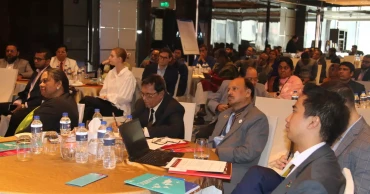
Responsible business conduct for decent work is crucial for sustainable value chains in Bangladesh
The International Labor Organization (ILO) Better Work Bangladesh (BWB) organized a two-day consultation event, "Responsible Business Conduct (RBC) along Value Chain and Purchasing Practices” to step towards advancing the landscape of business and labor practices in Bangladesh.
With the financial support of the Government of Japan, the event was held on January 24 and 25, 2024, and attracted over 100 participants from various sectors, including government, trade unions, employers' organizations, enterprises, development partners, and civil society organizations.
BCC fines Diamond Egg, CP for raising egg prices in collusion
The insightful discussions on RBC during the event emphasized the commitment to fostering decent work practices beyond the Readymade Garment (RMG) sector, including Plastic, Tea, Agriculture, FMCG, Leather & Footwear, said a press release.
The consultation aimed to facilitate dialogue among ministries and governmental agencies, social partners and enterprises for assessing what is needed to put the right ecosystem in place to promote responsible business conduct for the realization of decent work in and beyond the apparel sector in Bangladesh.
As the world increasingly acknowledges the importance of responsible business practices and human rights due diligence in supply chains, the event provided further orientation to participants on business practices that translate decent work into action and addressed the roles and responsibilities of the different actors.
Tuomo Poutiainen, ILO Country Director for Bangladesh, said, "Responsible business conduct is key to sustainable and inclusive growth. This event is crucial to promoting responsible business conduct in business operations in Bangladesh, within and beyond the apparel sector, aligning with international instruments, such as the ILO MNE Declaration and United Nations Guiding Principles on Business and Human Rights, as well as global best practices.”
“There is a need for a collective commitment from various stakeholders to facilitate a dialogue, fostering a general understanding of and promoting responsible business conduct across industries and supply chains. The other sectors can also learn from the Better Work Bangladesh experiences in RMG in the last 10 years,” he added.
Avijit Chowdhury, additional secretary to the Government of Bangladesh and executive member of the Bangladesh Investment Development Authority (BIDA), said, "We need to focus on economic diplomacy that highlights enhancing working conditions and elevating work standards. Adopting a holistic approach with a positive mindset to Responsible Business Conduct (RBC) is key. Bangladesh is reviewing its investment policy to integrate decent work issues and promote sustainable investments through addressing technology use, skill development and ensuring compliance."
NBR awards 54 public and private companies as highest taxpayers
Haruta Hiroki, first secretary, and head of economic department, Embassy of Japan in Bangladesh, said, "We place significant importance on business and human rights, upholding a commitment to responsible business conduct. Our focus on ethical and socially responsible business practices remained unwavering. We genuinely care about human rights issues, and our journey reflects a sincere commitment to fostering positive impact."
In the two-day discussions, participants explored how the ILO MNE Declaration could be useful for Bangladesh to stimulate the contribution of enterprises (national and multinational) to development and inclusive growth. They also reflected on potential entry points for promoting responsible business conduct for the realization of decent work in a coordinated and coherent manner across governmental actions, highlighting the role of employers’ and workers’ organizations as well as enterprises.
Wasim Zachariah, chairman of the Standing Committee on SDG Affairs, BGMEA, reflected, "In a global landscape shaped by geopolitical challenges and economic shifts, the importance of RBC becomes even more evident. The ongoing conflicts, such as the one between Ukraine and Russia, coupled with the energy crisis and economic downturn in Europe, highlight the interconnectedness of markets. As we navigate these complexities, it's crucial for businesses to integrate RBC into their supply chains.”
Babul Akhtar, Senior Vice President, IndustriALL Bangladesh Council (IBC), said, "We must prioritize creating safe working environments in collaboration with workers to align with international standards and RBC. It requires action and genuine commitment that ensures that workers are not only part of the dialogue but are integral to impactful decisions within the RBC approach.”
The consultation resulted in shaping a possible roadmap for the promotion of responsible business conduct for decent work in Bangladesh.
Plastic goods industry's international product fair in Dhaka from Wed
This roadmap outlines priority actions for promoting sustainable, responsible, and inclusive business practices across different economic sectors and recommends the creation of a national working group on RBC for the realization of decent work to provide overarching guidance in this area.
The event highlighted the critical importance of coordination and coherence among the different actors to foster collaborative efforts to contribute to sustainable and inclusive growth, reads the release.
2 years ago

Imad N. Fakhoury appointed as IFC Regional Director for South Asia
Newly appointed Regional Director for South Asia of the International Finance Corporation (IFC) Imad N. Fakhoury has said private sector investment is key to achieving South Asia’s development goals amid persisting global crises.
“By offering innovative and scalable solutions, IFC will help accelerate the region’s transition to a greener, more inclusive and resilient development model,” said Fakhoury.
IFC’s focus is on creating opportunities where they are needed most, sustaining jobs, supporting climate goals, improving inclusion for all by improving services for people, and strengthening digital and financial access across the region.
Based in New Delhi, Fakhoury will spearhead IFC's strategy and operations, while reinforcing relationships with the private sector, governments, and regional partners to boost impactful development outcomes in the region.
“IFC will also support the region to mainstream gender considerations and help remove obstacles to gender equity in South Asia,” he said.
Fueling economic growth and job creation in South Asia is imperative to unlocking the region’s potential and paving the path towards prosperity, said Riccardo Puliti, IFC’s Regional Vice President for Asia and the Pacific.
“Fakhoury’s deep experience in enabling and scaling up private capital mobilization for sustainable infrastructure and climate transitions will be a huge asset for IFC,” said Puliti.
IFC’s focus in South Asia centers on providing strategic investments and advisory interventions across Bangladesh, Bhutan, India, the Maldives, Nepal, Sri Lanka to promote inclusive sustainable growth and encourage global and regional integration, among others. Strengthening capital markets, increasing competitiveness, and closing the gender gap are also among IFC’s priorities in the region.
In FY23, IFC provided nearly $3.45 billion in long-term investments in South Asia, including $1.3 billion mobilized from other investors.
Fakhoury said, “With the recently concluded COP28, IFC is prioritizing both climate investments and delivering impactful outcomes to help countries achieve their climate targets. I look forward to engaging with all stakeholders to ramp up our support for sustainable infrastructure—encompassing mitigation and adaptation as well as digital connectivity—while empowering small businesses and facilitating public-private partnerships (PPPs) to increase the region’s resilience.”
Fakhoury joined the World Bank Group in 2019 as a Senior Adviser at IFC and moved into his previous role as Global Director for Infrastructure Finance, PPPs & Guarantees at the end of 2019.
From 2010-2018, he held several ministerial positions in successive Jordanian governments as Minister of Planning and International Cooperation, Minister of Mega Projects, Minister of Public Sector Development, and Chief of Staff to the King of Jordan.
One of the key architects of flagship PPP transactions in Jordan, he also served as a co-founder and chair/board member in several national strategic infrastructure PPP companies, public organizations, and councils.
Fakhoury has a BSc in Biomedical Engineering and an MSc in Engineering Management from Case Western Reserve University. He also holds a Master’s in Public Policy from the Harvard Kennedy School of Government, and an MBA from the Kellogg Business School at Northwestern University.
IFC — a member of the World Bank Group — is the largest global development institution focused on the private sector in emerging markets.
2 years ago

Uniqlo sues Shein over alleged copy of its popular ‘Mary Poppins bag’
Shein, founded in China but now based in Singapore, did not immediately respond to a request for comment. The lawsuit was filed in Tokyo District Court on Dec. 28 by Tokyo-based Fast Retailing Co., which operates Uniqlo stores.Uniqlo said Thursday it’s demanding damages of about 160 million yen ($1.1 million) in its lawsuit targeting the three companies that operate Shein, Roadget Business Pte, Fashion Choice Pte and Shein Japan Co.
Uniqlo said Shein’s product was a copyright violation of inferior quality that undermined customer confidence in the Uniqlo brand.Uniqlo’s bag comes with inner pockets and is billed as durable and water-resistant. In Japan, it costs 1,500 yen, and in the U.S. $19.90, coming in various colors, including light blue and violet.Uniqlo, which has nearly 2,500 stores in 26 global markets, is behind hit affordable casual clothing like HeatTech thermal underwear.
Shein reaches customers mainly through its app. The company says it uses digital technology to respond nimbly to customer tastes and avoid waste.
2 years ago

Global economy will slow for a third straight year in 2024, World Bank predicts
Hobbled by high interest rates, persistent inflation, slumping trade and a diminished China, the global economy will slow for a third consecutive year in 2024.
That is the picture sketched by the World Bank, which forecast Tuesday that the world economy will expand just 2.4% this year. That would be down from 2.6% growth in 2023, 3% in 2022 and a galloping 6.2% in 2021, which reflected the robust recovery from the pandemic recession of 2020.
Heightened global tensions, arising particularly from Israel's war with Hamas and the conflict in Ukraine, pose the risk of even weaker growth. And World Bank officials express worry that deeply indebted poor countries cannot afford to make necessary investments to fight climate change and poverty.
"Near-term growth will remain weak, leaving many developing countries — especially the poorest — stuck in a trap: with paralyzing levels of debt and tenuous access to food for nearly one out of every three people," Indermit Gill, the World Bank's chief economist, said in a statement.
In recent years, the international economy has proved surprisingly resilient in the face of shock after shock: the pandemic, Russia's invasion of Ukraine, resurgent global inflation and the burdensome interest rates that were imposed by central banks to try to bring price increases back under control. The World Bank now says the global economy grew half a percentage point faster in 2023 than it had predicted back in June and concludes that "the risk of a global recession has receded.''
Leading the way in 2023 was the United States, which likely registered 2.5% growth last year — 1.4 percentage points faster than the World Bank had expected in mid-year. The World Bank, a 189-country anti-poverty agency, expects U.S. growth to decelerate to 1.6% this year as higher interest rates weaken borrowing and spending.
The Federal Reserve has raised U.S. interest rates 11 times since March 2022. Its strenuous efforts have helped bring U.S. inflation down from the four-decade high it reached in mid-2022 to nearly the Fed's 2% target level.
Higher rates are also taming global inflation, which the World Bank foresees sinking from 5.3% last year to 3.7% in 2024 and 3.4% in 2025, though still above pre-pandemic averages.
China's economy, the world's second-largest after the United States, is expected to grow 4.5% this year and 4.3% in 2025, down sharply from 5.2% last year. China's economy, for decades a leading engine of global growth, has sputtered in recent years: Its overbuilt property market has imploded. Its consumers are downcast, with youth unemployment rampant. And its population is aging, sapping its capacity for growth.
Slumping growth in China is likely to hurt developing countries that supply the Chinese market with commodities, like coal-producing South Africa and copper-exporting Chile.
The World Bank expects the 20 countries that share the euro currency to eke out 0.7% growth this year, a modest improvement on 0.4% expansion last year. Japan's economy is forecast to grow just 0.9%, half the pace of its 2023 expansion.
2 years ago

UN economic forecast cites conflicts, sluggish trade, high interest and climate disasters
The United Nations issued a somber global economic forecast for 2024 on Thursday, pointing to challenges from escalating conflicts, sluggish global trade, persistently high interest rates and increasing climate disasters.
In its flagship economic report, the U.N. projected that global economic growth would slow to 2.4% this year from an estimated 2.7% in 2023, which exceeds expectations. But both are still below the 3% growth rate before the COVID-19 pandemic began in 2020, it said.
Also read: North Korea conducts artillery drills along disputed sea border. South Korea plans similar drills
The U.N. forecast is lower than those of the International Monetary Fund in October and the Organization for Economic Cooperation and Development in late November.
The IMF said it expects global growth to slow from an expected 3% in 2023 to 2.9% in 2024. The Paris-based OECD, comprising 38 mainly developed countries, estimated that international growth would also slow from an expected 2.9% in 2023 to 2.7% in 2024.
The U.N.'s report -- World Economic Situation and Prospects 2024 -- warned that the prospects of prolonged tighter credit conditions and higher borrowing costs present "strong headwinds" for a world economy saddled with debt, especially in poorer developing countries, and needing investment to resuscitate growth.
Shantanu Mukherjee, director of the U.N.'s Economic Analysis and Policy Division, said fears of a recession in 2023 were averted mainly due to the United States, the world's largest economy, curbing high inflation without putting the brakes on the economy.
Also read: An election that could determine fate of American democracy: Biden starting campaign year
But he told a news conference launching the report: "We're still not out of the danger zone."
Mukherjee said that's because the unsettled situation in the world could fuel inflation. For example, another supply chain shock or problem in fuel availability or distribution could prompt another interest rate hike to bring the situation under control, he said.
"We're not expecting a recession, per se, but because there is volatility in the environment around us, this is the major source of risk," he said.
Very high interest rates for a long time and the threat of possible shocks to prices contribute to "quite a difficult balancing act," Mukherjee said. "So that's really why we said that we are not yet out of the woods."
According to the report, global inflation, which was at 8.1% in 2022, is estimated to have declined to 5.7% in 2023, and is projected to decline further to 3.9% in 2023 .
But in about a quarter of all developing countries, annual inflation is projected to exceed 10% this year, it said.
Also read: Blasts kill 103 people at ceremony honouring slain Iranian general Qassim Soleimani
While the U.S. economy performed "remarkably well" in 2023, the report said growth is expected to decline from an estimated 2.5% in 2023 to 1.4% this year.
"Amid falling household savings, high interest rates, and a gradually softening labor market, consumer spending is expected to weaken in 2024 and investment is projected to remain sluggish," the U.N. said. "While the likelihood of a hard landing has declined considerably, the United States economy will face significant downside risks from deteriorating labor, housing and financial markets."
With elevated inflation and high interest rates, the report said Europe faces "a challenging economic outlook."
GDP in the European Union is forecast to expand from 0.5% in 2023 to 1.2% in 2024, it said, with the increase driven by "a pick-up in consumer spending as price pressures ease, real wages rise, and labor markets remain robust."
Japan, the world's fourth largest economy, is projected to see economic growth slow from 1.7% in 2023 to 1.2% this year despite the country's monetary and fiscal policies, the report said, "Rising inflation may signal an end from the deflationary trend that persisted for more than two decades" in the country, it said.
In China, the world's second-largest economy, the U.N. said recovery from COVID lockdowns has been more gradual than expected "amid domestic and international headwinds.
With economic growth of just 3.0% in 2022, the report said China turned a corner during the second half of 2023 with the growth rate reaching 5.3%. But it said the combination of a weak property sector and faltering external demand for its products "will nudge growth down moderately to 4.7% in 2024.
Also read: US Navy helicopters fire at Yemen's Houthi rebels and kill several in latest Red Sea shipping attack
In developing regions, the U.N. said economic growth in Africa is projected to remain weak with a slight increase from an average of 3.3% in 2023 to 3.5% in 2024.
"The unfolding climate crisis and extreme weather events will undermine agricultural output and tourism, while geopolitical instability will continue to adversely impact several subregions … especially the Sahel and North Africa," the report said.
The U.N. forecasts a moderate slowdown in East Asia economies from 4.9% in 2023 to 4.6% in 2024. In Western Asia, GDP is forecast to grow by 2.9% in 2024, up from 1.7% in 2023.
In South Asia, GDP rose by an estimated 5.3% last year and is projected to increase by 5.2% in 2024, "driven by a robust expansion in India, which remains the fastest growing large economy in the world." Its growth is forecast to reach 6.2% this year, similar to its projected 6.3% increase in 2023.
2 years ago

Kurdistan-Bangladesh Business Council chief meets BGMEA President to discuss business potential
Having secured a solid standing in the world, Bangladesh considers diversifying markets as a key strategy for its apparel industry to pursue sustainable growth.
The Bangladesh Garment Manufacturers and Exporters Association (BGMEA) has actively been engaged in exploring new yet promising markets under its apparel diplomacy initiative.
Under this initiative, the BGMEA delegations have paid visits to potential apparel export destinations, including Australia, South Korea, India, China, and most recently, Iraq.
Rising loan dependency and shrinking savings due to income disparity: Insights from BBS survey
The goal is to foster trade relations, explore new markets, and propel the sustainable growth of Bangladesh’s apparel industry.
The BGMEA delegation’s recent visit to Iraq aimed at strengthening trade ties between Bangladesh and Iraq.
2 years ago

Cabinet body okays proposals for import of 3.065 million MTs of petroleum oils, other products
Cabinet Committee on Government Purchase (CCGP) in a meeting on Wednesday approved a number of proposals including the import of 3.065 million metric tons of petroleum oils from foreign suppliers in 2024.
Evolving global order brings risks and opportunities for Bangladesh, economist Wahiduddin tells BIDS Conference
Finance Minister AHM Mustafa Kamal presided over the virtually held meeting.
As per the proposals, moved by the Energy and Mineral Resources Division, state-owned Bangladesh Petroleum Corporation (BPC) will import the entire petroleum oils to meet the local requirements.
Of these, 1.5 million (15 lakh) MTs are crude oil and the remaining 1.565 million (15.65 lakh) MTs are refined petroleum.
As per the proposals, some 800,000 (8 lakh) MTs of light Arabian Light Crude (ALC) oil will be imported from Saudi Aramco at a cost of Tk 6,407.35 crore while 700,000 (7 lakh) MTs of crude oil will be imported from Adnoc of Abu Dhabi at a cost of Tk 5808.52 crore.
The proposed 1.5 million (15 lakh) MTs of refined petroleum oils will be imported from January to June period in 2024 through international quotation process from different suppliers at an approximate value of Tk 13,599.79 crore.
Annually, Bangladesh requires about 6.5 million MTs of petroleum fuels of which it imports 1.5 million MTs of crude oils while the remaining is refined petroleum oils of different types.
The diesel dominates the import quantity.
Thailand keen on FTA with Bangladesh as soon as possible
The CCGP approved a proposal to set up a 100 MW wind power plant in Satkhira district under private sector sponsorship from which the government will purchase electricity.
As per proposal, the Sustainable Energy International Ltd will set up the plant and the state-owned Bangladesh Power Development Board (BPDB) will purchase electricity from the plant over the period of 20 years at a tariff rate of Tk 13.525 (about US Cent 12) per kilowatt hour spending Tk 5687.08 crore.
Under another proposal, the Consortium of (1) Infraco Asia Development Pte Ltd; (2) Greencells GmbH. and (3) Global Greengen Ltd., will set up a 10 MW solar (AC) power plant in Sadar Upazila of Noakhali District.
The BPDB will buy electricity over the period of 20 years at a tariff rate of Tk 11.017 (about US Cent 9.7) per kilowatt hour spending Tk 357.12 crore.
The committee also approved two separate proposals of Bangladesh Agriculture Development Corporation (BADC) to import 30,000 MTs of TSP fertiliser from OCP, SA of Morocco at a cost of Tk 132.63 crore and 25,000 MTs of TSP fertiliser from GCT of Tunisia at a cost of Tk 109.14 crore.
A proposal of Rapid Action Battalion (RAB) received an approval for import of 4 personnel armoured carrier vehicles at Tk 23.91 crore.
FBCCI will support steel industry to increase exports to Commonwealth nations
The committee also approved a number of proposals for import of rice bran oil, soybean oil and lentils by Trading Corporation of Bangladesh (TCB) from local suppliers.
2 years ago

Fashion for Good keen to share knowledge around new innovations with manufacturers in Bangladesh
Priyanka Khanna, Innovation Director – Scaling at Fashion for Good has said Bangladesh is an important region for the textile industry worldwide and they are keen to share their knowledge around new innovations with the manufacturers in Bangladesh.
“Through this partnership we brought innovators; namely, teams from Circ and Infinited Fiber Company to interact, engage, and in the future partner with the local industry actors,” she was quoted as saying in a media release issued on Tuesday.
BMCCI holds seminar on legal compliances for companies
On December 7-8, Bangladesh Apparel Exchange in partnership with Fashion for Good, facilitated the “Chemical Recycling Technologies: Manufacturing Markets Gateway”, in Bangladesh, one of the world's leading garment manufacturing countries.
Fashion for Good, the Amsterdam based global platform for innovation, along with two disruptive technology start-ups focused on textile-to-textile chemical recycling, Circ and Infinited Fiber Company, were the key stakeholders in this initiative.
The two-day visit leveraged Bangladesh's status as a major garment production hub, exploring the potential of chemical recycling technologies to enhance environmental sustainability.
Emphasizing the importance of circularity, the event aimed to spread awareness about current disruptive innovations that could transform the industry's approach to waste and resource management, setting an example for future sustainable practices.
It focused on integrating these technologies within the local manufacturing landscape, securing feedstock partnerships, and developing a value chain for recycled apparel materials.
BGMEA, H&M Group discuss collaboration to further strengthen partnership with Bangladesh
Denim Asia Limited, Knit Asia Limited, Progress Apparels Limited, Ananta BD, Reverse Resources, and the Bangladesh Garment Manufacturers and Exporters Association (BGMEA) played pivotal roles in this initiative.
Knit Asia Ltd, notably acclaimed for their commitment to sustainable practices, along with Denim Asia, associated with the sustainable brand Noize Jeans, showcased their commitment to sustainable manufacturing processes.
Progress Apparels Limited, a ready-made garment producer and part of PDS Limited demonstrated its advanced sustainable production facilities. Reverse Resources and the BGMEA hosted an intimate “Meet and Greet Networking Session”, to boost awareness about the technologies in the industry.
Founder and CEO of Bangladesh Apparel Exchange Mostafiz Uddin, emphasized the significance of this event for the wider Bangladeshi textile industry and said, "This tour marks a critical step towards a circular fashion ecosystem in Bangladesh. It's not just an event; it's part of a larger movement to incorporate innovative recycling technologies and establish global partnerships for a sustainable fashion industry."
Labour rights issues are settled: BKMEA president tells ERF seminar
Featuring interactive sessions, factory visits, and knowledge sharing, this initiative offered a platform for fostering collaborations between manufacturers and technology innovators.
Bangladesh Apparel Exchange and Fashion for Good are optimistic about a future where Bangladesh leads in sustainable and circular apparel manufacturing.
2 years ago