World-Business

Crypto firms acted like banks, then collapsed like dominoes
Over the past few years, a number of companies have attempted to act as the cryptocurrency equivalent of a bank, promising lucrative returns to customers who deposited their bitcoin or other digital assets.
In a span of less than 12 months, nearly all of the biggest of those companies have failed spectacularly. Last week, Genesis filed Chapter 11, joining Voyager Digital, Celsius and BlockFi on the list of companies that have either filed for bankruptcy protection or gone out of business.
This subset of the industry grew as cryptocurrency enthusiasts were looking to build their own parallel world in finance untethered to traditional banking and government-issued currencies. But lacking safeguards, and without a government backstop, these companies failed in domino-like fashion. What started with one crypto company collapsing in May spilled over onto one crypto lending firm and then the next.
Read more: Binimoy says it can put an end to illegal digital transactions
Further, government regulators started clamping down on crypto lending companies’ ability to advertise their services, saying that their products should have been regulated by securities regulators.
The collapse is reminiscent of the 2008 financial crisis, but on a much smaller scale. There are no worries that the collapse of these crypto firms will impact the broader economy.
Crypto lending companies like Voyager, Genesis and BlockFi were trying to do what banks do in traditional finance: take in crypto deposits, give depositors a dividend on their stored crypto, and then make loans to earn a profit. It’s what the banking industry has done for hundreds of years, but with government-sanctioned currencies.
The biggest drawback to crypto lending is the lack of safeguards. There is no deposit insurance, government stopgap, or even a privately run entity to protect depositors if their crypto bank were to fail. This was fine when crypto prices were moving higher because the collateral banks were accepting in exchange for the loans was increasing in value.
Read more: Digital payments to boost Bangladesh GDP by 1.7pc: Report
Demand for crypto deposits was so high, firms were willing to pay a yield of 10% of more on depositors’ crypto holdings.
But then crypto prices started falling and kept falling. Bitcoin, for instance, plunged from over $65,000 in November 2021 to below $17,000 last November. As a result, much of the underlying collateral these firms were holding became worth less than the loans they had issued, effectively making several “crypto banks” insolvent.
The first two crypto lending firms to collapse were Celsius and Voyager Digital. The companies had been exposed to both falling crypto prices as well as risky loans made to crypto hedge funds like Three Arrows Capital, which was forced to liquidate and go out of business in June.
BlockFi, another crypto lender, turned to then-crypto giant FTX and its founder Sam Bankman-Fried for a rescue. Bankman-Fried gave BlockFi a financial lifeline, one of several moves that earned Bankman-Fried plaudits as a savior or financial backstop for the crypto industry.
But FTX’s own bankruptcy in November, caused by high-risk lending to its affiliated hedge fund Alameda Research, caused BlockFi’s financial lifeline to wither away. BlockFi’s own bankruptcy became an inevitability. In a show of how intertwined these crypto lenders became, Genesis made billions in loans to Alameda.
Saddled with bad loans, many of these high-tech firms experienced a very old phenomenon: depositors wanted their money back, and a bank run started.
WHAT'S NEXT?
The tens of thousands of customers at these crypto lending firms are now waiting to see if their assets can be recovered or found in bankruptcy court, which could take months or even years. At Genesis, more than $900 million in customer funds are now locked up in bankruptcy.
It’s not clear whether crypto lending will see a return any time soon. After FTX failed, crypto exchange giant Binance announced it would start its own fund to provide rescue financing for a crypto firm in trouble, an idea that has its origins in government-sponsored central banking or deposit insurance.
Further, the crypto industry seems to coming around to the idea of some sort of regulation, which would provide a minimum of safeguards to depositors or investors that does not exist at the moment. There were several bills pending in Congress last year, but with the change in control to the Republicans in the House of Representatives, it's not clear whether the broader GOP has an interest in regulating the crypto industry.
3 years ago

Elon Musk: Tweets about taking Tesla private weren't fraud
Elon Musk returned to federal court Monday in San Francisco, testifying that he believed he had locked up financial backing to take Tesla private during 2018 meetings with representatives from Saudi Arabia’s Public Investment Fund — although no specific funding amount or price was discussed.
The 51-year-old billionaire Tesla CEO and Twitter owner is facing a class action lawsuit filed by Tesla investors alleging he misled them with a tweet saying funding was secured to take his electric car company private — for $420 per share.
But the deal never came close to happening, and the tweet resulted in a $40 million settlement with securities regulators.
Read more: Elon Musk depicted as liar, visionary in Tesla tweet trial
The trial hinges on the question of whether a pair of tweets that Musk posted on Aug. 7, 2018, damaged Tesla shareholders during a 10-day period leading up to Musk's admission that the buyout he had envisioned wasn’t going to happen.
Speaking in a soft halting tone, Musk said Monday he “had trouble sleeping last night and unfortunately I am not at my best.” He added that it was important for jurors to know that he “felt that funding was secured” due to his ownership of “SpaceX stock alone."
“Just as I sold stock in Tesla to buy Twitter. ... I didn't want to sell Tesla stock but I did sell Tesla stock,” he said of the sale to make up for lack of funding from other sources for his $44 billion deal to take Twitter private. Musk sold nearly $23 billion worth of his car company’s shares between last April, when he started building a position in Twitter, and December.
“My SpaceX shares alone would have meant that funding was secured,” Musk said of the 2018 tweets.
Even before Musk first took the stand on Friday, U.S. District Judge Edward Chen had declared that jurors can consider those two tweets to be false, leaving them to decide whether Musk deliberately deceived investors and whether his statements saddled them with losses.
Musk has previously contended he entered into the Securities and Exchange Commission settlement under duress and maintained he believed he had locked up financial backing for a Tesla buyout during meetings with representatives from Saudi Arabia’s Public Investment Fund.
Read more: Elon Musk sells $3.58B worth of Tesla stock, purpose unknown
At a July 31, 2018 meeting, the Saudi Public Investment Fund’s Yasir Al-Rumayyan “confirmed unequivocally that they would support Tesla going private. That was part of what ‘funding secure’ meant,” Musk said Monday. “But in addition there was SpaceX stock, which could also be used.”
In the first of the 2018 tweets, Musk stated “funding secured” for what would have been a $72 billion — or $420 per share — buyout of Tesla at a time when the electric automaker was still grappling with production problems and was worth far less than it is now. Musk followed up a few hours later with another tweet suggesting a deal was imminent.
Nicholas Porritt, a lawyer representing Tesla shareholders, asked Musk if he “went with 420 because it was a joke your girlfriend enjoys.” Musk replied he thinks there is “some karma” around the number 420 — which is also a slang reference to marijuana — although he added he doesn't know “if it's good karma or bad karma at this point.”
He then said the number was a "coincidence" and it represented a 20% premium of Tesla's share price at the time.
After it became apparent that the money wasn’t in place to take Tesla private, Musk stepped down as Tesla’s chairman while remaining CEO as part of the SEC settlement, without acknowledging wrongdoing.
On Friday, Musk had testified he thinks it is possible to be “absolutely truthful” on Twitter. "But can you be comprehensive? Of course not.”
On Monday, he again emphasized: “My tweet was truthful, absolutely truthful."
Asked by his lawyer, Alex Spiro, if he understood the charges against him, Musk said he's being "accused of fraud. It’s outrageous.”
Shares of Tesla climbed $8.76. or 6.6%, to $142.18 on Monday. He said he never deceived investors.
3 years ago
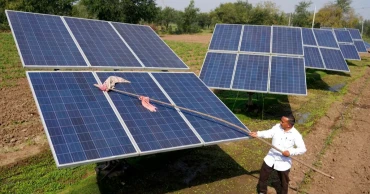
Clean energy gains a foothold in India, but coal still rules
For six years, Pravinbhai Parmar's farm in Gujarat state in western India has been lined with rice, wheat and solar panels.
The 36-year-old is among a handful of farmers in his native Dhundi village who have been using solar power to irrigate crops.
Read more: Renewable energy jobs rise to 12.7 million globally
“I was spending nearly 50,000 rupees ($615) every year to water my crops,” said Parmar. “With solar I spend nothing."
Parmar also sells the excess electricity to his state’s grid, earning an average of 4,000 rupees ($50) a month.
"It’s a win-win in every way,” he said.
Thousands of farmers have been encouraged to take up solar power for irrigation in the agriculture-rich state as India aims to reach ‘net zero’ by 2070. But livelihoods powered by clean energy are major outliers in the country that’s the third-largest emitter of planet-warming gases in the world, and last year announced its biggest-ever auction for coal mines.
Coal’s share in producing electricity for Gujarat fell from 85% to 56% in the last six years, according to analysis by London-based energy think tank Ember. The share of renewable energy for the state grew from 9% to 28% in the same period.
But Gujarat is just one of four of India's 28 states that met their renewable energy targets for 2022. Most states have installed less than 50% of their targets and some states such as West Bengal have installed only 10% of their target.
Nationwide fossil fuels generate more than 70% of India’s electricity and have been doing so for decades. Coal is by far the largest share of dirty fuels. Renewable energy currently contributes about 10% of India’s electricity needs.
From 2001 to 2021, India installed 168 gigawatts of coal-fired generation, nearly double what it added in solar and wind power combined, according to an analysis of Ember data. India’s federal power ministry estimates that its electricity demand will grow up to 6% every year for the next decade.
“The challenge of reducing the share of coal in the electricity generation mix is particularly acute because you are dealing with a sector that is growing rapidly,” said Thomas Spencer, energy analyst at the Paris-based International Energy Agency.
Spencer said India’s quickly developing economy and growing electricity consumption per capita is causing rising demand.
Read more: Consultant submits final draft on review of renewable energy policy
“Historically, countries that have achieved substantial and rapid transitions away from coal-fired power tend to have had either slowly growing or stagnant or even slightly declining electricity demand,” he added.
A report by the Global Energy Monitor ranks India among the top seven countries globally for prospective renewable power. The planned buildout of 76 gigawatts of solar and wind power by 2025 will avoid the use of almost 78 million tons of coal annually and could lead to savings of up to 1.6 trillion rupees ($19.5 billion) per year.
India missed its target to install 175 gigawatts of renewable energy to its overall power production by 2022. Experts say that to meet its 2030 renewable energy target of installing a total of 450 gigawatts, India needs to build out clean energy at a far greater rate than it is doing now.
The Indian government has repeatedly defended its use of coal and its energy transition strategy, stating that the fuel is necessary for the nation's energy security. Coal India limited, a government-owned company, is the largest state-owned coal producer in the world. It's responsible for about 82% of the total coal produced in India.
In November last year, the Indian government announced its biggest ever auction for coal mines, inviting bids for 141 mines spread across 12 states in the country. The government says the additional mines will contribute to its target of producing 1 billion tons of coal by April 2024.
Analysts say multiple obstacles include acquiring land for clean energy projects in part due to resistance from local communities. Longstanding contracts with coal plants also make it easier for state-run electricity companies to buy coal power instead of clean power.
As of December 2022, Indian state-owned electricity distribution companies owed power generators $3.32 billion in overdue payments. Their poor financial health has dampened their ability to invest in clean energy projects, analysts say.
Building energy storage, enacting more progressive policies — such as the $2.6 billion government scheme that encourages making components required to produce solar energy — and ensuring these policies are being implemented is essential to speed up a move toward renewables, analysts say.
“New laws such as the energy conservation bill as well as updated mandates issued by the federal government that make it necessary for electricity companies to purchase renewables provide hope,” said Madhura Joshi, an energy analyst at the climate think tank E3G. “At the end of the day what is needed is speeding up the installation of renewables and associated infrastructure.”
She added: “It’s great that India has a 2070 net zero target, but changes need to happen now for us to achieve this. We must build out our renewables capacity at a great speed.”
Experts say that electricity distribution companies need to allow for more rooftop solar installations even if it results in short-term economic losses for them. Investing in modernizing and building new wind energy projects will also speed up the transition, analysts said.
“Ultimately in India, renewable energy is a highly cost-effective technology. The perception that coal is cheap is changing,” said Spencer.
The price of renewable energy has plummeted. The cost of solar power has dropped roughly sixfold from 12 rupees (14 cents) per kilowatt-hour in 2011 to 2.5 rupees (0.03 cents) per kilowatt-hour in recent years.
Aditya Lolla, an energy policy analyst at Ember, is optimistic for India's clean energy future, saying renewables are “at the cusp” of skyrocketing. He believes battery storage for renewables to provide uninterrupted electricity and clean fuels — such as green hydrogen — will grow at a rapid pace.
“Storage technology for clean energy as well as green hydrogen is expected to become affordable in the coming years," Lolla said. “India is betting big on that.”
3 years ago

Amazon plans to invest $35 billion in new data centers in Virginia
Amazon Web Services plans to invest $35 billion in new data centers in Virginia under a deal with the state, Gov. Glenn Youngkin announced Friday.
Millions of dollars in incentives to close the deal still require legislative approval, but General Assembly leaders in both parties expressed support in a news release issued by Youngkin’s office.
Still, data centers have become a politically volatile topic, particularly in northern Virginia, where the structures are increasingly common and where neighbors are voicing noise and environmental concerns.
Data centers house the computer servers and hardware required to support modern internet use, and demand continues to increase. But the data centers require high-powered fans and extensive cooling capacity that can generate noise. They also consume huge amounts of electricity that can require construction of high-voltage transmission lines to support them.
Bills proposed in the legislature this year would increase regulate where centers could be located.
The governor’s office said the locations of the data centers, to be built by 2040, will be determined at a later date. But tech companies prefer northern Virginia because it is close to the historical backbone of the internet, and proximity to those connection points provides nanoseconds of advantage that are of importance to tech companies that rely on the servers to support financial transactions, gaming technology and other time-sensitive applications.
Read more: Amazon to make big business changes in EU settlement
Bill Wright, a Prince William County resident who opposed a massive data center expansion recently approved by the county’s Board of Supervisors over considerable community opposition, said Friday’s announcement shows that “the influence of big tech money has become intoxicating to our politicians.”
He said that he does not object to data centers in and of themselves and hopes that the state will place them in areas that don't harm the environment, and in rural areas where jobs are needed. But he expressed skepticism that the state is willing to stand up to tech companies that want the centers in northern Virginia.
“Northern Virginia is being overwhelmed by these things,” Wright said. “We may as well start calling ourselves the Commonwealth of Amazon.”
Suzanne Clark, a spokeswoman the the Virginia Economic Development Partnership, said Amazon Web Services is exploring several site locations “in collaboration with the Commonwealth” but did not specify any sites.
Northern Virginia has been a tech hub since the formation of the internet, and now hosts more data centers than the next five largest U.S. markets combined, according to the Northern Virginia Technology Council. They have also proven to be a cash cow for local governments that embrace them — data centers now provide for more than 30 percent of the general fund budget of Loudoun County, a suburb of the nation’s capital with more than 400,000 residents.
Another data center opponent, Elena Schlossberg with the Coalition to Protect Prince William County, expressed dismay that Youngkin felt emboldened to announce a data center deal in a year when state and local officials are all on the election ballot in Virginia — and as community concern over data centers is growing.
“That is just mind-boggling that he does not see that communities are uniting” in opposition to data centers, she said.
In a tweet, Youngkin spokeswoman Macaulay Porter said $35 billion represents the largest capital investment in Virginia history. In terms of jobs, the governor's office said it is expected to generate more than 1,000 jobs across the state. That pales in comparison to the 25,000 jobs associated with Amazon's decision in 2018 to build a second headquarters in Arlington County.
The deal calls for Amazon to receive incentives from a new Mega Data Center Incentive Program, as well as a grant of up to $140 million for workforce development site improvements and other costs. Both will require legislative approval.
The exact amount of the grant under the incentive program will depend on how many jobs are created, according to the enabling legislation under consideration by the General Assembly. It will also include temporary exemptions from a sales and use tax levied on data centers in Virginia.
State Sen. Chap Petersen, D-Fairfax, is sponsoring legislation that would restrict the placement of data centers near natural or historic resources. Petersen said Virginia risks being overwhelmed by data centers if protections aren't put in place.
“In my opinion, the data centers are short-term financial gains with long-term environmental consequences. Industrial buildings with no actual workers are not the economy of the future,” he said. “In fact, they may well be obsolete in a decade. Meanwhile, we are losing valuable farmland and historic sites.”
An Amazon Web Services spokesman declined to comment on the record over how many data centers are planned and Amazon's preferences for where to locate them.
3 years ago

HSBC, AUW launch one-year master of science in apparel, retail management programme
The Hong Kong and Shanghai Banking Corporation (HSBC) and The Asian University for Women (AUW) together Saturday (January 21, 2023) announced the launch of the "HSBC-AUW School of Apparel and Retail Management," a one-year master of science in apparel and retail management programme.
The programme will be guided by a global academic committee chaired by Dipak C Jain, former dean of the Kellogg School of Management at Northwestern University. He also served as the dean of INSEAD in France.
The HSBC-AUW School of Apparel and Retail Management will prepare young female professionals with expertise in fashion, merchandising, supply chain management, brand management, and occupational health and safety issues, said a media statement Saturday.
Read: Diesel import from India via pipeline from June: Nasrul Hamid
The programme was launched at the "HSBC-AUW School of Apparel: Leading the Future of Fashion" at Chattogram hotel.
Education Minister Dipu Moni sent a video message to the event.
Commerce Minister Tipu Munshi, Deputy Minister for Education Mohibul Hasan Chowdhury, AUW founder Kamal Ahmad, Bangladesh Garment Manufacturers and Exporters Association President Faruque Hassan, former Denmark prime minister Poul Nyrup Rasmussen, US state department senior official Katrina Fotovat, The Daily Star Editor Mahfuz Anam, and HSBC Bangladesh CEO Md Mahbub ur Rahman, joined the programme.
Read: 5th BMCCI LegalTalk seminar on tax law, foreign investment held
AUW Vice-Chancellor Rubana Huq said: "Today, the apparel industry in Bangladesh needs a homegrown talent pool, which will serve the needs of the sector. So, to prepare cohorts ready to take on the challenge of employability in Bangladesh, AUW is happy to launch the School of Apparel with HSBC Bangladesh."
Amanda Murphy, head of commercial banking (South and Southeast Asia) at HSBC said: "The global apparel industry is evolving rapidly alongside emerging technologies, changing consumption patterns and an increasing focus on sustainability."
"We are proud to partner with the Asian University for Women to launch the HSBC-AUW School of Apparel and the Masters programme to equip future talent with the expertise to drive continued innovation in Bangladesh's largest export industry. Importantly, this programme supports the professional and leadership development of women, providing better access to opportunities through inclusion and fostering long-term growth for Bangladesh and its communities."
Read More: In the era of RMG, showcasing the Majestic Silks of Bangladesh
Academic excellence, industry relevance and social significance would be the defining features of the programme. The graduates would be technologically savvy, have superior communication skills and gain up-to-date, contemporary knowledge and skills needed for apparel and retail management.
Under the programme, 13 courses will be offered to students of AUW. And 50 students will be enrolled in the inaugural year.
HSBC will help set up the school by designing Mac labs and providing support for curriculum and faculty, IT and class infrastructure and education materials.
Read More: Bangladesh to become 9th largest consumer market globally by 2030: HSBC
3 years ago
Job cuts in tech sector spread, Microsoft lays off 10,000
Microsoft is cutting 10,000 workers, almost 5% of its workforce, joining other tech companies that have scaled back their pandemic-era expansions.
The company said in a regulatory filing Wednesday (January 18, 2023) that the layoffs were a response to “macroeconomic conditions and changing customer priorities.”
The Redmond, Washington-based software giant said it will also be making changes to its hardware portfolio and consolidating its leased office locations.
Microsoft is cutting far fewer jobs than it had added during the COVID-19 pandemic as it responded to a boom in demand for its workplace software and cloud computing services with so many people working and studying from home.
Read More: Recession-Proof Your Career With Tech Skills
“A big part of this is just overexuberance in hiring,” said Joshua White, a finance professor at Vanderbilt University.
Microsoft’s workforce expanded by about 36% in the two fiscal years following the emergence of the pandemic, growing from 163,000 workers at the end of June 2020, to 221,000 in June 2022.
The layoffs represent “less than 5 percent of our total employee base, with some notifications happening today,” CEO Satya Nadella said in an email to employees.
“While we are eliminating roles in some areas, we will continue to hire in key strategic areas,” Nadella said. He emphasized the importance of building a “new computer platform” using advances in artificial intelligence.
Read More: 11 Virtual Meeting Etiquette Rules for Professionals
He said customers that were accelerating their spending on digital technology during the pandemic are now trying to “optimize their digital spend to do more with less.”
“We’re also seeing organizations in every industry and geography exercise caution as some parts of the world are in a recession and other parts are anticipating one,” Nadella wrote.
Other tech companies have also been trimming jobs amid concerns about an economic slowdown.
Amazon and business software maker Salesforce earlier this month announced major job cuts as they prune payrolls that rapidly expanded during the pandemic lockdown.
Read More: Malta Work Permit Visa for Bangladeshi Citizens
Amazon said that it will be cutting about 18,000 positions and began notifying affected employees Wednesday in the U.S., Canada and Costa Rica, with other regions to follow, according to emails from executives. The job cuts, which began in November, are the largest set of layoffs in the Seattle company’s history, although just a fraction of its 1.5 million global workforce.
Also Wednesday, the U.K.-based cybersecurity firm Sophos confirmed it had laid off 10% of its global workforce — 450 employees — on Tuesday. Sophos, known for threat intelligence and detection, was acquired in 2020 by the private equity firm Thoma Bravo for $3.9 billion.
Facebook parent Meta is laying off 11,000 people, about 13% of its workforce. And Elon Musk, the new Twitter CEO, has slashed the company’s workforce.
Nadella made no direct mention of the layoffs on Wednesday when he put in an appearance at the World Economic Forum’s annual meeting happening this week in Davos, Switzerland.
Read More: Career Counseling: 10 Reasons you need a Career Coach
When asked by the forum’s founder Klaus Schwab on what tech layoffs meant for the industry’s business model, Nadella said companies that boomed during the COVID-19 pandemic are now seeing “normalization” of that demand.
“Quite frankly, we in the tech industry will also have to get efficient, right?” Nadella said. “It’s not about everyone else doing more with less. We will have to do more with less. So we will have to show our own productivity gains with our own sort of technology.”
Microsoft declined to answer questions about where the layoffs and office closures would be concentrated. The company sent notice to Washington state employment officials Wednesday that it was cutting 878 workers at its offices in Redmond and the nearby cities of Bellevue and Issaquah.
As of June, it had 122,000 workers in the U.S. and 99,000 elsewhere.
Read More: UNV Program: How to become a UN Volunteer from Bangladesh
White, the Vanderbilt professor, said all industries are looking to cut costs ahead of a possible recession but tech companies could be particularly sensitive to the rapid rise in interest rates, a tool that has been used aggressively in recent months by the Federal Reserve in its fight against inflation.
“This hits tech companies a little harder than it does industrials or consumer staples because a huge portion of Microsoft’s value is on projects with cash flows that won’t pay off for several years," he said.
Among the projects that have been attracting attention recently is Microsoft’s investment in its San Francisco startup partner OpenAI, maker of the writing tool ChatGPT and other AI systems that can generate readable text, images and computer code.
Microsoft, which owns the Xbox game business, also faces regulatory uncertainty in the U.S. and Europe delaying its planned $68.7 billion takeover of video game company Activision Blizzard, which had about 9,800 employees as of a year ago.
Read More: Interview Anxiety: How to calm your nerves and avoid stress
3 years ago

Global economic growth will slow down in 2023, but will pick up in 2024: IMF chief
The days of the International Monetary Fund (IMF) regularly downgrading global economic growth are almost over, according to Kristalina Georgieva, the organization’s managing director.
At the World Economic Forum in Davos, Switzerland, the IMF chief told CNBC on Tuesday (January 17, 2023), “I don’t see a downgrade now, but growth in 2023 will slow down.”
“The good news though is that we expect growth to bottom out this year and 2024 to be a year in which we finally see the world economy on an upside,” she said.
Read: Economic woes, war, climate change on tap for Davos meeting
Since October 2021, the IMF has revised its growth projection three times.
Georgieva told CNBC that although inflation is dropping, it is “still quite high,” and that we are “not quite there yet” in terms of central banks possibly lowering interest rates.
She added that central banks must be careful “not to remove their foot off the brake too early”. The US inflation rate plummeted last week to its lowest level since October 2021, while inflation in the euro zone fell in December for a second consecutive month.
Read: Europe’s inflation slows again but cost of living still high
Georgieva also spoke on China, reiterating IMF predictions that the country’s GDP will expand but that it won’t contribute as much to global growth as in the past.
China will achieve the IMF’s projected growth of 4.4 percent by the end of the year if it continues with its present Covid-19 reform plan, she said.
3 years ago

China’s economic growth falls to second-lowest level in four decades
China’s economic growth fell to its second-lowest level in at least four decades last year under pressure from anti-virus controls and a real estate slump, but activity is reviving after restrictions that kept millions of people at home and sparked protests were lifted.
The world's No. 2 economy grew by 3% in 2022, less than half of the previous year's 8.1% rate, official data showed Tuesday. That was the second-lowest annual rate since at least the 1970s after 2020, when growth fell to 2.4% at the start of the coronavirus pandemic.
China’s slump has hurt its trading partners by reducing demand for oil, food, consumer goods and other imports. A rebound would be a boost to global suppliers who face a growing risk of recession in Western economies.
Economic growth sank to 2.9% over a year earlier in the three months ending in December from the previous quarter’s 3.9%, the National Bureau of Statistics reported.
Read more: China economy recovering but hampered by virus outbreaks
Consumer spending started to recover but still was weak in December after the ruling Communist Party abruptly ended its “zero-COVID” controls.
China’s economic growth is in long-term decline after hitting a peak of 14.2% in 2007, hampered by hurdles including an aging, shrinking workforce and growing curbs on Chinese access to Western technology due to security concerns.
China’s population of working age people 16 to 59 has fallen by about 5% from its 2011 peak to 876.6 million last year, based on official data released Tuesday. The working-age group as a share of the population of 1.4 billion fell to 62% from 70% a decade ago.
The International Monetary Fund and private sector forecasters expect economic growth no higher than about 4% through the rest of the decade.
In December, retail sales fell 1.8% from a year earlier, but that was an improvement over the previous month's 5.9% contraction. Wary consumers are returning only gradually to shopping malls and restaurants amid a surge in COVID-19 infections that has flooded hospitals with patients.
Investment in factories, real estate and other fixed assets in December rebounded to 0.5% growth over the previous month following November's 0.5% contraction.
“The good news is that there are now signs of stabilization,” said Louise Loo of Oxford Economics in a report.
Read more: China's trade surplus swells to $877.6B as exports grow
Growth is forecast to improve this year to a still-modest level of about 5%. Economists point to weakness in real estate, an important economic engine, and slowing exports.
Factory output in 2022 rose 3.6% over the previous year, suggesting activity tumbled after hitting 4.8% in the third quarter of the year as U.S. and European demand for Chinese goods weakened under pressure from interest rate hikes to cool record-setting inflation.
The surprise end of some of the world's most pervasive anti-virus controls followed a promise by the Communist Party in November to reduce the cost and disruptions of “zero COVID.”
That policy aimed to isolate every sick person. It helped keep China's infection numbers below those of most other countries. But it shut down Shanghai and other cities for up to two months in early 2020 to fight outbreaks, disrupting manufacturing and trade. Growth tumbled to a low point of 0.4% over a year earlier in April-June before rebounding to 3.9% in the following quarter.
A new infection wave that began in October prompted authorities to reimpose restrictions that closed factories and required millions of people to stay home. Public frustration boiled over into protests in Shanghai and other cities. Some protesters in Shanghai called for Chinese leader Xi Jinping to resign.
The ruling party has dropped quarantine, testing and other restrictions and eased controls that blocked most travel into and out of China. It has yet to say when large-scale tourism into the country will resume.
Even after those controls were relaxed, some factories and restaurants were forced to close for weeks at a time in December due to lack of employees who weren't infected.
To shore up the economy, the ruling party has backtracked on key financial and industrial policies, winding down anti-monopoly and data crackdowns aimed at tightening control over China’s tech industries. That campaign wiped hundreds of billions of dollars off the share prices of e-commerce giant Alibaba and other tech companies on foreign stock exchanges.
The government also is loosening controls on real estate financing after tighter controls on debt that Chinese leaders worry is dangerously high caused economic growth to slide starting in 2021.
On Saturday, the Cabinet promised tax cuts, bank loans and other support for entrepreneurs to “promote stable growth.”
“Reopening should result in a burst of growth over the coming year,” said Goldman Sachs economist Andrew Tilton in a report Friday. Goldman raised its outlook on this year’s expansion to 5.2% from 4.5%.
Others are more cautious. The World Bank this month cuts it 2023 growth outlook for China to 4.3% from a forecast in June of 5.2%. It cited uncertainty about COVID-19 and the weak real estate industry.
The debt crackdown forced smaller developers out of business in an industry that accounts for up to 25% of China’s economic activity. Some bigger competitors missed bond repayments. Sales plunged while jittery buyers waited for the status of developers to become clear.
Financial markets are waiting to see what happens to Evergrande Group, the global industry’s most indebted company, which is trying to restructure more than $300 billion owed to banks and bondholders.
3 years ago
Diesel import from India via pipeline from June: Nasrul Hamid
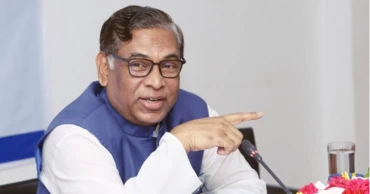
State Minister for Power Nasrul Hamid on Monday said that diesel import from India would start through a recently built pipeline on an experimental basis from June.
The minister said this in Parliament while replying to a question from Awami League MP Abdul Latif (Chattogram-11).
With Speaker Shirin Sharmin Chaudhury in the chair, the question-answer session of the day’s sitting was tabled in the House.
In a scripted answer, Nasrul Hamid said that about 131.5 km India-Bangladesh Friendship Pipeline (IBFPL) has been constructed for importing diesel from India.
Of the 131.5 km pipeline, 126.5 km is in the Bangladesh part and 5 km in the Indian part, the state minister said.
Nasrul Hamid also said pre-commissioning of diesel imports through this pipeline is underway.
“It is expected that the commissioning of diesel import, meaning that experimental diesel import through the pipeline will start in June, this year,” Nasrul said.
In response to another question from AL lawmaker Ali Azam (Bhola-2), Industries Minister Nurul Majid Mahmud Humayun said there are currently 15 sugar mills in the country. Among them, only one is profitable and the remaining 14 are non-profit.
Read more: Bangladesh may prefer to import Russian oil via third country
In reply to a query from AL MP Mohammad Habib Hasan (Dhaka-18), Nasrul Hamid said it is not possible to resume providing residential gas connections unless the gas supply increases sufficiently and the growing demand for gas in industry, power and fertilizer plants is not reduced.
In the context of gradual decline in domestic gas production, giving priority to industry, electricity and fertilizer factories in terms of gas connection is considered essential for the sake of economic mobility, he said.
Moreover, due to the rapid increase in the availability and use of LPG at the private level, the provision of new gas connections at the household level has been stopped through circulars.
In response to a question from AL lawmaker Nurunnabi Chowdhury (Bhola-3), Nasrul Hamid said currently (June 2022) the amount of gas reserves in the country is 9.06 trillion cubic feet. With this reserve gas, it will be possible to meet the needs of the country for about 11 years.
Read more: Fuel import from India through pipeline to start from 2023: PM
In reply to a query from AL lawmaker Didarul Alam (Chattogram-4), Information and Broadcasting Minister Hasan Mahmud said that now there are 346 online portals including 162 registered online news portals, 169 registered online portals of dailies and 15 online portals of TV channels.
3 years ago

Economic woes, war, climate change on tap for Davos meeting
The World Economic Forum is back with its first winter meetup since 2020 in the Swiss Alpine town of Davos, where leaders are seeking to bridge political divisions in a polarized world, buttress a hobbling economy and address concerns about a climate change — among many other things.
Sessions will take up issues as diverse as the future of fertilizers, the role of sports in society, the state of the COVID-19 pandemic and much more. Nearly 600 CEOs and more than 50 heads of state or government are expected, but it's never clear how much concrete action emerges from the elite event.
Here’s what to watch as the four-day talkfest and related deal-making get underway in earnest Tuesday:
WHO’S COMING?
Back in the snows for the first time since the pandemic and just eight months after a springtime 2022 session, the event will host notables like European Union Commission President Ursula von der Leyen, U.S. climate envoy John Kerry, and the new presidents of South Korea, Colombia and the Philippines.
Chinese Vice Premier Liu He addresses the gathering Tuesday, a day before his first meeting with his U.S. counterpart, Treasury Secretary Janet Yellen, in Zurich. Yellen will skip Davos.
Who else is missing? U.S. President Joe Biden, Chinese President Xi Jinping, British Prime Minister Rishi Sunak, Indian Prime Minister Narendra Modi and French President Emmanuel Macron.
Russian President Vladimir Putin, of course: Envoys from his country has been shunned because of his war in Ukraine.
Ukrainian first lady Olena Zelenska was on her way to Davos and will speak Tuesday, while her husband, President Volodymyr Zelenskyy, will give a remote address Wednesday and other officials from Ukraine are appearing on panels.
Read more: Business trusted most in a more polarized world, report says
Outside the main convention center, a themed venue known as Ukraine House is hosting a concert, photo exhibits, seminars, cocktail events and other meetings this week to drum up support for Ukraine’s efforts to drive out Russian forces.
ECONOMIC FOCUS
The slowdown in the global economy will be a major theme at Davos, with officials ranging from International Monetary Fund Managing Director Kristalina Georgieva and European Central Bank President Christine Lagarde speaking in sessions.
Inflation soared as the world reopened from the pandemic and Russia invaded Ukraine, driving up food and energy prices, and though it has started to slow in major economies like the U.S. and those in Europe, inflation is still painfully high.
Georgieva said in an IMF blog post Monday that divides between nations — the theme at Davos this year is “Cooperation in a Fragmented World” — are putting the global economy at risk by leaving “everyone poorer and less secure.”
Georgieva urged strengthening trade, helping vulnerable countries deal with debt and ramping up climate action.
PRIORITIZING CLIMATE
A major climate theme emerging from the forum’s panel sessions is the energy transition from fossil fuels to clean energy. Former U.S. Vice President Al Gore will be talking about decarbonization, efforts to build clean energy infrastructure and ensure an equitable transition.
It follows a strong year for the energy transition: Many countries passed incentives for renewable energy in 2022.
One hot topic on the agenda — harnessing nuclear fusion — focuses on science that offers immense potential but is many decades away from a commercial rollout that could feed the world’s skyrocketing thirst for energy.
Sessions on issues like adaptation to climate change and panels on deforestation, biodiversity and the future of environmental protection will give a greener hue to the gathering.
CRITICAL VOICES
The elite gathering is regularly skewered by critics who argue that attendees are too out-of-touch or profit- or power-minded to address the needs of common people and the planet.
Throughout the week, critics and activists will be waiting outside the Davos conference center to try to hold decision-makers and business leaders to account.
Read more: Robust leadership, political trust fortified Dhaka-Ankara economic, defence ties: Turan
It started Sunday, when dozens of climate activists — some with clown makeup — braved snowfall to wave banners and chant slogans at the end of the Davos Promenade, a thoroughfare now lined with storefront logos of corporate titans like Accenture, Microsoft, Salesforce, Meta, as well as country “houses” that promote national interests.
Greenpeace International also blasted use of corporate jets that ferry in bigwigs, saying such carbon-spewing transportation smacks of hypocrisy for an event touting its push for a greener world. It said over 1,000 private-jet flights arrived and departed airports serving Davos in May.
Forum President Borge Brende acknowledged Sunday that some government leaders and CEOs fly in that way.
"I think what is more important than that is to make sure we have agreements on how we, overall, move and push the envelope when it comes to the green agenda,” he said.
3 years ago