World-Business

Business trusted most in a more polarized world, report says
People worldwide are more gloomy about their economic prospects than ever before and trust business far more than other institutions like governments, nonprofits and the media in an increasingly divided world, according to a survey from public relations firm Edelman.
Released late Sunday to coincide with the World Economic Forum’s gathering of business elites and government leaders this week in Davos, Switzerland, the online survey conducted in 28 countries shows that fewer people believe their family will be better off in five years.
Read more:US to max out on debt soon, setting up political fight
Those who believe they’ll be better off dropped to 40% from 50% last year and hit all-time lows in 24 nations. That is because 89% fear losing their job, 74% worry about inflation, 76% are concerned about climate change and 72% worry about nuclear war.
The Edelman Trust Barometer also says 62% of respondents see business as both competent and ethical, compared with 59% for nongovernmental agencies, 51% for governments and 50% for the media. That was attributed to how companies treated workers during the COVID-19 pandemic and return to offices as well as many businesses vowing to exit Russia after it invaded Ukraine.
People still said they distrusted CEOs as well as government leaders and journalists, while trusting their own corporate executives, co-workers and neighbors. Scientists were trusted the most — by 76% of respondents.
“The increased level of trust in business brings with it higher-than-ever expectations of CEOs to be a leading voice on societal issues,” said Richard Edelman, CEO of Edelman. “By a six-to-one margin, respondents want more societal involvement by business on issues such as climate change, economic inequality and workforce reskilling.”
But companies face stirring contention by jumping into those topics, with 52% saying businesses can’t avoid politicization when they tackle divisive social issues, he said.
Despite the uncertainty, people want companies to stand up for them: 63% say they buy or advocate for brands based on their beliefs and values.
Most respondents say business should do more, not less, to deal with climate change, economic inequality and other issues.
This comes as social divisions have become entrenched, creating a polarized world that has left people feeling like they can’t overcome their differences or even willing to help others who don’t share their beliefs, the survey says.
Less than one-third of respondents said they would help, live with or work with someone who strongly disagrees with their viewpoints. Six countries — Argentina, Colombia, the U.S., South Africa, Spain and Sweden — were listed as severely polarized, driven by distrust in government and a lack of shared identity.
If divisions are not addressed, people fear the result will be worsening prejudice and discrimination, slower economic development and violence in the streets, the report said.
More than 40% in the survey believe governments and companies must work together to solve social issues, with the onus on the most trusted institution — business — to bring people together.
Most respondents — 64% — said companies supporting politicians and media outlets that build consensus would help increase civility and strengthen society.
In its 23rd year, the Edelman Trust Barometer surveyed more than 32,000 people online in 28 countries from Argentina to Saudi Arabia to the U.S. from Nov. 1 to Nov. 28.
3 years ago

China's trade surplus swells to $877.6B as exports grow
China’s trade surplus swelled to a record $877.6 billion last year as exports rose despite weakening U.S. and European demand and anti-virus controls that temporarily shut down Shanghai and other industrial centers.
Exports increased 7% from a year earlier to $3.95 trillion, decelerating from 2021′s explosive 29.9% gain, customs data showed Friday. Imports edged up 1.1% to 2.7 trillion, cooling from the previous year’s 30.1% rise as economic growth slowed and consumer spending weakened.
Read more: Bangladesh reassures Chinese FM of one-China policy, seeks better trade relations
The country’s politically volatile global trade surplus expanded by 29.7% from 2021′s record, already the highest ever for any economy.
“China’s foreign trade and exports showed strong resilience in the face of many difficulties and challenges,” said a customs agency spokesperson, Lu Daliang, at a news conference.
Export growth slumped late in the year after the Federal Reserve and other central banks raised interest rates to cool record-setting inflation by slowing economic activity.
December exports fell for a third month, contracting by 10.1% from a year earlier to $306.1 billion. That was bigger than November’s 9% slide.
Last year's exports to the United States edged up 1% over 2021 to $581.8 billion despite tariff hikes by President Joe Biden’s predecessor, Donald Trump, that still are in place on many goods. Chinese imports of American goods declined 1% to $177.6 billion.
China’s annual trade surplus with the United States, one of the irritants that prompted Trump to hike tariffs, widened by 1.8% from 2021 to $404.1 billion.
Forecasters expect Chinese export growth to weaken further as the possibility of recession in Western economies increases. Some expect this year’s exports to shrink.
“China’s exports are likely to contract until the middle of the year,” Julian Evans-Pritchard of Capital Economics said in a report this week.
Earlier in 2022, trade also was hampered by anti-virus controls that shut down Shanghai and other industrial centers in March for up to two months, disrupting manufacturing and global shipping.
In December, exports to the United States fell 19.5% from a year earlier to $301.1 billion. Imports of American goods shrank 7.3% to $228.1 billion. That produced a $78 billion surplus, down 17.5% from a year earlier.
Exports to the 27-nation European Union tumbled 39.5% to $43.6 billion. Imports of European goods fell 31.3% to $24 billion. China’s trade surplus with Europe fell 50% to $19.6 billion.
“Downward pressure on the world economy is increasing,” warned the customs agency’s Lu.
Also in December, Chinese imports from Russia, mostly oil and gas, rose 8.3% over a year earlier to $9 billion.
China, the biggest global energy consumer, has stepped up purchases from Russia to take advantage of price discounts after Washington, Europe and Japan cut imports to punish President Vladimir Putin’s government for its attack on Ukraine.
China can buy Russian oil and gas without triggering Western sanctions, but Biden has warned Beijing against helping Moscow’s military. China bought about 20% of Russia’s crude exports in 2021 and increased that last year.
China’s December imports of oil, food, industrial components and consumer goods shrank 7.3% to $228.1 billion.
Business and consumer activity is starting to rebound following the ruling Communist Party’s surprise decision to lift anti-virus controls that kept millions of people at home and blocked most travel into and out of China.
Activity has been temporarily dampened by a surge in COVID-19 infections that forced some factories, restaurants and other businesses to close due to lack of healthy workers. Wary consumers are returning only gradually to shopping malls and restaurants.
The economy also is under pressure from tighter controls on debt, which triggered a slump in the country’s vast real estate industry.
Manufacturing activity weakened in December and new export orders contracted for a fifth month, according to a survey by a leading business magazine, Caixin. Auto sales fell 6.7% from a year earlier. Housing sales and retail spending are down.
Authorities say the peak of the infection wave might have passed in Beijing and other major cities.
A revival in Chinese demand would be a boost to global suppliers at a time when U.S., Europe and Japanese sales are weakening. China is the biggest export customer for its Asian neighbors and a key consumer market.
Economists say the only comparison for China’s vast trade surplus as a percentage of its economy was Saudi Arabia and other oil exporters during their 1970s price boom, but their total revenues were smaller.
The swollen surplus has strained the ability of China’s central bank to manage the exchange rate of its yuan, which rose to multi-year highs against the U.S. dollar as money flowed into the country.
The People’s Bank of China responded by ordering banks to keep the exchange rate stable and trying to limit the ability of traders to speculate on the currency’s movement.
3 years ago

UAE names oil company chief to lead UN COP28 climate talks
The United Arab Emirates on Thursday named a veteran technocrat who both leads Abu Dhabi’s state-run oil company and oversees its renewable energy efforts to be the president of the upcoming United Nations climate negotiations in Dubai, highlighting the balancing act ahead for this crude-producing nation.
Authorities nominated Sultan al-Jaber, a trusted confidant of UAE leader Sheikh Mohammed bin Zayed Al Nahyan, who serves as CEO of the Abu Dhabi National Oil Co. That firm pumps some 4 million barrels of crude a day and hopes to expand to 5 million daily.
Those revenues fuel the ambitions of this federation of seven sheikhdoms on the Arabian Peninsula — as well as the production of more of the heat-trapping carbon dioxide that the U.N. negotiations hope to limit.
Read more: UAE keen to scale up engagements with Bangladesh
But al-Jaber also once led a once-ambitious project to have a $22 billion “carbon-neutral” city on Abu Dhabi’s outskirts — an effort later pared back after the global financial crisis that struck the Emirates hard beginning in 2008. Even today, he serves as the chairman of Masdar, a clean energy company that grew out of the project that now operates in more than 40 countries.
“Sultan al-Jaber has the credentials and background to lean into trends that are already on going,” said Ryan Bohl, an Austin, Texas-based Mideast analyst for a risk-intelligence firm called the RANE Network. “Him being an oilman, I don’t think that will be that big of a risk for him.”
The Emirates’ state-run WAM news agency made the announcement, noting al-Jaber’s years also serving as a climate envoy.
“This will be a critical year in a critical decade for climate action,” WAM quoted al-Jaber as saying. “The UAE is approaching COP28 with a strong sense of responsibility and the highest possible level of ambition.”
He added: “We will bring a pragmatic, realistic and solutions-oriented approach that delivers transformative progress for climate and for low-carbon economic growth.”
His nomination, however, drew immediate criticism. Harjeet Singh, who is the head of Global Political Strategy at Climate Action Network International, said al-Jaber holding the CEO title at the state oil company posed “an unprecedented and alarming conflict of interest.”
“There can be no place for polluters at a climate conference, least of all presiding over a COP,” Singh said.
Each year, the country hosting the U.N. negotiations known as the Conference of the Parties — where COP gets its name — nominates a person to chair the talks. Hosts typically pick a veteran diplomat as the talks can be incredibly difficult to steer between competing nations and their interests. The nominee’s position as “COP president” is confirmed by delegates at the start of the talks, usually without objections.
The caliber of COP presidents has varied over the years. Observers widely saw Britain’s Alok Sharma as energetic and committed to achieving an ambitious result. Egypt’s Foreign Minister Sameh Shoukry faced criticism by some participants for the chaotic and at times non-transparent way he presided over last year’s meeting.
In its announcement about al-Jaber, WAM said the Emirates had invested “more than $50 billion in renewable energy projects across 70 countries, with plans to invest a minimum of $50 billion over the next decade.” It wasn’t immediately clear where those figures came from.
Mubadala, Abu Dhabi’s sovereign wealth fund, has invested some $3.9 billion since 2018 in renewable energy, according to the New York-based research firm Global SWF. Masdar listed some $14.3 billion in investments in a 2020 briefing. Masdar did not respond to questions about its investments Thursday.
But at the same time, Mubadala has invested $9.8 billion over the same period in oil and gas projects, Global SWF said.
The UAE is home to a massive solar park in Dubai, as well as the Barakah Nuclear Power Plant, which is the Arabian Peninsula’s only atomic energy source. But it also requires vast amounts of energy to run the desalination plants that brought green golf courses to its desert expanses, power the air conditioners cooling its cavernous malls in the heat of the summer and power heavy industries like aluminum smelters.
The UAE’s clean energy policies grew in the mid-2000s as Dubai’s real-estate boom saw it constructing the world’s tallest building and massive, palm-shaped archipelagos off its coast. The World Wildlife Fund at the time estimated the UAE had the world’s largest ecological footprint per capita — meaning that each of its residents used more resources on average than those living in any other nation. The UAE still ranks high on similar lists.
The Masdar City project grew out of that concern of being tarnished, before being pared back.
“By us actually doing it and investing money, we had access to lessons learned that no one had access to,” al-Jaber told The Associated Press in 2010. “We have to learn, adjust, adapt and move forward. We can’t be rigid.”
The UAE then pivoted Masdar City into a campus now hosting the U.N.’s International Renewable Energy Agency and the firm itself into investing into renewables at home and abroad. Joe Biden, just before leaving office as America’s vice president, even visited Masdar City in 2016.
Analysts believe the Emirates is trying to maximize its profits before the world increasingly turns to renewables. The Emirates itself has pledged to be carbon neutral by 2050 — a target that remains difficult to assess and one that authorities haven’t fully explained how they’ll reach.
The UAE “have made no bones about being a major oil and gas producer and presumably he is very well connected to rulers in the country,” said Alden Meyer, a longtime climate talk observer at the environmental think tank E3G. “I hope (al-Jaber) has good diplomatic and negotiation skills and the ability to build consensus and compromise.”
COP28 will be held at Dubai’s Expo City from Nov. 30 through Dec. 12.
3 years ago

US to max out on debt soon, setting up political fight
The federal government is on track to max out on its $31.4 trillion borrowing authority as soon as this month, starting the clock on an expected standoff between President Joe Biden and the new House Republican majority that will test both parties' ability to navigate a divided Washington, with the fragile global economy at stake.
Once the government bumps up against the cap — it could happen any time in the next few weeks or longer — the Treasury Department will be unable to issue new debt without congressional action. The department plans to deploy what are known as “extraordinary measures” to keep the government operating. But once those measures run out, probably mid-summer, the government could be at risk of defaulting unless lawmakers and the president agree to lift the limit on the U.S. government's ability to borrow.
The expected showdown over the debt limit would be a stark display of the new reality for Biden and Democrats, who enjoyed one-party control of Washington for the past two years. It would presage the challenges to come in achieving even the modest ambitions that Democrats are bringing to the task of legislating in a divided Capitol.
Read more: US economy likely returned to growth after shrinking in first 2 quarters of 2022
The White House has insisted that it won't allow the nation's credit to be held captive to the demands of newly empowered GOP lawmakers. But the concessions made by new House Speaker Kevin McCarthy in his arduous path to securing the job raise questions about whether he has the ability to cut any kind of deal to resolve a standoff.
McCarthy, who only secured his post after 15 rounds of voting and major compromises with hard-line members of his caucus, has said that his fellow Republicans will only agree to increase the debt ceiling in return for spending cuts of unspecified magnitude. And a new rule that allows any one lawmaker to trigger a vote for McCarthy's removal could make even the most urgent of votes a dicey matter.
McCarthy said he’s spoken with Biden about the coming debt ceiling and told the president “it doesn’t have to come to that” — meaning a federal government shutdown over spending levels.
“This is our moment to change the behavior,” McCarthy said Tuesday on Fox’s “Hannity.”
But the new speaker stopped short of saying Republicans now in charge of the House would go so far as to refuse to pass the annual spending bills needed to fund the government, as happened more than a decade ago during an earlier debt ceiling showdown in Congress.
“We’re going to look at every single dollar spent,” McCarthy said.
The stakes are treacherous. Past forecasts suggest a default could instantly bury the country in a deep recession, right at a moment of slowing global growth as the U.S. and much of the world face high inflation because of the pandemic and Russia’s invasion of Ukraine.
Read more: US economy shrinks for a 2nd quarter, raising recession fear
The White House has ruled out executive action to stave off a default.
“Congress is going to need to raise the debt limit without — without — conditions and it’s just that simple,” White House press secretary Karine Jean-Pierre said recently. “Attempts to exploit the debt ceiling as leverage will not work. There will be no hostage taking.”
On Capitol Hill, Republican Rep. Chip Roy of Texas, one of the McCarthy holdouts and an outspoken critic of government spending, wouldn't rule out trying to oust McCarthy if he fails to live up to his pledge to seek spending cuts along with any debt limit increase.
“We will use the tools of the House to enforce the terms of the agreement,” Roy told CNN on Sunday.
Rep. Bob Good, R-Va., said in a Fox News interview on Monday that the debt limit will be “the real test” for conservatives. Republicans have to begin “leveraging power to accomplish what you need to accomplish," he said. Good fought McCarthy’s bid to become speaker until the final vote, when he responded “present.”
The debt ceiling debate is a form of political theater — it encourages lawmakers to engage in brinkmanship in the name of fiscal responsibility — though past showdowns have done little to meaningfully alter the long-term rise in federal debt.
House Republican leaders liken the debt ceiling to a credit card limit, promising to put “mechanisms in place so that you don’t keep maxing it out,” in the words of House Majority Leader Steve Scalise of Louisiana.
“We’re going to confront this and I think the American people have called on us to confront this,” said Scalise.
Any effort to compromise with House Republicans could force Biden to bend on his own priorities, whether that's the funding of the IRS to ensure that wealthier Americans pay what they owe, or domestic programs for children and the poor.
It's hard to peg the exact date when the government will hit its debt ceiling, because payments and receipts vary from day to day, especially with the April filing deadline for income taxes. The current balance suggests the debt ceiling could be reached as early as this week or as late as March.
When Treasury takes extraordinary measures to keep the government running, it can halt contributions to pension funds and borrow from accounts to manage changes in the foreign exchange rate, freeing up cash to meet its other obligations.
Treasury first used these measures in 1985 and has used them at least 16 times since, according to the Committee for a Responsible Federal Budget, a fiscal watchdog. But the extraordinary measures only work for so long, and would likely run out — and put the U.S. at risk of default — sometime around the summer.
If the government were to default, financial markets could be expected to crash. Several million workers could be laid off. The world could feel the aftershocks of the crisis for years to come. Moody's Analytics called this risk “cataclysmic” in a 2021 forecast ahead of the previous debt ceiling increase, suggesting that the resulting chaos would be due to government dysfunction, rather than the underlying health of the U.S. economy.
“Debt limit negotiations are always protracted and almost always contentious, and the political trends seem to make it likely that they will exacerbate those tendencies and will create a volatile situation," said Shai Akabas, director of economic policy at the Bipartisan Policy Center, which forecasts the so-called X-date when the government exhausts its extraordinary measures.
Akabas told the Associated Press the X-date has "likely moved forward" from this year's third quarter due to rising interest rates and a pause on student loan repayments recently extended by the Biden administration. A more precise date will become available when the Congressional Budget Office updates its outlook later this month.
Either way, lawmakers know the risks that they're taking with the livelihoods of people across the country by having this dispute. Economists have warned them plenty of times.
A 2013 Treasury report drew on the debt ceiling impasse in 2011, when Republicans had also just won a House majority. It outlined how impasses contribute to long-lasting scars on financial markets, noting that business and household confidence fell to levels that are typically only seen during recessions.
"It took months before confidence recovered, even though, ultimately, there was no default," the report said.
3 years ago

Philippine court voids oil exploration pact involving China
The Philippine Supreme Court on Tuesday declared unconstitutional a 2005 pact by China, the Philippines and Vietnam to jointly explore for oil in the disputed South China Sea, a decision that also brings other proposed agreements into doubt.
The decision by 12 of the court's 15 justices voided the Joint Marine Seismic Undertaking agreement by state-owned companies in the three nations, which are among Asian countries locked in decades-long territorial disputes in the busy waterway.
Two justices dissented and one was on leave and did not vote. The court did not immediately make public the full decision and only released highlights in a statement.
President Ferdinand Marcos Jr., who took office in June last year, expressed willingness to revive failed negotiations for joint oil exploration with China in a meeting with his Chinese counterpart, Xi Jinping, in Beijing last week.
The court ruled that the 2005 agreement violated the constitution by allowing the state-owned oil companies of China and Vietnam to undertake joint oil exploration in Philippine waters. The charter specifies that “the exploration, development and utilization of natural resources shall be under the full control and supervision of the state.”
The petitioners argued that oil exploration in Philippine waters should be undertaken by Filipino citizens or corporations and groups that are at least 60% owned by Filipinos, according to the court.
Proponents argued that the agreement only involved pre-exploration activities which were not covered by the constitutional prohibition.
But the court said the accord’s intent “is to discover petroleum which is tantamount to `exploration.’”
The agreement led to a joint oil search in 142,886 square kilometers (55,168 square miles) of sea, including waters claimed by the Philippines as part of its territory and other areas it contests with China, Vietnam, Malaysia, Brunei and Taiwan.
Under President Rodrigo Duterte, Marcos’s predecessor, the Philippines signed a 2018 agreement with China aimed at agreeing on terms for a possible joint oil and gas exploration in the disputed waters. But years of negotiations failed, mainly due to disagreement over which side has sovereign rights over the stretch of sea to be covered by the joint search.
Duterte’s administration terminated the agreement shortly before his six-year term ended last year.
A 2016 ruling by a United Nations-backed arbitration tribunal invalidated China’s extensive territorial claims based on historical grounds in the South China Sea. Beijing did not participate in the arbitration, rejected the decision and continues to defy it.
3 years ago

China economy recovering but hampered by virus outbreaks
Wang Jian is anxious to get back to work teaching basketball to children now that China has lifted anti-COVID-19 restrictions. But his gym in the eastern city of Shenyang has been closed for a month because all its coaches are infected.
The most optimistic forecasts say China's business and consumer activity might revive as early as the first quarter of this year. But before that happens, entrepreneurs and families face a painful squeeze from a surge in virus cases that has left employers without enough healthy workers and kept wary customers away from shopping malls, restaurants, hair salons and gyms.
“I hope the situation will turn around in March or April with no more COVID shocks,” said Wang, 33, who went without a paycheck for four months when the gym closed during virus outbreaks. “If parents worry about possible reinfection, they simply won’t send their children for training.”
The abrupt decision by President Xi Jinping's government to end controls that shut down factories and kept millions of people at home will move up the timeline for economic recovery, but might disrupt activity this year as businesses scramble to adapt, forecasters say.
“This will be a bumpy process,” said Dong Chen, chief Asia economist for Pictet Wealth Management.
“People still are struggling with infections, but we think this could be temporary,” Chen said. “Broadly, we think this is a positive surprise.”
The decision to accelerate China's reopening is a boost for the global economy at a time when activity in the United States and Europe is weakening after repeated interest rate hikes by central banks to cool surging inflation.
It is likely to help revive auto sales and propel demand for imported consumer goods, oil and food in China, one of the biggest global markets. Countries including Thailand with big tourism industries look forward to an influx of Chinese travelers.
The World Bank and private sector forecasters have cut estimates of China's economic growth last year to as low as 2.2% due to the infection spike that started in early October and challenged Beijing's “zero-COVID” goal of isolating every case. The International Monetary Fund expects a recovery to 4.4% this year, but that still would be among the lowest levels of the past three decades.
“Zero-COVID” kept China’s infection numbers low but shut down Shanghai and other industrial cities last year for two months, disrupting manufacturing and shipping. Business groups said global companies were shifting investment plans away from China because rules that required visitors from abroad to quarantine for a week kept executives from visiting.
The ruling party promised Nov. 11 to reduce the cost and disruption. A series of surprise announcements rolled back travel and other restrictions that health experts and economists had expected to persist through mid-2023.
On Sunday, Beijing began allowing travelers to enter China without quarantines. The government has yet to say when China will resume issuing tourist visas.
“The sudden, chaotic way in which pandemic policies have been changed means that growth will be hampered in new ways,” Daniel H. Rosen, Charlie Vest and Rogan Quinn of Rhodium Group said in a report. High numbers of infections make it "realistic to expect production to be hampered for a substantial part of 2023.”
Forecasters say the economy probably contracted in the final quarter of 2022 as virus case numbers rose and retail spending and trade fell.
Exports shrank after American and European consumer demand was depressed by interest rate hikes. That forces Chinese planners to make up for lost foreign sales by trying to boost consumer demand.
“The key to rapid economic recovery" is to "convert income into consumption and investment as much as possible,” one of the country's most prominent financial figures, Guo Shuqing, the ruling party secretary for the central bank, told the official Xinhua News Agency.
Informal measures show public and business activity improving but weak.
This month’s subway passenger numbers in 10 large cities recovered to 55-60% of the level a year ago, up from 30-35% last month, according to Macquarie Group. Roads are growing more congested.
Foreign companies that see China as a critical market welcome the change but are struggling, said Eric Zheng, president of the American Chamber of Commerce in Shanghai.
“Companies were not prepared for this abrupt change,” said Zheng, whose group has about 1,000 member companies. “It is hard to manage a workforce when a lot of people are getting sick.”
Still, “things are almost going back to normal,” Zheng said. “Once life goes back to normal and consumers are out shopping, things will definitely improve.”
Another business group, the American Chamber of Commerce in China, said more than 70% of companies that responded to a poll last month expressed confidence the infection wave would last no more than three months and end early this year.
The ruling party is trying to nudge up growth by easing restrictions on financing for real estate and winding down anti-monopoly and data security crackdowns on tech companies that caused their stock market values to plunge.
In December, regulators announced Ant Group, an online financial company that was forced to call off a planned multibillion-dollar public stock offering in 2020, would be allowed to raise 10.5 billion yuan ($1.6 billion) for its consumer unit, more than doubling its capital.
“These measures are helpful, but far from enough to move the needle,” Larry Hu and Yuxiao Zhang of Macquarie said in a report.
Hotels, restaurants and other businesses hoping for a boost from this month’s Lunar New Year holiday, the busiest tourism season, suffered a blow when some local authorities appealed to migrant workers to skip traditional visits to their hometowns that might spread infections.
The operator of the 12-room Oriental Hotel in the eastern city of Hefei, who would give only his family name, Huang, said he is losing 4,000 yuan ($550) a month. His occupancy rate is 20%, well below the 50% needed to break even.
“People stay home and maybe they worry about possible reinfection,” Huang said. “If it stays the same for another year, I will give up running the hotel.”
The National Health Commission stopped announcing case numbers last month, but reports by city and county governments suggest hundreds of millions of people might have been infected.
The Zhengtai Restaurant in the northwestern city of Jinzhong closed for two weeks because almost all its 57 employees were infected, according to the manager, Chang Zhigang. Chang said the business has lost about 2 million yuan ($300,000) per year since the start of the pandemic.
“We don’t expect the situation to turn around within a short time, given there are very few people on the street,” Chang said.
3 years ago

Europe’s inflation slows again but cost of living still high
Europe ended a bad year for inflation with some relief as price gains eased again. While the cost of living is still painfully high, the slowdown is a sign that the worst might be over for weary consumers.
The consumer price index for the 19 countries that used the euro currency rose 9.2% in December from a year earlier, the slowest pace since August, the European Union statistics agency Eurostat said Friday. Croatia joined the eurozone on Jan. 1.
It was the second straight decline in inflation since June 2021. In November, the rate dipped to 10.1% after peaking at a record 10.6% in the previous month.
Households and businesses across Europe have been plagued by surging energy costs since Russia launched its war in Ukraine in February, which played havoc with oil and natural gas markets and have been the main driver of inflation.
The latest numbers indicate that the energy crisis may be easing for now. Energy price rises slowed to 25.7%, down from 34.9% in November and 41.5% in October.
Natural gas prices have slipped from all-time highs this summer as Europe has largely filled its storage for winter with supplies from other countries while warmer-than-usual weather has reduced fears of a shortage during the heating season.
Food price gains, the other big factor that’s been driving up European inflation, held fairly steady. Prices for food, alcohol and tobacco rose at a 13.8% annual pace in December, a smidgen higher than the month before.
Inflation also has been worsened by bottlenecks in supplies of raw materials and parts amid rebounding global consumer demand after COVID-19 pandemic restrictions ended.
“It is likely that the peak in inflation is behind us now, but far more relevant for the economy and policymakers is whether inflation will structurally trend back to 2% from here on,” said Bert Colijn, senior eurozone economist at ING Bank.
So-called core inflation, which excludes volatile food and energy costs, climbed to 5.2% last month from November’s 5%, as prices rose for both services and goods such as clothing, appliances, cars and computers. Colijn and other economists said that means European Central Bank officials will likely roll out more interest rate hikes to get inflation back to their 2% target.
Soaring costs for energy and food have threatened a recession and fed labor unrest as wages fail to keep pace with the price rises. Across Europe, subway staff, hospital workers, train drivers, postal workers and air traffic controllers have gone on strike, threatening political turmoil.
In a sign that energy costs remain a worry for political leaders, French President Emmanuel Macron on Thursday urged energy suppliers to renegotiate what he called “abusive contracts” with small businesses to ensure “reasonable” price hikes.
Macron spoke to bakers gathered at the presidential palace for a traditional Epiphany kings cake ceremony, underscoring how energy and food prices are intertwined.
“Like you, I’ve had enough of people making excessive profits on the crisis,” he said.
The French government has capped natural gas and electricity price hikes to 15% this year for consumers and some very small companies that don’t use much energy. But more energy-intensive businesses, like bakeries, aren’t covered, leaving some of them facing closure because they can’t pay their bills.
While governments have offered relief on high energy bills, central banks are battling inflation by hiking interest rates.
Last month, the European Central Bank raised its benchmark rate by half a point, slowing its record pace of interest rate increases slightly but promising that more hikes are on the way. It matched actions taken by counterparts in the U.S., United Kingdom and elsewhere.
“The eurozone economy is at best stagnating, and persistently strong core inflation means the ECB will feel duty bound to press on with its tightening cycle for a while yet,” said Andrew Kenningham, chief Europe economist for Capital Economics.
3 years ago
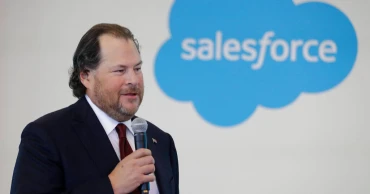
Amazon, Salesforce jettison jobs in latest tech worker purge
E-commerce giant Amazon and business software maker Salesforce are the latest U.S. technology companies to announce major job cuts as they prune payrolls that rapidly expanded during the pandemic lockdown.
Amazon said Wednesday that it will be cutting about 18,000 positions. It's the largest set of layoffs in the Seattle-based company’s history, although just a fraction of its 1.5 million global workforce.
“Amazon has weathered uncertain and difficult economies in the past, and we will continue to do so,” CEO Andy Jassy said in a note to employees that the company made public. “These changes will help us pursue our long-term opportunities with a stronger cost structure.”
Read more: Amidst recession fears, Biden has to convince Americans job gains mean better days ahead
He said the layoffs will mostly impact the company's brick-and-mortar stores, which include Amazon Fresh and Amazon Go, and its PXT organizations, which handle human resources and other functions.
In November, Jassy told staff that layoffs were coming due to the economic landscape and the company’s rapid hiring in the last several years. Wednesday's announcement included earlier job cuts that had not been numbered. The company had also offered voluntary buyouts and has been cutting costs in other areas of its sprawling business.
Salesforce, meanwhile, said it is laying off about 8,000 employees, or 10% of its workforce.
The cuts announced Wednesday are by far the largest in the 23-year history of a San Francisco company founded by former Oracle executive Marc Benioff. Benioff pioneered the method of leasing software services to internet-connected devices — a concept now known as “cloud computing."
The layoffs are being made on the heels of a shake-up in Salesforce's top ranks. Benioff's hand-picked co-CEO Bret Taylor, who also was Twitter's chairman at the time of its tortuous $44 billion sale to billionaire Elon Musk, left Salesforce. Then, Slack co-founder Stewart Butterfield left. Salesforce bought Slack two years ago for nearly $28 billion.
Salesforce workers who lose their jobs will receive nearly five months of pay, health insurance, career resources, and other benefits, according to the company. Amazon said it is also offering a separation payment, transitional health insurance benefits, and job placement support.
Benioff, now the sole chief executive at Salesforce, told employees in a letter that he blamed himself for the layoffs after continuing to hire aggressively into the pandemic, with millions of Americans working from home and demand for the company's technology surging.
Read more: Amazon to make big business changes in EU settlement
“As our revenue accelerated through the pandemic, we hired too many people leading into this economic downturn we’re now facing, and I take responsibility for that," Benioff wrote.
Salesforce employed about 49,000 people in January 2020 just before the pandemic struck. Salesforce's workforce today is still 50% larger than it was before the pandemic.
Meta Platforms CEO Mark Zuckerberg also acknowledged he misread the revenue gains that the owner of Facebook and Instagram was reaping during the pandemic when he announced in November that his company would by laying off 11,000 employees, or 13% of its workforce.
Like other major tech companies, Salesforce's recent comedown from the heady days of the pandemic have taken a major toll on its stock. Before Wednesday's announcement, shares had plunged more 50% from their peak close to $310 in November 2021. The shares gained nearly 4% Wednesday to close at $139.59.
“This is a smart poker move by Benioff to preserve margins in an uncertain backdrop as the company clearly overbuilt out its organization over the past few years along with the rest of the tech sector with a slowdown now on the horizon,” Wedbush analyst Dan Ives wrote.
Salesforce also said Wednesday that it will be closing some of its offices, but didn't include locations. The company's 61-story headquarters is a prominent feature of the San Francisco skyline and a symbol of tech's importance to the city since its completion in 2018.
3 years ago

Amazon to make big business changes in EU settlement
Amazon will make major changes to its business practices to end competition probes in Europe by giving customers more visible choices when buying products and, for Prime members, more delivery options, European Union regulators said Tuesday.
The EU’s executive Commission said it accepted the legally binding commitments from Amazon to resolve two antitrust investigations. The deal allows the company to avoid a legal battle with the E.U.’s top antitrust watchdog that could have ended with potentially huge fines, worth up to 10% of annual worldwide revenue.
The agreement marks another advance by EU authorities as they clamp down on the power of Big Tech companies, and comes just a day after the Commission accused Facebook parent Meta of distorting competition in the classified ads business.
“Today’s decision sets the rules that Amazon will need to play by in the future instead of Amazon determining these rules for all players on its platform,” the EU’s competition commissioner Margrethe Vestager said at a press briefing in Brussels. “With these new rules, competing independent retailers, carriers and European customers will have more opportunities and choice.”
The agreement only applies to Amazon’s business practices in Europe and will last for seven years. Amazon will have to make the promised changes by June.
“We are pleased that we have addressed the European Commission’s concerns and resolved these matters,” Amazon said in a prepared statement, adding that it still disagrees with some of the Commission’s preliminary conclusions.
Amazon had offered concessions in July to resolve the two investigations. It improved those initial proposals after the commission tested them out and received feedback from consumer groups, delivery companies, book publishers and academics.
The company promised to give products from rival sellers equal visibility in the “buy box,” a premium piece of real estate on its website and app that leads to higher sales. The buy box has two buttons that let customers “buy now” or “add to basket.”
Read more: Amazon CEO says company won't take down antisemitic film
European customers will get a second buy box underneath the first one for the same product, but with a different price or delivery offer.
“As Amazon cannot populate both Buy Boxes with its own retail offers, this will give more visibility to independent sellers,” Vestager said. Regulators will monitor how the second box performs and ask the company to adjust the presentation if it doesn’t get enough customers attention, she said.
Amazon is also easing access for merchants and couriers to its Prime membership service. It will stop discriminating against Prime sellers that don’t use its own logistics and delivery services and will let Prime members freely choose any delivery service. Currently, couriers can only deliver Prime parcels if they’re approved by Amazon.
The company also pledged to stop using “non-public data” from independent sellers on its platform to provide insights on how to compete against those merchants through its own sales of branded goods or “private label” products..
Amazon uses the data to decide what kind of products to launch, how much to sell them for, which suppliers to choose, or how to manage inventories, Vestager said.
She said the company has committed to stop doing this with seller data, including sales, revenues, shipments, transaction prices, performance, and consumer visits.
Amazon is facing similar scrutiny in the U.S. and Britain.
In September, California Attorney General Rob Bonta’s office sued Amazon, accusing the company of stifling competition and increasing prices for products across the market through its policies. His office said Amazon effectively barred third-party sellers and wholesale suppliers from offering lower prices elsewhere through contract terms that harmed the ability of other businesses to compete.
The company says it considers an item competitively priced when it’s offered at or below a price displayed by other retailers, which can spur higher prices elsewhere. Some vendors who pay more to sell on Amazon could lower their prices on other sites, but they don’t do so out of fear they will lose valuable Amazon real estate or face suspensions, the lawsuit said.
Read more: Amazon hiring 100,000 employees
The settlement comes amid a wider crackdown by regulators in Europe and elsewhere on Big Tech companies. In March, E.U. officials approved a new law that will take effect by 2024 to prevent so-called digital gatekeepers from dominating markets by giving preference to their own products, or using data collected from different services. Violations could result in fines of up to 10% of their annual revenue.
3 years ago

India-Bangladesh Chamber of Commerce and Industry holds 15th AGM
India-Bangladesh Chamber of Commerce and Industry (IBCCI) held its 15th annual general meeting (AGM) in the capital Saturday.
The decisions taken at the 14th AGM were approved in the meeting. Hoda Vashi Choudhury and Co has been appointed as the auditor for IBCCI for the 2022-2023 fiscal.
The participants of the AGM emphasised enhancing trade between Bangladesh and India. The speakers also referred to visa complications, work permits and some legal issues and stressed finding solutions to them.
IBCCI President Abdul Matlub Ahmad delivered the welcome speech at the programme. IBCCI Vice-President Shoeb Chowdhury was also present.
IBCCI President Abdul Matlub Ahmad, Vice-President Shoeb Chowdhury; directors Dewan Sultan Ahmed, Mohammad Ali Deen, and Farkhunda Jabeen Khan spoke on the occasion.
Read more: Home Business Local Business FBCCI-led 62-member delegation in India to elevate bilateral trade ties
Mohammad Ali, Dewan Sultan Ahmed, Yaqub Sharafati, Mohammad Mehboob Alam, Tofayel Ahmed, Hadiur Rahman Nirob, Delowar Hossain, MJ Sheikh, Manoj Kanti, Tapas Kumar Baral, Farkhunda Jabeen Khan, Mohammad Ali Deen, Quamrul Islam, Moshiur Rahman, Bazlur Rahman, Ahsanul Huq Chowdhury, SK Mahfuz Hamid, Amit Kumar, Sanjay Basu, Nasir Uddin, Shamsuddin Ahmed, Tanveer Alam Khan, Kamrul Hasan, Rubel Hossain also attended the AGM.
3 years ago