World-Business

Bangladesh business delegation to explore trade, investment opportunities in Türkiye
An 86-member business delegation from Dhaka Chamber of Commerce and Industry (DCCI) will leave for Istanbul, Türkiye on Tuesday on a four-day visit.
DCCI President Rizwan Rahman will be leading the business delegation.
The purpose of the visit will be to explore a new scope of business and investment cooperation especially in the diverse manufacturing, general trading and service sectors with a view to identify potential business partners for joint venture investment, attract FDI from Türkiye to Bangladesh and vice versa.
Bangladesh and Türkiye have been maintaining a friendly diplomatic and economic relation since ages, said the chamber body on Monday ahead of the visit.
The long standing bilateral relations between Bangladesh and Türkiye reached a “new height” with increasing trade and investment cooperation in diverse areas.
To steer this friendly economic relation, the DCCI is leading the business delegation to Istanbul, Türkiye.
During this business trip, the delegation will have several interactive business meetings with one of the largest Chambers in the world, the Istanbul Chamber of Commerce, the Foreign Economic Relations Board of Türkiye (DEIK).
Moreover, there will be Türkiye-Bangladesh Business Forum, business to business (B2B) match-makings, industry visits and meetings with the Turkish Trade Minister Mehmet MUS. Members of the DCCI business delegation will also visit a few Industrial Zones of Turkey.
3 years ago

Dedicated SEZ for US Companies: FBCCI seeks investment in ICT sector
The Federation of Bangladesh Chambers of Commerce & Industries (FBCCI) has invited the US entrepreneurs to invest in Bangladesh‘s ICT sector after Prime Minister Sheikh Hasina declared to establish a dedicated economic zone for the US companies.
The PM made the announcement in New York at U.S.-Bangladesh Business Council meeting organized by the US Chamber of Commerce on September 22, said the apex trade body in a press release Friday.
Read: FBCCI wants testing lab at ports for ease of doing business
FBCCI President Md. Jashim Uddin said the USA should take the advantage of investing in Bangladesh, the fastest growing economy in South Asia, regional supply chains and its demographic dividend.
Bangladesh could also benefit from America’s expertise in research and service innovation, he said.
The FBCCI President said he expects that the relationship between the USA and Bangladesh will expand beyond the traditional areas and both sides would explore growing prospects in frontier technologies, robotics and block chain, space, bio-health, and others.
"At your request, Bangladesh would be happy to offer a dedicated ‘Special Economic Zone’ (SEZ) solely for the US investors," the FBCCI quoted the PM as saying.
Read: FBCCI-led 62-member delegation in India to elevate bilateral trade ties
PM Hasina is currently visiting the USA to attend the 77th United Nations General Assembly.
The PM invited US businesses to invest in Bangladesh specially in 100 ‘Special Economic Zones’ (SEZs), and the several Hi-tech Parks.
With more than 600,000 freelancing IT professionals, she said “Bangladesh is the right destination for IT investments. Moreover, availability of young, skilled workers at a competitive wage is an added advantage”.
3 years ago

Bangladesh Bank yet to allow Indian rupee in foreign trade
Bangladeshi businesses cannot use Indian rupee for foreign trade as Bangladesh Bank is yet to enlist the currency to settle letters of credit (LCs).
BB spokesperson and executive director Md Serajul Islam told UNB that the central bank is yet enlisted Rupee for foreign trade.
He said that Bangladesh Bank is reviewing currency diversification in foreign trade to reduce sole dependence on the US dollar.
Read:“Use rupee, taka”: India asks exporters to refrain from trading in dollars with Bangladesh
Before allowing any foreign currency for trading, the central bank has maintained an exchange stander, and stability in line with the IMF standard, he said.
Businesses said if trade between Bangladesh and India happen in local currencies, pressure from falling US dollar reserves and associated ongoing forex market instability can be reduced.
They said India is the second largest source of imports of raw materials and other goods for Bangladesh. Industrial raw materials, capital machinery, cotton, yarn, fabrics, and chemicals worth USD 16.19 billion were imported from India in the fiscal year 2021-22.
Read:Bangladesh’s forex reserves now $36.90 billion
At the same time, Bangladesh exported goods worth USD2 billion to the neighbouring country.
On September 15, Bangladesh Bank allowed banks to open accounts in the Chinese currency yuan.
IMF has recognized five countries’ currencies as “high-value”. The Chinese yuan was admitted to IMF’s high-value currency basket in 2016. Since then, the yuan has become stronger than ever as per a currency review by the IMF.
Read Sri Lanka hopes to reach initial agreement with IMF for help
3 years ago

Bangladesh’s forex reserves now $36.90 billion
Bangladesh’s forex reserves are now down to USD 36.90 billion, despite the central bank’s move of curbing imports, and currency diversification in foreign trade.
According to the data of Bangladesh Bank, forex reserves on Wednesday (September 21, 2022) stood at USD 36.90 billion, which was USD 37.08 billion last Monday.
In the first week of this month, the reserves fell to USD 37.06 billion as the Asian Clearing Union (ACU) cleared its July-August arrears of USD 1.74 billion. As of August 25 last year, the reserves were USD 48.60 billion. According to that, the reserve has decreased by USD 11.5 billion in one year.
This is happening due to the selling pressure of US dollars for import LCs and the surge of individual demand to meet travel, medical treatment, and tuition fees for foreign universities.
On September 1, 2022, the forex reserves of Bangladesh were USD 39.05 billion.
Bangladesh Bank has been selling dollars from the reserves in continuation of last fiscal year to bring 'stability' to the forex market. In total, the central bank has sold USD 2.57 billion from reserves in two months (July-August) and of the current FY 2022-23.
Former Bangladesh Bank governor Atiur Rahman said that despite the increase in remittance, the forex reserve fell due to the continued sale of dollars.
"There is no problem even if the reserves fall to USD 38 billion in the current global context. Because, with this reserve, it is possible to meet the import expenses of more than six months,” he added.
Also read: Forex reserves below $38 billion despite tightened imports
3 years ago
World HRD Congress: Robi scores Asia's Best Employer Brand Awards 2022
The World HRD Congress recently recognised Robi with the "Asia's Best Employer Brand Awards 2022."
These award honours organisations that have used marketing communications effectively in attracting, retaining, and developing talent, and retention policies.
Robi Vice-President (Organisational Change and Employee Experience) Sabin Rahman received the award at a ceremony held in Singapore.
Read: US-Bangla resumes Dhaka-Bangkok flights September 1
Robi's ability to translate and combine vision with action with human resource strategy, blend the strategy with the business, and cultivate competencies to ensure the organisation is future-ready were assessed as part of the awarding process, according to a media statement.
This is the second time that Robi has won the award. Previously, it won it in 2019.
3 years ago
.jpg)
Gas prices dip just below $4 for the first time in 5 months in US
Gasoline prices dipped to just under the $4 mark for the first time in more than five months — good news for consumers who are struggling with high prices for many other essentials.
AAA said the US national average for a gallon of regular was $3.99 on Thursday.
Prices have dropped 15 cents in the past week and 68 cents in the last month, according to the auto club.
The shopping app GasBuddy reported that the national average was already down to $3.98 on Wednesday.
Also read: US inflation will likely stay high even as gas prices fall
Falling prices for gas, airline tickets and clothes are giving consumers a bit of relief, although inflation is still close to a four-decade high.
Oil prices began rising in mid-2020 as economies recovered from the initial shock of the pandemic. They rose again when the U.S. and allies announced sanctions against Russian oil over Russia's war against Ukraine.
Recently, however, oil prices have dropped on concern about slowing economic growth around the world. U.S. benchmark crude oil has recently dipped close to $90 a barrel from over $120 a barrel in June.
High prices also may be causing U.S. motorists to drive less. Gasoline demand in early August was down 3.3% from the same week last year after tracking more closely to 2021 numbers earlier in the summer.
Prices at the pump are likely to be a major issue heading into the mid-term elections in November.
Republicans blame President Joe Biden for the high gasoline prices, seizing on his decisions to cancel a permit for a major pipeline and suspend new oil and gas leases on federal lands.
Also read: Fuel, natural gas price hikes to have domino effect on economy: DCCI
Biden said over the weekend that a family with two cars is saving $100 a month because prices have dropped from their peak in mid-June.
“That's breathing room,” he tweeted. “And we're not letting up any time soon.”
Biden has also sparred with oil companies, accusing them of not producing as much oil and gasoline as they could while posting huge profits. “Exxon made more money than God this year,” he said in June.
Exxon said it has increased oil production. The CEO of Chevron said Biden was trying to vilify his industry.
The nationwide average for gas hasn't been under $4 since early March. Prices topped out at $5.02 a gallon on June 14, according to AAA. They declined slowly the rest of June, then began dropping more rapidly.
Motorists in California and Hawaii are still paying above $5, and other states in the West are paying close to that. The cheapest gas is in Texas and several other states in the South and Midwest.
A year ago, the nationwide average price was around $3.20 a gallon.
3 years ago

US-Bangla resumes Dhaka-Bangkok flights September 1
Private carrier US-Bangla Airlines will resume its flights on the Dhaka-Bangkok-Dhaka on September 1.
Except for Mondays and Wednesdays, the airline will operate flights on this route, route five days a week, Md Kamrul Islam, general manager (public relations) of the US-Bangla, said Saturday.
The flights will leave Hazrat Shahjalal International Airport at 10:10am and will land at Bangkok's Suvarnabhumi International Airport at 1:40pm (local time).
Read: US-Bangla to operate international flights on four routes from Saturday
The return flights will leave Bangkok at 2:40pm (local time) on the same day and arrive in Dhaka at 4:20pm.
US-Bangla flights on the Dhaka-Bangkok-Dhaka route were grounded due to Covid-19.
Apart from operating flights on all domestic routes, US-Bangla now runs flights to Singapore, Chennai, Male, Guangzhou, Kuala Lumpur, Doha, Sharjah, Dubai, Muscat and Kolkata.
Read US-Bangla resumes Chattogram-Kolkata flights September 1
3 years ago

How do we know when a recession has begun?
The U.S. economy has contracted for two straight quarters, intensifying fears that the nation is on the cusp of a recession — if not already in one — barely two years after the pandemic recession officially ended.
Six months of contraction is a long-held informal definition of a recession. Yet nothing is simple in the post-pandemic economy. Its direction has confounded Federal Reserve policymakers and many private economists since growth screeched to a halt in March 2020 as COVID-19 struck and 20 million Americans were suddenly thrown out of work.
One sector of the economy that has remained defiantly buoyant is the jobs market and on Friday, the Labor Department will release monthly employment data that most economists believe will show that hiring, too, has begun to cool.
That would be a sizeable shift in an era that may be remembered for having so many unfilled jobs that there were two available for every American who didn’t have one.
Even as the economy shrank over the first half of this year, employers added 2.7 million jobs — more than in most entire years before the pandemic struck. And the unemployment rate has sunk to 3.6%, near a half-century low. Robust hiring and exceedingly low unemployment aren’t consistent with a recession.
While most economists — and Fed Chair Jerome Powell — have said they don’t think the economy is in recession, many increasingly expect an economic downturn to begin later this year or next.
Either way, with inflation raging at its highest level in four decades, Americans’ purchasing power is eroding. The pain is being felt disproportionately by lower-income and Black and Hispanic households, many of whom are struggling to pay for higher-cost essentials like food, gas and rent. Compounding those pressures, the Fed is jacking up interest rates at the fastest pace since the early 1980s, thereby magnifying borrowing costs for homes and cars and credit card purchases.
Read: Inflation hits record 8.9% in euro area, but economy grows
As a result, regardless of whether a recession has officially begun, Americans have increasingly soured on the economy,
So how, exactly, do we know when an economy is in recession? Here are some answers to such questions:
WHO DECIDES WHEN A RECESSION HAS STARTED?
Recessions are officially declared by the obscure-sounding National Bureau of Economic Research, a group of economists whose Business Cycle Dating Committee defines a recession as “a significant decline in economic activity that is spread across the economy and lasts more than a few months.”
The committee considers trends in hiring as a key measure in determining recessions. It also assesses many other data points, including gauges of income, employment, inflation-adjusted spending, retail sales and factory output. It puts heavy weight on jobs and a gauge of inflation-adjusted income that excludes government support payments such as Social Security.
Yet the NBER typically doesn’t declare a recession until well after one has begun, sometimes for up to a year. Economists consider a half-point rise in the unemployment rate, averaged over several months, as the most historically reliable sign of a downturn.
DO TWO STRAIGHT QUARTERS OF ECONOMIC CONTRACTION EQUAL A RECESSION?
That’s a common rule of thumb, but it isn’t an official definition.
Still, in the past, it has been a useful measure. Michael Strain, an economist at the right-leaning American Enterprise Institute, notes that in each of the past 10 times that the economy shrank for two consecutive quarters, a recession has resulted.
Still, even Strain isn’t sure we’re in recession now. Like many economists, he notes that the underlying drivers of the economy — consumer spending, business investment, home purchases — all grew in the first quarter.
Overall gross domestic product — the broadest measure of the nation’s output — declined at a 1.6% annual rate from January through March because of one-off factors, including a sharp jump in imports and a post-holiday season drop in businesses’ inventories. Many economists expect that when GDP is revised later this year, the first quarter may even turn out to be positive.
“The basic story is that the economy is growing but still slowing, and that slowdown really accelerated in the second quarter,” Strain said.
DON’T A LOT OF PEOPLE THINK A RECESSION IS COMING?
Yes, because many people now feel more financially burdened. With wage gains trailing inflation for most people, higher prices for such essentials as gas, food, and rent have eroded Americans’ spending power,
This week, Walmart reported that higher gas and food costs have forced its shoppers to reduce their purchases of discretionary spending such as new clothing, a clear sign that consumer spending, a key driver of the economy, is weakening. The nation’s largest retailer, Walmart reduced its profit outlook and said it will have to discount more items like furniture and electronics.
Read: India's Mukesh Ambani kickstarts dynastic succession
And the Fed’s rate hikes have caused average mortgage rates to double from a year ago, to 5.5%, causing a sharp fall in home sales and construction.
Higher rates will also likely weigh on businesses’ willingness to invest in new buildings, machinery and other equipment. If companies reduce spending and investment, they’ll also start to slow hiring. Rising caution among companies about spending freely could lead eventually to layoffs. If the economy were to lose jobs and the public were to grow more fearful, consumers would further reduce spending.
The Fed’s rapid rate hikes have raised the likelihood of recession in the next two years to nearly 50%, Goldman Sachs economists have said. And Bank of America economists now forecast a “mild” recession later this year, while Deutsche Bank expects a recession early next year.
WHAT ARE SOME SIGNS OF AN IMPENDING RECESSION?
The clearest signal that a recession is under way, economists say, would be a steady rise in job losses and a surge in unemployment. In the past, an increase in the unemployment rate of three-tenths of a percentage point, on average over the previous three months, has meant that a recession will soon follow.
Many economists monitor the number of people who seek unemployment benefits each week, which indicates whether layoffs are worsening. Weekly applications for jobless aid, averaged over the past four weeks, have risen for eight straight weeks to nearly 250,000, the highest level since last November. While that is a potentially concerning sign, it is still a low level historically.
ANY OTHER SIGNALS TO WATCH FOR?
Many economists also monitor changes in the interest payments, or yields, on different bonds for a recession signal known as an “inverted yield curve.” This occurs when the yield on the 10-year Treasury falls below the yield on a short-term Treasury, such as the 3-month T-bill. That is unusual. Normally, longer-term bonds pay investors a richer yield in exchange for tying up their money for a longer period.
Inverted yield curves generally mean that investors foresee a recession that will compel the Fed to slash rates. Inverted curves often predate recessions. Still, it can take 18 to 24 months for a downturn to arrive after the yield curve inverts.
For the past two weeks, the yield on the two-year Treasury has exceeded the 10-year yield, suggesting that markets expect a recession soon. Many analysts say, though, that comparing the 3-month yield to the 10-year has a better recession-forecasting track record. Those rates are not inverted now.
WILL THE FED KEEP RAISING RATES EVEN AS THE ECONOMY SLOWS?
The economy’s flashing signals — slowing growth with strong hiring — have put the Fed in a tough spot. Chair Jerome Powell is aiming for a “soft landing,” in which the economy weakens enough to slow hiring and wage growth without causing a recession and brings inflation back to the Fed’s 2% target.
But Powell has acknowledged that such an outcome has grown more difficult to achieve. Russia’s invasion of Ukraine and China’s COVID-19 lockdowns have driven up prices for energy food, and many manufactured parts in the U.S.
Powell has also indicated that if necessary, the Fed will keep raising rates even amid a weak economy if that’s what’s needed to tame inflation.
“Is there a risk that we would go too far?” Powell asked last month. “Certainly there’s a risk, but I wouldn’t agree that’s the biggest risk to the economy. The biggest mistake to make…would be to fail to restore price stability.”
3 years ago
Inflation hits record 8.9% in euro area, but economy grows
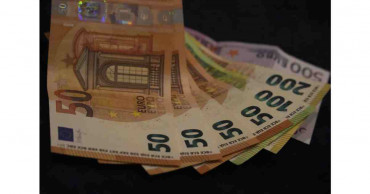
Inflation in the European countries using the euro currency shot up to another record in July, pushed by higher energy prices fueled by Russia’s war in Ukraine, but the economy still managed better-than-expected, if meager, growth in the second quarter.
Annual inflation in the eurozone’s 19 countries rose to 8.9% in July, an increase from 8.6% in June, according to numbers published Friday by the European Union statistics agency.
For months, inflation has been running at its highest levels since 1997, when record-keeping for the euro began, leading the European Central Bank to raise interest rates last week for the first time in 11 years and signal another boost in September.
Energy prices surged in July by 39.7%, only slightly lower than the previous month due to gas supply concerns. Prices for food, alcohol and tobacco rose by 9.8%, faster than the increase posted last month due to higher transport costs, shortages and uncertainty around Ukrainian supply.
“Another ugly inflation reading for July,” said Bert Colijn, senior eurozone economist for ING bank, adding that there was “no imminent sign of relief.”
Read: Asian shares mostly higher after rally on Wall Street
The eurozone’s economy, meanwhile, grew from April through June, expanding by 0.7% compared with the previous quarter, despite stagnation in Germany, Europe’s traditional economic engine. France avoided fears of a recession by posting modest 0.5% growth, while Italy and Spain exceeded expectations with 1% and 1.1% expansions, respectively.
Economists pointed to the rebound in tourism following the COVID-19 pandemic, with short-staffed airports and airlines packed this summer, leading to travel chaos.
With inflation continuing to rise higher than expected, analysts expect economic growth to be the last glimmer of good news, with inflation, rising interest rates and the worsening energy crisis expected to push the region into recession later this year.
“This is as likely to be as good as it will get for the eurozone for the foreseeable future,″ Andrew Kenningham, chief Europe economist for Capital Economics, wrote in an analyst note.
Europe’s growth contrasts with the United States, whose the economy has contracted for two straight quarters, raising fears of a recession with inflation at 40-year highs. But the job market is even stronger than before the COVID-19 pandemic, and most economists, including Federal Reserve Chair Jerome Powell, have said they don’t think the economy is in recession.
3 years ago

Tesla 2Q profit falls from 1Q, but is stronger than expected
Tesla's second-quarter profit fell 32% from record levels in the first quarter as supply chain issues and pandemic lockdowns in China slowed production of its electric vehicles.
But the Austin, Texas, company still surprised analysts Wednesday with a better-than-expected $2.26 billion net profit for the quarter. Tesla stuck with a prediction of 50% annual vehicle sales growth over the next few years, but said that depends on the supply chain, equipment capacity and other issues.
The company made a record $3.32 billion in this year's first quarter.
Tesla's sales from April through June fell to 254,000 vehicles, their lowest quarterly level since last fall. But the company predicted record-breaking production in the second half and said that in June it had the highest production month in its history.
Industry analysts had been expecting lower earnings after the lower sales figures and tweets by CEO Elon Musk about laying off 10% of the company's work force due to fears of a recession. In an interview, Musk described new factories in Austin and Berlin as “money furnaces” that were losing billions of dollars because supply chain breakdowns were limiting the number of cars they can produce.
Read: Musk sells $4B in Tesla shares, presumably for Twitter deal
But Tesla exceeded Wall Street expectations from April through June with adjusted earnings of $2.27 per share. Analysts polled by FactSet expected $1.81. Revenue was $16.93 billion, beating estimates of $16.54 billion.
Edward Jones analyst Jeff Windau said the earnings were better than expected. He noted that the decrease in automobile revenues from the first quarter was offset by stronger energy storage, solar and services performance.
Musk reiterated the 50% annual vehicle sales growth forecast but said it depends a lot on circumstances that the company might not be able to control.
Windau said the forecast “shows the confidence they have in their ability to grow the electric vehicle market.”
Tesla shares rose 1.5% to $753.40 in extended trading Wednesday.
The company said it converted 75% of its bitcoin investment to government currency during the quarter, adding $936 million in cash to its balance sheet. It spent $1.5 billion on the investment last year. Overall, it booked a $106 million cost for bitcoin, plus added costs for employee reductions.
CEO Elon Musk said the bitcoin holdings were sold to raise cash because of uncertainty over how long pandemic lockdowns would last in China. He said Tesla is open to increasing bitcoin holdings in the future.
The price of bitcoin has fallen about 50% so far this year.
Musk also said Tesla is seeing indications that inflation may be declining as prices for most commodities drop. He cautioned against making economic predictions but said commodity prices, such as steel and aluminum, are trending down.
Musk said Tesla’s “Full Self-Driving” beta test software is on track to be released before the end of this year to all North American customers who want to buy it. And with regulatory approval, it will be released in Europe and other parts of the world, he said. Despite its name, “Full Self-Driving” cannot drive itself, and Tesla warns that drivers have to pay attention all the time.
Chief Financial Officer Zachary Kirkhorn said the company is seeing “maybe a little” impact on demand due to macroeconomic issues. Musk reiterated that Tesla has a vehicle supply problem, not a demand problem, and said it now takes six months to a year to get a new vehicle. He said the company has increased prices to “embarrassing levels” due to inflation, but he hopes to reduce prices a bit.
3 years ago