world-business
Asian shares mostly gain as Trump temporarily eases tariffs
Most Asian stocks advanced on Tuesday, tracking gains on Wall Street after U.S. President Donald Trump temporarily relaxed certain tariffs, especially on electronics, while signs of easing pressure in the U.S. bond market also supported sentiment.
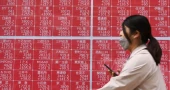
Japan’s Nikkei 225 jumped 0.9% to 34,336.74.
Do you consider Bangladesh as a cashless economy?
Automakers led the gains, with Toyota Motor Corp. climbing 4.9% and Honda Motor Co. up 4.8%. Sony Corp. rose 3.1%, Nintendo edged 0.3% higher, and semiconductor producers Tokyo Electron and Renesas added 1.1% and 1.4%, respectively.
In Australia, the S&P/ASX 200 advanced 0.5% to 7,787.40, while South Korea’s Kospi gained 0.8% to 2,475.25.
Chinese markets showed mixed performance. Hong Kong’s Hang Seng dipped before inching up by less than 0.1% to 21,423.44. Meanwhile, the Shanghai Composite slipped 0.1% to 3,260.55.
“This is becoming the norm: one step forward, two steps back, followed by sudden shifts to carrot-and-stick tactics. That seems to be this administration’s approach — issue a strong policy, then dilute it with selective exemptions or temporary delays. It’s a kind of market management resembling whack-a-mole,” said Stephen Innes, managing partner at SPI Asset Management.
On Monday, Wall Street rebounded. The S&P 500 rose 0.8% to 5,405.97, although trading remained volatile. The Dow Jones Industrial Average climbed 0.8% to 40,524.79, and the Nasdaq composite added 0.6% to 16,831.48.
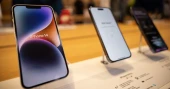
Technology stocks like Apple helped buoy markets after Trump announced exemptions for smartphones, computers, and other electronics from certain steep tariffs that could have significantly increased prices for American consumers. These exemptions mean U.S. importers can avoid raising prices or absorbing higher costs themselves.
Apple gained 2.2%, and Dell Technologies advanced 4%.
Carmakers also benefited after Trump hinted at potential pauses on automotive tariffs. General Motors rose 3.5%, while Ford Motor rallied 4.1%.
Still, the relief could be short-lived. Trump's tariff measures have been marked by abrupt changes, and his administration has stressed that the electronics exemptions are only temporary.
This ongoing uncertainty complicates long-term planning for companies and consumers alike, as policy direction shifts frequently. Financial markets have experienced dramatic swings as investors attempt to react to the shifting landscape.
China’s exports surge while imports dip amid rising US tariffs
A more promising development for investors was the stabilisation of the bond market, which had been volatile the previous week.
Typically, Treasury yields fall when investor anxiety is high, since U.S. government bonds are seen as safe havens. But last week saw an unusual spike in yields, coupled with a decline in the U.S. dollar’s value against other major currencies — hinting that global investors might be reconsidering the U.S. as their preferred refuge during turbulent times.
Last week, Trump announced a 90-day pause on many of the tariffs, citing concerns from bond market participants who were “getting a little queasy.”
By early Tuesday, the yield on the 10-year Treasury note had eased to 4.35%, down from 4.48% on Friday and 4.01% a week earlier.
Yields fell following positive data regarding inflation expectations from U.S. households. While consumers projected slightly higher inflation over the next year, expectations for inflation over the next three to five years either held steady or declined, according to a survey from the Federal Reserve Bank of New York.
This is potentially favourable for the Federal Reserve, which is wary of rising long-term inflation expectations, as they can trigger behavioural shifts that further fuel inflation.
In other early Tuesday trading, benchmark U.S. crude increased by 17 cents to $61.70 a barrel, while Brent crude, the global standard, rose 16 cents to $65.04 a barrel.
The U.S. dollar strengthened to 143.14 Japanese yen from 143.04 yen. The euro edged down slightly to $1.1346 from $1.1351.
10 months ago
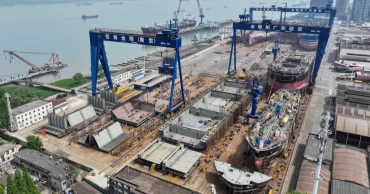
China’s exports surge while imports dip amid rising US tariffs
China’s exports soared 12.4% in March compared to the same period last year, as exporters rushed shipments ahead of higher U.S. tariffs introduced under President Donald Trump’s trade policies, the country’s customs authority reported on Monday.
Imports, however, declined by 4.3% in March.
In the first quarter of the year, exports from the world’s second-largest economy rose by 5.8%, while imports dropped 7% year-on-year.
China recorded a trade surplus of $27.6 billion with the United States in March, with exports to the U.S. climbing 4.5%. For the first three months of the year, the surplus reached $76.6 billion.
Following recent changes in U.S. trade policy, Chinese goods are now subject to tariffs as high as 145%.
Despite trade tensions with the U.S., China saw notable growth in exports to other regions. Shipments to Southeast Asia rose nearly 17% in March from a year earlier, while exports to Africa increased over 11%.
Chinese President Xi Jinping was in Vietnam on Monday, kicking off a regional tour that includes stops in Malaysia and Cambodia. The trip, which appears to be aimed at strengthening trade ties with neighboring nations also facing potential U.S. tariffs, gained additional relevance amid ongoing trade disputes with Washington. Last week, the U.S. delayed enforcement of some of the tariffs by 90 days.
Trade between China and Vietnam saw significant changes in March, with exports from China rising nearly 17% and imports from Vietnam slipping by 2.7%.
Though Xi’s visit was likely scheduled in advance, it carries added diplomatic and economic importance as trade tensions intensify.
Lyu Daliang, a spokesperson for the customs administration, acknowledged the difficult global trade environment but emphasized China’s resilience. He noted the country’s diverse export markets and its vast domestic economy as stabilizing factors.
He also highlighted China’s consistent role as the world’s second-largest importer for 16 consecutive years, growing its share of global imports from around 8% to 10.5%.
“Looking ahead, China still has significant potential for import growth, and our large domestic market continues to offer vast opportunities for global businesses,” Lyu said.
10 months ago
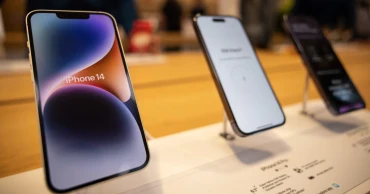
Trump exempts smartphones, computers from new tariffs amid trade concerns
The Trump administration announced late Friday that it will exempt certain electronics, including smartphones and laptops, from reciprocal tariffs.
The move is expected to ease pressure on consumers and offer a boost to major tech firms like Apple, Samsung, and chipmakers such as Nvidia, AP reports.
US Customs and Border Protection said that items like smartphones, laptops, hard drives, flat-panel monitors, and some chips will be excluded from the current 145% tariffs on Chinese goods and 10% tariffs applied to other countries. Semiconductor manufacturing equipment will also be exempt.
Late on Saturday, while travelling to Miami, Trump said he would give more details of the exemptions at the start of next week.
Apple unlikely to make iPhones in US despite Trump’s China tariffs
"We'll be very specific," he told reporters on Air Force One. "But we're taking in a lot of money. As a country we're taking in a lot of money."
The move came after concerns from US tech companies that the price of gadgets could skyrocket, as many of them are made in China.
Exemptions - backdated to April 5 - also include other electronic devices and components, including semiconductors, solar cells and memory cards, reports BBC.
Trump had previously suggested the trade war could encourage Apple to manufacture iPhones in the US, but industry experts have long doubted that prospect given Apple’s complex supply chain in China.
Relocating iPhone production would require years of planning and billions in investment, potentially tripling the cost of the product and slashing its sales. The new exemption echoes relief measures granted during Trump’s first term, when similar tariffs were imposed.
Trump entered his second term with a more aggressive approach to tariffs, which sparked a market slide. The "Magnificent Seven" tech stocks—Apple, Microsoft, Nvidia, Amazon, Tesla, Google parent Alphabet, and Facebook parent Meta—saw a $2.1 trillion drop in combined market value, or 14%, since April 2, when sweeping tariffs were unveiled. That loss narrowed to $644 billion after Trump paused tariffs outside of China last Wednesday.
10 months ago

US wholesale inflation fell last month as price pressures eased
US wholesale prices fell last month in another sign that inflationary pressures are easing. But President Donald Trump’s trade wars cloud the outlook.
The Labor Department said Friday that its producer price index — which tracks inflation before it hits consumers — fell 0.4% from February, first drop since October 2023. Compared with a year earlier, producer prices rose 2.7%, down from a 3.2% year-over-year gain in February and much lower than the 3.3% economists had forecast. Gasoline prices fell 11.1% from February and egg prices, which had skyrocketed because of bird flu, plummeted 21.3%.
Excluding volatile food and energy prices, so-called core wholesale inflation fell 0.1% from February, the first drop since July. Compared to a year earlier, core producer prices were up 3.3% and lower than economists had forecast.
The report comes a day after the Labor Department delivered good news on inflation at the consumer level. Its consumer price index rose just 2.4% last month from March 2024, the smallest year-over-year gain since September. Core consumer prices posted the smallest year-over-year increase in nearly four years.
China raises tariffs on US goods from 84% to 125%
The inflation outlook is muddied by Trump’s trade wars. He’s imposing a 145% tax — a tariff — on Chinese imports and is hitting most of the rest of the world’s imports with a 10% levy that might go up after 90 days.
The trade barriers are widely expected to raise prices as importers attempt to pass along their higher costs.
10 months ago
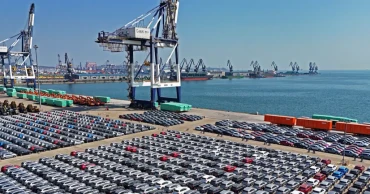
China raises tariffs on US goods from 84% to 125%
China on Friday announced a set of countermeasures, stating it will raise tariffs on U.S. goods from 84% to 125%, effective Saturday.
The trade conflict between the U.S. and China has intensified as both sides raise tariffs, despite U.S. President Donald Trump having paused tariff increases for other nations.
Trump’s overall tariff rate on Chinese goods now stands at 145%. When he announced on Wednesday that China would face 125% tariffs, he excluded a separate 20% tariff linked to China’s involvement in fentanyl production.
“The U.S. has turned the frequent imposition of excessively high tariffs on China into a numbers game, which lacks real economic meaning and will be remembered as a farce in the history of the global economy,” said a spokesperson from China’s Commerce Ministry in a statement unveiling the counteraction.
“Nonetheless, if the U.S. continues to seriously violate China’s interests, China will firmly respond and fight to the end.”
The Commerce Ministry also stated it is filing an additional case with the World Trade Organization in response to the U.S. tariff hikes.
10 months ago
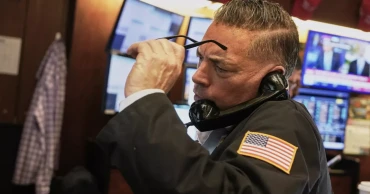
Asian shares sink, with Japan's Nikkei down 5.6% as China-US trade war escalates
Asian shares sank Friday after U.S. stocks gave up much of their historic gains from the day before.
The deepening worries over President Donald Trump’ s trade war initially helped pull Japan’s Nikkei 225 share index down 5.6%.
By mid-morning in Tokyo, it was down 4.7% at 32,969.95.
The yen surged against the U.S. dollar, which also lost value against the euro.
One dollar bought 143.48 Japanese yen, down from about 146 yen a day earlier. The euro rose to $1.1305 from $1.1195.
South Korea's Kospi fell 1.6% to 2,400.34, while in Australia, the S&P/ASX 200 shed 2.1% to 7,552.10.
Investors are viewing Trump's decision to view a 90 day delay on higher tariffs for most countries as a ploy, not a pivot, Stephen Innes of SPI Asset Management said in a commentary.
“That’s the market hitting the brakes, hard. The sugar high from Trump’s tariff pause is fading fast, and Asia’s about to feel the comedown. The champagne’s flat, the party’s over, and the tape is twitching,” he wrote.
Asian markets rise; Nikkei jumps 6.5% amid tariff uncertainty
On Thursday, the S&P 500 tumbled 3.5%, slicing into Wednesday’s surge of 9.5% following Trump’s decision to pause many of his tariffs worldwide. The Dow Jones Industrial Average dropped 1,014 points, or 2.5%, and the Nasdaq composite tumbled 4.3%.
But China announced more countermeasures against the United States and losses for U.S. stocks accelerated after the White House clarified that the United States will tax Chinese imports at 145%, not the 125% rate that Trump had written about in his posting on Truth Social Wednesday, once other previously announced tariffs were included. The drop for the S&P 500 exceeded 6% at one point.
All told, the S&P 500 fell 188.85 points Thursday to 5,268.05. The Dow Jones Industrial Average dropped 1,014.79 to 39,593.66, and the Nasdaq composite sank 737.66 to 16,387.31.
“Trump blinks,” UBS strategist Bhanu Baweja wrote in a report about the president’s decision on tariffs, “but the damage isn’t all undone.”
China, meanwhile, has been seeking to join forces with other countries in apparent hopes of forming a united front against Trump. The world’s second-largest economy is also ramping up its own countermeasures to Trump’s tariffs.
The stock price of Warner Bros. Discovery, the company behind “A Minecraft Movie,” dropped 12.5% for one of Wall Street’s sharpest losses after China said Thursday it will “appropriately reduce the number of imported U.S. films.” The Walt Disney Co.’s stock sank 6.8%
A spokesperson for the China Film Administration said it is “inevitable” that Chinese audiences would find American films less palatable given the “wrong move by the U.S. to wantonly implement tariffs on China.”
That was after Trump and his Treasury secretary, Scott Bessent, sent a clear message to other countries Wednesday after announcing their pause on tariffs for most countries: “Do not retaliate, and you will be rewarded.”
The European Union said Thursday it will put its trade retaliation measures on hold for 90 days and leave room for a negotiated solution.
Asian markets fall as Trump's tariffs roil global trade
Thursday’s swings also hit the bond market, which has historically played the role of enforcer against politicians and economic policies it deemed imprudent. It helped topple the United Kingdom’s Liz Truss in 2022, for example, whose 49 days made her Britain’s shortest-serving prime minister.
Earlier this week, big jumps for U.S. Treasury yields had rattled the market, so much that Trump said Wednesday he had been watching how investors were “getting a little queasy.”
Several reasons could have been behind the sharp, sudden rise in yields. Hedge funds may have sold Treasurys in order to raise cash, and investors outside the United States may be dumping their U.S. government bonds because of the trade war. Regardless of the reasons behind it, higher Treasury yields crank up pressure on the stock market and push rates higher for mortgages and other loans for U.S. households and businesses.
The 10-year Treasury yield had calmed following Trump’s U-turn on tariffs, dropping all the way back to 4.30% shortly after the release of a better-than-expected report on inflation Thursday morning. That’s after it had shot up to nearly 4.50% Wednesday morning from just 4.01% at the end of last week.
As Thursday progressed, though, the 10-year Treasury yield climbed once again and reached 4.40%. It was trading at 4.39% early Friday.
Asian markets crash; Nikkei plunges nearly 8%
In other dealings early Friday, U.S. benchmark crude oil lost 37 cents to $59.70 per barrel in electronic trading on the New York Stock Exchange.
Brent crude, the international standard, fell 30 cents to $63.03 per barrel.
10 months ago

As Trump imposes tariffs, China moves to fill the void left by alienated US allies
As President Donald Trump ramps up his trade war with China, he is also straining ties with traditional U.S. allies who might have otherwise bolstered America's position in the standoff between the world's two largest economies.
For years, American policymakers—including Trump—have sought to shift U.S. economic and strategic focus toward countering China’s growing global influence. However, nearly three months into his second term, Trump’s "America First" tariffs and budget reductions may be creating a major opening for Beijing to sidestep U.S. pressure.
This week, Trump intensified his trade offensive by raising tariffs on Chinese imports to an extraordinary 145%. At the same time, he temporarily halted tariffs on other nations' goods for 90 days following a sharp downturn in the stock market. Still, the back-and-forth approach has disrupted global trade and damaged Washington's relations with long-standing partners.
While Trump promotes a protectionist agenda, China is broadcasting a contrasting message: it promises wider market access and positions itself as a source of global economic stability.
Beijing, now directly targeted by Trump’s tariff strategy, is maneuvering to benefit from the geopolitical shift, seizing opportunities created by U.S. isolationism to expand its influence and strengthen ties with other global players.
“The world must embrace fairness and reject hegemonism,” China has stated—an implicit criticism of U.S. trade policy. In recent months, Chinese leaders have engaged with their counterparts from the EU, South Korea, Japan, and other nations, appealing for unity among countries hit by U.S. tariffs.
China reiterated its commitment to global engagement, stating: “As the world’s second-largest economy and a major consumer market, China remains committed to further opening, regardless of global uncertainties.”
U.S. Tariff Policy Sparks Global Reaction
Trump’s aggressive tariff campaign follows his withdrawal from international institutions such as the World Health Organization and the dismantling of U.S. agencies like USAID and the U.S. Agency for Global Media. These moves have fueled concerns that Washington is surrendering influence to Beijing.
China reaches out to others as Trump layers on tariffs
Rep. Raja Krishnamoorthi, the top Democrat on the House Select Committee on the Chinese Communist Party, criticized the approach: “Rather than reinforcing alliances to counter China, the Trump administration is turning its back on the partnerships that have underpinned U.S. strength and security for decades.”
Trump’s selective tariff pause—excluding China—highlights the administration’s desire to isolate Beijing. But White House press secretary Karoline Leavitt defended the policy, claiming, “Rather than drifting toward China, countries are reaching out to the United States because they rely on our markets.”
Commerce Secretary Howard Lutnick confirmed that building international coalitions is not part of Trump’s strategy. “The president is focused on securing the best deals for America individually,” he said.
Beijing Eyes Strategic Gains
Despite the turbulence, Beijing hasn’t yet fully capitalized on the opening, according to Josh Lipsky of the Atlantic Council’s GeoEconomics Center. He noted that both the U.S. and China are so entrenched in their trade conflict that other countries have become secondary considerations. China's persistent overcapacity in manufacturing may also limit its ability to forge new economic alliances.
Gabriel Wildau of Teneo noted that Trump's partial tariff suspension appears aimed at further isolating China, making it harder for Beijing to rally a broad global coalition against U.S. trade actions.
On Capitol Hill, House Democrats expressed concern that Trump’s tariffs have pushed important Asia-Pacific partners—including Japan, South Korea, Australia, and Vietnam—closer to China.
“We’ve started trade disputes with every one of our partners in the Asia-Pacific,” said Rep. Adam Smith of Washington. Rep. Joe Courtney of Connecticut added, “This is steering our allies away from us.”
But not everyone agreed. Rep. Trent Kelly of Mississippi defended the tariffs, saying, “Letting others take advantage of us doesn’t make us strong leaders.”
Shortly after Trump announced his new round of “reciprocal” tariffs on April 2, Rep. Krishnamoorthi denounced the decision as “a total surrender of American global leadership that plays straight into China’s hands.”
Trump pauses reciprocal tariffs for 90 days, except for China
China Strengthens Global Ties Amid U.S. Trade Disruption
Amid intensifying trade tensions, Chinese Premier Li Qiang spoke by phone with European Commission President Ursula von der Leyen, reaffirming China’s desire to strengthen its relationship with the EU. Li described China and the EU as vital trading partners with deeply interconnected economies.
Von der Leyen acknowledged the need for Europe and China to support a more robust international trading system in light of U.S. disruptions. She also pressed for improved market access for European firms in China.
China raises retaliatory tariff on US to 84% as it vows to 'fight to the end'
Meanwhile, Chinese Commerce Minister Wang Wentao, during a virtual meeting with Malaysia’s trade minister, emphasized Beijing’s readiness to work with trading partners to protect multilateral trade rules. Malaysia currently chairs ASEAN, the 10-member Southeast Asian bloc.
ASEAN’s economic ministers, in a joint statement, voiced concern over U.S. unilateral tariffs, warning of negative impacts on small businesses and overall trade flows.
Earlier in March, China’s trade officials met with their counterparts from Japan and South Korea, issuing a joint statement calling for greater cooperation on supply chain resilience. However, they stopped short of addressing a unified response to U.S. tariffs—highlighting the challenges of forming a regional consensus.
10 months ago
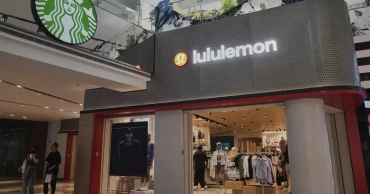
China reaches out to others as Trump layers on tariffs
China is reaching out to other nations as the U.S. layers on more tariffs in what appears to be an attempt to form a united front to compel Washington to retreat. Days into the effort, it's meeting only partial success with many countries unwilling to ally with the main target of President Donald Trump's trade war.
Facing the cratering of global markets, Trump on Wednesday backed off his tariffs on most nations for 90 days, saying countries were lining up to negotiate more favorable conditions.
China has refused to seek talks, saying it would “fight to the end” in a tariff war, prompting Trump to further jack up the tax rate on Chinese imports to 125%. China has retaliated with tariffs on U.S. goods of 84%, which took effect Thursday.
Trump's move was seemingly an attempt to narrow what had been an unprecedented trade war between the U.S. and most of the world to a showdown between the U.S. and China.
“A just cause receives support from many,” Foreign Ministry spokesperson Lin Jian said at a daily briefing on Thursday. “The U.S. cannot win the support of the people and will end in failure.”
China has thus far focused on Europe, with a phone call between Premier Li Qiang and European Commission President Ursula von der Leyen “sending a positive message to the outside world.”
“China is willing to work with the EU to jointly implement the important consensus reached by the leaders of China and the EU, strengthen communication and exchanges, and deepen China-EU trade, investment and industrial cooperation,” the official Xinhua News Agency reported.
That was followed by a video conference between Chinese Commerce Minister Wang Wentao and EU Commissioner for Trade and Economic Security Šefčović on Tuesday to discuss the U.S. “reciprocal tariffs.”
Wang said the tariffs “seriously infringe upon the legitimate interests of all countries, seriously violate WTO rules, seriously damage the rules-based multilateral trading system, and seriously impact the stability of the global economic order,” Xinhua said.
Global shares jump following historic gains on Wall St after Trump paused most of his tariffs
“It is a typical act of unilateralism, protectionism and economic bullying,” Wang said quoted as saying.
“China is willing to resolve differences through consultation and negotiation, but if the U.S. insists on its own way, China will fight to the end,” Wang said.
Wang has also spoken with the 10-member Association of Southeast Asian Nations, while Li, the premier, has met with business leaders. China has “already made a full evaluation and is prepared to deal with all kinds of uncertainties, and will introduce incremental policies according to the needs of the situation,” Xinhua quoted Li as saying.
In Hong Kong, the spokesperson for the local office of China's Foreign Ministry reiterated Beijing's unwillingness to negotiate with the U.S. under current conditions.
“We must solemnly tell the U.S.: a tariff-wielding barbarian who attempts to force countries to call and beg for mercy can never expect that call from China,” Huang Jingrui wrote in an op-ed appearing in the South China Morning Post.
If the U.S. is truly sincere about starting a dialogue with China, it should “immediately rectify its wrong practices and adopt the right attitude of equality, respect and mutual benefit,” Huang wrote.
Despite their unhappiness with Washington, not all countries are interested in linking up with China, especially those with a history of disputes with Beijing.
“We speak for ourselves, and Australia’s position is that free and fair trade is a good thing," Australian Prime Minister Anthony Albanese told reporters. “We engage with all countries, but we stand up for Australia’s national interest and we stand on our own two feet.”
China imposed a series of official and unofficial trade barriers against Australia in 2020 after the government angered Beijing by calling for an independent inquiry into the COVID-19 pandemic.
India has also reportedly turned down a Chinese call for cooperation, and Russia, typically seen as China's closest geopolitical partner, has been left out of the Trump tariffs altogether. Taiwanese Foreign Minister Lin Chia-lung said on Wednesday that his government is preparing for talks on tariffs with the U.S.
Asia shares surge after Trump pauses tariffs
The U.S. imposed a 32% tariff on imports from Taiwan, a close trading and security partner. Taiwan produces most of the high-performing computer chips craved by the U.S. and others and has long enjoyed a trade surplus with Washington.
Yet, Southeast Asian nations such as Vietnam and Cambodia find themselves in a particular bind. They benefited when factories moved to their countries from China due to rising costs. They are being hit by punishing tariffs but have few buyers outside the U.S. and are already operating on razor-thin margins.
Trump had previously denied contemplating a pause, but the drama over his tariffs will continue as the administration prepares to engage in country-by-country negotiations. Meanwhile, tariffs will be 10% for the countries where the larger ones were paused.
It's not clear what further steps China will take, but the Foreign Ministry's Lin said China “will not sit idly by and let the legitimate rights and interests of the Chinese people be deprived of, nor will we allow the international trade rules and multilateral trading system to be undermined.” Non-tariff options include bans on American movies, American law firms and other trade in services.
World markets soared on Thursday, with Japan’s benchmark jumping more than 9%, as investors welcomed Trump’s decision Germany’s DAX initially gained more than 8%. It was up 7.5% at 21,141.53 a bit later, while the CAC 40 in Paris gained 7.2% to 7,360.23. Britain’s FTSE 100 surged 5.4% to 8,090.02.
Trump pauses reciprocal tariffs for 90 days, except for China
However, U.S. futures edged lower and oil prices also declined. Chinese shares saw more moderate gains, given yet another jump in the tariffs each side is imposing on each others’ exports.
The future for the S&P 500 was down 0.4% while that for the Dow Jones Industrial Average edged 0.2% lower.
10 months ago
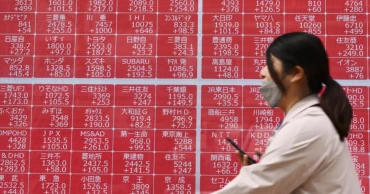
Global shares jump following historic gains on Wall St after Trump paused most of his tariffs
World markets soared on Thursday, with Japan’s benchmark jumping more than 9% as investors welcomed U.S. President Donald Trump’s decision to put his latest tariff hikes on hold for 90 days, though he excluded China from the reprieve.
In early trading, Germany’s DAX initially gained more than 8%. By midmorning, they were up 5.3% at 20,720.86, while France's CAC 40 in Paris gained 5% to 7,204.23. Britain's FTSE 100 surged 4.0% to 7,983.37.
Chinese shares saw more moderate gains, given yet another jump in the tariffs each side is imposing on each others’ exports.
The future for the S&P 500 was down 2.1% while the contract for the Dow Jones Industrial Average dropped 1.6%.
Analysts had expected the global comeback given that U.S. stocks had one of their best days in history on Wednesday as investors registered their relief over Trump’s decision.
“Everything is still very volatile, because with Donald Trump, you don’t know what to expect. This is really big uncertainty in the market. The threat of recession has not faded," said Francis Lun, chief executive of Geo Securities.
In Asia, Japan’s benchmark Nikkei 225 jumped 9.1% to finish at 34,609.00, zooming upward as soon as trading began.
Australia’s S&P/ASX 200 soared 4.5% to 7,709.60. South Korea’s Kospi gained 6.6% to 2,445.06. Hong Kong's Hang Seng added 2.1% to 20,681.78. The Shanghai Composite rose 1.2% to 3,223.64.
Investors went “from fear to euphoria,” Stephen Innes, managing partner at SPI Asset Management, said in a commentary.
“It’s now a manageable risk, especially as global recession tail bets get unwound, and most of Asia’s exporters breathe a massive sigh of relief,” he said, referring to the tariffs on China, which Trump has kept.
EU welcomes Trump tariff pause, silent on retaliation
On Wednesday, the S&P 500 surged 9.5%, an amount that would count as a good year for the market and its third-best day since 1940.
The Dow Jones Industrial Average shot to a gain of 2,962 points, or 7.9%. The Nasdaq composite leaped 12.2%.
Markets had been sinking earlier in the day on worries that Trump’s trade war could drag the global economy into a recession. But then came the posting on social media that investors worldwide had been waiting and wishing for.
“I have authorized a 90 day PAUSE,” Trump said, saying more than 75 countries are negotiating on trade and not retaliating against his latest increases in tariffs. China was a huge exception, with Trump saying tariffs are going up to 125% against its products.
Treasury Secretary Scott Bessent later told reporters that Trump was pausing his so-called ‘reciprocal’ tariffs, announced on his April 2 “Liberation Day,” on dozens of trading partners. He kept a 10% tariff on nearly all global imports.
China was a huge exception, though, with Trump saying tariffs are going up to 125% against its products, after Beijing hiked its tariffs on U.S. exports to 84%.
The trade war is not over, and an escalating battle between the world’s two largest economies can create plenty of damage. U.S. stocks are also still below where they were just a week ago.
Wall Street also got a boost from a relatively smooth auction of U.S. Treasurys on Wednesday. Earlier jumps in Treasury yields had indicated increasing levels of stress and Trump said he had been watching the bond market “getting a little queasy.”
Higher yields on Treasurys put pressure on the stock market and push upward on rates for mortgages and other loans for U.S. households and businesses. U.S. Treasury yields have historically dropped — not risen — during volatile times because the bonds are usually seen as some of the safest possible investments.
Asia shares surge after Trump pauses tariffs
This week’s sharp rise had brought the yield on the 10-year Treasury back to where it was in late February.
After approaching 4.50% in the morning, the 10-year yield pulled back to 4.34% following Trump’s pause and the Treasury’s auction.
By early Thursday, it was trading at 4.28%, up from 4.26% late Tuesday and from just 4.01% late last week.
In energy trading, benchmark U.S. crude fell $1.62 to $60.73 a barrel. Brent crude, the international standard, declined $1.67 to $63.81 a barrel.
In currency trading, the U.S. dollar fell to 146.06 Japanese yen from 147.77 yen. The euro cost $1.1052, up from $1.0951.
10 months ago
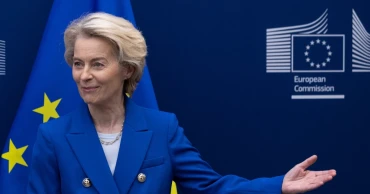
EU welcomes Trump tariff pause, silent on retaliation
European Commission President Ursula von der Leyen on Thursday welcomed President Donald Trump’s decision to temporarily halt most US tariffs, but she did not say whether the European Union intends to press ahead with its own retaliatory measures.
“I have authorized a 90 day PAUSE,” Trump said, after recognizing the more than 75 countries that he said have been negotiating on trade and had not retaliated against his latest increases in tariffs. Countries subject to the pause will now be tariffed at 10%. The EU's rate was 20%, but it was not entirely clear how the 27-nation bloc would be impacted.
China was not included. Trump further jacked up the tax rate on Chinese imports to 125%.
Von der Leyen described the halt on reciprocal tariffs as “an important step towards stabilizing the global economy. Clear, predictable conditions are essential for trade and supply chains to function.”
Before Trump’s announcement on Wednesday, EU member countries voted to approve retaliatory tariffs on $23 billion in goods in response to his 25% tariffs on imported steel and aluminum. The EU, the largest trading partner of the US, described them as “unjustified and damaging.”
The tariffs are set to go into effect in stages, some on April 15 and others on May 15 and Dec. 1. The EU commission didn’t immediately provide a list of the goods. The bloc’s top trade official has shuttled between Brussels and Washington for weeks trying to head off a conflict.
Trump pauses reciprocal tariffs for 90 days, except for China
But Von der Leyen gave no sign that the EU’s timetable has changed.
Members of the EU – the world’s largest trading bloc – repeated their preference for a negotiated deal to settle trade issues, and von der Leyen underscored that commitment, “with the goal of achieving frictionless and mutually beneficial trade.”
Still, the head of the EU’s executive branch – which negotiates trade deals and disputes on behalf of the member countries – said that Europe intends to diversify its trade partnerships.
She said that the EU will continue “engaging with countries that account for 87% of global trade and share our commitment to a free and open exchange of goods, services, and ideas,” and to lift barriers to commerce inside its own single market.
“Together, Europeans will emerge stronger from this crisis,” von der Leyen said.
10 months ago