Asia
Massive fire at Karachi shopping mall kills 6, injures a dozen
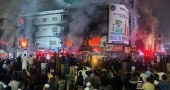
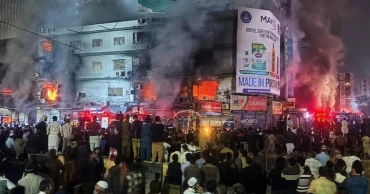
A fire at a multistory shopping plaza in Karachi killed six people, including a firefighter, as crews battled the blaze that erupted overnight, officials said Sunday.
The fire broke out late Saturday at Gul Plaza, spreading rapidly through shops selling cosmetics, garments, and plastic goods, Dr. Abid Jalal Sheikh, the city’s chief rescue officer, told reporters. About 75 percent of the fire was brought under control, but firefighters expected another four to six hours to fully extinguish the flames.
Five bodies were recovered from the four-story building and its basement, which housed roughly 1,200 shops. A firefighter died while trying to douse flames on the upper floors, and some people may still be trapped inside, rescue officials said. Families continued searching for missing relatives.
Road crashes leave 24 dead, 45 injured in Pakistan
Television footage showed thick smoke rising from the damaged building as dozens of firefighters in protective gear battled the blaze. Parts of the structure collapsed during the fire.
The cause of the blaze has not yet been determined, and authorities have launched an investigation.
Prime Minister Shehbaz Sharif expressed grief over the deaths and directed authorities to deploy all resources to prevent further loss of life.
Karachi, the capital of Sindh province, has seen a string of deadly fires, often linked to poor safety standards and illegal construction. In November 2023, a shopping mall fire killed 10 people and injured 22.
1 month ago
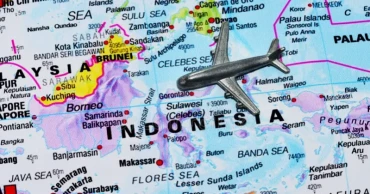
Indonesian plane with 11 aboard goes missing; search underway
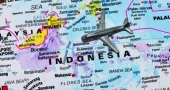
An Indonesian passenger aircraft carrying 11 people disappeared from radar on Saturday while approaching a mountainous region between the islands of Java and Sulawesi, prompting a large-scale search and rescue operation, officials said.
The turboprop ATR 42-500 aircraft operated by Indonesia Air Transport was flying from Yogyakarta to South Sulawesi’s capital when it lost contact with air traffic control, according to Transportation Ministry spokesperson Endah Purnama Sari. The plane was last detected at 1:17 pm local time in the Leang-Leang area of Maros district in South Sulawesi.
Rescue authorities have deployed multiple teams supported by air force helicopters, drones and ground units to locate the aircraft.
Hope of finding the wreckage grew after hikers on Mount Bulusaraung reported seeing scattered debris bearing markings similar to the airline’s logo, along with small fires still burning in the area. The reports are being verified by rescue teams attempting to reach the remote location, said Maj Gen Bangun Nawoko, commander of South Sulawesi’s Hasanuddin military region.
Indonesia plane crash search finds remains, debris at sea
Officials said the aircraft disappeared shortly after air traffic controllers instructed the pilot to adjust the plane’s approach path. After the final communication, radio contact was lost and an emergency distress phase was declared.
The aircraft was carrying eight crew members and three passengers from the Ministry of Marine Affairs and Fisheries, who were on an airborne maritime surveillance mission, Minister Sakti Wahyu Trenggono confirmed.
Search efforts are being hampered by the steep terrain of Bulusaraung National Park, which spans the Maros and Pangkep districts.
Body parts, debris found after Indonesia plane crash
Indonesia, an archipelago nation of more than 17,000 islands, depends heavily on air travel to connect remote regions. The country has faced repeated transport accidents in recent years, often blamed on weak safety enforcement.
1 month ago
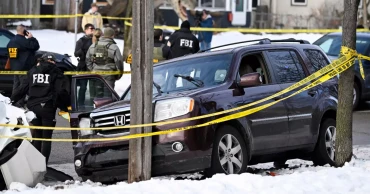
Road crashes leave 24 dead, 45 injured in Pakistan
At least 24 people were killed and 45 others injured in two separate road accidents in Pakistan on Saturday, officials said.
The first incident occurred in Sargodha, in eastern Punjab province, when a truck carrying passengers and cargo skidded off the road and plunged into a canal amid heavy fog. Fourteen people died and nine others were injured, according to local police and rescue teams.
Hours later, a passenger bus overturned on the Makran Coastal Highway in southwestern Balochistan, killing at least 10 people and injuring 36 others, senior police official Aslam Bangulzai said. The bus was traveling from Karachi to Jiwani.
Traffic accidents are frequent in Pakistan, often attributed to reckless driving, poor road conditions, and weak enforcement of traffic laws.
1 month ago
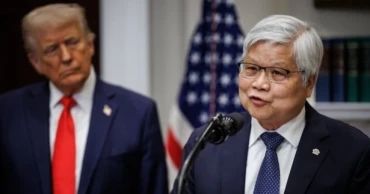
Taiwan hails its ‘best’ trade deal with US, as China protests
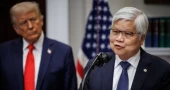
Taiwan’s premier on Friday praised a new trade agreement with the United States as the “best tariff deal” granted to countries with trade surpluses, while China condemned the accord.
The deal reduces U.S. tariffs on Taiwanese goods to 15% in exchange for $250 billion in new investments in the U.S. tech industry. Taiwan Premier Cho Jung-tai said the agreement matched tariffs applied to Japan, Korea, and the European Union, and underscored Taiwan’s strategic importance to the U.S.
China, which claims Taiwan as its territory, criticized the deal, with Foreign Ministry spokesperson Guo Jiakun saying it opposed agreements carrying sovereign or official connotations with Taiwan.
The U.S. Commerce Department said the pact would establish industrial parks in the U.S., boost domestic manufacturing, and drive a reshoring of the semiconductor sector. Taiwanese firms investing in the U.S., including chipmaker TSMC, will benefit from favorable tariff treatment and exemptions. TSMC announced plans to increase capital spending by nearly 40% this year, with $165 billion pledged for U.S. investments and new fabrication plants in Arizona.
Cho said tariffs for automotive and wood furniture products are set at 15% with no added fees, and some aerospace components will face no tariffs. The deal requires ratification by Taiwan’s parliament, where opposition lawmakers have raised concerns about potential impacts on the domestic semiconductor industry.
Trade analysts noted the timing is significant, as the U.S. Supreme Court is set to rule soon on the legality of Trump-era tariffs, which could affect trade leverage. Taiwan, facing persistent security threats from China, was motivated to strengthen economic and strategic ties with the United States.
1 month ago
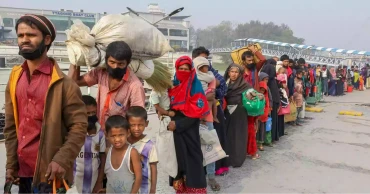
Myanmar denies genocide, calls Rohingya crackdown counterterrorism at ICJ
Myanmar on Friday denied that its 2017 military campaign against the Rohingya minority amounted to genocide, telling the United Nations’ top court that the operation was a legitimate response to insurgent attacks in Rakhine state.
Addressing judges at the International Court of Justice (ICJ), Myanmar’s representative Ko Ko Hlaing said the country was acting against terrorism and rejected allegations that its forces carried out genocidal acts. He argued that Myanmar could not be expected to allow armed groups to operate freely in northern Rakhine.
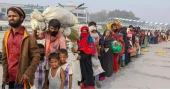
The campaign followed attacks by a Rohingya militant group and led to accusations of mass killings, sexual violence and the burning of villages, forcing more than 700,000 Rohingya to flee to neighboring Bangladesh. About 1.2 million Rohingya now live in overcrowded camps there, facing worsening humanitarian conditions.
The case was filed in 2019 by Gambia, which accuses Myanmar of violating the Genocide Convention. Gambian Justice Minister Dawda Jallow said the Rohingya endured decades of persecution that culminated in what he described as genocidal “clearance operations” in 2016 and 2017.
Myanmar disputed Gambia’s evidence, including findings by a UN fact-finding mission, saying the claims failed to meet the required burden of proof.
Former leader Aung San Suu Kyi defended Myanmar at earlier hearings in 2019 but is now imprisoned following the 2021 military takeover. In 2022, the court rejected Myanmar’s challenge to its jurisdiction, allowing the case to proceed.
Separately, the International Criminal Court has sought an arrest warrant for junta chief Min Aung Hlaing over alleged crimes against humanity linked to the Rohingya.
1 month ago
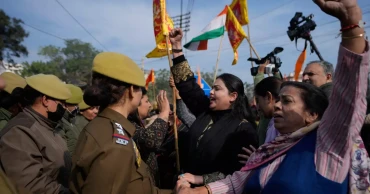
India shuts Kashmir medical college after Muslim students dominated first MBBS batch
India has shut down a medical college in Indian-administered Kashmir following protests by right-wing Hindu groups over the admission of a large number of Muslim students into its first batch.
The National Medical Commission (NMC), the federal regulator for medical education, revoked the recognition of Shri Mata Vaishno Devi Medical Institute (SMVDMI) on January 6. The institute is located in Reasi district, a mountainous region overlooking the Pir Panjal range that separates Jammu from the Kashmir Valley.
Of the 50 students admitted to the five-year MBBS programme in November, 42 were Muslims, mostly from Kashmir, seven were Hindus and one was a Sikh. This was the first MBBS batch launched by the private college, which was founded by a Hindu religious trust and partly funded by the government.
Across India, admissions to both public and private medical colleges are conducted through a centralised entrance exam known as the National Entrance Examination Test (NEET), organised by the federal education ministry’s National Testing Agency. More than two million students sit for the exam each year, competing for around 120,000 MBBS seats.
Read More: ‘Goodwill prevails’ as Bangladesh, India prioritise cooperation over confrontation
Public colleges are usually preferred due to lower fees, but they require higher scores. Students who meet the minimum qualifying threshold but fall short of public college cut-offs typically enrol in private institutions.
One such student was 18-year-old Saniya Jan* from Baramulla district in Kashmir. After qualifying NEET, she opted for SMVDMI as it was relatively close to her home, around 316 kilometres away. “It was a dream come true – to be a doctor,” Saniya told Al Jazeera.
Her parents travelled to Reasi to drop her off when classes began in November. “My daughter has been a topper since childhood. I have three daughters, and she is the brightest. She really worked hard to get a medical seat,” her father, Gazanfar Ahmad*, told Al Jazeera.
However, soon after the academic session started, local Hindu groups began protesting after learning about the religious composition of the batch. They demanded the cancellation of Muslim students’ admissions, arguing that since the college was largely funded through offerings at the Mata Vaishno Devi Temple, Muslims had “no business being there”.
Demonstrations continued for weeks, with protesters gathering daily outside the college gates and raising slogans.
Lawmakers from Prime Minister Narendra Modi’s Bharatiya Janata Party (BJP) wrote to Kashmir’s lieutenant governor, urging that admissions be reserved exclusively for Hindu students. The lieutenant governor serves as the federally appointed administrator of the region.
Their demands later escalated to calls for the college’s closure.
Amid the growing agitation, the NMC announced on January 6 that it had withdrawn the college’s authorisation for failing to “meet the minimum standard requirements” set by the government. The regulator cited deficiencies in faculty, bed occupancy, patient flow, libraries and operating theatres. The following day, the college’s letter of permission to operate was also revoked.
However, several students told Al Jazeera they did not observe any major shortcomings.
Read More: Indian smuggled goods worth Tk 81 lacs seized in Sylhet, 1 held
“I don’t think the college lacked resources,” said Jahan*, who provided only her second name. “We have seen other colleges. Some of them only have one cadaver per batch, while this college has four of them. Every student got an opportunity to dissect that cadaver individually.”
Rafiq, another student, said that even government medical colleges in Srinagar lacked similar facilities. “Even they don’t have the kind of facilities that we had here,” he said.
Saniya’s father also said that the campus appeared well-run when he visited.“The college was good. The faculty was supportive. It looked like no one cared about religion inside the campus,” he said.
Political analyst Zafar Choudhary questioned how the regulator had approved the college in the first place if it lacked proper infrastructure. “Logic dictates that their infrastructure would have only improved since the classes started. So we don’t know how these deficiencies arose all of a sudden,” he told Al Jazeera.
He also criticised the demands made by Hindu groups. “There is a system in place that determines it. A student is supposed to give preference, and a lot of parameters are factored in before the admission lists are announced. When students are asked for their choices, they give multiple selections rather than one. So how is it their fault?” he asked.
Al Jazeera contacted SMVDMI executive head Yashpal Sharma for comment, but he did not respond. The college has not issued any public statement since losing its authorisation.
Meanwhile, students have returned home.
Salim Manzoor*, another student, noted that in Muslim-majority Kashmir there are medical colleges where Hindu students are enrolled under minority quotas.
The BJP has denied claiming that Muslim students were unwelcome but said public sentiment around the temple trust must be respected. “This college is named after Mata Vaishno Devi, and there are millions of devotees whose religious emotions are strongly attached to this shrine,” BJP spokesperson Altaf Thakur told Al Jazeera. “The college recognition was withdrawn because NMC found several shortcomings. There’s no question of the issue being about Hindus and Muslims.”
Kashmir Chief Minister Omar Abdullah said students would not be made to “suffer due to NMC’s decision” and would be accommodated in other institutions. “These children cleared the National Entrance Examination Test, and it is our legal responsibility to adjust them. We will have supernumerary seats, so their education is not affected. It is not difficult for us to adjust all 50 students, and we will do it,” he said.
He also criticised the BJP and allied groups. “People generally fight for having a medical college in their midst. But here, the fight was put up to have the medical college shut. You have played with the future of the medical students of [Kashmir]. If ruining the future of students brings you happiness, then celebrate it.”
National Conference legislator Tanvir Sadiq said the university had received more than $13 million in government funding since 2017, making all Kashmiris stakeholders. “This means that anyone who is lawfully domiciled in [Indian-administered Kashmir] can go and study there. In a few decades, the college would have churned out thousands of fresh medical graduates. If a lot of them are Muslims today, tomorrow they would have been Hindus as well,” he said.
Nasir Khuehami of the Jammu and Kashmir Students’ Association warned that the controversy risks communalising education. “The narrative that because the college is run by one particular community, only students from that community alone will study there, is dangerous,” he said.
Back in Baramulla, Saniya remains uncertain about her future. “I appeared for a competitive exam, which is one of the hardest in India, and was able to get a seat at a medical college,” she said.
“Now everything seems to have crashed. I came back home waiting for what decision the government will take for our future. All this happened because of our identity. They turned our merit into religion.”
1 month ago

Japan, South Korea leaders drum to K-pop after summit
Japanese Prime Minister Sanae Takaichi and South Korean President Lee Jae Myung agreed to further strengthen cooperation between their countries, then surprised the public with a cultural exchange of their own by drumming together to K-pop hits.
The impromptu jam session followed their summit on Tuesday in Nara, Japan’s ancient capital and Takaichi’s hometown.
Wearing matching athletic jackets, the two leaders sat side by side and played drums to popular songs including BTS’ “Dynamite” and “Golden” by K-pop Demon Hunters in a short video released by Takaichi’s office on Wednesday.
The performance was arranged as a surprise by Takaichi, a heavy metal fan who played drums during her university days.
“Playing the drums has been my longtime dream,” Lee wrote on X, thanking Takaichi for arranging the session. “Just as we respected our differences and harmonised our rhythms, I hope Korea and Japan will deepen cooperation and grow closer step by step.”
Takaichi praised Lee as a quick learner, saying he picked up the basics in just a few minutes.
Japan to host South Korea summit as ties with China worsen
She also said Japan and South Korea would continue close communication between their governments and push forward their “shuttle diplomacy” to develop bilateral relations in a forward-looking and stable manner.
1 month ago
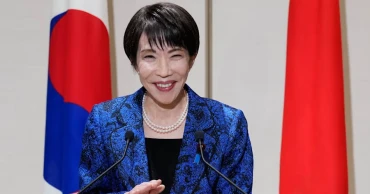
Japan PM plans snap election to seek fresh mandate
Japanese Prime Minister Sanae Takaichi is planning to dissolve the lower house of Parliament soon to clear the way for a snap election aimed at securing a fresh public mandate for her policies, a senior ruling party leader said on Wednesday.
Shunichi Suzuki, secretary general of the ruling Liberal Democratic Party (LDP), told reporters that Takaichi informed top party leaders of her intention to dissolve the powerful lower house shortly after it convenes on January 23.
Takaichi, who became Japan’s first female prime minister in October, is widely seen as seeking to take advantage of her strong public approval rating of around 70 percent to strengthen the position of her scandal-hit party and its coalition partners.
Suzuki said the prime minister will formally outline her plans at a news conference scheduled for next Monday. No specific date for the dissolution or the election was announced, though local media have reported that the lower house could be dissolved on January 23, with voting possibly held as early as February 8.
The governing coalition currently holds only a slim majority in the lower house following election losses in 2024. An early election is expected to help Takaichi secure more seats for the LDP and its new junior partner.
Opposition parties criticised the move, calling it a self-serving decision that could delay urgent parliamentary debate on the national budget.
Takaichi is seeking public backing for her policy agenda, which includes “proactive” fiscal spending and further accelerating Japan’s military buildup under a new coalition arrangement with the conservative Japan Innovation Party. The party joined the ruling bloc after the centrist Komeito left over disagreements on ideology and anti-corruption reforms.
In late December, Takaichi’s cabinet approved a record 122.3 trillion yen ($770 billion) budget for the next fiscal year starting in April, aimed at tackling inflation, supporting low-income households and boosting economic growth. The budget still requires parliamentary approval.
Winning an early election would also make it easier for Takaichi to pass the budget and other key legislation.
The prime minister, known for her hawkish, nationalist views and conservative stance on social issues, is also seeking to regain conservative voters who have shifted toward emerging populist parties in recent elections.
Although the LDP has brought several independents into its alliance to secure a narrow lower-house majority, the ruling bloc remains in the minority in the upper house.
1 month ago
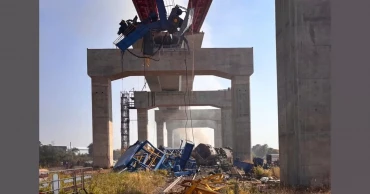
At least 22 killed as crane collapses on train in Thailand
A construction crane fell on a passenger train in northeastern Thailand on Wednesday, killing at least 22 people, officials said.
The crane, which was being used to construct an elevated highspeed railway, fell onto the moving train as it was traveling from Bangkok to Ubon Ratchathani province, causing the train to derail and catch fire, according to Nakhon Ratchasima's Public Relations Department.
The department said in a Facebook post that the fire was under control and that rescuers were searching for people trapped inside the train.
Gas cylinder explosion after wedding kills eight in Islamabad
Transport Minister Piphat Ratchakitprakan said at least 12 people were killed and that there were 195 people on board the train. He said he has ordered an investigation into the accident.
1 month ago

South Korea prosecutors seek death sentence for ex-president Yoon
An independent counsel has sought the death penalty for former South Korean President Yoon Suk Yeol over rebellion charges linked to his declaration of martial law in December 2024, a Seoul court said Tuesday.
The Seoul Central District Court said the demand was made by the legal team of independent counsel Cho Eun-suk during a hearing.
Yoon, who was removed from office in April last year, is facing multiple criminal trials over the brief imposition of martial law and other scandals during his presidency. The rebellion charge is considered the most serious among the cases against him.
The court is expected to deliver its verdict in February.
Yoon has defended his decision, saying the decree was a desperate but peaceful attempt to alert the public to what he described as the threat posed by the liberal opposition Democratic Party. He accused the opposition-controlled parliament of obstructing his agenda and disrupting state affairs.
He previously labelled the parliament “a den of criminals” and “anti-state forces.” However, lawmakers moved swiftly to challenge the martial law order, with enough members, including some from Yoon’s own party, entering the assembly chamber overnight to vote it down.
1 month ago