Asia
N. Korea wants more control over farming amid food shortage
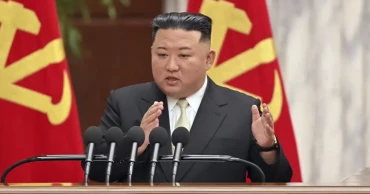
North Korean leader Kim Jong Un vowed to strengthen state control over agriculture and make all available efforts to increase grain production, state media reported, as the country faces a worsening food shortage.
The prospect for an early resolution of its food insecurity is still dim, as North Korea restricts the operation of markets and devotes much of its scarce resources to its nuclear program. While experts believe the food situation is the worst it has been under Kim’s rule, they still say they see no signs of imminent famine or mass deaths.
During a recent four-day ruling Workers’ Party meeting, Kim said his government sees agricultural development as a matter of “strategic” importance and that farming goals should be settled without fail, according to the official Korean Central News Agency.
“In order to attain the gigantic long-term objective of rural development, it is necessary to decisively strengthen the party guidance over the agricultural sector and improve the rural party work,” Kim was quoted as saying.
He said that all state sectors and units must provide “mental and moral, material and technical support and assistance to the rural communities,” saying that should be “a trend of the whole society.”
Kim also ordered officials to overcome unspecified “lopsidedness in the guidance on farming” and concentrate on increasing farm yields. He said provincial, city and county authorities must boost their guidance on agriculture.
KCNA didn’t elaborate how Kim wants to reinforce and improve his government’s control over agriculture.
But experts have said North Korean authorities’ attempts to supply grain via state-run facilities and restrict private dealings at markets was considered one of the reasons behind the worsened food situation. Others include decreased personal incomes, pandemic-related border curbs that blocked unofficial rice purchases from China and the overall economic difficulties deepened by mismanagement, COVID-19 and international sanctions.
North Korea’s grain production last year was estimated at 4.5 million tons, a 3.8% drop from a year earlier, according to South Korean assessments. In the previous decade, its annual production was an estimated 4.4 million to 4.8 million tons. South Korea’s spy agency has said North Korea needs 5.5 million tons of grain to feed its 25 million people each year.
“It is difficult to be optimistic about the food supply as long as Pyongyang insists on implementing North Korean style socialism and isolating the country from international trade and assistance while developing nuclear missiles,” Leif-Eric Easley, a professor at Ewha University in Seoul, said.
Holding a ruling party’s Central Committee meeting focused on agriculture — while previous plenary meetings mostly concentrated on the country’s nuclear program or rivalries with the United States and South Korea — could be an acknowledgement the food situation is serious. But some experts say the country also likely aims to burnish Kim’s image as a leader caring for his people and boost domestic support of his push to expand his nuclear arsenal.
Kim also called for faster construction of new irrigation systems that would help the country cope with extreme weather conditions brought by climate change. He also called for machinery manufacturers to build and supply more efficient farming machines and for workers to accelerate their efforts to reclaim tidelines to expand farming.
According to KCNA, Kim praised the plenary meeting for producing more definite proposals that would put agriculture on a “stable and sustained development track” and accelerate overall prosperity. But the account did not give further specifics.
3 years ago

Pakistan aims for tighter security in 1st digital census
Pakistan launched its first-ever digital population and housing census on Wednesday in an effort to securely gather demographic data on every individual ahead of this year’s parliamentary elections, officials said.
The digital count will provide data for policy decisions, which now are based on the 2017 census that counted the population at 207 million people. It’s also meant to beef up security and avoid another morass like the one that beset the 2021 census. The results of that count, which was done manually, were never announced over complaints about errors and exclusion.
The results of the digital census will be announced next month, according to Pakistan’s Bureau of Statistics, which is conducting the census amid tight security.
On Wednesday, census workers fanned out across Pakistan to collect the data. In addition to policy decisions on such matters as education and health, the information also will be used for the next parliamentary elections.
For the first time, census workers will count transgender people, who are largely neglected in this impoverished Islamic nation. According to human rights groups, there are around 10,000 trans people living in Pakistan.
3 years ago

China dismisses FBI statement on COVID-19 lab leak theory
For the second day in a row, China on Wednesday dismissed U.S. suggestions that the COVID-19 pandemic may have been triggered by a virus that leaked from a Chinese laboratory.
Responding to comments by FBI Director Christopher Wray, Foreign Ministry spokeswoman Mao Ning said the involvement of the U.S. intelligence community was evidence enough of the “politicization of origin tracing.”
Read more: China says it’s been ‘open and transparent’ on COVID origins
“By rehashing the lab-leak theory, the U.S. will not succeed in discrediting China, and instead, it will only hurt its own credibility,” Mao said.
“We urge the U.S. to respect science and facts ... stop turning origin tracing into something about politics and intelligence, and stop disrupting social solidarity and origins cooperation,” she said.
In an interview with Fox News that aired Tuesday, Wray said, “The FBI has for quite some time now assessed that the origins of the pandemic are most likely a potential lab incident in (central China’s) Wuhan.”
“Here you are talking about a potential leak from a Chinese government-controlled lab,” Wray said.
Read more: Coronavirus origins still a mystery 3 years into pandemic
Referring to efforts to trace the origin of the coronavirus, he added, “I will just make the observation that the Chinese government, it seems to me, has been doing its best to try to thwart and obfuscate the work here, the work that we’re doing, the work that our U.S. government and close foreign partners are doing. And that’s unfortunate for everybody.”
On Tuesday, Mao pushed back at a report from the U.S. Department of Energy that assessed with “low confidence” that the virus that was first detected in Wuhan in late 2019 leaked from a nearby government laboratory.
The report hasn’t been made public and officials in Washington stressed that U.S. agencies are not in agreement on the origin of the virus.
Mao on Tuesday insisted that China has been “open and transparent” in the search for the virus’ origins and has “shared the most data and research results on virus tracing and made important contributions to global virus tracing research.”
A World Health Organization expert group said last year that “key pieces of data” to explain how the pandemic began were still missing. The scientists cited avenues of research that were needed, including studies evaluating the role of wild animals and environmental studies in places where the virus might have first spread.
The Associated Press has previously reported that the Chinese government was strictly controlling research into the origin of the pandemic that has killed more than 6.8 million people worldwide, clamping down on some work and promoting fringe theories that it could have come from outside the country.
Some scientists are open to the lab-leak theory, but many scientists believe the virus came from animals, mutated, and jumped to people, as has happened with other viruses in the past. Experts say the origin of the pandemic may not be known for many years — if ever.
3 years ago

Taiwan says 25 Chinese planes, 3 ships sent toward island
China sent 25 warplanes and three warships toward Taiwan on Wednesday morning, the island’s Defense Ministry said, as tensions remain high between Beijing and Taipei’s main backer Washington.
The ministry said 19 of those planes crossed into Taiwan’s air defense identification zone while the ships were continuing to operate in the Taiwan Strait. It said Taiwan responded by scrambling fighters, dispatching ships and activating coastal missile defense systems to “closely monitor and respond.”
China stages such incursions on a near-daily basis, part of what are termed “gray zone” tactics, aimed at intimidation and wearing down Taiwan’s equipment, exhausting its personnel and degrading public morale. Those also include cyberwarfare and disinformation campaigns, along with a relentless drive to deprive Taiwan of diplomatic allies.
Taiwan has responded by upgrading its fleet of F-16 fighter jets and ordering 66 more of the planes from the U.S., while purchasing a range of other weaponry and extending its mandatory term of military service for all males from four months to one year.
Relations between Beijing and Washington, Taiwan’s primary ally and source of defensive weaponry, have spiraled over China’s actions toward the island, trade, technology and the South China Sea.
U.S. Secretary of State Antony Blinken canceled a visit to Beijing last month after the U.S. shot down a suspected Chinese spy balloon off the U.S. east coast, drawing furious protests from China.
China claims Taiwan as its own territory to be brought under its control by force if necessary, and has been rapidly expanding its military to meet that challenge should it arise.
In memos and testimony, top U.S. officers have called for heightened preparations, saying China sees a shrinking window for action and may move on Taiwan within a few years.
China says it prefers peaceful unification between the sides, but the Taiwanese public overwhelmingly favors the current state of de-facto independence.
Wednesday’s incursions were relatively modest by recent standards. During China’s National Day weekend in 2021, Beijing dispatched 149 military aircraft southwest of Taiwan in strike group formations. In August, in response to a trip to Taiwan by then-U.S. House Speaker Nancy Pelosi, China staged war games surrounding the island simulating a blockade and fired missiles over it into the Pacific Ocean.
Along with ordering new hardware from the U.S., Taiwanese President Tsai Ing-wen has been pushing for a revitalization of the domestic defense industry, including producing conventionally powered submarines.
3 years ago

East-West showdown looms at G-20 FMs meeting in India
Fractured East-West relations over Russia’s war in Ukraine and increasing concerns about China’s global aspirations are set to dominate what is expected to be a highly contentious meeting of foreign ministers from the world’s largest industrialized and developing nations this week in India.
The increasingly bitter rift between the United States and its allies on one side and Russia and China on the other appears likely to widen further as the top diplomats from the Group of 20 gather in the Indian capital on Thursday. U.S. Secretary of State Antony Blinken, Chinese Foreign Minister Qin Gang and their Russian counterpart Sergey Lavrov will all be in attendance and battling for support from non-aligned members of the group.
While they will all be in the same room together, there was no sign that Blinken, who spent two days in Kazakhstan and Uzbekistan warning Central Asia about the threat Russia poses before traveling to Delhi, would sit down with either of them.
As it has at most international events since last year, the split over the war in Ukraine and its impact on global energy and food security will overshadow the proceedings. But as the conflict has dragged on over the past 12 months, the divide has grown and now threatens to become a principle irritant in U.S.-China ties that were already on the rocks for other reasons.
A Chinese peace proposal for Ukraine that has drawn praise from Russia but dismissals from the West has done nothing to improve matters as U.S. officials have repeatedly in recent days accused China of considering the provision of weapons to Russia for use in the war.
Those accusations have exacerbated the already poor state of affairs between the world’s two largest economies over Taiwan, human rights, Hong Kong and the South China Sea that took another hit last month with the U.S. discovery and then shoot-down of a Chinese surveillance balloon over American airspace that resulted in Blinken postponing a much-anticipated trip to Beijing.
A hastily arranged meeting between Blinken and China’s top diplomat Wang Yi on the margins of the Munich Security Conference two weeks ago yielded no tangible results. And recently renewed U.S. suggestions that the COVID-19 pandemic could have been the result of a Chinese lab leak have made the situation worse.
On Tuesday in Kazakhstan, Blinken again warned China against transferring lethal military equipment to Russia, saying there would be significant consequences for such actions. “China can’t have it both ways when it comes to the Russian aggression in Ukraine,” Blinken said. “It can’t be putting forward peace proposals on the one hand while actually feeding the flames of the fire that Russia has started with the other hand.”
Read more: G20 foreign ministers’ meet in Delhi: Momen to hold meetings on the sidelines
In the meantime, Moscow has been unrelenting in pushing its view that the West, led by the U.S., is trying to destroy Russia.
Ahead of the meeting, the Russian Foreign Ministry slammed U.S. policies, saying that Lavrov and his delegation would use the G-20 to “focus on the attempts by the West to take revenge for the inevitable disappearance of the levers of dominance from its hands.”
Read more: Blinken warns Central Asia of dangers from war in Ukraine
“The destructive policy of the U.S. and its allies has already put the world on the brink of a disaster, provoked a rollback in socio-economic development and seriously aggravated the situation of the poorest countries,” it said in a statement. “The entire world is suffering from the cynical revelry of illegal sanctions, the artificial breakup of cross-border supply chains, the imposition of notorious price ceilings and, in effect, from attempts to steal natural resources.”
The antagonism has left G-20 host India in the unenviable position of trying to reconcile clearly irreconcilable differences. The meeting is particularly crucial for India’s hopes to use its chairmanship of the group to leverage its position on the global stage and adopt a neutral stance on Ukraine in order to focus on issues of importance to developing nations like rising inflation, debt stress, health, climate change and food and energy security.
“I think those are equally important issues to focus on, of course along with the Russia-Ukraine conflict,” said Indian Foreign Secretary Vinay Kwatra, the most senior bureaucrat in the foreign ministry.
Read more: Modi urges G20 finance leaders to focus on ‘most vulnerable’
But just last week, India was forced to issue a chair’s summary at the conclusion of the G-20 finance ministers meeting after Russia and China objected to a joint communique that retained language on the war in Ukraine drawn directly from last year’s G-20 leaders summit declaration.
India hopes to avert a repeat of that, but prospects appear dim.
“We will see how it goes forward. It is a repetition of the Bali declaration,” said Indian foreign ministry spokesman Arindam Bagchi. “Obviously, we stand by that declaration. Our prime minister was there. There is no question of not agreeing with that text. We are with that text.”
So far, though, India has refrained from directly criticizing Russia, its major Cold War-era ally, while increasing imports of Russian oil, even as it has increasingly faced pressure to take a firm stand on Moscow. India has also abstained from voting in UN resolutions that condemn the Ukraine invasion.
“India’s messaging has been clear and consistent: It’s not about to criticize Russia, but it strongly opposes the war and supports all efforts to bring it to an end,” said Michael Kugelman, deputy director at the Wilson Center think tank.
“The West would prefer it go further, and Russia would prefer it say less, but each side has accepted New Delhi’s position, and India’s relations with both sides have remained strong throughout the war,” he said.
3 years ago

India revives civil militia after Hindu killings in Kashmir
After seven Hindus were killed in early January in two back-to-back attacks in Dhangri village in disputed Kashmir, former Indian army soldier Satish Kumar described his sleepy mountainous village as an “abode of fear.”
Days after the deadly violence in the village in frontier Rajouri district, where homes are separated by maize and mustard fields, hundreds of residents staged angry protests across the Hindu-dominated Jammu region. In response, Indian authorities revived a government-sponsored militia and began rearming and training thousands of villagers, including some teenagers.
Kumar was among the first people to join the militia under the new drive and authorities armed him with a semiautomatic rifle and 100 bullets.
“I feel like a soldier again,” said the 40-year-old Kumar, who runs a grocery store since his retirement from the Indian military in 2018.
The militia, officially called the “Village Defense Group,” was initially formed in the 1990s as the first line of defense against anti-India insurgents in remote Himalayan villages that government forces could not reach quickly.
Also Read: 2 kids among 6 people die in Kashmir village attack: Police
As the insurgency waned in their operational areas and as some militia members gained notoriety for brutality and rights violations, drawing severe criticism from human rights groups, the militia was largely disbanded.
But the January violence stirred unpleasant memories of past attacks in Rajouri, which is near the highly militarized Line of Control that divides Kashmir between India and Pakistan and where combat between Indian soldiers and rebels is not uncommon.
Brandishing his weapon inside his single-story concrete home on an overcast February day, Kumar justified his decision to join the militia as the “only way to combat fear and protect (my) family from terrorists.”
“I am a trained person and have fought against terrorists. But what is the use of (military) training if you do not have a weapon,” Kumar said. “Believe me, I felt almost incapacitated due to fear.”
On January 1, two gunmen killed four villagers, including a father and his son, and wounded at least five others. The next day, a blast outside one of the houses killed two children and injured at least 10 others. It is still unclear whether the explosive was left behind by the attackers. A week later, one of the injured died at a hospital, raising the overall death toll to seven.
“There was carnage in our village and Hindus were under attack,” Kumar said.
Also Read: Indian police say 4 suspected rebels killed in Kashmir
The police blamed militants fighting against Indian rule for decades in Kashmir, the Himalayan territory claimed by India and Pakistan in its entirety. But two months later, they are yet to announce a breakthrough or name any suspects, exacerbating fear and anger among residents in the village of about 5,000 where Hindus represent about 70% and the rest are Muslims.
The policy to rearm civilians comes after India stripped Kashmir of its semiautonomy and took direct control of the territory amid a months-long security and communications lockdown in 2019. Kashmir has since remained on edge as authorities also put in place a slew of new laws that critics and many Kashmiris fear could change the region’s demographics.
In New Delhi’s effort to shape what it calls “Naya Kashmir,” or a “new Kashmir,” the territory’s people have been largely silenced, with their civil liberties curbed, as India has shown no tolerance for any form of dissent.
So when the Dhangri violence occurred, the Indian government was swift to rearm the civilian militia even though it had announced its reconstitution in August last year.
Officials said they have since armed and provided weapons training to over 100 other Hindu men in Dhangri, while also lifting the ban on gun licenses in the already militarized Rajouri. The village already had over 70 former militiamen, some of whom still possess the colonial British-era Lee–Enfield rifles allotted to them over a decade ago.
For the first time, the militia has also been financially incentivized by the government, which said each member would be paid 4,000 Indian rupees ($48) a month.
Still, the decision to revitalize the Village Defense Group is not without controversy.
Some security and political experts argue that the policy could weaponize divisions in Jammu’s volatile hinterland where communal strife has historically existed.
In the past, more than 200 police cases, including charges of rape, murder and rioting, were registered against some of the tens of thousands of militiamen in Jammu region, according to government data.
“Small arms proliferation is dangerous for any society and when a state does it, it’s a tacit admission of failure to secure a society,” said Zafar Choudhary, a political analyst.
India has a long history of arming civilians in its counterinsurgency efforts and civilian militiamen were first used to fight separatists in India’s northeastern states. In 2005, India’s federal government founded a local militia, the Salwa Judum, to combat Maoist rebels in the central Chhattisgarh state. It was accused by rights groups of committing widespread atrocities and was disbanded in 2011.
In Kashmir, the civil defense groups were armed almost six years after the deadly insurgency against Indian rule began.
S.P. Vaid was a young officer in 1995 when he supervised the creation of the militia’s first unit after two Hindu men were killed in a militant attack in a remote hilly village in Jammu region. Vaid, who recently retired as Indian-controlled Kashmir’s top police officer, said hours after his team reached the village the locals demanded arms for their protection.
“I had no government brief on that, but I immediately sought permission from headquarters to provide the villagers with 10 guns,” he said. “That’s how it started.”
The Indian government formally rolled out a policy to arm villagers a few months later.
Security officials argue that arming civilians deterred militant activity and helped stop the out-migration of Hindus from remote areas, unlike in the Kashmir valley where a year after armed rebellion broke out most local Hindus fled to Jammu amid militant threats and the killings of local community leaders.
Kuldeep Khoda, another former top police officer in the region credited for implementing the policy, said the results “surprised us."
“It was an experiment but it worked,” Khoda said at his home in Jammu city.
For its work on civil defense groups, the region’s police were given an award by the International Association of Chiefs of Police, an influential U.S.-based police group, Khoda said.
The militia, he said, “played a pivotal role in defeating Pakistani designs to instigate communal tensions.”
But Choudhary, the political analyst, said “civilians are not armed in a functional democracy.”
The sharpening divisions already appear stark in Dhangri.
Muslim residents in the village say fear and grief bind them together with their Hindu neighbors, yet their request to join the militia has been refused.
Mohammed Mushtaq is a former paramilitary soldier who lives near the house where gunmen first fired on January 1.
“We have lived together for generations and have a similar social system. But fingers have been pointed at us,” he said. Mushtaq and two other Muslim neighbors, also former soldiers, asked the authorities for weapons under the policy but were refused, he said.
As Mushtaq spoke sitting outside his home, the sounds of religious hymns and devotional songs floated from the loudspeakers of a Hindu temple on top of a hill. The chants were interspersed with the chirping of birds and occasional whistles from pressure cookers in some village kitchens.
Moments later, a muezzin called Muslims to early afternoon prayers.
Kumar, the former soldier and militia member, said the decision not to induct his Muslim neighbors in the militia was “arbitrary” as “we still do not know who carried out the massacre” in Dhangri.
Meanwhile, hundreds of old militia members in Rajouri’s remote hamlets are oiling their weapons again.
“We had locked up our guns and thought we would never need them,” said 38-year-old Usha Raina, who has been a militia member since 2015 along with over two dozen other villagers in the neighboring hamlet of Kalal Khas.
“The incident (in Dhangri) has scared us all and the guns are back in our living rooms,” she said.
3 years ago
Drones fly deep inside Russia; Putin orders border tightened
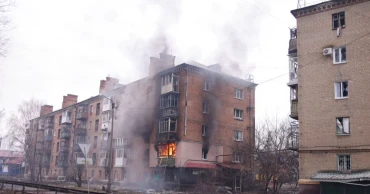
Drones that the Kremlin said were launched by Ukraine flew deep inside Russian territory, including one that got within 100 kilometers (60 miles) of Moscow, signaling breaches in Russian defenses as President Vladimir Putin ordered stepped-up protection at the border.
Officials said the drones caused no injuries and did not inflict any significant damage, but the attacks on Monday night and Tuesday morning raised questions about Russian defense capabilities more than a year after the country's full-scale invasion of its neighbor.
Ukrainian officials did not immediately take responsibility, but they similarly have avoided directly acknowledging responsibility for past strikes and sabotage while emphasizing Ukraine’s right to hit any target in Russia.
Although Putin did not refer to any specific attacks in a speech in the Russian capital, his comments came hours after the drones targeted several areas in southern and western Russia. Authorities closed the airspace over St. Petersburg in response to what some reports said was a drone.
Also Tuesday, several Russian television stations aired a missile attack warning that officials blamed on a hacking attack.
Also Read: Flurry of drone strikes hits Russia as TV, radio are hacked
The drone attacks targeted regions inside Russia along the border with Ukraine and deeper into the country, according to local Russian authorities.
A drone fell near the village of Gubastovo, less than 100 kilometers (60 miles) from Moscow, Andrei Vorobyov, governor of the region surrounding the Russian capital, said in an online statement.
The drone did not cause any damage, Vorobyov said, but it likely targeted “a civilian infrastructure object.”
Pictures of the drone showed it was a small Ukrainian-made model with a reported range of up to 800 kilometers (nearly 500 miles) but no capacity to carry a large load of explosives.
Russian forces early Tuesday shot down another Ukrainian drone over the Bryansk region, local Gov. Aleksandr Bogomaz said in a Telegram post.
Three drones also targeted Russia’s Belgorod region on Monday night, with one flying through an apartment window in the capital, local authorities reported. Regional Gov. Vyacheslav Gladkov said the drones caused minor damage to buildings and cars.
The Russian Defense Ministry said Ukraine used drones to attack facilities in the Krasnodar region and neighboring Adygea. It said the drones were brought down by electronic warfare assets, adding that one of them crashed into a field and another diverted from its flight path and missed a facility it was supposed to attack.
Russia's state RIA Novosti news agency reported a fire at the oil facility, and some other Russian reports said that two drones exploded nearby.
While Ukrainian drone strikes on the Russian border regions of Bryansk and Belgorod have become a regular occurrence, other strikes reflected a more ambitious effort.
Some Russian commentators described the drone attacks as an attempt by Ukraine to showcase its capability to strike deep behind the lines, foment tensions in Russia and rally the Ukrainian public. Some Russian war bloggers described the raids as a possible rehearsal for a bigger, more ambitious attack.
Andrei Medvedev, a commentator with Russian state television who serves as a deputy speaker of Moscow’s city legislature and runs a popular blog about the war, warned that the drone strikes could be a precursor to wider attacks within Russia that could accompany Ukraine’s attempt to launch a counteroffensive.
“The strikes of exploding drones on targets behind our lines will be part of that offensive,” Medvedev said, adding that Ukraine could try to extend the range of its drones.
Russia hawks urged strong retaliation. Igor Korotchenko, a retired Russian army colonel turned military commentator, called for a punishing strike on the Ukrainian presidential office in Kyiv.
Another retired military officer, Viktor Alksnis, noted that the drone attacks marked the expansion of the conflict and criticized Putin for failing to deliver a strong response.
Also on Tuesday, authorities reported that airspace around St. Petersburg, Russia's second-largest city, was temporarily closed, halting all departures and arrivals at the main airport, Pulkovo. Officials did not give a reason for the move, but some Russian reports claimed that it was triggered by an unidentified drone.
The Russian Defense Ministry said it was conducting air defense drills in western Russia.
Last year, Russian authorities repeatedly reported shooting down Ukrainian drones over annexed Crimea. In December, the Russian military said Ukraine used drones to hit two bases for long-range bombers deep inside Russian territory.
Speaking at Russia’s main security agency, the FSB, Putin urged the service to tighten security on the Ukraine border.
In another development that fueled tensions across Russia on Tuesday, an air raid alarm interrupted the programming of several TV channels and radio stations in several regions. Russia’s Emergency Ministry said in an online statement that the announcement was a hoax “resulting from a hacking of the servers of radio stations and TV channels in some regions of the country."
Meanwhile, satellite photos analyzed by The Associated Press appeared to show a Russian warplane in Belarus that Belarusian guerrillas claimed to have targeted as largely intact.
Tuesday’s high-resolution images from Planet Labs PBC and Maxar Technologies showed the Russian A-50 early warning and control aircraft after what Belarusian opposition activists described as an attack on the Machulishchy air base Sunday outside the Belarusian capital of Minsk.
However, a discoloration could be seen on the aircraft's distinctive, circular rotodome above its fuselage that could be damage. That discoloration wasn't seen in earlier images of the aircraft at the air base. The Maxar image also showed what appeared to be vehicles near the airplane as well.
Belarusian activists supporting Ukraine alleged that the aircraft was seriously damaged. Russian and Belarusian officials did not comment on the claims.
In Ukraine, four people were killed and five others wounded Tuesday by renewed Russian shelling of the southern Ukrainian city of Kherson, regional Gov. Oleksandr Prokudin said in a Telegram.
A 68-year-old man was also killed as Russian forces shelled Kupiansk, a town in Ukraine’s northeastern Kharkiv region, Gov. Oleh Syniehubov said.
The fiercest fighting continued to be in eastern areas of Ukraine, where Russia wants control over all four of the provinces it illegally annexed in September.
Ukrainian officials said Russian forces have deployed additional troops and equipment, including the latest T-90 battle tanks, in those areas.
In a video address, Ukraine's President Volodymyr Zelenskyy thanked U.S. industrialists for supporting Ukraine and voiced hope for their support in rebuilding the country after the war. Zelenskyy noted that the country faces a “colossal task” to restore hundreds of thousands of damaged sites, including “whole cities, industries, productions."
3 years ago

China says TikTok ban reflects US insecurities
U.S. government bans on Chinese-owned video sharing app TikTok reveal Washington’s own insecurities and are an abuse of state power, a Chinese Foreign Ministry spokesperson said Tuesday.
The U.S. government “has been overstretching the concept of national security and abusing state power to suppress other countries’ companies,” Mao Ning said at a daily briefing. “How unsure of itself can the U.S., the world’s top superpower, be to fear a young person’s favorite app to such a degree?”
The White House is giving all federal agencies, in guidance issued Monday, 30 days to wipe TikTok off all government devices. The White House already did not allow TikTok on its devices.
TikTok is used by two-thirds of American teens, but there’s concern in Washington that China could use its legal and regulatory powers to obtain private user data or to try to push misinformation or narratives favoring China.
Congress and more than half of U.S. states have so-far banned TikTok from government-issued mobile devices.
Some have also moved to apply the ban to any app or website owned by ByteDance Ltd., the private Chinese company that owns TikTok and moved its headquarters to Singapore in 2020.
China has long blocked a long list of foreign social media platforms and messaging apps, including YouTube, Twitter, Facebook and Instagram.
Washington and Beijing are at odds over myriad issues including trade, computer chips and other technology, national security and Taiwan, along with the discovery of a suspected Chinese spy balloon over the U.S. and its shooting down earlier this month.
On Monday, Canada announced it was joining the U.S. in banning TikTok from all government-issued mobile devices.
“I suspect that as government takes the significant step of telling all federal employees that they can no longer use TikTok on their work phones many Canadians from business to private individuals will reflect on the security of their own data and perhaps make choices,” Canadian Prime Minister Justin Trudeau told reporters after the announcement.
Canadian Treasury Board President Mona Fortier said the Chief Information Officer of Canada had determined that TikTok “presents an unacceptable level of risk to privacy and security.”
“On a mobile device, TikTok’s data collection methods provide considerable access to the contents of the phone,” Fortier said.
The app will be removed from Canadian government issued phones on Tuesday.
The European Union’s executive branch said last week it has temporarily banned TikTok from phones used by employees as a cybersecurity measure.
TikTok has questioned the bans, saying it has not been given an opportunity to answer questions and governments were cutting themselves off from a platform beloved by millions.
3 years ago

Pakistani court orders arrest of former premier Imran Khan
A Pakistani court on Tuesday issued an arrest warrant for former Prime Minister Imran Khan, as the cricket star-turned-politician called on his supporters to keep up protests amid a roiling political crisis.
The court in the capital Islamabad that ordered the former premier’s arrest said Khan had skipped a hearing on charges of selling state gifts and concealing his assets.
Judge Zafar Iqbal’s order came on a day of political drama in Pakistan, as three other courts on Tuesday ruled Khan was immune from arrest on separate charges relating to allegations of terrorism, attempted murder against a rival politician, and graft.
Tight security and thousands of supporters greeted Imran Khan, 70, as he made his first appearance in Islamabad since being shot in the leg during a protest rally in November. One of Khan’s supporters was killed and a dozen others were wounded in the attack, which drew nationwide condemnation.
Khan has been leading protests for months now calling for early elections to oust the current government of Prime Minister Shahbaz Sharif, who says polls will be held later this year when Parliament completes its five-year term.
Fawad Chaudhry, a senior leader from Khan’s Pakistan Tehreek-e-Insaf party, said there was “a serious threat to the security of Imran Khan and thousands of people” as he moved around the capital. He said Khan was being paraded from one court to another in “fake cases.”
Khan was ousted from the premiership in April through a no-confidence vote by lawmakers. He has accused Sharif of conspiring with the U.S. to oust him from power, without providing evidence.
Legal problems for Khan have continued to mount. In October, an elections tribunal disqualified Khan from holding public office on charges he sold state gifts and concealed assets as premier. He was stripped of his seat in the National Assembly, the lower house of Pakistan’s Parliament.
Khan has challenged his disqualification and denied wrongdoing.
The latest developments come a day after Islamabad police said they had arrested Amjad Shoaib, a retired army general and Khan ally, on charges of inciting the public and government employees against national institutions.
Shoaib was arrested after he appeared on a Pakistani news channel on Saturday criticizing authorities for keeping Khan’s supporters jailed, especially in remote areas of the country.
The standoff between Khan and Sharif’s government has roiled the country as its economy faces severe problems and a growing currency crisis.
Pakistan is in talks with the International Monetary Fund to revive a bailout that was originally signed in 2019 when Khan was in power.
On Tuesday, Moody’s Investors Service downgraded Pakistan’s rating. The action is seen as a warning that Pakistan is more likely to default on its foreign debts.
Moody’s assessment was driven by Pakistan’s increasingly fragile liquidity and external position that raises default risks to a level consistent with a Caa3 rating.
3 years ago

China says it’s been ‘open and transparent’ on COVID origins
China on Tuesday said it has been “open and transparent” in the search for the origins of COVID-19, after questions about how the pandemic began received new attention.
Most recently, the U.S. Department of Energy assessed with “low confidence” that the pandemic that was first detected in the central Chinese city of Wuhan in late 2019 began with the leak of a virus from a lab. The report hasn’t been made public.
China had “shared the most data and research results on virus tracing and made important contributions to global virus tracing research,” Foreign Ministry spokesperson Mao Ning Mao told reporters at a daily briefing.
“Politicizing the issue of virus tracing will not smear China but will only damage the U.S.’s own credibility,” Mao said, in response to complaints from U.S. officials and members of Congress that China has not been entirely cooperative.
Her comments came amid continuing questions about how the virus that has killed more than 6.8 million people worldwide first emerged.
Also Read: Coronavirus origins still a mystery 3 years into pandemic
Others in the U.S. intelligence community disagree with the U.S. Energy Department assessment of the lab leak, citing differing opinions within the government. “There is just not an intelligence community consensus,” John Kirby, the spokesman for the National Security Council, said Monday.
Others in the U.S. intelligence community disagree with the U.S. Energy Department assessment of the lab leak, citing differing opinions within the government. “There is just not an intelligence community consensus,” John Kirby, the spokesman for the National Security Council, said Monday.
3 years ago