Asia

58 weak Rohingya land on Indonesian beach after weeks at sea
Dozens of hungry and weak Rohingya Muslims were found on a beach in Indonesia’s northernmost province of Aceh on Sunday after weeks at sea, officials said.
The group of 58 men arrived on Indrapatra beach at Ladong, a fishing village in Aceh Besar district, early Sunday, said local police chief Rolly Yuiza Away. Villagers who saw the group of ethnic Rohingya on a rickety wooden boat helped them to land and then reported their arrival to authorities, he said.
“They look very weak from hunger and dehydration. Some of them are sick after a long and severe voyage at sea,” said Away, adding that the men received food and water from villagers and others as they waited for further instructions from immigration and local officials in Aceh.
Read more: Urgently rescue boat carrying upto 200 Rohingyas: ASEAN parliamentarians urge member states, others
At least three of the men were rushed to a health clinic for medical care, and others are also receiving various medical treatments, Away said.
The United Nations and other groups on Friday urged countries in South Asia to rescue as many as 190 people believed to be Rohingya refugees aboard a small boat that has been adrift for several weeks in the Andaman Sea.
“Reports indicate those onboard have now remained at sea for a month in dire conditions with insufficient food or water, without any efforts by States in the region to help save human lives,” the U.N. refugee agency, UNHCR, said in a statement. “Many are women and children, with reports of up to 20 people dying on the unseaworthy vessel during the journey.”
Away said it wasn’t clear where the group was traveling from or if they were part of the group of 190 Rohingya refugees that has been adrift in the Andaman Sea. But one of the men who spoke some Malay said they had been at sea for more than a month and had aimed to land in Malaysia to seek a better life and work there.
More than 700,000 Rohingya Muslims have fled from Buddhist-majority Myanmar to refugee camps in Bangladesh since August 2017, when the Myanmar military launched a clearance operation in response to attacks by a rebel group. Myanmar security forces have been accused of mass rapes, killings and the burning of thousands of homes.
Groups of Rohingya have attempted to leave the crowded camps in Bangladesh and travel by sea in hazardous voyages to other Muslim-majority countries in the region.
Read more: Very limited spaces offered for Rohingya resettlement: UNHCR
Muslim-dominated Malaysia has been a common destination for the boats, and traffickers have promised the refugees a better life there. But many Rohingya refugees who land in Malaysia face detention.
Although Indonesia is not a signatory to the United Nations’ 1951 Refugee Convention, the UNHCR said that a 2016 presidential regulation provides a national legal framework governing the treatment of refugees on boats in distress near Indonesia and to help them disembark.
These provisions have been implemented for years, most recently last month when about 219 Rohingya refugees, including 63 women and 40 children, were rescued off the coast of North Aceh district aboard two rickety boats.
“We urge the government of Indonesia to rescue the boats and allow them to safely disembark," Amnesty International Indonesia's executive director Usman Hamid said. “We also urge the Indonesian government to lead a regional initiative to resolve the refugee crisis.”
On Thursday, the U.N. special rapporteur on the situation of human rights in Myanmar, Tom Andrews, urged governments in South and Southeast Asia “to immediately and urgently coordinate search and rescue for this boat and ensure safe disembarkation of those aboard before any further loss of life occurs.”
“While many in the world are preparing to enjoy a holiday season and ring in a new year, boats bearing desperate Rohingya men, women and young children, are setting off on perilous journeys in unseaworthy vessels,” Andrews said in a statement.
3 years ago

US warns of possible attack in Islamabad amid security fears
The U.S. Embassy in Islamabad on Sunday warned its staff of a possible attack on Americans at a top hotel in Pakistan's capital as the city was already on high alert following a suicide bombing earlier in the week.
The U.S. government is aware of information that “unknown individuals are possibly plotting to attack Americans at the Marriott Hotel in Islamabad sometime during the holidays," the embassy said in a security alert. The advisory banned its American personnel from visiting the popular hotel over the holidays.
Read more: Afghan forces shell border town, killing 6: Pakistani army
The U.S. mission also urged all personnel to refrain from non-essential travel in Islamabad during the holiday season.
The embassy directive came two days after a suicide bombing in a residential area of the capital killed a police officer and wounded ten others. The explosion happened when police stopped a taxi for inspection during a patrol. According to the police, a rear seat passenger detonated explosives he was carrying, blowing up the vehicle.
Militants with the Pakistani Taliban, who are separate from but allied with Afghanistan's rulers, later claimed the attack.
Read more: Pakistan launches operation to free officers held by Taliban
Islamabad's administration has since put the city on high alert, banning public gatherings and processions, even as campaigns are ongoing for upcoming local elections. Police have stepped up patrols and established snap checkpoints to inspect vehicles across the city.
A suicide bombing targeted the capital's Marriott Hotel in September 2008, in one of the deadliest such incidents in the capital. Attackers drove a dump truck up to the hotel's gates before detonating it, killing 63 people and wounding over 250 others.
3 years ago

China sends 71 warplanes, 7 ships toward Taiwan in 24 hours
China’s military sent 71 planes and seven ships toward Taiwan in a 24-hour display of force directed at the island, Taiwan’s defense ministry said Monday, after China expressed anger at Taiwan-related provisions i n a U.S. annual defense spending bill passed on Saturday.
China’s military harassment of self-ruled Taiwan, which it claims is its own territory, has intensified in recent years, and the Communist Party’s People’s Liberation Army has sent planes or ships toward the island on a near-daily basis.
Read more: China’s foreign minister signals deeper ties with Russia
Between 6 a.m. Sunday and 6 a.m. Monday, 47 of the Chinese planes crossed the median of the Taiwan Strait, an unofficial boundary once tacitly accepted by both sides, according to Taiwan’s Ministry of National Defense.
Among the planes China sent towards Taiwan were 18 J-16 fighter jets, 11 J-1 fighters, 6 Su-30 fighters and drones.
Taiwan said it monitored the Chinese moves through its land-based missile systems, as well as on its own navy vessels.
“This is a firm response to the current US-Taiwan escalation and provocation,” said Shi Yi, the spokesman for the PLA’s Eastern Theater Command, in a statement on Sunday night. It announced that the PLA was holding joint combat patrols and joint strike drills in the waters around Taiwan.
Read more: China sends 39 warplanes, 3 ships toward Taiwan in 24 hours
Shi was referring to the U.S. defense spending bill, which calls China a strategic challenge. With regard to the Indo-Pacific region, the legislation authorizes increased security cooperation with Taiwan and requires expanded cooperation with India on emerging defense technologies, readiness and logistics.
China’s military has often used large military exercises as a demonstration of force in response to U.S. government actions in support of Taiwan. It conducted large live-fire military exercises in August in response to U.S. House speaker Nancy Pelosi’s visit to Taiwan. Beijing views visits from foreign governments to the island as de facto recognition of the island as independent and a challenge to China’s claim of sovereignty.
3 years ago

Leader of ex-communist rebels Pushpa Kamal becomes Nepal’s new PM
The leader of former communist rebels became Nepal’s new prime minister Sunday with the support from his ex-opponent and other smaller political parties.
The announcement was made by the office of President Bidhya Devi Bhandari after the Maoist communist party leader Pushpa Kamal Dahal met her to stake his claim for the prime minister following last month’s elections in a major twist in politics in the Himalayan nation.
Dahal has support of more than half the members of the newly elected House of Representatives, the lower house of Parliament.
He is likely to take the oath of office on Monday and prove his majority in the 275-member house later in the week.
Seven parties have pledged their support for Dahal, including his friend-turned-foe Communist Party of Nepal (United Marxist-Leninist), led by Khadga Prasad Oli.
Dahal and Oli had partnered in the last parliamentary election in 2017, but midway through the five-year term they began to squabble on who would continue as the prime minister. It was initially agreed that they would share the term but Oli apparently refused, angering Dahal.
Dahal abandoned the partnership and aligned with Sher Bahadur Deuba and his Nepali Congress party to be part of a new coalition government that was led by Deuba.
After the Nov. 20 elections, Deuba and Dahal fell out after failing to agree on who would become the prime minister.
Dahal, also known as Prachanda, or the “fierce one,” led a violent Maoist communist insurgency from 1996 to 2006. More than 17,000 people were killed and the status of many others remains unknown.
The Maoists gave up their armed revolt, joined a U.N.-assisted peace process in 2006 and entered mainstream politics. Dahal’s party secured the most parliamentary seats in 2008 and he became prime minister, but quit a year later over differences with the president.
Prior to the elections, Dahal told The Associated Press in an interview that his main goal was to give the country a stable government that would complete the full five-year term.
Nepal has been hampered by political instability, frequent changes in government and squabbles among parties, which has been blamed for delays in writing the constitution and slow economic development.
No government since the abolition of the centuries-old monarchy in 2008 has completed a full term.
3 years ago

4 NGOs suspend work in Afghanistan after Taliban bar women
Four major international aid groups on Sunday suspended their operations in Afghanistan following a decision by the country’s Taliban rulers to ban women from working at non-governmental organizations.
Save the Children, the International Rescue Committee, the Norwegian Refugee Council and CARE said they cannot effectively reach children, women and men in desperate need in Afghanistan without the women in their workforces. The NGO ban was introduced a day earlier, allegedly because women weren’t wearing the Islamic headscarf correctly.
The four NGOs are providing healthcare, education, child protection and nutrition services and support amid plummeting humanitarian conditions.
“We have complied with all cultural norms and we simply can’t work without our dedicated female staff, who are essential for us to access women who are in desperate need of assistance," Neil Turner, the Norwegian Refugee Council's chief for Afghanistan, told The Associated Press on Sunday. He said the group has 468 female staff in the country.
The Taliban takeover in August 2021 sent Afghanistan’s economy into a tailspin and transformed the country, driving millions into poverty and hunger. Foreign aid stopped almost overnight. Sanctions on Taliban rulers, a halt on bank transfers and frozen billions in Afghanistan’s currency reserves have already restricted access to global institutions and the outside money that supported the country’s aid-dependent economy before the withdrawal of U.S. and NATO forces.
In a statement, the International Committee of the Red Cross warned that excluding women from schools and NGO work in Afghanistan “can and will lead to catastrophic humanitarian consequences in the short to long term.” The Taliban also banned female students from attending universities across the country this week.
Last month, in an interview with the AP, a top official from the the Red Cross, Martin Schuepp, said more Afghans will struggle for survival as living conditions deteriorate in the year ahead. Half of Afghanistan's population, or 24 million people, are in need of humanitarian aid, according to the group.
Top U.S. officials, including the Secretary of State Antony Blinken and the charge d'affaires to Afghanistan Karen Decker, condemned the move.
Read: US slams Taliban for women’s NGO jobs ban in Afghanistan
Decker, tweeting in Dari on Sunday, said: “As a representative of the largest donor of humanitarian assistance to Afghanistan, I feel I have the right to an explanation of how the Taliban intends to prevent women & children from starving, when women are no longer permitted to distribute assistance to other women & children.”
Her remarks triggered a response from the Taliban-led government's chief spokesman, Zabihullah Mujahid, who said all institutions wanting to operate in the country are obliged to comply with its rules and regulations.
"We do not allow anyone to talk rubbish or make threats regarding the decisions of our leaders under the title of humanitarian aid,” he said in a tweet.
The International Rescue Committee said it was dismayed by the Taliban decision, adding that more than 3,000 of its staff in Afghanistan are women. “If we are not allowed to employ women, we are not able to deliver to those in need,” the group said in a statement announcing it was suspending work in the country.
Read: Military bases had $260M in damages from Afghan evacuation
The NGO order came in a letter on Saturday from Economy Minister Qari Din Mohammed Hanif. It said any organization found not complying with the order will have their license revoked in Afghanistan.
The flurry of rulings from the all-male and religiously-driven Taliban government are reminiscent of their rule in the late 1990s, when they banned women from education and public spaces and outlawed music, television and many sports.
The Economy Ministry's order comes days after the Taliban banned female students from attending universities across the country, triggering backlash overseas and demonstrations in major Afghan cities.
At around midnight Saturday in the western city of Herat, where earlier protesters were dispersed with water cannons, people opened their windows and chanted “Allahu Akbar (God is great)” in solidarity with female students.
In the southern city of Kandahar, also on Saturday, hundreds of male students boycotted their final semester exams at Mirwais Neeka University. One of them told The Associated Press that Taliban forces tried to break up the crowd as they left the exam hall.
“They tried to disperse us so we chanted slogans, then others joined in with the slogans,” said Akhbari, who only gave his last name. “We refused to move and the Taliban thought we were protesting. The Taliban started shooting their rifles into the air. I saw two guys being beaten, one of them to the head.”
A spokesman for the Kandahar provincial governor, Ataullah Zaid, denied there was a protest. There were some people who were pretending to be students and teachers, he said, but they were stopped by students and security forces.
3 years ago

Hong Kong leader aims to reopen border with China next month
Hong Kong’s leader said Saturday that China has agreed to a reopening of the city’s border with the mainland, which has been largely closed by pandemic restrictions, and that he is aiming for a mid-January start.
Chief Executive John Lee, returning from a trip to Beijing where he met President Xi Jinping and other officials, told reporters at the Hong Kong airport that the two sides would develop a plan to reopen the border in a gradual and orderly manner.
The announcement came as China is easing a “zero-COVID” policy that has restricted entry to the country, isolated infected people and locked down areas with outbreaks.
Hong Kong is a semi-autonomous Chinese territory that borders Guangdong province in southeast China. People must pass through immigration to cross between the two, and most land and sea entry points have been closed and controls tightened because of the pandemic.
Read more: Thousands flee Hong Kong for UK, fearing China crackdown
Lee has made a full reopening of the border a priority to boost the city’s flagging economy. The issue was one of several on his agenda for this week’s trip to Beijing to deliver an annual report to the central government, his first such report since taking office on July 1.
He offered no details on how the border might be reopened, and whether it would include an elimination of the five days of hotel quarantine required for people entering mainland China.
3 years ago
Packed ICUs, crowded crematoriums: COVID roils Chinese towns
Yao Ruyan paced frantically outside the fever clinic of a county hospital in China’s industrial Hebei province, 70 kilometers (43 miles) southwest of Beijing. Her mother-in-law had COVID-19 and needed urgent medical care, but all hospitals nearby were full.
“They say there’s no beds here,” she barked into her phone.
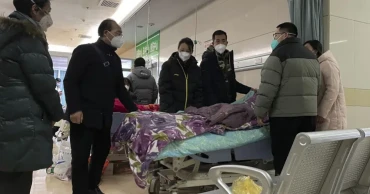
As China grapples with its first-ever national COVID-19 wave, emergency wards in small cities and towns southwest of Beijing are overwhelmed. Intensive care units are turning away ambulances, relatives of sick people are searching for open beds, and patients are slumped on benches in hospital corridors and lying on floors for a lack of beds.
Yao’s elderly mother-in-law had fallen ill a week ago with the coronavirus. They went first to a local hospital, where lung scans showed signs of pneumonia. But the hospital couldn’t handle serious COVID-19 cases, Yao was told. She was told to go to larger hospitals in adjacent counties. As Yao and her husband drove from hospital to hospital, they found all the wards were full. Zhuozhou Hospital, an hour’s drive from Yao’s hometown, was the latest disappointment.
Yao charged toward the check-in counter, past wheelchairs frantically moving elderly patients. Yet again, she was told the hospital was full, and that she would have to wait.
“I’m furious,” Yao said, tearing up, as she clutched the lung scans from the local hospital. “I don’t have much hope. We’ve been out for a long time and I’m terrified because she’s having difficulty breathing.”
Over two days, Associated Press journalists visited five hospitals and two crematoriums in towns and small cities in Baoding and Langfang prefectures, in central Hebei province. The area was the epicenter of one of China’s first outbreaks after the state loosened COVID-19 controls in November and December. For weeks, the region went quiet, as people fell ill and stayed home.
Many have now recovered. Today, markets are bustling, diners pack restaurants and cars are honking in snarling traffic, even as the virus is spreading in other parts of China. In recent days, headlines in state media said the area is “ starting to resume normal life.”
But life in central Hebei’s emergency wards and crematoriums is anything but normal. Even as the young go back to work and lines at fever clinics shrink, many of Hebei’s elderly are falling into critical condition. As they overrun ICUs and funeral homes, it could be a harbinger of what’s to come for the rest of China. The Chinese government has reported only seven COVID-19 deaths since restrictions were loosened dramatically on Dec. 7, bringing the country’s total toll to 5,241. On Tuesday, a Chinese health official said that China only counts deaths from pneumonia or respiratory failure in its official COVID-19 death toll, a narrow definition that excludes many deaths that would be attributed to COVID-19 in other places.
Experts have forecast between a million and 2 million deaths in China through the end of next year, and a top World Health Organization official warned that Beijing’s way of counting would “underestimate the true death toll.” At Baoding No. 2 Hospital in Zhuozhou on Wednesday, patients thronged the hallway of the emergency ward. The sick were breathing with the help of respirators. One woman wailed after doctors told her that a loved one had died.
The ICU was so crowded, ambulances were turned away. A medical worker shouted at relatives wheeling in a patient from an arriving ambulance.
“There’s no oxygen or electricity in this corridor!” the worker exclaimed. “If you can’t even give him oxygen, how can you save him?”
“If you don’t want any delays, turn around and get out quickly!” she said.
The relatives left, hoisting the patient back into the ambulance. It took off, lights flashing.
Read more: Reports of severe COVID in China are "extremely concerning", WHO
In two days of driving in the region, AP journalists passed around thirty ambulances. On one highway toward Beijing, two ambulances followed each other, lights flashing, as a third passed by heading in the opposite direction. Dispatchers are overwhelmed, with Beijing city officials reporting a sixfold surge in emergency calls earlier this month. Some ambulances are heading to funeral homes. At the Zhuozhou crematorium, furnaces are burning overtime as workers struggle to cope with a spike in deaths in the past week, according to one employee. A funeral shop worker estimated it is burning 20 to 30 bodies a day, up from three to four before COVID-19 measures were loosened.
“There’s been so many people dying,” said Zhao Yongsheng, a worker at a funeral goods shop near a local hospital. “They work day and night, but they can’t burn them all.”
At a crematorium in Gaobeidian, about 20 kilometers (12 miles) south of Zhuozhou, the body of one 82-year-old woman was brought from Beijing, a two-hour drive, because funeral homes in China’s capital were packed, according to the woman’s grandson, Liang.
“They said we’d have to wait for 10 days,” Liang said, giving only his surname because of the sensitivity of the situation. Liang’s grandmother had been unvaccinated, Liang added, when she came down with coronavirus symptoms, and had spent her final days hooked to a respirator in a Beijing ICU.
Over two hours at the Gaobeidian crematorium on Thursday, AP journalists observed three ambulances and two vans unload bodies. A hundred or so people huddled in groups, some in traditional white Chinese mourning attire. They burned funeral paper and set off fireworks.
“There’s been a lot!” a worker said when asked about the number of COVID-19 deaths, before funeral director Ma Xiaowei stepped in and brought the journalists to meet a local government official.
As the official listened in, Ma confirmed there were more cremations, but said he didn’t know if COVID-19 was involved. He blamed the extra deaths on the arrival of winter.
“Every year during this season, there’s more,” Ma said. “The pandemic hasn’t really shown up” in the death toll, he said, as the official listened and nodded.
Even as anecdotal evidence and modeling suggests large numbers of people are getting infected and dying, some Hebei officials deny the virus has had much impact.
“There’s no so-called explosion in cases, it’s all under control,” said Wang Ping, the administrative manager of Gaobeidian Hospital, speaking by the hospital’s main gate. “There’s been a slight decline in patients.”
Wang said only a sixth of the hospital’s 600 beds were occupied, but refused to allow AP journalists to enter. Two ambulances came to the hospital during the half hour AP journalists were present, and a patient’s relative told the AP they were turned away from Gaobeidian’s emergency ward because it was full.
Thirty kilometers (19 miles) south in the town of Baigou, emergency ward doctor Sun Yana was candid, even as local officials listened in.
“There are more people with fevers, the number of patients has indeed increased,” Sun said. She hesitated, then added, “I can’t say whether I’ve become even busier or not. Our emergency department has always been busy.”
Read more: China limits how it defines COVID deaths in official count
The Baigou New Area Aerospace Hospital was quiet and orderly, with empty beds and short lines as nurses sprayed disinfectant. COVID-19 patients are separated from others, staff said, to prevent cross-infection. But they added that serious cases are being directed to hospitals in bigger cities, because of limited medical equipment.
The lack of ICU capacity in Baigou, which has about 60,000 residents, reflects a nationwide problem. Experts say medical resources in China’s villages and towns, home to about 500 million of China’s 1.4 billion people, lag far behind those of big cities such as Beijing and Shanghai. Some counties lack a single ICU bed.
As a result, patients in critical condition are forced to go to bigger cities for treatment. In Bazhou, a city 40 kilometers (25 miles) east of Baigou, a hundred or more people packed the emergency ward of Langfang No. 4 People’s Hospital on Thursday night.
Guards worked to corral the crowds as people jostled for positions. With no space in the ward, patients spilled into corridors and hallways. Sick people sprawled on blankets on the floor as staff frantically wheeled gurneys and ventilators. In a hallway, half a dozen patients wheezed on metal benches as oxygen tanks pumped air into their noses.
Outside a CT scan room, a woman sitting on a bench wheezed as snot dribbled out of her nostrils into crumpled tissues. A man sprawled out on a stretcher outside the emergency ward as medical workers stuck electrodes to his chest. By a check-in counter, a woman sitting on a stool gasped for air as a young man held her hand.
“Everyone in my family has got COVID,” one man asked at the counter, as four others clamored for attention behind him. “What medicine can we get?”
In a corridor, a man paced as he shouted into his cellphone.
“The number of people has exploded!” he said. “There’s no way you can get care here, there’s far too many people.”
It wasn’t clear how many patients had COVID-19. Some had only mild symptoms, illustrating another issue, experts say: People in China rely more heavily on hospitals than in other countries, meaning it’s easier for emergency medical resources to be overloaded.
Over two hours, AP journalists witnessed half a dozen or more ambulances pull up to the hospital’s ICU and load critical patients to sprint to other hospitals, even as cars pulled up with dozens of new patients.
A beige van pulled up to the ICU and honked frantically at a waiting ambulance. “Move!” the driver shouted.
“Let’s go, let’s go!” a panicked voice cried. Five people hoisted a man bundled in blankets out of the back of the van and rushed him into the hospital. Security guards shouted in the packed ward: “Make way, make way!”
The guard asked a patient to move, but backed off when a relative snarled at him. The bundled man was laid on the floor instead, amid doctors running back and forth. “Grandpa!” a woman cried, crouching over the patient.
Medical workers rushed over a ventilator. “Can you open his mouth?” someone shouted.
As white plastic tubes were fitted onto his face, the man began to breathe more easily.
Others were not so lucky. Relatives surrounding another bed began tearing up as an elderly woman’s vitals flatlined. A man tugged a cloth over the woman’s face, and they stood, silently, before her body was wheeled away.
Within minutes, another patient had taken her place.
3 years ago
N. Korea fires ballistic missiles after US-S. Korea drills
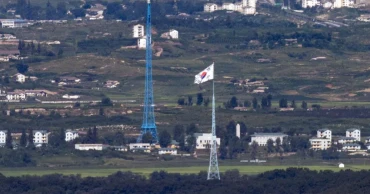
North Korea fired two short-range ballistic missiles toward its eastern waters on Friday, its latest weapons demonstration that came days after U.S. and South Korean warplanes conducted joint drills that North Korea views as an invasion rehearsal.
North Korea has conducted an unprecedented number of missile tests this year in what some experts call an attempt to bolster its weapons capability and pressure its rivals to make concessions such as sanctions relief in future negotiations. Recently, the North also claimed to have performed major tests needed to acquire its first spy satellite and a more mobile intercontinental ballistic missile capable of reaching the U.S. mainland.
South Korea’s military detected the two missile launches from North Korea’s capital region at around 4:32 p.m. on Friday. Japan said it also confirmed at least one missile launch by North Korea.
It wasn’t immediately clear exactly what kinds of missiles North Korea fired. South Korea’s military said the missiles traveled about 250 kilometers (155 miles) and 350 kilometers (220 miles) respectively before landing in the waters between the Korean Peninsula and Japan.
Japanese Vice Defense Minister Toshiro Ino said that one missile detected by Japan flew as far as 300 kilometers (180 miles) at a maximum altitude of 50 kilometers (30 miles). He said that missile might have showed an “irregular” trajectory, a possible reference to North Korea’s highly maneuverable, nuclear-capable KN-23 missile, which was modeled on Russia’s Iskander missile.
South Korea’s military called the launches “a grave provocation” that hurts international peace. It said South Korea will maintain a firm readiness and closely monitor North Korean moves in coordination with the United States. Ino also accused North Korea of significantly raising tensions with repeated weapons tests.
Read more: N Korea fires 2 ballistic missiles in resumption of testing
The launches could be a response to the U.S.-South Korean aerial military exercises near the Korean Peninsula on Tuesday, as North Korea has said its torrid run of testing activities in past months were meant as a warning over its rivals’ previous combined drills. Washington and Seoul have said their drills are defensive in nature, but North Korea calls them practice for an invasion.
The latest U.S.-South Korean drills drew B-52 nuclear-capable bombers and F-22 stealth fighter jets from the United States and other advanced warplanes from South Korea. The training was part of a bilateral agreement on boosting a U.S. commitment to defend its Asian ally with all available military capabilities, including nuclear, according to South Korea’s Defense Ministry.
The F-22 jets were supposed to stay in South Korea for more joint drills this week with the South Korean air force, but the U.S. aircraft eventually returned to their base in Japan due to weather conditions, South Korean defense officials said.
The aerial drills came after North Korea said it used old missiles as launch vehicles to test cameras and other systems on Sunday for the development of its first military reconnaissance satellite. Its state media also published low-resolution photos of South Korean cities as viewed from space.
Some civilian experts in South Korea said the photos were too crude for surveillance purposes and that the launches were likely a cover for tests of North Korea’s missile technology. South Korea’s military has maintained North Korea fired two medium-range ballistic missiles.
Such assessments have infuriated North Korea, with the powerful sister of North Korean leader Kim Jong Un issuing crude insults of unidentified South Korean experts. Kim Yo Jong said there was no reason to use an expensive, high-resolution camera for a single-shot test.
Kim Yo Jong also scoffed at South Korea’s previous assessment that North Korea still has technological hurdles to overcome to acquire functioning ICBMs that can launch nuclear strikes on the U.S. homeland — such as the ability to protect its warheads from the harsh conditions of atmospheric reentry.
To prove the North’s ICBM capability, she suggested that North Korea might carry out a standard-trajectory ICBM launch. All of the North’s previous ICBM launches were made at a steep angle to avoid neighboring countries. A normal-angle ICBM launch could sharply inflame regional animosities and trigger a strong response from the U.S. as the weapon would fly toward the Pacific Ocean.
Read more: North Korea fires new type of short-range ballistic missiles
A spy satellite and a solid-fueled ICBM are among the high-tech weapons systems that Kim Jong Un has vowed to introduce to cope with what he calls U.S. hostility. Other weapons systems he wants to procure include missiles with multi-warheads, underwater-launched nuclear missiles, nuclear-powered submarines and hypersonic missiles.
Last week, North Korea tested a “high-thrust solid-fuel motor” that experts say would be used for a solid-fueled missile, which is more agile and harder to detect before launches than liquid-fueled weapons.
3 years ago

Notorious French serial killer freed from Nepal prison
Confessed French serial killer Charles Sobhraj was freed from prison in Nepal on Friday after serving most of his sentence for the murders of American and Canadian backpackers.
Sobhraj was driven out of Central Jail in Kathmandu in a heavily guarded police convoy to the Department of Immigration, where he will wait for his travel documents to be prepared.
The country’s Supreme Court had ordered that Sobhraj, who was sentenced to life in prison in Nepal, be released because of poor health, good behavior and having already served most of his sentence. Life sentences in Nepal are 20 years.
The order also said he had to leave the country within 15 days.
Sobhraj's attorney Gopal Siwakoti Chitan told reporters that the request for the travel documents must be made by the immigration department to the French embassy in Nepal, which could take some time. Offices are closed over the weekend for the Christmas holiday.
The court document said he had already served more than 75% of his sentence, making him eligible for release, and he has heart disease.
The Frenchman has in the past admitted killing several Western tourists and he is believed to have killed at least 20 people in Afghanistan, India,
Thailand, Turkey, Nepal, Iran and Hong Kong during the 1970s. However, his 2004 conviction in Nepal was the first time he was found guilty in court.
Sobhraj was held for two decades in New Delhi’s maximum-security Tihar prison on suspicion of theft but was deported without charge to France in 1997. He resurfaced in September 2003 in Kathmandu.
His nickname, The Serpent, stems from his reputation as a disguise and escape artist.
3 years ago

Car bombing in Islamabad kills 2 suspects and policeman
A powerful car bomb detonated near a residential area in Islamabad on Friday, killing two suspected militants and an officer, police said, raising fears that militants have a presence in one of the country’s safest cities.
At least three police officers and seven passersby were wounded in the bombing.
Friday’s bombing in Pakistan’s capital city happened 15 kilometers ( about 9 miles) from the garrison city of Rawalpindi, home of the military and government spy agencies.
Police said in a statement that the blast happened when police officers spotted the car and ordered the driver to halt for routine checking. Instead of stopping, its driver detonated explosives hidden inside. A female passenger in the car also was killed, Suhail Zafar Chattha, a senior police officer in Islamabad told reporters at the scene.
TV footage showed a burning car as police officers cordoned off the area.
Residents said they saw policemen on motorcycles chasing a car and ordering a man inside the vehicle to come out.
Chattha, the city’s deputy police chief confirmed that account, saying the suspect blew up the explosive-laden vehicle after being surrounded by police officers.
Read: Bombing at Indonesian police station kills officer, hurts 7
Pakistani Prime Minister Shahbaz Sharif condemned the bombing and thanked the police.
“Police officers stopped the terrorists by sacrificing their blood and the nation salutes its brave men,” Sharif said in a statement.
No one claimed responsibility for the bombing. Pakistani Taliban have stepped up attacks on security forces since November, when they unilaterally ended a monthslong cease-fire with Pakistan’s government.
The violence comes days after several Pakistani Taliban detainees overpowered their guards at a counterterrorism center in northwestern Pakistan on Sunday after snatching police weapons and taking three officers hostage.
On Tuesday, Pakistan’s special forces raided the detention center, triggering an intense shootout in which the military later said 25 detainees linked to the Pakistani Taliban were killed in Bannu, a district in the Khyber Pakhtunkhwa province and part of a former tribal region.
Three troops and at least three hostages were killed in that incident.
Read: Turkey makes more arrests in connection with deadly bombing
The government has since stepped up security across the country, based on intelligence reports that the Pakistani Taliban, known as Tehreek-e-Taliban Pakistan or TTP, had dispatched fighters to carry out attacks at public places and police stations.
Pakistani Taliban are separate but allied with the Afghan Taliban, who seized power in neighboring Afghanistan last year as U.S. and NATO troops were in the final weeks of their pullout after 20 years of war. Since then, top TTP leaders and fighters have been hiding in neighboring Afghanistan, though the militants still have relatively free reign in patches of the province.
3 years ago