Asia

China reduces COVID-19 case number reporting as virus surges
China’s National Health Commission scaled down its daily COVID-19 report starting Wednesday in response to a sharp decline in PCR testing since the government eased antivirus measures after daily cases hit record highs.
A notice on the commission’s website said it stopped publishing daily figures on numbers of COVID-19 cases where no symptoms are detected since it was “impossible to accurately grasp the actual number of asymptomatic infected persons,” which have generally accounted for the vast majority of new infections. The only numbers they’re reporting are confirmed cases detected in public testing facilities.
This poses a key challenge for China as it relaxes its strict “zero-COVID” policy. With mass-PCR testing no longer obligatory and people with mild symptoms allowed to recuperate at home rather than in one of the field hospitals that became notorious for overcrowding and poor hygiene, it has grown more difficult to gauge the true number of cases.
Beijing's streets have grown eerily quiet, with lines forming outside fever clinics — the number of which has been increased from 94 to 303 — and at pharmacies, where cold and flu medications are harder to find.
Though authorities said they were sourcing millions of COVID-19 antigen rapid test kits for Beijing pharmacies, they remained difficult to obtain.
A Beijing resident surnamed Zhu said they developed a sore throat and a fever, but wasn’t able to confirm whether they had the coronavirus because of a lack of antigen test kits.
Read more: China students return home amid COVID travel spread fears
“Beijing is really confused right now,” Zhu said, declining to provide their full name to speak on what could be seen as a sensitive topic in China. “They made a complete 180-degree turn without even going through a transitionary period.”
Despite a push to boost vaccinations among the elderly, two centers set up in Beijing to administer shots were empty Tuesday except for medical personnel. Despite fears of a major outbreak, there was little evidence of a surge in patient numbers.
At the China-Japan Friendship Hospital’s fever clinic in Beijing, a dozen people waited for nucleic acid test results. Nurses in full-body white protective gear checked in patients one by one.
A few kilometers (miles) south, at Chaoyang Hospital, about a dozen people waited in a line of blue tents, deflecting winds amid subzero temperatures. One person in the queue took out a bottle of disinfectant and sprayed it around her as she waited.
Across the street at Gaoji Baikang Pharmacy, around a dozen people waited in line for cough medication and Chinese herbal remedies. A sign at the front told waiting customers: “Avoid panic and hoarding, we are doing all we can to stock up to fulfill your medicinal needs.” A man coming out had bought two packages of Lianhua Qingwen, a Chinese herbal remedy, saying that each customer was restricted from buying any more than that.
Inquiries to health hotlines have increased six-fold, according to state media.
Without asymptomatic cases being counted, China reported just 2,249 “confirmed” infections Wednesday, bringing the nation’s total to 369,918 — more than double the level on Oct. 1. It has recorded 5,235 deaths — compared with 1.1 million in the United States.
Read more: China to drop travel tracing as it relaxes ‘zero COVID’
China’s government-supplied figures have not been independently verified and questions have been raised about whether the Communist Party has sought to minimize numbers of cases and deaths.
Since Tuesday, the U.S. consulates in the northeastern Chinese city of Shenyang and the central city of Wuhan have been offering only emergency services “in response to increased number of COVID-19 cases,” the State Department said.
President Xi Jinping’s government is still officially committed to stopping virus transmission. But the latest moves suggest the party will tolerate more cases without quarantines or shutting down travel or businesses as it winds down its “zero-COVID” strategy.
Despite relaxed rules, restaurants were mostly closed or empty in the capital. Many businesses are having difficulty finding enough staff who haven’t gotten infected. Sanlitun, one of Beijing’s most popular shopping districts, was deserted despite having its anti-COVID-19 fences taken down in recent days.
Hospitals have also reportedly been struggling to remain staffed, while packages were piling up at distribution points because of a shortage of China's ubiquitous motorized tricycle delivery drivers.
Some Chinese universities say they will allow students to finish the semester from home in hopes of reducing the potential for a bigger COVID-19 outbreak during the January Lunar New Year travel rush.
Starting Tuesday, China also stopped tracking some travel, potentially reducing the likelihood people will be forced into quarantine for visiting COVID-19 hot spots. Despite that, China’s international borders remain largely shut and there has been no word on when restrictions will be eased on inbound travelers and Chinese wanting to go overseas.
The move follows the government’s dramatic announcement last week that it was ending many of the strictest measures, following three years during which it enforced some of the world’s tightest virus restrictions.
Last month in Beijing and several other cities, protests over the restrictions grew into calls for Xi and the Communist Party to step down — a level of public dissent not seen in decades. The party responded with a massive show of force and an unknown number of people were arrested at the protests or in the days following.
Experts warn there still is a chance the party might reverse course and reimpose restrictions if a large-scale outbreak ensues.
3 years ago

Indian and Chinese soldiers engage in new border combat
Soldiers from India and China clashed last week along their disputed border, India’s defense minister said Tuesday, in the latest violence along the contested frontier since June 2020, when troops from both countries engaged in a deadly brawl.
Rajnath Singh, who addressed lawmakers in Parliament, said the Friday’s encounter along the Tawang sector of eastern Arunachal Pradesh state started when Chinese troops “encroached into Indian territory” and “unilaterally tried to change the status quo” along the disputed border near the Yangtze River area.
Singh said no Indian soldiers were seriously hurt and troops from both sides withdrew from the area soon afterward. A statement from the Indian army on Monday said troops on both sides suffered minor injuries.
Singh said that local military commanders met Sunday to discuss the dispute and the Indian government spoke to China through diplomatic channels.
Col. Long Shaohua, the spokesperson for the People’s Liberation Army’s Western Theater responsible for the area, said that Chinese border guards organized “a routine patrol on the Chinese side of the Line of Actual Control” but were “blocked by the Indian army illegally crossing the line.”
Also read: Indian, Chinese troops clash at border in fresh faceoff
“We ask the Indian side to strictly control and restrain front-line troops, and work with China to maintain peace and tranquility on the border,” Long said in a statement posted on his official social media.
At a daily briefing, Chinese Foreign Ministry spokesperson Wang Wenbin said “the present situation on the China-India border is peaceful and stable overall.”
For decades, India and China have fiercely contested the Line of Actual Control, a loose demarcation that separates Chinese and Indian held territories from Ladakh in the west to India’s eastern state of Arunachal Pradesh, which China claims in its entirety. India and China fought a war over the border in 1962.
U.S. State Department spokesperson Ned Price said the government was keeping an eye on the clash.
“We do strongly oppose any unilateral attempts to advance territorial claims by incursions, military or civilian, across the border at the established Line of Actual Control and we encourage India and China to utilize existing bilateral channels to discuss disputed boundaries,” Price told reporters Tuesday in Washington, D.C.
In recent years, soldiers from both sides have patrolled areas along the disputed border. Opposing soldiers often come into contact and the two Asian giants have accused each other of sending troops into the other’s territory.
In June 2020, a clash in the Karakoram mountains in the Galwan Valley in Ladakh sparked tensions after soldiers fought with stones, fists and clubs. At least 20 Indian and four Chinese soldiers died. The countries both stationed tens of thousands of troops backed by artillery, tanks and fighter jets along their de facto border.
After multiple meetings between military commanders, some Indian and Chinese soldiers have pulled back from a key friction point in Ladakh, but tensions between the two Asian giants remain.
In November, Indian army chief Manoj Pande said there had been “no significant reduction” in Chinese troop strength in Ladakh. He said the border situation was “stable but unpredictable.”
3 years ago

Islamic State group claims attack on hotel in Afghan capital
The militant Islamic State group has claimed responsibility for a coordinated attack on a hotel in Afghanistan's capital that left three assailants dead and at least two of the hotel guests injured as they tried to escape by jumping out from a window.
The attack on the Kabul Longan Hotel on Monday afternoon sent plumes of smoke rising from the 10-story structure building in the heart of Kabul, according to images posted on social media. Residents reported explosions and gunfire.
Read more: Afghan forces shell border town, killing 6: Pakistani army
Taliban forces rushed to the area and blocked all roads leading to the site in the central Shar-e Naw neighborhood. Khalid Zadran, the Taliban-appointed spokesman for the Kabul police chief, said the attack lasted several hours, followed by a clean-up operation.
Hours later, the regional affiliate of the Islamic State group — a key rival of the Taliban since they seized power in Afghanistan over a year ago — claimed responsibility for the attack.
In a statement carried by one of the militant Telegram channels used by IS, the group said two of its members targeted the hotel because it is frequented by diplomats and owned by “communist China."
The statement further claimed IS attackers detonated two bags with explosives that were left in the hotel earlier, including one in the main hall, and set fire to a part of the hotel. The militant group offered no proof for its claims.
Read more: Taliban official: 27 people lashed in public in Afghanistan
There were conflicting reports as to the casualty numbers.
Taliban officials said three assailants were killed; IS claim said only two of its members took part in the attack, identifying them by name and posting their photographs.
According to Zabihullah Mujahid, the Taliban government spokesman, two foreign residents were injured when they jumped out of windows to escape the fighting.
But the Emergency Hospital in Kabul said in a tweet it received 21 casualties, including the bodied of three people.
The IS regional affiliate — known as the Islamic State in Khorasan Province — has increased its attacks since the Taliban takeover of Afghanistan in August 2021.
3 years ago

Indian, Chinese troops clash at border in fresh faceoff
Soldiers from India and China clashed last week along their disputed border, India's defense minister said Tuesday, in the latest violence along the contested frontier since June 2020, when troops from both countries engaged in a deadly brawl.
Rajnath Singh, who addressed lawmakers in Parliament, said the Friday's encounter along the Tawang sector of eastern Arunachal Pradesh state started when Chinese troops “encroached into Indian territory” and “unilaterally tried to change the status quo” along the disputed border near the Yangtze River area.
Singh said no Indian soldiers were seriously hurt and troops from both sides withdrew from the area soon afterward. A statement from the Indian army on Monday said troops from both sides suffered minor injuries.
Read more: Europe can’t put its energy needs first while requesting India to act otherwise: Jaishankar
He said that local military commanders met Sunday to discuss the dispute and the Indian government spoke to China through diplomatic channels.
Chinese Foreign Ministry spokesperson Wang Wenin gave no details on the incident at a daily briefing but said China hopes India will join it in carrying through agreements between the sides and “together safeguard peace and tranquility in the region along the China-India border."
“As far as we understand, the present situation on the China-India border is peaceful and stable overall,” Wang said.
For decades, India and China have fiercely contested the Line of Actual Control, a loose demarcation that separates Chinese and Indian held territories from Ladakh in the west to India’s eastern state of Arunachal Pradesh, which China claims in its entirety. India and China fought a war over the border in 1962.
Read more: India’s BSF says 5,500 CCTV cameras to be installed along borders with Bangladesh, Pakistan
In recent years, soldiers from both sides have patrolled areas along the disputed border. Opposing soldiers often come into contact and the two Asian giants have accused each other of sending troops into the other’s territory.
In June 2020, a clash in the Karakoram mountains in the Galwan Valley in Ladakh sparked tensions after soldiers fought with stones, fists and clubs. At least 20 Indian and four Chinese soldiers died. The countries both stationed tens of thousands of troops backed by artillery, tanks and fighter jets along their de facto border.
After multiple meetings between military commanders, some Indian and Chinese soldiers have pulled back from a key friction point in Ladakh, but tensions between the two Asian giants remain.
In November, Indian army chief Manoj Pande said there had been “no significant reduction” in Chinese troop strength in Ladakh. He said the border situation was “stable but unpredictable.”
3 years ago

China students return home amid COVID travel spread fears
Some Chinese universities say they will allow students to finish the semester from home in hopes of reducing the potential of a bigger COVID-19 outbreak during the January Lunar New Year travel rush.
It wasn’t clear how many schools were taking part, but universities in Shanghai and nearby cities said students would be given the option of either returning home early or staying on campus and undergoing testing every 48 hours. The Lunar New Year, which falls on Jan. 22 this year, is traditionally China’s busiest travel season.
Universities have been the scene of frequent lockdowns over the past three years, occasionally leading to clashes between the authorities and students confined to campus or even their dorm rooms.
Read: Facing COVID surge, China expanding hospitals, ICUs
Tuesday’s announcements came as China begins relaxing its strict “zero-COVID” policy, allowing people with mild symptoms to stay home rather than be sent to a quarantine center, among other changes that followed widespread protests.
Starting from Tuesday, China has stopped tracking some travel, potentially reducing the likelihood people will be forced into quarantine for visiting COVID-19 hot spots.
The move follows the government’s dramatic announcement last week that it was ending many of the strictest measures, following three years during which it enforced some of the world’s tightest virus restrictions.
Last month in Beijing and several other cities, protests over the restrictions grew into calls for leader Xi Jinping and the Communist Party to step down — a level of public dissent not seen in decades.
While met with relief, the relaxation has also sparked concerns about a new wave of infections potentially overwhelming health care resources in some areas.
The easing of measures means a sharp drop in testing, but cases still appear to be rising rapidly, with many testing themselves at home and staying away from hospitals. China reported 7,451 new infections on Monday, bringing the nation’s total to 372,763 — more than double the level on Oct. 1. It has recorded 5,235 deaths — compared to 1.1 million in the United States.
China’s government-supplied figures have not been independently verified and questions have been raised about whether the ruling Communist Party has sought to minimize numbers of cases and deaths.
Read: China struggles with COVID infections after controls ease
The U.S. consulates in the northeastern Chinese city of Shenyang and the central city of Wuhan would offer emergency services from Tuesday “in response to increased number of COVID-19 cases,” the State Department said.
“Mission China makes every effort to ensure full consular services are available to U.S. citizens living in the PRC, but further disruptions are possible,” an e-mailed message said, using the initials for China’s official name, the People’s Republic of China.
Xi’s government is still officially committed to stopping virus transmission, the last major country to try. But the latest moves suggest the party will tolerate more cases without quarantines or shutting down travel or businesses as it winds down its “zero-COVID” strategy.
Amid the unpredictable messaging from Beijing, experts warn there still is a chance the ruling party might reverse course and reimpose restrictions if a large-scale outbreak ensues.
The change in policy comes after protests erupted Nov. 25 after 10 people died in a fire in the northwestern city of Urumqi. Many questioned whether COVID-19 restrictions impeded rescue efforts. Authorities denied the claims spread online, but demonstrators gave voice to longstanding frustration in cities such as Shanghai that have endured severe lockdowns.
The party responded with a massive show of force and an unknown number of people were arrested at the protests or in the days following.
3 years ago

Foreigners need not worry: Bali governor says on Indonesia’s law on sex outside marriage
The governor of Bali has dismissed worries that amended rules, which include provisions criminalising sex outside marriage, may frighten tourists away from its coasts – saying that foreign visitors to Bali are not in danger.
Last week, the contentious measure that forbids cohabitation of unmarried couples was approved by Indonesia's parliament.
In an effort to reassure tourists, Bali Governor Wayan Koster underlined in a statement on Sunday (December 11) that the new regulations, which take effect in three years, may only be prosecuted if a parent, spouse, or child files a complaint, AsiaOne reports.
He stated that anyone who “visits or resides” in Bali would not need to fear over the implementation of the Indonesian criminal code.
The Bali governor said that laws regarding this matter in the penal code had been changed from a previous, more stringent version so as to “give a greater assurance of everyone's privacy and comfort,” the report added.
Read: 2002 Bali terrorist attack: Australia wants Indonesia to monitor released bombmaker
According to Wayan, the Bali government would make sure that “there will be no checking on marital status upon check-in at any tourism accommodation, such as hotels, villas, apartments, guest houses, lodges and spas.”
In addition, Wayan refuted what he called “hoax” predictions of flight and hotel cancellations, noting that information from airlines, travel agencies, and tour operators showed an increase in the number of people planning to come to Bali between December 2022 and March 2023.
The tourist organisation wants international visitors to the mostly Hindu island of Bali to achieve pre-pandemic levels of six million per year by 2025. Bali is the epicentre of Indonesian tourism.
The governor of Bali has dismissed worries that amended rules, which include provisions criminalising sex outside marriage, may frighten tourists away from its coasts – saying that foreign visitors to Bali are not in danger.
Last week, the contentious measure that forbids cohabitation of unmarried couples was approved by Indonesia's parliament.
In an effort to reassure tourists, Bali Governor Wayan Koster underlined in a statement on Sunday (December 11) that the new regulations, which take effect in three years, may only be prosecuted if a parent, spouse, or child files a complaint, AsiaOne reports.
Read: Indonesia’s Parliament votes to ban sex outside of marriage
He stated that anyone who “visits or resides” in Bali would not need to fear over the implementation of the Indonesian criminal code.
The Bali governor said that laws regarding this matter in the penal code had been changed from a previous, more stringent version so as to “give a greater assurance of everyone's privacy and comfort,” the report added.
According to Wayan, the Bali government would make sure that “there will be no checking on marital status upon check-in at any tourism accommodation, such as hotels, villas, apartments, guest houses, lodges and spas.”
In addition, Wayan refuted what he called “hoax” predictions of flight and hotel cancellations, noting that information from airlines, travel agencies, and tour operators showed an increase in the number of people planning to come to Bali between December 2022 and March 2023.
The tourist organisation wants international visitors to the mostly Hindu island of Bali to achieve pre-pandemic levels of six million per year by 2025. Bali is the epicentre of Indonesian tourism.
3 years ago

China to drop travel tracing as it relaxes ‘zero COVID’
China will drop a travel tracing requirement as part of an uncertain exit from its strict “zero-COVID” policies that have elicited widespread dissatisfaction.
At midnight on Monday, the smart phone app will cease to function, meaning residents’ travels will not be traced and recorded, potentially reducing the likelihood they will be forced into quarantine for visiting pandemic hot spots. China’s ruling Communist Party allows no independent parties to conduct verification and such apps have been used in past to suppress travel and free speech. It’s part of a package of apps that includes the health code, which has yet to be disabled.
The move follows the government’s snap announcement last week that it was ending many of the most draconian measures. That follows three years of lockdowns, travel restrictions and quarantines on those moving between provinces and cities, mandated testing, and requirements that a clean bill of health be shown to access public areas.
Last month in Beijing and several other cities, protests over the restrictions grew into calls for leader Xi Jinping and the Communist Party to step down, in a level of public political expression not seen in decades.
While met with relief, the relaxation has also sparked concerns about a new wave of infections potentially overwhelming health care resources in some areas.
Read: Facing COVID surge, China expanding hospitals, ICUs
Xi’s government is still officially committed to stopping virus transmission, the last major country to try. But the latest moves suggest the party will tolerate more cases without quarantines or shutting down travel or businesses as it winds down its “zero-COVID” strategy.
Facing a surge in COVID-19 cases, China is setting up more intensive care facilities and trying to strengthen hospitals’ ability to deal with severe cases. At the same time, the government reversed course by allowing those with mild symptoms to recuperate at home rather than being sent to field hospitals that have become notorious for overcrowding and poor hygiene.
Reports on the Chinese internet, which is tightly controlled by the government, sought to reassure a nervous public, stating that restrictions would continue to be dropped and travel, indoor dining and other economic activity would soon be returning to pre-pandemic conditions.
China’s leaders had long praised “zero COVID” for keeping numbers of cases and deaths much lower than in other nations, but health officials are now saying the most prevalent omicron variety poses much less of a risk.
Read: China struggles with COVID infections after controls ease
Amid a sharp drop in the amount of testing, China on Monday announced only around 8,500 new cases, bringing the nation’s total to 365,312 — more than double the level since Oct. 1 — with 5,235 deaths. That compares to 1.1 million COVID-19 deaths in the United States.
Protests erupted Nov. 25 after 10 people died in a fire in the northwestern city of Urumqi. Many believed COVID-19 restrictions may have impeded rescue efforts. Authorities denied the claims spread online, but demonstrators gave voice to longstanding frustration in cities such as Shanghai that have endured severe lockdowns.
The party responded with a massive show of force and an unknown number of people were arrested at the protests or in the days following.
Xi’s government promised to reduce the cost and disruption after the economy shrank by 2.6% from the previous quarter in the three months ending in June. Forecasters say the economy probably is shrinking in the current quarter. Imports tumbled 10.9% from a year ago in November in a sign of weak demand.
Some forecasters have cut their outlook for annual growth to below 3%, less than half of last year’s robust 8.1% expansion.
Amid the unpredictable messaging from Beijing, experts warn there still is a chance the ruling party might reverse course and reimpose restrictions if a large-scale outbreak ensues.
Last week’s announcement allowed considerable room for local governments to assign their own regulations. Most restaurants in Beijing, for example, still require a negative test result obtained over the previous 48 hours and rules are even stricter for government offices.
The uncertainty and apparent growing number of cases — despite the lack of government data — have forced the cancellation of events from foreign embassy holiday parties to next spring’s Formula One Chinese Grand Prix car race in Shanghai.
Read: China eases controls, gives no sign when ‘zero COVID’ ends
Meanwhile, pharmacies in Hong Kong have reported a run on Panadol and other cold, flu and headache medications by customers supplying relatives in mainland China, according to Lam Wai-man, chairman of the pharmacy trade association in the semi-autonomous southern Chinese city, which has already lifted most of its COVID-19 restrictions.
“Everyone on the mainland wants to buy some pills to have in reserve at home,” Lam said.
Alan Cheung, the owner of the Sands Medicine Shop in the Wan Chai district, said he was receiving around 10 inquiries about flu medication from mainland residents every day. “Normally, no one would ask me about this kind of product normally,” Cheung said.
3 years ago

Afghan forces shell border town, killing 6: Pakistani army
Deadly shelling from Afghan forces killed 6 people in a border town on Sunday, Pakistan's military said, as relations continue to sour between the neighboring countries.
The violence hitting Chaman in southwestern Pakistan follows a series of deadly incidents and attacks that have skyrocketed tensions with Afghanistan's Taliban rulers. Chaman is the main border crossing for trade between the countries.
Read more: Taliban official: 27 people lashed in public in Afghanistan
The Pakistani army's media wing said the fire wounded 17 people and blamed the casualties on the “unprovoked and indiscriminate fire” of heavy weapons by Afghan forces on civilians.
In Afghanistan, a spokesman for Kandahar’s governor, Ataullah Zaid, appeared to link the clashes between Pakistani and Taliban forces with the construction of new checkpoints on the Afghan side of the border. He said one Taliban fighter was killed and 10 were wounded. Three civilians were also injured, he added.
Pakistan's army said troops responded to Afghan fire, but its media wing didn't give further details. It said Pakistan has approached authorities in the Afghan capital, Kabul, to highlight the severity of the border incident.
A doctor with a government-run hospital in Chaman, Akhtar Mohammad, told The Associated Press that live rounds injured 27 people who were brought into hospital for treatment. Of these, six died and seven were in a critical condition.
Read more: Roadside bomb kills 6 people in north Afghanistan: Taliban
A resident on Pakistan's side of the border, Wali Mohammad took his wounded cousin to the hospital in Chaman. He said there were a number of explosions followed by rapid gunfire.
“We were in the street like any other day off when suddenly a big explosion was heard and debris hit many people, including one of my cousins,” said Mohammad.
A deadly shooting in November shuttered the border at Chaman for eight days, causing heavy commercial losses and leaving thousands of people stranded on both sides.
Later in the month, Pakistan's embassy in Kabul came under gunfire. Pakistani officials called the incident an attack on its envoy there and blamed Taliban officials for the security breach. Islamabad also has said Afghanistan's rulers are sheltering militants who carry out deadly attacks on its soil.
3 years ago
China struggles with COVID infections after controls ease
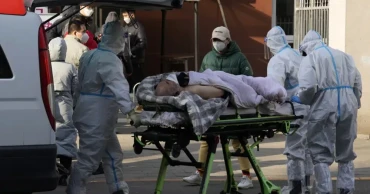
A rash of COVID-19 cases in schools and businesses were reported by social media users Friday in areas across China after the ruling Communist Party loosened anti-virus rules as it tries to reverse a deepening economic slump.
Official data showed a fall in new cases, but those no longer cover big parts of the population after the government on Wednesday ended mandatory testing for many people. That was part of dramatic changes aimed at gradually emerging from “zero-COVID” restrictions that have confined millions of people to their homes and sparked protests and demands for President Xi Jinping to resign.
Social media users in Beijing and other cities said coworkers or classmates were ill and some businesses closed due to lack of staff. It wasn’t clear from those accounts, many of which couldn’t be independently confirmed, how far above the official figure the total case numbers might be.
“I’m really speechless. Half of the company’s people are out sick, but they still won’t let us all stay home,” said a post signed Tunnel Mouth on the popular Sina Weibo platform. The user gave no name and didn’t respond to questions sent through the account, which said the user was in Beijing.
The reports echo the experience of the United States, Europe and other economies that have struggled with outbreaks while trying to restore business activity. But they are a jarring change for China, where “zero COVID,” which aims to isolate every case, disrupted daily life and depressed economic activity but kept infection rates low.
Xi’s government began to loosen controls Nov. 11 after promising to reduce their cost and disruption. Imports tumbled 10.9% from a year ago in November in a sign of weak demand. Auto sales fell 26.5% in October.
“Relaxing Covid controls will lead to greater outbreaks,” said Neil Thomas and Laura Gloudeman of Eurasia Group in a report, “but Beijing is unlikely to return to the extended blanket lockdowns that crashed the economy earlier this year.”
Read: China eases controls, gives no sign when ‘zero COVID’ ends
The changes suggest the ruling party is easing off its goal of preventing virus transmission, the basis of “zero COVID,” but officials say that strategy still is in effect.
Restrictions probably must stay in place at least through mid-2023, public health experts and economists say. They say millions of elderly people need to be vaccinated, which will take months, and hospitals strengthened to cope with a surge in cases. Officials announced a vaccination campaign last week.
On Friday, the government reported 16,797 new cases, including 13,160 without symptoms. That was down about one-fifth from the previous day and less than half of last week’s daily peak above 40,000.
More changes announced Wednesday allow people with mild COVID-19 cases to isolate at home instead of going to a quarantine center that some complained were crowded and unsanitary. That addressed a major irritant for the public.
A requirement for subway riders, supermarket shoppers and others to show negative virus tests also was dropped, though they still are needed for schools and hospitals.
A post signed Where Dreams Begin Under Starlight by a user in Dazhou, a southwestern city in Sichuan province, said all but five students in a public school class of 46 were infected.
“It’s really amazing that the school insists students go to school,” the user wrote. The user didn’t respond to a question sent through the account.
The requirement for hundreds of millions of people to be tested as often as once a day in some areas over the past two years helped the government spot infections with no symptoms. Ending that approach reduces the cost of monitoring employees and customers at offices, shops and other businesses. But it increases the risk they might spread the virus.
This week’s changes follow protests that erupted Nov. 25 in Shanghai, Beijing and other cities against the human cost of “zero COVID.”
It isn’t clear whether any of the changes were a response to protests, which died out following a security crackdown.
The ruling party’s Politburo on Wednesday declared stabilizing weak economic growth its priority, though leaders have said local officials still are expected to protect the public.
“The re-pivot to growth and the exit from zero-Covid are clear from the top level,” said Larry Hu and Yuxiao Zhang of Macquarie Group, an Australian bank, in a report. However, they warned, “uncertainties remain high,” including “how disruptive the exit of zero-Covid could be.”
Party leaders stopped talking about the official 5.5% annual growth target after the economy shrank by 2.6% from the previous quarter in the three months ending in June. That was after Shanghai and other industrial centers shut down for up to two months to fight outbreaks.
Private sector economists have cut forecasts of annual growth to as low as below 3%, which would be less than half of last year’s 8.1% and among the weakest in decades.
Social media posts suggested some cities might have outbreaks that weren’t reflected in official figures.
Read: China reports 2 new COVID deaths as some restrictions eased
Posts dated Thursday by 18 people who said they were in Baoding, a city of 11 million southwest of Beijing, reported they tested positive using home kits or had fevers, sore throats and headaches. Meanwhile, the Baoding city government reported no new cases since Tuesday.
Drugstores were mobbed by customers who bought medications to treat sore throats and headaches after rules were dropped that required pharmacists to report those purchases, prompting fears a customer might be forced into a quarantine center.
Also Friday, the market regulator announced prices of some medicines including Lianhua Qingwen, a traditional flu treatment, rose as much as 500% over the past month. It said sellers might be punished for price-gouging.
Lines formed outside hospitals, though it wasn’t clear how many people wanted treatment for COVID-19 symptoms.
People waited four to five hours to get into the fever clinic of Chaoyang Hospital in Beijing, according to a woman who answered the phone there and would give only her surname, Sun. She said no virus test was required but patients had to show a smartphone “health code” app that tracks their vaccine status and whether they have been to areas deemed at high risk of infection.
Hong Kong, which enforces its own anti-virus strategy, has faced a similar rise in cases as the southern Chinese city tries to revive its struggling economy by loosening controls on travel and the opening hours of restaurants and pubs.
Hong Kong reported 75,000 new cases over the past week, up about 25% from the previous week. But those don’t include an unknown number of people who stay at home with COVID-19 symptoms and never report to the government.
3 years ago

Taliban official: 27 people lashed in public in Afghanistan
Twenty-seven people were lashed in public on Thursday in Taliban-ruled Afghanistan as punishment for alleged adultery, theft, drug offenses and other crimes, according to a court official.
Afghanistan’s new authorities have implemented hard-line policies since they took over the country in August 2021 that have underlined their interpretation of Islamic law, or Sharia.
The country’s Supreme Court issued the final rulings after appeals. In a statement, the court said the lashings took place in the northern province of Parwan, with 18 men and nine women punished in all.
Abdul Rahim Rashid, an official with the court, said the men and women were each lashed between 25 to 39 times. An unspecified number of those punished also received two-year prison terms in Charakar, the provincial capital, he added.
The lashings were carried out before a “public gathering of locals and officials,” Rashid added.
Read: Rights group: Taliban unlawfully killed 13 ethnic Hazaras
Provincial officials and local residents attended the public punishments, during which officials spoke about the importance of Sharia law, added the court statement.
Thursday’s lashings come a day after the Taliban authorities executed an Afghan convicted of killing another man, the first public execution since the former insurgents returned to power last year.
The execution, carried out with an assault rifle by the victim’s father, took place in western Farah province before hundreds of spectators and many top Taliban officials, according to Zabihullah Mujahid, the top government spokesman. Some officials came from the capital Kabul.
The execution was met with international criticism. U.N. Secretary-General Antonio Guterres said “the death penalty cannot be reconciled with full respect for the right to life,” spokeswoman Stephanie Tremblay said.
In comments late Wednesday, State Department spokesman Ned Price said the U.S. condemned the public execution. Price said the Taliban’s future relationship with Washington depended “largely on their actions when it comes to human rights.”
No foreign state has officially recognized the Taliban government that took over as U.S. and NATO troops withdrew last year. The Taliban formerly ruled Afghanistan before the U.S. invasion of 2001.
On Thursday, spokesman Mujahid rejected international criticisms of the Taliban government.
“Unfortunately, a number of countries and institutions still do not have a proper knowledge and understanding of Afghanistan,” he said.
Read: Now silent under Taliban, a Kabul cinema awaits its fate
Mujahid pointed out that capital punishment was practiced in many other countries including the United States.
A separate court statement said that earlier this week, three men convicted of theft were lashed in public in the eastern province of Paktika.
During the previous Taliban rule of Afghanistan in the late 1990s, the group carried out public executions, floggings and stonings.
After they overran Afghanistan in 2021, the Taliban initially promised to allow for women’s and minority rights. Instead, they have restricted rights and freedoms, including imposing a ban on girl’s education beyond the sixth grade.
The former insurgents have struggled in their transition from warfare to governing amid an economic downturn and the international community’s withdrawal of aid.
3 years ago