Asia

China crowds angered by Covid curbs openly urge Xi to resign
Protesters pushed to the brink by China’s strict COVID measures in Shanghai called for the removal of the country’s all-powerful leader and clashed with police Sunday as crowds took to the streets in several cities in an astounding challenge to the government.
Police forcibly cleared the demonstrators in China’s financial capital who called for Xi Jinping’s resignation and the end of the Chinese Communist Party’s rule — but hours later people rallied again in the same spot, and social media reports indicated protests also spread to at least seven other cities, including the capital of Beijing, and dozens of university campuses.
Largescale protests are exceedingly rare in China, where public expressions of dissent are routinely stifled — but a direct rebuke of Xi, the country’s most powerful leader in decades, is extraordinary.
Three years after the virus first emerged, China is the only major country still trying to stop transmission of COVID-19 — a “zero COVID” policy that regularly sees millions of people confined to their homes for weeks at a time and requires near-constant testing. The measures were originally widely accepted for minimizing deaths while other countries suffered devastating wavs of infections, but that consensus has begun to fray in recent weeks.
Then on Friday, 10 people died in a fire in an apartment building, and many believe their rescue was delayed because of excessive lockdown measures. That sparked a weekend of protests, as the Chinese public’s ability to tolerate the harsh measures has apparently reached breaking point.Hundreds of demonstrators gathered late Saturday in Shanghai, which experienced a devastating lockdown in the spring in which people struggled to secure groceries and medicines and were forcefully taken into centralized quarantine.
Read: Protests over China's COVID controls spread across country
On a street named for the city in China’s far west where the fire happened, one group of protesters brought candles, flowers and signs honoring those who died in the blaze. Another, according to a protester who insisted on anonymity, was more active, shouting slogans and singing the national anthem.
In a video of the protest seen by The Associated Press, chants sounded loud and clear: “Xi Jinping! Step down! CCP! Step down!” Xi, arguably China’s most dominant leader since Mao Zedong, was recently named to another term as head of the ruling Chinese Communist Party, and some expect him to try to stay in power for life.
The protester and another, who gave only his last name, Zhao, confirmed the chants. Both insisted on having their identities shielded because they fear arrest or retribution.
The atmosphere of the protest encouraged people to speak about topics considered taboo, including the 1989 Tiananmen Square massacre in which the ruling Communist Party had ordered troops to fire on pro-democracy student demonstrators, the unnamed protester said. Some also called for an official apology for the deaths in the fire in Urumqi in the Xinjiang region. One member of the Uyghur ethnic group that is native to Xinjiang and has been the target of a sweeping security crackdown shared his experiences of discrimination and police violence.
Read: China reports 10,000 new virus cases, capital closes parks
“Everyone thinks that Chinese people are afraid to come out and protest, that they don’t have any courage,” said the protester, who said it was his first time demonstrating. “Actually in my heart, I also thought this way. But then when I went there, I found that the environment was such that everyone was very brave.”
Initially peaceful, the scene turned violent in the early hours of Sunday. Hundreds of police surrounded the protesters and broke up the first more active group before they came for the second as they tried to move people off the main street. The protester said that he saw multiple people being taken away, forced by police into vans, but could not identify them.
The protester named Zhao said one of his friends was beaten by police and two were pepper sprayed. He said police stomped his feet as he tried to stop them from taking his friend away. He lost his shoes in the process, and left the protest barefoot.
Zhao said protesters yelled slogans, including one that has become a frequent rallying cry: “(We) do not want PCR (tests), but want freedom.”
On Sunday afternoon, crowds returned to the same spot and again railed against PCR tests. People stood and filmed as police started shoving at people.
A crowdsourced list on social media showed that there were also demonstrations at 50 universities. Videos posted on social media that said they were filmed in Nanjing in the east, Guangzhou in the south, Beijing in the north and at least five other cities showed protesters tussling with police in white protective suits or dismantling barricades used to seal off neighborhoods. The Associated Press could not independently verify all the protests.
In Beijing, students at the nation’s top college, Tsinghua University, held a demonstration Sunday afternoon in front of one of the school’s cafeterias. Three young women stood there initially with a simple message of condolence for the victims of the Urumqi apartment fire, according to a witness, who refused to be named out of fear of retribution, and images of the protest the AP has seen.
Students shouted “freedom of speech” and sang the Internationale, the socialist anthem. The deputy Communist Party secretary of the school arrived at the protest, promising to hold a schoolwide discussion.
Meanwhile, two cities in China’s northwest, where residents have been confined to their homes for up to four months, eased some anti-virus controls Sunday after public protests Friday.
Meanwhile, Urumqi, where the fire occurred, as well as the smaller city of Korla were preparing to reopen markets and other businesses in areas deemed at low risk of virus transmission and to restart bus, train and airline service, state media reported.
3 years ago
Monkeys in central Thailand city mark their day with feast
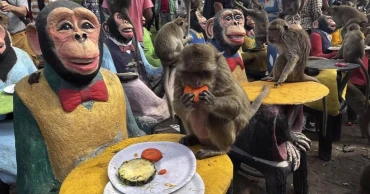
A meal fit for monkeys was served on Sunday at the annual Monkey Feast Festival in central Thailand.
Amid the morning traffic, rows of monkey statues holding trays were lined up outside the compound of the Ancient Three Pagodas, while volunteers prepared food across the road for real monkeys — the symbol of Lopburi province, around 150 kilometers (93 miles) north of Bangkok.
Throngs of macaque monkeys ran around, at times fighting with each other, while the crowds of visitors and locals grew.
As the carefully prepared feast was brought toward the temple, the ravenous creatures began to pounce and were soon devouring the largely vegetarian spread.
While the entertainment value of the festival is high, organizers are quick to point out that it is not just monkey business.
Read: Thailand pre-school shooting: Death toll rises to 36
“This monkey feast festival is a successful event that helps promote Lopburi’s tourism among international tourists every year,” said Yongyuth Kitwatanusont, the festival’s founder.
“Previously, there were around 300 monkeys in Lopburi before increasing to nearly 4,000 nowadays. But Lopburi is known as a monkey city, which means monkeys and people can live in harmony.”
Such harmony could be seen in the lack of shyness exhibited by the monkeys, which climbed on to visitors, vehicles and lampposts. At times the curious animals looked beyond the abundant feast and took an interest in other items.
“There was a monkey on my back as I was trying to take a selfie. He grabbed the sunglasses right off my face and ran off on to the top of a lamppost and was trying to eat them for a while,” said Ayisha Bhatt, an English teacher from California working in Thailand.
The delighted onlookers were largely undeterred by the risk of petty theft, although some were content to exercise caution.
Read: Thailand now offering 10-year visa: Who are eligible?
“We have to take care with them, better leave them to it. Not too near is better,” said Carlos Rodway, a tourist from Cadiz, Spain, having previously been unceremoniously treated as a climbing frame by one audacious monkey.
The festival is an annual tradition in Lopburi, the provincial capital, and held as a way to show gratitude to the monkeys for bringing in tourism. This year’s theme is “monkeys feeding monkeys,” an antidote to previous years where monkey participation had decreased due to high numbers of tourists, which intimidated the animals.
3 years ago
Kim's daughter called 'most beloved' child in 2nd appearance
North Korea's leader has taken his daughter to a meeting with missile scientists in her second public appearance, in which state media called her Kim Jong Un's “most beloved” child, deepening outside debate over whether she is being primed as his successor.
The daughter, believed to Kim’s second child named Ju Ae and about 9 or 10 years old, was first unveiled to the outside world last weekend in state media photos showing her observing the North’s intercontinental ballistic missile launch the previous day with her parents and other older officials. The daughter wearing a white puffy coat and red shoes was shown walking hand-in-hand with Kim past a huge missile loaded on a launch truck and watching a soaring weapon.
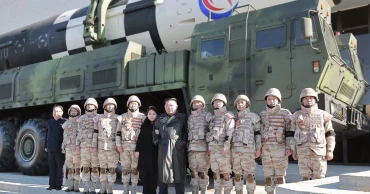
On Sunday, the North’s state media mentioned her for the second time, saying she and Kim took group photos with scientists, technicians, officials and other workers involved in what it called the test-launch of its Hwasong-17 ICBM.
KCNA described her as Kim’s “most beloved” or “precious” child, a more honorific title than her previous description of “(Kim’s) beloved” child on its Nov. 19 dispatch. It also released a slew of photos showing the daughter in a long, black coat with a black fur collar, holding her father’s arm.
Read more: Kim claims that the ICBM test shows the ability to counter US threats
Some photos showed the two of them standing in the middle of a line of uniformed soldiers before a massive missile atop a launch truck. Others showed Kim's daughter clapping her hands or talking to her father as people cheered in the background.
Taking after her mother Ri Sol Ju, who wasn’t visible in any of the photos Sunday, she had a more mature appearance than in her unveiling a week ago.
“This is certainly striking. The photograph of Kim Ju Ae standing alongside her father while being celebrated by technicians and scientists involved in the latest ICBM launch would support the idea that this is the start of her being positioned as a potential successor,” said Ankit Panda, an expert with the Carnegie Endowment for International Peace.
“State media underscoring her father’s love for her further underscores this, I think. Finally, both of her initial public appearances have been in the context of strategic nuclear weapons — the crown jewels of North Korea’s national defense capabilities. That doesn’t strike me as coincidental,” Panda said.
After her first public appearance, South Korea’s spy service told lawmakers that it assessed the girl pictured is Kim’s second child, who is about 10 and whose name is Ju Ae. The National Intelligence Service said her looks matched information that she is taller and bigger than other girls of the same age. It also said that her unveiling appeared to reflect Kim’s resolve to protect the security of North Korea’s future generations in the face of a standoff with the United States.
Read more: Kim threatens to use nukes amid tensions with US, S. Korea
South Korean media previously speculated Kim has three children — born in 2010, 2013 and 2017 — and that the first child is a son while the third one is a daughter. The unveiled daughter is highly likely the child who retired NBA star Dennis Rodman saw during his 2013 trip to Pyongyang. After that visit, Rodman told the British newspaper The Guardian that he and Kim had a “relaxing time by the sea” with the leader’s family and that he held Kim’s baby daughter, named Ju Ae.
North Korea has made no mention of Kim’s reported two other children. But speculation that his eldest child is a son has led some experts to question how a daughter can be Kim's successor given the deeply male-dominated, patriarchal nature of North Korean society. Kim is a third-generation member of the family that has run North Korea for more than seven decades, and his father and grandfather successively governed the country before he inherited power in late 2011.
“We’ve been told that Kim has three children, including possibly a son. If this is true, and if we assume that the male child — who has yet to be revealed — will be the heir, is Ju Ae truly Kim’s most ‘precious,’ from a succession standpoint?” said Soo Kim, a security analyst at the California-based RAND Corporation. “I think it is too early to draw any conclusions.”
She said that Kim Jong Un may think his daughter’s unveiling is an effective distraction while conditioning Washington, Seoul and others to living with the North Korean nuclear threat as “the spectacle of Ju Ae appears to eclipse the intensifying gravity of North Korea’s nuclear and missile threat." She added that by parading his daughter around, Kim Jong Un may also want to tell his people that nuclear weapons are the sole guarantor for the country’s future.
In remarks at the group photo session, Kim Jong Un called the recently tested Hwasong-17 “a great entity of strategic strength” and ordered officials to further build the country’s military capability to a “more absolute and irreversible one.” The North’s Hwasong-17 launch was part of a barrage of missile tests that it says were meant to issue a warning over U.S.-South Korean military drills that it views as an invasion rehearsal.
Analyst Cheong Seong-Chang at the private Sejong Institute in South Korea said that Kim Jong Un cannot make his son his successor if he thinks he lacks leadership. Cheong said Kim may be preventing potential pushback for choosing a daughter as a fourth-generation leader, so he likely brought her to a successful ICBM launch event to help public loyalty toward him be carried on smoothly to his daughter.
“When a king has many children, it’s natural for him to make his most beloved child as his successor,” Cheong said. “Kim Ju Ae is expected to appear occasionally at Kim Jong Un’s public events and take a succession training.”
Revealing the young Ju Ae came as a huge surprise to foreign experts, as Kim Jong Un and his father Kim Jong Il were both first mentioned in state media dispatches after they became adults. Cheong, however, said Kim Jong Il had Kim Jong Un in mind as his heir when his son was 8 years old. Cheong cited his conversations with Kim Jong Un’s aunt and her husband, who defected to the United States.
The fact that the South Korean spy agency said Ju Ae is about 10 years old despite reportedly being born in 2013 could be related to the country’s age-calculating system that typically makes people’s age one or two years older.
3 years ago

Protests over China's COVID controls spread across country
Protests against China's pervasive anti-virus controls that have confined millions of people to their homes spread to Shanghai and other cities after complaints they might have worsened the death toll in an apartment fire in the northwest.
Shanghai police used pepper spray against about 300 protesters, according to a witness. They gathered Saturday night to mourn the deaths of at least 10 people in an apartment fire last week in Urumqi in the Xinjiang region in the northwest.
Videos posted on social media that said they were filmed in Nanjing in the east, Guangzhou in the south and at least five other cities showed protesters tussling with police in white protective suits or dismantling barricades used to seal off neighborhoods. Witnesses said a protest occurred in Urumqi, but The Associated Press was unable to confirm details of other videos.
President Xi Jinping’s government faces mounting anger at its “zero-COVID” policy that has shut down access to areas throughout China in an attempt to isolate every case at a time when other governments are easing controls and trying to live with the virus.
Read more: China reports 10,000 new virus cases, capital closes parks
That has kept China’s infection rate lower than the United States and other countries. But the ruling Communist Party faces growing complaints about the economic and human cost as businesses close and families are isolated for weeks with limited access to food and medicine.
Some protesters were shown in videos shouting for Xi to step down or the ruling party to give up power.
Party leaders promised last month to make restrictions less disruptive by easing quarantine and other rules but said they were sticking to “zero-COVID.” Meanwhile, an upsurge in infections that pushed daily cases above 30,000 for the first time has led local authorities to impose restrictions residents complain exceed what is allowed by the national government.
The fire deaths in Urumqi triggered an outpouring of angry questions online about whether firefighters who needed three hours to extinguish the blaze or victims trying to escape might have been obstructed by locked doors or other controls. Authorities denied that, but the disaster became a focal point for public anger about anti-disease restrictions, ruling party propaganda and censorship.
In Shanghai, protesters gathered at Middle Urumqi Road at midnight with flowers, candles and signs reading “Urumqi, November 24, those who died rest in peace,” according to a participant who would give only his family name, Zhao.
Zhao said one of his friends was beaten by police and two were pepper-sprayed. He said police stomped on his feet as he tried to stop them from taking his friend away. He lost his shoes and left barefoot.
According to Zhao, protesters yelled slogans including “Xi Jinping, step down, Communist Party, step down,” “Unlock Xinjiang, unlock China,” “do not want PCR (tests), want freedom” and “press freedom.”
Around 100 police stood in lines to prevent protesters from gathering or leaving, Zhao said. He said buses with more police arrived later.
Read more: China launches Covid-19 vaccine inhaled through mouth
Another protester, who gave only his family name, Xu, said there was a larger crowd of thousands of demonstrators, but police stood in the road and let them pass on the sidewalk.
Internet users posted videos and accounts on Chinese and foreign social media showing protests in Shanghai, Nanjing, Chengdu and Chongqing in the southwest and Urumqi and Korla in Xinjiang.
A video that said it was shot in Urumqi showed protesters chanting, “Remove the Communist Party! Remove Xi Jinping!”
Protests in Xinjiang are especially risky following a security crackdown against Uyghurs and other mostly Muslim ethnic minorities that has included mass detentions.
Most protesters in the videos were members of China's dominant Han ethnic group. A Uyghur woman in Urumqi said Uyghurs were too scared to take to the streets.
“Han Chinese people know they will not be punished if they speak against the lockdown,” said the woman, who asked not to be identified by name for fear of retaliation. “Uyghurs are different. If we dare say such things, we will be taken to prison or to the camps.”
Posts on Chinese social media were quickly deleted, which Beijing often does to suppress criticism it worries might serve as a rallying point for opposition to one-party rule.
People in some parts of Xinjiang have been confined to their homes since early August. Some complain they lack access to food and medicine and have posted appeals for help online.
In a possible attempt to placate the public, authorities on Saturday announced they had achieved “societal zero-COVID” and restrictions in Urumqi and Korla would be relaxed. The government said taxi, railway, bus and other public services that had been suspended for weeks would resume. State-owned China Southern Airlines announced it would resume flights from Urumqi to four Chinese cities starting Monday.
Social media users greeted news the disease was under control with disbelief and sarcasm. “Only China can achieve this speed,” wrote one user on the Sina Weibo social media service.
Anger boiled over earlier after Urumqi city officials appeared to blame the deaths from Thursday night's fire on the apartment tower’s residents.
“Some residents’ ability to rescue themselves was too weak,” said Li Wensheng, head of Urumqi’s fire department, at a news conference.
Police announced the arrest of a 24-year-old woman on charges of spreading “untrue information” about the death toll online.
Late Friday, people in Urumqi marched largely peacefully in big puffy winter jackets in the cold winter night.
Videos of protests featured people holding the Chinese flag and shouting “Open up, open up." Some shouted and pushed against rows of men in the white protective suits.
Two Urumqi residents who declined to be named for fear of retribution said large-scale protests occurred Friday night. One of them said he had friends who participated.
The AP pinpointed the locations of two of the videos of the protests in different parts of Urumqi. In one video, police in face masks and hospital gowns faced off against shouting protesters. In another, one protester spoke to a crowd about their demands. It was unclear how widespread the protests were.
Xi has defended the strategy as an example of the superiority of the Chinese system compared with the United States and other Western countries, which politicized the use of face masks and had difficulties enacting widespread lockdowns.
But support for “zero-COVID” has cratered in recent months, as tragedies sparked public anger.
Last week, the government of the central city of Zhengzhou apologized for the death of a 4-month old girl who was in quarantine. Her father said his efforts to take her to a hospital were delayed after ambulance workers balked at helping them because he tested positive for the virus.
The Uyghur woman in Urumqi said she had been unable to leave her apartment since Aug. 8, and was not even allowed to open her window. On Friday, she and her neighbors defied the order, opening their windows and shouting in protest.
“No more lockdowns! No more lockdowns!” they screamed, according to the woman.
3 years ago
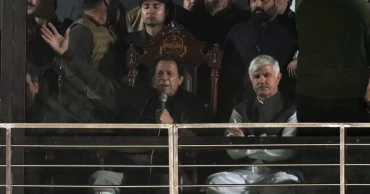
Pakistan's ex-PM Khan says his party to quit all assemblies
Pakistan's former premier Imran Khan said Saturday his party was quitting the country's regional and national assemblies, as he made his first public appearance since being wounded in a gun attack earlier this month.
Khan, a former cricket star turned politician, was ousted in a no-confidence vote in Parliament in April. He is now in the opposition and has been demanding early elections, claiming his ouster was illegal and orchestrated by Prime Minister Shahbaz Sharif, with the U.S. government’s help. Sharif and Washington have dismissed the allegations and the current government says the next polls will be held as scheduled in 2023.
Khan launched a protest march late last month from the eastern city of Lahore toward Islamabad as part of his campaign for early polls, but stepped down from personally leading the convoy after he was wounded by a gunman who opened fire at his vehicle. One of Khan’s supporters was killed and 13 were wounded in the attack. The gunman was arrested.
On Saturday night, in Rawalpindi city near Islamabad, Khan rejoined the protest march.
He told tens of thousands of his cheering supporters that his Tehreek-e-Insaf party was leaving all regional and national assemblies and getting out of this "corrupt system.”
His party resigned from the national assembly en masse in April ahead of a vote to elect a new prime minister, although most of the resignations have yet to be accepted. Khan's stronghold is in the northwest province of Khyber Pakhtunkhwa, and leaving the Punjab assembly would hand power to his rivals.
The politician spoke for more than an hour, including references to the Sufi mystic Rumi, the fall of the Soviet Union, and the seventh-century Shiite leader Imam Hussain.
Toward the end of his speech, he did a U-turn on his demand for snap elections, saying his party would win the polls scheduled for nine months' time. He also said he would no longer march on the capital.
Read more: Pakistan’s politics of FIR registrations
“They (government) cannot deal with a march in Islamabad, they can call as many police as they want, but they cannot stop the hundreds of thousands from entering Islamabad,” said Khan. "We could have created a situation like Sri Lanka. I have decided against marching on Islamabad because I don’t want there to be anarchy in the country. I don't want to cause any harm to this country."
After months of protests over an economic crisis that has led to shortages of essentials such as food and medicine, thousands of Sri Lankans stormed the president’s residence in July, forcing then-President Gotabaya Rajapaksa to flee and later resign.
Khan said he will meet his chief ministers and parliamentary party and announce the timing of the exit.
The rally came days after the appointment of a new army chief, Asim Munir, who ran the country's spy agency during Khan's term in office but was fired without an explanation from the then-premier.
Munir replaces Gen. Qamar Javed Bajwa, who Khan has also accused of playing a role in his ouster. Bajwa denies the allegation.
Read more: Imran Khan far better actor than Shahrukh and Salman, says Pakistani politician
Pakistan's Foreign Minister Bilawal Bhutto Zardari described Khan's Saturday night rally as a “facesaving flopshow.”
He said in a tweet: “Unable to pull revolution crowds, failed at undermining appointments of new chiefs, frustrated, resorts to resignation drama.”
3 years ago

Indian police detain man accused of killing Australian woman because ‘her dog barked at him’
Delhi Police have detained an Indian man accused of killing an Australian woman in Queensland in 2018. The man, Rajwinder Singh, had left Australia after killing the woman.
Toyah Cordingley (24) was killed by Rajwinder, according to investigators, because “her dog barked at him,” NDTV reports.
Apparently, after an altercation with his wife, Rajwinder Singh (38) headed to Wangetti Beach in Queensland. He admitted to Delhi police that he was carrying some fruits and a kitchen knife.
A pharmacy employee, Cordingley, was walking her dog down the shore. Rajwinder and Cordingley got into a fight, as the latter’s dog was barking at him. According to authorities, this led to the Indian man attacking and reportedly killing Cordingley.
Read more: India's tribespeople seek formal recognition of ancient nature-worshipping faith
Rajwinder then tied the dog to a tree and buried Cordingley’s body in the sand.
Two days later, Rajwinder Singh fled Australia – leaving behind his wife, three children, and his job.
A Red Corner Notice from Interpol was issued against Rajwinder, and on November 21 the Patiala House Court issued a non-bailable warrant in accordance with the extradition laws.
Read more: Indian foreign secretary cements support for Myanmar’s development during visit
According to a senior police officer, Rajwinder was detained by the Special Cell of the Delhi Police along the G T Karnal Road based on information supplied by the CBI, which serves as Interpol’s central agency in India, and their Australian counterparts.
3 years ago

Death toll from Indonesia earthquake reaches 310 as more bodies found
The death toll from an earthquake that struck Indonesia’s Java island early this week rose to 310 after rescuers found more bodies under landslides, an official said. At least 24 people remain missing.
In devasted towns in western Java, residents gathered near badly damaged mosques for Friday prayers. Others held prayers along with rescuers between the tents at evacuation centers.
Bodies were recovered Friday in two areas of mountainous Cianjur district where landslides triggered by Monday’s quake brought tons of mud, rocks and broken trees, said Henri Alfiandi, chief of the National Search and Rescue Agency.
REad: 10 killed in apartment fire in northwest China's Xinjiang
More than 1,400 rescuers have been searching through the rubble since the magnitude 5.6 quake, which injured more than 2,000 people.
The head of the National Disaster Management Agency, Suharyanto, who uses one name, said rescuers will continue searching until rebuilding begins.
“We will do it up to the last person. There is no reduction whatsoever, in strength, enthusiasm, or the equipment,” Suharyanto said.
He said distribution of food and other aid is improving and is reaching more people in 110 evacuation locations.
REad: Militants kill six police officers during ambush in northwest Pakistan
The disaster agency said the earthquake damaged at least 56,000 houses and displaced at least 36,000 people. Hundreds of public facilities were destroyed, including 363 schools.
An earthquake of that strength would not typically cause such serious damage. But Monday’s quake was shallow and shook a densely populated area that lacks earthquake-resistant infrastructure.
Indonesia is frequently struck by earthquakes, volcanic eruptions and tsunamis because of its location on the arc of volcanoes and fault lines in the Pacific Basin known as the “Ring of Fire.”
3 years ago
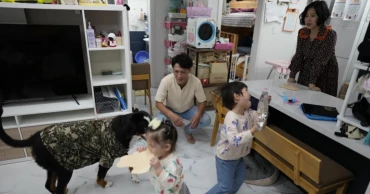
South Korea in demographic crisis as many stop having babies
Yoo Young Yi’s grandmother gave birth to six children. Her mother birthed two. Yoo doesn’t want any.
“My husband and I like babies so much … but there are things that we’d have to sacrifice if we raised kids,” said Yoo, a 30-year-old Seoul financial company employee. “So it’s become a matter of choice between two things, and we’ve agreed to focus more on ourselves.”
There are many like Yoo in South Korea who have chosen either not to have children or not to marry. Other advanced countries have similar trends, but South Korea’s demographic crisis is much worse.
South Korea’s statistics agency announced in September that the total fertility rate — the average number of babies born to each woman in their reproductive years — was 0.81 last year. That’s the world’s lowest for the third consecutive year.
The population shrank for the first time in 2021, stoking worry that a declining population could severely damage the economy — the world’s 10th largest — because of labor shortages and greater welfare spending as the number of older people increases and the number of taxpayers shrinks.
President Yoon Suk Yeol has ordered policymakers to find more effective steps to deal with the problem. The fertility rate, he said, is plunging even though South Korea spent 280 trillion won ($210 billion) over the past 16 years to try to turn the tide.
Many young South Koreans say that, unlike their parents and grandparents, they don’t feel an obligation to have a family. They cite the uncertainty of a bleak job market, expensive housing, gender and social inequality, low levels of social mobility and the huge expense of raising children in a brutally competitive society. Women also complain of a persistent patriarchal culture that forces them to do much of the childcare while enduring discrimination at work.
“In a nutshell, people think our country isn’t an easy place to live,” said Lee So-Young, a population policy expert at the Korea Institute for Health and Social Affairs. “They believe their children can’t have better lives than them, and so question why they should bother to have babies.”
Many people who fail to enter good schools and land decent jobs feel they’ve become “dropouts” who “cannot be happy” even if they marry and have kids because South Korea lacks advanced social safety nets, said Choi Yoon Kyung, an expert at the Korea Institute of Child Care and Education. She said South Korea failed to establish such welfare programs during its explosive economic growth in the 1960 to ’80s.
Read: BGMEA calls on South Korea's Youngone to invest more in Bangladesh
Yoo, the Seoul financial worker, said that until she went to college, she strongly wanted a baby. But she changed her mind when she saw female office colleagues calling their kids from the company toilet to check on them or leaving early when their children were sick. She said her male coworkers didn’t have to do this.
“After seeing this, I realized my concentration at work would be greatly diminished if I had babies,” Yoo said.
Her 34-year-old husband, Jo Jun Hwi, said he doesn’t think having kids is necessary. An interpreter at an information technology company, Jo said he wants to enjoy his life after years of exhaustive job-hunting that made him “feel like I was standing on the edge of a cliff.”
There are no official figures on how many South Koreans have chosen not to marry or have kids. But records from the national statistics agency show there were about 193,000 marriages in South Korea last year, down from a peak of 430,000 in 1996. The agency data also show about 260,600 babies were born in South Korea last year, down from 691,200 in 1996, and a peak of 1 million in 1971. The recent figures were the lowest since the statistics agency began compiling such data in 1970.
Kang Han Byeol, a 33-year-old graphic designer who’s decided to remain single, believes South Korea isn’t a sound place to raise children. She cited frustration with gender inequalities, widespread digital sex crimes targeting women such as spy cams hidden in public restrooms, and a culture that ignores those pushing for social justice.
“I can consider marriage when our society becomes healthier and gives more equal status to both women and men,” Kang said.
Read: Witnesses describe South Korean crowd surge as 'a hell'
Kang’s 26-year-old roommate Ha Hyunji also decided to stay single after her married female friends advised her not to marry because most of the housework and child care falls to them. Ha worries about the huge amount of money she would spend for any future children’s private tutoring to prevent them from falling behind in an education-obsessed nation.
“I can have a fun life without marriage and enjoy my life with my friends,” said Ha, who runs a cocktail bar in Seoul.
Until the mid-1990s, South Korea maintained birth control programs, which were initially launched to slow the country’s post-war population explosion. The nation distributed contraceptive pills and condoms for free at public medical centers and offered exemptions on military reserve training for men if they had a vasectomy.
United Nations figures show a South Korean woman on average gave birth to about four to six children in the 1950s and ’60s, three to four in the 1970s, and less than two in the mid-1980s.
South Korea has been offering a variety of incentives and other support programs for those who give birth to many children. But Choi, the expert, said the fertility rate has been falling too fast to see any tangible effects. During a government task force meeting last month, officials said they would soon formulate comprehensive measures to cope with demographic challenges.
South Korean society still frowns on those who remain childfree or single.
In 2021 when Yoo and Jo posted their decision to live without children on their YouTube channel, “You Young You Young,” some posted messages calling them “selfish” and asking them to pay more taxes. The messages also called Jo “sterile” and accused Yoo of “gaslighting” her husband.
Lee Sung-jai, a 75-year-old Seoul resident, said it’s “the order of nature” for humankind to marry and give birth to children.
“These days, I see some (unmarried) young women walking with dogs in strollers and saying they are their moms. Did they give birth to those dogs? They are really crazy,” he said.
Seo Ji Seong, 38, said that she’s often called a patriot by older people for having many babies, though she didn’t give birth to them for the national interest. She’s expecting a fifth baby in January.
Read: Halloween tragedy: Many South Koreans angry, ashamed over safety failures
Seo’s family recently moved to a rent-free apartment in the city of Anyang, which was jointly provided by the state-run Korea Land and Housing Corporation and the city for families with at least four children. Seo and her husband, Kim Dong Uk, 33, receive other state support, though it’s still tough economically to raise four kids.
Kim said he enjoys seeing each of his children growing up with different personalities and talents, while Seo feels their kids’ social skills are helped while playing and competing with one another at home.
“They are all so cute. That’s why I’ve kept giving birth to babies even though it’s difficult,” Seo said.
3 years ago

Election battle won, real test begins for new Malaysian PM
Reformist leader Anwar Ibrahim has won a hard-fought battle to become Malaysia’s new prime minister. But working with former foes to form a unity government as a polarized nation watches will immediately test his political mettle.
There is no honeymoon period for Anwar, 75, who got straight down to work less than 24 hours after he was sworn in as the nation’s 10th leader.
National television showed Anwar clocking in Friday morning at the government administrative capital of Putrajaya. His first test will be the construction of a Cabinet and the distribution of portfolios to appease the diverse members of his unity government.
Anwar promised Monday that his Cabinet will be leaner compared to the previous, oversized administration, and said he will forego his salary as prime minister amid the country’s economic slowdown. He said new Cabinet members would be asked to cut their salaries, too.
“My main priority now is the cost of living,” he told a news conference.
Anwar pledged to work swiftly to find ways to help Malaysians struggling with rising food costs, a currency at its lowest point in over two decades and stagnating wages ahead of an expected economic slowdown next year.
Read: Long-time reformist leader Anwar sworn in as Malaysian PM
Anwar’s Pakatan Harapan, or Alliance of Hope, won 82 out of 222 seats in the Nov. 19 general election. To cobble a majority, he won support from two key rival blocs: the long-ruling National Front, which has 30 seats, and the Sarawak Parties Alliance with 23. Several smaller blocs have said they will also join.
Former Prime Minister Muhyiddin Yassin’s Malay-centric National Alliance unexpectedly won 73 seats. Muhyiddin’s hard-line ally, the Pan-Malaysian Islamic Party that touts Sharia, took 49 seats to become the country’s single largest party in an indication of the rise of conservative Islam.
Anwar’s victory with support from political rivals marked another “watershed moment that heralded a new era for Malaysian democracy,” said Ahmad Fauzi Abdul Hamid, political analyst with the University of Science, Malaysia.
It came on the back of his alliance’s stunning victory in 2018 polls, which ended the National Front’s 60-year grip on power and led to the country’s first regime change since independence from Britain in 1957. But the new government crumbled after power grab that led to turmoil and saw a total of three prime ministers in four years. Anwar was in prison at the time on a sodomy charge he said was politically motivated.
Anwar fostered a conciliatory tone after his appointment, welcoming all parties to his government as long as they adhere to the basic rules of good governance, no corruption and a “Malaysia for all Malaysians.”
Read: Reformist leader Anwar close to becoming Malaysia's next PM
Analysts said the makeup of his Cabinet will provide a clearer picture of his policies going forward, as he puts flesh to bones on his campaign promises to clean up the government and heal deepening racial and religious gashes. His anti-corruption platform will be tested amid concerns that concessions will be made for some National Front leaders battling graft charges in return for their support.
An ethnic Muslim, Anwar must also earn the trust of conservative Malays, who viewed him as too liberal and opted for Muhyiddin’s right-wing bloc in the contentious election. Police have tightened security and Anwar’s supporters have been told to hold off celebrations that may provoke Islamic supporters.
In such a racially charged environment, Anwar’s aims — including replacing a decades-old affirmative action plan that gives privileges to Malays in jobs, education and housing — may be a minefield.
Anwar has assured Malays that their rights under the constitution and the position of Islam as the national religion will be protected. But he stressed that other races must not be marginalized so that the country can be united.
“Racial divide has been in existence in Malaysia since independence,” said political analyst Ahmad Fauzi.
“Anwar will come up with his own formula to rein in the problem, but thinking that he’ll be able to extinguish it is to expect the impossible from him,” he added.
3 years ago

10 killed in apartment fire in northwest China's Xinjiang
A fire in an apartment building in northwestern China's Xinjiang region has killed 10 people and injured nine, authorities said Friday.
The fire broke out Thursday night in the regional capital of Urumqi, where temperatures have dropped to below freezing after dark. The blaze took around three hours to extinguish.
The injured were all expected to survive and the cause of the fire is under investigation, the local government said.
Read more: 38 killed in factory fire in China
The tragedy comes days after 38 people died in a fire at an industrial trading company in central China caused by welding sparks that ignited cotton cloth.
Four people have been detained over the fire in the city of Anyang and local authorities ordered sweeping safety inspections.
Aging infrastructure, poor safety awareness and, in some cases, government corruption has led to series of recent fires, explosions and building collapses around China, which continues to grapple with new COVID-19 outbreaks, prompting lockdowns and rigid travel restrictions affecting millions of people.
Read more: Maldives fire: Identitties of Bangladeshi victims confirmed
3 years ago