Asia
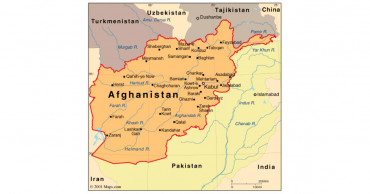
Helicopter crash kills 3 in Kabul during training session
At least three Afghan crew members were killed Saturday when a U.S.-manufactured Black Hawk helicopter they were flying crashed, the Taliban’s defense ministry said.
The statement said that five others were wounded in the accident during a training session overseen by Afghanistan's defense ministry at the capital of Kabul.
It is not known how many U.S. choppers remain in the hands of the Taliban government. As the U.S.-backed Afghan government collapsed in mid-August last year, dozens of Afghan pilots fled to Central Asian countries, including Tajikistan and Uzbekistan.
Afghan air force pilots played a key role, alongside their U.S. counterparts, in the 20-year war against Taliban insurgents that ended with the departure of foreign troops last year. The airstrikes inflicted heavy casualties among the Taliban and repeatedly drove them from positions they had seized in different parts of the country.
Read: UN warns 6 million Afghans at risk of famine as crises grow
Last year about 140 Afghan pilots and others were flown out of Tajikistan then to Abu Dhabi in the United Arab Emirates and their final destination in the U.S.
Separately, three civilians were wounded when a bicycle bomb exploded in Kabul, said Khalid Zadran, spokesman for the the capital's police chief.
The attack occurred in the Shai neighborhood and there was no immediate claim of responsibility for the blast.
Recently, the Islamic State group has claimed similar attacks in the country. IS has waged a bloody campaign of attacks on Taliban targets and minority groups, particularly Shiites whom the extremist IS considers heretics.
3 years ago

UN chief appeals to world to help badly flood-hit Pakistan
U.N. Secretary-General Antonio Guterres appealed to the world to help Pakistan after arriving in the country Friday to see climate-induced devastation from months of deadly record floods that have left half a million people living in tents under the open sky.
His trip comes less than two weeks after Guterres appealed for $160 million in emergency funding to help those affected by the monsoon rains and floods that have caused at least $10 billion in damages and 1,391 deaths. International aid is arriving, including the first planeload of what the U.S. has pledged will be $30 million in assistance.
“I have arrived in Pakistan to express my deep solidarity with the Pakistani people after the devastating floods here. I appeal for massive support from the international community as Pakistan responds to this climate catastrophe," he said on Twitter before dawn.
Last week, the U.N. chief issued a stern warning about the effects of climate change.
“Let’s stop sleepwalking toward the destruction of our planet by climate change,” he said in a video message to a ceremony in Islamabad at the time. “Today, it’s Pakistan. Tomorrow, it could be your country.”
Also read: Over 6.4 million in 'dire need' after unprecedented Pakistan floods
Pakistan's Information Minister Maryam Aurangzeb in a statement thanked the U.N. chief for visiting Pakistan at a time when, she said, one-third of Pakistan is underwater. She said she wants the visit to help elevate the crisis for flood victims to the global level.
“The visit will also help in realizing the consequences of the deadly effects of climate change," said, urging the international community to step up efforts to help poor countries affected by floods and natural disasters.
Aurangzeb said Guterres will receive a briefing from Pakistani officials about damages caused by floods before addressing a news conference along with Prime Minister Shahbaz Sharif in Islamabad on Friday.
So far, U.N. agencies and several countries have sent nearly 60 planeloads of aid, and authorities say the United Arab Emirates is one of the most generous contributors, as it has sent so far 26 flights carrying aid or flood victims. The United States said it will provide $30 million in assistance to help flood victims.
Also read: Aid pours into Pakistan; deaths from floods cross 1,200 mark
The floods have touched all of Pakistan and affected more than 3.3 million people. Heritages sites have also been damaged, including Mohenjo Daro, considered one of the best-preserved ancient urban settlements in South Asia.
The ruins near the Indus River were discovered in 1922 and to this day, mystery surrounds the disappearance of the civilization that dates back 4,500 years, coinciding with those of ancient Egypt and Mesopotamia.
Mohenjo Daro is a UNESCO World Heritage Site, and the U.N. heritage agency on Thursday announced an emergency amount of $350,000 to help recover flood-damaged cultural heritage sites.
Guterres was received on his arrival by Deputy Foreign Minister Hina Rabbani Khar and will meet with Prime Minister Sharif and other government and military officials on his visit.
Before the U.N. chief's arrival, Sharif told a visiting American diplomat that the world should step up its fight against climate change to avoid more deadly flooding. Derek Chollet, a senior State Department official, was visiting Islamabad to assess damages and arrange for aid.
According to the government's statement, Chollet affirmed that the U.S. would stand by Pakistan in the wake of the floods and extend help to help people rebuild.
On Friday, the first American planeload carrying aid will arrive in Pakistan, according to Pakistan officials, who say Washington is setting up a humanitarian aid air bridge to deliver much-needed for flood victims,
Since June, heavy rains and floods have added new burdens to cash-strapped Pakistan and highlighted the disproportionate effect of climate change on impoverished populations. Experts say Pakistan is responsible for only 0.4% of the world’s historic emissions blamed for climate change. The U.S. is responsible for 21.5%, China for 16.5% and the EU 15%.
The floods in Pakistan have also injured 12,722 people, destroyed thousands of kilometers of roads, toppled bridges and damaged schools and hospitals, according to the National Disaster Management Agency.
3 years ago

At least 32 dead in karaoke parlor fire in south Vietnam
The death toll from a fire at a karaoke parlor in southern Vietnam has risen to 32 and some parts of the building remain inaccessible more than a day later, state media reported.
The fire that began late Tuesday trapped workers and customers inside the multi-story venue in Thuan An city in Binh Duong province, state media said. The fire was brought under control quickly but smoldered into the next day.
Vietnam News Agency reported 32 deaths from the blaze as of late Wednesday and at least one karaoke room and one storage room have not been accessed because the temperature remained high.
Read: 6 die in crash of Vietnam-era helicopter in West Virginia
Some people were injured from asphyxiation and others suffered broken limbs when they jumped from upper floors to try to escape the fire, reports said. Firefighters using ladders from their trucks managed to rescue others.
President Nguyen Xuan Phuc extended his condolences to families of the victims and asked government officials to support the families and quickly find the cause of the blaze. The preliminary finding was that it was caused by an electrical short circuit and started on the second or third floor.
Enforcement of safety standards at entertainment venues in many parts of Southeast Asia is sometimes lax and believed to contribute to multiple deaths in case of fires.
Police in Thailand said that a pub in the eastern province of Chonburi was presenting live entertainment without a license when a fire broke out in early August, trapping many people inside because exits were blocked or locked.
Read:Special Presidential Envoy for Climate Kerry to visit Greece, Indonesia, Vietnam
The toll from that fire has climbed to 23 dead, 13 of them on the night of the blaze and 10 in the month since then. Many had serious burns over most of their bodies, which are extremely difficult to guard against deadly infections. At least five other victims are believed to still be on ventilators.
3 years ago

Mongolian President gifts racehorse to Indian Defence Minister
Indian Defence Minister Rajnath Singh, who is on an official visit to Ulan Bator, has received from Mongolian President Rajnath Singh a very special gift -- an awesome white racehorse.
"A special gift from our special friends in Mongolia. I have named this magnificent beauty, ‘Tejas’. Thank you, President Khurelsukh. Thank you Mongolia," Singh tweeted on Wednesday.
A day before, the Indian Defence Minister called on Mongolian President Ukhnaagiin Khurelsukh and reviewed "the multifaceted strategic ties" between the two countries.
"Excellent meeting with the President of Mongolia, H.E. U. Khurelsukh in Ulaanbaatar. Recalled my last meeting with him in 2018, when he was the Prime Minister of the country. We are fully committed to further deepening our multifaceted Strategic Partnership with Mongolia," Singh said in another tweet.
Read: India has contributed in establishment of democracy in Bangladesh: Rajnath Singh
Some seven years ago, Indian Prime Minister Narendra Modi also received a racehorse from then Mongolian Premier Chimed Saikhanbileg during his historic visit to that country.
3 years ago

Bengal Law Minister raided in coal scam
India's top probe agency has raided the properties of Bengal Law Minister Moloy Ghatak in connection with a coal smuggling case.
Sources told UNB on Wednesday that the Central Bureau of Investigation (CBI) was conducting searches in seven properties belonging to the Minister in the cities of Kolkata and Asansol.
The raids come a day after the senior Minister in Bengal Chief Minister Mamata Banerjee's cabinet tweeted to say that the country's state of affairs "is horrifying" under "Home Minister Amit Shah's watch".
The alleged scam pertains to the sales of illegally mined coal, worth thousands of crores of rupees, the proceeds of which were shared by a nexus of politicians and those operationing the racket.
Read: Rallies show Pakistan’s ex-PM Khan remains political force
Ghatak is the third senior politician of the state's ruling Trinamool Congress party to face the heat of the federal probe agencies.
In July, Partha Chatterjee, then Bengal Commerce and Industry Minister, was held in connection with a school jobs scam. Subsequently, Anubrata Mondal, another Trinamool Congress politician, was arrested by the CBI in a cattle smuggling case.
3 years ago

Rallies demonstrate Imran Khan’s political force
Since he was toppled by parliament five months ago, former Prime Minister Imran Khan has demonstrated his continued popularity with mass rallies across Pakistan, signaling to his rivals that he remains a considerable political force.
On Tuesday, he addressed some 25,000 supporters in the northwestern city of Peshawar, the capital of deeply conservative Khyber Pakhtunkhwa province bordering Afghanistan.
Khan said he would soon organize a mass march to the capital, as a culmination of his campaign to force the government of Prime Minister Shahbaz Sharif to hold a snap election, which some analysts say Khan might win due a groundswell of support.
“I will soon give you a call for a march on Islamabad,” Khan told the cheering crowd, then asked: “Are you ready for it?”
“Yes,” came the response from his supporters.
Read: Modi congratulates next British PM Liz Truss
Sharif has rejected the demand for early elections, saying the vote should take place as scheduled in 2023.
As during previous rallies, Tuesday’s speech was not shown live by TV stations on instructions from the country’s media regulatory agency. The regulators have banned broadcasting his live speeches, purportedly because of his recent critical remarks about the military and judiciary. Viewers also had difficulty accessing the speech via YouTube and other social media.
Since his ouster, Khan has claimed that the current government came into power under a plot by the U.S. which allegedly disagreed with his more independent foreign policy; Washington has denied such a claim.
Khan had served as prime minister for over three-and-a-half years until he was brought down by an alliance of political parties in a parliamentary no-confidence vote in April.
In a new twist to his comeback campaign, the former cricket star-turned-Islamist politician faces terrorism charges for allegedly threatening police and a judge at a rally last month in Islamabad. At the time, Khan sharply criticized the authorities for having arrested his close aide Shahbaz Gill on charges of inciting troops to mutiny against top army generals.
Khan could face several years in prison under Pakistan’s 1997 anti-terrorism law, which grants police wider powers. He is currently on a type of bail that shields him from arrest until Sept. 12.
“Look, a terrorist is standing in front of you,” Khan sarcastically told the crowd Tuesday evening.
Analysts say that even in the opposition, Khan remains a political force.
“Yes, Imran Khan will win elections whenever the voting takes place,” predicted Rana Akram Rabbani, a newspaper columnist and former senior politician.
In Tuesday’s speech, Khan again attacked Washington, saying his removal from office was the result of a U.S.-organized plot and collusion with Sharif. Both have denied the allegation.
Khan said Pakistan should not allow its soil to be used for attacks against any country.
His comments come amid reports that the U.S. drones were using Pakistan’s air space for surveillance in neighboring Afghanistan, where the Afghan Taliban seized power last year.
Khan is a vocal critic of military operations.
Read: Typhoon batters South Korea, forcing thousands to flee
Even before coming to power, he called for the resolution of the Afghan issue through peace talks. Addressing the United States on Tuesday, he said he wants friendship with Washington, but that “we will not accept your slavery.”
Khan has said in recent months that the United States wanted him gone because of his foreign policy choices in favor of Russia and China, and a visit he made on Feb. 24 to Moscow, where he held talks with Russian President Vladimir Putin as Russian tanks rolled into Ukraine.
Khan has said he was not aware that the Russian invasion of Ukraine would start during his visit.
After coming to power in 2018, Khan initially enjoyed excellent ties with the military.
His troubles began when he resisted the appointment of a new spy chief by the army chief Gen. Qamar Javed Bajwa.
Although the issue was later resolved, analysts say Khan and Bajwa never repaired the relationship and that Khan still believes Bajwa was part of the alleged plot to topple him.
Khan claimed Tuesday that his political opponents tried to drive a wedge between him and the army which traditionally plays an out-sized role in Pakistan politics.
“I love my army,” Khan said.
3 years ago

Typhoon batters South Korea, forcing thousands to flee
The most powerful typhoon to hit South Korea in years battered its southern region Tuesday, dumping almost a meter (3 feet) of rain, destroying roads and felling power lines, leaving 20,000 homes without electricity as thousands of people fled to safer ground.
Typhoon Hinnamnor grazed the resort island of Jeju and made landfall near the mainland port of Busan in the morning and was moving northeast toward the sea with winds of up to 144 kilometers (89 miles) per hour. It is on track to move closer to eastern China later in the week, after ferry services in eastern China and flights in Japan were suspended in previous days.
South Korean officials put the nation on alert about potential damages from flooding, landslides and tidal waves unleashed by Hinnamnor, which came just weeks after heavy rains in the region around the capital Seoul caused flooding that killed at least 14 people.
Also read: More than 200 dead after typhoon slams Philippines
Prime Minister Han Duk-soo called for evacuations in areas vulnerable to flooding, saying Hinnamnor could end up being a “historically strong typhoon that we never experienced before.”
The storm dumped more than 94 centimeters (37 inches) of rain in central Jeju since Sunday, where winds peaked at 155 kph (96 mph).
A 25-year-old man was missing after falling into a rain-swollen stream in the southern city of Ulsan, according to the Ministry of the Interior and Safety, which didn’t immediately report more casualties. Fires were reported at a major steel plant operated by POSCO in the southern city of Pohang, but it wasn’t immediately clear whether they were caused by the storm.
The Safety Ministry said more than 3,400 people in the southern regions were forced to evacuate from their homes because of safety concerns and that officials were advising or ordering 14,000 more people to evacuate. At least five homes and buildings were flooded or destroyed, and scores of roads were damaged.
More than 600 schools were closed or converted to online classes. More than 250 flights and 70 ferry services were grounded while more than 66,000 fishing boats evacuated to ports. Workers as of 6 a.m. managed to restore electricity to 2,795 of the 20,334 households that were knocked out of power.
Also read: Typhoon In-fa hits China’s east coast, canceling flights
A South Korean presidential official, who spoke on condition of anonymity during a background briefing, said officials were investigating the cause of the fires at POSCO's Pohang plant, where firefighters were working to extinguish flames that damaged at least three facilities at the complex.
Lim Yoon-sook, an official from the North Gyeongsang province fire department, said the flames destroyed a building housing electricity equipment and were continuing to burn through a separate office building, although workers were close to extinguishing a smaller fire at a cokes factory.
In North Korea, state media reported “all-out efforts” to minimize damage from flooding and landslides. The Korean Central News Agency reported leader Kim Jong Un during government meetings had issued unspecified “detailed tasks” to improve the country’s disaster response capacity but it didn’t elaborate on the plans.
North Korea sustained serious damage from heavy rains and floods in 2020 that destroyed buildings, roads and crops, shocking the country's already-crippled economy.
3 years ago

Earthquake kills 65, triggers landslides in southwest China
The powerful earthquake that set off landslides and shook buildings in southwestern China killed at least 65 people and injured hundreds, state media said Tuesday.
At least 16 other people are missing a day after the 6.8 magnitude earthquake struck a mountainous area in Luding county in Sichuan province, which sits on the edge of the Tibetan Plateau where tectonic plates meet and is hit regularly by quakes. The temblor shook buildings in the provincial capital of Chengdu, whose 21 million residents are already under a COVID-19 lockdown.
Power was knocked out and buildings damaged in the historic town of Moxi in the Tibetan autonomous prefecture of Garze, where 37 people were killed. Tents were erected for more than 50,000 people being moved from homes made unsafe by the quake, the official Xinhua News Agency reported.
State broadcaster CCTV showed rescue crews pulling a woman who appeared uninjured from a collapsed home in Moxi, where many of the buildings are constructed from a mix of wood and brick. Around 150 people were reported with varying degrees of injuries.
Also read: Southwest China quake leaves 30 dead, triggers landslides
Another 28 people were killed in neighboring Shimian county on the outskirts of the city of Ya'an. Another 248 people were reported as injured, mainly in Moxi, and another 12 people were reported missing.
Three of the dead were workers at the Hailuogou Scenic Area, a glacier and forest nature reserve.
Along with the deaths, authorities reported stones and soil falling from mountainsides, causing damage to homes and power interruptions, CCTV said. One landslide blocked a rural highway, leaving it strewn with rocks, the Ministry of Emergency Management said.
Buildings shook in Chengdu, 200 kilometers (125 miles) from the epicenter.
The earthquake and lockdown follow a heat wave and drought that led to water shortages and power cuts due to Sichuan’s reliance on hydropower. That comes on top of the latest major lockdown under China’s strict “zero-COVID” policy.
Also read: Strong undersea quake causes panic in western Indonesia
China’s deadliest earthquake in recent years was a 7.9 magnitude quake in 2008 that killed nearly 90,000 people in Sichuan. The temblor devastated towns, schools and rural communities outside Chengdu, leading to a years-long effort to rebuild with more resistant materials.
3 years ago

Modi congratulates next British PM Liz Truss
Indian Prime Minister Narendra Modi on Monday congratulated Liz Truss after she was named Britain's next Premier.
"Congratulations @trussliz for being chosen to be the next PM of the UK," Modi tweeted, an hour after Truss triumphed Indian-origin Rishi Sunak in the internal leadership race of Britain's ruling Conservative Party.
"Confident that under your leadership, the India-UK Comprehensive Strategic Partnership will be further strengthened. Wish you the very best for your new role and responsibilities," the Prime Minister wrote.
Also read: PM Hasina greets new UK Tory leader Lizz Truss
Truss will be the third woman to occupy the highest executive post in the UK after Margaret Thatcher and Theresa May.
"We need to show that we will deliver over the next two years. I will deliver a bold plan to cut taxes and grow our economy," Truss said, after she was declared the winner.
Also read: Liz Truss: UK's incoming PM who models herself on Iron Lady Thatcher
"I will deliver on the energy crisis, dealing with people's energy bills, but also dealing with the long-term issues we have on energy supply," she added.
3 years ago

Southwest China quake leaves 30 dead, triggers landslides
At least 30 people were reported killed in a 6.8 magnitude earthquake that shook China’s southwestern province of Sichuan on Monday, triggering landslides and shaking buildings in the provincial capital of Chengdu, whose 21 million residents are already under a COVID-19 lockdown.
The quake struck a mountainous area in Luding county shortly after noon, the China Earthquake Networks Center said.
Sichuan, which sits on the edge of the Tibetan Plateau where tectonic plates meet, is regularly hit by earthquakes. Two quakes in June killed at least four people.
The death toll rose to 30 as the search for trapped people continued Monday night, state media said.
Earlier, authorities had reported 7 deaths in Luding county and 14 more in neighboring Shimian county to the south. Three of the dead were workers at the Hailuogou Scenic Area, a glacier and forest nature reserve.
Also read: Strong undersea quake causes panic in western Indonesia
Along with the deaths, authorities reported stones and soil falling from mountainsides, causing damage to homes and power interruptions, state broadcaster CCTV said. One landslide blocked a rural highway, leaving it strewn with rocks, the Ministry of Emergency Management said.
Buildings shook in Chengdu, 200 kilometers (125 miles) away from the epicenter. Resident Jiang Danli said she hid under a desk for five minutes in her 31st floor apartment. Many of her neighbors rushed downstairs, wary of aftershocks.
“There was a strong earthquake in June, but it wasn’t very scary. This time I was really scared, because I live on a high floor and the shaking made me dizzy,” she told The Associated Press.
The earthquake and lockdown follow a heat wave and drought that led to water shortages and power cuts due to Sichuan’s reliance on hydropower. That comes on top of the latest major lockdown under China’s strict “zero-COVID” policy.
The past two months in Chengdu “have been weird,” Jiang said.
Also read: 7.3 earthquake hits north Philippines, causes some damage
The U.S. Geological Survey recorded a magnitude of 6.6 for Monday’s quake at a relatively shallow depth of 10 kilometers (6 miles). Preliminary measurements by different agencies often differ slightly.
China’s deadliest earthquake in recent years was a 7.9 magnitude quake in 2008 that killed nearly 90,000 people in Sichuan. The temblor devastated towns, schools and rural communities outside Chengdu, leading to a years-long effort to rebuild with more resistant materials.
3 years ago