Asia

Myanmar military air strike on hospital kills 31
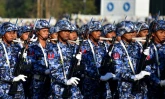
A Myanmar military air strike on a hospital in western Rakhine state killed at least 31 people, an on-site aid worker said Thursday, as the junta intensifies its offensive ahead of elections scheduled for this month.
The military has escalated air strikes since seizing power in a 2021 coup that ended a decade of democratic governance, conflict monitors report. Polls are set to begin on December 28, which the junta presents as a path to peace, but rebel groups have vowed to prevent voting in areas under their control.
Myanmar frees thousands of political prisoners ahead of election
Wai Hun Aung, an aid worker at Mrauk-U General Hospital near the Bangladesh border, said the situation was “terrible,” with 31 confirmed dead and 68 injured, and casualties likely to rise. At least 20 shrouded bodies were seen outside the hospital overnight.
A junta spokesperson was not immediately available for comment.
Source: Agencies
5 months ago
Fighting on Thailand-Cambodia border shows no signs of easing
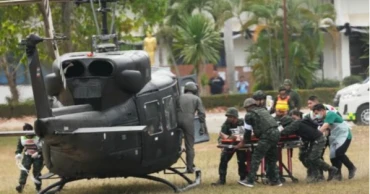
Renewed clashes along the Thailand-Cambodia border continued Wednesday, displacing hundreds of thousands as people sought refuge in overcrowded temporary shelters. On the Thai side, outgoing gunfire could still be heard.
The violence, rooted in long-standing territorial disputes, followed a skirmish Sunday that injured two Thai soldiers and disrupted a ceasefire brokered in July. U.S. President Donald Trump said he plans to call the two leaders Thursday and expressed confidence he could persuade them to halt the fighting.
Thailand-Cambodia clashes displace 5 lakh; evacuees recount escape
Thailand’s Prime Minister Anutin Charnvirakul vowed to press on, while Cambodia’s Senate President Hun Sen promised a strong response. The recent clashes have killed over a dozen people, with roughly 400,000 evacuated in Thailand and more than 127,000 in Cambodia. Casualties include five Thai soldiers and nine Cambodian civilians, including a baby.
The violence also affected sports, as Cambodia withdrew its team from the 33rd Southeast Asian Games in Thailand over safety concerns. Both countries have deployed heavy artillery and airstrikes, including rockets and drones, while Thai authorities imposed curfews in border districts.
Evacuees expressed deep concern for their families and livestock, hoping the conflict ends soon.
Source: AP
5 months ago
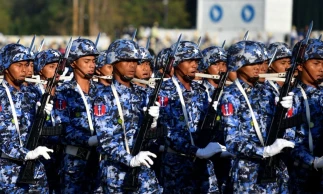
Critics of army rule in Myanmar stage a silent strike against upcoming election
Opponents of Myanmar’s military administration on Wednesday carried out a coordinated silent strike, urging citizens to remain indoors as a symbolic rejection of national elections slated for later this month.
The protest took place despite the risk of severe punishment for any action deemed to interfere with the polls. The junta has already filed legal cases against 10 prominent pro-democracy activists who last week held a rare flash-mob demonstration in Mandalay, Myanmar’s second-largest city.
Critics argue that the December 28 election lacks credibility, saying the process is designed to provide a veneer of legitimacy to the military, which toppled the elected government of Aung San Suu Kyi in February 2021.
The General Strike Coordination Body, a leading non-violent resistance organization, called for citizens to observe a “silent strike” on Wednesday. People were asked to remain inside homes, offices or workplaces between 10 a.m. and 3 p.m. to mark International Human Rights Day. Similar silent protests have periodically taken place since the 2021 takeover.
Photos circulating on social media showed unusually quiet streets in Yangon, the country’s commercial hub, and in several other cities.
Meanwhile, the state-run Myanma Alinn newspaper reported that authorities were seeking the arrest of the 10 activists under provisions of a new election law that impose up to 10 years’ imprisonment for disrupting the electoral process.
The activists are accused of distributing anti-election leaflets in a crowded Mandalay market on December 3. Their brief, spontaneous rally drew significant attention because public demonstrations in Mandalay have become nearly impossible under heavy security and routine crackdowns. Many participants made no attempt to conceal their identities as they chanted slogans and scattered flyers.
Those charged include well-known activists Tayzar San, Nan Lin and Khant Wai Phyo. They had urged the public to reject the polls, oppose the military’s conscription law and demand the release of political detainees.
Tayzar San — a doctor-turned-activist who organized the first major anti-military protest in Mandalay days after the 2021 coup — has been a key figure in the civil resistance. An arrest warrant has been pending against him for years.
Speaking to AP following last week’s protest, he said the public’s participation demonstrates that “even after five years, people have not become passive nor surrendered under the repressive mechanisms of the military dictatorship.”
Independent Myanmar media, including the Democratic Voice of Burma, reported earlier that authorities had warned shop owners of arrest if they participated in Wednesday’s silent shutdown.
5 months ago

Thailand-Cambodia clashes displace 5 lakh; evacuees recount escape
Renewed fighting along the Thailand-Cambodia border has forced hundreds of thousands of residents to flee their homes, with evacuees describing emotional and rushed escapes.
Amnat Meephew, 73, had only moments to gather his clothes before leaving his home just a few kilometers from the border, marking the second mass displacement in four months. “Sometimes when I think about it, I tear up. Why are Thais and Cambodians, who are like siblings, fighting?” he said, his voice breaking.
The clashes, which erupted Monday, disrupted a ceasefire brokered by U.S. President Donald Trump after July’s fighting, which left dozens dead on both sides. Thai officials reported around 400,000 evacuees, while Cambodia said more than 127,000 people were displaced.
In Thailand’s northeastern Surin province, many residents left preemptively after local leaders issued warnings following a brief skirmish at the border on Sunday. Evacuees took shelter in university halls and tents, with music and volunteer-led activities helping children cope. Health teams monitored their wellbeing.
Thidarat Homhual, who fled her home 15 kilometers from the border, recalled leaving her pets behind. “Although no one wants to adjust to living like this, I’ll just go with the flow, otherwise it would be too stressful,” she said from a gymnasium housing over 500 people.
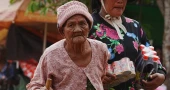
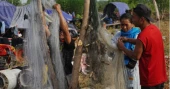
Across the border, Cambodian evacuees sought refuge in open fields, using tents or makeshift shelters anchored to trucks. Families huddled around small stoves to cook and keep warm amid dropping temperatures. Loueng Soth, who fled with her seven relatives, described sleeping on the ground and praying for an end to the fighting.
Thai Chea, displaced just hundreds of meters from the fighting, said evacuees long for a swift return home. “I want the war to end so that I can go back to my home, do my farming work, and take care of my dogs and chickens,” he said.
With no resolution in sight, thousands on both sides continue to endure harsh conditions as the conflict shows little sign of abating.
5 months ago

Cambodia vows fierce resistance as border fighting with Thailand escalates
Cambodia has pledged a strong fight against Thailand as renewed clashes along the two nations’ border forced tens of thousands of people to flee their homes on Tuesday.
The escalation follows a skirmish Sunday that injured two Thai soldiers and disrupted a U.S.-brokered ceasefire from July, which had ended territorial fighting that killed dozens and displaced more than 100,000 civilians.
Thai Prime Minister Anutin Charnvirakul said Cambodia had yet to seek negotiations, adding that military operations would continue to protect sovereignty and public safety. Cambodia’s Senate President Hun Sen, who remains the de facto leader, said his country had refrained from retaliation Monday but began firing back overnight. “Cambodia wants peace, but is forced to defend its territory,” he said.
Both militaries reported attacks on their positions, including artillery, rockets, and drone strikes. Cambodia said the new fighting killed seven civilians and wounded 20, while Thailand reported three soldier deaths. Thai airstrikes along the border continued as defensive operations.
Evacuations are underway on both sides. In Thailand, shelters in Surin province host over 3,600 people, with nearly 500 temporary shelters across four provinces accommodating 125,838 individuals. Cambodia has evacuated almost 55,000 people, with numbers rising.
The countries share a long history of border disputes, often over territory housing ancient temples. Cambodia accused Thai forces of damaging Ta Krabey temple, while Thailand claimed Cambodian rockets targeted its northeastern province. Independent verification was not possible.
Cambodia and Thailand escalate border fighting, tens of thousands flee
The July ceasefire, brokered by Malaysia under pressure from former U.S. President Donald Trump, appears unheeded. Trump said Tuesday he would intervene to stop the renewed fighting. Meanwhile, U.S. Secretary of State Marco Rubio called for both nations to remove heavy weapons, coordinate landmine clearance, and uphold prior agreements.
Disputes over prisoners and landmines continue to fuel tension. Thailand holds 18 Cambodian detainees taken when the July truce began, and accuses Cambodia of laying new mines that have injured soldiers. Cambodia counters that the mines are remnants from past conflicts.
Source: AP
5 months ago

Japan evaluates damage after 7.5 magnitude quake
Japan is assessing damage and warning residents of possible aftershocks after a 7.5 magnitude earthquake struck late Monday, causing injuries, minor damage, and a tsunami along the Pacific coast.
At least 34 people were injured, one seriously, mostly by falling objects, according to the Fire and Disaster Management Agency. The quake occurred around 11:15 p.m. about 80 kilometers off Aomori prefecture, with a depth of 44 kilometers, the U.S. Geological Survey said.
A tsunami of up to 70 centimeters hit Kuji port in Iwate prefecture, while other areas experienced waves up to 50 centimeters. Most power outages affecting around 800 homes were restored by Tuesday morning, and Shinkansen trains resumed operation. About 480 residents took shelter at Hachinohe Air Base, and 18 defense helicopters were deployed for assessments.
7.5-magnitude earthquake in northern Japan injures 33 and generates 2-foot tsunami
No abnormalities were reported at nuclear facilities, though 450 liters of water spilled at the Rokkasho reprocessing plant’s spent fuel cooling area. The Japan Meteorological Agency warned of potential aftershocks and a slightly increased risk of a magnitude 8 quake along the northeast coast.
Prime Minister Sanae Takaichi emphasized prioritizing public safety and urged citizens to remain vigilant.
Source: AP
5 months ago
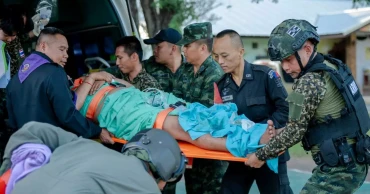
Cambodia and Thailand escalate border fighting, tens of thousands flee
Cambodia vowed a fierce response to Thailand as fighting resumed along their shared border, forcing tens of thousands to evacuate. The clashes reignited after a Sunday skirmish injured two Thai soldiers, breaking a ceasefire established in July. Over five days of earlier fighting, dozens were killed and more than 100,000 civilians displaced.
Cambodia’s Senate President Hun Sen said Monday the country initially refrained from retaliating but launched counterattacks overnight, targeting Thai forces with artillery, rockets, and drones. Thailand, which carried out defensive airstrikes along the frontier, reported three soldiers killed, while Cambodia confirmed seven civilian deaths and 20 injuries. Both sides blamed each other for initiating the conflict.
Thai Prime Minister Anutin Charnvirakul stated that Cambodia had not contacted Thailand for negotiations, signaling continued operations to defend sovereignty. Hun Sen emphasized Cambodia was compelled to fight to protect its territory.
Evacuations have been extensive. Thailand set up nearly 500 temporary shelters in four provinces, hosting 125,838 people, with others staying with relatives. In Cambodia, over 55,000 have been relocated to safer areas. Evacuees described fleeing amid shelling, carrying only essential belongings.
The two countries share a history of border tensions, with disputes over territory hosting ancient temples. Previous ceasefire agreements, brokered by Malaysia and supported by U.S. pressure, called for removing heavy weapons, halting disinformation, and restoring trust. Yet, compliance has been incomplete. Cambodia accuses Thailand of holding 18 prisoners from July’s ceasefire, while Thailand alleges new Cambodian land mines have caused injuries.
The recent flare-up underscores the fragility of peace efforts and deep-rooted animosity between the neighbors, with civilians bearing the brunt of the renewed violence.
5 months ago

US to allow Nvidia H200 chip shipments to China amid national security concerns
The United States will permit exports of Nvidia’s H200 AI chips to China, with a 25% fee collected on sales, President Donald Trump announced Monday.
The move aims to balance maintaining U.S. leadership in AI technology while addressing national security concerns over advanced chip transfers to China. Trump said the same approach will apply to other AI chipmakers, including AMD and Intel, reports Reuters.
The decision follows debate over whether restricting Nvidia and competitors from selling to China would help U.S. global dominance or spur Chinese self-reliance in AI. Nvidia shares rose 2% in after-hours trading following Trump’s announcement, with the U.S. Commerce Department finalizing details. Trump stated the arrangement includes security vetting before exports, and that the latest, faster Blackwell chips will not be part of the deal.
The H200 is nearly six times more powerful than the H20 chips previously allowed for export. Critics, including several Democratic senators and U.S. Representative John Moolenaar, warned that the decision could strengthen China’s military and industrial capabilities. They expressed concern that Chinese firms could copy or mass-produce the technology, undercutting U.S. firms.
Chinese regulators have previously cautioned domestic companies against using downgraded Nvidia chips like the H20 and L20. Analysts expect Beijing to gradually relax its stance toward Nvidia, while continuing long-term efforts to develop its own advanced AI chips. China’s domestic AI chip industry includes firms such as Huawei, Cambricon, and Moore Threads.
Nvidia welcomed the decision, calling it a balance between commercial interests and national security. The Trump administration sees the H200 export as a compromise, allowing sales to vetted commercial customers while protecting U.S. strategic interests and jobs in the AI sector.
5 months ago

A fire in an office building in Indonesia's capital kills at least 17 people
A fire swept through a seven-story office building in central Jakarta on Tuesday, killing at least 17 people, police said.
Thick black smoke rose over the area as flames quickly engulfed the structure, triggering panic among residents and office workers in the densely populated neighborhood.
5 months ago

Japan issues tsunami alert after 7.6 quake
A powerful earthquake with a preliminary magnitude of 7.6 struck northeastern Japan late Monday night (December 08, 2025), prompting a tsunami warning for wide stretches of the Pacific coastline, according to the Japan Meteorological Agency (JMA).
The quake struck at 11:15 p.m. local time at a depth of 50 km and registered upper 6 on Japan’s seismic intensity scale of 7 in the hardest-hit areas, the agency said.
Read more: Earthquake: Matlab Bridge crack triggers fears as thousands cross every day
Tsunami warnings have been issued for coastal regions of Hokkaido, Aomori and Iwate prefectures, where waves as high as 3 meters are expected. The epicenter was located off the eastern coast of Aomori at 41.0 degrees north latitude and 142.3 degrees east longitude.
A tsunami advisory was also issued for Miyagi and Fukushima prefectures following the strong tremor. Authorities urged residents in the warned areas to move to higher ground immediately as aftershocks are likely.
Read more: Earthquake Alerts: Best Free Mobile Apps in 2025-26
5 months ago