Asia

South Korea moves to arrest dozens repatriated from Cambodia over online scam links
South Korean authorities are seeking arrest warrants for most of the 64 nationals recently repatriated from Cambodia over allegations of involvement in online scam operations, police said Monday.
The 64 individuals had been detained in Cambodia over recent months for allegedly working in online fraud syndicates and were flown back to Seoul on a chartered flight Saturday. Upon arrival, they were taken into custody for questioning to determine whether they had voluntarily joined the scam networks or were coerced into working there.
According to the Korean National Police Agency, state prosecutors have requested arrest warrants for 58 of the returnees. They are accused of carrying out various forms of cyber fraud — including romance scams, fake investment pitches and voice phishing — primarily targeting South Koreans. Courts are expected to decide on the warrants in the coming days.
Police said five of the 64 have been released but declined to disclose details, citing ongoing investigations. Four of the returnees told investigators they had been beaten and forced to work in scam centers in Cambodia.
The surge in online scam operations, many based in Southeast Asia, has created two major victim groups — those coerced into working in scam centers under threat of violence and the individuals defrauded by such operations. International monitoring groups estimate that criminal syndicates earn billions of dollars annually from these scams.
Public calls for stronger government action intensified after a 22-year-old South Korean student was found dead in Cambodia in August. Authorities said he was lured by a friend into providing his bank account to a scam ring and was later tortured to death.
The United Nations and other agencies estimate that more than 100,000 people have been trafficked into scam centers in Cambodia, with similar numbers in Myanmar and tens of thousands elsewhere. Seoul officials believe around 1,000 South Koreans remain trapped in such centers in Cambodia.
Last week, South Korea imposed a travel ban on certain Cambodian regions and sent a government delegation to Phnom Penh to coordinate efforts against human trafficking and online fraud.
Interpol recently reported that scam networks have expanded beyond Southeast Asia to regions including the Middle East, West Africa and Central America, with victims now being trafficked from as far as South America and Western Europe.
Source: AP
7 months ago
Afghan, Pakistani officials meet in Doha to address border violence
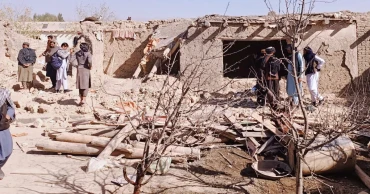
Afghan and Pakistani delegations were in the Qatari capital, Doha, on Saturday, for talks on defusing the deadliest crisis between them in several years, after more than a week of fighting killed dozens of people and injured hundreds on both sides.
Both governments sent their defense ministers to lead the talks, which, Pakistan said, would focus on “immediate measures to end cross-border terrorism emanating from Afghanistan and restore peace and stability along the border.”
Each country says it is responding to aggression from the other. Afghanistan denies harboring militants who carry out attacks in border areas.
Regional powers, including Saudi Arabia and Qatar, have called for calm, as the violence threatened to further destabilize a region where groups including the Islamic State group and al-Qaida are trying to resurface.
A 48-hour ceasefire intended to pause hostilities expired Friday evening. Hours later, Pakistan struck across the border.
Pakistani security officials confirmed to The Associated Press that there were strikes on two districts in Afghanistan's eastern Paktika province.
The targets were hideouts of the militant Hafiz Gul Bahadur group, according to the officials who spoke on condition of anonymity because they were not authorized to talk to the media. One said the operation was a direct response to the suicide bombing of a security forces compound in Mir Ali, in Pakistan’s Khyber Pakhtunkhwa province a day earlier.
The Pakistani Air Force raids killed dozens of armed fighters and there were no civilian deaths, they said.
But Afghan officials said the aerial assaults killed at least 10 civilians, including women, children and local cricketers. The attacks prompted the national cricket board to boycott an upcoming series in Pakistan.
On Saturday, several thousand people attended funeral prayers in Paktika. They sat in the open air as loudspeakers broadcast sermons and condemnation.
Zabihullah Mujahid, the Taliban government’s chief spokesman, in a statement, criticized the “repeated crimes of Pakistani forces and the violation of Afghanistan’s sovereignty.”
Such acts were deemed provocative and viewed as “deliberate attempts” to prolong the conflict, he added.
The two countries share a 2,611-kilometer (1,622-mile) border known as the Durand Line, but Afghanistan has never recognized it.
Pakistan is grappling with surging militancy, especially in areas bordering Afghanistan. It also accuses its nuclear-armed neighbor and rival India of backing armed groups, without providing any evidence.
Pakistan's army chief, Asim Munir, urged Afghans to choose “mutual security over perpetual violence and progress over hardline obscurantism.”
“The Taliban must rein in the proxies who have sanctuaries in Afghanistan,” he told an audience on Saturday at the Pakistan Military Academy in Kakul, Khyber Pakhtunkhwa.
7 months ago

China Eastern Airlines to resume flights to India after five-year halt
State-owned China Eastern Airlines will resume direct flights between Shanghai and Delhi from November 9, marking the restoration of air links between China and India after a five-year suspension, the airline’s website shows. The resumption comes amid a diplomatic thaw between the two Asian giants, largely influenced by aggressive trade policies pursued by the United States.
According to the airline’s online booking platform, the flights will operate three times a week — on Wednesdays, Saturdays, and Sundays. China Eastern Airlines did not immediately respond to Reuters’ request for comment.
Earlier this month, India’s Ministry of External Affairs announced that commercial flights between the neighbouring countries would restart after a five-year freeze. The announcement followed Indian Prime Minister Narendra Modi’s first visit to China in over seven years for a Shanghai Cooperation Organisation (SCO) summit, where both sides discussed boosting trade ties. Modi also raised concerns about India’s growing bilateral trade deficit with China.
India and China had suspended direct flights in 2020 during the COVID-19 pandemic. The services did not resume after deadly clashes along their Himalayan border later that year, which left four Chinese and 20 Indian soldiers dead — the worst violence between the neighbours in decades.
India’s largest airline, IndiGo, had previously announced plans to start daily nonstop flights between Kolkata and Guangzhou. Guangzhou Baiyun International Airport said at the time it would encourage more direct routes, including between Guangzhou and Delhi.
The diplomatic rapprochement comes amid mounting trade tensions with the United States. In September, US President Donald Trump raised tariffs on Indian imports to 50 percent, citing India’s continued purchase of Russian oil. He also called on the European Union to impose 100 percent tariffs on China and India as part of efforts to pressure Moscow to end its war in Ukraine.
Source: Agency
7 months ago

Afghan and Pakistani delegations head to Doha for crisis talks
Afghan and Pakistani delegations are traveling to Doha, Qatar, to ease tensions following the deadliest crisis between the two countries in recent years, after more than a week of clashes left dozens dead and hundreds injured on both sides.
The Taliban government said Saturday that the Afghan delegation includes the defense minister and the head of the national intelligence agency. Pakistan’s delegation was scheduled to depart the same day, according to the national broadcaster PTV, which did not provide further details.
Both countries accuse each other of aggression. Pakistan alleges that Afghanistan is harboring militants who launch attacks in border regions, a claim rejected by the Taliban.
A 48-hour ceasefire intended to halt hostilities expired Friday evening, and hours later, Pakistan conducted strikes across the border. Pakistani security officials confirmed to The Associated Press that air raids targeted districts in Afghanistan’s eastern Paktika province, including Urgun and Barmal.
The strikes focused on hideouts of the militant Hafiz Gul Bahadur group, according to officials who spoke on condition of anonymity. Pakistani Air Force raids reportedly killed dozens of armed fighters, with no civilian casualties, they said. One official added that the operation was a direct response to a suicide bombing targeting a Pakistani security forces compound in Mir Ali, Khyber Pakhtunkhwa, the previous day.
However, Afghan officials reported that at least 10 civilians, including women and children, were killed in the attacks. The assaults also prompted Afghanistan’s national cricket board to boycott an upcoming series in Pakistan.
Zabihullah Mujahid, chief spokesman for the Taliban government, condemned what he described as “repeated crimes of Pakistani forces and violations of Afghanistan’s sovereignty,” calling the attacks “provocative acts and deliberate attempts” to prolong the conflict.
Source: AP
7 months ago
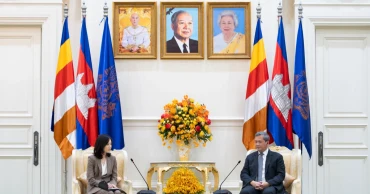
South Korea to airlift scam suspects from Cambodia after student’s death
Around 60 South Koreans accused of involvement in online scam operations in Cambodia will be flown home on Saturday aboard a chartered plane, officials said.
The move follows the death of a South Korean student allegedly forced to work at a scam center in Cambodia, sparking outrage and prompting Seoul to send a delegation to Phnom Penh for urgent talks.
South Korea’s national security director Wi Sung-lac said the repatriation flight is scheduled to depart Phnom Penh around midnight local time. Once back home, the returnees will face questioning to determine whether they were coerced into scam work or joined willingly through fake job offers.
Authorities estimate Cambodia’s scam centers employ about 200,000 people, including roughly 1,000 South Koreans. Many are trapped under threats of violence, while others help orchestrate global online fraud schemes involving fake investments, gambling, and romance scams.
Following the student’s death, South Korea imposed a travel ban on parts of Cambodia, including Bokor Mountain in Kampot province, where his body was found. Cambodian Prime Minister Hun Manet has urged Seoul to lift the restriction.
President Lee Jae Myung has also ordered a crackdown on false job ads across Southeast Asia, as scam networks continue to spread beyond the region, Interpol warns.
7 months ago
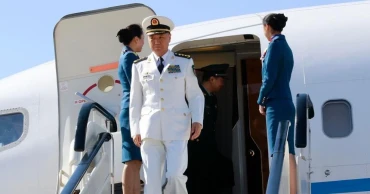
China expels top general He Weidong, eight others in sweeping military corruption purge
China’s second-highest ranking general, He Weidong, along with eight senior military officials, has been expelled from the Communist Party and the armed forces over alleged serious corruption and disciplinary violations, the Defense Ministry announced Friday.
Ministry spokesperson Zhang Xiaogang said the officials were accused of grave misconduct involving large sums of money, calling the offenses “of grave nature, with extremely harmful consequences.”
He Weidong, vice-chair of the powerful Central Military Commission (CMC) and a member of the 24-member Politburo, is the most senior figure to be removed in President Xi Jinping’s latest anti-graft campaign within the military. He has not appeared publicly for several months.
He previously headed the Eastern Theater Command, responsible for military operations targeting Taiwan if conflict were to erupt. Among those expelled was Miao Hua, director of the CMC’s political work department, who was already under investigation last year.
The announcement comes days before Xi and top party leaders convene in Beijing for a key closed-door meeting, known as the fourth plenum, to set national goals for the next five years.
Xi’s long-running anti-corruption drive has previously ousted hundreds of senior officers, including two former defense ministers — Li Shangfu and Wei Fenghe — accused of corruption last year.
7 months ago
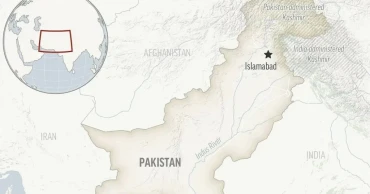
Suicide blast hits Pakistan security compound near Afghan border amid fragile ceasefire
A suicide car bomber linked to the Pakistani Taliban attacked a security forces compound in Mir Ali, North Waziristan, near the Afghan border on Friday, sparking a fierce gun battle that left at least six militants and one soldier dead, police said.
Local police official Irfan Ali said the blast damaged nearby houses in the area. The attackers, armed with guns, attempted to storm the compound after the explosion, according to another officer, Afzal Khan. The military has yet to comment on the incident.
The assault comes as Pakistan and Afghanistan observe a temporary ceasefire, set to expire Friday evening, after deadly cross-border clashes earlier this week that killed dozens on both sides. The truce was mediated by “friendly countries,” with local media reporting that Qatar has offered to host peace talks in Doha—though neither government has confirmed this.
Foreign Ministry spokesperson Shafqat Ali Khan told reporters that Islamabad wants Kabul to prevent militants from using Afghan territory for attacks inside Pakistan. He said the ceasefire remains intact and declined to speculate on an extension.
Pakistan has seen a sharp rise in militant attacks this year, mostly blamed on the Tehrik-e-Taliban Pakistan (TTP). The military claims to have killed 88 militants in operations this week alone.
7 months ago

UN urges Pakistan, Afghanistan to end deadly border clashes
The United Nations has called on Pakistan and Afghanistan to ensure “a lasting end to hostilities” and protect civilians after days of intense cross-border fighting left dozens dead and hundreds injured on both sides.
The violence, the deadliest since the Taliban’s takeover of Afghanistan in 2021, has raged since October 10, with both countries accusing each other of provocation. A ceasefire was agreed on Wednesday following appeals from regional powers amid fears of wider instability in an area where Islamic State and al-Qaida groups are active.
The UN Assistance Mission in Afghanistan (UNAMA) welcomed the truce, reporting at least 17 civilians killed and 346 injured in Spin Boldak, while documenting further casualties in other provinces.
Pakistan has yet to release civilian figures but said security forces killed dozens of militants who crossed from Afghanistan into Mohmand district on Thursday. The two countries share the 2,611-km-long Durand Line, which Kabul has never recognized.
7 months ago
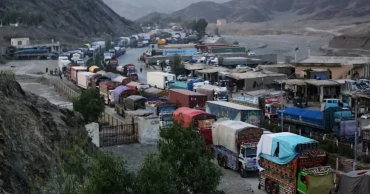
UN urges Pakistan and Afghanistan to end hostilities, protect civilians
The United Nations on Thursday called on Pakistan and Afghanistan to bring “a lasting end to hostilities” after days of cross-border fighting left dozens dead and hundreds injured.
The recent clashes mark the deadliest confrontation between the two neighbors since 2021, when the Taliban took control of Afghanistan following the collapse of the Western-backed government. Violence escalated from Oct. 10, with both sides claiming retaliation against armed provocations from the other. On Wednesday, Pakistan and Afghanistan agreed to a ceasefire.
The truce came after appeals from regional powers, amid fears that the fighting could destabilize a region where extremist groups, including the Islamic State and al-Qaida, are attempting to regroup. No overnight clashes were reported, though key border crossings remained closed on Thursday.
The UN Assistance Mission in Afghanistan (UNAMA) welcomed the ceasefire and continues to assess casualties. According to initial reports, at least 17 civilians were killed and 346 injured in Spin Boldak in southern Afghanistan on Wednesday. UNAMA also documented at least 16 civilian casualties in other provinces during earlier clashes.
Pakistan, Afghanistan agree to 48-hour ceasefire
“UNAMA calls on all parties to bring a lasting end to hostilities to protect civilians and prevent further loss of life,” the mission said.
Pakistan has not released figures on civilian casualties on its side and has repeatedly accused Afghanistan of sheltering militants — a charge denied by the Taliban. The two countries share a 2,611-kilometer (1,622-mile) border, known as the Durand Line, which Afghanistan has never formally recognized.
Source: AP
7 months ago

Hong Kong passes bill to regulate ride-hailing platforms like Uber
Hong Kong’s legislature on Wednesday approved a new law to regulate online ride-hailing services, requiring platforms such as Uber and their drivers to obtain licenses after years of pressure from the city’s taxi industry.
According to officials, the first licensed platforms are expected to begin operations by late 2026.
Under the new law, the city’s transport commissioner will grant licenses based on a company’s experience, financial capacity, and investment plans. Licensed operators must ensure proper service quality and verify that all vehicles and drivers on their platforms hold valid permits.
Drivers must be at least 21 years old, have held a private car license for at least one year, and have no major traffic convictions within the past five years. They will also be required to pass a test and complete a pre-service training course.
Uber Hong Kong welcomed the move, calling it “a significant milestone in integrating ridesharing into the city’s transport system” and in providing clear rules for both riders and drivers.
Police have previously cracked down on Uber drivers for operating without permits, and more than two dozen drivers were fined in 2018. Taxi operators have long opposed ride-hailing apps, arguing that they threaten their business.
Uber, which began operating in Hong Kong in 2014, has faced repeated legal and regulatory hurdles but remains popular among commuters dissatisfied with taxi services.
Authorities said a cap on the number of ride-hailing vehicles will be proposed in a supplementary regulation next year before license applications open.
Those operating ride-hailing services without a license will face fines of up to HK$1 million (about US$128,600) and up to one year in prison, the bill states.
7 months ago