Asia

Etihad to begin direct flights between Abu Dhabi and Kabul
Abu Dhabi-based airline Etihad announced on Friday that it will start direct flights to Kabul, becoming the latest international carrier to operate routes to Afghanistan’s capital.
The airline said the new service, set to begin in December with three weekly flights, aims to meet “growing demand” for travel between the United Arab Emirates and Afghanistan while boosting “trade, travel, and community ties.”
Etihad, which posted a record profit of $476 million in 2024, said around 300,000 Afghans currently live and work in the UAE — one of the Gulf’s largest Afghan communities. The new connection, it added, will strengthen economic and social relations and enhance Abu Dhabi’s regional connectivity.
Turkish Airlines and FlyDubai already operate direct flights to Kabul.
The UAE has deepened its relationship with Afghanistan’s Taliban-led government in recent years. In June 2024, Emirati President Sheikh Mohammed bin Zayed Al Nahyan met with senior Taliban leader Sirajuddin Haqqani, who remains on a U.S. wanted list for deadly attacks. Later that year, the UAE formally accepted a Taliban-appointed ambassador.
Despite ongoing Western isolation over the Taliban’s restrictions on women and girls, the regime has expanded ties with regional powers. Russia became the first nation to recognize the Taliban government in July, while India announced Friday that it would upgrade its technical mission in Kabul to a full embassy.
7 months ago

China, Russia, Vietnam leaders attend North Korea’s 80th party anniversary
North Korea is set to mark the 80th anniversary of its ruling Workers’ Party on Friday, with high-profile delegations from China, Russia, Vietnam, and Laos joining the celebrations in Pyongyang.
The event highlights Pyongyang’s growing alignment with key allies Beijing and Moscow amid its deepening isolation from the West. Both China and Russia have sent senior officials to the commemorations, underscoring their support for Kim Jong Un’s regime.
Chinese Premier Li Qiang, one of the seven members of the Communist Party’s Politburo Standing Committee and China’s No. 2 leader after President Xi Jinping, arrived in Pyongyang on Thursday, according to China’s Xinhua News Agency. His visit marks the highest-level Chinese trip to North Korea since 2019.
Russia has dispatched Dmitry Medvedev, former president and current deputy head of the Security Council, to attend the celebrations, North Korea’s KCNA reported. The move reflects deepening military and political cooperation between Moscow and Pyongyang, with North Korea accused of sending troops and ammunition to support Russia’s war in Ukraine.
Vietnam’s Communist Party General Secretary To Lam, the country’s top leader, also arrived Thursday and was welcomed personally by Kim Jong Un in Pyongyang. His visit coincides with the 75th anniversary of Vietnam–North Korea diplomatic relations.
Laos’ President Thongloun Sisoulith, who also serves as general secretary of the Lao People’s Revolutionary Party, is expected to attend as well, KCNA said earlier.
Although North Korea has not disclosed details of the celebration events, the high-level international attendance signals Pyongyang’s intent to showcase its strong ties with its remaining allies — particularly China and Russia.
7 months ago

24 killed as Myanmar army paraglider bombs Buddhist festival
At least 24 people were killed and 47 others injured when Myanmar’s military dropped two bombs from a motorised paraglider on a crowd protesting against the junta, a spokesperson for the government-in-exile told BBC Burmese.
The attack took place on Monday evening as around 100 people gathered in Chaung U township in central Myanmar to mark a national holiday.
Since the 2021 military coup that sparked a civil war with armed resistance groups and ethnic militias, thousands have been killed and millions displaced. After losing control of more than half the country, the military has recently regained ground through an increasingly brutal campaign of airstrikes and heavy shelling.
Monday’s incident was one of hundreds of air raids carried out this year by Myanmar’s armed forces. The junta has recently bolstered its air capabilities with new drones purchased from China—now openly backing the regime—and technical assistance from Russia.
Beijing has also been pressuring rebel groups along its border with Myanmar to halt arms supplies to opposition forces. As a result, insurgents have been forced to retreat from many territories gained over the past two years.
The latest attack targeted a township in the Sagaing region, where people had gathered for the Thadingyut full moon festival to hold a candlelight vigil. The event was organised as a peaceful protest against military conscription and the upcoming national election, and also called for the release of political prisoners, including Aung San Suu Kyi, the deposed and jailed democratic leader.
Sagaing has been a major flashpoint in the ongoing conflict, with much of the region under the control of volunteer militias known as the People’s Defence Force (PDF). These groups also run local administrations. A local PDF official told BBC Burmese they had received warnings about a possible aerial strike during Monday’s gathering.
They tried to disperse the crowd, but the paramotors—locally known as paragliders—arrived earlier than expected, he said. “It all happened in seven minutes,” he added, saying he was injured in the explosion while several others around him were killed.
Locals said many bodies were unrecognisable after the blast. “Children were completely torn apart,” a woman who helped organise the event told AFP. She said she was not present during the attack but attended funerals the next day, adding they were still “collecting body parts.”In a statement on Tuesday, Amnesty International said the junta’s use of motorised paragliders to strike civilian areas was part of a “disturbing trend.”
BBC Burmese recently reported that the military had increasingly turned to paramotors due to shortages of aircraft, helicopters, and jet fuel. Although international sanctions have made it difficult for the junta to acquire weapons, recent support from China and Russia appears to have shifted the balance.
Joe Freeman, Amnesty International’s Myanmar researcher, said the attack “should serve as a gruesome wake-up call that civilians in Myanmar need urgent protection.” He also urged the Association of Southeast Asian Nations (Asean), which meets later this month, to “increase pressure on the junta and revise an approach that has failed the Myanmar people for almost five years.”
Myanmar is set to hold general elections in December—the first since the coup—but critics argue the polls will neither be free nor fair. Many opposition parties have been banned, and voting is expected to take place only in areas under military control.
7 months ago

Landslide in northern India hits bus, kills at least 15
At least 15 people were killed late Tuesday after a massive landslide struck a passenger bus in India’s northern state of Himachal Pradesh, officials said.
The bus was traveling through a hilly area near Bilaspur district when it was hit by debris following several days of torrential rain. Police said there were around 20 to 25 passengers on board, and the victims included nine men, four women, and two children.
Three injured children were rescued and taken to a local hospital, according to a statement from the office of Chief Minister Sukhvinder Singh Sukhu, the state’s highest elected official.
Rescue operations continued into Wednesday to locate several missing passengers feared dead, police said.
Intermittent heavy rains since Monday have left mountain slopes dangerously unstable across the region.
Indian President Droupadi Murmu and Prime Minister Narendra Modi expressed condolences to the victims’ families and pledged government support for relief efforts.
Extreme rainfall this year has triggered deadly floods and landslides across South Asia — including India, Pakistan, Bangladesh, Bhutan, Sri Lanka, Afghanistan, the Maldives, and Nepal.
In August, flash floods wiped out an entire village in India’s northern state of Uttarakhand, while at least 44 people were killed in neighboring Nepal over the weekend due to mudslides and floods caused by severe rainfall.
The weekend’s downpour, arriving near the end of Nepal’s monsoon season, also flooded parts of Kathmandu and forced the cancellation of all domestic flights on Saturday.
Experts warn that human-driven climate change is intensifying South Asia’s monsoon patterns. Once predictable, the seasonal rains — typically spanning June to September and again from October to December — now occur in erratic, extreme bursts, bringing torrential downpours followed by prolonged dry spells.
Source: AP
7 months ago

Japan stocks hit record as LDP names pro-business Sanae Takaichi new leader
Japanese stocks surged to record levels after the ruling Liberal Democratic Party (LDP) elected Sanae Takaichi as its new leader, positioning her to potentially become Japan’s first female prime minister.
The benchmark Nikkei 225 index jumped 4.75% on Monday, closing above 47,000 for the first time. Takaichi, a veteran politician who has served as minister for economic security and internal affairs, is known for her pro-business stance, advocating higher government spending and low borrowing costs.
Investors reacted positively to her victory, with shares in real estate, technology, and heavy industry companies rising sharply. However, the yen weakened, hitting a record low against the euro and dropping 1.7% against the US dollar. Japan economist Jesper Koll described the market movement as a “knee-jerk reaction” to her potential premiership.
Takaichi, a long-time admirer of former UK Prime Minister Margaret Thatcher, has championed the late Shinzo Abe’s economic policies, known as Abenomics, emphasizing public spending and cheap credit. If confirmed as prime minister later this month, she will face challenges including a sluggish economy, slow wage growth, and negotiations on tariffs with the US under President Donald Trump.
Her pro-business agenda is expected to benefit Japanese companies but could put further pressure on the yen amid rising national debt.
Source: BBC
7 months ago
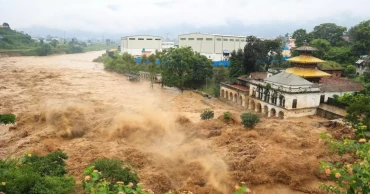
Nepalese villages swept away by heavy rainfall and landslides, leaving at least 44 dead
Severe rainfall triggered landslides, flooding, and a lightning strike across Nepal on Sunday, leaving at least 44 people dead and five others missing, authorities said.
The hardest-hit area was the eastern mountain district of Illam, where 37 people died after entire villages were swept away. Six members of a single family were killed when a landslide buried their home while they slept, officials said. Heavy rain since Friday has hampered rescue operations, washing away roads and blocking access to many affected villages.
The government deployed helicopters to evacuate those needing medical attention and mobilized ground troops to move residents to safer locations. Neighboring districts also reported casualties: one person died in a landslide, three were killed by lightning, and three more perished in flooding in southern Nepal.
Authorities had issued severe rainfall warnings for eastern and central regions from Saturday through Monday, shutting down major highways and grounding domestic flights on Saturday. By Sunday, roads were partially reopened, though traffic remained heavy as hundreds of thousands returned to Kathmandu after celebrating Dashain, Nepal’s largest festival.
While some areas near rivers in the capital experienced flooding, no major damage or casualties were reported there. The government declared a national holiday until Monday due to the extreme weather.
Last year, similar monsoon-related landslides and floods killed 224 people and injured 158. The weekend’s heavy rainfall occurred at the end of Nepal’s monsoon season, which typically runs from June to mid-September.
7 months ago

Indonesia restores TikTok’s operating license after platform shares data from protest period
Indonesia has reinstated TikTok’s operating license after the Chinese-owned social media platform complied with a government request for data related to its live streaming activity during deadly protests in late August.
The country’s Ministry of Communication and Digital Affairs had suspended TikTok’s license on Friday, citing a failure to meet data-sharing obligations as a private electronic system operator. Officials said TikTok initially refused to provide complete user activity data from August 25–30, when nationwide protests erupted over lawmakers’ privileges and police brutality, leaving 10 people dead.
According to the ministry, TikTok had earlier said its internal policies prevented full compliance with the request. The suspension sparked public concern about free speech protections under President Prabowo Subianto, a former general criticized for his role during Indonesia’s dictatorship era.
Alexander Sabar, the ministry’s Director General of Digital Space Supervision, said the government sought the data to identify accounts linked to online gambling that monetized TikTok’s live streaming feature during the unrest. “TikTok has now submitted data related to traffic escalation and monetization activity of its Live during the requested period,” he said Saturday.
Following TikTok’s cooperation, the government lifted the temporary suspension and reactivated its registration as an electronic system provider.
Despite the suspension, TikTok remained accessible in Indonesia throughout Friday. The company said it respects the laws and regulations of countries where it operates and was working with the government “to resolve this issue constructively.”
7 months ago

Typhoon Matmo strengthens, prompting China to evacuate 347,000 people ahead of landfall
Typhoon Matmo intensified as it approached southern China, leading authorities to evacuate around 347,000 people from Guangdong and Hainan provinces ahead of Sunday’s landfall.
The storm, with maximum sustained winds of 151 kph (94 mph) Sunday morning, struck Zhanjiang in Guangdong in the mid-afternoon, prompting China’s National Meteorological Center to issue a red-level typhoon warning, the highest on its scale.
Hainan province, also in the storm’s path, canceled flights, suspended public transport, and closed businesses starting Saturday. Authorities preemptively evacuated 197,856 residents. In Guangdong, 151,000 people were moved from the southwestern coastal areas, and local media reported waves washing over roads in Zhanjiang.
Heavy rainfall is expected, with totals of 100 to 249 mm (3.9 to 9.8 inches) forecasted in parts of both provinces. Macau, outside the direct path of Matmo, canceled schools and tutoring sessions due to adverse weather.
Earlier this week, Matmo passed through the Philippines, affecting more than 220,000 people across northern agricultural plains and mountainous regions. Nearly 35,000 were moved to emergency shelters or relocated to relatives’ homes to avoid flood- and landslide-prone areas. No casualties or major damage were reported.
The storm is expected to continue westward and northward, moving toward northern Vietnam and China’s Yunnan province.
7 months ago

Landslides in eastern Nepal kill 11 amid heavy rainfall warning
At least 11 people were killed and one remains missing after landslides triggered by heavy rainfall struck two villages in eastern Nepal on Sunday, officials said.
Six members of a single family died when a landslide buried their home as they slept, while five others were killed in a neighboring village, said Bholanath Guragai, assistant administrative officer of Illam district. Rescue operations are ongoing, though continuous rain and blocked roads have made access difficult.
Authorities said several other villages have also been affected, with helicopters requested for emergency evacuations. Nepal’s government has issued a severe rainfall warning for the eastern and central regions through Monday, closing highways and grounding all domestic flights on Saturday due to poor visibility.
Floods and landslides from heavy rain kill 8 in Vietnam and Thailand
The disruptions come as hundreds of thousands of people return to Kathmandu following the Dashain festival. Some areas near the capital’s rivers were flooded, but no major casualties were reported.
Last year, similar monsoon-season disasters killed 224 people and injured 158 across the country.
Source: AP
7 months ago
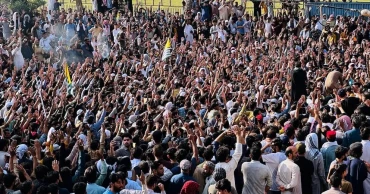
Violent protests end in Pakistan-administered Kashmir after peace deal
Authorities in Pakistan-administered Kashmir have reached a peace agreement with a civil rights alliance, ending days of violent protests that left at least 10 people dead and restoring calm to the region.
Under the deal, the regional government, led by Prime Minister Chaudhry Anwarul Haq, agreed to continue subsidies on wheat and electricity, while also accepting more than three dozen other demands, including reducing the number of ministers and improving health, education, and public services.
Federal Minister Tariq Fazal Chaudhry confirmed on X that the agreement followed two days of talks in Muzaffarabad, the regional capital, and that protesters had dispersed. “The government has accepted all demands of the protesters,” he said.
The breakthrough came after Prime Minister Shehbaz Sharif sent a high-level delegation to Muzaffarabad to negotiate with leaders of the Awami Action Committee. Alliance leader Shaukat Nawaz Mir said he was satisfied with the outcome and thanked Sharif and the government for addressing long-neglected issues.
Sharif welcomed the successful talks, saying public welfare and peace remain his government’s priorities.
Kashmir, the disputed Himalayan territory, is divided between Pakistan and India, both of which claim it in full. Similar protests erupted in 2024, prompting government concessions, though many promises were not fulfilled, according to alliance leaders, who hope the new agreement will be implemented fully and on time.
8 months ago