Asia

Japan’s first female LDP leader Takaichi sparks gender equality concerns
Japan’s new Liberal Democratic Party (LDP) president, Sanae Takaichi, is set to become the country’s next prime minister, raising questions about women’s advancement in a nation already ranked low on global gender equality indices.
At 64, Takaichi is an ultra-conservative figure within the male-dominated LDP and an admirer of former British Prime Minister Margaret Thatcher. She also champions the conservative vision of former Prime Minister Shinzo Abe. Takaichi becomes the first woman to lead the party that has dominated Japan’s postwar politics almost continuously.
Elected to parliament in 1993 from her hometown of Nara, Takaichi has held key positions, including minister of economic security, internal affairs, and gender equality. However, female lawmakers in her party often face marginalization when advocating for diversity and gender equality, and Takaichi has largely maintained traditionalist views endorsed by male party leaders.
Women hold only about 15% of seats in Japan’s lower house, the more powerful parliamentary chamber, and just two of the nation’s 47 prefectural governors are women.
Known for her unconventional past as a heavy-metal drummer and motorbike rider, Takaichi promotes a stronger military, increased fiscal spending for growth, nuclear fusion, cybersecurity, and stricter immigration policies. She has promised to boost female representation in her cabinet, but experts warn her leadership may still hinder women’s advancement, as she must balance loyalty to male power brokers to maintain her position.
Takaichi has supported traditional gender roles for women, yet has recently discussed her own menopausal challenges and emphasized educating men about women’s health to improve workplace and school conditions.
She opposes same-sex marriage, a change allowing married couples to keep separate surnames, and supports male-only succession for the imperial family. Takaichi is also a wartime history revisionist and China hawk, frequently visiting the controversial Yasukuni Shrine. Her positions on history and national security may complicate relations with Beijing and Seoul and pose challenges for LDP’s coalition with the moderate Komeito party.
8 months ago
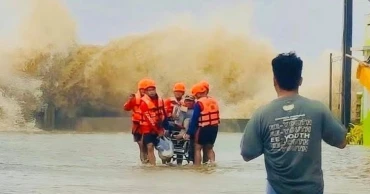
Typhoon hits northern Philippines, hampering disaster relief after quake and storms
Typhoon Matmo struck northern Philippines on Friday, further complicating recovery efforts after a deadly earthquake in the central province and two recent storms.
The typhoon made landfall in Dinapigue town of Isabela province with sustained winds reaching 130 kph (81 mph). It was forecast to move northwest over extensive agricultural valleys and mountainous areas, prompting evacuations in flood- and landslide-prone villages.
Authorities suspended classes in schools, and cargo and fishing vessels were barred from venturing into rough seas along Matmo’s path. The storm is expected to enter the South China Sea on Saturday, moving toward southern China, according to Philippine meteorologists. Hong Kong’s observatory said Matmo is likely to pass near the territory en route to Hainan Island and Guangdong province over the weekend.
Locally called Paolo, Matmo is the 16th tropical cyclone to strike the Philippines this year. The archipelago, located on the Pacific “Ring of Fire,” typically experiences around 20 typhoons and storms annually and is highly susceptible to natural disasters.
The typhoon is not expected to directly affect the southern regions that were hit by a 6.9-magnitude earthquake Tuesday night. The quake, centered in Cebu province, killed at least 72 people and injured more than 550, mostly in the city of Bogo and nearby towns. More than 5,000 homes were damaged, with many residents taking shelter in parks, open fields, and sidewalks due to fears of aftershocks.
Last week, Tropical Storm Bualoi killed at least 37 people in the Philippines and displaced thousands before moving into Vietnam, where it caused 49 fatalities and roughly $485 million in economic losses. Earlier, Super Typhoon Ragasa — the strongest tropical cyclone globally this year — also led to several deaths in the Philippines before hitting southern China.
8 months ago
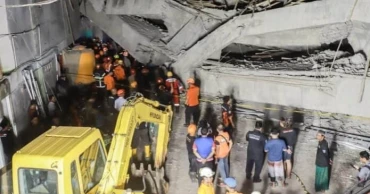
Indonesian rescuers recover more bodies from collapsed school as death toll climbs
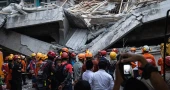
Rescue workers in Indonesia on Friday pulled more bodies from the wreckage of a collapsed school building, with dozens of students still missing and fears that the death toll will continue to rise.
The school building, which was undergoing renovation, crumbled on Monday in Sidoarjo, East Java, trapping hundreds of people gathered in a prayer hall at the al Khoziny Islamic boarding school, an institution more than a century old.
Rescuers had initially used bare hands and simple tools to search for survivors, but by Thursday—after detecting no further signs of life—they deployed heavy machinery fitted with jackhammers to speed up the recovery process.
By Friday evening, five more bodies were recovered, bringing the confirmed death toll to 10. Authorities said more than 50 students remained unaccounted for.
Most of those trapped were boys aged 12 to 19, attending grades seven through 12. Female students, who had been praying in a different section of the school, managed to escape unharmed.
One survivor, 13-year-old Rizalul Qoib, returned to view the rubble of his school. He described hearing what sounded like falling rocks as the floor shook. “I stopped praying and ran,” he said. A slab hit his head, but he managed to crawl through a gap in the debris, guided by a voice and a shaft of light.
Dozens of others survived with serious injuries, including broken bones and head wounds, and remain hospitalized.
Officials said two of the bodies recovered Friday were found inside the prayer hall, while another appeared to be near an exit, as though trying to flee.
Authorities confirmed the building had only been designed for two floors, but school administrators had started adding two more levels illegally. Police believe the old foundation collapsed under the weight of newly poured concrete.
School officials have not commented publicly.
On Friday, rescue crews continued to work under the scorching sun, breaking apart massive slabs of concrete as the odor of decomposing bodies lingered.
Indonesia’s disaster agency chief Suharyanto said recovery efforts should be completed by Saturday.
8 months ago

Indian Army chief warns Pakistan: End state-backed terror or risk losing place in geography
Indian Army Chief General Upendra Dwivedi on Friday issued a stern warning to Pakistan, saying the country must end state-sponsored terrorism or face threats to its very existence in history and geography.
Speaking at an event in Rajasthan, he cautioned that India would not exercise the restraint it did during Operation Sindoor 1.0 if provoked again. “If Pakistan wants to secure its place in world history and geography, it must stop state-backed terror. We will respond more strongly than we did during Operation Sindoor 1.0 if pushed again,” he said.
Pakistan announces ‘Army Rocket Force’ after operation Sindoor
Operation Sindoor, launched on May 7, saw Indian forces carry out strikes in Pakistan-occupied Kashmir and inside Pakistan, killing over 100 militants in retaliation for the April 22 Pahalgam attack that claimed 26 civilian lives.
Pakistan retaliated with drone and missile strikes over the following days, but Indian forces repelled the attacks and safeguarded key sites.
General Dwivedi urged troops to remain on standby, hinting at possible future operations. His comments follow Prime Minister Narendra Modi’s warning that Operation Sindoor remains active and future provocations will face stronger retaliation.
Meanwhile, Air Force chief A P Singh revealed that 8–10 Pakistani fighter jets, including F-16s and JF-17s, were destroyed in the May clashes—while dismissing Pakistan’s claims of downing Indian aircraft as “fascinating tales.”
Source: India Today
8 months ago
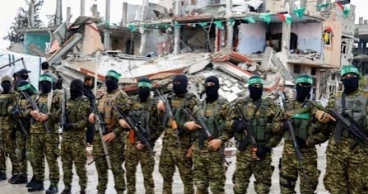
Pakistani forces kill 7 insurgents in raid on militant hideout in Balochistan
Pakistani security forces killed seven insurgents during a raid on a militant hideout in the restive southwestern province of Balochistan, the military said Friday.
The operation took place Wednesday in the remote Sherani district, just a day after a car bomb blast outside the paramilitary headquarters in Quetta killed at least 10 people and injured 30.
Troops exchanged gunfire with the militants before recovering weapons, ammunition and explosives, according to a military statement. The slain fighters were identified as members of “Fitna Al-Khawarij” — a term used by authorities to refer to the banned Baloch Liberation Army (BLA) and other separatist outfits.
The military also alleged the insurgents received backing from India but offered no evidence. Pakistan has long accused New Delhi of aiding separatists in Balochistan and Taliban fighters in the country — claims India consistently denies.
Balochistan has for decades witnessed a simmering separatist insurgency, along with attacks from the Pakistani Taliban and the outlawed BLA, which demand independence from Islamabad.
Security forces continue to conduct intelligence-driven operations nationwide, particularly in conflict-prone areas. On Thursday night, a roadside bomb targeted a police vehicle in Peshawar, the capital of northwestern Khyber Pakhtunkhwa province bordering Afghanistan, wounding eight people, including four officers, police said.
8 months ago
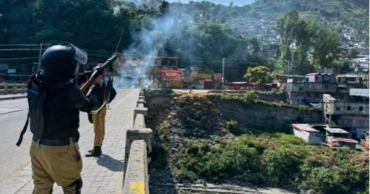
Pakistan opens talks with Kashmir protesters as PM calls for calm after deadly clashes
The death toll from violent clashes between security forces and demonstrators in Pakistan-administered Kashmir rose to nine on Thursday as Prime Minister Shehbaz Sharif sent a delegation to the regional capital for talks with protest leaders, officials said.
In a statement, Sharif urged calm and called on police to exercise restraint, emphasizing that his government was committed to addressing public grievances in Kashmir.
Tariq Fazal Chaudhry, a minister in Sharif’s cabinet, said on X that discussions with representatives of the Awami Action Committee were underway in Muzaffarabad. Meanwhile, local authorities reported that convoys of buses and cars were moving toward Muzaffarabad ahead of another planned protest.
The clashes erupted earlier this week after an alliance of several groups launched demonstrations demanding subsidies on food, electricity, and other essential services. Video footage posted online showed violent confrontations between protesters, many armed with sticks and guns, and police deployed to maintain order and protect government buildings.
The regional prime minister, Chaudhry Anwarul Haq, said his administration had agreed to meet 36 of the alliance’s 38 demands, including reduced electricity tariffs, cheaper wheat, and local governance reforms, but the group continued its violent protests.
According to government officials, at least nine people, including three police officers, were killed, while more than 150 others, mostly police personnel, were injured. Critically wounded officers were transported to hospitals in Islamabad for treatment.
Interior Minister Mohsin Naqvi visited the capital’s main hospital on Thursday to meet injured officers. He praised their “courage and restraint” and directed authorities to ensure the best medical care, warning that violent elements attempting to destabilize the region “at the behest of enemies” would not be allowed to act with impunity.
8 months ago
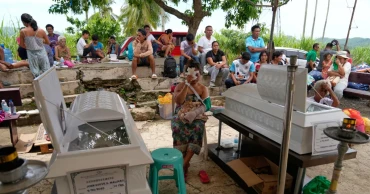
Philippines earthquake: Death toll climbs to 72
When firefighters brought out the body of his 4-year-old son in a bag from a budget hotel demolished by a 6.9-magnitude earthquake in the central Philippines, Isagani Gelig stooped down and gently stroked the black cadaver bag for several minutes, trying to feel his child's remains inside for the last time.
A bag containing the body of Gelig's wife, the Condor Pension House’s receptionist, was carried out next. She had worked there at night while taking care of their son, John. A rescuer handed him a cellphone found with her body and he nodded a confirmation that it was hers.
Gelig and his family had frantically called after the powerful earthquake shook the city of Bogo in Cebu province Tuesday night, but she never picked up.
“I went around the rubble and kept calling out their names,” Gelig told The Associated Press beside the hotel ruins, where he and rescuers discovered their remains pinned together in the first-floor rubble.
The death toll from the earthquake rose to at least 72 people Thursday with nearly 300 injured. Disaster officials said there have not been reports of additional missing people. More than 170,000 people were affected, including many who have refused to return home because they were traumatized and fearful of aftershocks.
The earthquake damaged or destroyed 87 buildings and nearly 600 houses in Bogo, a relatively new and progressive coastal city of about 90,000, and outlying towns. Bridges and concrete roads were damaged and a seaport in Bogo collapsed.
The quake was triggered around 10 p.m. by a shallow undersea fault line that Filipino seismologists said has not moved for at least 400 years.
President Ferdinand Marcos Jr. flew to Bogo Thursday to assess the damage and offer aid and support to survivors while mourning with families of the victims. Just days ago, the president was in the central region after a fierce storm left at least 37 people dead and lashed more than half a million people, including in Cebu province.
Countries offer condolences and support
The United States, a longtime treaty ally of the Philippines, offered assistance following the earthquake. Several other countries, including China and Japan, expressed condolences.
“Japan always stands with the Philippines in overcoming this time of difficulties,” Japanese Prime Minister Shigeru Ishiba said in a message to Marcos.
One of the world’s most disaster-prone countries, the Philippines is often hit by earthquakes and volcanic eruptions due to its location on the Pacific “Ring of Fire,” an arc of seismic faults around the ocean.
The archipelago also is lashed by about 20 typhoons and storms each year, making disaster response a major task of the government and volunteer groups.
Victims and survivors share harrowing stories
Shortly after the earthquake ravaged Bogo, the Red Cross tried to call up one of its full-time volunteers who lived in the city.
Ian Ho, 49, was a highly trained first responder. When he did not answer, a Red Cross team was deployed. His house had crumbled and he was found inside, buried in the rubble while embracing his 14-year-old son, who was injured. The teen survived, Red Cross Secretary-General Gwendolyn Pang said.
“He chose to be the shield of his son,” Pang said. “This is the kind of people that we have, lifesavers with an innate instinct to help other people. In this case, the last person that he saved was his son.”
While most people were at home when when the quake struck, Bryan Sinangote was watching a basketball game with less than 100 spectators in San Remigio town, just outside Bogo. Everybody froze. When the up-and down shaking became intense, everybody dashed out of the gym in panic, the 49-year-old driver said.
A gymnasium ceiling collapsed, killing three coast guard personnel and a firefighter. Sinangote said he tried to roll away but was partly trapped. He was later pulled free by members of the coast guard and treated for face and arm injuries.
It was not his first brush with death. He recalled how Typhoon Haiyan, one of the strongest tropical cyclones on record, destroyed his house in San Remigio in 2013. Haiyan left more than 7,300 people dead or missing, flattened entire villages and caused ships to run aground and smash into houses in the central Philippines.
“It’s heartbreaking to hear what happened to Bogo city,” Sinangote said, adding that Filipinos have no option but to learn to live side by side with calamities. “After Typhoon Haiyan destroyed my house, I built it back in one year. We just have to be prepared for anything."
8 months ago

South Korean president apologizes for abuses in foreign adoption programs
South Korea’s President Lee Jae Myung on Thursday issued an apology for poorly managed foreign adoption programs, acknowledging widespread abuses and fraud, months after the country’s Truth and Reconciliation Commission recognized state responsibility for such practices for the first time.
In a Facebook post, Lee offered “heartfelt apology and words of comfort” on behalf of the nation to South Koreans adopted abroad, as well as their adoptive and birth families. He acknowledged that findings from the commission and recent court rulings confirmed human rights abuses in international adoptions and admitted the government failed to act adequately in such cases.
Lee expressed sorrow over the “anxiety, pain and confusion” experienced by adoptees sent abroad as children and called on officials to establish systems safeguarding their rights and helping them locate birth parents.
South Korean President Lee in Tokyo to strengthen Japan ties before meeting Trump
South Korea faced criticism for adoption practices during the 1970s and 1980s, when thousands of children were sent overseas. Investigations revealed many records were falsified to portray children as orphans, while some were removed or taken from their families without proper consent.
A March report by the Truth and Reconciliation Commission confirmed the government’s role in facilitating adoptions to reduce welfare costs, echoing a 2024 AP-Frontline investigation showing that around 200,000 Korean children were sent abroad through questionable means.
South Korea formally ratified the Hague Adoption Convention in July, which took effect on Wednesday, aiming to safeguard international adoptions in the future.
Source: AP
8 months ago
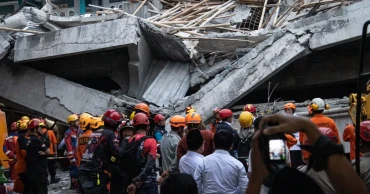
Indonesian rescuers racing against time to save students trapped in collapsed school
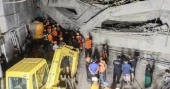
Indonesian rescue workers are racing against time to find dozens of students still trapped under the rubble of a collapsed Islamic boarding school in East Java, as the death toll from the disaster rose to six on Wednesday.
The century-old Al Khoziny school building in Sidoarjo collapsed during afternoon prayers on Monday, crushing hundreds of students inside a prayer hall. Most of the victims were boys aged between 12 and 18, while female students, praying in a separate section, managed to escape.
At least five students have been rescued after teams dug tunnels through the debris, while oxygen, food, and water have been delivered through small gaps to others believed alive but still trapped. On Wednesday afternoon, one boy was pulled out alive and taken to hospital.
Authorities said more than 100 people were injured, with over two dozen still hospitalized, many with head injuries and broken bones.
Rescue efforts have been complicated by unstable concrete slabs and steel bars, forcing workers to dig manually rather than use heavy machinery. More than 300 personnel, supported by thermal drones and detectors, are continuing the search.
Officials said the collapse occurred while two additional floors were being illegally added to the two-story prayer hall. Investigators believe the old foundation was too weak to support the new concrete structure, leading to the tragedy.
Search operations remain focused on saving those still trapped within the “golden hours,” officials added.
8 months ago
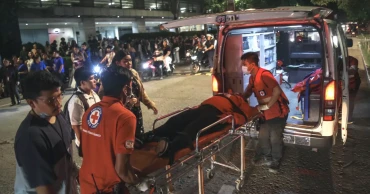
Philippines earthquake kills 69, rescue efforts underway
Rescuers in the central Philippines used heavy equipment and sniffer dogs on Wednesday to search for survivors in collapsed homes and damaged buildings, a day after a powerful earthquake left at least 69 people dead.
Officials warned the toll could rise from Tuesday night’s magnitude 6.9 quake, which struck around 10 p.m., trapping residents in the hardest-hit city of Bogo and nearby rural towns in Cebu province. Rescue efforts were slowed by rain, damaged bridges and blocked roads.
“We’re still in the golden hour of our search and rescue,” said Bernardo Rafaelito Alejandro IV, deputy administrator of the Office of Civil Defense, noting reports of many people pinned under debris.
The quake’s epicenter was traced to an undersea fault at a shallow depth of 5 kilometers, about 19 kilometers northeast of Bogo, a coastal city of 90,000 where nearly half the deaths occurred.
Authorities are assessing whether international assistance will be sought. The U.S., Japan, Australia and the European Union have already expressed condolences. “We stand ready to support the Philippine government’s response,” U.S. Ambassador MaryKay Carlson said on X.
In Bogo, rescuers tried to move heavy machinery to a mountain village hit by a landslide and falling boulders, said city disaster officer Rex Ygot. Several survivors were taken to hospital.
Fatalities were also reported in the nearby towns of Medellin and San Remigio, where a firefighter, three coast guard members and a child were killed by falling walls and debris as they fled a basketball game disrupted by the quake.
The quake, among the strongest in the region in over a decade, struck while many were at home. A brief tsunami alert was issued for Cebu, Leyte and Biliran provinces but lifted after no significant waves were observed. Still, thousands of frightened residents spent the night outdoors despite rain.
The disaster struck as the region was still reeling from a tropical storm that killed at least 27 people last week, cut power in major areas and displaced tens of thousands.
Schools and offices were closed in quake-hit cities and towns as buildings were inspected. More than 600 aftershocks have been recorded since Tuesday night, said Teresito Bacolcol, director of the Philippine Institute of Volcanology and Seismology, warning of landslide risks on soaked mountainsides.
“This was really traumatic for people. They were battered by a storm and then jolted by an earthquake,” he said.
The Philippines, located on the Pacific “Ring of Fire,” frequently faces quakes, volcanic eruptions and about 20 typhoons each year.
8 months ago