Asia
Powerful quake hits central Philippines, casualties stand at 69
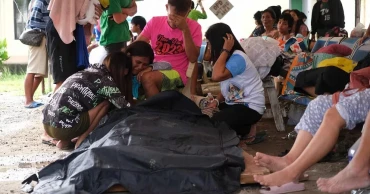
At least 69 people have been confirmed dead after a magnitude-6.9 earthquake struck Cebu province in the central Philippines late Tuesday night, trapping residents in collapsed houses, nightclubs, and businesses.
The quake, which hit around 10 p.m., had an epicenter about 19 kilometers northeast of Bogo city at a shallow depth of 5 kilometers, officials said. Nearly half of the reported fatalities were in Bogo, a coastal city of 90,000, where authorities warned the death toll could rise as rescuers searched through the rubble.
Troops, police, and volunteers, aided by backhoes and sniffer dogs, were conducting house-to-house searches despite damaged bridges, blocked roads, and heavy rains. Some victims were also reported in Medellin and San Remigio towns, including coast guard members, a firefighter, and a child, killed by collapsing walls and falling debris.
Afghanistan earthquake kills over 2,200, Taliban reports
The quake, one of the strongest in the region in more than a decade, prompted a brief tsunami warning that was later lifted. Still, thousands of residents stayed in parks and open fields overnight, fearful of aftershocks.
Officials said more than 600 aftershocks have been recorded since the quake. The region was already reeling from a deadly tropical storm that killed at least 27 people last week.
The Philippines sits on the Pacific “Ring of Fire,” making it highly prone to earthquakes and volcanic eruptions.
Source: AP
8 months ago

Vietnamese dissident sentenced to 11 more years for criticizing Communist Party in prison
A prominent Vietnamese dissident, already serving a 10-year term, has been handed an additional 11-year sentence for criticizing the ruling Communist Party while in prison, rights groups said Tuesday, underscoring Hanoi’s strict suppression of dissent.
Trinh Ba Phuong was convicted Friday by the People’s Court of Da Nang after authorities found a note in his cell reading, “Down with the Communist Party of Vietnam for violating human rights, down with the Communist court for wrongfully convicting me,” according to The 88 Project, an organization documenting human rights abuses in Vietnam. Phuong has denied writing the statement.
Vietnamese state media did not report the case, and the country’s Ministry of Foreign Affairs did not respond to requests for comment.
Elaine Pearson, Asia director for Human Rights Watch, said the conviction demonstrates Hanoi’s “zero tolerance for dissent” and came at a time when a senior European Union trade official was visiting Vietnam to strengthen ties. She urged governments to raise concerns about the crackdown on free expression and press for the release of activists like Phuong.
Under Article 117 of Vietnam’s criminal code, Phuong was accused of consistently displaying “a defiant and resentful attitude toward the communist regime.” The 40-year-old activist is known for campaigning on human rights, land rights, and environmental issues. His parents were imprisoned in 2014 for participating in protests.
Phuong gained international attention after documenting abuses during a January 2020 police raid that left an elderly farmer and three officers dead. He was arrested later that year and convicted in 2021 for spreading anti-state propaganda.
According to The 88 Project, this is the first instance of a Vietnamese political prisoner being prosecuted for statements made while already imprisoned. The group said, under international law, Phuong’s actions amounted to peaceful protest against human rights violations and his alleged wrongful conviction.
8 months ago
UN urges Taliban to restore internet across Afghanistan
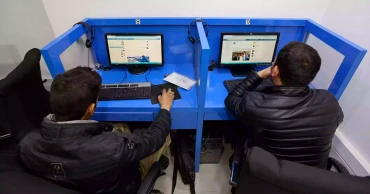
The United Nations mission in Afghanistan on Tuesday called on the Taliban to reopen internet and telecommunications services nationwide, warning that the ongoing blackout has left the country largely isolated from the world.
The outage, first reported Monday, is the first nationwide internet shutdown since the Taliban regained power in August 2021 and is part of their stated campaign against “immorality.”
Earlier this month, several provinces lost fiber-optic connections following a decree from Taliban leader Hibatullah Akhundzada restricting the service.
The UN Assistance Mission in Afghanistan said the disruption is undermining the country’s fragile economy and worsening one of the world’s most severe humanitarian crises. It noted that the blackout is affecting banking and financial systems, limiting women and girls’ access to services, disrupting medical care and remittances, and hindering aviation operations.
The mission also said that such restrictions curtail freedom of expression and the right to information. Telecommunications, it added, are especially vital during emergencies, pointing to recent earthquakes in eastern Afghanistan and the ongoing forced returns of people from neighboring countries.
The UN mission said the internet suspension, first implemented on Sept. 16, spread nationwide by Sept. 29. It pledged to continue pressing the Taliban authorities to restore connectivity in support of the Afghan population.
8 months ago
Flights suspended in Afghanistan as nationwide internet blackout disrupts services
Air travel in Afghanistan has come to a halt after the Taliban government imposed a nationwide internet shutdown, leaving the country largely cut off from the outside world and crippling essential services.
The suspension, which began Monday evening, has severely disrupted communications, banking, payments and online education – considered a vital lifeline for many women and girls barred from attending schools and universities.
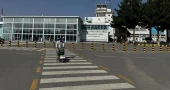
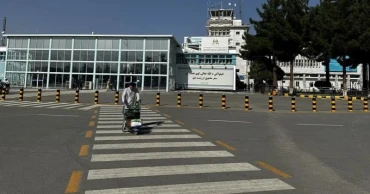
Kabul’s main airport was described as “nearly deserted” by residents, with no visible arrivals or departures. Flight-tracking site Flightradar24 showed a handful of flights cancelled on Tuesday, while many others were marked “unknown.” Some passengers were told that flights would not resume until Thursday at the earliest.
Although life in Kabul appeared outwardly “normal,” one local resident said, “there is no communication at all.”
‘We are blind without internet’
The blackout followed weeks of Taliban restrictions on fibre-optic connections across several provinces, which authorities said was intended to curb “immorality.” Until Monday, the capital Kabul had remained unaffected, but service was abruptly cut at around 5 pm local time. By Tuesday morning, people across the country woke up to find services paralyzed.
Najibullah, a 42-year-old shopkeeper in Kabul, told AFP that residents felt “blind without phones and internet.”
“All our business relies on mobiles. Deliveries are with mobiles. It’s like a holiday—everyone is at home. The market is totally frozen,” he said.
Banks in Kabul remained open but struggled to dispense cash amid long queues. In Helmand province, however, a money changer said all banks were closed. International agencies also reported losing contact with their Kabul offices, while mobile internet and satellite TV were badly disrupted.
Privately owned broadcaster Tolo News urged viewers to follow its social media accounts, warning of expected disruptions to TV and radio networks. Local journalists said they were unable to call interviewees, forcing them to send crews directly to people’s homes.
Education cut off
The blackout has dealt a heavy blow to Afghan women and girls, many of whom rely on online study as their last access to education.
“My daughters’ online English classes are gone,” a money changer in Takhar province told the BBC. “Their last opportunity to study and stay engaged is now gone.”
Another woman said she had hoped to finish her studies and secure online work, but now “that dream has been destroyed.” A university student, whose midwifery course was banned last year, said: “When I heard that the internet had been cut, the world felt dark to me.”
Wider restrictions
NetBlocks, an internet watchdog, described the situation as a “total internet blackout,” noting that telephone services were also affected. Taliban officials in Balkh province had earlier defended the fibre-optic ban as an effort to curb “evils.”
The move is the latest in a series of restrictions imposed since the Taliban returned to power in 2021 after the withdrawal of US and allied forces. Earlier this month, authorities removed books written by women from university curricula and banned the teaching of human rights and sexual harassment. Women are already barred from education beyond the age of 12, with midwifery courses quietly discontinued in late 2024.
Source: Agency
8 months ago

Death toll from Typhoon Bualoi flooding in Vietnam rises to 19
Heavy rains and flooding triggered by the remnants of Typhoon Bualoi have killed at least 19 people in Vietnam, with several others still missing, officials said Tuesday.
Over the past 24 hours, some parts of the country received more than 30 centimeters (nearly a foot) of rain, according to Vietnam’s national weather agency, which warned that downpours are expected to continue.
The prolonged rainfall has led to flash floods and landslides, cutting off roads and isolating communities across several provinces — from the northern mountains of Son La and Lao Cai to central Nghe An. Swollen rivers, fed by continuous rains and dam discharges, have caused widespread inundation. The Thao River in Yen Bai province rose well above emergency levels overnight, pushing water up to a meter deep into homes and forcing evacuations.
In the capital Hanoi, many streets were submerged, and authorities urged residents near the Red River to remain on high alert.
Typhoon Bualoi kills at least 9 in Vietnam before weakening into a storm
State media reported that rescuers are searching for at least 13 people still missing, including eight fishermen.
The storm had already claimed more than 20 lives in the Philippines before striking Vietnam early Monday. Bualoi lingered after landfall, worsening the flooding and landslide risks.
Experts warn that climate change is fueling stronger and wetter tropical storms across East Asia, as warmer oceans provide more energy for intense winds and heavier rainfall.
Source: AP
8 months ago
At least 8 killed in car bombing outside Pakistani paramilitary HQ
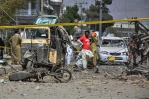
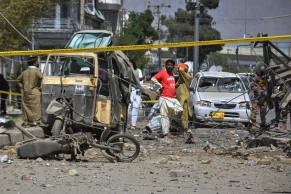
At least eight people were killed and several others injured when militants detonated a powerful car bomb outside the headquarters of Pakistan’s paramilitary security forces in Quetta on Tuesday, officials said.
Police said four attackers exited the vehicle before the blast and engaged security personnel in a fierce gunfight. All four were later killed by returning fire from the troops, Balochistan Chief Minister Sarfraz Bugti said.
Residents described the explosion as massive, audible from miles away. Ambulances rushed to the site in front of the Frontier Constabulary, and the wounded were taken to nearby hospitals. CCTV footage showed the car stopping at the gate of the compound, followed by an explosion and gunfire, which shattered windows of surrounding buildings and damaged nearby vehicles.
No group immediately claimed responsibility, but suspicion falls on separatist militants who frequently target civilians and security forces in insurgency-hit Balochistan, where Quetta serves as the provincial capital. Provincial Health Minister Bakhat Kakar warned that the death toll could rise further.
Bugti condemned the attack, saying terrorists cannot break the nation’s resolve, and vowed to maintain peace and security in the province.
The attack comes weeks after a suicide bombing outside a stadium near Quetta killed at least 13 people and injured 30, highlighting the ongoing security challenges in the region. Balochistan has long faced insurgency from groups such as the outlawed Baloch Liberation Army, which demand independence and have repeatedly targeted security forces and civilians.
Source: Agency
8 months ago

Sri Lanka reports alarming rate of drug-addicted schoolchildren
Sri Lanka's National Dangerous Drugs Control Board (NDDCB) said on Monday that Sri Lanka's Western Province records the highest number of drug-addicted schoolchildren, with Colombo district accounting for most cases.
The NDDCB said in a statement that children from low-income communities in Colombo and its suburbs are particularly vulnerable. Certain parts of the Kandy district, along with Gampaha, Kurunegala, Anuradhapura, Galle, Ratnapura, and Kalutara, were also identified as high-risk areas.
Peer influence has been cited as a major driver of drug use among schoolchildren, while weak implementation of school drug prevention policies and limited involvement of principals and education offices have worsened the problem, said the NDDCB. Stressful family environments, neglect, poverty, malnutrition, and the easy availability of drugs in communities are also contributing factors.
To curb the trend, the NDDCB said it is rolling out programs through six streams, including school, youth, family, workplace, and community-based initiatives, along with environmental and media campaigns.
Screening and counseling services are being expanded, with trained school counselors now intervening with low-risk students, while medium- and high-risk children are referred for treatment at the NDDCB's Youth Treatment Center before returning to school or vocational education.
Meanwhile, police told local media that 206 children were taken into custody for drug-related offenses between Jan. 1 and Aug. 31 this year, adding that over 15,600 awareness programs have been conducted in schools to combat drug abuse.
8 months ago
World’s highest bridge opens in China’s mountainous southwest
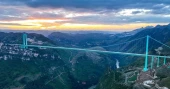
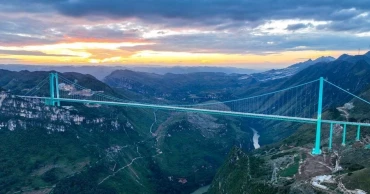
The world’s highest bridge, the Huajiang Grand Canyon Bridge, opened to traffic Sunday morning in southwest China’s Guizhou Province, reducing travel across the deep canyon from two hours to just two minutes. The bridge, soaring 625 meters above the Beipan River, is nearly nine times the height of San Francisco’s Golden Gate Bridge.
Spanning 2,890 meters across the Huajiang Grand Canyon — often called “the Earth’s crack” — the bridge is now a key part of China’s rapidly expanding infrastructure network. Construction began in 2022 and, over three years, the project has drawn global attention, showcasing China’s engineering capabilities in mountainous canyon regions. Guizhou, known as “the world’s bridge museum,” has long relied on tunnels and bridges to navigate its rugged karst terrain.
Wu Chaoming, project manager and native of a small mountain village in Guizhou, recalled the region’s once-difficult connectivity: “From my hometown to the county seat, there was only one bus per day, bursting at the seams. People even rode on the luggage racks on the roof.” Since 2012, the province has accelerated bridge construction, now hosting over 32,000 bridges built or underway — a tenfold increase from the 1980s.
The Huajiang Grand Canyon Bridge surpasses the former world’s highest bridge, also over the Beipan River, which opened in 2016 with a vertical clearance of 565.4 meters. With a main span of 1,420 meters, it is now the world’s longest-span steel truss girder suspension bridge in mountainous terrain.
The bridge is expected to boost regional connectivity, reduce travel time, and alleviate traffic pressure on the Shanghai-Kunming expressway. Beyond transport, it is set to enhance industrial collaboration and resource flow across the regional urban cluster.
Engineering feat and innovation
Chinese engineers overcame multiple challenges, including complex geology, strong canyon winds, and high-altitude precision work. The project employed satellite navigation, drones, smart monitoring systems, and ultra-high-strength materials, achieving millimeter-level construction accuracy. The bridge has secured 21 patents, with several innovations incorporated into national bridge construction standards.
“Guizhou demonstrates that complex terrain is not a constraint but a catalyst for innovation,” said renowned Chinese bridge expert Ge Yaojun.
A new tourist destination
The bridge is also envisioned as a world-class tourism site. Over 50 square kilometers around the structure are planned for tourism, including extreme sports, sightseeing, science education, and leisure facilities. A cloud-top café atop the 800-meter-high tower is expected to open in October. Other attractions under development include paragliding, rope-free bungee jumping, a high-altitude speed runway, and a water-screen light show.
The bridge recently hosted the first World’s Highest Bridge Triathlon International Challenge, attracting nearly 200 athletes from more than 20 countries. Authorities predict the bridge will draw over one million visitors annually, boosting local industries such as agriculture, hospitality, and cultural products.
The Huajiang Grand Canyon Bridge not only sets a new record but also exemplifies China’s ingenuity in transforming challenging terrain into infrastructure and tourism opportunities.
8 months ago
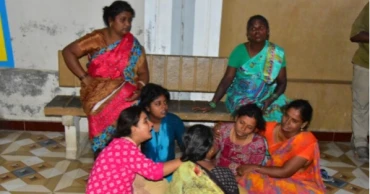
Death toll rises to 40 after stampede at actor Vijay’s rally in Tamil Nadu
At least 40 people have died and 124 were injured following a stampede at a political rally for actor-turned-politician Joseph Vijay Chandrasekhar in Karur district, Tamil Nadu, state health minister Ma Subramanian said Sunday. Nine children were among the deceased.
Tens of thousands had gathered on Saturday under sweltering heat. Vijay, a former actor with massive local popularity, arrived six hours late, prompting crowd congestion. As his vehicle departed, supporters surged forward, triggering the stampede.
20 killed in Gaza aid stampede at Israeli-backed distribution site
Authorities cited crowd indiscipline and announced a probe led by a former judge. Tamil Nadu Chief Minister M.K. Stalin pledged over $11,000 to families of each victim. Vijay expressed profound sorrow on social media, and Prime Minister Narendra Modi called the tragedy “deeply saddening.”
Stampedes are not uncommon in India, where large gatherings frequently overwhelm safety measures.
8 months ago
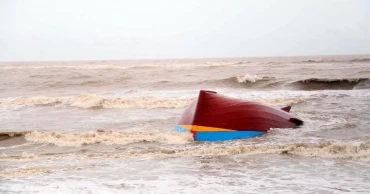
Typhoon Bualoi kills at least 9 in Vietnam before weakening into a storm
Former Typhoon Bualoi battered central Vietnam with heavy rain and strong winds, killing at least nine people, flooding roads, damaging homes and sweeping away temporary bridges before weakening and moving into Laos Monday, state media reported.
The storm damaged houses, schools and power lines, leaving over 347,000 households without electricity. Six fatalities occurred in Ninh Binh province, while others were reported in Thanh Hoa, Hue, and Danang. In Quang Tri, a fishing boat with nine crew members was swept away; four swam ashore. Rescue teams were searching for 17 missing fishermen in central provinces.
Vietnam evacuates thousands as Typhoon Bualoi nears, airports closed
Bualoi made landfall early Sunday in Ha Tinh with winds up to 133 kph and storm surges exceeding one meter. Thousands were evacuated from coastal and northern provinces as the storm approached.
The typhoon had previously killed at least 20 people in the Philippines, forcing 23,000 families to seek shelter.
Source: Agency
8 months ago