Asia
Flash floods kill 34 in Kashmir, displace over 210,000 in Pakistan
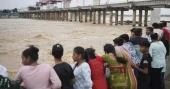
Torrential monsoon rains have unleashed deadly flash floods and landslides across Pakistan and Indian-controlled Kashmir, killing at least 34 people and displacing more than 210,000 in Pakistan, officials said Wednesday.
In Indian-controlled Kashmir’s Jammu region, a landslide struck a popular Hindu pilgrimage route near Katra late Tuesday, burying devotees en route to a hilltop shrine. Disaster management official Mohammed Irshad said bodies were pulled from the debris, while at least 18 injured pilgrims were taken to hospitals. Rescue teams were searching for the missing, and pilgrimages were suspended.
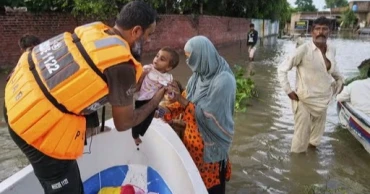
Meanwhile, Pakistan’s eastern Punjab province has been inundated by swollen rivers following relentless downpours. Lt. Gen. Inam Haider, head of the National Disaster Management Authority, said the military was assisting in evacuations and relief operations. Two soldiers were killed while helping flood victims, army officials confirmed.
Authorities said the flooding submerged the revered shrine of Guru Nanak, the Sikh religion’s founder, in Narowal district. Late Wednesday, a controlled breach was carried out on the Chenab River to protect a barrage from collapse, diverting water into nearby villages. Thousands of people watched from higher ground as their homes were submerged.
More than 20,000 people were evacuated overnight from flood-prone areas outside Lahore, as rising waters from the Ravi River threatened Pakistan’s second-largest city, officials said.
Over 150 still missing after deadly flash floods in Northwestern Pakistan
Rescue efforts are also ongoing in six Punjab districts, where heavy rainfall and water released from Indian dams have swamped low-lying areas. Officials warned that floodwaters in the Ravi, Chenab and Sutlej rivers are still rising.
Pakistan has been hit hard this monsoon season, with floods killing more than 800 people since late June. Scientists warn climate change is intensifying rainfall across South Asia, raising fears of a repeat of the 2022 disaster that inundated a third of Pakistan and killed nearly 1,800.
India alerted Pakistan earlier this week about potential cross-border flooding, marking the first public official contact between the rivals in months.
Source: Agency
9 months ago

Floods and landslides from heavy rain kill 8 in Vietnam and Thailand
Heavy rains triggered flooding and landslides across parts of Southeast Asia on Wednesday, claiming at least eight lives in the wake of a tropical storm.
In Vietnam, flooding hit several northern and central provinces, leaving seven dead, one missing, and 34 injured, according to state media. Nearly 20 centimeters (8 inches) of rain fell overnight in northeastern regions, prompting ongoing flood warnings for riverside areas.
In neighboring Thailand, heavy rainfall from Tuesday evening into Wednesday caused floods in multiple northern provinces. In Nan province, rising rivers forced evacuations as homes were inundated. Officials reported that over 600 people were affected. One person died, several were injured, and seven—including an eight-year-old—went missing following a landslide in a small village in Chiang Mai province.
Thailand’s Department of Disaster Prevention and Mitigation said flash floods and landslides damaged numerous homes and caused injuries across the northern provinces. The Meteorological Department warned of continued heavy rain in northern and northeastern regions, cautioning residents in low-lying areas and foothills near rivers about potential flooding and landslides.
The downpours followed Tropical Storm Kajiki, which made landfall Monday afternoon in central Vietnam, prompting the evacuation of thousands from high-risk areas. The storm also brought winds and rain to southern China’s Hainan Island.
A 2024 scientific study highlighted that warming seas due to climate change are causing Southeast Asian cyclones to form closer to land, intensify faster, and last longer, increasing risks to urban areas.
9 months ago

Suspected human remains recovered at Japanese WWII mine where Korean laborers died
Suspected human remains have been recovered at a former Japanese mine where about 180 mostly Korean forced laborers died in a 1942 accident, a Japanese group involved in the search said Tuesday.
Korean divers found three possible limb bones and a skull over the past two days at the site of the Chosei Mine in western Yamaguchi prefecture, according to the civil organization Kizamu Kai.
The bones will be examined by local police to determine if they belong to any victims of the mine collapse 83 years ago. If confirmed, the discovery is expected to speed up efforts to recover the remains of 136 Korean and 47 Japanese workers killed in the accident.
“I was waiting for this day,” Kizamu Kai representative Yoko Inoue said.
The discovery comes shortly after a Tokyo summit between Japanese Prime Minister Shigeru Ishiba and South Korean President Lee Jae Myung, which highlighted cooperation on regional security and trade while downplaying historical tensions.
The Chosei undersea mine began operations in 1914. In February 1942, part of the mine’s ceiling collapsed, flooding the shaft and killing 183 workers. The accident was largely forgotten until 1991, when citizens started investigating to preserve the site and erect a memorial.
Historians note that Japan used hundreds of thousands of Korean laborers during World War II to fill workforce gaps, as many Japanese men were fighting overseas.
Kizamu Kai began undersea searches for victims’ remains last year after years of collecting historical documents and witness accounts. Ishiba, who has recognized Japan’s wartime aggression, approved government consultation with experts on safe recovery methods earlier this year.
Chief Cabinet Secretary Yoshimasa Hayashi expressed condolences and said authorities are monitoring the police examination. The health and welfare ministry has so far not funded the searches, while Kizamu Kai continues on its own.
Critics say Japan has long been reluctant to address wartime atrocities, including forced labor and sexual abuse of Asian women. The government maintains that all compensation claims were resolved under the 1965 treaty with South Korea.
Despite past tensions, bilateral ties have improved since 2023 under U.S. pressure to enhance security cooperation amid China’s growing regional influence.
9 months ago

China makes AI education mandatory for all 6-year-olds from this Sep
Starting September 1, 2025, China will implement a major education reform requiring all students, beginning at age six, to take artificial intelligence (AI) classes. As part of the country’s national plan to become a global leader in AI innovation, students will receive at least eight hours of AI instruction each year.
Younger children will engage in hands-on learning activities, while older students will study robotics, machine learning, and practical AI applications. Schools will prepare teachers, revise curricula, and integrate AI lessons into STEM education.
China and US envoys will hold first top-level dialogue on artificial intelligence
This ambitious initiative aims to establish China as a pioneer in fostering AI literacy from the earliest stages of education.
Source: MEGA News
9 months ago

India alerts Pakistan to flood risk in first official contact in months
India has informed Pakistan about potential cross-border flooding following heavy monsoon rains, Pakistan’s Foreign Ministry said Monday, marking the first public official contact between the two nuclear-armed neighbors in months.
The ministry said India conveyed the information through diplomatic channels rather than via the Indus Waters Commission, the permanent body set up under the 1960 Indus Waters Treaty. An Indian official, speaking on condition of anonymity, said the warning was shared on humanitarian grounds and not under the treaty. There was no immediate comment from New Delhi.
This is the first known diplomatic-level contact since May, after India carried out missile strikes in Pakistan in response to the April killing of 26 tourists in Kashmir. Pakistan retaliated with its own strikes before a U.S.-brokered cease-fire took hold.
The alert comes as monsoon rains continue to batter the region. Floods in Pakistan have killed nearly 800 people since June 26. Indian-administered Kashmir has also seen dozens of deaths.
The Indus Waters Treaty, suspended by India after the April attack, governs sharing of the Indus River system, with India controlling the eastern rivers and Pakistan the western rivers flowing through the disputed Kashmir region.
9 months ago
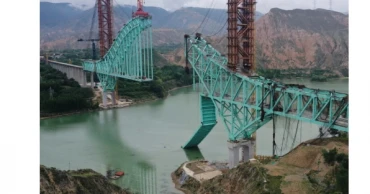
Bridge collapse in China kills 12 workers
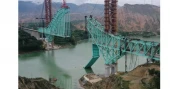
The collapse of an under-construction railway bridge over a major river in China has killed at least 12 workers and left four others missing, state media reports said.
Aerial photos from the official Xinhua News Agency show a large section missing from the bridge's curved aquamarine arch. A bent section of the bridge deck hangs downward into the Yellow River below.
Sixteen workers were on the bridge in northwest China's Qinghai province when a steel cable snapped about 3 a.m. Friday during a tensioning operation, Xinhua said. Boats, a helicopter and robots were being used in the search for the missing.
The bridge is 1.6 kilometers (1 mile) long and its deck is 55 meters (180 feet) above the surface of the river below, the English-language China Daily newspaper said.
9 months ago
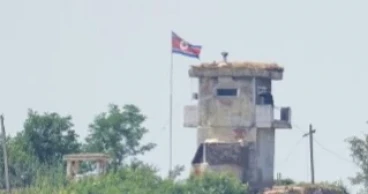
North Korea slams South for ‘serious provocation’ after border warning shots
North Korea on Saturday accused South Korea of a “serious provocation” after Seoul fired warning shots at North Korean soldiers setting up barriers along the tense border.
Ko Jong Chol, vice chief of the North Korean People’s Army General Staff, said the shots on Tuesday coincided with South Korea-U.S. military drills and were a deliberate attempt to escalate tensions. South Korea’s Joint Chiefs of Staff confirmed firing warning shots when North Korean soldiers briefly crossed the military demarcation line in the central border area. The soldiers returned to North Korean territory without incident, and no return fire was reported.
Taiwan court jails ex-lawmaker’s son over illegal fuel supply to North Korea
In recent months, Seoul has used loudspeakers and warning shots to prevent North Korean troops from crossing the border while reinforcing defenses with anti-tank barriers and mines. Ko said North Korean soldiers were carrying out a “barrier project to permanently block the southern border” and had informed U.S. forces in advance to avoid accidental clashes.
Tensions remain high as North Korean leader Kim Jong Un showcases nuclear capabilities and aligns with Russia amid the Ukraine conflict. Kim has dismissed diplomatic overtures from South Korea’s new liberal President Lee Jae Myung, who recently called for restoring a 2018 inter-Korean military agreement to reduce border tensions.
9 months ago

South Korean President Lee in Tokyo to strengthen Japan ties before meeting Trump
South Korean President Lee Jae Myung on Saturday held his first full-fledged summit with Japanese Prime Minister Shigeru Ishiba in Tokyo, in a visit aimed at demonstrating improved ties between the two neighbors as they face common challenges alongside their key ally, the United States.
Lee’s choice to travel to Japan before visiting Washington — an unusual order — is seen as part of his preparation for a crucial first meeting with U.S. President Donald Trump, where trade and defense are expected to dominate discussions.
Japanese officials welcomed the move as a signal of Lee’s priority on Seoul-Tokyo relations, which have often been strained by historical disputes and at times disrupted trilateral cooperation with Washington.
Receiving Lee at the Prime Minister’s Office, Ishiba noted the significance of Tokyo being the first stop of the South Korean president’s overseas trip since taking office in June. He also shared photos of their meeting on social media platform X.
The two leaders initially met in a closed session before holding broader talks with expanded delegations. For Ishiba, facing pressure from rivals within his party after July’s election setback, the summit offered an opportunity to strengthen his standing.
Rintaro Nishimura, an analyst with The Asia Group’s Japan branch, said the timing reflected Lee’s “pragmatic diplomacy,” balancing bilateral and trilateral relations with Washington. He added that while tariffs are central, Lee’s decision to prioritize Tokyo underscored Japan’s importance in his foreign policy.
Though largely symbolic, Saturday’s meeting also highlighted the 60th anniversary of diplomatic normalization between the two nations. Possible outcomes include expedited visas for South Korean travelers and new working holiday programs.
South Korean prosecutors move to arrest jailed ex-President Yoon’s wife
The agenda also covered regional concerns, including North Korea’s nuclear program and China’s growing assertiveness.
Ishiba, who already reached a tariffs deal with Trump earlier this year, positioned himself to coordinate with Lee ahead of the South Korean leader’s first Washington summit.
The talks came shortly after both leaders signaled reconciliatory gestures. In his Aug. 15 Liberation Day address, Lee urged both nations to move beyond historical grievances while maintaining trust. In an interview with Japan’s Yomiuri newspaper, he said he would uphold past agreements on forced labor and wartime sexual slavery, despite lingering resentment among Koreans.
Ishiba, for his part, expressed “remorse” over Japan’s wartime aggression in his Aug. 15 address, reviving a term absent from such statements since 2013 under former Prime Minister Shinzo Abe.
Source: Agency
9 months ago
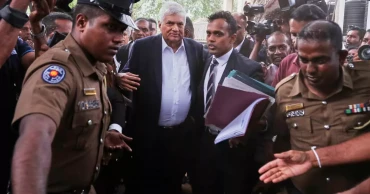
Former Sri Lankan president arrested over alleged abuse of state funds
Sri Lankan police on Friday arrested former president and senior opposition leader Ranil Wickremesinghe on charges of misusing public funds during his tenure, officials said.
Police spokesman Fedrick Wootler told The Associated Press that Wickremesinghe, who held office from 2022 to 2024, is accused of spending state funds to attend his wife’s graduation ceremony in London following an official trip to the United States.
According to his aide Danushka Ramanayake, Wickremesinghe was taken to court after being detained by the Financial Crimes Investigations Department.
He is the first former Sri Lankan head of state to be arrested and the most prominent figure to face corruption probes under President Anura Kumara Dissanayake’s administration, which came to power last year vowing to hold past leaders accountable.
Dissanayake, elected in September, secured a parliamentary landslide two months later, strengthening his government’s anti-graft drive. Since then, more than a dozen former ministers and senior officials have been detained over alleged corruption and malpractice.
SAFF Men’s U-17: Bangladesh placed in Group A with hosts Sri Lanka, Nepal
Wickremesinghe rose to the presidency in 2022 after mass protests and an economic meltdown forced Gotabaya Rajapaksa to resign. While he is credited with stabilizing the economy by curbing inflation, strengthening the rupee, and boosting reserves, he faced public backlash for tough austerity measures tied to an IMF bailout, including higher taxes and utility costs.
Source: Agency
9 months ago
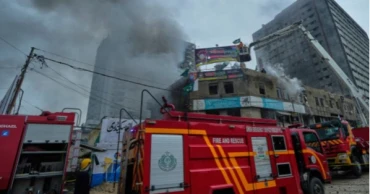
At least 25 injured in fireworks storage blast in Karachi
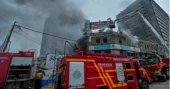
An explosion at a fireworks storage facility in Pakistan’s southern port city of Karachi left at least 25 people injured on Thursday, several of them critically, police and hospital officials said.
Television footage showed thick plumes of smoke rising from the building, with shattered glass from nearby shops strewn across the street. Witnesses said residents fled the area in panic as the blast triggered chaos.
Senior police officer Asad Raza said firefighters battled the flames while ambulances rushed the injured, including pedestrians, to different hospitals.
Over 150 still missing after deadly flash floods in Northwestern Pakistan
The explosion also damaged multiple shops and vehicles along Jinnah Road, a busy commercial area of the city. Authorities have yet to determine the cause of the blast.
Pakistan has witnessed similar incidents in the past. In January, six people were killed in an explosion at another fireworks storage facility in Mandi Bahauddin, located in Punjab province.
Source: Agency
9 months ago