Asia

Thai, Cambodian troops clash at disputed border, 3 injured
Tensions between Thailand and Cambodia reached a boiling point on Thursday as soldiers from both countries exchanged gunfire across multiple disputed border areas, injuring at least three civilians.
The clashes occurred a day after both nations downgraded diplomatic ties, with embassies recalling staff and ambassadors being expelled.
A livestream from Thailand’s Surin province showed residents fleeing their homes and taking shelter in concrete bunkers as explosions echoed in the background. Hostilities reportedly continued throughout the day across several locations.
The first armed encounter was reported near the ancient Prasat Ta Moan Thom temple, situated on the Thailand-Cambodia border between Surin and Oddar Meanchey provinces. Both sides blamed each other for initiating the violence.
Cambodian Prime Minister Hun Manet accused Thailand of launching attacks on Cambodian military positions at both Prasat Ta Moan Thom and Prasat Ta Krabey, later extending to areas near Preah Vihear province and Thailand’s Ubon Ratchathani.
"Cambodia has always favored peaceful resolution, but we had no choice but to respond militarily to this armed aggression," Hun Manet stated.
Thailand’s army said three civilians were injured when artillery shells fired from Cambodia hit a residential area in Surin province. The army also reported that local residents were promptly evacuated for safety.
The latest confrontation follows Cambodia’s announcement Thursday morning to downgrade its diplomatic relations with Thailand to the lowest level.
Cambodia expelled the Thai ambassador and recalled its embassy staff from Bangkok. The move came in response to Thailand’s earlier closure of border crossings, withdrawal of its ambassador, and expulsion of Cambodia’s ambassador, which were reactions to a landmine explosion that injured five Thai soldiers on Wednesday.
Tensions have been mounting since May, when a Cambodian soldier was killed in a skirmish over another disputed area.
Thailand’s military said Thursday’s confrontation began when a drone was spotted, followed by six armed Cambodian soldiers approaching the Thai position. Thai troops claimed they attempted verbal warnings before Cambodian forces opened fire.
Cambodia’s Defense Ministry denied initiating the clash, asserting it acted in self-defense against a Thai incursion into Cambodian territory.
British F-35 Jet leaves India after month-long stay, memes fly high
Cambodian Senate President Hun Sen called for calm via Facebook, urging citizens to trust the government and military. Meanwhile, the Thai embassy in Phnom Penh warned of potential further escalations and advised Thai nationals to leave Cambodia or avoid travel there unless necessary.
Landmine incidents have worsened the situation in recent weeks. On Wednesday, five Thai soldiers were wounded—one losing a leg—after triggering a landmine near the border.
A similar blast last week injured three soldiers, one of whom lost a foot. Thai officials claim the mines were newly planted and not of Thai origin, alleging they were Russian-made. Cambodia dismissed these claims as “baseless,” citing leftover unexploded ordnance from past conflicts.
Nationalist sentiment in both countries has intensified the crisis. Thailand’s prime minister was suspended from office on July 1 amid an ethics investigation tied to her handling of the dispute.
Border disputes between the two neighbors have a long history, with frequent flare-ups around contested sites. One of the most contentious areas is the ancient Preah Vihear temple.
Although the International Court of Justice awarded sovereignty over the temple to Cambodia in 1962 and reaffirmed that ruling in 2013, the decision remains a source of tension in Thai-Cambodian relations.
10 months ago

British F-35 Jet leaves India after month-long stay, memes fly high
A British F-35B stealth fighter jet that had been stranded for over a month in southern India finally took off Tuesday after successful repairs, officials said.
The $115 million jet, among the world’s most advanced, landed safely in Kerala’s Thiruvananthapuram airport on June 14 after hydraulic and power issues forced it to divert from its carrier, HMS Prince of Wales. A U.K. engineering team fixed the technical glitches.
The incident sparked a wave of memes and cartoons in India. One AI-generated image by Kerala Tourism featured the jet basking under coconut trees with a fake review: “Kerala is such an amazing place, I don’t want to leave.”
Tourism official K. Biju called it “good humor” and a nod to British tourists, Kerala’s largest inbound group.
The aircraft has now resumed its journey to a British carrier in Darwin, Australia.
Source: Agency
10 months ago

Ishiba’s coalition loses majority in Japan’s upper House Election, fueling political ucertainty
Japanese Prime Minister Shigeru Ishiba’s ruling coalition has lost its majority in the 248-seat upper house following Sunday’s crucial parliamentary election, deepening political instability in the country, according to NHK public television.
Ishiba’s Liberal Democratic Party (LDP) and its junior partner Komeito needed to secure 50 additional seats on top of their 75 to maintain control. With only one seat left to be declared, the coalition had managed just 47 — three seats short of the target.
The result marks the first time since its founding in 1955 that the LDP has failed to hold a majority in both houses of parliament, after already losing its grip on the lower house in October.
Despite the defeat, Ishiba pledged to remain in office, stating, “I will fulfill my responsibility as head of the No. 1 party and work for the country.” However, pressure is expected to mount from within his party either to step down or explore a new coalition arrangement.
The LDP, while still the largest party in parliament, won only 39 seats in this election — better than projected by exit polls but far from enough to retain control. Ishiba attributed the underperformance to the delayed impact of his administration’s measures to combat rising living costs. “It’s a tough situation. I take it humbly and sincerely,” he told NHK in a live interview.
Although the upper house does not have the power to initiate a no-confidence vote, the loss intensifies doubts over Ishiba’s political future and hinders the government’s legislative capabilities.
Economic Discontent Driving Voter Frustration
The election was heavily influenced by public discontent over economic issues. Voters voiced concerns about rising prices, stagnant wages, and increasing social security burdens. Stricter immigration policies also emerged as a contentious topic, fueling the rise of populist sentiments.
Adding to the pressure, U.S. President Donald Trump has criticized Japan’s stance in trade talks, particularly over the limited import of American cars and rice. A 25% tariff set to take effect on August 1 has further complicated Ishiba’s position. While the Prime Minister resisted making concessions before the election, prospects for progress remain uncertain under a weakened government.
Japan holds crucial election as PM Ishiba faces potential setback
Populist Surge Shakes Establishment Politics
As voter frustration mounted, populist and conservative parties made major gains. The right-wing populist party Sanseito, known for its hardline anti-foreigner and anti-globalist stance, surged from one to 14 seats. Meanwhile, the conservative Democratic Party for the People (DPP) quadrupled its presence, jumping from four to 17 seats.
DPP leader Yuichiro Tamaki said the result showed voters see his party “as a new alternative.” However, none of the opposition parties signaled any willingness to collaborate with Ishiba’s government. CDPJ leader Yoshihiko Noda emphasized the need for a united opposition, declaring: “Public opinion clearly said ‘no’ to the Ishiba government.”
Voter Divide: Stability vs. Change
The LDP’s near-continuous dominance in postwar Japan has long been a pillar of political stability. But this election exposed deep divisions in public opinion — with some seeking stability and unity, and others pushing for more inclusive and progressive reforms.
“I voted for candidates who won’t fuel division,” said 43-year-old Tokyo resident Yuko Tsuji, who supported the LDP. “If the ruling party doesn’t govern properly, the conservative base will drift toward extremes.”
Meanwhile, 57-year-old voter Daiichi Nasu called for a more diverse society, backing the CDPJ for its progressive stance on immigration and gender equality. “I want to see progress on those fronts,” he said.
The election’s outcome, shaped by voter frustration and a shifting political landscape, now leaves Japan’s government facing renewed challenges — both domestically and in its international relations.
Soure: Agency
10 months ago

Death toll from Vietnam tourist boat accident rises to 38
The death toll from a tourist boat accident in Vietnam's Halong Bay has risen to at least 38, with several people still reported missing, authorities said, as rescue operations continue ahead of the arrival of Typhoon Wipha.
The incident occurred on Saturday afternoon when a vessel carrying 48 tourists and five crew members capsized in the bay, one of Vietnam’s most popular tourist destinations. It is considered one of the worst boating disasters in the country in recent years.
"At least 38 of those on board have been confirmed dead and 10 rescued," the government said in a statement.
According to the official Vietnam News Agency, all the passengers were Vietnamese nationals, including several children.
A large-scale rescue effort is underway involving dozens of personnel from the border guard, navy, police, and professional diving teams. Despite calmer seas, poor visibility caused by adverse weather has hampered the search and rescue mission.
Aura Farming: Indonesian boy’s viral dance shines global light on heritage boat race
Authorities have confirmed that the sunken boat has been retrieved.
The accident happened around 2 p.m. local time on Saturday, shortly after Typhoon Wipha entered the South China Sea. Officials said strong winds, heavy rain, and lightning were present in the area at the time, though these were not yet directly linked to the typhoon but rather local wind patterns in the northern region.
Halong Bay, located about 200 kilometers (125 miles) northeast of Hanoi, is a UNESCO World Heritage site and draws tens of thousands of tourists annually, with boat tours being a major attraction.
A similar tragedy occurred in 2011 when a tour boat sank in Halong Bay, claiming 12 lives, including foreign nationals.
Typhoon Wipha, the third storm to enter the South China Sea this year, is forecast to make landfall along Vietnam’s northern coast early next week.
Source: Agency
10 months ago
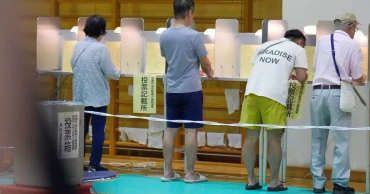
Japan holds crucial election as PM Ishiba faces potential setback
Japanese voters headed to the polls Sunday to elect members to the country’s upper house of parliament, in a high-stakes election that could deal a blow to Prime Minister Shigeru Ishiba and his ruling coalition, heightening political uncertainty.
The vote will determine half of the 248 seats in the upper house — the less powerful of the two chambers in Japan’s legislature. Preliminary results are expected later Sunday.
Prime Minister Ishiba has set a modest goal: securing a simple majority of 125 seats. His Liberal Democratic Party (LDP) and junior coalition partner Komeito, which already hold 75 seats, need to win 50 more. This target marks a sharp drop from the 141 seats the coalition held before the election, and opinion polls suggest significant losses are likely.
A poor outcome wouldn't immediately unseat Ishiba, as the upper house lacks the authority to pass a no-confidence motion. However, a weak showing could intensify internal pressure within the LDP for him to resign or seek new political alliances.
Key issues driving voter discontent include surging living costs, stagnant wages, and rising social security burdens. Tensions over immigration and foreign visitors have also become prominent, with the rise of a right-wing populist party campaigning on stricter anti-foreigner measures.
Japan’s Emperor meets Mongolian president to boost ties
Ishiba's government, already weakened by scandals and losses in the October lower house election, has struggled to push through economic relief measures. Public frustration has only deepened with slow responses to inflation and falling incomes.
Adding to the pressure, U.S. President Donald Trump has criticized Japan over stalled trade talks and lackluster imports of American goods, with a new 25% tariff looming from August 1.
While Ishiba has avoided major policy shifts ahead of the vote, political gridlock is likely to continue even after the election, with a fragmented opposition and a weakened government.
Among the most vocal challengers is the populist Sanseito party, which promotes an anti-globalist, anti-vaccine, and ultra-nationalist agenda, including stricter immigration policies and traditional gender roles. Meanwhile, centrist and left-leaning parties like the Constitutional Democratic Party of Japan (CDPJ) have gained support but remain divided.
Human rights groups have raised concerns over rising xenophobic rhetoric in the campaign and online.
Voters remain torn between maintaining stability and pursuing change. Yuko Tsuji, 43, said she voted for LDP candidates to ensure unity and prevent political fragmentation. “If the ruling party fails to lead, it may push conservatives to extremes,” she said.
Trump to put 25% tariffs on Japan and South Korea, new import taxes on five other nations
On the other hand, Daiichi Nasu, a 57-year-old voter, voiced support for the CDPJ in hopes of fostering a more inclusive society, supporting progressive immigration and gender equality policies. “I want to see progress,” he said.
Source: Agency
10 months ago
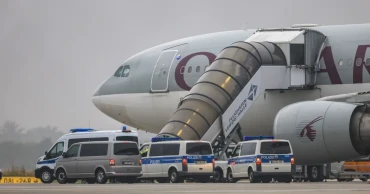
Germany deports 81 Afghan nationals to their homeland in 2nd flight since the Taliban's return
Germany deported 81 Afghan men to their home country on Friday, marking the second such repatriation since the Taliban regained control of Afghanistan in 2021 and the first under Chancellor Friedrich Merz's new government, which has vowed to implement stricter migration policies.
All of the deported individuals were men whose asylum applications had been denied and who had previously come to the attention of German judicial authorities. The deportation was conducted with the assistance of Qatar following several weeks of diplomatic negotiations. While Chancellor Merz confirmed that contact had been made with Afghan authorities, he declined to provide further details.
Germany had resumed deportations to Afghanistan over 10 months ago under the previous government led by then-Chancellor Olaf Scholz. At the time, Scholz pledged to intensify the removal of rejected asylum seekers.
Although Germany has not formally severed diplomatic ties with Afghanistan, it does not recognize the Taliban-led government in Kabul. “The key issue is how we engage with this regime, and for now, our interaction will remain at a technical coordination level,” Merz said during a press briefing in Berlin.
The Interior Ministry signaled intentions to carry out additional deportations to Afghanistan, though no specific timeline was provided.
Merz has made tightening immigration controls a central policy goal. Since taking office in May, his government has increased border police presence, expanded the border checks started under Scholz, and implemented policies to turn back certain asylum seekers. It has also suspended family reunification programs for many migrants.
Zelenskyy appoints Ukraine’s first new prime minister since Russian invasion
Germany has seen a notable drop in asylum applications — from 329,120 in 2023 to 229,751 last year — with numbers continuing to decline in 2025. “These figures suggest we are moving in the right direction, but the work is not yet complete,” Merz said.
The deportation flight came ahead of a scheduled migration summit hosted by Interior Minister Alexander Dobrindt. The meeting — taking place on Germany’s highest mountain, the Zugspitze, near the Austrian border — includes ministers from France, Poland, Austria, Denmark, and the Czech Republic, along with the EU's migration commissioner, Magnus Brunner.
10 months ago
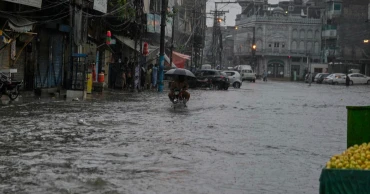
Heavy monsoon rains kill 54 in Pakistan
Heavy monsoon rains killed at least 54 people in eastern Pakistan in 24 hours, bringing the total rain-related deaths in the country to 178 over the past three weeks, officials said Thursday.
Rainfall has triggered flash floods and inundated several villages as the country experiences 82% more rainfall this month compared to the same period in July 2024, the Pakistan Meteorological Department said.
Since June 26, Pakistan has reported 178 deaths from Punjab, Khyber Pakhtunkhwa in the northwest, Sindh in the south and Balochistan in the southwest, officials said.
The 54 deaths in the past day occurred in Punjab province, which received 124% more rainfall between July 1 and July 15 than the same period the previous year, forecasters said.
Heavy downpours continued Thursday, flooding streets in several urban areas including Rawalpindi and Lahore. Cloudburst in the Jhelum district in Punjab triggered flash flooding, prompting authorities to use boats to evacuate dozens of people.
The National Disaster Management Authority issued an updated flood alert Thursday and urged local officials to remain on high alert. Tourists were advised to avoid travel to affected areas where rains could trigger landslides and block highways.
Television news footage Thursday showed an army helicopter plucking three members of a family from the roof of their house after they were stranded by a flash flood on the outskirts of Rawalpindi city.
More rain is expected in the capital Islamabad, Pakistan-administered Kashmir and other parts of the country, the meteorological department reported.
Authorities have warned they cannot rule out a repeat of extreme weather like the 2022 floods that inundated a third of the country, killing 1,737 people.
10 months ago

Imran Khan's ex-wife Reham Khan launches Pakistan Republic Party
Reham Khan, journalist and former wife of PTI founder Imran Khan, has formally entered Pakistan’s political arena by launching her own political party, the Pakistan Republic Party.
Speaking at a press conference at the Karachi Press Club, Reham Khan said, “I’ve never accepted political positions before. I joined a party once for just one person. But today, I stand on my own terms.”
She said her party aims to act as the voice of the people and will seek to hold the ruling elite accountable. According to Khan, the Pakistan Republic Party is a response to the growing public disillusionment with the current political system.
“This is not just a party, it’s a movement to convert politics into service,” she said. Reham also expressed gratitude to the Karachi Press Club, saying, “I had told the Karachi Press Club that whenever I would make an announcement, it would be from here. This place supported me in difficult times.”
Death toll rises to 16 in Pakistan building collapse
Reflecting on Pakistan’s persistent development challenges, she said, “From 2012 to 2025, the Pakistan I’ve witnessed still lacks clean drinking water and basic healthcare. That’s not acceptable anymore.”
Khan said her political journey is motivated by a genuine desire for change and not by a hunger for power. “Our parliament must reflect the people. Every class should be represented by someone who actually belongs to that class,” she added.
She criticised Pakistan’s dynastic politics and said her party had no external backing. “We are not here to serve personal empires. No one in our party will contest from four constituencies at one time, and we’re not here to play political games.”
Calling out the dominance of elite families, she said, “Only five families are sitting in the assemblies,” and pledged to bring forward leadership focused on public service. Reham Khan promised to unveil her party’s manifesto soon, stating that it would be rooted in constitutional values.
She concluded her address by saying she has come to “replace all the pig political people.”
Source: NDTV
10 months ago

India orders Boeing aircraft checks after deadly Air India crash
India’s aviation regulator has instructed airlines to inspect specific Boeing aircraft models following last month’s deadly Air India crash which killed 260 people.
On Monday, the Directorate General of Civil Aviation (DGCA) directed all carriers operating Boeing 787 Dreamliners and certain Boeing 737 variants to examine their fuel control switches. Airlines must complete inspections and report their findings by July 21.
The order comes after a preliminary investigation into the June 12 crash near Ahmedabad found both engines were deprived of fuel when the switches were flipped off almost simultaneously. The report, released last week, did not clarify how or why the switches moved from the “run” to the “cutoff” position mid-flight.
Fuel to Air India plane was cut off moments before crash, report says
The switches regulate fuel flow to the engines. The aircraft, a Boeing 787-8 Dreamliner, crashed shortly after takeoff, killing 241 of the 242 people onboard and 19 on the ground.
Investigators cited a 2018 U.S. Federal Aviation Administration advisory that recommended checking the locking mechanism of these switches on Boeing planes.
Cockpit audio recordings revealed a moment of confusion between the pilots, with one asking why the fuel had been cut. The other denied taking such action.
Some Indian aviation experts have suggested pilot error, though pilot unions strongly rejected such claims. The Indian Commercial Pilots’ Association condemned “reckless and unfounded” speculation, including theories of pilot suicide.
Air India CEO Campbell Wilson said the probe found no mechanical or maintenance faults with the aircraft. In a memo to staff, he noted the aircraft had passed all mandatory maintenance and safety checks, and the pilots were medically cleared.
Following the crash, Indian authorities ordered comprehensive checks of all 33 Dreamliners in Air India’s fleet.
10 months ago

Aura Farming: Indonesian boy’s viral dance shines global light on heritage boat race
An 11-year-old Indonesian boy has captured global attention with a viral video of him dancing on the front of a traditional boat, sparking an international trend known as “aura farming.”
The boy, Rayyan Arkhan Dikha—known online as Dika—was filmed performing calm, rhythmic movements in a traditional black outfit and sunglasses during a local boat race called pacu jalur in Riau province. The event, which dates back to the 1600s, is held every August to mark Indonesian Independence Day and has been recognized as part of Indonesia’s Intangible Cultural Heritage since 2015.
“Aura farming,” a term made popular in 2024, refers to consistently exuding coolness, often associated with anime characters or celebrities. Social media users have dubbed Dika “the ultimate aura farmer” as his poised performance on the bow of a narrow canoe has inspired countless recreations across TikTok and Instagram.
Indonesia's Mount Lewotobi Laki Laki volcano erupts, sends searing-hot ash miles high
Initially shared on TikTok in January by a user named Lensa Rams, the video has recently gone viral, with athletes and celebrities—like Paris Saint-Germain, NFL star Travis Kelce, and U.S. soccer player Diego Luna—mimicking Dika’s signature moves.
In recognition of his influence, Riau Governor Abdul Wahid named Dika a provincial tourism ambassador and awarded him a 20 million rupiah (about $1,200) scholarship. “The world is now seeing the rich culture of Riau, especially pacu jalur,” Wahid said.
Dika, who has been participating in the races since age nine, will return for this year’s competition in August. Speaking after meeting with Indonesia’s Culture Minister Fadli Zon, he said: “I’m happy that I’ve gone viral globally.”
Source: Arab News
10 months ago