Asia
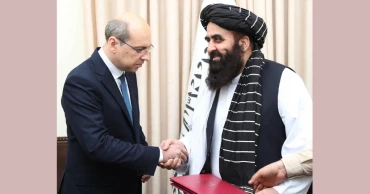
Russia becomes first state to recognise Afghanistan's Taliban government
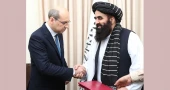
Russia has become the first nation to officially recognise the Taliban government in Afghanistan, drawing sharp criticism from opposition figures and rights activists.
The decisin marks a significant diplomatic breakthrough for the Taliban nearly four years after they seized control of Kabul and re-established their rule.
Afghanistan’s acting Foreign Minister Amir Khan Muttaqi expressed hope that Russia’s decision would encourage other nations to follow suit. So far, most countries have hesitated to recognise the Taliban administration due to its strict interpretation of Sharia law and severe restrictions on women and girls.
Critics, however, have strongly condemned Moscow’s recognition. Former Afghan politician Fawzia Koofi warned that normalising relations with the Taliban would not bring peace but rather embolden impunity. She further cautioned that such actions could endanger both Afghan citizens and global security.
The Afghan Women's Political Participation Network echoed these concerns, saying the recognition legitimises a "regime that is authoritarian, anti-women, and systematically dismantling basic civil rights."
The Taliban maintains that they respect women's rights within the framework of their interpretation of Afghan culture and Islamic law. However, since they regained power in 2021, girls above the age of 12 have been barred from receiving an education, and women have been excluded from many professions. Additional restrictions include limiting women’s ability to travel without a male guardian and bans on women raising their voices in public.
Russia launches largest air attack on Kyiv since war began
Muttaqi described Russia’s move, announced on Thursday, as the beginning of "a new phase of positive relations, mutual respect, and constructive engagement," calling the decision "courageous."
Russia’s Foreign Ministry, in a statement, highlighted prospects for expanded economic cooperation with Afghanistan in sectors such as energy, transportation, agriculture, and infrastructure. The ministry also pledged continued support to Kabul in fighting terrorism and drug trafficking.
Unlike many other countries, Russia kept its embassy in Kabul open after the Taliban took power in 2021, following the withdrawal of US and allied troops. In 2022, Russia also became the first country to sign a major economic agreement with the Taliban, involving the supply of oil, gas, and wheat to Afghanistan.
Earlier this year, in April, Russia removed the Taliban from its list of terrorist organisations, further paving the way for official engagement. Russian President Vladimir Putin had already referred to the Taliban as an "ally" in combating terrorism during remarks made in July last year.
The relationship between the two countries, however, remains complex. The Soviet Union, led by Russia, invaded Afghanistan in 1979, leading to a devastating nine-year conflict that resulted in the deaths of approximately 15,000 Soviet troops. The Soviet-backed government installed in Kabul faced international condemnation, eventually forcing a Soviet withdrawal in 1989.
In response to Russia’s latest decision, the Afghan Women's Political Participation Network recalled the Soviet invasion, saying they had not forgotten Russia’s role in Afghanistan’s destruction. The group accused Moscow of continuing its harmful interference under the guise of diplomacy.
Former Afghan National Security Adviser Dr Rangin Dadfar Spanta also criticised Russia's recognition, calling it "regrettable." He warned that in the absence of widespread opposition, other countries might follow Russia’s example.
Following the Taliban takeover in 2021, the United Nations imposed strict sanctions on Afghanistan, including the freezing of around $9 billion in assets. The UN has condemned the Taliban’s treatment of women, labelling the restrictions as "gender apartheid," while also reporting incidents of public floggings and brutal attacks on former government officials.
Despite widespread international refusal to recognise the Taliban, some countries have maintained or adjusted their relations. Germany, for example, is considering re-establishing deportations of convicted Afghan criminals. Although Germany halted deportations after the Taliban’s return to power, politician Alexander Dobrindt said Thursday that Berlin should negotiate directly with Afghan authorities to resume deportations.
However, the UN Human Rights Office warned on Friday that returning individuals to Afghanistan would be inappropriate, citing ongoing human rights violations under the Taliban regime.
While most countries shut their embassies in Kabul after 2021, a few—including China, the United Arab Emirates, Uzbekistan, and Pakistan—continue to maintain formal diplomatic representation by appointing ambassadors to Afghanistan.
#With Inputs from BBC
11 months ago

Russia becomes first country to officially recognize Taliban’s rule in Afghanistan
Russia on Thursday became the first nation to officially recognize the Taliban government in Afghanistan since the group took control in 2021, following Moscow’s decision to remove the Taliban from its list of banned organizations.
The Russian Foreign Ministry confirmed it had accepted the credentials of Afghanistan’s newly appointed Ambassador, Gul Hassan Hassan. In a statement, the ministry said this formal recognition would help promote “productive bilateral cooperation.”
Afghanistan’s Foreign Ministry described the move as historic, quoting Taliban Foreign Minister Amir Khan Muttaqi, who welcomed the decision as “a good example for other countries.”
The Taliban regained power in Afghanistan in August 2021 after U.S. and NATO troops withdrew. Since then, they have been pushing for international recognition while enforcing a strict version of Islamic law.
Until now, no country had formally recognized the Taliban regime, though the group maintained diplomatic contacts and held high-level discussions with several countries, including China and the United Arab Emirates.
Despite those efforts, the Taliban government has remained largely isolated globally, primarily due to its severe restrictions on women.
Foreign Ministers laud progress in China-Afghanistan-Pakistan trilateral cooperation
Although the Taliban initially pledged a more moderate rule compared to their first period in power from 1996 to 2001, they began imposing strict limitations on women and girls shortly after the 2021 takeover. Women are barred from most jobs and public spaces, such as parks, gyms, and bathhouses, while girls are prohibited from education beyond grade six.
Russian officials have recently stressed the importance of engaging with the Taliban to support stability in Afghanistan, and in April, lifted the ban on the group.
Russia’s ambassador to Afghanistan, Dmitry Zhirnov, told state-run Channel One that President Vladimir Putin approved the recognition of the Taliban government based on recommendations from Foreign Minister Sergey Lavrov.
Afghanistan's central bank to inject $25m to keep local currency stable
Zhirnov said the decision reflects Russia’s “sincere desire to build full-scale relations with Afghanistan.”
Source: Agency
11 months ago
China opposes trade deals that undermine its interests, says Commerce Ministry
China strongly opposes any country making trade deals that undermine its interests, a spokesperson for the Ministry of Commerce said on Thursday.
Spokesperson He Yongqian responded to media inquiries regarding the recent trade agreement between the United States and Vietnam, noting that China is currently assessing the situation.
He described the U.S. imposition of "reciprocal tariffs" on trade partners as a form of unilateral bullying, a practice China consistently opposes.
The spokesperson emphasized that China supports efforts by other nations to resolve trade disputes with the U.S. through equal-footing consultations but firmly rejects any agreements made at China's expense.
She warned that if such situations occur, China will take decisive countermeasures to defend its legitimate rights and interests.
11 months ago

Japan Islanders sleepless after 900 earthquakes in two weeks
More than 900 earthquakes have shaken a remote and underpopulated island chain in southern Japan over two weeks, keeping residents apprehensive and awake all night.
There have been no reports of damage and no tsunami awareness has been raised but authorities have advised residents to prepare to evacuate if needed.
"It's very scary to even fall asleep," one resident told the regional broadcaster MBC. "It feels like it's always shaking."
The Tokara area has experienced many earthquakes formerly but the frequency of the most recent tremors has been abnormal, according to local media.
Japan is one of the most seismically active nations on Earth as it is located on the so-called Pacific Ring of Fire, where many tectonic plates meet. It experiences about 1,500 earthquakes each year.
About 700 people live on seven of the 12 Tokara islands. There are no nearby hospitals in the islands and the nearest is at least six hours by ferry to the prefectural capital, Kagoshima.
In Toshima village, some residents have been exhausted and sleepless, authorities said, as they persuaded the media to stop overwhelming locals with queries.
China, EU aim to deepen cooperation on global issues
"We ask that you be considerate and not make excessive inquiries or interviews," according to a notice on the village website. Some guesthouses on the Tokara islands denied accepting tourists because of the earthquakes, Toshima Village said on its website, noting that they might be used as shelters for locals.
This series of tremors come as the country as a whole has been kept anxious by the rumours of the occurrence of a terrifying earthquake. A 1999 comic book by manga artist Ryo Tatsuki has been spreading these rumors. In a new edition released in 2021, she claimed the next big earthquake would occur on 5 July this year.
These speculations have alarmed some tourists, with several media reporting a large number of trip cancellations.
The vast majority of earthquakes that hit Japan are moderate, but there are some that cause massive damage, like the one in 2011 that caused a massive tsunami into the north-east coast, killing more than 18,000 people.
However, authorities have for decades been scared of the "big one" - a once-in-a-century megaquake that many had been warned about growing up. Worst-case scenarios predict it could kill 300,3000 people.
Earlier this week, the government called for new precautions , such as building embankments and evacuation buildings, to enhance public readiness in case of such a disaster - but it warned that much more needs to be done.
11 months ago
Indonesia finds 31 survivors as ferry sinks near Bali
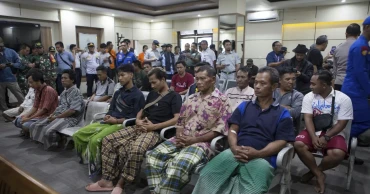
Rescue operations were underway on Thursday to locate 29 missing people after a ferry sank off Indonesia's popular resort island of Bali, leaving at least five dead.
According to the National Search and Rescue Agency, 31 people were rescued from the vessel, which had 53 passengers and 12 crew members on board when it sank on Wednesday night.
“The ferry is completely submerged, and there’s a chance some people are trapped inside. However, for now, we’re concentrating the search on the water’s surface,” said Nanang Sigit, head of the Surabaya Search and Rescue team.
The five recovered bodies will be returned to their families in Banyuwangi, East Java, Sigit added.
Authorities said the KMP Tunu Pratama Jaya ferry sank roughly 30 minutes after departing Ketapang Port in Banyuwangi for Bali’s Gilimanuk Port, a short 5-kilometer (3.1-mile) journey.
Rescue teams deployed a helicopter and 15 boats to search for survivors, assisted by fishermen and coastal residents.
Rough sea conditions have complicated the search efforts. Strong waves reaching up to 2 meters (6.5 feet) and poor visibility hindered operations overnight. Although the weather improved Thursday morning, the Meteorology, Climatology and Geophysics Agency reported waves as high as 2.5 meters (8.2 feet) with strong currents and winds persisting in the afternoon.
Serbian police detain 79 protesters as dissent persists against populist president
“Today’s search is focused on the waters between the accident site and Gilimanuk Port, where initial victims were found,” Sigit stated.
An officer at the port reportedly saw the ferry sinking before rescue teams could be dispatched. "The vessel couldn’t be contacted by radio initially, but communication was eventually established with other ships. By then, the ferry was already listing," Sigit explained.
Many survivors were found unconscious after drifting for hours in rough seas, Banyuwangi Police Chief Rama Samtama Putra said.
Authorities have launched an investigation into the cause of the incident. Survivors reported a leak in the ferry’s engine room. The ferry was carrying 22 vehicles, including 14 trucks.
Relatives of passengers gathered at the port, visibly distressed and desperate for news.
Those rescued were taken to nearby medical facilities, including Bali’s Jembrana Regional Hospital.
Supardi, a 64-year-old survivor, described his harrowing experience. “When the ferry began to tilt, I thought of jumping into the sea, but the ship sank too quickly. I went down with the water, maybe 7 meters deep, before managing to climb to the surface,” he said.
He and three others stayed afloat by using life jackets until rescuers arrived.
Ferry accidents are frequent in Indonesia, a sprawling archipelago of over 17,000 islands, where lax safety standards and overloading often contribute to maritime disasters.
11 months ago
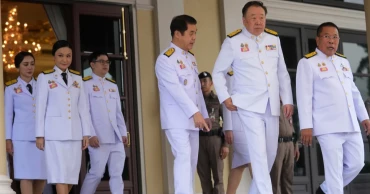
Thailand's new cabinet members take oaths, including suspended PM
Thailand’s new Cabinet members took their oaths of office Thursday, including the suspended prime minister who is under an ethics investigation for her remarks to a senior Cambodian leader.
Paetongtarn Shinawatra was suspended as prime minister Tuesday, the same day Thailand's king endorsed a Cabinet lineup in which she would be the culture minister.
Paetongtarn was smiling as she arrived at Government House for the swearing-in ceremony with other new members, but did not answer questions.
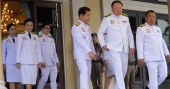
Acting Prime Minister Suriya Jungrungreangkit led the new Cabinet members at the ceremony to receive the endorsement from King Maha Vajiralongkorn.
Suriya is expected later to assign the acting prime minister duty to Phumtham Wechayachai, who was sworn in Thursday as deputy prime minister and interior minister. Phumtham had been deputy prime minister and defense minister since Paetongtarn took office last year.
Thai Prime Minister Paetongtarn suspended over leaked phone call controversy
Paetongtarn has faced growing dissatisfaction over her handling of a border dispute with Cambodia, including an armed confrontation in May in which a Cambodian soldier was killed.
In a leaked phone call with Cambodian Senate President Hun Sen, she attempted to defuse tensions — but instead set off a string of complaints and public protests. Critics said she went to far in appeasing Hun Sen and damaged Thailand's image and reputation.
The Constitutional Court voted unanimously Tuesday to review a petition accusing her of a breach of the ethics, and voted 7-2 to immediately suspend her until it issues its ruling. The court gave Paetongtarn 15 days to give evidence to support her case. It's unclear when it will rule.
11 months ago

29 rescued, 32 missing after ferry sinks near Bali, Indonesia
Rescuers were searching Thursday for 32 people missing after a ferry sank the previous night near Indonesia’s resort island of Bali. Four bodies have been recovered, and weather and sea conditions were improving during the morning, aiding the search for survivors.
So far, 29 people have been rescued, according to the National Search and Rescue Agency.
Family members came to the departure port in panic, some weeping, as they sought reassurance about their loved ones and hoped they were among the survivors.
Nine boats, including two tug boats and two inflatable boats, as well as local fishermen and people onshore searched for people. Strong waves up to 2 meters (6.5 feet) high and darkness had hampered the search overnight, but a rescue official said improved weather and sea conditions in the morning made it easier for rescuers to continue the search for the missing victims.
The KMP Tunu Pratama Jaya sank almost half an hour after leaving Ketapang port in the East Java town of Banyuwangi late Wednesday, bound for Bali’s Gilimanuk port, a 50-kilometer (30-mile) trip.
Death toll rises to 36 in India pharma factory blast
The ferry carried 53 passengers, 12 crew members and 22 vehicles, including 14 trucks, the National Search and Rescue Agency said in a statement.
The ferry sinking was witnessed by the on-duty officer at the port before it was reported to the rescue team.
“The ferry could not be contacted via radio from the beginning. Then it could be contacted by other ships from the same company. But the ship was already in a tilting condition,” said Nanang Sigit, head of Surabaya Search and Rescue agency, in a statement.
“For today’s search we are focusing on searching on the water, as the initial victims were found in the water between the location of the accident toward Gilimanuk port,” Sigit said.
Many of those rescued were unconscious after drifting in choppy waters for hours, said Banyuwangi police chief Rama Samtama Putra.
Ferry tragedies are common in Indonesia, an archipelago of more than 17,000 islands, where ferries are often used as transport and safety regulations can lapse.
11 months ago
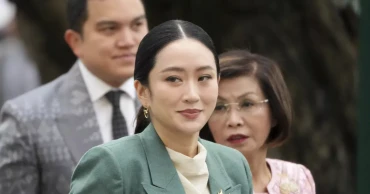
Thai Prime Minister Paetongtarn suspended over leaked phone call controversy
Thailand's Constitutional Court on Tuesday suspended Prime Minister Paetongtarn Shinawatra from office, pending an investigation into allegations that she breached ethical standards during a leaked phone conversation with a senior Cambodian leader regarding a border dispute.
Paetongtarn, who has faced mounting criticism over her handling of the dispute that escalated into an armed clash on May 28, allegedly appeared overly submissive to Cambodian Senate President Hun Sen during the call. The confrontation resulted in the death of a Cambodian soldier.
The leaked audio, intended to ease tensions, instead provoked widespread backlash, sparking public protests and accusations that Paetongtarn compromised national interests.
The court voted unanimously to examine the complaint and, by a 7-2 margin, decided to suspend Paetongtarn with immediate effect while the investigation is underway. She has been granted 15 days to present her defense.
Following the court's decision, Paetongtarn defended her actions, stating, "I only thought of ways to avoid conflict and prevent casualties among soldiers." She also expressed regret to those upset over the leaked conversation and left Government House shortly after.
Deputy Prime Minister and Transport Minister Suriya Jungrungruangkit has been appointed as acting prime minister, said Chousak Sirinil, minister in the prime minister's office.
The suspension comes amid political unrest and growing dissatisfaction with Paetongtarn and her Pheu Thai party. Critics have labeled her government’s performance as disappointing, while Thailand faces economic challenges.
Thailand banning cannabis sales without prescription 3yrs after decriminalisation
The leaked phone call added fuel to the controversy. In it, Paetongtarn urged Hun Sen — a close ally of her father, former Prime Minister Thaksin Shinawatra — to disregard criticism from a Thai regional army commander, referring to him as "an opponent." The remarks angered nationalists and conservatives, triggering protests in Bangkok demanding her resignation.
Paetongtarn also faces a separate investigation by another state agency over the leaked call, which could lead to her removal.
Her suspension has drawn parallels to previous political turmoil in Thailand, where courts and unelected institutions have frequently intervened against elected leaders. Both her father Thaksin, ousted in a 2006 coup, and her aunt Yingluck Shinawatra, removed by court order in 2014, experienced similar fates.
“This recurring cycle of political instability will continue unless Thailand enacts genuine democratic reforms to curb the power of unelected institutions,” said Purawich Watanasukh, a political science lecturer at Thammasat University.
Meanwhile, Thaksin, a polarizing figure in Thai politics, appeared in court Tuesday over a 2015 defamation case involving the monarchy. He also faces scrutiny over his controversial return to Thailand in 2023, when he was granted clemency on corruption charges after avoiding prison.
The Shinawatra family's influence, once firmly rooted among Thailand's rural and working-class supporters, has shown signs of weakening. Many of Thaksin’s former supporters were disillusioned after his behind-the-scenes deal with conservatives, which sidelined the reformist Move Forward Party despite its election victory.
Thailand to tighten cannabis rules amid rise in smuggling
Thailand's courts, especially the Constitutional Court, are widely viewed as protectors of the royalist establishment, often accused of using legal mechanisms to undermine political rivals.
Source: Agency
11 months ago
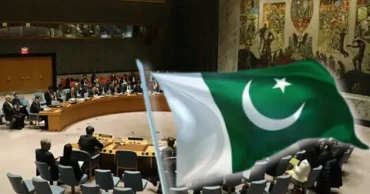
Pakistan to lead UN Security Council in July
Pakistan will take over the presidency of the United Nations Security Council (UNSC) starting Tuesday, overseeing the council’s proceedings throughout July, according to state media reports.
This marks a key moment in Pakistan’s ongoing two-year term as a non-permanent member of the Security Council, which began in January 2025.
Islamabad secured the position with a strong mandate, receiving 182 votes out of 193 during the election.
US vetoes UN security council call for immediate Gaza ceasefire
The presidency of the UNSC rotates every month among its 15 member states, following the alphabetical order of their names.
For July, the responsibility falls to Pakistan, placing it at the helm of one of the UN’s most influential bodies.
Source: With inputs from PTI
11 months ago
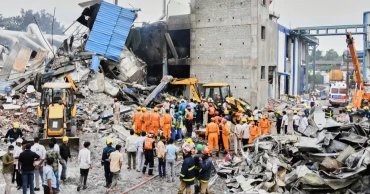
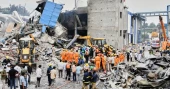
Death toll rises to 36 in India pharma factory blast
The death toll from Monday's massive explosion and fire at a pharmaceutical factory in India’s southern state of Telangana has risen to at least 36 while about three dozen were left injured, authorities said Tuesday.
The fire department recovered the charred bodies of 34 workers from the accident site in an industrial area about 50 kilometres (31 miles) from the state capital Hyderabad, the state’s fire services director GV Narayana Rao told The Associated Press.
Two other workers succumbed to burns and were pronounced dead in hospital, Rao said, adding that debris of the gutted pharmaceutical unit of Sigachi Industries was still being removed to find out if any more workers were trapped.
Nearly three dozen injured workers were admitted to hospitals, he said.
“The whole structure of the factory has collapsed. Fire has been doused, and we hope to finish removing the debris in the next few hours,” Rao said.
Sigachi Industries did not disclose what led to the explosion and fire, but said the plant's core manufacturing infrastructure was damaged and facility operations would be halted for 90 days. The plant produces microcrystalline cellulose, a chemical compound commonly used in making drugs, the company said.
At least 8 killed in explosion and fire at pharmaceutical factory in India
The explosion and subsequent fire was reported on Monday in the factory’s spray dryer unit, which is used to process raw material into fine powder for making drugs, Rao said.
The state’s Health Minister Damodar Raja Narasimha said there were 108 workers inside the factory at the time of the explosion.
“As bodies were badly burnt and mutilated, a special medical team has been deployed to conduct DNA tests”, said Narasimha, adding the state government has set up a panel to investigate the cause of the incident.
Witnesses said they heard the explosion from a couple of kilometers away from the site.
India is home to some of the world’s top pharmaceutical companies, playing a pivotal role in the global supply of generic medicines and vaccines. The country’s robust manufacturing and cost-effective production have made it a hub for pharma giants.
11 months ago