asia

Beijing threatens response to ‘unacceptable’ virus measures
The Chinese government sharply criticized COVID-19 testing requirements imposed on visitors from China and threatened countermeasures against countries involved, which include the U.S. and several European nations.
“We believe that the entry restrictions adopted by some countries targeting China lack scientific basis, and some excessive practices are even more unacceptable,” Foreign Ministry spokesperson Mao Ning said at a daily briefing Tuesday.
“We are firmly opposed to attempts to manipulate the COVID measures for political purposes and will take countermeasures based on the principle of reciprocity,” she said. Mao did not specify what steps China might take.
Read more: EU, Beijing heading for collision over China’s COVID crisis
The comments were China’s sharpest to date on the issue. Australia and Canada this week joined a growing list of countries requiring travelers from China to take a COVID-19 test prior to boarding their flight, as China battles a nationwide outbreak of the coronavirus after abruptly easing restrictions that were in place for much of the pandemic.
Other countries including the U.S., India, Japan, South Korea and several European nations have announced tougher COVID-19 measures on travelers from China amid concerns over a lack of data on infections in China and fears that new variants may emerge.
China has had some of the toughest entry requirements for people arriving from abroad. It is about to drop a mandatory five-day quarantine for all arrivals but will still require a negative COVID-19 test within 48 hours of the flight.
White House press secretary Karine Jean-Pierre said “there’s no cause for retaliation” by Beijing for countries “taking prudent health measures to protect their citizens” with COVID-related restrictions on travelers coming from China. She added that restrictions were “based on public health and science.”
“This is something that all of us, (and) other countries are doing to make sure that we are protecting our citizens here,” Jean-Pierre said.
French Prime Minister Elisabeth Borne defended the tests. Starting Wednesday, anyone flying from China to France will have to present a negative virus test taken within the previous 48 hours and be subject to random testing on arrival.
“We are in our role, my government is in its role, protecting the French,” Borne said Tuesday on France-Info radio.
The U.K. will require that passengers from China take a COVID test before boarding the plane from Thursday. Transport Secretary Mark Harper said the requirement is for “collecting information” because Beijing isn’t sharing coronavirus data.
Health officials will test a sample of passengers when they arrive in the U.K., but no quarantine is required for those who test positive, he said.
“The policy for arrivals from China is primarily about collecting information that the Chinese government is not sharing with the international community,” Harper told the LBC radio station on Tuesday.
Sweden’s Public Health Agency said Tuesday that it had urged the government to require travelers from China to present a recent negative COVID-19 test.
Read more: Lack of info on China’s COVID-19 surge stirs global concern
The statement from the agency comes as Sweden, which has taken over EU’s rotating presidency, has called a meeting of the EU’s crisis management mechanism for Wednesday to try to agree on a common European line.
The Swedish government “is preparing to be able to introduce travel restrictions. At the same time, we are conducting a dialogue with our European colleagues to get the same rules as possible in the EU,” Justice Minister Gunnar Strömmer said in a statement.
Austria, too, plans to test the wastewater of all planes arriving from China for new variants of the coronavirus, the Austria Press Agency reported Tuesday, following a similar announcement by Belgium a day earlier.
Chinese health officials said last week that they had submitted data to GISAID, a global platform for sharing coronavirus data.
The versions of the virus fueling infections in China “closely resemble” those that have been seen in different parts of the world between July and December, GISAID said Monday.
Dr. Gagandeep Kang, who studies viruses in the Christian Medical College of Vellore in India, said that the information from China, albeit limited, seemed to suggest that “the pattern was holding” and that there wasn’t any sign of a worrisome variant emerging.
Mi Feng, the spokesperson for China’s National Health Commission, said authorities have been open and transparent since the start of the pandemic three years ago. China held technical exchange meetings twice with the WHO last month on the overall situation, medical treatment, vaccination and other issues, he said Tuesday.
A senior Hong Kong official also criticized the steps taken by some other countries. Some have applied the requirements to passengers from Hong Kong and Macao, both semiautonomous Chinese territories, as well as mainland China.
Hong Kong Chief Secretary Eric Chan said in a Facebook post that the government had written to various consulates on Monday to express its concerns over the “unnecessary and inappropriate” rules.
Some experts have questioned the effectiveness of the testing. Kerry Bowman, assistant professor at the University of Toronto’s Temerty Faculty of Medicine, said that people can test positive long after entering the country.
The requirement is “not based on science at this point,” he said after Canada announced measures last weekend.
China, which for most of the pandemic adopted a “zero-COVID” strategy that imposed harsh restrictions aimed at stamping out the virus, abruptly eased those measures in December.
Chinese authorities previously said that from Jan. 8, overseas travelers would no longer need to quarantine upon arriving in China, paving the way for Chinese residents to travel.
3 years ago

Myanmar army leader touts election plan on Independence Day
Myanmar’s ruling military leader, Senior Gen. Min Aung Hlaing, on Wednesday described plans for an election later this year and called for national unity in a speech as he led a ceremony marking the 75th anniversary of independence from Britain.
He urged other nations and international organizations, as well as his country’s own people, to support “the genuine, discipline-flourishing multiparty democratic system,” a concept the ruling military has defined as its goal.
The first real move toward holding polls could occur at the end of this month, when the latest six-month extension of a state of emergency is completed. The state of emergency was instituted to allow military rule after the army seized power in February 2021 from the elected government of Aung San Suu Kyi.
The army’s takeover reversed nearly a decade of progress toward democracy after five decades of military rule. The military has said it acted due to massive voting fraud in the poll, though independent election observers did not find any major irregularities.
Read: Court in Myanmar again finds Suu Kyi guilty of corruption
“Upon accomplishing the provisions of the state of emergency, free and fair elections will be held in line with the 2008 constitution, and further work will be undertaken to hand over state duties to the winning party in accordance with the democratic standards,” Min Aung Hlaing declared in his speech in the capital, Naypyitaw, where he also presided over a large-scale parade.
Military units and civil servants marched in formation close to the grandiose parliament complex while fighter jets, bombers and helicopters flew overhead.
The plan for a general election is widely seen as an attempt to normalize the military’s seizure of power through the ballot box and to deliver a result that ensures the generals retain control. The military will control the entire process and has spent the past two years enfeebling any credible opposition.
Although not officially outlawed, the National League for Democracy, the popular former ruling party, has effectively been broken up, with its leaders and many of its members either in jail or in hiding. All forms of dissent are currently suppressed by the security forces, sometimes with lethal force.
Read: Myanmar's military regime must end its violence, release those unjustly detained: US
The NLD, led by Suu Kyi, won a second successive landslide victory in the 2020 general election, a result that triggered its overthrow by the military the following year.
The army’s seizure of power led to peaceful nationwide protests that the security forces quashed with deadly force, triggering armed resistance that some U.N. experts characterize as civil war.
Myanmar’s history even before the 2021 takeover was marked marked by decades of armed conflict between the central government and ethnic minorities seeking greater autonomy, mostly in border regions.
Armed conflict still rages through most of the country, and Min Aung Hlaing stressed that “the cessation of internal armed conflicts to ensure national solidarity and peace which are absolute necessities for our country and strenuous efforts are being made towards that end.”
Min Aung Hlaing’s government’s toppling of democracy and fierce repression of all opposition have also made it a pariah state among many other countries, which have instituted political and economic sanctions against the ruling generals.
“It is seen that some organizations and countries had meddled in the internal affairs of Myanmar. However, we have decided to stand firm globally, while adhering to our foreign policy in order to safeguard the sovereignty, security and interests of our nation,” he said.
3 years ago
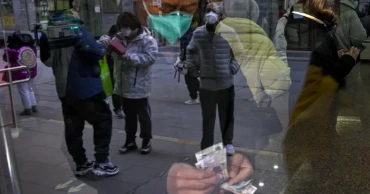
Beijing threatens response to ‘unacceptable’ virus measures
The Chinese government sharply criticized COVID-19 testing requirements imposed on passengers from China and threatened countermeasures against countries involved, which include the U.S. and several European nations.
“We believe that the entry restrictions adopted by some countries targeting China lack scientific basis, and some excessive practices are even more unacceptable,” Foreign Ministry spokesperson Mao Ning said at a daily briefing Tuesday.
“We are firmly opposed to attempts to manipulate the COVID measures for political purposes and will take countermeasures based on the principle of reciprocity,” she said. Mao did not specify what steps China might take.
The comments were China’s sharpest to date on the issue. Australia and Canada this week joined a growing list of countries requiring travelers from China to take a COVID-19 test prior to boarding their flight, as China battles a nationwide outbreak of the coronavirus after abruptly easing restrictions that were in place for much of the pandemic.
Other countries including the U.S., U.K., India, Japan and several European nations have announced tougher COVID-19 measures on travelers from China amid concerns over a lack of data on infections in China and fears of the possibility that new variants may emerge.
French Prime Minister Elisabeth Borne defended the tests. Starting Wednesday, anyone flying from China to France will have to present a negative virus test taken within the previous 48 hours and be subject to random testing on arrival.
“We are in our role, my government is in its role, protecting the French,” Borne said Tuesday on France-Info radio.
The U.K. will require that passengers from China take a COVID test before boarding the plane from Thursday. Transport Secretary Mark Harper said the requirement is for “collecting information” because Beijing isn’t sharing coronavirus data.
Health officials will test a sample of passengers when they arrive in the U.K., but no quarantine is required for those who test positive, he said.
“The policy for arrivals from China is primarily about collecting information that the Chinese government is not sharing with the international community,” Harper told the LBC radio station on Tuesday.
Sweden’s Public Health Agency said Tuesday that it had urged the government to require travelers from China to present a recent negative COVID-19 test.
The statement from the agency comes as Sweden, which has taken over EU’s rotating presidency, has called a meeting of the EU’s crisis management mechanism for Wednesday to try to agree on a common European line.
Read more: Lack of info on China’s COVID-19 surge stirs global concern
The Swedish government “is preparing to be able to introduce travel restrictions. At the same time, we are conducting a dialogue with our European colleagues to get the same rules as possible in the EU,” Justice Minister Gunnar Strömmer said in a statement.
Austria, too, plans to test the wastewater of all planes arriving from China for new variants of the coronavirus, the Austria Press Agency reported Tuesday, following a similar announcement by Belgium a day earlier.
Chinese health officials said last week that they had submitted data to GISAID, a global platform for sharing coronavirus data.
The versions of the virus fueling infections in China “closely resemble” those that have been seen in different parts of the world between July and December, GISAID said Monday.
Dr. Gagandeep Kang, who studies viruses in the Christian Medical College of Vellore in India, said that the information from China, albeit limited, seemed to suggest that “the pattern was holding” and that there wasn’t any sign of a worrisome variant emerging.
Mao, the Chinese Foreign Ministry spokesperson, said that health authorities had recently held a video conference with the WHO to exchange views on the current COVID situation, medical treatment, vaccination and other technical issues, and agreed to continue technical exchanges to help end the pandemic as soon as possible.
A senior Hong Kong official also criticized the steps taken by some other countries. Some countries have applied the requirements to passengers from Hong Kong and Macao, both semiautonomous Chinese territories, as well as mainland China.
Hong Kong Chief Secretary Eric Chan said in a Facebook post that the government had written to various consulates on Monday to express its concerns over the “unnecessary and inappropriate” rules.
Some Canadian experts have questioned the effectiveness of the testing. Kerry Bowman, assistant professor at the University of Toronto’s Temerty Faculty of Medicine, said that people can test positive long after entering the country.
The requirement is “not based on science at this point,” he said after Canada announced measures last weekend.
Read more: China to resume issuing passports, visas as virus curbs ease
China, which for most of the pandemic adopted a “zero-COVID” strategy that imposed harsh restrictions aimed at stamping out the virus, abruptly eased those measures in December.
Chinese authorities previously said that from Jan. 8, overseas travelers would no longer need to quarantine upon arriving in China, paving the way for Chinese residents to travel.
3 years ago
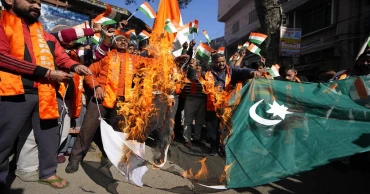
2 kids among 6 people die in Kashmir village attack: Police
Two children were killed and five other civilians wounded in a blast in a village in Indian-controlled Kashmir on Monday, a day after assailants sprayed bullets toward a row of homes, leaving at least four dead, police said.
The blast occurred near one of the houses targeted overnight in Dhangri village in southern Rajouri district. A 5-year-old boy and a 12-year-old girl died in the blast. The injured were being treated at a hospital.
On Sunday night, two gunmen indiscriminately opened fire at three houses in Dhangri, top police officer Mukesh Singh told reporters. He said four civilians were killed and five others were wounded.
Police blamed militants fighting against Indian rule for carrying out the two attacks at Dhangri, which is close to the highly militarized Line of Control that divides the disputed region between India and Pakistan.
It was unclear whether the explosive was left behind by the attackers.
Authorities rushed police and soldiers to the area and were searching for the attackers.
Hundreds of people assembled in Dhangri to protest the killings, chanting slogans denouncing the attackers. Nearly three dozen people in the southern city of Jammu also protested the killings that Manoj Sinha, New Delhi’s top administrator in the region, condemned as a “cowardly terror attack.”
“I assure the people that those behind this despicable attack will not go unpunished,” he said.
India and Pakistan each claim the divided territory of Kashmir in its entirety.
Rebels in the Indian-controlled portion of Kashmir have been fighting New Delhi’s rule since 1989. Most Muslim Kashmiris support the rebel goal of uniting the territory, either under Pakistani rule or as an independent country.
India insists the Kashmir militancy is Pakistan-sponsored terrorism. Pakistan denies the charge, and most Kashmiris consider it a legitimate freedom struggle. Tens of thousands of civilians, rebels and government forces have been killed in the conflict.
3 years ago
Floods in Philippines leave 51 dead, over a dozen missing
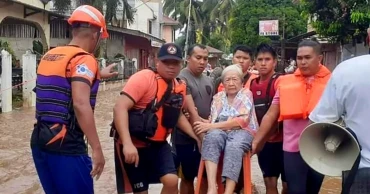
The death toll in the massive floods that devastated parts of the Philippines over the Christmas weekend has climbed to 51, with 19 others missing, the national disaster response agency said Monday, as affected residents struggle to get back on their feet.
Photos on social media showed residents in Misamis Occidental province in Northern Mindanao sweeping away thick mud from the floors of their homes. In the seaside village of Cabol-anonan, coconut trees were uprooted and huts made of light material were nearly flattened.
Read more: Rain, floods in Philippines leave 32 dead, others missing
The Northern Mindanao region in the south bore the brunt of the disaster, reporting 25 deaths, according to the National Disaster Risk Reduction and Management Council. Most of the deaths were from drowning and landslides, and among the missing were fishermen whose boats capsized.
Floods have subsided in most of the areas hit by bad weather that disrupted Christmas celebrations in the eastern, central and southern Philippines. But over 8,600 of the nearly 600,000 affected people remain in emergency shelters.
Over 4,500 houses were damaged by the floods, along with roads and bridges, and some areas still have disrupted power and water supply, the disaster management agency said. The government sent food and other essentials to flood-hit residents, deployed heavy equipment for clearing operations, and provided iron sheets and shelter repair kits, officials said. Teams from the capital Manila were sent to assist communities with limited clean water in setting up water filtration systems.
Read more: Philippine rain, flooding cause at least 25 deaths
At least 22 cities and municipalities have declared a state of calamity, the disaster management council said. The move will allow the release of emergency funds and hasten rehabilitation efforts.
A shear line — the point where warm and cold air meet — triggered heavy rains in parts of the country last week, causing the floods, the state weather bureau said.
3 years ago

Iran tests military drones in wargame near Strait of Hormuz
Iran’s military tested new attack drones in the coastal area of the Gulf of Oman and near the strategic Strait of Hormuz Saturday as part of its ongoing annual drill, state TV reported.
Meanwhile, antigovernment protests underway for over three months continued. Videos on social media showed protests in Tehran’s grand bazaar and several cities and towns including in the Kurdish area. Part of Tehran’s bazaar closed in the wake of the protests which authorities cracked down on.
State TV said the Ababil-5 attack drone was used during wargames for the first time and successfully hit its target with a bomb after traveling 400 kilometers (250 miles). Iran has tested many other military drones over the past decade.
The military drones have been a point of contention between Iran and the United States and its allies, which claim Tehran is supplying Moscow with drones that have been used in attacks in West-backed Ukraine.
In November, Iran acknowledged it has supplied Russia with drones, adding that the supply came before Moscow’s war in Ukraine. Iran says it is committed to stopping the conflict.
Read more: White House: Iran set to deliver armed drones to Russia
The Strait of Hormuz is located at the mouth of the Persian Gulf and is crucial to global energy supplies, with about a fifth of all oil traded at sea passing through it.
Commandos and airborne infantry participated in the wargames, dubbed “Zolfaghar-1401,” along with fighter jets, helicopters, military transport aircraft and submarines. Iran’s military will fire missiles and air defense systems as well. Iran regularly holds such drills to improve its defensive power and test weapons.
Since mid-September, Iran has been shaken by antigovernment protests which were ignited by the death of a woman who was detained by the country’s morality police. The demonstrations rapidly escalated into calls for an end to more than four decades of the country’s clerical rule.
Read more: Iranian troops in Crimea supporting Russian drone attacks, says US
More than 500 protesters have been killed and over 18,500 people have been arrested, according to Human Rights Activists in Iran, a group that has closely monitored the unrest. Iranian authorities have not released figures for those killed or arrested.
3 years ago
NKorea's Kim orders 'exponential' expansion of nuke arsenal
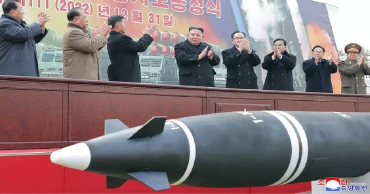
North Korean leader Kim Jong Un ordered the “exponential” expansion of his country's nuclear arsenal and the development of a new, more powerful intercontinental ballistic missile, state media reported Sunday, after he entered 2023 with another weapons test following a record number of missile firings last year.
Kim’s moves are in line with the broad direction of his nuclear weapons development program as he has repeatedly vowed to boost both the quality and quantity of his arsenal. Some experts said Kim will likely continue a provocative run of weapons tests this year before he would ultimately try to use his enlarged arsenal to wrest concessions like sanctions relief in future dealings with his rivals.
“They are now keen on isolating and stifling (North Korea), unprecedented in human history,” Kim said at a recently ended ruling party meeting, according to the official Korean Central News Agency. “The prevailing situation calls for making redoubled efforts to overwhelmingly beef up the military muscle to thoroughly guarantee the sovereignty, security and fundamental interests of (the country).”
Kim accused South Korea of being “hell-bent on imprudent and dangerous arms build-up” and openly trumpeting its preparations for war with North Korea. That, Kim said, highlights the need to mass-produce battlefield tactical nuclear weapons and calls for “an exponential increase of the country’s nuclear arsenal,” KCNA said.
Kim also set forth a task to develop another ICBM system “whose main mission is quick nuclear counterstrike," KCNA said, without elaborating.
Read more: North Korea's Kim lays out key goals to boost military power
Kim accused the United States of frequently deploying nuclear strike means in South Korea, boosting trilateral military cooperation with South Korea and Japan and pushing to establish a NATO-like regional military bloc.
Tactical nuclear weapons and a military reconnaissance satellite are among an array of weapons systems that Kim has vowed to introduce in recent years. Other weapons he wants include a multi-warhead missile, a more agile solid-fueled ICBM, an underwater-launched nuclear missile and a hypersonic weapon.
Outside worries about North Korea’s nuclear program have grown since the North last year approved a new law that authorized the preemptive use of nuclear weapons in a broad range of situations and openly threatened to use its nuclear weapons first.
During his speech at the party meeting, Kim reiterated that threat.
“(Kim's report) made clear that our nuclear force considers it as the first mission to deter war and safeguard peace and stability. However, if it fails to deter, it will carry out the second mission, which will not be for defense,” KCNA said.
The North’s increasing nuclear threats have prompted the United States and South Korea to expand their regular exercises and strengthen a trilateral security cooperation involving Japan. The U.S. military has warned any nuclear attack by North Korea against the United States or its allies and partners “will result in the end of that regime.
“It was during his 2018 New Year’s speech that (Kim) first ordered the mass production of warheads and ballistic missiles, and he’s doubling down on that quantitative expansion goal in the coming year,” said Ankit Panda, an expert with the Carnegie Endowment for International Peace.
Panda said the reference to a new ICBM appears to concern a solid-propellant system. “We should expect to see larger, solid propellant missiles tested soon,” he said.
Last month, North Korea said Kim supervised the test of a “high-thrust solid-fuel motor” for a new strategic weapon. Experts say the weapon refers to a solid-fueled ICBM, which can be launched more quickly than a liquid-fueled ICBM because the fuel in solid-propellant rockets is already loaded inside. All of North Korea's previously tested ICBMs use liquid propellants.
Read more: Kim claims N. Korean successes, wants to overcome challenges
Earlier Sunday, South Korea’s military detected the missile launch from the North’s capital region. The Joint Chiefs of Staff said in a statement the missile traveled about 400 kilometers (250 miles) before falling into the water between the Korean Peninsula and Japan.
The Joint Chiefs of Staff called the launch “a grave provocation” that hurts peace and security on the Korean Peninsula and around the world. It said South Korea closely monitors North Korean moves in coordination with the United States and maintains a readiness to overwhelmingly deal with any provocations.
The U.S. Indo-Pacific Command said in a statement that the launch highlights “the destabilizing impact” of North Korea’s unlawful weapons programs. It said U.S. commitments to defend South Korea and Japan “remain ironclad.”
North Korea test-fired more than 70 missiles last year. The North’s testing spree indicated the country is likely emboldened by its advancing nuclear program, though whether the country has functioning nuclear missiles remains a source of outside debate.
On Saturday, North Korea fired three short-range ballistic missiles toward its eastern waters.
North Korea’s state media confirmed Sunday that the country conducted the test-firings of its super-large multiple rocket launcher to test the weapon’s capability. KCNA said three shells fired from the launcher on Saturday accurately hit an island target off the country's eastern coast. It said North Korea fired another shell from the launcher toward its eastern waters Sunday.
Kim Jong Un said the rocket launcher put all of South Korea within striking distance and is capable of carrying a tactical nuclear warhead, according to KCNA.
Outside experts categorize weapons fired from the launcher as ballistic missiles because of their trajectories, ranges and other characteristics.
The North’s missile launch for a second straight day came after South Korea on Friday conducted a rocket test related to its plan to establish space-based surveillance to better monitor North Korea. On Friday, South Korea’s military said it test-launched a solid-fueled rocket, a type of a space launch vehicle that it plans to use to put its first spy satellite into orbit in coming years.
Animosities between the rival Koreas have deepened since early last week, when South Korea accused North Korea of flying drones across the countries’ heavily fortified border for the first time in five years and sent its own drones toward the North.
South Korea acknowledged it failed to shoot down any of the five North Korean drones it said were found south of the border. But South Korea has vowed to bolster its air defense network and get tough on future provocations by North Korea.
3 years ago

Army in strife-torn Myanmar lifts curfew for New Year’s Eve
Authorities in military-ruled Myanmar announced a suspension of the normal four-hour curfew to allow New Year’s celebrations in three biggest cities, but opponents of army rule urge people to stay away and claimed security forces might stage an attack and blame it on them.
A leaked official letter that circulated on social media said the Yangon regional government was lifting the curfew from midnight to 4 a.m. for one night, when it would host a New Year’s countdown party with fireworks and music at the city’s People’s Park.
Residents of the country’s capital, Naypyidaw, and the second largest city, Mandalay, confirmed that the curfew had also been lifted in their cities, which would also host official celebrations.
However, groups opposed to army rule posted warnings on social media urging people not to attend the military-organized events for safety reasons. They suggested that security forces might stage a provocation, such as a bombing or shooting, for which it would blame urban guerrillas of the People’s Defense Force, the armed wing of Myanmar’s banned main pro-democracy movement, which calls itself the National Unity Government.
Read more: New Year’s Eve muted by omicron; many hoping for better 2022
Myanmar has been engulfed in what some U.N. experts have characterized as a civil war since the military seized power from the elected government of Aung San Suu Kyi in February 2021. The army is engaged in brutal large-scale counterinsurgency operations in the countryside, while authorities also contend with urban guerrillas who target people and institutions associated with the ruling military.
The opposition’s social media postings also said that attending New Year’s gatherings could be seen as falling into a propaganda trap of the military, which could show images of people celebrating to claim that the the situation in the country had returned to normal.
Although it had become a tradition to hold public New Year’s celebrations with concerts in major cities, none was held last year due to coronavirus restrictions and the curfews imposed by the military.
The U.S. Embassy in Yangon issued a warning on Dec. 23 to avoid visiting military-affiliated establishments, hotels, restaurants and bars on holidays and days of national significance and to stay aware of the possibility of shootings and bombings.
Read more: Revellers throng to New Year’s parties after COVID hiatus
On Dec. 18, an explosion occurred on a state-owned ferry traveling across the Yangon River from Yangon to the suburban township of Dala, injuring at least 17 people. The military government blamed the People’s Defense Force for the blast but presented no evidence
3 years ago

N Korea fires 3 missiles amid tensions over drone flights
North Korea fired three short-range ballistic missiles toward its eastern waters in its latest weapons display on Saturday, a day after rival South Korea launched a solid-fueled rocket as part of its efforts to build a space-based surveillance capability to better monitor the North.
Tensions between the rival Koreas rose earlier this week when South Korea accused North Korea of flying five drones across the rivals’ tense border for the first time in five years and responded by sending its own drones toward the North.
South Korea’s Joint Chiefs of Staff said in a statement it detected the three launches from an inland area south of Pyongyang, the North’s capital, on Saturday morning. It said the three missiles traveled about 350 kilometers (220 miles) before landing in the waters between the Korean Peninsula and Japan. The estimated range suggests the missiles tested target South Korea.
The Joint Chiefs of Staff called the launches “a grave provocation” that undermines international peace. It said South Korea closely monitors North Korean moves in coordination with the United States and maintains a readiness to “overwhelmingly” deter any provocation by North Korea.
The U.S. Indo-Pacific Command said the launches highlight “the destabilizing impact” of North Korea's unlawful weapons programs and that the U.S. commitments to the defense of South Korea and Japan “remain ironclad.” Earlier Saturday, Japan's Defense Ministry also reported suspected ballistic missile firings by North Korea.
It was North Korea’s first missile launch in eight days and came five days after South Korea said it detected the North Korean drones, all presumed to be small surveillance drones, south of the border.
South Korea’s military on Monday scrambled warplanes and helicopters, but they failed to shoot down any of the North Korean drones before they flew back home or vanished from South Korean radar. One of the North Korean drones traveled as far as northern Seoul. That caused security jitters among many people in the South, for which the military offered a rare public apology Tuesday.
South Korea still flew three of its surveillance drones across the border on Monday in an unusual tit-for-tat step against a North Korean provocation. South Korea on Thursday staged large-scale military drills to simulate shooting down drones.
South Korean President Yoon Suk Yeol has called for boosting his country’s air defense network and vowed to sternly deal with provocations by North Korea.
Since taking office in May, Yoon’s government has expanded regular military drills with the U.S. in the face of increasing North Korean nuclear threats. North Korea has called such drills between its rivals an invasion rehearsal and argued its recent missile tests were a response to them. But some experts say North Korea is using the South Korea-U.S. training as a pretext to modernize its arsenal and increase its leverage in future dealings with the U.S.
Before Saturday’s launches, North Korea had already test-fired more than 70 missiles this year. Many of them were nuclear-capable weapons designed to attack the U.S. mainland and its allies South Korea and Japan.
On Friday, South Korea launched a solid-fueled rocket, a type of a space launch vehicle that it plans to use to put its first spy satellite into orbit in coming years.
In March, South Korea conducted its first successful launch of a solid-fuel rocket, and defense officials said Friday’s launch was a follow-up test to the earlier launch. Friday’s unannounced launch triggered a brief public scare of a UFO appearance or a North Korean missile firing in South Korea.
South Korea currently has no military reconnaissance satellites of its own and depends on U.S. spy satellites to monitor strategic facilities in North Korea.
North Korea is also pushing to acquire its first military surveillance satellite. Earlier this month, North Korea said it used two old missiles as space launch vehicles to test a camera and other systems needed for a spy satellite and later released low-resolution satellite photos showing South Korean cities.
Some South Korean experts said the North Korean satellite imagery was too crude for military reconnaissance purposes and that they are likely a disguised test of North Korea’s missile technology. Infuriated over such an assessment, Kim Yo Jong, the powerful sister of North Korean leader Kim Jong Un, issued crude insults against unidentified South Korean experts. She also dismissed some outside doubts over North Korea’s intercontinental ballistic missile technology and threatened to conduct a full-range, standard-trajectory ICBM test.
This week, North Korea is under a major ruling party meeting in Pyongyang to review past policies and new policy goals for 2023. It's highly unusual for North Korea to test-launch a missile when it holds a key meeting.
In an indication that the plenary meeting of the Workers’ Party was being wrapped up, the North's state media reported Saturday that its powerful Politburo decided to complete the draft resolution of the plenary meeting.
Some observers said North Korea will likely publish details of the meeting on Sunday, which would carry Kim Jong Un's vows to expand his nuclear arsenal and introduce sophisticated weapons in the name of dealing with what he calls U.S. hostility.
___
Associated Press writer Yuri Kageyama in Tokyo contributed to this report.
3 years ago
Court in Myanmar again finds Suu Kyi guilty of corruption
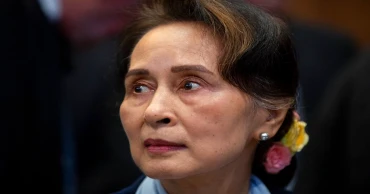
BANGKOK (AP/UNB) — A court in military-ruled Myanmar convicted the country’s ousted leader Aung San Suu Kyi of corruption Friday, sentencing her to seven years in prison in the last of a string of criminal cases against her, a legal official said.
The court’s action leaves her with a total of 33 years to serve in prison after a series of politically tinged prosecutions since the army toppled her elected government in February 2021.
The case that ended Friday involved five offenses under the anti-corruption law and followed earlier convictions on seven other corruption counts, each of which was punishable by up to 15 years in prison and a fine.
The 77-year-old Suu Kyi has also been convicted of several other offenses, including illegally importing and possessing walkie-talkies, violating coronavirus restrictions, breaching the country’s official secrets act, sedition and election fraud.
Her previous convictions had landed her with a total of 26 years’ imprisonment.
Suu Kyi’s supporters and independent analysts say the numerous charges against her and her allies are an attempt to legitimize the military’s seizure of power while eliminating her from politics before an election it has promised for 2023.
In the five counts of corruption decided Friday, Suu Kyi was alleged to have abused her position and caused a loss of state funds by neglecting to follow financial regulations in granting permission to Win Myat Aye, a Cabinet member in her former government, to hire, buy and maintain a helicopter.
Suu Kyi was the de facto head of government, holding the title of state counsellor. Win Myint, who was president in her government, was a co-defendant in the same case.
Friday’s verdict in the purpose-built courtroom in the main prison on the outskirts of the capital, Naypyitaw, was made known by a legal official who insisted on anonymity for fear of being punished by the authorities. The trial was closed to the media, diplomats and spectators, and her lawyers were barred by a gag order from talking about it.
The legal official said Suu Kyi received sentences of three years for each of four charges, to be served concurrently, and four years for the charge related to the helicopter purchase, for a total of seven years. Win Myint received the same sentences.
Win Myat Aye, at the center of the case, escaped arrest and is now Minister of Humanitarian Affairs and Disaster Management in the National Unity Government, established by the military's opponents as a parallel administration by elected legislators who were barred from taking their seats when the army seized power last year. The military has declared NUG to be an outlawed “terrorist organization.”
The defendants denied all charges, and her lawyers are expected to appeal in the coming days. The official also said both Suu Kyi and Win Myint appeared to be in good health.
"From start to finish, the junta grabbed whatever it could to manufacture cases against her with full confidence that the country’s kangaroo courts would come back with whatever punitive judgments the military wanted,” Phil Robertson, deputy Asia director of Human Rights Watch, said in an emailed statement. “Due process and a free and fair trial were never remotely possible under the circumstances of this political persecution against her.”
The end of the court cases against Suu Kyi, at least for now, raises the possibility that she would be allowed outside visitors, which she has been denied since she was detained.
The military government has repeatedly denied all requests to meet with her, including from the Association of Southeast Asian Nations, which seeks to help mediate an end to the crisis in Myanmar that some United Nations experts have characterized as a civil war because of the armed opposition to military rule.
The U.N., after its special envoy Noeleen Heyzer met in August with Senior Gen. Min Aung Hlaing, announced the head of Myanmar’s military-installed government, that he “expressed openness to arranging a meeting at the right time” between her and Suu Kyi.
A statement from the military government said: "Depending on the circumstances after the completion of the judiciary process, we will consider how to proceed.”
Due to her age, the 33 years in prison that Suu Kyi now faces “amount to an effective life sentence against her,” said Robertson.
“The Myanmar junta’s farcical, totally unjust parade of charges and convictions against Aung San Suu Kyi amount to politically motivated punishment designed to hold her behind bars for the rest of her life," he said. “The convictions aim to both permanently sideline her, as well as undermine and ultimately negate her NLD party’s landslide victory in the November 2020 election.”
Suu Kyi is currently being held in a newly constructed separate building in the prison in Naypyitaw, near the courthouse where her trial was held, with three policewomen whose duty is to assist her.
Allowing access to Suu Kyi has been a major demand of the many international critics of Myanmar’s military rulers, who have faced diplomatic and political sanctions for their human rights abuses and suppression of democracy.
Suu Kyi, the daughter of Myanmar’s martyred independence hero Gen. Aung San, spent almost 15 years as a political prisoner under house arrest between 1989 and 2010.
Her tough stand against the military rule in Myanmar turned her into a symbol of nonviolent struggle for democracy, and won her the 1991 Nobel Peace Prize.
Her National League for Democracy party initially came to power after easily winning the 2015 general election, ushering in a true civilian government for the first time since a 1962 military coup.
But after coming to power, Suu Kyi was criticized for showing deference to the military while ignoring atrocities it is credibly accused of committing in a 2017 crackdown on the Muslim Rohingya minority.
Her National League for Democracy won a landslide victory again in the 2020 election, but less than three months afterwards, elected lawmakers were kept from taking their seats in Parliament and top members of her government and party were detained.
The army said it acted because there had been massive voting fraud in the 2020 election, but independent election observers did not find any major irregularities.
The army’s takeover in 2021 triggered widespread peaceful protests that security forces tried to crush with deadly forces and that soon erupted into armed resistance.
Myanmar security forces have killed at least 2,685 civilians and arrested 16,651, according to a detailed list compiled by the Assistance Association for Political Prisoners, a non-governmental organization that tracks killings and arrests.
3 years ago