asia

Thai navy searching for 31 sailors in water after ship sank
Thai navy ships and helicopters were searching on Monday for more than two dozen sailors still missing more than 12 hours after a warship sank in rough seas overnight in the Gulf of Thailand.
As of noon, 75 sailors from the HTMS Sukhothai corvette had been rescued and 31 were still in the water, the navy said. The high waves that caused the accident had lessened since Sunday night's sinking, but were still high enough to endanger small boats, the navy announced.
Read more: History buff finds ships that sank in 1878 in Lake Michigan
A rescued crew member interviewed by Thai PBS television said he had to float in the sea for three hours before he was rescued. He said that the ship was buffeted by waves 3 meters (10 feet) high as it was sinking Sunday night, complicating rescue efforts.
“The waves are still high and we cannot search for them from the horizontal line. We have to fly the helicopters and search for them from a bird’s eye view instead,” navy spokesman Adm. Pokkrong Monthatphalin told Thai PBS.
Strong winds blew seawater onto the HTMS Sukhothai and knocked out its electrical system Sunday evening, making control of the ship difficult. The navy dispatched three frigates and two helicopters with mobile pumping machines to try to assist the disabled ship by removing the seawater but it couldn't do so because of the strong winds.
Read more: Death toll from sinking of Lebanon migrant boat climbs to 89
The loss of power allowed more seawater to flow into the vessel, causing it to list and sink.
The warship had been on patrol at sea 32 kilometers (20 miles) from the pier at Bangsaphan district in Prachuap Khiri Khan province. Pokkrong said the ship had been on its regular patrol to assist any fishing boats needing help.
“Our top priority now is to rescue all the sailors. We will plan to have the ship salvaged later," he said. The search was being conducted in an area of 16 square kilometers (6.2 square miles) around the site of the sinking.
While northern and central Thailand are seeing their coldest temperatures of the year, far southern Thailand has been experiencing storms and flooding in recent days. Ships were warned to stay ashore.
3 years ago

North Korea says rocket launch was test of 1st spy satellite
North Korea said Monday it fired a test satellite in an important final-stage test for the development of its first spy satellite, a key military capability coveted by its leader Kim Jong Un along with other high-tech weapons systems.
The North’s official Korean Central News Agency also released black-and-white photos showing a space view of the South Korean capital and Incheon, a city just west of Seoul, in an apparent attempt to show the North is pushing to monitor its rival with its advancing technologies.
The rocket carrying the test satellite was launched Sunday to assess the satellite's photography and data transmission systems, KCNA said.
Read more: North Korea calls UN's Guterres 'puppet of US' after launch
The country’s National Aerospace Development Administration called the test results “an important success which has gone through the final gateway process of the launch of reconnaissance satellite." It said it would complete the preparations for its first military reconnaissance satellite by April next year, according to KCNA.
“From the images released, the resolution does not appear to be so impressive for military reconnaissance,” Soo Kim, a security analyst at the California-based RAND Corporation, said. “I’d note, however, that this is probably an ongoing development, so we may see more improvements to North Korea’s military reconnaissance capabilities over time.”
South Korea, Japan and U.S. authorities had said Sunday they had detected a pair of ballistic missile launches by North Korea from its northwestern Tongchang-ri area, where the North's satellite launch pad is located. They said the two missiles flew about 500 kilometers (310 miles) at a maximum altitude of 550 kilometers (340 miles) before landing in the waters between the Korean Peninsula and Japan. This could mean North Korea might have fired a missile or two to send the test-piece satellite into space.
Read more: Missile tests practiced to attack South, US: North Korea
A spy satellite was on a wish list of sophisticated military assets Kim announced during a ruling party meeting early last year, together with multi-warhead missiles, solid-fueled long-range missiles, underwater-launched nuclear missiles and nuclear-powered submarines. Kim has called for such high-tech weapons systems and an expanded nuclear arsenal to pressure the United States to abandon its hostile polices on North Korea, an apparent reference to U.S.-led sanctions and the U.S.-South Korean military drills that North Korea views as an invasion rehearsal.
North Korea has since taken steps to develop such weapons systems. In February and March, North Korea said it conducted tests to check a camera and data transmission systems to be used on a spy satellite. In November, it test-launched its developmental, longest-range Hwasong-17 intercontinental ballistic missile, a weapon believed to be designed to carry multiple warheads. Last week, North Korea said it performed a “high-thrust solid-fuel motor” to be used for a new strategic weapon, an apparent reference to a solid-fueled ICBM.
Ankit Panda, an expert with the Carnegie Endowment for International Peace, said that North Korea will likely make a proper orbital launch for a reconnaissance satellite next April — probably around April 15, the birthday of Kim’s late grandfather and state founder Kim Il Sung. The day is one of the most important state anniversaries in North Korea.
Earlier this year, North Korea test-launched a record number of missiles, many of them nuclear-capable missiles with varying ranges to reach the U.S. mainland and its allies South Korea and Japan. It also legislated a law authorizing the preemptive use of nuclear weapons on a broad range of scenarios, causing security jitters in South Korea and elsewhere.
North Korea has avoided fresh U.N. sanctions for those moves, however, because U.N. Security Council permanent members Russia and China won't support U.S. attempts to impose them.
“Having codified his country’s nuclear law earlier this year, tested missiles of varying capabilities, and made it very clear he has no interest in diplomacy with the U.S. and South Korea, Kim has essentially paved the way for nuclearization,” Soo Kim, the analyst, said. “He’s lent the appearance that the only possible way out of this quagmire is for the international community to fold the conditions set forth by the regime."
She said a handful of other high-priority geopolitical concerns involving China and Russia “has allowed Kim to buy time and the grace of the international community to push forward with his plan.”
3 years ago

Fuel tanker tunnel blast kills at least 19 in Afghanistan
At least 19 people were killed and 32 injured when a fuel tanker exploded in a tunnel north of the Afghan capital Kabul, a local official said Sunday.
The Salang Tunnel, which is around 80 miles north of Kabul, was originally built in the 1960s to assist the Soviet invasion. It is a key link between the country's north and south.
A spokesman for Parwan province, Said Himatullah Shamim, said Saturday night's tunnel explosion killed at least 19 people, including women and children. He said survivors remain trapped under rubble and that the number of casualties could rise.
It was not immediately clear what caused the incident, which happened at around 8.30 p.m.
Parwan's health department has received 14 dead and 24 injured so far, according to local official Dr. Abdullah Afghan. There are five women and two children among the dead, he said, and the rest are men who are severely burnt and cannot be recognized.
A spokesman for the Ministry of Public Works, Molvi Hamidullah Misbah, said earlier Sunday that the fire was extinguished and that teams were still working to clear the tunnel.
3 years ago

N Korea fires 2 ballistic missiles in resumption of testing
North Korea fired a pair of ballistic missiles on Sunday toward its eastern waters, its first weapons test in a month and coming two days after it claimed to have performed a key test needed to build a more mobile, powerful intercontinental ballistic missile designed to strike the U.S. mainland.
South Korea’s military detected the launch of two North Korean ballistic missiles from its northwest Tongchangri area. The missiles flew across the country toward its eastern waters, South Korea’s Joint Chiefs of Staff said in a statement.
It said the missiles were fired about 50 minutes apart but gave no further details, like precisely what type of weapons North Korea fired and how far they flew. The Joint Chiefs of Staff said South Korea’s military has bolstered its surveillance posture and maintains a readiness in close coordination with the United States.
Read more: Missile tests practiced to attack South, US: North Korea
Japanese officials also said they spotted the two missile launches from North Korea. Its coast guard said the missiles fired from North Korea fell in the waters between the Korean Peninsula and Japan. Japanese coast guard officials said both missiles landed outside Japan’s exclusive economic zone.
The Tongchangri area is home to North Korea’s Sohae Satellite Launching Ground, where the country in past years launched satellite-carrying long-range rockets in what the U.N. called a disguised test of ICBM technology.
On Thursday, in the Sohae facility, North Korea also performed what it called the test of a “high-thrust solid-fuel motor” for a new strategic weapon, a development that experts say could allow it to possess a more mobile, harder-to-detect arsenal of intercontinental ballistic missiles that can reach the U.S. mainland.
It wasn’t immediately known if Sunday’s launches occurred from the Sohae facility.
Sunday’s launch is the North’s first public weapons test since the country last month launched its developmental, longest-range liquid-fueled Hwasong-17 ICBM capable of reaching the entire U.S. homeland. Earlier this year, North Korea test-launched a variety of other missiles at a record pace, despite pandemic-related economic hardships and U.S.-led pressures to curb its nuclear program.
Read more: North Korea continues its bombardment of missiles with a potential ICBM
North Korea has defended its weapons testing as self-defense measures to cope with the expanded U.S.-South Korea military drills that it views as an invasion rehearsal. But some experts say North Korea likely used its rivals’ military training as an excuse to enlarge its weapons arsenal and increase its leverage in future negotiations with the U.S.
The weapon North Korea said it could build with the recently tested motor likely refers to a solid-fueled ICBM, which is among a list of high-tech weapons systems that leader Kim Jong Un vowed to procure during a major ruling Workers’ Party conference early last year. Other weapons systems Kim promised to manufacture include a multi-warhead missile, underwater-launched nuclear missiles and spy satellites.
The fuel in solid-propellant rockets is already loaded inside, which helps to shorten launch preparation times, increase the weapon’s mobility and make it harder for outsiders to detect what’s happening before liftoff. North Korea already has a growing arsenal of short-range, solid-fueled ballistic missiles targeting key locations in South Korea, including U.S. military bases there.
The exact status of North Korea’s nuclear attack capability remains in secrecy, as all its intercontinental ballistic missile tests in recent years have been carried out at a steep angle to avoid neighboring countries.
Some experts speculate North Korea already has functioning nuclear-tipped missiles that can hit the entire U.S., given the number of years it has spent on its nuclear program. But others say country is still years away from acquiring such weapons, saying it has yet to publicly prove it has a technology to protect warheads from the harsh conditions of atmospheric reentry.
3 years ago

COVID-linked deaths seen in Beijing after virus rules eased
Outside a funeral home in eastern Beijing, dozens of people were bundled up in parkas and hats against the freezing temperatures Friday evening as workers in full protective suits wheeled out coffins one by one.
When an employee with a clipboard shouted the name of the dead, a relative trundled up to the coffin to examine the body. One of the relatives told The Associated Press their loved one had been infected with COVID-19.
Deaths linked to the coronavirus are appearing in Beijing after weeks of China reporting no fatalities, even as the country is seeing a surge of cases.
That surge comes as the government last week dramatically eased some of the world’s strictest COVID-19 containment measures. On Wednesday, the government said it would stop reporting asymptomatic COVID-19 cases since they’ve become impossible to track with mass testing no longer required.
That halt in reporting made it unclear how fast the virus is spreading. Social media posts, business closures and other anecdotal evidence suggest huge numbers of infections.
It's also unclear how many people are dying from the virus. An AP reporter who visited the Dongjiao Funeral home was told by relatives that at least two people cremated there had died after testing positive.
Health authorities had designated Dongjiao and one other funeral home to cremate those who die after testing positive, according to a relative of one of the dead. The woman said her elderly relative had fallen ill in early December, tested positive, and died Friday morning in an emergency ward.
She said there were lots of people in the emergency ward who had tested positive for COVID-19, adding that there weren’t enough nurses to take care of them. The woman did not want to be identified for fear of retribution.
Over about an hour, an AP reporter saw about a dozen bodies wheeled from the Dongjiao funeral home.
About a half-dozen people inside described how another victim had struggled to breathe that morning before dying, and the death certificate listed “pneumonia” as the cause of death, even after a positive test for COVID-19, one of those people said. The people interviewed did not want to be identified for fear of retribution.
Read more: China reduces COVID-19 case number reporting as virus surges
Three employees of shops in the complex that houses the funeral home said there had been a marked increase in the number of people going there in recent days. One estimated about 150 bodies were being cremated daily, up from what is normally a few dozen a day.
One employee attributed it to the coronavirus, although another said there are usually more deaths with the arrival of winter. The employees did not want to be identified for fear of retribution.
China has not reported a death from COVID-19 since Dec. 4.
China’s official death toll remains low, with just 5,235 deaths — compared with 1.1 million in the United States. However, public health experts caution that such statistics can’t be directly compared.
Chinese health authorities count only those who died directly from COVID-19, excluding those whose underlying conditions were worsened by the virus. In many other countries, guidelines stipulate that any death where the coronavirus is a factor or contributor is counted as a COVID-19-related death.
Experts say this has been the longstanding practice in China, but questions have been raised at times about whether officials have sought to minimize the figures.
Also on Friday, China’s Cabinet ordered rural areas to prepare for the return of migrant workers this holiday season in hopes of preventing a big surge in COVID-19 cases in communities with limited medical resources.
Returnees must wear masks and avoid contact with elderly people, and village committees must monitor their movements, the guidelines said, but didn't mention the possibility of isolation or quarantines.
There are fears of a surge in cases around China's winter holidays, when tens of millions take to trains, buses and planes for what may be their only trip home all year.
Read more: China students return home amid COVID travel spread fears
The upcoming Lunar New Year falls on Jan. 22, but migrants generally begin heading home two weeks or more in advance. Some Chinese universities say they will allow students to finish the semester from home to help spread out the travel rush and reduce the potential for a bigger outbreak.
Medical resources in smaller cities and rural communities, which are home to about 500 million of China's 1.4 billion people, lag far behind those of large cities such as Beijing and Shanghai. Rural medical infrastructure includes 17,000 county-level hospitals — many of which lack even a single ICU bed — 35,000 township health centers and 599,000 village clinics.
China has been pushing to increase the number of fever clinics in rural areas to treat those with COVID-19 symptoms. Currently, about 19,400 such clinics or consulting rooms operate in communities and townships around the country, state media reported Friday.
By March 2023, about 90% of health centers at the township level will have fever clinics, Nie Chunlei, head of primary health at the National Health Commission, said Thursday.
“This will effectively enhance the capability of primary-level health care institutions to receive patients with fever,” said Nie, who also urged stockpiling of medicines and antigen test kits, many of which have become scarce even in big cities.
The lifting of some travel regulations has spurred both relief and anxiety over the level of COVID-19 preparedness.
Health experts have said China will face a peak of infections in the next month or two and is trying to persuade reluctant seniors and others at risk to get vaccinated.
The changes follow growing frustration with the “zero-COVID" policy blamed for hindering the economy and creating massive social stress. The easing began in November, and accelerated after Beijing and several other cities saw protests over the restrictions that grew into calls for President Xi Jinping and the Communist Party to step down — a level of public dissent not seen in decades.
It's unclear what prompted the government's shift in policy. Experts cite economic pressure, public discontent, and the difficulties of containing the extremely infectious omicron variant as factors.
China wasn't fully prepared for opening up from a public health standpoint, and the decision was driven mainly by economic and social factors, said Zeng Guang, a health expert formerly affiliated with China’s Center for Disease Control, speaking at a conference organized by the state-run Global Times newspaper.
Under the relaxed rules, obligatory testing is no longer required and people with mild symptoms are permitted to recover at home rather than go to a quarantine center. Meanwhile, the semi-autonomous gambling enclave of Macao will scrap its mandatory hotel quarantine for arrivals from Hong Kong, Taiwan and overseas starting Saturday, the government said.
However, travelers must spend five days in home isolation and undergo testing, and are barred from entering mainland China until the 10th day upon arrival. Both Macao and Hong Kong have scrapped most anti-COVID-19 measures.
3 years ago

Malaysia landslide death toll rises to 24
Rescuers on Saturday found the bodies of a woman and two children, raising the death toll from a landslide on an unlicensed campground in Malaysia to 24 with nine others still missing.
Selangor state fire chief Norazam Khamis told reporters the bodies of a mother and son were found buried under a meter (3 feet) of mud and debris. The body of a little girl was discovered later. He said there was hope of finding survivors if they clung on to piles or branches or rocks with pockets of air but that chances were slim.
Read more: Landslide at Malaysia campground leaves 16 dead, 17 missing
Authorities said 94 people were sleeping at the camp site on an organic farm early Friday when the dirt tumbled from a road about 30 meters (100 feet) above them and covered about 1 hectare (3 acres). Most were families enjoying a short vacation during the yearend school break.
The 24 victims included seven children and 13 women. Authorities were still carrying out autopsies and waiting for next of kin to identify the victims.
A mother and her toddler daughter were found Friday hugging each other in a heart-rending scene, rescuers said. Seven people were hospitalized and dozens more, including three Singaporeans, were rescued unharmed.
Read more: 1 dead, up to 12 missing in landslide on Italian island
Wearing helmets and carrying shovels and other equipment, rescuers worked in teams Saturday to comb through debris as deep as 8 meters (26 feet). Excavators were deployed to clear mud and fallen trees and rescue dogs were sent to sniff out possible signs of life and cadavers. Officials said an estimated 450,000 cubic meters (nearly 16 million cubic feet) of debris — enough to fill 180 Olympic-sized swimming pools — hit the campsite.
Norazam said rescuers were treading carefully as underground water streams may trigger further landslides.
Authorities have said the landowners did not have a license to run a campground. Officials are unable to pinpoint the exact cause of the landslide, which came without warning, but believed it could be due to underground water movement while the yearend monsoon rains made the soil unstable.
Survivors recounting their ordeal told local media they heard a thunderous noise and felt the earth move before soil collapsed on their tents. The government has ordered all campsites nationwide that are near rivers, waterfalls and hillsides to be shut for a week to assess their safety.
The campsite in Batang Kali, about 50 kilometers (30 miles) north of Kuala Lumpur, is a popular recreational site for locals to pitch or rent tents from the farm. But authorities said it has been running illegally for the past two years. It has permission to run the farm but no license to operate camping activities. If found guilty, the operator faces up to three years in prison and a fine.
3 years ago

Iran authorities arrest actress of Oscar-winning movie
Iranian authorities arrested one of the country’s most famous actresses on charges of spreading falsehoods about nationwide protests that grip the country, state media said Saturday.
The report by IRNA said Taraneh Alidoosti, star of the Oscar-winning movie “The Salesman,” was detained a week after she made a post on Instagram expressing solidarity with the first man recently executed for crimes committed during the nationwide protests.
According to the report published on the state media’s official Telegram channel, Alidoosti was arrested because she did not provide ’’any documents in line with her claims.″
''His name was Mohsen Shekari.'' she said in her post. ‘‘Every international organization who is watching this bloodshed and not taking action, is a disgrace to humanity."
Shekari was executed Dec. 9 after being charged by an Iranian court with blocking a street in Tehran and attacking a member of the country's security forces with a machete.
Read more: Iran execution: Man publicly hanged from crane amid protests
Iran has been rocked by protests since the Sept. 16 death of 22-year-old Mahsa Amini, who died after being detained by the morality police. The protests have since morphred into one of the most serious challenges to Iran’s theocracy installed by the 1979 Islamic Revolution.
Hengameh Ghaziani and Katayoun Riahi, two other famous actresses in Iran, were arrested by authorities for expressing solidarity with protesters on social media. Both have been released.
At least 495 people have been killed in the demonstrations amid a harsh security crackdown, according to Human Rights Activists in Iran, a group that has been monitoring the protests since they began. Over 18,200 people have been detained by authorities.
3 years ago
Landslide at Malaysia campground leaves 16 dead, 17 missing
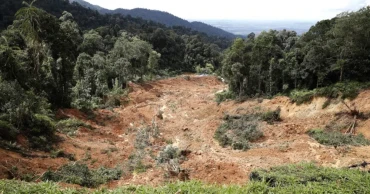
A landslide early Friday at a hillside tourist campground in Malaysia left 16 people dead and authorities said 17 others were feared buried at the site on an organic farm outside the capital of Kuala Lumpur.
An estimated 94 Malaysians were sleeping at the campsite in Batang Kali in central Selangor state, around 50 kilometers (31 miles) north of Kuala Lumpur, when the incident occurred, said district police chief Suffian Abdullah.
He said the death toll has risen to 16, including a five-year-old boy. Seven people have been hospitalized with injuries and rescuers were searching for the estimated 17 missing people, he said. Another 53 people were rescued without harm.
Suffian said the victims had entered the area, a popular recreational site for locals to pitch or rent tents from the farm, on Wednesday. More than 400 personnel, including tracking dogs, were involved in the search and rescue efforts. The Selangor fire department said firefighters began arriving at the scene half an hour after receiving a distress call at 2:24 a.m.
The landslide fell from the side of a road from an estimated height of 30 meters (98 feet) and covered an area of about three acres (1.2 hectare). The fire department posted photos of rescuers with flashlights digging through soil and rubble in the early hours of the morning.
Read more: Newborn among 7 dead in Italian island landslide
Prime Minister Anwar Ibrahim has called for a thorough search and is expected to visit the site late Friday.
Local Government Development Minister Nga Kor Ming told local media that the campsite has been operating illegally for the past two years. The operator has government approval to run an organic farm but has no license for camping activities, he said. If found guilty, Nga warned the camp operator could face up to three years in jail and a fine.
Some families with young children who were rescued took refuge at a nearby police station. Survivors reportedly said they heard a loud thundering noise before the soil came crashing down.
Leong Jim Meng, 57, was quoted by the New Straits Times English-language daily saying he and his family were awakened by a loud bang “that sounded like an explosion” and felt the earth move.
“My family and I were trapped as soil covered our tent. We managed to escape to a carpark area and heard a second landslide happening,” he told the newspaper. He said it was surprising because there was no heavy rain in recent days, only light drizzles.
Read more: 33 killed in Colombia landslide
The campsite is located on an organic farm not far from the Genting Highlands hill resort, a popular tourist destination with theme parks and Malaysia’s only casino. Access to roads leading to the area have been blocked. Authorities have halted outdoor recreational activities in Batang Kali.
Nga, the local government development minister, said all campsites nationwide that are situated by rivers, waterfalls and hillsides will be closed for a week to assess their safety amid forecasts of downpours in the next few days. Malaysia is currently experiencing year-end monsoon rains.
3 years ago
Suspected tainted liquor kills at least 31 in eastern India
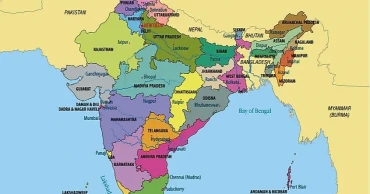
At least 31 people died and 20 others were hospitalized in serious condition after allegedly drinking tainted liquor sold without authorization in eastern India, a top elected official said Thursday.
The deaths occurred Tuesday and Wednesday and the victims belonged to three villages in Saran district of Bihar state where the manufacturing, sale and consumption of liquor are prohibited.
The deaths were reported in a district government-run hospital where the sick were brought by their families for treatment, said Dr. S.D. Sinha, the hospital chief.
Sale and consumption of liquor were prohibited in Bihar state in 2016 after women's groups campaigned against poor workers splurging their meager incomes on drinking.
Police officer Santosh Kumar said several of the 20 hospitalized have lost their eyesight.
Several opposition parties, including the Hindu nationalist Bharatiya Janata Party, held protests Thursday outside the state legislature building to demand the state's liquor ban be scrapped and some monetary compensation provided to the bereaved families.
Read more: 28 people dead, 60 sick in India from drinking spiked liquor
Sushil Modi, the state BJP leader, said more than 1,000 people have died after drinking tainted liquor since the ban was imposed six years ago. The BJP is in opposition in the state.
Nitish Kumar, the state's top elected official belonging to the socialist party Janata Dal, rejected their demands and said the ban on the sale of liquor was “not my personal wish but a response to the cries of the women of the state.”
Three people have been detained for questioning for allegedly selling spiked alcohol in the area, he said. Saran district is nearly 60 kilometers (40 miles) north of Patna, the Bihar state capital.
Deaths from illegally brewed alcohol are common in India, where illicit liquor is cheap and often spiked with chemicals such as pesticides to increase potency. Illicit liquor has also become a hugely profitable industry across India, where bootleggers pay no taxes and sell enormous quantities of their product to the poor at a cheap rate.
At least 28 people died and 60 others became ill from drinking tainted liquor in the western Indian state of Gujarat earlier this year. Gujarat is another Indian state where the manufacturing, sale and consumption of liquor are prohibited.
Read more: 39 die, dozens sick in India from drinking spurious liquor
In 2020, at least 120 people died after drinking tainted liquor in India’s northern Punjab state.
3 years ago

China removes 6 diplomats from UK after protester assaulted
China’s government has removed a Chinese consul general and five of his staff following the assault on a Hong Kong pro-democracy protester at the Chinese consulate in Manchester, Britain’s foreign secretary said Thursday.
James Cleverly said British police wanted to question the six officials over the assault on protester Bob Chan, who said masked men came out from the consulate building during a peaceful protest in October, dragged him into the consulate grounds and beat him up.
Police said officers at the scene had to intervene and remove Chan, who suffered injuries to his face and back.
Cleverly said Britain’s Foreign Office requested Beijing waive the diplomatic immunity of the six officials to allow police investigating the matter to question them.
“In response, the Chinese Embassy, acting on instructions from Beijing, notified His Majesty’s Government that the functions of the Consul General in Manchester have come to an end and he has returned to China,” Cleverly said. He added that the other staff have “either left the United Kingdom or will shortly do so.”
Chan welcomed Thursday’s development in a statement.
“It has been two months since I was attacked in Manchester by staff members of the Chinese Consulate,” he said. “What happened on 16 October 2022 was unacceptable and illegal, and the withdrawal of these Chinese diplomats gives me a sense of closure.”
Read more: India not a strategic rival or competitor for China: Ambassador Jiming
The incident, which was captured on video, had increased tensions between Britain and China. China’s foreign ministry maintained that Chan had illegally entered the consulate, and that Chinese diplomatic staff have the right to maintain security on their premises.
Hong Kong is a former British colony and Britain has offered residency to tens of thousands of the city's residents since a sweeping crackdown on civil and political rights there following a wave of anti-Beijing protests in 2019. China has declared a pledge it made to London to maintain those rights until 2047 — a document registered with the United Nations — to be null and void.
Last month, British Prime Minister Rishi Sunak declared that the U.K.’s “golden era” of ties with China was over in his first major speech on foreign policy, describing China’s growing authoritarianism as a “systemic challenge to our values and interests.” Some British politicians had called for the Chinese diplomats to be expelled following the incident.
In response to Britain's demands, the Chinese Embassy in the U.K. issued a statement denying all wrongdoing and saying Cleverly made “irresponsible comments by distorting facts.”
It repeated its contention that protesters “illegally intruded into the consulate premises and assaulted consulate officials, thus gravely undermining the safety and dignity of consulate officials.”
China has “launched solemn representations with the U.K.,” it said, implying that retaliatory action could follow.
Read more: A stunning pearl is rising from Bay of Bengal: Chinese Ambassador
“The U.K. side must be clear that reciprocity is an essential principle in diplomacy. Any act that undermines China’s interests will definitely be met with forceful responses,” it said.
3 years ago