asia
.jpg)
China rejects UN report on Uyghur rights abuses in Xinjiang
China has denounced a long-delayed U.N. report that was released over its protest and that says the government's arbitrary detention of Uyghurs and other mostly Muslim ethnic groups in the western region of Xinjiang may constitute crimes against humanity.
Human rights groups and the Japanese government welcomed the report, which had become caught up in a tug-of-war between China and others, who were critical of the delay and lobbying for its release.
The assessment released late Wednesday by the U.N. human rights office in Geneva concluded that China has committed serious human rights violations under its anti-terrorism and anti-extremism policies and calls for “urgent attention” from the U.N., the world community and China itself to address them.
The report largely corroborates earlier reporting by researchers, advocacy groups and the news media, while carefully steering away from estimates and other findings that cannot be definitively proven. It adds the weight of the U.N. to the conclusions, though China showed no sign of backing off its blanket denials and portraying the criticism as a politicized Western smear campaign.
In a sternly worded protest that the U.N. posted with its report, China's diplomatic mission in Geneva said it firmly opposed the release of the U.N. assessment, which it said ignores human rights achievements made in Xinjiang and the damage caused by terrorism and extremism to the population.
“Based on the disinformation and lies fabricated by anti-China forces and out of presumption of guilt, the so-called ‘assessment’ distorts China’s laws, wantonly smears and slanders China, and interferes in China’s internal affairs,” the protest read in part.
Japan was one of the first foreign governments to comment on the report, which was released early Thursday morning in Asia. Its top government spokesperson urged China to improve transparency and human rights conditions in the Xinjiang region.
“Japan is highly concerned about human rights conditions in Xinjiang, and we believe that it is important that universal values such as freedom, basic human rights and rule of law are also guaranteed in China,” Chief Cabinet Secretary Hirokazu Matsuno said.
Human Rights Watch and Amnesty International called on the U.N. and governments to set up an independent investigation into the human rights abuses.
Read: A Uyghur gets death sentence, as China bans once OK’d books
“Never has it been so important for the U.N. system to stand up to Beijing, and to stand with victims,” said John Fisher, the deputy director of global advocacy for the group.
The U.N. report made no mention of genocide, which some countries, including the United States, have accused China of committing in Xinjiang.
The report was drawn in part from interviews with former detainees and others familiar with conditions at eight detention centers.
It said that descriptions of the detentions were marked by patterns of torture and other cruel and inhuman treatment and said that allegations of rape and other sexual violence appear credible.
“The extent of arbitrary and discriminatory detention of members of Uyghur and other predominantly Muslim groups ... in (the) context of restrictions and deprivation more generally of fundamental rights ... may constitute international crimes, in particular crimes against humanity,” the report said.
The rights office said it could not confirm estimates that a million or more people were detained in the internment camps in Xinjiang, but added it was “reasonable to conclude that a pattern of large-scale arbitrary detention occurred” at least between 2017 and 2019.
Beijing has closed many of the camps, which it called vocational training and education centers, but hundreds of thousands of people continue to languish in prison, many on vague, secret charges.
The U.N. assessment said that reports of sharp increases in arrests and lengthy prison sentences in the region strongly suggested a shift toward formal incarceration instead of the use of the camps.
The report called on China to release all individuals arbitrarily detained and to clarify the whereabouts of those who have disappeared and whose families are seeking information about them.
That the report was released was in some ways as important as its contents.
U.N. High Commissioner for Human Rights Michelle Bachelet said she received pressure from both sides to publish — or not publish — and resisted it all, while noting her experience with political squeeze during her two terms as president of Chile.
Her announcement in June that the report would be released by end of her 4-year term on Aug. 31 triggered a swell in back-channel campaigns — including letters from civil society, civilians and governments on both sides of the issue.
“To be perfectly honest, the politicization of these serious human rights issues by some states did not help,” said Bachelet, who early on staked out a desire to cooperate with governments.
Critics had said a failure to publish the report would have been a glaring black mark on her tenure.
Agnès Callamard, the secretary general of Amnesty International, said, “The inexcusable delay in releasing this report casts a stain" on the record of the U.N. human rights office, “but this should not deflect from its significance.”
3 years ago

IMF agrees to provide crisis-hit Sri Lanka $2.9 billion
The International Monetary Fund said Thursday it has reached a staff-level agreement with Sri Lanka to provide $2.9 billion over four years to help salvage the country from its economic crisis.
An IMF team visiting Sri Lanka said in a statement that the preliminary agreement is subject to approval from the agency's management and executive board “contingent on the implementation by the authorities of prior actions, and on receiving financing assurances from Sri Lanka’s official creditors and making a good faith effort to reach a collaborative agreement with private creditors.”
Read: Sri Lanka hopes to reach initial agreement with IMF for help
Sri Lanka is facing its worst economic crisis in recent memory with acute shortages of essentials like fuel, medicines and food because of serious foreign currency shortages.
The island nation has suspended repayment of nearly $7 billion in foreign debt due for this year. The country's total foreign debt amounts to more than $51 billion of which $ 28 billion has to be repaid by 2028.
The IMF said Sri Lanka's economy is expected to contract by 8.7% and inflation has exceeded 60%.
Read: Sri Lanka leader proposes 25-year plan for crisis-hit nation
“Against this backdrop, the authorities’ program, supported by the Fund, would aim to stabilize the economy, protect the livelihoods of the Sri Lankan people, and prepare the ground for economic recovery and promoting sustainable and inclusive growth," it said.
3 years ago
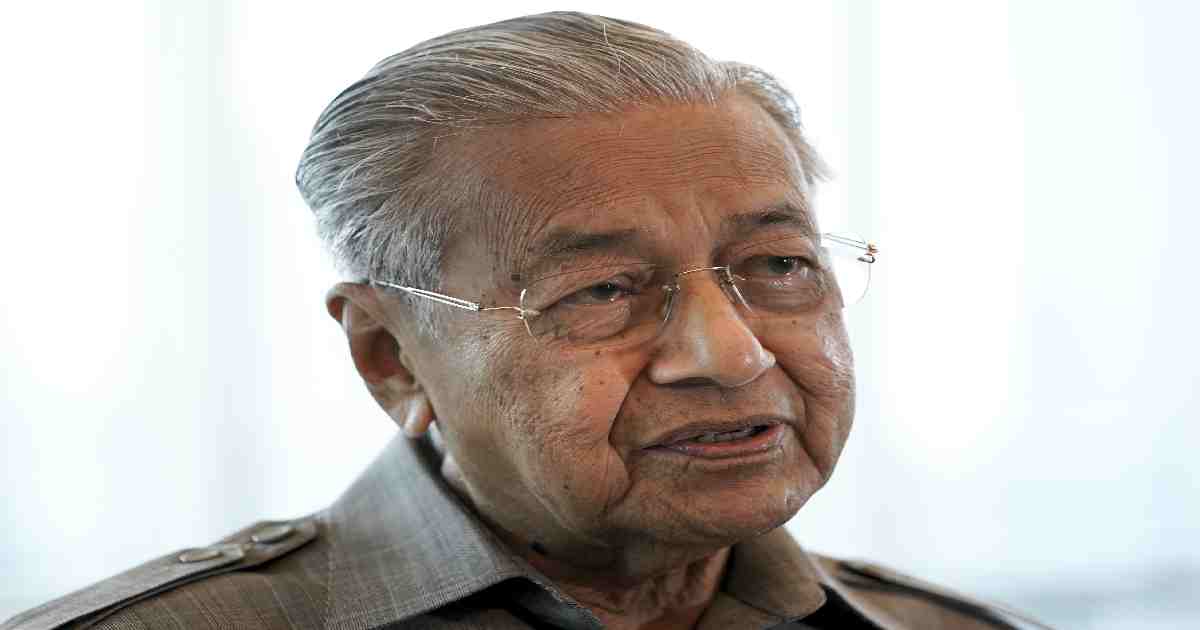
Ex-Malaysian leader Mahathir, 97, hospitalized with COVID-19
Former Malaysian Prime Minister Mahathir Mohamad, 97, was hospitalized Wednesday after testing positive for COVID-19, his office said.
“Mahathir has been admitted to the National Heart Institute for observation for a few days as advised by the medical team,” it said in a statement. It didn't provide further details on his condition.
Mahathir, who was Malaysia's prime minister for two different periods, once was the world's oldest leader. He has had two coronary bypass surgeries but remains robust and sharp witted. He was admitted several times to the same hospital earlier this year.
Mahathir later said he was hospitalized after experiencing shortness of breath due to a shortage of red blood cells. He later had a pacemaker implanted but acquired an infection during the surgery. He has said he thought he was dying at that point but somehow made a recovery.
Read: Mahathir seeks Parliament vote as new Malaysian PM sworn-in
Mahathir ruled Malaysia initially for 22 years until his retirement in 2003. Spurred by anger over government corruption, he led the opposition to a historic election victory in 2018 that ousted the governing party in the first peaceful transfer of power since Malaysia’s independence in 1957.
Mahathir became the world’s oldest leader at 92 for a second stint but that triumph lasted only 22 months as his government collapsed due to defections. Mahathir formed a new ethnic Malay party in 2020 and a Malay alliance this year to contest elections due next year.
Mahathir said in an interview with The Associated Press earlier this month that he plans to contest the polls “If I am strong enough, if I am healthy enough, if they want me to contest, I will contest.”
3 years ago

Taiwan forces fire at drones flying over island near China
Taiwan’s military fired warning shots at drones from China flying over its outposts just off the Chinese coastline, underscoring heightened tensions and the self-ruled island's resolve to respond to new provocations.
Taiwan's forces said in a statement that troops took the action on Tuesday after drones were found hovering over the Kinmen island group. Dadan, one of the islands where a drone was spotted, lies roughly 15 kilometers (9 miles) off the Chinese coast.
The statement Wednesday referred to the unmanned aerial vehicles as being of “civilian use," but gave no other details. It said the drones returned to the nearby Chinese city of Xiamen after the shots were fired. Taiwan previously fired only flares as warnings.
The incident comes amid heightened tensions after China fired missiles into the sea and sent planes and ships across the dividing line in the Taiwan Strait earlier this month. It followed angry rhetoric from Beijing over a trip to Taiwan by House Speaker Nancy Pelosi, the highest-ranking U.S. dignitary to visit the island in 25 years.
China claims Taiwan as its own territory and its recent actions have been viewed as a rehearsal of a possible blockade or invasion. China's drills brought strong condemnation from Taiwan's chief ally, the U.S., along with fellow regional democracies such as Australia and Japan. Some of China's missiles early in August fell into nearby Japan's exclusive economic zone.
Taiwan maintains control over a range of islands in the Kinmen and Matsu groups in the Taiwan Strait, a relic of the effort by Chiang Kai-shek's Nationalists to maintain a foothold on the mainland after being driven out by Mao Zedong's Communists amid civil war in 1949.
Taiwan's Defense Ministry said China's actions failed to intimidate the island's 23 million people, saying they had only hardened support for the armed forces and the status quo of de-facto independence.
Officials said anti-drone defenses were being strengthened, part of a 12.9% increase in the Defense Ministry’s annual budget next year. The government is planning to spend an additional 47.5 billion New Taiwan dollars ($1.6 billion), for a total of 415.1 billion NTD ($13.8 billion) for the year.
The U.S. is also reportedly preparing to approve a $1.1 billion defense package for Taiwan that would include anti-ship and air-to-air missiles to be used to repel potential Chinese invasion attempt.
Read: Taiwan leader tells troops to keep cool amid Chinese threats
Following the Chinese drills, the U.S. sailed two warships through the Taiwan Strait, which China has sought to designate as its sovereign waters. Foreign delegations from the U.S., Japan and European nations have continued to arrive to lend Taipei diplomatic and economic support.
Arizona Gov. Doug Ducey is currently visiting Taiwan to discuss production of semiconductors, the critical chips that are used in everyday electronics and have become a battleground in the technology competition between the U.S. and China.
Ducey is seeking to woo suppliers for the new $12 billion Taiwan Semiconductor Manufacturing Corp. (TSMC) plant being built in his state.
The governor is also visiting tech powerhouse South Korea, and in a statement on his official website said his aim was to take these relationships to the next level - to strengthen them, expand them and ensure they remain mutually beneficial.”
Last week, the Indiana governor visited Taiwan on a similar mission.
Taiwanese Air Force pilots have also trained at Luke Air Force Base outside Phoenix for more than 25 years, an indication of continuing U.S. support for Taiwan's defense despite the lack of formal diplomatic ties.
Taiwan produces more than half the global supply of high-end processor chips. China's firing of missiles during its exercises disrupted shipping and air traffic, and highlighted the possibility that chip exports might be interrupted.
Reacting to Ducey's visit, China on Wednesday reaffirmed its opposition to any official contacts between the U.S. and Taiwan. That was a further reminder of the Communist Party's refusal to acknowledge the separation of powers within the U.S. government and the right of American local officials to operate independently of the administration.
“We urge the relevant parties in the U.S. to ... stop any forms of official contacts with Taiwan, and refrain from sending wrong signals to the Taiwan independence forces," Foreign Ministry spokesperson Zhao Lijian said at a daily briefing.
“China will take strong measures to resolutely safeguard national sovereignty and territorial integrity," Zhao said.
3 years ago

Taiwan leader tells troops to keep cool amid Chinese threats
Taiwan's president told the self-ruled island's military units Tuesday to keep their cool in the face of daily warplane flights and warship maneuvers by rival China, saying that Taiwan will not allow Beijing to provoke a conflict.
China has kept up military pressure on Taiwan in the weeks following U.S. House Speaker Nancy Pelosi’s visit to Taipei in early August. Beijing initially retaliated with large military drills in the waters and skies near Taiwan. It fired missiles over the island, some of which landed in Japan’s economic zone, considered a serious escalation, while also sending warships and planes toward the island in large numbers.
President Tsai Ing-wen said Taiwan must remain restrained despite the daily pressure from China.
“The more provocative enemy soldiers are, the more stable we need to be. We will not allow those on the opposing banks to manufacture a conflict with an inappropriate excuse,” she said during a visit to the navy's station on Penghu, an archipelago of several dozen islands off Taiwan's western coast.
She also inspected a radar squadron, an air defense company, and a navy fleet.
At the Magong air base, she was greeted by pilots standing in front of a Taiwanese-made Indigenous Defense Force fighter jet.
“You are the pride of the Taiwanese people,” Tsai said. “When each Taiwanese person sees you in the national military uniform, everyone’s hearts are filled with respect and gratitude.”
China accuses the U.S. and Taiwanese “separatist forces” for creating instability by rejecting Beijing’s claim to sovereignty over the island.
Read: US sails warships through Taiwan Strait in 1st since Pelosi
“The Taiwan independence forces’ attempt to solicit foreign support, including that of the U.S., for independence is the source of current tensions across the Taiwan Strait,” Foreign Ministry spokesperson Zhao Lijian said at a daily briefing in Beijing.
Zhao also criticized the visit of Guatemalan Foreign Minister Mario Bucaro to Taiwan on Tuesday.
“The Taiwanese ... authority has been using the so-called countries with diplomatic ties for political manipulation. These are nothing but self-deceiving tricks and cannot block the historical trend that China will be fully reunified," he added.
Bucaro met with Tsai earlier Tuesday and reaffirmed his country's support of Taiwan. Guatemala is one of Taiwan's 14 remaining diplomatic allies.
“Guatemala will always support Taiwan because we have very firm belief in the principles of peace, sovereignty, and territorial integrity," he said. “The Guatemalan government strongly believes that people have the right to enjoy peace in their lives, and the right to live in peace is not negotiable.”
While China's biggest maneuvers, which had disrupted fishing, shipping and air traffic, are over, Beijing has kept up the pressure in recent weeks with daily flights by warplanes and warship navigations, often over the median line of the Taiwan Strait, a waterway that separates the island from China.
Taiwan has responded by tracking the ships and the planes, issued warnings and used its missile systems to monitor the other side's movements.
China has also sent drones flying over the Kinmen islands, which are closest to China, in the latest escalation. A video that went viral last week showed two soldiers staring up at the drone from an outpost in an outlying island in Kinmen before attempting to strike it down with a rock. This weekend, another video published online allegedly showed a Chinese drone flying around a different outlying island.
A spokesperson for Kinmen's army unit said in a statement Monday that Taiwan would take a four-step measure to deal with drones in the future, which involves warning it off, reporting the incursion, expelling the drone, and finally shooting it down if it doesn't leave.
3 years ago
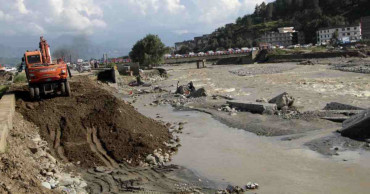
Over 33 mln people, 72 districts of Pakistan affected by floods
Over 33 million people and 72 districts have been affected by the ongoing calamity of floods in Pakistan caused by this season's monsoon rains started in mid-June, the country's National Disaster Management Authority (NDMA) said.
According to a report released by the NDMA late Sunday night, the country's southern Sindh province remained the worst-hit region as 23 of its districts and over 14.5 million people have been affected by the floods.
The report added that southwest Balochistan was the second most affected province, with more than 9 million of its population and 31 districts suffered.
Read: Strong undersea quake causes panic in western Indonesia
The country suffered a 188 percent increase in rainfall throughout this season till Aug. 28, in comparison to the average rainfall over the last three decades, the report said, adding that the 30-year-average rainfall in Pakistan had been 135mm while during this monsoon it went up to 390mm.
The NDMA said that Sindh province recorded a 470 percent increase in rainfall, with 697mm this season compared to 122mm of average rainfall in the last 30 years, followed by Balochistan province which witnessed a 411 percent increase.
3 years ago

India blows up two illegal skyscrapers
In nine seconds flat, two skyscrapers built illegally in the city of Noida near the Indian capital some nine years ago were razed by a controlled explosion on Sunday afternoon.
Exactly at 2.30 pm, the 40-storey twin towers -- Apex and Ceyane -- were brought down with the use of 3,700kg of explosives, as millions of Indians glued to their TV sets to watch the spectacle live.
The twin towers became the country's largest ever highrises to be imploded.
Also read: How India plans to blow up two illegal skyscrapers near Delhi
India's Supreme Court, in August last year, ordered the demolition of the twin towers built by private developer Supertech for violation of various building norms.
Utkarsh Mehta of Edifice Engineering, the company entrusted with the demolition job, said, "As expected, the explosion triggered vibrations like that of a minor earthquake. We achieved 100% success."
Also read: Protests in India against release of 11 convicted rapists
Local civic authorities had earlier ensured the evacuation of residents of all housing societies in the vicinity of the twin towers. Stray dogs were also shifted to animal shelters, officials said.
"The nearby Noida Expressway was shut for 45 minutes for the demolition. Hospitals in the city were on alert and 8-10 ambulances kept at standby in case of any untoward situation," a police officer said.
Demolitions of highrises are rare in India. Two years ago, authorities in the southern state of Kerala razed two luxury waterfront highrises for flouting environmental norms.
3 years ago

Pakistan flooding deaths pass 1,000 in 'climate catastrophe'
Deaths from widespread flooding in Pakistan topped 1,000 since mid-June, officials said Sunday, as the country’s climate minister called the deadly monsoon season “a serious climate catastrophe.”
Flash flooding from the heavy rains has washed away villages and crops as soldiers and rescue workers evacuated stranded residents to the safety of relief camps and provided food to thousands of displaced Pakistanis.
Pakistan's National Disaster Management Authority reported the death toll since the monsoon season began earlier than normal this year — in mid- June — reached 1,033 people after new fatalities were reported in Khyber Pakhtunkhwa and southern Sindh provinces.
Sherry Rehman, a Pakistani senator and the country's top climate official, said in a video posted on Twitter that Pakistan is experiencing a “serious climate catastrophe, one of the hardest in the decade.”
“We are at the moment at the ground zero of the front line of extreme weather events, in an unrelenting cascade of heatwaves, forest fires, flash floods, multiple glacial lake outbursts, flood events and now the monster monsoon of the decade is wreaking non-stop havoc throughout the country," she said. The on-camera statement was retweeted by the country’s ambassador to the European Union.
Read: Pakistan seeks international help for flood victims
Flooding from the Swat River overnight affected northwestern Khyber Pakhtunkhwa province, where tens of thousands of people — especially in the Charsadda and Nowshehra districts — have been evacuated from their homes to relief camps set up in government buildings. Many have also taken shelter on roadsides, said Kamran Bangash, a spokesperson for the provincial government.
The unprecedented monsoon season has affected all four of the country's provinces. Nearly 300,000 homes have been destroyed, numerous roads rendered impassable and electricity outages have been widespread, affecting millions of people.
Rehman told Turkish news outlet TRT World that by the time the rains recede, "we could well have one fourth or one third of Pakistan under water.”
“This is something that is a global crisis and of course we will need better planning and sustainable development on the ground. ... We’ll need to have climate resilient crops as well as structures,” she said.
The government has deployed soldiers to help civilian authorities in rescue and relief operations across the country.
Meanwhile, the Pakistani army said in a statement it airlifted a 22 tourists trapped in a valley in the country's north to safety.
3 years ago

US sails warships through Taiwan Strait in 1st since Pelosi
The U.S. Navy is sailing two warships through the Taiwan Strait on Sunday, in the first such transit publicized since U.S. House Speaker Nancy Pelosi visited Taiwan earlier in August, at a time when tensions have kept the waterway particularly busy.
The USS Antietam and USS Chancellorsville are conducting a routine transit, the U.S. 7th Fleet said. The cruisers “transited through a corridor in the Strait that is beyond the territorial sea of any coastal State,” the statement said.
China conducted many military exercises in the strait as it sought to punish Taiwan after Pelosi visited the self-ruled island against Beijing's threats.
Read:Taiwan: China, Russia disrupting, threatening world order
China has sent many warships sailing in the Taiwan Strait and waters surrounding Taiwan since Pelosi's visit, as well as sending warplanes and firing long-range missiles. It views the island as part of its national territory and opposes any visits by foreign governments as recognizing Taiwan as its own state.
The U.S. regularly sends its ships through the Taiwan Strait as part of what it calls freedom of navigation maneuvers.
The 100 mile-wide (160 kilometer-wide) strait divides Taiwan from China.
3 years ago

How India plans to blow up two illegal skyscrapers near Delhi
In nine seconds flat, two skyscrapers built illegally in the city of Noida near the Indian capital nine years ago will be razed by a controlled explosion on Sunday afternoon.
India's Supreme Court, in August last year, ordered the demolition of the 40-storey twin towers -- Apex and Ceyane -- built by private developer Supertech for violation of various building norms.
The twin towers will be India's largest ever highrises to be imploded at 2.30 pm (local time), using 3,700kg of explosives.
"I am getting goosebumps. I am a little nervous but confident as well," Utkarsh Mehta of Edifice Engineering, the company entrusted with the demolition job, told the local media this morning.
Read: Protests in India against release of 11 convicted rapists
Mehta said the explosion would trigger vibrations like that of a minor earthquake, which will be felt in a 30-40 metre radius of the twin towers.
"The dust will take 15-20 minutes to settle down but we would need at least three to four months to clear the debris. Anti-smog guns have been pressed into action to clear the Noida sky," he said.
Local civic authorities have already ensured the evacuation of residents of all housing societies in the vicinity of the twin towers. Stray dogs have also been shifted to animal shelters, officials said.
"The nearby Noida Expressway will be shut for 45 minutes for the demolition. Hospitals in the city have been put on alert and 8-10 ambulances kept at standby in case of any untoward situation," a police officer said.
Demolitions of highrises are rare in India. Two years ago, authorities in the southern state of Kerala razed two luxury waterfront highrises for flouting environmental norms.
3 years ago