asia
North Korean and Russian leaders in call reaffirm their alignment over Ukraine
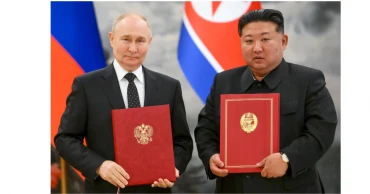
North Korean leader Kim Jong Un and Russian President Vladimir Putin have pledged to further strengthen their ties and cooperation in the war against Ukraine, according to state media reports from both countries on Wednesday.
The two leaders spoke by phone on Tuesday, days before Putin’s planned meeting with U.S. President Donald Trump in Alaska.
During the call, Putin praised the “bravery, heroism and self-sacrificing spirit” of North Korean troops fighting alongside Russian forces to repel a Ukrainian incursion into Russia’s Kursk border region, North Korea’s Korean Central News Agency (KCNA) said.
Russia’s TASS news agency, citing the Kremlin, reported that Putin briefed Kim on his upcoming talks with Trump, scheduled for Friday in Alaska. KCNA’s account of the conversation did not mention the Trump meeting.
Trump praises Intel CEO’s ‘amazing story’ days after demanding his resignation
Kim expressed “full support” for all future measures by Russia’s leadership and discussed expanding cooperation “in all fields” under a strategic partnership agreement signed during their summit last year, KCNA said.
Since Russia’s invasion of Ukraine in 2022, Kim has prioritized strengthening relations with Moscow to break out of diplomatic isolation and align with countries challenging Washington. His government has rejected U.S. and South Korean calls to resume stalled talks on denuclearization, which collapsed in 2019 after a failed summit with Trump during his first term.
South Korean intelligence estimates that North Korea has sent about 15,000 troops to Russia since last fall, along with large shipments of artillery and ballistic missiles, to support Moscow’s war effort. Pyongyang has also agreed to send thousands of military construction workers and deminers to the Kursk region, a deployment Seoul believes could take place soon.
9 months ago

Japanese warships make first visit to New Zealand’s capital in over 50 years
Japanese warships docked in New Zealand’s capital Wellington on Friday for the first time in over 50 years, reflecting Tokyo’s efforts to strengthen strategic ties in the South Pacific region.
Two destroyers, JS Ise and JS Suzunami, carrying more than 500 crew members, arrived at Wellington harbor escorted by the New Zealand navy ship HMNZS Canterbury. The Japanese vessels were on an Indo-Pacific deployment, having participated in recent joint military exercises in Sydney with New Zealand, Australia, and other nations.
Though the visit was largely ceremonial, it underscores Japan’s growing focus on expanding bilateral military cooperation beyond its sole treaty ally, the United States, amid ongoing regional tensions.
“Our defense forces are developing cooperative work, not only with New Zealand and Australia but also with many Pacific Island countries,” Japan’s envoy to Wellington, Makoto Osawa, said Friday. “Our main goal is the free and open Indo-Pacific.”
The ambassador’s comments came shortly after Australia announced that Japanese firm Mitsubishi Heavy Industries won a major contract to build Australian warships, beating a German competitor. Australian officials called it the largest defense industry deal between the two countries.
Japan Deploys First F-35B Stealth Jets to Strengthen Southern Defenses
New Zealand has also been boosting its strategic and military relations in Asia as part of a recent foreign policy shift emphasizing Pacific cooperation and security. In July, Wellington announced the start of work on a defence logistics agreement with Japan to facilitate closer military collaboration.
Japanese naval visits to the South Pacific remain rare, but the strategic importance of the waters around New Zealand, Australia, and Pacific Island nations is growing amid competition between Beijing and Western powers for regional influence.
Though geographically remote, New Zealand has increasingly become involved in complex regional security matters. In February, live-fire exercises by Chinese naval frigates in the Tasman Sea between New Zealand and Australia raised concerns after flights were abruptly diverted.
According to New Zealand’s military, this is the first visit by a Japanese naval vessel to Wellington since 1973.
Source: Agency
9 months ago
UN investigators reveal systematic torture in Myanmar detention centres
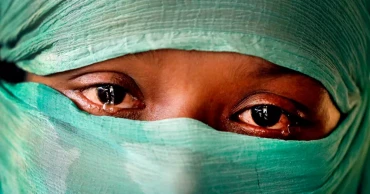
A United Nations-backed investigative team has uncovered significant evidence of systemic torture and sexual violence in Myanmar’s detention facilities over the past year, including electric shocks, strangulation, gang rape, and burning of sexual body parts.
Nicholas Koumjian, head of the international independent investigative team, made the disclosure as his team released its latest annual report on Tuesday, covering the period up to June 30.
Myanmar has been engulfed in turmoil since the military seized power from the elected government of Aung San Suu Kyi in February 2021, sparking a civil war. Following the brutal crackdown on peaceful protests, many opponents of military rule took up arms, and large parts of the country remain embroiled in conflict.
The investigation has made progress in identifying security personnel involved in operations at detention centres, as well as perpetrators who have summarily executed captured combatants and civilians accused of collaboration. The perpetrators include members of security forces, affiliated militias, and opposition armed groups.
Artist covers UN sculpture with plastic waste during plastic treaty talks
The report details documented abuses such as beatings, electric shocks, strangulations, gang rape, burning of sexual body parts, and other forms of sexual violence in Myanmar’s detention facilities.
“Our report highlights a continued increase in the frequency and brutality of atrocities committed in Myanmar,” Koumjian said. “We are working towards the day when the perpetrators will have to answer for their actions in a court of law.”
He added, “We have uncovered significant evidence, including eyewitness testimony, showing systematic torture in Myanmar detention facilities.”
The team has also launched new investigations into atrocities against communities in Rakhine state, where Myanmar’s military and the opposition Arakan Army are battling for control.
More than 700,000 Rohingya fled to neighbouring Bangladesh in 2017 to escape persecution, with around 70,000 more crossing the border last year amid intensified conflict in Rakhine.
The Independent Investigative Mechanism on Myanmar, established in 2018 under the UN Human Rights Council, collects and preserves evidence of human rights abuses and violations in Myanmar. It has shared evidence with authorities at the International Criminal Court and the UN’s International Court of Justice concerning the Rohingya cases.
9 months ago

India's top court cracks down on stray dogs in Delhi
No stray dogs roaming the streets of New Delhi?
That could soon become a reality, as India’s top court has ordered authorities in New Delhi to begin removing all stray dogs from the streets, with instructions to sterilize and permanently relocate them to shelters.
In its order issued Monday, the Supreme Court directed the capital’s civic bodies to immediately begin capturing 5,000 stray dogs from designated “high-risk areas” and transfer them to shelters equipped with adequate staff and CCTV surveillance. The process is to be completed within six to eight weeks.
It is unclear how the court arrived at the figure of 5,000 stray dogs. Various estimates put the number of strays in New Delhi between 500,000 to one million.
While many of the dogs that roam New Delhi's streets are harmless, the court's order aims to control rising dog biting cases, including cases involving children. Some estimates, based on hospital records, suggest New Delhi sees nearly 2,000 dog bite incidents every day.
“The situation is extremely grim,” the court said in its order, adding that it was passed while “keeping (the) larger public interest in mind.”
“Infants, young children should not at any cost fall prey to stray dogs,” it said.
The court also ordered authorities to create an animal helpline within a week so that all dog bite cases in the capital can be reported. It said any individual or organization that stops authorities from removing stray dogs from the streets will face “strict” legal consequences, while adding the strays should not to be released back on streets, in residential areas or in public places.
Animal lovers and activists had earlier opposed the court taking up the case. On Monday, the court chided them too.
“All these animal activists … will they be able to bring back those who have fallen prey to rabies?,” the court asked.
Rabies through dog bites is caused by a virus that invades the central nervous system. If left untreated, it is almost always fatal.
Shortly after the court's order, a senior minister of the state legislature in Delhi said his government will begin the process of rounding up the strays. Cabinet Minister Kapil Mishra said the court's order is a step towards freeing New Delhi “from the fear of rabies and stray animals.”
“The comprehensive welfare of stray animals will also be a priority,” Mishra said in a post on X.
9 months ago
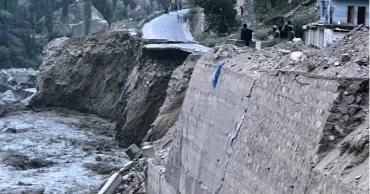
Massive mudslide kills 7 volunteers repairing flood damage in Northern Pakistan
Seven volunteers were killed and three others injured early Monday when a massive mudslide struck while they were repairing a drainage channel damaged by recent flash floods in northern Pakistan’s Gilgit-Baltistan region, officials said.
The mudslide hit the town of Danyor at dawn, with rescuers recovering the victims’ bodies and transporting the injured to a nearby hospital, said Faizullah Faraq, a regional government spokesperson.
The disaster followed a glacial lake outburst flood on Sunday that damaged the crucial Karakoram Highway passing through Danyor, disrupting traffic and trade between Pakistan and China. Engineers, workers, and heavy machinery were deployed to begin repairs, Faraq added.
Several landslides also occurred near the highway, damaging homes in Danyor and surrounding areas. First responders evacuated affected residents to safer locations and distributed essential food supplies, local police chief Hassan Ali said.
Flooding and mudslides in southern Japan cause missing persons
Sunday’s glacial lake outburst caused the Hunza River to swell and triggered flash floods that destroyed crops. Authorities are still assessing the full extent of the damage, Ali added.
Gilgit-Baltistan’s Chief Minister Gulbar Khan called the deceased “heroes who sacrificed their lives for the community” in a statement Monday.
The region is home to scenic glaciers that provide about 75 percent of Pakistan’s stored water, according to official sources. Last month, flash floods and landslides killed 18 tourists in the area.
Experts said glacial lake outburst floods occur when water trapped by glaciers is suddenly released due to collapsing ice or debris barriers. Rising temperatures linked to climate change are accelerating glacier melt in northern Pakistan, increasing the size and number of such lakes.
A recent study by World Weather Attribution found rainfall from June 24 to July 23 was 10 to 15 percent heavier due to global warming. Pakistan, which produces less than 1 percent of global greenhouse gases, suffers disproportionately from extreme weather.
In 2022, the country’s worst monsoon season killed over 1,700 people and caused an estimated $40 billion in damage. Since June 26, rains and floods have killed more than 300 people nationwide.
9 months ago

Rahul Gandhi, Priyanka detained during protest against Election Commission
Delhi Police on Monday morning detained several senior opposition MPs including Congress leaders Rahul Gandhi, Priyanka Gandhi Vadra and Shiv Sena (UBT) leader Sanjay Raut, after their demonstration against what they alleged was the Election Commission’s “collusion” with the ruling BJP moved onto the streets of central Delhi.
As he and other leaders were taken away in police buses, Rahul Gandhi told reporters crowding around him, “This fight is not political... it is to save the Constitution. The fight is for ‘one person, one vote’.” He added, “The reality is they cannot talk... the truth is in front of the country.”
Joint Commissioner of Police Deepak Purohit confirmed the detentions but declined to specify a number, reports NDTV.
Detained INDIA bloc leaders have been taken to a nearby police station, he said.
'To be nasty to people, to be violent are not Indian values': Rahul Gandhi tells Indian expats in US
Purohit explained that police had not granted permission for a protest of this size, noting that only 30 MPs had been allowed to march to the Election Commission to submit a complaint.
Deputy Commissioner of Police Devesh Kumar Mahla said, “The Election Commission said 30 MPs could visit them... but over 200 came marching. We stopped them to prevent any breakdown of law-and-order. They were then detained. Some MPs tried jumping barricades.. they were also detained.”
Footage from outside Parliament showed numerous politicians and party workers holding placards, chanting slogans, and pushing against police barricades. Another clip captured Samajwadi Party chief Akhilesh Yadav climbing over two barricades.
9 months ago
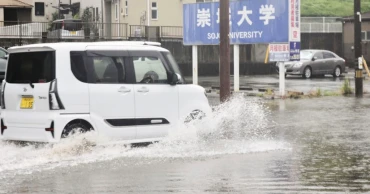
Flooding and mudslides in southern Japan cause missing persons
Heavy rains on Japan’s southern main island of Kyushu have caused severe flooding and mudslides, injuring several people and leaving multiple others missing, officials said Monday.
The downpours began late last week in Kagoshima prefecture, where one person went missing and four others were injured. The low-pressure system remained over the region, bringing more rain to northern parts of Kyushu.
The Japan Meteorological Agency issued the highest-level warning early Monday for Kumamoto prefecture, while the Fire and Disaster Management Agency advised tens of thousands of residents in Kumamoto and six other prefectures to evacuate.
Rescue teams were searching for several missing persons. In Kumamoto, a family of three was caught in a mudslide while driving to an evacuation center. Two family members were rescued alive, but one remained missing. Additionally, two others were reported missing in different locations within the prefecture.
Heavy rain slams southern Japan, triggering floods and mudslides
More people went missing after falling into swollen rivers in Kumamoto and neighboring Fukuoka prefecture.
Television footage showed muddy water rushing through streets, carrying broken trees and debris, as residents waded through floodwaters up to knee level.
Prime Minister Shigeru Ishiba said the government was fully supporting rescue operations and relief efforts in the affected areas. He urged people to “use maximum caution” and “prioritize actions to save your lives.”
The heavy rains also disrupted travel during Japan’s Buddhist Bon holiday week. Bullet trains between Kagoshima and Hakata, as well as local train services, were suspended Monday morning. Partial services resumed where rainfall had eased.
Around 6,000 households in Kumamoto experienced power outages, Kyushu Electric Power Company reported.
9 months ago

Nepal’s LGBTQ+ community holds first pride rally since US funding cuts
Nepal’s LGBTQ+ community and supporters gathered in Kathmandu on Sunday for their annual pride rally, marking the first event since significant funding cuts following the suspension of US financial aid.
Hundreds joined the colorful parade through the city, coinciding with the Gai Jatra festival, a traditional celebration honoring deceased family members. The festival has increasingly welcomed participation from sexual minorities, adding vibrancy to the event.
The community’s progress has faced setbacks after the US government, under former President Donald Trump, began dismantling the US Agency for International Development (USAID), a key provider of humanitarian aid.
Due to these cuts, many help centers for Nepal’s LGBTQ+ community have shut down, leaving thousands without crucial support.
UN rights office in Dhaka unacceptable for promoting LGBTQ agenda: Khelafat Majlish
Nepal had made notable strides in LGBTQ+ rights in recent years, becoming one of the first Asian countries to legalize same-sex marriage. The 2015 constitution explicitly bans discrimination based on sexual orientation.
The US had been among the largest donors supporting HIV prevention, safe-sex counseling, and other vital services through USAID partnerships. With the closure of the USAID office in Nepal, these programs have been severely affected.
“Many of our community services have been hit hard by the funding cuts, but we remain hopeful of securing alternative support to restart these programs,” said Simran Sherchan, an LGBTQ+ rights activist participating in the rally.
9 months ago
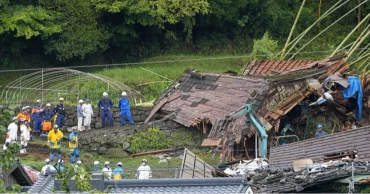
Heavy rain slams southern Japan, triggering floods and mudslides
Torrential rain pounded the southern Japanese island of Kyushu on Friday, triggering floods and landslides and sending residents to shelters as officials issued highest-level warnings in parts of the region.
A mudslide hit a house in Aira city in Kagoshima prefecture, burying two people who were rescued alive and taken to hospital, according to the Fire and Disaster Management Agency.
The agency issued evacuation advisories to more than 360,000 people in Kagoshima prefecture and neighboring Miyazaki.
Television footage showed muddy water gushing down swollen rivers. In Kirishima city, floodwater was up to knee level at a shopping mall.
10 killed in China flash floods, 33 missing
The heavy rain paralyzed local transportation, halting trains and buses. Dozens of flights in and out of Kagoshima have been canceled.
Prime Minister Shigeru Ishiba 's government set up a task force for emergency response and support. “The government will do everything to protect your life and safety,” he said.
The Japan Meteorological Agency predicted heavy rainfall and thunderstorms through Friday in Kyushu because of a low-pressure system.
JMA official Shuichi Tachihara, in a nationally televised news conference, warned that there is a growing risk of disaster, urging residents in the region to take early precautions.
9 months ago

Advocacy group files lawsuit against Justice Department and FBI seeking Epstein case records
Advocacy group Democracy Forward filed a lawsuit Friday against the Justice Department and the FBI seeking records about their handling of the Jeffrey Epstein sex trafficking investigation.
The group is demanding documents related to communications among senior administration officials concerning Epstein files, as well as any correspondence between Epstein and former President Donald Trump. The lawsuit, filed in a federal court in Washington, follows unfulfilled Freedom of Information Act requests submitted in late July.
Skye Perryman, president and CEO of the Democratic-aligned group, urged the court to act quickly to ensure public access to information about the “extraordinary situation.” Government agencies often withhold records linked to criminal investigations from public view.
Democracy Forward has brought numerous lawsuits challenging Trump administration policies and executive orders.
Public interest in the case surged after the Justice Department announced last month it would not release further documents related to the investigation. This decision drew criticism from conspiracy theorists, online investigators, and some Trump supporters who sought evidence of a cover-up.
Trump sues Wall Street Journal and Rupert Murdoch over Epstein coverage
The Trump administration’s effort to unseal grand jury transcripts was denied by a Florida judge, who ruled that the request did not meet the legal exceptions for public release. A similar request is pending in New York.
Meanwhile, the House Oversight Committee has subpoenaed the Justice Department for investigation files, part of a congressional probe examining possible links between Epstein and Trump or other high-level officials.
Since Epstein’s 2019 death in custody while awaiting sex trafficking trial, conspiracy theories about the extent of investigations and who knew about his crimes have circulated widely. Trump has denied any prior knowledge of Epstein’s offenses and said he ended their association years ago, while attempting to move beyond the Justice Department’s decision to withhold full investigation details. However, lawmakers from both parties continue to pursue the matter.
9 months ago