Africa

More than 2 million people displaced, Burkina Faso’s government says, as aid falls short
Violence linked to al-Qaida and the Islamic State group has made Burkina Faso a country with one of the world's fastest-growing populations of internally displaced people, with the number mushrooming by more than 2,000% since 2019, according to government data.
Figures released last month showed more than 2 million people are internally displaced in the West African nation, the majority of them women and children, fueling a dire humanitarian crisis as the conflict pushed people from their homes, off their farms and into congested urban areas or makeshift camps.
Aid groups and the government are scrambling to respond amid a lack of funds and growing needs. One in four people requires aid, and tens of thousands are facing catastrophic levels of hunger. Yet not even half of the $800 million humanitarian response budget requested last year by aid groups was funded, according to the United Nations.
Also Read: UN agencies warn of starvation risk in Sudan, Haiti, Burkina Faso and Mali, call for urgent aid
"The spectrum of consequences (for people) is vast but grim at every point. A lot of people might die, and they're dying because they weren't able to access food and health services, because they weren't properly protected, and the humanitarian assistance and the government response wasn't sufficient," Alexandra Lamarche, a senior fellow at advocacy group Refugees International, said.
The violence has divided a once-peaceful nation, leading to two coups last year. Military leaders vowed to to stem the insecurity, but jihadi attacks have continued and spread since Capt. Ibrahim Traore seized power in September.
The government retains control of less than 50% of the country, largely in rural areas, according to conflict analysts. Al-Qaida and Islamic State-affiliated groups control or threaten large areas, said Rida Lyammouri, senior fellow at the Policy Center for the New South, a Morocco-based think tank.
"State security forces don't have the resources (human and equipment) to fight both groups at all fronts," he said.
The jihadis' strategy of blocking towns, preventing people from moving freely and goods from flowing in, has compounded the displacement crisis. Some 800,000 people in more than 20 towns are under siege, say aid groups.
Also Read: Mass killing of civilians by security forces in Burkina Faso
"The situation is very difficult. ... People don't have food, children don't have school," Bibata Sangli, 53, who left the eastern town of Pama in January 2022 just before it came under siege. She still has family there who are unable to leave, Sangli said.
A community leader who last year met Jafar Dicko, the top jihadi in Burkina Faso, said Dicko's group blockades towns that don't accept its rules, such as banning alcohol and requiring women to be veiled their faces. The leader spoke on condition of anonymity because he wasn't authorized to speak to the media.
In January, the United Nations began using Chinook heavy-lift helicopters to airlift food to areas inaccessible by road - an extremely costly approach. The three Chinooks were reduced to one in May, making it harder to reach many people as quickly.
While the humanitarian situation deteriorates, so has the ability of aid groups to operate.
Since the military takeovers of Burkina Faso's government began in January 2022, incidents against aid organizations perpetrated by the security forces increased from one in 2021 to 11 last year, according to unpublished data for aid groups seen by The Associated Press. The incidents included workers being arrested, detained and injured.
In November, security forces killed a humanitarian worker with a Burkina Faso aid organization in the Sahel region, the vast expanse below the Sahara Desert, according to a text message sent to an aid worker WhatsApp group seen by the AP.
Rights groups, analysts and civilians say Traore, the junta leader, is only focused on achieving military gains and cares little about human rights, freedom of speech or holding people accountable for indiscriminate killings of individuals suspected of supporting the militants.
Burkina Faso's security forces killed at least 150 civilians in the north in April, according to local residents from the village of Karma, where most of the violence took place. Prosecutors said they opened an investigation into the killings.
Earlier this year, an AP investigation into a video circulating on social media determined that Burkina Faso's security forces killed children at a military base in the country's north.
While the government wages war, civilians bear the brunt and are running out of hope.
After jihadis attacked his village in eastern Burkina Faso in April, killing people and stealing cattle, a father of five, who did not want to be identified for security reasons, fled to the region's main town of Fada N'Gourma.
But now his family doesn't have food or access to health care, and the assistance supplied by humanitarian groups isn't enough, he said.
"Since we've been displaced, our situation keeps getting worse," the 46-year-old man said. "I miss my home."
2 years ago

13 members of same family die in Namibia after eating toxic porridge, reports say
Thirteen members of the same family have died in Namibia after eating porridge that authorities believe became toxic when it was mixed with a fermented substance left over from a homemade alcoholic beverage, the state broadcaster reported.
The Namibian Broadcasting Corporation said another four people are in a criticial condition in the hospital. NBC, quoting the Namibian health ministry, said at least 20 people consumed the "poisonous or toxic" porridge after it was mixed with sediment from a homemade beer.
The victims ranged in age from 2 to 33, NBC said.
The incident happened in the Kavango East region in the far northeast of the country.
3 years ago

South Sudan struggles to clear mines after decades of war as people start returning home
For the first time since fleeing South Sudan's civil war eight years ago, Jacob Wani returned home excited to rebuild his life.
But when the 45-year-old farmer tried to access his land in Eastern Equatoria state's Magwi County, he was banned, told that it had been labeled hazardous and contaminated with mines.
"My area is dangerous," Wani said, standing in his shop in Moli village where he now lives, a few miles from the farm. "I do not have the capacity to rebuild in this place and I am also afraid (of explosives). If I go, maybe something can hurt me."
As South Sudanese trickle back into the country after a peace deal was signed in 2018 to end a five-year civil war that killed nearly 400,000 people and displaced millions, many are returning to areas riddled with mines left from decades of conflict. More than 5,000 South Sudanese have been killed or injured by land mines and unexploded ordnance since 2004, according to the U.N. Mine Action Service (UNMAS).
South Sudan is trying to clear all anti-personnel minefields and cluster munitions in the country by 2026.
While more than 84 million square meters of cluster munitions and mines have been cleared in nearly two decades, according to UNMAS — equivalent to approximately 15,000 American football fields — experts doubt that the deadline will be met as munitions are being found across the country daily. Ten people were killed in March after mistakenly playing with a grenade in a remote village in Western Bahr el Ghazal State.
"The contamination is too huge," said Jurkuch Barach Jurkuch, chairperson for South Sudan National Mines Action. Efforts are also complicated by a lack of funding, continued insecurity and flooding during the rainy season, he said.
Eastern Equatoria state, along the border with Uganda, is South Sudan's most heavily contaminated area, hit by wars with northern Sudan before gaining independence in 2011, fighting with the Lord's Resistance Army led by Uganda's notorious warlord Joseph Kony and South Sudan's civil war.
By the end of 2021, the state had the most areas with cluster munitions in the country — 55 out of a total of 123 — according to Mine Action Review, which does global mine analysis. The state is also the second most returned to in the country since the peace agreement, with more than 115,00 people coming back, according to the U.N.
During a visit to Magwi County in May, families told The Associated Press that they had their food rations cut by 50% in refugee camps in Uganda, which pushed them to come back hoping they'd be able to cultivate. But people are returning to the remnants of conflict-riddled villages, with little food, shelter or open schools, all of which is compounded by the mines. In some communes, more than half of the area is contaminated, locals say.
"Whenever there is a land mine, there is a danger. So everybody fears to go cultivate and do activities in the bush because of fear of land mines," said Sebit Kilama, a community leader.
Private contractors and aid groups are trying to clear the area from contamination, but say the task is enormous.
During clearance in a cluster munitions site in May by the aid group MAG, focused on mine clearance, 16 unexploded munitions were found in less than a week of work. Locals are also finding devices a few miles from main roads. When AP journalists visited, a villager alerted the demining team of an unexploded 60 millimeter mortar shell, which he found a few miles into the brush.
MAG is working with communities to raise awareness about the danger of mines and other unexploded ordnance.
"Land mines don't have an expiry date," said Clara Hayat, a community outreach officer with MAG, during a talk to a group of children in a village where people recently returned from Uganda.
"Don't bring them home, because they can kill," she said.
3 years ago
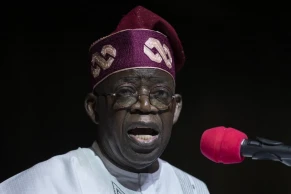
Nigeria’s Bola Tinubu sworn in as president
Nigeria’s Bola Tinubu has been sworn in as president of Africa’s most populous country at a period of unprecedented challenges, leaving some citizens hopeful for a better life and others skeptical that his government would perform better than the one he succeeded.
The former governor of Lagos, Nigeria’s economic hub, Tinubu, 71, was sworn in as Nigeria’s president in Abuja, the capital city, in the presence of thousands of Nigerians and several heads of governments. He succeeds President Muhammadu Buhari to lead a country that by 2050 is forecast to become the third most populous nation in the world, tied with the United States after India and China.
He has promised to build on Buhari's efforts to deliver democratic dividends to citizens in a country where deadly security crises, widespread poverty and hunger have left many frustrated and angry. And with his election still being contested in court by opposition parties and among many young Nigerians, Tinubu has also pledged to reunite the country.
Symbolic of a transition of power and loyalty to the new president, Gen. Lucky Irabor, Nigeria’s chief of defense staff, presented old national and defense flags of Nigeria to Buhari and received new ones from Tinubu, who is also the Chief of the Armed Forces.
Following the national elections in February, newly elected governors also took their oath of office in many Nigerian states on Monday.
At the inauguration venue, neither of the two main opposition candidates challenging Tinubu’s election in court was present and many Nigerians tweeted in protest to Tinubu’s inauguration. The outcome of the court challenge is due in about three weeks. If the opposition challenges are upheld, it would be the first time a presidential election would be nullified by the court in Nigeria’s history.
Tinubu's manifesto of “renewed hope” prioritizes the creation of sufficient jobs and ramping up of local production of goods, investing in agriculture and public infrastructure, providing economic opportunities for the poorest and most vulnerable as well as creating better national security architecture to tackle all forms of insecurity.
However, Tinubu’s ambitious plans could be threatened in his first 100 days in office by a mountain of challenges, from insecurity to a fiscal crisis, poverty and deepening public discontent with the state, said Mucahid Durmaz, Senior West Africa Analyst at risk intelligence company Verisk Maplecroft.
Some analysts also say the promises made by Tinubu and the hope they bring are reminiscent of when Buhari was first elected president in 2015 as a former military head of state. His priorities were to fight insecurity and build the economy but he ended up failing to meet the expectations of many.
“No Nigerian president has come into office with so much goodwill from citizens as President Buhari but no other president has squandered it as quickly as President Buhari did,” said Dr Seun Kolade, a Nigerian development expert and associate professor at De Montfort University, in the U.K. “In terms of expectations and what is possible, this is a very mediocre eight years, to put it mildly."
In Nigeria's capital, Abuja, locals identified economic hardship and insecurity as the biggest challenges they struggled with during Buhari's eight-year rule. “People have really suffered (during) this period. People have been dying because of a lack of money, and I pray and hope we should not experience this kind of thing again under the new president,” said Princess Taiwo, a fruit seller.
Long before Buhari came to power in 2015, Nigeria’s development has for many years slowed under the weight of poor governance and endemic corruption, making it difficult for citizens to benefit from the country’s high earnings as Africa’s top oil producer.
Though he has whittled down the power of Islamic extremists in the northeast and has built key infrastructure with the aid of foreign loans, many believe the quality of life and standard of living has reduced under Buhari. They cite widening insecurity in other parts of the country, growing poverty as well as an economy struggling with record unemployment, inflation at an 18-year high of 22.2%, and rising debt.
“When you combine the lack of opportunities in an environment that is disabling with a strong youth population that is frustrated, that is a ticking time bomb and that is the story of Nigeria over the past 50 years and Buhari has made it worse,” said development expert Kolade.
Coming from the ruling All Progressives Congress, which has been dogged with allegations of corruption, Tinubu's emergence as Nigeria's president-elect has also drawn concerns about how transparent he would be in office.
Although he has often talked about assembling the best hands to lead Nigeria, the nation's problem has never been about the quality of public officials but about accountability, said Leena Koni Hoffmann-Atar, associate fellow in the Africa program at the Chatham House think tank.
“What we underestimate is that for state institutions to be strengthened, beyond the character and competence of the individuals, you have to have processes of accountability. And it remains to be seen whether accountability in state institutions will be strengthened under his administration,” said Hoffmann-Atar.
Tinubu must also act quickly and decisively to tackle Nigeria's security crises with the country already in a critical situation, analysts said.
“There is already a very substantial loss of confidence in the government as a protector of citizens," said Nnamdi Obasi, senior adviser for Nigeria at the International Crisis Group. “If the new government fails to act very decisively, we would have more people seeking their own self-help and protection."
Among those now contemplating self-protection are villagers in north central Plateau state’s Mangu district where gunmen killed more than 100 people in a late-night attack earlier in May. Yaputat Pokyes, one of the survivors, said all that they want from the incoming president is to help them stay alive.
End/UNB/AP/MB
3 years ago
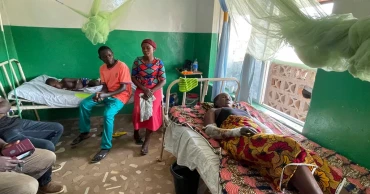
In Nigeria’s hard-hit north, families seek justice as armed groups seek control
Christian Jonathan's mother was holding the 9-month-old boy in her arms when she was shot dead during an attack on their village in northwestern Nigeria. The assailants cut off one of Christian's finger and abandoned him by the side of the road with a bullet wound in his tiny leg.
"They left him on the ground beside his mother's body," said Joshua Jonathan, Christian's father. "They thought the boy was dead."
The late-night attack in April in Runji in Kaduna State left 33 people dead, most of them burned alive or shot dead. Many more have been killed since in the continuing clashes between nomadic cattle herders and farming communities in northwest and central regions of the West African nation, including more than 100 this month in Plateau state.
The decadeslong violence is becoming more deadly, killing at least 2,600 people in 2021, according to the most recent data from the Armed Conflict Location & Event Data Project. Once armed with sticks, the groups now fight with guns that have been smuggled into the country.
Both sides accuse the government of injustice and marginalization, but the clashes have also taken on a religious dimension, giving rise to militias that side with the herders, who are primarily Muslim, or the farmers from Christian communities.
The growing security crisis presents a huge challenge for Nigeria's incoming president, Bola Tinubu, who rose to power in Nigeria — Africa's largest economy and among its top oil producers — promising to improve the lives of affected communities and address the root causes of the crisis by providing jobs and ensuring justice. Tinubu's inauguration is scheduled for Monday.
If the violence isn't reined in, analysts say, it could further destabilize the country and drive more of its 216 million people into poverty. U.N. agencies say the violence affects mostly children, who are already threatened by malnutrition, and women, who are often abducted and forced into marriage.
The response of security forces can be slow and arrests are rare, prompting a growing number of communities to defend themselves when they come under siege.
"There is a substantial loss of confidence in the government as a protector of citizens," said Nnamdi Obasi, the senior adviser for Nigeria at the International Crisis Group. Obasi warned that the failure of the incoming administration to speedily resolve the conflict would lead to "more people seeking their own self-defense, more proliferation of weapons, more criminal groups and a rise in organized armed groups."
In Runji, an agrarian village, The Associated Press spoke to some survivors in hospital beds and others touring a mass grave and their razed houses. They said they were under attack for hours and that the gunmen fled long before security forces arrived.
Every household bears a scar.
Christopher Dauda's family was trying to escape when the gunmen caught up with his wife and four children, killing all five. Danjuma Joshua's two daughters were shot in the back while they tried to flee. In the home of Asabe Philip, who survived but has burns all over her body, the assailants burned five children alive as they cowered in one room.
Christian's aunt has tried to fill the void left by the killing of his mother. His father said Christian cries a lot and barely sleeps, although his physical wounds are gradually healing.
"We try to manage with what we have left," Joshua Jonathan said.
On the other side of the conflict, the herders say they are also under attack. They complain of cattle rustling and extrajudicial killings by local security groups working as community vigilantes.
Abdullahi Bello Bodejo, the president of the national herders' association, denied that anyone in the group was responsible for the violence. Most of the herders belong to the Fulanis, an ethnic group.
"Fulanis are not the killers. Any person carrying out killings is not our member. Sometimes, when communities accuse us of killings, 75% is not true; they have their own crisis but always blame Fulanis," said Bodejo.
Nigerian security forces say they have arrested dozens of gunmen and recovered their weapons. But the assailants are estimated to number in the thousands and can easily recruit new members, according to Abdulaziz Abdulaziz, a conflict researcher.
"There is a limit to the kinetic (military) operations, as it doesn't address the socioeconomic issue that gave rise to banditry in the region in the first place," said Oluwole Ojewale of the Africa-focused Institute of Security Studies. He said the incoming Tinubu administration must work with state governments to address unemployment, poverty and social injustice.
The recent violence has led to the formation of community, state and regional security outfits that experts say could create bigger problems for Nigeria's security architecture if not properly monitored.
And their recruits are young.
Felix Sunday, a college student in Kaduna, said that he was 16 when he joined a local vigilante group in 2021, and that he struggles to combine the night watch with his studies.
Across much of West and Central Africa, porous national borders facilitate the smuggling of weapons. A survey-based report published in 2021 by the Geneva-based Small Arms Survey in collaboration with the Nigerian government found that at least 6 million firearms may have been in the hands of civilians in the country at the time.
The military and police have recovered hundreds of firearms in Nigeria in the last year, but weapons dealers elsewhere are exacerbating the problem.
"Things have gotten considerably worse. Some are large military weapons imported from other countries," said Confidence MacHarry with the Lagos-based SBM Intelligence security firm.
With sophisticated weapons, the gunmen have launched daring attacks in areas with a heavy security presence, including a military base and an airport in Kaduna, indicating that the problem may be the motivation of the security forces themselves.
Survivors of the attack in Plateau told the AP that the police didn't arrive until the next day, echoing comments from people living in Runji, which has a security checkpoint nearby.
"When we call the soldiers, it is after the attackers have left that the soldiers come. Even if we hear they (the attackers) are coming and we report to the government, they don't take proactive action," said Simon Njam, a vigilante leader near Runji who uses bows, arrows and locally-made guns to secure the area.
Part of the problem is that the security forces are disorganized and unprepared to respond to the attacks, according to Kabir Adamu, the founder of Beacon Consulting, a security firm based in Nigeria's capital, Abuja.
"We don't have a coordinated security sector that identifies and counters threats," he said. "They need to work together to protect lives and currently, we are not seeing enough of that."
The Nigerian military and police didn't respond to written and phone inquiries seeking a response to the claims.
As more families mourn the loss of their loved ones, forced to replace farmland with graveyards, their priority is demanding justice.
"How can people just come and kill and nothing will happen?" asked Dauda in Runji, remembering his life with his wife and four children. "They cannot bring back my lost family, but the government can at least rebuild my home and ensure justice."
3 years ago

Sudan military ruler seeks removal of UN envoy in letter to UN chief, who is 'shocked' by the demand
Sudan's military ruler demanded in a letter to the U.N. secretary general that the U.N. envoy to his country be removed, officials said Saturday. The U.N. chief was “shocked” by the letter, a spokesman said.
The envoy, Volker Perthes, has been a key mediator in Sudan, first during the country's fitful attempts to transition to democracy and then after worsening tensions between military rivals exploded into open fighting last month.
The fighting pits troops loyal to military chief Gen. Abdel-Fattah Burhan against a powerful paramilitary group, the Rapid Support Forces, headed by Gen. Mohammed Hamdan Dagalo.
Burhan's letter to U.N. Secretary-General Antonio Guterres was received Friday.
“The Secretary-General is shocked by the letter he received this morning,” U.N. spokesman Stephane Dujarric said. “The Secretary-General is proud of the work done by Volker Perthes and reaffirms his full confidence in his Special Representative.”
Dujarric didn’t reveal the contents of the letter. A senior Sudanese military official said Burhan’s letter asked Guterres to replace Perthes who was appointed to the post in 2021.
According to the official, Burhan accused Perthes of “being partisan,” and that his approach in pre-war talks between the generals and the pro-democracy movement helped inflame the conflict. The talks had aimed at restoring the country’s democratic transition, which was derailed by a military coup in Oct. 2021.
The official spoke on condition of anonymity because he was not authorized to brief media.
Later Saturday, the U.S. State Department said it supports Perthes and that he “continues to have our confidence.” A statement by spokesman Matthew Miller said that “we express our concern over the letter from the Sudanese Armed Forces calling for his (Perthes’) resignation.”
Perthes declined to comment on the letter.
Burhan’s letter came after the U.N. envoy accused the warring parties of disregarding the laws of war by attacking homes, shops, places of worship, and water and electricity installations.
In his briefing to the U.N. Security Council earlier this week, Perthes blamed the leaders of the military and the RSF for the war, saying they have chosen to “settle their unresolved conflict on the battlefield rather than at the table.”
Burhan accused Perthes last year of “exceeding the U.N. mission’s mandate and of blatant interference in Sudanese affairs.” He threatened to expel him from the country.
The ongoing fighting broke out in mid-April between the military and the powerful RSF. Both Burhan and Dagalo led the 2021 coup that removed the Western-backed government of Prime Minister Abdalla Hamdok.
The fighting turned the capital of Khartoum and the adjacent city of Omdurman into a battleground. The clashes also spread elsewhere in the country, including the war-wracked Darfur region.
The conflict has killed hundreds of people, wounded thousands and pushed the country to near collapse. It forced more than 1.3 million out of their homes to safer areas inside Sudan, or to neighboring nations.
Sexual violence including rape of women and girls, a common practice in Sudan's wars and political upheavals, were reported in Khartoum and Darfur since the fighting began.
The Combating Violence Against Women Unit, a government-run group, said Friday it received reports of at least 24 cases of sexual attacks in Khartoum, and 25 other cases in Darfur.
The unit, which tracks violence against women, said most survivors reported that the attackers were in RSF uniform and in areas of Khartoum controlled by RSF checkpoints.
The RSF did not respond to a request for comment.
The warring parties have agreed on a weeklong cease-fire, brokered by the U.S. and Saudi Arabia. However, the truce, which is scheduled to expire Monday night, did not stop the fighting in parts of Khartoum and elsewhere in the county.
Residents reported sporadic clashes Saturday in parts of Omdurman, where the army’s aircraft were seen flying over the city. Fighting was also reported in al-Fasher, the provincial capital of North Darfur.
3 years ago

Thousands of exhausted South Sudanese head home, fleeing brutal conflict
Tens of thousands of exhausted people are heading home to the world's youngest country as they flee a brutal conflict in neighboring Sudan.
There's a bottleneck of men, women and children camping near the dusty border of Sudan and South Sudan and the international community and the government are worried about a prolonged conflict.
Fighting between Sudan's military and a rival militia killed at least 863 civilians in Sudan before a seven-day ceasefire began Monday night. Many in South Sudan are concerned about what could happen if the fighting next door continues.
“After escaping danger there’s more violence,” said South Sudanese Alwel Ngok, sitting on the ground outside a church. “There’s no food, no shelter, we’re totally stranded, and I’m very tired and need to leave,” she said.
Ngok thought she’d be safe returning home after fleeing clashes in Sudan’s capital, Khartoum, where she watched three of her relatives killed. She and her five children arrived in Renk, South Sudan, where people were sheltering on the ground, some sleeping with their luggage piled up near thin mats. Women prepared food in large cooking pots as teenagers roamed aimlessly. Days after Ngok and her family arrived, she said, a man was beaten to death with sticks in a fight that began with a dispute over water.
Years of fighting between government and opposition forces in South Sudan killed almost 400,000 people and displaced millions until a peace agreement was signed nearly five years ago. Enacting a solid peace has been sluggish: The country has yet to deploy a unified military and create a permanent constitution.
Large-scale clashes between the main parties have subsided, but there is still fighting in parts of the country.
South Sudan has billions in oil reserves that it moves to international markets through a pipeline that runs through Sudan in territories controlled by the warring parties. If that pipeline is damaged, South Sudan’s economy could collapse within months, said Ferenc David Marko, a researcher at the International Crisis Group.
However, the most immediate concern is the tens of thousands of South Sudanese who are returning with no idea of how they'll get home to their towns and villages. Many are unable to afford the trip. Aid groups and the government are stretched for resources they can use to help.
Some 50,000 people have crossed into the border town of Renk, many sheltering in stick huts along the road and in government buildings throughout the city. Some wander aimlessly in the market, desperately asking foreigners how to get home. People are arriving faster than they can be taken to new locations.
The longer they stay, the greater the risk of fighting between communities, many with longstanding grievances stemming from the civil war. Many are frustrated because they don’t know what lies ahead.
The power struggle in South Sudan between President Salva Kiir, a Dinka, and Vice President Riek Machar, a Nuer, took on an ethnic dimension during the civil war. Communities in Renk said that the conflict that broke out over water in May and led to the killing of the man with sticks quickly became a wider dispute between the ethnic groups, forcing people to flee once again.
At first, the local government wanted to divide the South Sudanese returning through Renk, based on their place of origin. Aid groups, however, pushed back. Together with the government and community leaders, the aid groups are engaging in peace dialogues.
“We are worried (about more violence)," said Yohannes William, the chairman for the humanitarian arm of the government in Upper Nile state. “The services that (are) being provided here, they are limited. We have been told that this is a transit center, anyone who comes should be there two days or three days and then transit.”
"But now, unfortunately, due to the delayment of transportation, they have been there for more than two weeks, three weeks,” William said.
Situated at the northernmost tip of South Sudan, Renk is connected to other parts of the country by few roads. The main routes are flights or boat trips along the Nile, and many people can’t afford them.
The United Nations' International Organization for Migration is trying to send the most vulnerable South Sudanese who have returned — some 8,000 people — home by boat, with the goal of transporting nearly 1,000 people daily along the Nile to the state capital of Malakal. However, the trips have just begun, and problems in coordination between aid groups and the government at the port this month delayed people from leaving, with children, babies and the sick camped by empty boats for days under the scorching sun.
Aid workers say it could take up to two months to decongest the city, which has nearly doubled in size. But Malakal already hosts some 44,000 displaced people in a United Nations protection camp, many still too afraid to leave for security reasons.
“The problem is ‘an out of the frying pan, into the fire’ conundrum, because we’re moving them to Malakal, and Malakal is itself congested,” Nicholas Haysom, the United Nations chief in South Sudan, told The Associated Press.
Some who have already returned to Malakal from Sudan say they're unsure if there's a home to go back to, having had no contact with their families during the civil war.
“I don't know if my relatives are dead or alive,” said William Deng. The 33-year-old hasn't been able to speak to his family in neighboring Jonglei state, which has little phone service, since returning in early May.
The government says that it has funding for 10 charter planes to fly people from Renk to parts of the country harder to reach by boat. But Renk’s tiny airport can’t support large planes, so each flight can only hold 80 people.
“The situation is dire … (South Sudan) is now being forced to receive additional refugees and returnees. As a result, the humanitarian needs in the country will continue to grow,” said Michael Dunford, regional director for East Africa for the World Food Program.
Even before this crisis, 70% of the population needed humanitarian assistance, and the World Food Program can’t meet their needs, he said.
Traders in Renk, who get the majority of their goods from Sudan, say they’re already feeling the economic pain, with prices spiking 70%.
“I used to send my family $100 a week. Now I send half that,” said Adam Abdalla Hassan.
The Sudanese shop owner supports his family in Sudan, but now is earning less because people don't have enough money, he said.
Those who returned say they’ve received little information about where or how they’re supposed to get home, and worry they won’t make it in time before the rainy reason, which starts soon, floods roads and makes it harder to fly.
“How can we stay here under the rain with the kids?” said Ehlam Saad. Holding up her UN-issued wristband, the 42-year-old said she’s been living in Renk for nearly three weeks. She has no idea how she’ll get to the capital of South Sudan, Juba, where she and her family lived before the war. Her only choice now is to find a way home and reunite with her husband and son, she said.
“A home is a home. Even if there’s fighting, even if you move around the world, even if it’s the worst option, it’s home,” she said.
3 years ago

What about those who can’t flee fighting in Sudan? Many face danger and despair
Mahmoud almost never leaves his small apartment in east Khartoum. Electricity has been out for most of the past month, so he swelters in the summer heat. When he does venture out to find food, he leaves his mobile phone behind because of looters in the street. Otherwise, he hunkers down in fear, worried that an artillery shell could burst into his home.
Exhausted, confused and unable to escape the conflict-ravaged Sudanese capital, the young research technician tries blocking out the reality of his surroundings.
"I am reading my book collection for a second time," he said. One work helping him get by: "Models of the Mind," a 2021 neuroscience book about how mathematics help explain the workings of the brain.
Since the conflict broke out last month, more than 1.3 million people have fled their homes to escape Sudan's fighting, going elsewhere in the country or across the borders. But Mahmoud and millions of others remain trapped in Khartoum and its sister cities of Bahri and Omdurman, unable to leave the central battleground between Sudan's military and the Rapid Support Forces paramilitary.
For them, every day is a struggle to find food, get water and charge their phones when electricity is cut off. All the while, they must avoid the fighters and criminals in the streets who rob and brutalize pedestrians, loot shops and storm into homes to steal whatever of value they can find.
Dollars have become hard to find and dangerous to hold, a target for looters. Amazingly, Bankak, the banking app of the Bank of Khartoum, continues to function most of the time. It has become a lifeline for many, allowing users to transfer money and make payments electronically.
Mahmoud uses the app to pay the one shop owner he visits to stock up on canned goods. During weeks when electricity was out, the shop owner still gave him what he needed and let him pay later. A technology company that Mahmoud worked for before the fighting puts 30,000 Sudanese pounds — around $50 — on his app account every few weeks.
That transfer allows him to keep eating. "If I have money in my bank account and Bankak is operating, everything will be good," he said. Like others who spoke to The Associated Press, Mahmoud asked to be identified only by his first name for fear of reprisals.
Since April 15, the Sudanese army, led by Gen. Abdel Fattah Burhan, and the RSF, commanded by Gen. Mohamed Hamden Dagalo, have been locked in a violent power struggle that has turned the once sleepy Khartoum into an urban battlefield. More than 800 civilians have been killed, according to the Sudan Doctor's Union.
On Monday a week-long cease-fire began, the conflict's seventh, with fighting easing across parts of the city. But gunbattles and bombardments still continue despite the pledge made by both forces in Saudi Arabia. Residential areas and hospitals have been pounded by army airstrikes, while RSF troops have commandeered homes and turned them into bases.
The more immediate danger is often the armed men and looters in the streets. Waleed, another resident of east Khartoum, said he has had several terrifying encounters. In one case, he saw around 30 RSF fighters, some who looked no older than 15, tormenting a passerby, waving their weapons at him and demanding he lie on the ground, then shouting at him to stand up.
"They were playing with him like a puppet," Waleed said.
Many can't afford to leave. Mahmoud wants to get to Ethiopia, then to Portugal where he been offered a position as a research technician. But he doesn't have the $2,500 he estimates the trip will cost him. Waleed said he can't leave for medical reasons.
Others say they have no choice but to stay and work. One of the many women who sell tea in the streets of Khartoum, Tana Tusafi, a single mother from Ethiopia, says her four children depend on her. "I have no one to provide for me, so I have to work," she said.
The dangers are unpredictable. Mahmoud said that last week RSF fighters in a neighboring building started shooting at his apartment block, believing an army sniper could be there after seeing lights inside. Mahmoud said he had to confront the troops and convince them his block was only filled with civilians.
Another resident, Fatima, said her brother disappeared after having coffee with friends on May 13. That first evening when he didn't come home, "I thought he might have stayed over at his friend's house," Fatima said.
On Monday, Khalid finally returned. For eight days, he had been detained and interrogated by the RSF, Fatima said.
The Missing Person Initiative, an online tracker where people can report missing loved ones, said it has reports of at least 200 people unaccounted for in the capital region. It said it has received multiple reports of individuals being detained by the paramilitary.
Darker still is the growing number of rape and sexual assault allegations. According to Hadhreen, a community-led health and crisis group, there have been at least 10 confirmed rape cases in the capital area. Seven were committed by RSF soldiers, it said, while the three others were by unknown attackers within RSF-held areas.
The reports of sexual violence harken back to the Darfur conflict of the early 2000s, during which the Janjaweed militia was accused of widespread rapes and other atrocities. Many of its fighters were later folded into the RSF. They were again accused of raping dozens of women when they broke up a pro-democracy protest camp in Khartoum in 2019.
In this landscape of fear, those who remain in the city find ways to get by. Some store owners operate out of their homes, hoping to hide from the looters.
Waleed said only one remaining bakery serves his neighborhood and two others. Each customer registers their name beforehand
"If you were lucky and registered your name at 7 o'clock in the morning you might get your bread at 12 noon," Waleed said. He too survives because of Bankak, on money that his family in Saudi Arabia puts into his account.
During the first weeks of May, there was no electricity in his neighborhood, so Waleed relied on a nearby mosque with a generator to charge his phone. But no electricity meant no running water.
"We roamed around with buckets to trying to find people who have electric generators who can activate their water pumps," he said. Last week, the electric company restored power in his area.
Most of the city's hospitals have also shut down, many of them damaged in bombardments or ground fighting. Since May 11 alone, there have been 11 attacks on humanitarian facilities in the capital, the World Health Organization reported. Community action groups, led in part by a grassroots pro-democracy network known as the Resistance Committees, have banded together to help treat Khartoum's sick and deliver medicines.
Hadeel Abdelsayed, a trainee doctor at one community clinic, said patients have died because they did not have enough oxygen. The clinic was eventually evacuated due to intense shelling.
Mahmoud, the researcher, said that if he can somehow secure the funding, he will try to make his escape to Ethiopia. But time is against him.
"My passport will expire in 10 weeks, so I will have to leave before then."
3 years ago

Aid agencies back UN's $7 billion appeal for Horn of Africa crisis
Humanitarian agencies are calling for full funding of the U.N.'s $7 billion appeal for the Horn of Africa during a pledging conference this week, citing a growing crisis and the need for urgent lifesaving intervention.
The U.N. says the region is facing the worst drought in 40 years, with more than 43.3 million people in need of assistance in Somalia, Ethiopia and Kenya, and more than half of those lacking access to sufficient food, according to the U.N.
The International Rescue Committee said that until now the appeals have received less than a quarter of the donations they need.
"Efforts to combat food insecurity need to be urgently scaled up across a wider group of governments, international financial institutions and climate actors," said the IRC's chief executive, David Miliband.
The U.N on Wednesday is convening a high-level pledging event at its headquarters in New York, where member states and partners will be encouraged to commit financial support to the Horn of Africa crisis.
Humanitarian organizations say time is running out as affected communities have gone for months with little or no food.
"It's beyond urgent. … We have averted famine before, and we can do it again. … People are already dying and there's no time for declarations," Deepmala Mahla, CARE International's vice president for humanitarian affairs. told The Associated Press.
A famine is yet to be declared in Somalia, where more than 6 million people are going hungry, but some humanitarian and climate officials have warned that trends are worse than in the 2011 famine in Somalia in which a quarter-million people died.
Formal famine declarations are rare because data to meet the benchmarks often cannot be obtained because of conflict, poor infrastructure or politics. Governments can be wary of being associated with a term of such grim magnitude.
Local nongovernmental organizations like Somalia's Hormuud Salaam Foundation say there's need for sustained funding.
"For lasting change, we must equip local organizations and local people with the tools to face the inevitable climate shocks of tomorrow," the foundation's CEO, Abdullahi Nur Osman, told the AP.
Persistent conflict in some of the affected areas, combined with climate change effects, have contributed to the growing crisis.
Parts of Somalia and Ethiopia are currently experiencing flooding during the ongoing rainy season and millions of people have been displaced.
The affected areas, mostly occupied by herders, had seen prolonged dry seasons that left livestock, which are a source of livelihoods, dead.
Parts of Somalia are grappling with insecurity due to the al-Shabab extremist group that has carried out numerous large-scale attacks.
Northern Ethiopia experienced conflict for more than two years as regional forces clashed with national forces. Hundreds of thousands of people died and the situation remains fragile, seven months after a peace deal was signed.
3 years ago

Death toll tops 80 after attack in north Nigeria; 7 suspects arrested
The death toll from an attack by dozens of gunmen in north central Nigeria's Plateau state has reached 80, local authorities said Thursday, with survivors still searching for bodies days after the incident.
The gunmen targeted several villages in the remote Mangu district of Plateau during the attack that started Monday and lasted till Tuesday, according to residents. Burials continued on Thursday in parts of Mangu located 60 kilometers (37 miles) from Jos, the state capital.
The police told The Associated Press seven suspects had been arrested. It was a “situation of sporadic shooting across a vast area of different villages,” said Alabo Alfred, the command spokesman.
The security crisis in the north-west and central regions of the country has stifled Nigeria’s development, despite its status as Africa’s largest economy and one of its top oil producers.
After decades of conflict, current and former pastoralists from the Fulani tribe took up arms against farmers over limited access to land and water. The attacks are sometimes reprisals and are mostly in remote areas where security forces are outnumbered and outgunned.
As of Thursday, families in Plateau's Mangu district are unable to retrieve the bodies of victims in areas that remained volatile, said Philip Pamshak, who has been assisting with the mass burials. “The place is still bad, so we had to run,” he said.
Quoting the local chiefs he spoke to when he visited the affected areas, Plateau Deputy Gov. Sonni Tyoden said in a statement that at least 10 villages were targeted in the attack. Local residents said it was carried out by herdsmen after a resident complained that his banana plantation had been destroyed by their cattle.
Survivors told the AP the assailants arrived in large numbers and scattered across the villages, setting houses ablaze while shooting at people.
“There was tension everywhere. They macheted some and (killed) some with guns,” according to Yaputat Pokyes, one of the survivors. Many residents have fled the area while the injured are being treated in different hospitals, he said.
Residents also said security forces only arrived a day after the attack began, echoing criticisms from analysts that security forces are sometimes slow to respond when violence breaks out.
Confidence MacHarry, from the Lagos-based SBM Intelligence security firm, said Nigerian security forces are not able to prevent or respond fast to such attacks because their early warning system was not effective and they lacked the firepower and personnel to prevent such attacks.
“For the early warning system to work, we are supposed to have reports of the pending attack and the response mechanism to prevent the attack from taking place,” said MacHarry.
Meanwhile, police investigating a separate deadly attack in the southeastern Anambra state said two suspects have been arrested. Tuesday’s attack on a U.S. convoy is suspected to have been carried out by violent separatists in the region.
The death toll has also increased from four to seven, including three U.S. Embassy staffers and four police officers, said Echeng Echen, the police chief in Anambra.
“The state police command and other security agencies are working round-the-clock, in concert with the Government of Anambra State, to find and rescue (two) missing officials" with the embassy, said Echeng.
3 years ago