africa

Ghanaian designers create solutions as fast fashion pollutes Africa
In a sprawling secondhand clothing market in Ghana’s capital, early morning shoppers jostle as they search through piles of garments, eager to pluck a bargain or a designer find from the stalls selling used and low-quality apparel imported from the West.
At the other end of the street, an upcycled fashion and thrifting festival unfolds with glamour and glitz. Models parade along a makeshift runway in outfits that designers created out of discarded materials from the Kantamanto market, ranging from floral blouses and denim jeans to leather bags, caps and socks.
The festival is called Obroni Wawu October, using a phrase that in the local Akan language means “dead white man’s clothes.” Organizers see the event as a small way to disrupt a destructive cycle that has made Western overconsumption into an environmental problem in Africa, where some of the worn-out clothes end up in waterways and garbage dumps.
“Instead of allowing (textile waste) to choke our gutters or beaches or landfills, I decided to use it to create something ... for us to use again,” said Richard Asante Palmer, one of the designers at the annual festival organized by the Or Foundation, a nonprofit that works at the intersection of environmental justice and fashion development.
Ghana is one of Africa's leading importers of used clothing. It also ships some of what it gets from the United Kingdom, Canada, China and elsewhere to other West African nations, the United States and the U.K., according to the Ghana Used Clothing Dealers Association.
Some of the imported clothes arrive in such poor shape, however, that vendors dispose of them to make room for the next shipments. On average, 40% of the millions of garments exported weekly to Ghana end up as waste, according to Neesha-Ann Longdon, the business manager for the Or Foundation’s executive director.
The clothing dealers association, in a report published earlier this year on the socioeconomic and environmental impact of the nation’s secondhand clothing trade, cited a much lower estimate, saying only 5% of the items that reach Ghana in bulk are thrown out because they cannot be sold or reused.
In many African countries, citizens typically buy preowned clothes — as well as used cars, phones and other necessities — because they cost less than new ones. Secondhand shopping also gives them a chance to score designer goods that most people in the region can only dream of.
But neither Ghana's fast-growing population of 34 million people nor its overtaxed infrastructure is equipped to absorb the amount of cast-off attire entering the country. Mounds of textile waste litter beaches across the capital, Accra, and the lagoon which serves as the main outlet through which the city’s major drainage channels empty into the Gulf of Guinea.
“Fast fashion has taken over as the dominant mode of production, which is characterized here as higher volumes of lower-quality goods,” Longdon said.
Jonathan Abbey, a fisherman in the area, said his nets often capture textile waste from the sea. Unsold used clothes “aren’t even burned but are thrown into the Korle Lagoon, which then goes into the sea,” Abbey said.
The ease of online shopping has sped up this waste cycle, according to Andrew Brooks, a King’s College London researcher and the author of “Clothing Poverty: The Hidden World of Fast Fashion and Second-hand Clothes.”
In countries like the U.K., unwanted purchases often end up as charity donations, but clothes are sometimes stolen from street donation bins and exported to places where the consumer demand is perceived to be higher, Brooks said. Authorities rarely investigate such theft because the clothes are "seen as low-value items,” he said.
Donors, meanwhile, think their castoffs are “going to be recycled rather than reused, or given away rather than sold, or sold in the U.K. rather than exported overseas,” Brooks said.
The volume of secondhand clothing sent to Africa has led to complaints of the continent being used as a dumping ground. In 2018, Rwanda raised tariffs on such imports in defiance of U.S. pressure, citing concerns the West's refuse undermined efforts to strengthen the domestic textile industry. Last year, Ugandan President Yoweri Museveni said he would ban imports of clothing “from dead people.”
Trade restrictions might not go far in either reducing textile pollution or encouraging clothing production in Africa, where profits are low and incentives for designers are few, experts say.
In the absence of adequate measures to stop the pollution, organizations like the Or Foundation are trying to make a difference by rallying young people and fashion creators to find a good use for scrapped materials.
Ghana's beaches had hardly any discarded clothes on them before the country's waste management problems worsened in recent years, foundation co-founder Allison Bartella said.
“Fast forward to today, 2024, there are mountains of textile waste on the beaches,” she said.
1 year ago
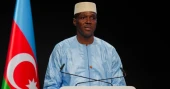
Mali's ruling military appoints new prime minister
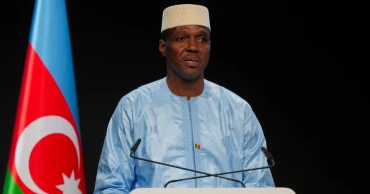
Mali's ruling junta on Thursday appointed a new prime minister from the ranks of the military generals, a day after firing his predecessor for criticizing the military regime.
The move effectively consolidates all power in the African country in the hands of military generals. Mali has been ruled by military leaders since the junta seized power in 2020 and staged another coup the following year.
Choguel Maïga, who was a civilian and who criticized the junta for postponing the presidential election scheduled for 2024, was removed on Wednesday, a move announced in a presidential decree issued by Gen. Assimi Goita, Mali’s leader, and read on state television channel ORTM.
Goita on Thursday appointed Gen. Abdoulaye Maïga as prime minister, according to an announcement on ORTM by Alfouseyni Diawara, secretary general of the Malian presidency. The two Maïgas are not related.
Abdoulaye Maïga’s appointment effectively means that all three branches of the government — the Malian presidency, the National Transitional Council, which is the transition’s legislative body, and the post of prime minister — are now in the hands of military officers.
Maïga, 43, previously served as minister of territorial administration, government spokesman and deputy prime minister.
“The choice of the new prime minister shows that the military is tightening its grip on power. General Maïga is especially seen close to transition President Goita, who wanted someone loyal as the country is preparing for possible elections next year,” said Ulf Laessing, head of Sahel program at Konrad Adenauer foundation in Mali.
“Chogoul provoked his sacking as he wants to present himself as possible elections candidate," Laessing added.
Maïga was not among the five officers behind the 2020 coup but quickly became part of the group running the country.
He is known for virulent rhetoric against France and MINUSMA, the former U.N. mission in Mali. During the U.N. General Assembly in September, he slammed Algerian diplomats for asserting that Malian civilians had been killed by the Malian army near the border between the two countries.
Since coming to power in Mali, the military junta has severely restricted freedom of expression, arresting more than a dozen politicians and opinion leaders for criticizing the military regime.
1 year ago

South Africa refuses aid for thousands of illegal miners trapped
South Africa's government says it will not help an estimated 4,000 illegal miners inside a closed mine in the country's North West province who have been denied access to basic supplies as part of an official strategy against illegal mining.
The miners in the mineshaft in Stilfontein are believed to be suffering from a lack of food, water and other basic necessities after police closed off the entrances used to transport their supplies underground.
It is part of the police’s Vala Umgodi, or Close the Hole, operation, which includes cutting off miners’ supplies to force them to return to the surface and be arrested.
North West police spokesperson Sabata Mokgwabone said information received from those who recently helped bring three miners to the surface indicated that as many as 4,000 miners may be underground. Police have not provided an official estimate.
In the past few weeks, over 1,000 miners have surfaced at various mines in North West province, with many reported to be weak, hungry and sickly after going for weeks without basic supplies.
Police continue on Thursday to guard areas around the mine to catch all those appearing from underground.
Cabinet Minister Khumbudzo Ntshavheni told reporters on Wednesday that the government would not send any help to the illegal miners because they are involved in a criminal act.
“We are not sending help to criminals. We are going to smoke them out. They will come out. Criminals are not to be helped. We didn’t send them there," Ntshavheni said.
Illegal mining remains common in South Africa's old gold-mining areas, with miners going into closed shafts to dig for any possible remaining deposits.
The illegal miners are often from neighboring countries, and police say the illegal operations involve larger syndicates that employ the miners.
Their presence in closed mines have also created problems with nearby communities, which complain that the illegal miners commit crimes ranging from robberies to rape.
Illegal mining groups are known to be heavily armed and disputes between rival groups sometimes result in fatal confrontations.
1 year ago

Botswana holds election with new economic challenges
Botswana votes in a national election this week that will decide if the ruling party extends a 58-year stretch in power in a southern African country that is a leading diamond producer and often held up as one of the most stable and least corrupt democracies on the continent.
President Mokgweetsi Masisi of the ruling Botswana Democratic Party, or BDP, is seeking a second and final term in office, although Wednesday's election isn't directly for president. Voters will decide the makeup of Parliament and lawmakers will later elect the president.
While the BDP has dominated Botswanan politics since independence from Britain in 1966, this election comes amid new economic uncertainty for a nation that relies heavily on diamond mining. Botswana is the second biggest producer of diamonds behind Russia and has been responsible for all the biggest rough gems found in the past decade, but it has experienced decreased revenue for its diamonds because of a downturn in demand.
Sales of rough diamonds at Debswana, the company the Botswana government jointly owns with the De Beers Group and a critical source of state revenue, were down nearly 50% in the first half of 2024, according to authorities. That has put a dent in the public purse and raised criticism of Masisi and the BDP for not taking steps to diversify the economy.
Unemployment has risen and stands at more than 27%, with youth unemployment above 45%. Government employees have been receiving their salaries late as a result of the tight financial position, taking the shine off of Botswana's reputation for efficient government and raising fears that austerity measures may be required.
“It is the first time in more than four decades that the state coffers are negative," said opposition politician the Rev. Prince Dibeela. “There are also more than 200,000 young people who are employable but cannot find work. We are a very fragmented society.”
The ruling BDP has promised to focus on diversifying Botswana's small economy, which has a GDP of $21 billion. Diamond mining and sales account for 80% of Botswana’s exports, a third of fiscal revenue and a quarter of the GDP, according to the International Monetary Fund, which has also said there's an urgent need for diversification.
“The Botswana Democratic Party stands ready to serve the people of Botswana with promises that resonate deeply with their aspirations," said Lebogang Kwape, the Deputy Secretary-General of the BDP and the current foreign minister. “We have listened intently to the voices of all Batswana (people of Botswana) and crafted a manifesto that directly responds to their needs with realism and sincerity.”
He said the BDP would put emphasis on processing mineral resources for new revenue streams, while also building the agriculture and tourism sectors.
Just over a million people have registered to vote, according to the Independent Electoral Commission that runs elections, with the increasing unemployment rate a key issue for voters. Botswana is larger than France but has a population of just 2.5 million, with the Kalahari Desert covering large portions of the landlocked country that borders South Africa. Drought and desertification threaten Botswana's development and the livelihoods of many of its people.
Three men have registered to challenge Masisi for president: Duma Boko of the main opposition Umbrella for Democratic Change party, Dumelang Saleshando of the Botswana Congress Party and Mephato Reatile from the Botswana Patriotic Front.
The election will also revive Masisi's feud with former President Ian Khama, the man he succeeded as Botswana's leader and then fell out with.
Khama, the son of Botswana's founding president, quit the BDP and went into exile in South Africa in 2021, accusing Masisi of taking an authoritarian approach to criticism. Khama was charged with illegal possession of a firearm and receiving stolen property in a criminal case he said was politically motivated to silence him.
Khama returned to Botswana in September to attend a court hearing and has campaigned for the Botswana Patriotic Front in an attempt to oust Masisi.
The 63-year-old Masisi is a former high school teacher and previously worked for the United Nations Children's Fund. He is just the fifth president of Botswana since it gained independence from Britain.
1 year ago
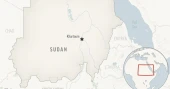
Paramilitary rampage kills over 120 in east-central Sudan: UN
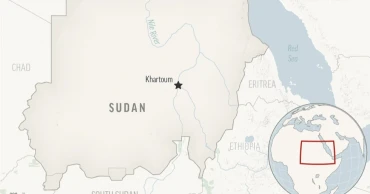
Fighters from the notorious paramilitary Rapid Support Forces ran riot in east-central Sudan in a multi-day attack that killed more than 120 people in one town, a doctors group and the United Nations said.
It was the group's latest attack against the Sudanese military after suffering a series of setbacks, losing ground to the military in the area. The war, which has been going on for more than a year and a half, has wrecked the African country, displacing millions of its population and pushing it to the brink of a full-blown famine.
RSF fighters went on a rampage in villages and towns on the eastern and northern sides of the province of Gezira between Oct. 20-25, shooting at civilians and sexually attacking women and girls, the United Nations said in a statement Saturday, adding that they looted private and public properties, including open markets.
The attack displaced more than 46,500 people in the city of Tamboul and other villages in eastern and northern Gezira last week, according to Sunday’s data from the International Organization for Migration’s Tracking Matrix.
“The killings and appalling human rights violations in Gezira province intensify the unacceptable human toll this conflict has taken on the people of Sudan,” IOM Director General Amy Pope told The Associated Press ahead of her trip to the country next week.
She called for concerted international efforts to stop the conflict, saying: “There is no time to lose. Millions of lives are in the balance.”
“These are atrocious crimes,” Clementine Nkweta-Salami, U.N. Humanitarian Coordinator in Sudan, said in a statement on Saturday. “Women, children, and the most vulnerable are bearing the brunt of a conflict that has already taken far too many lives.”
She said the attacks resembled the horrors committed during the Darfur genocide in the early 2000s, including rape, sexual violence, and mass killings.
The RSF was born out of Arab militias, commonly known as Janjaweed, mobilized by ex-Sudanese President Omar al-Bashir against populations in Darfur that identify as Central or East African. At the time, the Janjaweed were accused of mass killings, rapes and other atrocities, and Darfur became synonymous with genocide. Janjaweed groups still aid the RSF.
The Sudanese Doctors’ Union said in a statement that at least 124 people were killed and 200 others were wounded in the town of Sariha, adding that the group rounded up at least 150 others. It called on the U.N. Security Council to pressure the RSF to open “safe corridors” to enable aid groups to reach people in impacted villages.
“There is no way to help the injured or evacuate them for treatment,” the statement said.
Footage circulating online, some shared by RSF fighters themselves, showed members of the paramilitary group abusing detained people. One video showed a man wearing a military uniform grabbing an old man by the chin and dragging him around as other armed men chanted in the background.
The RSF didn’t immediately respond to a request for comment.
The Coordination of Civilian Democratic Forces, an alliance of pro-democracy parties and groups, also accused the RSF of storming villages, and opening fire on civilians as well as rounding up and mistreating “a large number of residents.”
In a statement, the alliance held the RSF “responsible for these massive violations,” and called for holding the preparators accountable.
The attack on Gezira came as the military had successfully taken back areas held by the RSF.
In September, the military launched a massive operation in and around the capital city of Khartoum, reclaiming large swaths of areas from the RSF. Also, earlier this month, it seized control of Jebel Moya, a strategic mountainous area in Gezira province, as well as areas in Gezira and nearby Sinnar province, driving out RSF forces.
In October, a top RSF commander, Abu Aqlah Keikel, the de facto ruler of Gezira, defected and surrendered himself to the military.
That prompted RSF fighters to attack villages and towns in Gezira seen as loyal to Keikel, according to local reports.
The war in Sudan began in April 2023 when simmering tensions between the military and the RSF exploded into open fighting in Khartoum, before spreading across the country.
The war has been marked by atrocities such as mass rape and ethnically motivated killings. The U.N. and international rights groups say these acts amount to war crimes and crimes against humanity, particularly in the western region of Darfur, which has been facing a bitter onslaught by the RSF.
The conflict has killed more than 24,000 people so far, according to the Armed Conflict Location and Event Data, a group monitoring the conflict since it started.
1 year ago

11 killed in Gasoline truck explosion in Uganda
At least 11 people were killed Tuesday after a fuel truck exploded next to a highway in Uganda, police said. Two children were among the dead.
The truck overturned after an accident and later exploded in a town just outside Kampala, the capital, police spokesman Patrick Onyango said.
Death toll in Uganda rubbish heap collapse reaches 24 as rescue teams find more victims
“The victims were burnt beyond recognition,” he said in a statement. A cloud of dark smoke rose from the scene.
A video shared online by an onlooker appeared to show people scooping up fuel from the truck before the blast. The dangerous scene echoed a similar incident in Nigeria last week that killed more than 140 people, including children.
People who rush to collect fuel from stricken trucks hope to sell it, despite warnings to stay away.
“This tragic incident serves as a reminder of the risks associated with fuel tanker accidents and the importance of exercising caution when dealing with hazardous materials," Onyango said.
There have been similar incidents over the years across East Africa. At least 62 people were killed in Tanzania in 2019 as they attempted to siphon fuel out of a damaged truck.
In South Sudan, at least 183 people were killed in 2015 when hundreds of villagers gathered around a fuel truck to collect fuel.
1 year ago
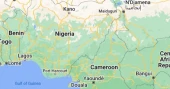
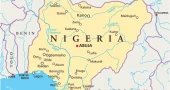
Over 100 killed as gasoline tanker explodes in Nigeria
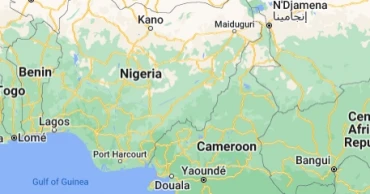
More than 100 people were killed and 50 others injured in northwestern Nigeria as they tried to scoop up fuel from an overturned petrol tanker, causing the vehicle to explode in flames, the emergency services said Wednesday.
The accident occurred at midnight in Jigawa state's Majiya town after the tanker driver lost control of the vehicle while traveling on a highway, local police spokesperson Lawan Adam said.
Ninety-seven people were “burned to ashes” at the scene while eight others died at the hospital, Dr. Haruna Mairiga, head of the Jigawa State Emergency Management Agency, told The Associated Press.
Deadly tanker accidents are common in Nigeria, Africa’s most populous country, where traffic regulations are not strictly enforced in many places and there is a lack of alternatives such as an efficient railway system to transport cargo.
It is also common for people to salvage fuel with cups and buckets to take home after such accidents. The practice has become more common amid Nigeria's soaring fuel prices, which have tripled since the start of last year as Nigeria ended costly gas subsidies.
The driver involved in the latest accident had traveled about 110 kilometers (68 miles) from the neighboring Kano state, police said.
Residents who heard about the accident rushed to the scene and were scooping up fuel, “sparking a massive inferno,” police spokesman Lawan Adam said.
Videos that appeared to be from the scene showed a massive fire stretching across the entire area, with what appeared to be bodies littered at the scene.
Residents in Majiya town were in mourning on Wednesday morning as locals held a mass burial for the victims. Most of the bodies were unrecognizable, the emergency services said.
“If they knew (about the danger), they wouldn’t have gone to fetch (the fuel)," said Mairiga, head of the emergency services.
He said emergency services only arrived at the scene several hours after the accident. “But the incident had already happened ... those caught up (in the fire) were burned to ashes,” Mairiga said.
In one of the videos, the person who recorded the clip appeared to try to mobilize others to help the victims. “It’s burning the body!” he shouted. “He will die ... when the vehicle explodes there will be a problem.”
Resident Sani Umar told the local Channels Television how the fire "spread so quickly that many couldn’t escape.”
"People were running in all directions, screaming for help," Umar said.
“This is a heartbreaking moment for us all,” said state police commissioner Ahmadu Abdullahi.
1 year ago
Gasoline tanker explosion kills at least 90, injuries 50 in Nigeria
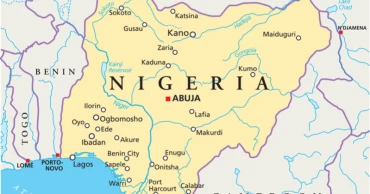
At least 90 people have died and 50 others have been injured following an explosion triggered by an overturned gasoline tanker in Nigeria, according to police reports.
The incident took place in Jigawa state shortly after midnight when the driver lost control of the tanker on a highway near a university.
Read: An explosion and fire at a service station in Russia's Chechnya kills 4
As locals rushed to collect fuel from the overturned vehicle, a sudden explosion ignited, resulting in a devastating fire that claimed 94 lives instantly, as stated by police spokesperson Lawan Adam.
1 year ago
Years of Congo war created a dire mental health crisis
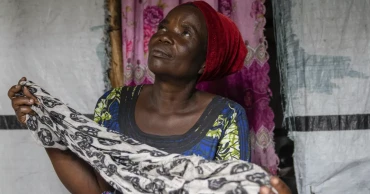
Nelly Shukuru felt trapped by her circumstances. The violence that forced her to flee her home, the dire conditions in a displacement camp in eastern Congo, and the pervasive hunger left her feeling hopeless. At 51, she contemplated suicide, believing her suffering was unending. A neighbor intervened just in time, as Shukuru expressed, “In my mind, the suffering was permanent. Those who have died are better off than I am.”
Years of conflict in eastern Congo have led to a severe mental health crisis, with aid organizations reporting a significant rise in people seeking help as fighting intensifies. The number of individuals receiving psychosocial support around Goma surged over 200% from January to June compared to the previous year, jumping from 6,600 to over 20,000, according to Action Against Hunger. Reports of suicidal thoughts also spiked, increasing from about five per month at the beginning of the year to over 120.
The ongoing conflict involves more than 100 armed groups competing for control in the mineral-rich region, particularly near the Rwandan border. The resurgence of the M23 rebel group has exacerbated violence, displacing millions and forcing over 600,000 people into camps near Goma. As a result, many individuals are grappling with anxiety, depression, PTSD, insomnia, and substance abuse, according to psychologists.
Psychologist Innocent Ntamuheza noted, “All around us there is war, and the number of people facing difficulty is increasing daily.” Yet, mental health support remains scarce, with less than 30% of the $180 million requested for protection services, including mental health, funded this year. The United Nations has labeled Congo one of the world’s most neglected crises.
Shukuru’s despair deepened after a violent incident in August involving her intoxicated son. Her family, once farmers and active in their community, fled their home in Sake after it was bombed. Now, they struggle to survive in the camp, where the aid received is insufficient.
Some camps are alarmingly close to the front lines, and Shukuru's camp was hit by shells in May, resulting in numerous casualties. Armed individuals sometimes mingle with the camp residents, heightening fear and insecurity. During an August visit, armed men were seen, and it remains unclear whether they are military personnel or militia members.
Read: Boat capsizes in eastern Congo lake, killing at least 50 people, witnesses say
The government’s efforts to combat the M23 involve supporting various militia groups, raising concerns about human rights abuses. Reports of sexual violence are rampant; one survivor described being assaulted while foraging for food. Those affected often seek help from organizations like Doctors Without Borders, yet the trauma persists, impacting their ability to sleep and live peacefully.
Mental health support is critical, and community leaders are being trained to identify individuals in need. Despite stigma around mental health, those who seek treatment have found coping strategies helpful. Josephine Mulonda, 52, shared how a technique called the “butterfly hug” has helped her manage anxiety stemming from her husband’s murder.
For children affected by conflict, organizations like War Child use creative methods such as movement and song to help them express their feelings. However, many of these children carry deep scars from their experiences, with some contemplating suicide as an escape from their suffering.
Read more: Congo's humanitarian crisis helped mpox spiral again into a global health emergency
One 14-year-old girl, separated from her family during an attack, fears for her safety while searching for firewood. The psychological support she receives offers temporary relief, but she remains uncertain about her mother’s fate, highlighting the profound impact of this ongoing crisis.
1 year ago

Mozambique votes for president as ruling party could extend its 49 years in power
Mozambique is voting for a new president on Wednesday in an election that is expected to extend the ruling party's 49 years in power since the southern African nation gained independence from Portugal in 1975.
Daniel Chapo, 47, is the candidate for the ruling Front for the Liberation of Mozambique, or Frelimo, seeking to succeed President Filipe Nyusi, who has served a maximum two terms.
Analysts say the strongest challenge to Chapo and Frelimo's dominance will likely come from 50-year-old independent Venancio Mondlane, a newcomer to national politics.
People also will vote for the makeup of Parliament and for provincial governors in a country of some 33 million people that went through a bloody, 15-year civil war that ended in 1992, and more recently has been shaken by an ongoing violent jihadist insurgency in the north.
Ending that insurgency and bringing stability to Cabo Delgado province — where 1.3 million fled their homes and more than half remain displaced — is a pledge by both leading candidates, while poverty, youth unemployment and government corruption are top issues for voters.
"I am still selling biscuits at a vegetable market here in Maputo to take care of my two children," 35-year-old Felicidade Simao said at a polling station. “My husband is unemployed and we are struggling. I want the best for my children and the winner of this election must make the dream of a better life in the future.”
Vote-counting is due to start right after polls close in the one-day election. Preliminary results from some areas are expected from Thursday, and the full results must be delivered to the Constitutional Council within 15 days of polls closing to be validated and formally declared. Around 17 million people are registered to vote.
The credibility of the election will be under scrutiny, with the leftist Frelimo party accused of ballot-stuffing and falsifying results in previous votes, including last year's local elections.
Frelimo has consistently denied the accusations of election tampering. Teams of regional and international election observers are in Mozambique, including from the European Union.
Frelimo effectively established a one-party state following independence and fought a civil war against the Mozambique National Resistance, or Renamo, for a decade and a half. The country, where Portuguese remains the official language, held its first elections in 1994, two years after a peace agreement.
Renamo is also contesting this election, with party leader Ossufo Momade, a military commander in the civil war, its candidate for president. The peace between Frelimo and Renamo has been fragile, with an outbreak of more fighting in 2013. Momade and outgoing leader Nyusi signed another peace deal in 2019.
But tensions remain, especially between the two political parties that were once at war with each other.
There are four candidates for president: Chapo, Mondlane, Momade and Lutero Simango of the Mozambique Democratic Movement, who is viewed as an outsider.
“I thank the entire Mozambican population for this opportunity we have today,” favorite Chapo said as he voted in the southern city of Inhambane. “We equally salute everyone for this orderly and peaceful environment seen since the beginning of the electoral campaign.”
The independent Mondlane, who broke away from Renamo, has focused his campaign on young Mozambicans frustrated with poverty and unemployment. The country boasts a long coastline of picturesque beaches on the Indian Ocean, but that vulnerable area has been battered by cyclones in recent years. A drought this year in the southern African region has left more than a million Mozambicans impacted by hunger.
Meanwhile, it emerged in 2016 that government officials and others had embezzled more than $2 billion in foreign loans that were kept secret, sending the economy into a crisis from which it is still recovering.
“All Mozambicans have high hopes from the new president,” said 69-year-old Baptista Antonio, who was one of the first to vote at an elementary school in the capital and port city of Maputo. "I was born during the colonial era and saw many transformations of the country from wars to development and all I can say is it’s a work in progress. There are many challenges ahead.”
Mondlane was aligned with a coalition of opposition parties, but they were barred from contesting the election, which raised accusations against Frelimo of attempting to control the election. He is now supported by a new party called Podemos, which means “we can” in Portuguese. A former banker, Mondlane drew large crowds to some of his boisterous pre-election rallies, and his emergence is a new challenge to Frelimo, which has traditionally won national elections comfortably ahead of Renamo.
Most analysts expect Frelimo to remain in power. It was declared the winner with more than 70% of the vote in national elections five years ago.
The Pangea risk company, which provides security and investment advice on developing countries, said Chapo's election has been "carefully stage managed" by Frelimo.
Chapo worked as a radio announcer and television presenter before becoming a law professor. He was the governor of southern Inhambane province — Mozambique's flagship tourism region — but was a surprise winner of an internal party vote in May to become Frelimo's presidential candidate.
Chapo would be Mozambique's first leader born after independence if he wins.
1 year ago