africa

Pet carnival held in Egypt to raise animal protection awareness
In a joyful atmosphere, hundreds of pet lovers gathered in Egypt's Mediterranean North Coast in the Matrouh Governorate for an annual pet carnival.
Aleef is a pet Carnival that is usually held in Egypt's capital Cairo. Being the country's largest of its kind, it provides pet lovers and owners a chance to meet experts in pet care, breeding, and nutrition.
"We have been holding this event for 12 years, but this is the first time to organize it in the North Coast, which is a plus for us," said Nadine Hamdy, marketing manager of the carnival.
Read: Coup leaders appear to have gained the upper hand in Niger, analysts say
A number of veterinarians, pet nutritionists, and pet trainers participated in the event, which took place on Saturday. It includes activities of pets medication and training and offers a number of recreational activities for pets, such as swimming trainings and shows.
Such event would help people better get along with animals, Hamdy said.
For Adam Kilani, a visitor from neighboring Alexandria Governorate, the event is an unforgettable experience for him, as his five-year-old pet dog Gawaher had learnt to swim for the first time in a year.
Read: 11 dead and 27 missing in flooding around Beijing after days of rain
"It is a great chance for me to learn about pet care in an amusing way," Kilani said, as he watched his dog swim.
Holding such events, especially in tourist resorts during the summer, will significantly promote the culture of pet ownership in Egypt, said Kilani.
"I have seen people here who have never touched a dog, but they were very happy to play with Gawaher. Some of them said they would love to keep a dog at home soon," Kilany said.
Read: More than 60 Senegalese migrants are feared dead on a monthlong voyage to Spain
Lina Kamal, who brought her three-year-old dog to the carnival, said the event was important because it raised the issue of stray animals and offered solutions to their plight.
"We should have stronger awareness to protect animals...this is one of the things that the carnival advocates," said Kamal.
2 years ago
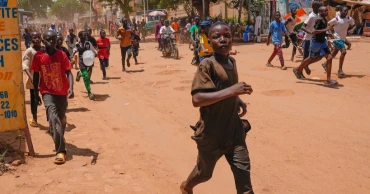
Niger's neighbours running out of options as defence chiefs meet to discuss potential military force
West African defense chiefs met Thursday to discuss the crisis in Niger after coup leaders there ignored their deadline to step down, leaving the region's countries with few options in their effort to restore democratic rule.
Niger's democratically elected president, Mohamed Bazoum, was overthrown in July and remains under house arrest with his wife and son in the capital, Niamey.
Defence chiefs from the West African regional bloc, ECOWAS, were meeting Thursday in Ghana to discuss next steps in their stated goal of restoring Bazoum. Coup leaders in Niger already have ignored a deadline to restate him or face military intervention.
Read more: Russia hits Ukrainian grain depots again as a foreign ship tries out Kyiv's new Black Sea corridor
This is the first meeting since ECOWAS ordered the deployment of a “standby force” last week to restore constitutional rule in the country. It’s unclear if or when troops would intervene. A force would likely consist of several thousands soldiers from Nigeria, Ivory Coast, Senegal and Benin and could take weeks or months to prepare, say conflict experts.
ECOWAS has a poor track record in stemming the region’s rampant coups: neighboring Burkina Faso and Mali have each had two within three years. Niger's coup was seen by the international community and ECOWAS as one too many and in addition to threatening a military invasion, the bloc has imposed severe economic and travel sanctions.
But as time drags on with no military action and a standstill in negotiations, the junta is entrenching its power, leaving ECOWAS with few choices.
“ECOWAS has few good options ... particularly as the (junta) seems unwilling for the moment to cede to outside pressure," said Andrew Lebovich, a research fellow with the Clingendael Institute, a think tank.
"An intervention could backfire and damage the organization in numerous ways, while a failure to extract major concessions from the (junta) could weaken the organization politically at an already fragile time," he said.
The top security body of the African Union met Monday to consider whether it would support military intervention but has yet to make public its decision.
The AU's Peace and Security Council could overrule a military intervention if it felt that wider stability on the continent was threatened by it. If it rejects the use of force, there are few grounds under which ECOWAS could claim legal justification, said Lebovich.
But on Thursday, Abdel-Fatau Musah, the ECOWAS commissioner for peace and security, told reporters that the bloc was working with the United Nations on Niger's situation and didn't “need any approval from the Security Council to find a solution to the crisis."
In recent years, Western countries have poured hundreds of millions of dollars of aid into Niger, which was seen as one of the last democratic countries in the Sahel region south of the Sahara Desert that it could partner with to beat back a growing jihadi insurgency linked to al-Qaida and the Islamic State group. France and the United States have approximately 2,500 military personnel in the country, which trained soldiers and, in the case of France, conducted joint operations.
Since the coup, both countries have suspended military operations, which Sahel experts say is leading to an increase in attacks.
On Tuesday, at least 17 Nigerien soldiers were killed and nearly two dozen wounded in the Tillaberi region in the biggest attack by jihadis in six months. Former militants have told The AP that active jihadis would leverage the coup to move around more freely and plan further violence while Niger's security forces are distracted in Niamey and Western assistance has halted.
Read more: Pakistan arrests 129 Muslims after mob attacks on churches and homes of minority Christians
Displaced people who fled jihadi violence and are now living in makeshift huts in Niamey say they've suffered enough from the extremists. They don't want more problems from their neighbors.
“I ask God not to bring (ECOWAS). We lost more than 600 people (from jihadi violence). I support the military, and God curse anyone who doesn’t love Niger,” said Daouda Mounkaila. Last year he, his wife and their 11 children were chased from their home in Tillaberi, one of the hardest-hit regions in the country.
Others in the capital are trying to cope with the impact of the ECOWAS sanctions.
Read more: China's Xi calls for measures to mitigate disastrous flooding amid economic slowdown
Niger relies on neighboring Nigeria for up to 90% of its energy, which has in part been cut off. The streets are littered with generators powering shops. Restaurant owners say they can't keep their fridges cold and have lost customers.
The sanctions are making it hard for aid groups to get food and supplies in. Before the coup, more than 4 million people in Niger — a country of some 25 million — were in need of humanitarian assistance, a number that's now expected to surge, say aid groups.
Read more: Taliban official says women lose value if their faces are visible to men in public
Trucks are stuck at the borders with Benin and Nigeria. Routes through countries that have ignored the sanctions, such as Burkina Faso, are dangerous because they're infiltrated with extremists.
“With the closure of land and air borders, it’s hard to bring aid into the country,” said Louise Aubin, the U.N. resident coordinator in Niger. Supplies such as food and vaccines could run out. It’s unclear how long the current stock will last, she said.
2 years ago
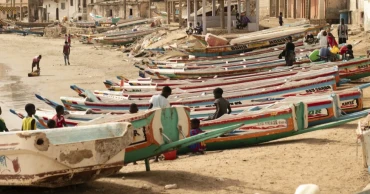
More than 60 Senegalese migrants are feared dead on a monthlong voyage to Spain
More than 60 migrants are feared dead after a Spanish fishing vessel rescued a boat off the Atlantic archipelago of Cape Verde that originally had more than 100 people aboard, authorities and migrant advocates said Thursday.
Seven bodies were found on the boat and an estimated 56 people are missing at sea and presumed dead, said International Organization for Migration spokesperson Safa Msehli. According to Senegal’s foreign affairs ministry, 38 people were rescued earlier in the week near Cape Verde, about 620 kilometers (385 miles) off the coast of West Africa.
The Spanish migration advocacy group Walking Borders said the vessel was a large fishing boat, called a pirogue, which had left Senegal on July 10.
Families in Fass Boye, a seaside town 145 kilometers (90 miles) north of the capital, Dakar, reached out to Walking Borders on July 20, after 10 days without hearing from loved ones on the boat, group founder Helena Maleno Garzón said.
Read: Small plane crashes in Malaysia, with at least 9 bodies recovered
Cheikh Awa Boye, president of the local fishing association, said survivors called home from Cape Verde after the rescue. Boye said two of his nephews are among those missing.
Mamour Ba, a 30-year-old student from Fass Boye, lost his younger brother Mame Cheik on the pirogue. His brother, a fisherman and a father of one, was 23 when he died trying to reach Spain with two other brothers and a nephew, who survived.
Mamour said they were still in shock when they relayed the news on Tuesday from a borrowed phone in Cape Verde.
“They had to leave for Spain to feed their families,” explained Mamour, who has himself tried and failed twice to reach Europe. Mame Cheik’s son still does not know what happened.
“Each time we were together he asked (for him), ‘father, father, father.’ He doesn’t know, he’s just a kid,” Mamour said.
Spain’s Maritime Rescue Service confirmed that a Spanish fishing boat named the Zillarri rescued 38 people and recovered seven bodies from a Senegalese pirogue on Aug. 14 after spotting it adrift northeast of Cape Verde.
An official of the tropical tuna fishing company PEVASA, which operates the Zillarri, said the survivors were asking for help and were in a “bad state.”
Read: Muslim mobs attack churches in eastern Pakistan after accusing Christians of desecrating the Quran
The route from West Africa to Spain is one of the world’s most dangerous, yet the number of migrants leaving from Senegal on rickety wooden boats has surged over the past year. The boats try to reach Spain’s Canary Islands, an archipelago off the northwest coast of Africa that has been used as a steppingstone to continental Europe.
Nearly 1,000 migrants died while trying to reach Spain by sea in the first six months of 2023, Walking Borders says. Worsening youth unemployment, political unrest, violence by armed groups and climate change push migrants across West Africa to risk their lives on overcrowded boats.
Nearly 10,000 people have reached the Canary Islands by sea from the northwest coast of Africa so far this year, according to Spanish Interior Ministry figures.
On Aug. 7, the Moroccan navy recovered the bodies of five Senegalese migrants and rescued 189 others after their boat capsized off the coast of Western Sahara.
Read: Rescuers recover 33 bodies from a landslide at a Myanmar jade mine, with 3 people still missing
In 2021, an AP investigation found at least seven migrant boats from northwest Africa had become lost in the Atlantic and were found drifting across the Caribbean and even off Brazil, carrying only lifeless bodies.
2 years ago

Deadly clashes between rival militias in Libya leave 27 dead, authorities say
Deadly clashes between rival militias in Libya’s capital killed at least 27 people and left residents trapped in their homes on Tuesday,unable to escape the violence,medical authorities said.
The fighting appears to be the most intense to shake Tripoli this year. There were at least four people dead but it was not immediately clear if they were militiamen or civilians, an official said.The clashes erupted late on Monday between militiamen from the 444 brigade and the Special Deterrence Force, according to local media reports. Tensions flared after Mahmoud Hamza, a senior commander of the 444 brigade, was allegedly detained by the rival group at an airport in Tripoli earlier in the day, the reports said.
Read also:Bangladesh climbs 5 spots in latest passport ranking, still behind Sri Lanka and Libya
Over 100 people were injured in the fighting, Libya's Emergency Medicine and Support Center, a medical body that is deployed during humanitarian disasters and wars, said early Wednesday.It is unclear how many of the dead were militiamen or civilians. The Red Crescent did not immediately respond to a request for comment.
Throughout the fighting Tuesday, the Health Ministry urged the warring sides to allow ambulance and emergency teams to enter the affected areas, primarily in the south of the city, and for blood to be sent to nearby hospitals.
Read also:Italy agrees to lift ban on flights from conflict-stricken Libya after 10 years
OPSGroup, an organization for the aviation industry, said late Monday that a large number of aircraft departed from Tripoli due to the clashes. Inbound flights were being diverted to the nearby city of Misrata, it said.
The escalation follows months of relative peace after nearly a decade of civil war in Libya, where two rival sets of authorities are locked in a political stalemate. Longstanding divisions have sparked several incidents of violence in Tripoli in recent years, although most have been over in a matter of hours.
Read also:Don’t want US foreign policy failures in Afghanistan, Iraq, Syria, and Libya repeated in Bangladesh: Elected Bangladeshi-American officials, activists write to Biden
In a statement Tuesday, the U.N. mission in Libya said it was following with concern "the security incidents and developments" and called for an immediate end to the ongoing clashes.Both of Libya's rival administrations also condemned the fighting in separate statements Tuesday. The House of Representatives, which is based in the eastern city of Benghazi, blamed its rival, the Tripoli-based government, for the violence.
The U.S. and British embassies in Libya issued statements expressing concerns over the violence. The United States called for an "immediate de-escalation in order to sustain recent Libyan gains toward stability and elections," the American Embassy said.
The oil-rich country has been divided since 2014 between rival administrations in the east and the west, each supported by an array of well-armed militias and different foreign governments. The North African nation has been in a state of upheaval since a 2011 NATO-backed uprising toppled and later killed longtime dictator Moammar Gadhafi.
2 years ago

Coup leaders appear to have gained the upper hand in Niger, analysts say
One week after a deadline passed for mutinous soldiers in Niger to reinstate the country's ousted president or face military intervention, the junta has not acquiesced. No military action has been taken and the coup leaders appear to have gained the upper hand over the regional group that issued the threat, analysts say.
The West African bloc ECOWAS had given the soldiers that overthrew Niger's democratically elected President Mohamed Bazoum until last Sunday to release and reinstate him or they threatened military action. On Thursday, the bloc ordered the deployment of a “standby” force to restore constitutional rule in Niger, with Nigeria, Benin, Senegal and Ivory Coast saying they would contribute troops.
But it's unclear when, how or if the troops will deploy. The move could take weeks or months to set into motion, and while the bloc decides what to do the junta is gaining power, some observers say.
“It looks as though the putschists have won and will stay ... The putschists are holding all the cards and have cemented their rule,” said Ulf Laessing, head of the Sahel program at the Konrad Adenauer Foundation, a think tank.
ECOWAS is unlikely to intervene militarily and risk dragging Niger into civil war, he said, adding that ECOWAS and Western countries would instead likely press the junta to agree to a short transition period.
Europe and the United States will have little choice but to recognize the junta in order to continue the security cooperation in the region, Laessing said.
The July 26 coup is seen as a major blow to many Western nations, which viewed Niger as one of its last partners in the conflict-riddled Sahel region south of the Sahara Desert that they could work with to beat back a growing jihadi insurgency linked to al-Qaida and the Islamic State group. The U.S. and France have more than 2,500 military personnel in the region and together with other European countries have invested hundreds of millions of dollars in military assistance and training Niger's forces.
There was still little clarity about what would happen days after ECOWAS announced the "standby" force deployment.
A meeting of the region’s defense chiefs was postponed indefinitely. The African Union is expected to hold a meeting on Monday to discuss Niger’s crisis. The group's Peace and Security Council could overrule the decision if it felt that wider peace and security on the continent were threatened by an intervention.
The delay of the defense chiefs' meeting to discuss the “standby” force shows that ECOWAS views the use of force as a last resort, said Nate Allen, an associate professor at the Africa Center for Strategic Studies.
“Given the likely challenges an intervention would face, (the use of force would) require a high degree of consensus and coordination not just within ECOWAS, but within the African Union and international community writ large,” he said.
But those with ties to the junta say they are preparing for a fight, especially since the soldiers are unwilling to negotiate unless ECOWAS acknowledges its leader, Gen. Abdourahmane Tchiani, who overthrew the president, as the new ruler.
Read: International pressure mounts on coup leaders in Niger while hundreds rally in support of junta
“ECOWAS is demanding that (the junta) immediately release President Bazoum and restore him as head of state. Is this a joke?” said Insa Garba Saidou, a local activist who assists Niger’s new military rulers with their communications and says he is in direct contact with them. “Whether Bazoum resigns or not, he will never be Niger's president again."
As time drags on, there is mounting concern for the safety of Bazoum, who has been under house arrest with his wife and son since the coup. Those close to him say his situation is deteriorating with no water, electricity and a lack of food. Niger’s junta told a top U.S. diplomat that they would kill the deposed president if neighboring countries attempted any military intervention to restore his rule, two Western officials told The Associated Press.
Most Nigeriens are trying to go about their lives as the standoff continues between the coup leaders and regional countries.
For the most part, the streets in the capital, Niamey, are calm with sporadic pockets of pro-junta demonstrations. Any pro-Bazoum demonstrations are quickly silenced by security forces.
On Sunday people marched, biked and drove through downtown Niamey, chanting “down with France” and expressing anger at ECOWAS.
“Niger is in a deplorable situation. We are very happy there was a coup d'etat. Now everyone can go into the streets without a problem ... (but) if ECWOAS allows people to attack Niger, it will cross a red line,” said resident Saidou Issaka.
Read: Niger crisis deepens as France plans evacuation and coup leaders get support from neighboring juntas
On Friday hundreds of people, many waving Russian flags, marched toward France's military base demanding the French leave. Mercenaries from the Russian-linked Wagner group already operate in a handful of other African countries and are accused of committing human rights abuses. Earlier this month during a trip to neighboring Mali, which is also run by a military regime and cooperates with Wagner, the junta reportedly asked the mercenaries for help.
Boubacar Adamou, a tailor in the capital, said he had made at least 50 Russian flags in the weeks since the coup.
But many Nigeriens don't have time for protests and are more focused on feeding their families.
The country of some 25 million people is one of the poorest in the world and the harsh travel and economic sanctions imposed by ECOWAS are taking a toll.
Moussa Ahmed, a food seller in Niamey, said the prices of food items such as cooking oil and rice had increased by 20% since the coup and there wasn't enough electricity to power the fridges in his shop. Niger gets up to 90% of its power from neighboring Nigeria, which has cut off some of its supply.
Aid groups that were already grappling with the challenges of helping more than 4 million people in need of humanitarian assistance say the crisis will exacerbate an already dire situation.
“We cannot overstate the impact on civilians, both in terms of humanitarian and protection needs, when military imperatives take precedence over civilian governance," said Jan Egeland, secretary general for the Norwegian Refugee Council.
Read more: Jihadists in Niger kill at least 100 in mounting violence
The sanctions and suspensions of development aid are expected to have a dramatic impact on living conditions for a country already under heavy strain, he said.
2 years ago
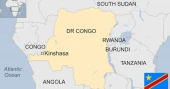
At least 10 killed in southwest Congo as intercommunal violence worsens over land rights and taxes
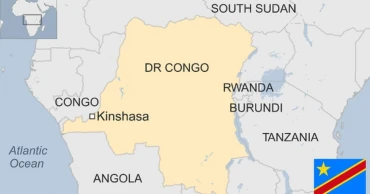
A militia group armed with guns and machetes killed at least 10 people in intercommunal violence in southwestern Congo, local authorities said.
The attack is the latest episode in a deepening crisis that has been overshadowed by conflict on the other side of the vast Central African nation.
According to provincial government spokesperson Adelard Nkisi, a militia group known as the Mobondo attacked civilians and burned down several houses in the village of Ipongi, just over 230 miles (370 kilometers) south of the capital Kinshasa, on Friday.
An unknown number of people were tied up and kidnapped by the militia members, who fled into the bush, Nkisi said. The provincial government sent defense and security forces to restore security in the area.
Read: 9 killed in violence as India's West Bengal votes for rural body elections
Tensions flared in June 2022 over land rights and customary taxes in Congo’s southwest, between the Teke, historical inhabitants of the region, and farmers from various other ethnic groups including the Yaka, who settled near the Congo River more recently.
According to spokesperson Nkisi, Friday’s violence broke out after a leader of the Yaka-majority Mobondo militia was arrested and taken into custody in a town nearby.
The incident is the latest in a cycle of violence that killed at least 300 people between June 2022 and March 2023 amid disagreements between Teke and Yaka communities about tax increases and access to farming land, according to Human Rights Watch.
Read: 5 dead in Philadelphia shooting in worst violence around US Independence Day
Symphorien Kwengo, vice-president of a regional civil society organization, called for community dialogue with the Mobondo militia to ease the deadly tensions in southwest Congo.
Meanwhile, an older, larger-scale conflict across the country displaced hundreds of thousands of people in 2022 alone, according to the UN refugee agency. In Congo’s northeastern provinces, close to the borders with Rwanda and Uganda, more than 120 armed groups continue to fight for control of valuable mineral resources and some to protect their communities. Frequent mass killings by rebel groups trigger exoduses of civilians, which in turn drive food insecurity, sexual violence, and the spread of disease.
Read more: France will deploy 40,000 police officers to quell violence that followed deadly police shooting
2 years ago

International pressure mounts on coup leaders in Niger while hundreds rally in support of junta
International pressure mounted Thursday against leaders of the coup in Niger as the American secretary of state said the United States "stands very much" in support of West African leaders who have threatened to use force to restore the nation's democracy, and Senegal offered troops to help.
As hundreds of anti-French protesters rallied in the Nigerien capital in support of the ruling junta, U.S. Secretary of State Antony Blinken offered general support for the regional bloc known as ECOWAS, though he did not specifically refer to its threat of military action. Blinken told reporters in New York that the U.S. believes the bloc's efforts to reinstate toppled President Mohamed Bazoum are "important, strong and have our support."
Senegal's foreign affairs minister said her country would participate in a military intervention if ECOWAS decides to act. "Senegalese soldiers have to go … these coups d'état must be stopped," Aissata Tall Sall said.
Also read: Niger crisis deepens as France plans evacuation and coup leaders get support from neighboring juntas
Meanwhile, Niger's military leaders sought to exploit anti-Western sentiment to shore up their takeover. The junta suspended broadcaster RFI and France 24 television from broadcasting in the country, according to the French foreign affairs ministry. The suspensions were part of the junta's "authoritarian repression," the ministry wrote on X, the social media platform formerly known as Twitter.
Last week's coup toppled Bazoum, whose ascendency was Niger's first peaceful, democratic transfer of power since independence from France in 1960. The coup stirred strident anti-French sentiment and raised questions about the future of the fight against extremism in Africa's Sahel region, where Russia and Western countries have vied for influence.
The coup has been condemned by Western countries and the ECOWAS bloc, which has threatened to forcibly remove the junta if it does not hand back power to Bazoum. As tensions have grown in the capital of Niamey and the region, many European countries have moved to evacuate their citizens.
Also read: Climate, coups risk African goal of silencing guns by 2030
At Thursday's protest organized by the junta and civil society groups on Niger's independence day, protesters pumped their fists in the air and chanted support for neighboring countries where militaries have also taken power in recent years. Some waved Russian flags, and one man brandished a Russian and Nigerien flag sewn together.
"For more than 13 years, the Nigerien people have suffered injustices," protester Moctar Abdou Issa said. The junta "will get us out of this, God willing … they will free the Nigerien people."
"We're sick of the French," he added.
It remains unclear whether a majority of the population supports the coup, and in many parts of the capital, people went about their lives as normal Thursday.
U.S. President Joe Biden used the occasion of Niger's independence day to call for Bazoum to be released and democracy restored.
"The Nigerien people have the right to choose their leaders. They have expressed their will through free and fair elections — and that must be respected," he said in a statement.
White House National Security Council spokesman John Kirby said the administration was still focused on diplomacy.
Also read: US sanctions Myanmar officials, military-affiliated 'cronies' ahead of coup anniversary
"We still believe there's time and space for that. The window is not going to be open forever," Kirby said.
In an address to the nation on Wednesday, the new military ruler, Gen. Abdourahmane Tchiani, lashed out at those who have condemned the coup and called on the population to be ready to defend the nation. He said harsh sanctions imposed last week by ECOWAS were illegal, unfair and inhuman.
ECOWAS has set a deadline of Sunday for the junta to reinstate Bazoum, who remains under house arrest.
In an opinion piece in The Washington Post, Bazoum described himself as a hostage who was one among hundreds of citizens arbitrarily arrested. He said his nation's security situation was improving before the coup but was now at risk because Niger would lose foreign aid and terrorist groups would take advantage of its instability.
"In our hour of need, I call on the U.S. government and the entire international community to help us restore our constitutional order," Bazoum wrote in the piece posted online late Thursday.
After the deadline set by ECOWAS expires, the bloc is expected to decide by consensus on the next step as recommended by its defense chiefs.
At a bloc meeting in Abuja, Nigeria's capital, Brig. Gen. Tukur Ismaila Gusau, a Nigeria defense spokesman, said the defense chiefs have been asked to come up with a military solution, which they hope will be "the last option."
The bloc's sanctions include halting energy transactions with Niger, which gets up to 90% of its power from neighboring Nigeria, according to the International Renewable Energy Agency.
France has 1,500 soldiers in Niger who conduct joint operations with its military against jihadis linked to al-Qaida and the Islamic State group. The United States and other European countries have helped train Niger's troops.
Niger was seen as the West's last reliable partner in the region, but some in the country see Russia and its Wagner mercenary group, which operates in a handful of African countries, as a powerful alternative.
The new junta has not said whether it intends to ally with Moscow or stick with Niger's Western partners, but that question has become central to the unfolding political crisis. Neighboring Mali and Burkina Faso — both ruled by juntas — have turned toward Moscow.
Ahead of Thursday's demonstration, the French Embassy in Niamey asked Niger's government to ensure the security of its premises after it was attacked by protesters and a door was set on fire.
The president of Nigeria, Bola Tinubu, dispatched two delegations Thursday to deal with Niger's crisis.
A group from ECOWAS headed by former Nigerian head of state Gen. Abdulsalami Abubakar was on its way to Niger. A second group led by Ambassador Babagana Kingibe went to engage with the leaders of Libya and Algeria, said Ajuri Ngelale, special adviser to the president.
2 years ago

Niger crisis deepens as France plans evacuation and coup leaders get support from neighboring juntas
France prepared to evacuate French and European nationals from Niger on Tuesday, telling them to carry no more than a small bag, after a military coup there won backing from three other West African nations ruled by mutinous soldiers.
The French Foreign Ministry in Paris cited recent violence that targeted the French Embassy in Niamey, the capital, as one of the reasons for the decision.
The closure of Niger's airspace also "leaves our compatriots unable to leave the country by their own means," the ministry said.
The evacuation comes amid a deepening crisis sparked by the coup last week against Niger's democratically elected president, Mohamed Bazoum. It was starting Tuesday for French and European citizens who wish to leave, the French ministry said in a statement. It gave no other details.
The West African regional body known as ECOWAS announced travel and economic sanctions against Niger on Sunday and said it would use force if the coup leaders don't reinstate Bazoum within one week. Bazoum's government was one of the West's last democratic partners against West African extremists.
In a joint statement, the military governments of Mali and Burkina Faso said that "any military intervention against Niger will be considered as a declaration of war against Burkina Faso and Mali."
Col. Abdoulaye Maiga, Mali's state minister for territorial administration and decentralization, read the statement on Malian state TV Monday evening. The two countries also denounced the ECOWAS economic sanctions as "illegal, illegitimate and inhumane" and refused to apply them.
ECOWAS suspended all commercial and financial transactions between its member states and Niger, as well as freezing Nigerien assets held in regional central banks. Niger relies heavily on foreign aid, and sanctions could further impoverish its more than 25 million people.
Mali and Burkina Faso have each undergone two coups since 2020, as soldiers overthrew governments claiming they could do a better job fighting increasing jihadi violence linked to al-Qaida and the Islamic State group. ECOWAS has sanctioned both countries and suspended them from the bloc, but never threatened to use force.
Also on Sunday, Guinea, another country under military rule since 2021, issued a statement in support of Niger's junta and urged ECOWAS to "come to its senses."
"The sanctions measures advocated by ECOWAS, including military intervention, are an option that would not be a solution to the current problem, but would lead to a human disaster whose consequences could extend beyond Niger's borders," said Ibrahima Sory Bangoura, general of the brigade, in a statement from the ruling party. He added the Guinea would not apply the sanctions.
In anticipation of the ECOWAS decision Sunday, thousands of pro-junta supporters took to the streets in Niamey, denouncing France, waving Russian flags along with signs reading "Down with France" and supporting Russian President Vladimir Putin and telling the international community to stay away.
There has been no clear explanation of the references to Russia, but some demonstrators regard the country as symbolizing their anti-Western feelings.
Protesters also burned down a door and smashed windows at the French Embassy before the Nigerien army dispersed them.
The evacuation was announced by France's embassy in an email sent to French nationals in Niamey. The message said the evacuation would be an airlift and that the spouses and children of French nationals were also eligible. It asked people to pack one small bag per person and to also take water, a bit of food, phones and batteries.
Niger could be following in the same footsteps as Mali and Burkina Faso, both of which saw protesters waving Russian flags after their respective coups, analysts say. After the second coup in Burkina Faso in September, protesters also attacked the French Embassy in the capital, Ouagadougou, and damaged and ransacked the Institut Francais, France's international cultural promotion organization.
If ECOWAS uses force, it could also trigger violence between civilians supporting the coup and those against it, Niger analysts say.
While unlikely, "the consequences on civilians of such an approach if putschists chose confrontation would be catastrophic," said Rida Lyammouri, senior fellow at the Policy Center for the New South, a Morocco-based think tank.
Lyammouri does not see a "military intervention happening because of the violence that could trigger," he said.
U.S. Secretary of State Antony Blinken on Sunday commended the resolve of the ECOWAS leadership to "defend constitutional order in Niger" after the sanctions announcement, and joined the bloc in calling for the immediate release of Bazoum and his family.
Also Sunday, junta spokesman Col. Maj. Amadou Abdramane banned the use of social media to put out messages he described as harmful to state security. He also claimed without evidence that Bazoum's government had authorized the French to carry out strikes to free Bazoum.
Observers believe Bazoum is being held at his house in Niamey. The first photos of him since the coup appeared Sunday evening, sitting on a couch smiling beside Chad President Mahamat Deby, who had flown in to mediate between the government and the junta.
Both the United States and France have sent troops and hundreds of millions of dollars of military and humanitarian aid in recent years to Niger, which was a French colony until 1960. The country was seen as the last working with the West against extremism in a Francophone region where anti-French sentiment opened the way for the Russian private military group Wagner.
After neighboring Mali and Burkina Faso ousted the French military and began working with Wagner mercenaries, Blinken visited Niger in March to strengthen ties and announce $150 million in direct assistance, calling the country "a model of democracy."
The U.S. will consider cutting aid if the coup is successful, the State Department said Monday. Aid is "very much in the balance depending on the outcome of the actions in the country," said department spokesman Matt Miller. "U.S. assistance hinges on continued democratic governance in Niger."
The sanctions could be disastrous and Niger needs to find a solution to avoid them, Prime Minister Ouhoumoudou Mahamadou told French media outlet Radio France Internationale on Sunday.
"When people say there's an embargo, land borders are closed, air borders are closed, it's extremely difficult for people. ... Niger is a country that relies heavily on the international community," he said.
In the capitalr, many people live in makeshift shelters tied together with slats of wood, sheets and plastic tarps because they can't pay rent. They scramble daily to make enough money to feed their children.
Since the 1990s, the 15-nation ECOWAS has tried to protect democracies against the threat of coups, with mixed success.
Four nations are run by military governments in West and Central Africa, where there have been nine successful or attempted coups since 2020.
In the 1990s, ECOWAS intervened in Liberia during its civil war, one of the bloodiest conflicts in Africa and one that left many wary of intervening in internal conflicts. In 2017, ECOWAS intervened in Gambia to prevent the new president's predecessor, Yahya Jammeh, from disrupting the handover of power. Around 7,000 troops from Ghana, Nigeria, and Senegal entered the country, according to the Global Observatory, which provides analysis on peace and security issues. The intervention was largely seen as accomplishing its mission.
2 years ago

11 dead and 27 missing in flooding around Beijing after days of rain
Chinese state media report 11 people have died and 27 are missing amid flooding in the mountains surrounding the capital Beijing.
Days of heavy rains have prompted authorities to close train stations and evacuate people in vulnerable communities to school gyms, state broadcaster CCTV reported Tuesday. Homes have been flooded, roads torn apart and cars piled into stacks.
READ: Flooding and a landslide in eastern China leave 5 dead and 3 missing
The level of rainfall is highly unusual for Beijing, which generally enjoys a moderate, dry climate. Flooding in other parts of northern China that rarely see such large amounts of rain have led to scores of deaths.
2 years ago

Toxic gas leak in South Africa has killed 16 people, including 3 children, police say
At least 16 people, including three children, were killed by a leak of a toxic nitrate gas being used by illegal miners to process gold in a settlement of closely packed metal shacks, South African police and local officials said late Wednesday.
Emergency services initially announced that as many as 24 people might be dead in the Angelo settlement in Boksburg, a city on the eastern outskirts of Johannesburg. But police and Gauteng Province Premier Panyaza Lesufi later said the number of deaths had been confirmed as 16 after a recount of the bodies.
“It’s not a nice scene at all ... It’s painful, emotionally draining and tragic,” Lesufi, who visited the scene, was quoted as saying in news reports.
Teams were searching the area looking for other casualties deep into the night. The bodies of the victims remained lying on the ground hours after the leak was reported around 8 p.m. as emergency services waited for forensic investigators and pathologists to arrive to process the scene. The bodies were still there at 3 a.m.
Read: New UN survey highlights progress in global trade facilitation despite polycrisis disruptions
“We can’t move anybody. The bodies are still where they are on the ground,” said emergency services spokesman William Ntladi.
A forensic investigator was seen covering the body of a small child with a blanket. Another body could be seen covered in a white cloth with a shoe sticking out. It lay under a strip of yellow police tape cordoning off the area.
Police said the three children killed were aged 1, 6 and 15. Two people were taken to the hospital for treatment, police said.
Boksburg is the city where 41 people died after a truck carrying liquefied petroleum gas got stuck under a bridge and exploded on Christmas Eve.
Ntladi said Wednesday's deaths were caused by a nitrate gas that leaked from a gas cylinder being kept in a shack. He said the cannister had emptied out in the leak and teams were able to begin going over an area stretching out 100 meters (100 yards) from the cyclinder to check for more casualties.
Read: Leaders of Italy and Poland say European Union should focus on stopping migration
Investigators were searching through narrow alleys between shacks, cast into darkness by the lack of streetlights — a common situation in the deeply impoverished informal settlements found in and around South Africa's cities. Six police cars, an armored vehicle and one ambulance were parked at the entrance to the Angelo settlement.
Ntladi said the information authorities had indicated the cylinder that caused the leak was being used by illegal miners to separate gold from dirt and rock.
Lesufi, the Gauteng premier, tweeted videos of the dusty inside of a shack where at least four gas cyclinders can be seen on metal stands. The video also shows what Lesufi said was the cylinder responsible for the leak lying on the floor next to the entrance of the shack.
Authorities didn't say if the illegal miners they believed to be responsible for the gas leak were among the casualties.
Illegal mining is rife in the gold-rich areas around Johannesburg, where miners go into closed off and disused mines to search for any deposits left over.
Mining fatalities underground are also common and the South African government department responsible for mining announced recently that at least 31 illegal miners were believed to have died in a gas explosion in a disused mine in the city of Welkom in central South Africa. The cause was methane gas, the mining department said.
Read: Ukraine and Russia accuse each other of preparing imminent attack on Europe's biggest nuclear plant
Wednesday's tragedy was likely to stoke more anger at illegal miners, who are often migrants from neighboring countries, operate in organized gangs and are blamed for bringing crime into neighborhoods.
Violence against illegal miners erupted last year and raged for days in an area west of Johannesburg after a group of 80 men, some of whom were believed to be illegal miners, were charged with gang raping eight women who were working on a TV shoot at a disused mine.
2 years ago