africa

At least 22 dead in Benin bus crash
At least 22 people were killed and nearly two dozen injured when a public bus crashed into a truck in the center of Benin, the government on Monday.
The president’s director of communications posted on Facebook that first responders had immediately been dispatched to the scene of the crash that occurred near the town of Dassa-Zoume on Sunday.
“In this painful circumstance, the government expresses its sympathy to the whole nation and presents its deepest condolences to all the grieving families. This tragedy has once again reminded us that safety on our roads remains a constant challenge and urges us to take even stronger actions for a more effective safety of people and goods,” the director said. A crisis unit has been set up for relatives to get information.
The cause of the crash was not immediately known. An investigation has been opened into the circumstances of the crash, said authorities.
Images and videos of the crash shared on social chat groups and seen by The Associated Press show the bus in flames and a charred body on the ground as one man tried to put out the fire with a jerry can of water.
About 21 people had burn injuries to varying degrees, said Benjamin Hounkpatin, the health minister during an interview with state television on Sunday. Speaking outside the hospital in Cotonou where the injured had been taken, he said they were alerted about the crash early evening Sunday and that health staff were doing everything they could.
“For the people who were burned we can't guarantee what will happen to them,” said Hounkpatin.
Transport accidents occur in Benin due to narrow roads in parts of the country, however, the death toll is not usually so high, according to locals. In July, three people were killed in a crash between a bus and a car near the town of Parakou, according to local media.
3 years ago
Burkina Faso says 66 women, children freed from extremists
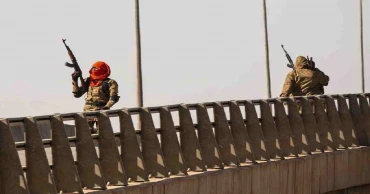
Burkina Faso's army has freed 66 women and children who were abducted earlier this month by Islamic extremists while gathering food in the country's northern Sahel region, according to a state television report Friday.
National broadcaster RTB reported that armed forces had located the hostages during a military operation in Center-North region. The group included 39 children, with four infants among them.
Authorities have said they had been out in the countryside gathering wild fruit near the town of Arbinda in Soum province when Islamic extremists kidnapped them on Jan. 12 and 13.
Extremists have besieged towns around the West African country, preventing people and goods from moving freely. The town of Arbinda has been under jihadi blockade for years, making women more vulnerable to attacks if they try to leave, rights groups say.
Also Read: 55 people killed in latest attack in northern Burkina Faso
Jihadi violence linked to al-Qaida and the Islamic State group has overrun Burkina Faso, killing thousands and displacing nearly 2 million people in the West African nation. The failure of successive governments to stop the fighting has caused widespread discontent and triggered two military coups in 2022.
The military junta that seized power in September, vowing to restore security, is still struggling to stem the violence.
3 years ago

Vietnamese president resigns, criticised for major scandals
Vietnamese President Nguyen Xuan Phuc resigned Tuesday, becoming the most senior member of the government to step down after a series of high-profile corruption scandals for which he was held responsible.
The state Vietnam News Agency reported that he had resigned at a session of the ruling Communist Party's Central Committee that was held “to consider and give opinions on Comrade Nguyen Xuan Phuc’s wish to stop holding positions, quit work and retire.” The language of the announcement strongly suggested that he was forced to step down.
Read more: ADB arranges $135m climate financing package to support electric mobility in Vietnam
Phuc, 68, began serving in government at the provincial level in 1979 and took his first position in national government in 2006. He joined the Politburo, the highest-ranking party body, in 2011, and was prime minister from 2016 to 2021, when he was elected president by the National Assembly.
The post of president in Vietnam is largely ceremonial. The most powerful position, Communist Party general secretary, is currently held by Nguyen Phu Trong, who in 2021 won a rare third five-year term in office. His hallmark has been a long-running anti-corruption campaign, which in his second term targeted two former Cabinet ministers and Hanoi’s former mayor.
An official statement published in state media praised Phuc for his efforts as prime minister in battling the COVID-19 pandemic.
It added, however, that he bore political responsibility as the country’s top executive for serious scandals involving his subordinates, including two deputy prime ministers and three other ministers. The statement noted that the two deputy prime ministers had resigned from their positions and criminal proceedings had been launched against two other ministers and many other officials. Several of the scandals involved corruption related to pandemic control measures.
The positions from which Phuc resigned also included Politburo membership, the executive committee of the Central Committee and chairman of the National Defense and Security Council.
Read more: At least 32 dead in karaoke parlor fire in south Vietnam
As prime minister, Phuc led Vietnam as it became further integrated in the global economy and sustained 7% economic growth until COVID-19 hit the world.
With strict measures including a nationwide lockdown, Vietnam managed to contain the spread of the virus in the first year of the pandemic and quickly resumed business and manufacturing. It was among a handful of countries in 2020 that recorded positive economic growth.
However, as in several other Asian nations that initially staved off serious outbreaks, cases shot up after mid-2021 with the spread of more highly transmissible variants.
3 years ago

Violence soars in Mali in the year after Russians arrive
Alou Diallo says he was drinking tea with his family one morning last month when groups of “white soldiers” invaded his village in central Mali, setting fire to houses and gunning down people suspected of being Islamic extremists. He scrambled to safety in the bush, but his son was shot and wounded while fleeing, then was finished off as he lay on the ground.
“I watched my 16-year-old son die,” Diallo told The Associated Press in Mali's capital, Bamako, where he lives in a makeshift camp for displaced people. As he recounted that awful Saturday in his village of Bamguel, the 47-year-old former cattle breeder made no attempt to hide the anger toward the troops, which he believed to be Russian mercenaries, who turned his world upside down.
“I really want peace to return and things to go back to normal,” he said. "Here in Bamako, I live a life I didn’t choose.”
It’s been more than a year since hundreds of fighters from the Wagner Group, a shadowy Russian military contractor, began working alongside Mali’s armed forces to try to stem a decade-long insurgency by Islamic extremists in the West African country, Western officials say.
Read more: At least 100 dead as two car bombs exploded at Somalia's capital
But since the mercenaries arrived, diplomats, analysts and human rights groups say indiscriminate violence against civilians has grown, the extremists linked to al-Qaida and the Islamic State group have only gotten stronger, and there’s concern the Russian presence will further destabilize the already-troubled region.
More than 2,000 civilians have been killed since December 2021, compared with about 500 in the previous 12 months, according to the Armed Conflict Location & Event Data Project, a nongovernmental organization. At least a third of those deaths recorded last year were from attacks involving the Wagner Group, according to the data compiled by ACLED.
“They are killing civilians, and by their very presence, giving Malian security forces a green light to act on their worst inclinations,” said Michael Shurkin, senior fellow at Atlantic Council and director of global programs at the consultancy group 14 North Strategies.
Military contractors from Wagner, which was founded by Yevgeny Prigozhin, a millionaire businessman with ties to Russian President Vladimir Putin, have been bolstering Moscow's forces during its invasion of Ukraine. But experts say they also operate in a handful of African countries.
Ever since Mali's military seized power in two coups starting in 2020, a junta led by Col. Assimi Goita has had tense relations with the international community.
France sent troops to Mali in 2013 to help its former colony drive Islamic militants from northern areas of the country but withdrew them in August as relations frayed and anti-French sentiment grew in the population. The West says Mali is increasingly looking to Moscow for security, although the junta says it has only invited in military trainers.
Alassane Maiga, head of communications for the junta, insisted that Wagner was not operating in the country. Asked about the attacks on civilians, Maiga said Mali’s government protects its citizens and their property.
“The army’s protection and security missions are carried out with respect for human rights and international humanitarian law,” he said.
The Wagner Group did not respond to requests for comment. At a U.N. Security Council debate on Tuesday, Russia’s deputy ambassador Anna Evstigneeva rejected attempts from abroad “to besmirch Russian assistance to Mali,” where Moscow has a bilateral agreement to assist the transitional government. She did not mention the Wagner Group.
Up to 1,000 mercenaries have been deployed and the Wagner Group is being paid nearly $11 million a month to provide security and training, according to a report by the U.S. Military Academy’s Combating Terrorism Center, which studies extremist violence.
The report said Wagner’s forces are struggling to make significant gains, with jihadi violence increasing. During the rainy season between June and September when fighting usually subsides, there were over 90 attacks against civilians and the military by an al-Qaida linked extremist group, compared with six in the same period a year earlier, it said, and an August assault on a barracks by an Islamic State-linked group killed at least 42 Malian soldiers.
In the bloodiest attack, Human Rights Watch said Mali’s army and foreign troops suspected to be Russian rounded up and killed an estimated 300 men in the town of Moura in March. Some were believed to be Islamic extremists but most were civilians. The investigation cited 27 people, including witnesses, traders, community leaders, diplomats and security analysts.
Read more: UN says part of Somalia will reach famine later this year
Mali’s Defense Ministry reported a similar incident at the time but said it had killed 203 “terrorists” and arrested 51 others.
“There are broad reports of human rights abuses across the region where they are working,” U.S. Undersecretary of State Victoria Nuland said of the Wagner mercenaries. “And we worry that these forces are not interested in the safety and security of the people of Mali but, instead, are interested in enriching themselves and strip-mining the country and are making the terrorism situation worse.”
Samuel Ramani, associate fellow at the Royal United Services Institute, a defense and security think tank, said Russia is not very credible at counterterrorism in Africa or more broadly.
“What we’ve seen repeatedly is that Russia and the Wagner Group forces are much better at strengthening the hold of authoritarian regimes in power than actually combating rebels and terrorist groups,” Ramani said, citing their limited knowledge of the terrain, strained relationships with low-ranking officers and a rigid command and control structure.
Many Malians accuse the military and the white soldiers working with them of arbitrary arrests of civilians herding cattle, farming or going to market. Most of them are ethnic Fulani who are increasingly targeted by security forces suspecting them of supporting the Islamic militants.
Rights groups say these alleged abuses aid the extremists, who capitalize on public grievances for use as a recruiting tool.
A 29-year-old cattle herder named Hamidou said he was arrested at his home in Douentza village in central Mali with two other people in November and accused of being an Islamic militant. He was locked in a tiny room where he was bound, beaten and interrogated by “white soldiers.”
“We were severely beaten daily. We didn’t think we’d survive,” said Hamidou, who asked to be identified only by his first name for fear of reprisal, adding that most of those detained were ethnic Fulani, like him. “From the day Wagner came to Mali until today, arbitrary arrests and killings of Fulani civilians have been increasing tremendously.”
The AP was unable to verify all of his account independently but a human rights researcher who also asked not to be identified for fear of reprisal said he saw the scars on Hamidou’s back and forehead after his release.
Thousands of United Nations peacekeeping troops have been in Mali for nearly a decade to protect civilians from violence, but Mali’s government has constrained their ability to operate, and countries such as Benin, Germany, Sweden, Ivory Coast and the United Kingdom have announced troop withdrawals, according to the International Crisis Group.
Nuland, the U.S. diplomat, said the Wagner Group has encouraged the junta to deny the peacekeepers access to areas where it has a mandate to investigate abuses. Security is “becoming more difficult as Wagner forces and others take on a larger role in the country and squeeze out U.N. peacekeepers,” she said.
While many locals say they detest Wagner, they fear nothing will change until there is a new government following elections scheduled for February 2024.
“It is up to the Malians to decide what steps to follow for the return of peace in Mali," said Seydou Diawara, head of a political opposition group. "Force and pressure by the international community on the military can only worsen the security and humanitarian situation.”
3 years ago

40 killed, dozens injured in Senegal road crash
At least 40 people were killed and dozens injured in a bus crash in central Senegal, the country’s president said Sunday.
President Macky Sall tweeted that the collision happened in Gnivy village, in the Kaffrine region, at about 3:30 a.m.
Read: 17 dead in China crash as holiday travel rush gets underway
“I am deeply saddened by the tragic road accident today in Gniby causing 40 deaths and many serious injuries. I extend my heartfelt condolences to the families of the victims and wish a speedy recovery to the injured,” said Sall.
He declared three days of mourning starting Monday and said he will hold an inter-ministerial council to discuss road safety measures.
Public prosecutor Cheikh Dieng said the crash happened on National Road No. 1 when a public bus punctured a tire and veered across the road, colliding with another bus coming from the opposite direction. At least 78 people are injured, some of them seriously, he said.
Images of the crash on social media show the damaged buses rammed into each other and a trail of debris along the road.
Read: Philippine rain, flooding cause at least 25 deaths
Traffic crashes happen regularly in the West African nation because of poor roads, bad cars and drivers not adhering to the rules, locals say.
In 2017, at least 25 people were killed when two buses also crashed. Many of those people were heading toward the central town of Touba for the annual Muslim pilgrimage.
3 years ago

Jihadi violence hits Benin, shows spread across West Africa
It’s been more than a year since jihadis first stormed Igor Kassah’s town in northern Benin but the priest still lives in fear. His once peaceful life is now marked by threatening phone calls and Islamic extremist diatribes tacked on church doors demanding that people leave. He is haunted by the bodies he has seen of those killed in the attacks.
“We no longer have a normal life,” the 41-year-old said through text messages to The Associated Press. “It’s hard to talk and act confidently because you don’t know who’s in front of you anymore.”
Violence by extremists linked to al-Qaida and the Islamic State group has wracked much of West Africa’s inland Sahel region for more than seven years. Now it is spreading into the coastal states with Benin the hardest hit, say experts.
Jihadi attacks in Benin have spiked more than tenfold between July and December compared to the same period last year — from 2 to 25 — according to the Armed Conflict Location & Event Data Project. This is more than any other coastal state in West Africa. If the extremist violence continues to spread it could have far-reaching consequences, say analysts.
“When you talk about the Sahel, geopolitical interests are limited,” said Kars de Bruijne, senior research fellow with Clingendael, a Dutch-based research organization.
“But it’s different for coastal states, which are economically much stronger and more important to the African Union and Western countries such as England and the United States,” he said. These Western powers might see their interests at stake, which is a key reason why they should be really concerned about the spillover of extremist violence into Benin, he said. The more fronts the jihadis open, the more difficult it will be to effectively respond, he said.
Read more: UN: Sahel violence could drive more refugees toward Europe
The violence in Benin, a country of 12 million people, is largely a result of what’s happening in neighboring Burkina Faso, where jihadi attacks have killed hundreds and displaced nearly 2 million people. Attacks were initially confined to the border between eastern Burkina Faso and Benin in the W and Pendjari National Parks in the Alibori and Atacora regions, but are now expanding. Incidents have increased since June in populated areas around the parks with jihadis connected to the al-Qaida-linked group known as JNIM, pushing Benin’s military from the border creating a security vacuum and taking control of part of the country, said a recent report by Clingendael.
The jihadi rebels appear to be creating a large area of influence from Niger to Togo in order to keep supply lines open, recruit people and procure material, say analysts. Another aim could be to withstand pressure from the Accra Initiative, a military platform involving Burkina Faso and coastal countries to prevent the further spread of extremism from the Sahel.
Benin’s government has ramped up its response investing nearly $130 million to create new operating bases, fortify existing ones and recruit nearly 4,000 security forces since last year, Benin’s President Patrice Talon said in a speech earlier this month.
But the government’s increased security is bringing human rights abuses such as arbitrary arrests of those suspected of working with jihadis, particularly the ethnic Fulani who are suspected to be affiliated to Islamic extremists, say locals and rights groups.
“There is a risk that human rights violations will become systematic and worsen, as is the case in neighboring countries that have been fighting the same armed groups for several years,” said Samira Daoud, regional director for West Africa for Amnesty International.
West Africa’s coastal states and the international community haven’t learned enough from the crisis in the Sahel about how to address the insecurity, say regional experts.
“We’re watching the same dynamic play out in Benin and I’m afraid that we are trying the same strategies that failed in the Sahel,” said Laura Sanders, founder of Cetus Global a consulting company based in Benin and focused on conflict prevention in West Africa.
Read more: Over 59 million internally displaced in 2021
“There’s an opportunity to choose a different route for littoral countries in addressing the crisis, focusing on the drivers of violence and what pushes people into these armed groups, such as unresolved grievances, social marginalization, and poor governance of natural resources,” she said.
To reduce humanitarian suffering as violence increases, it’s urgent to scale up investments now in education, nutrition and health in regions bordering central Sahel countries, say aid groups.
Meanwhile, communities in Benin say they are being forced to accept a life they never thought they’d have to endure.
“We thought for a moment, perhaps because of a certain naivety ... that (we) could escape the situation of threats, of near-daily attacks that (Benin) is undergoing,” said Arnaud Houenou an expert in national security and a professor at Benin’s University of Abomey Calavi.
“Benin has been spared the terrorist war in the Sahel despite its proximity to Nigeria and Burkina Faso,” he said. “But reality has set in.”
3 years ago

South Africa's parliament votes against impeaching Ramaphosa
South Africa's parliament voted against starting impeachment proceedings against President Cyril Ramaphosa over a report that says he held undeclared foreign currency at his farm in 2020.
The lawmakers voted 214 to 148 against the move to impeach Ramaphosa. The ruling African National Congress party, which holds a majority in the parliament, largely stood with Ramaphosa, preventing the motion from getting the two-thirds vote needed to proceed with impeachment.
Four ANC members of parliament, however, showed their opposition to Ramaphosa by voting in favor of impeachment and a few more did not show up for the vote.
Read more: Anger in rural areas fuel protests against Peru government
The crucial vote came after a damning parliamentary report alleged that Ramaphosa illegally hid at least $580,000 in cash in a sofa at his Phala Phala game ranch. It said he did not report the theft of the money to the police in order to avoid questions over how he got the foreign currency and why he had not declared it to authorities.
The report has brought Ramaphosa's opponents — opposition parties and even rivals within his ANC party — to call for him to step down.
At least four ANC lawmakers broke ranks with the party line and voted along with the opposition parties in favor of the impeachment process, including Nkosazana Dlamini-Zuma, currently a minister in Ramaphosa’s Cabinet and high-ranking ANC leader.
Dlamini-Zuma lost against Ramaphosa for the ANC presidency at its last national conference in 2017.
Other notable figures who voted in favor of Ramaphosa’s impeachment were Supra Mahumapelo and Mosebenzi Zwane, known rivals of Ramaphosa and allies of former president Jacob Zuma, indicating the extent of divisions within the ANC.
During the Tuesday seating. ANC lawmakers argued that the panel that drafted the report did not present enough evidence to warrant the impeachment of Ramaphosa. They said that other law enforcement agencies are still probing the matter.
They also cited Ramaphosa’s application for a judicial review of the report, saying parliament should await the outcome of that process before proceeding with any move against the president.
The parliamentary vote comes in a week where Ramaphosa will also be fighting for his political life as he seeks to be re-elected the leader of the ANC at its national conference starting in Johannesburg on Friday.
Read more: Congress removes Peru's president amid political unrest
The conference will also elect members of the party’s National Executive Committee, which is the party's highest decision-making body.
Ramaphosa must be re-elected as the ANC leader in order to stand for re-election to a second term as South Africa's president in 2024.
UNF
Comedian and actor Adam Sandler to get 2023 Mark Twain Prize
New York, Dec 13 (AP/UNB)- Over the years, The Mark Twain Prize for American Humor has gone to such luminaries as Richard Pryor, Carl Reiner, Whoopi Goldberg, Billy Crystal, George Carlin and Ellen DeGeneres. Next year, it's going to the guy who made us crack up as Happy Gilmour.
The John F. Kennedy Center for the Performing Arts said Tuesday that Adam Sandler would receive the prestigious award at a gala on March 19.
“Adam Sandler has entertained audiences for over three decades with his films, music, and his tenure as a fan favorite cast member on ‘SNL,’” said Kennedy Center President Deborah F. Rutter in a statement. “Adam has created characters that have made us laugh, cry, and cry from laughing."
The 56-year-old actor-comedian, who this year starred in the well-received Netflix basketball drama-comedy “Hustle,” has created a list of funny films, like “Happy Gilmore,” “Billy Madison,” “Grown Ups,” “Big Daddy,” “The Longest Yard” and “The Waterboy.”
His role as Howard Ratner in “Uncut Gems” garnered Sandler several nominations and awards, including winning the National Board of Review and the Independent Spirit Award.
3 years ago
21 killed as bus falls into canal in Egypt’s Nile Delta
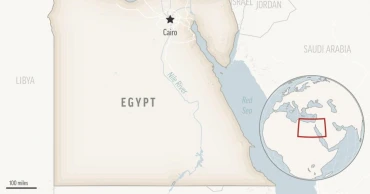
A bus fell into a canal in Egypt’s Nile River Delta region Saturday killing at least 21 people, the country’s Health Ministry said.
Dr. Sherif Makeen, a health ministry official, said three children were among the dead.
In a statement, the ministry said the accident happened in Dakahlia province, around 100 kilometers (62 miles) northeast of the capital of Cairo. Other injured passengers were transported to a local hospital.
The head of police investigations in the province, Brig. Mohamed Abdel Hadi, said the driver may have lost control of the vehicle’s steering wheel.
Read: Small plane crashes into Tanzania's Lake Victoria, 19 dead
Deadly traffic accidents claim thousands of lives every year in Egypt, which has a poor transportation safety record. Crashes and collisions are mostly caused by speeding, bad roads or poor enforcement of traffic laws.
In July, a passenger bus slammed into a parked trailer truck on a highway in the southern province of Minya, killing 23 people and injuring 30. In October, a truck slammed into a minibus in Dakahlia, killing at least 10 people, authorities said.
3 years ago

Zimbabwe, Uganda launch first satellites
Zimbabwe and Uganda recently launched their first homegrown satellites – a "milestone" for the efforts in space activities for the countries.
Zimbabwe's ZimSat-1 and Uganda's PearlAfricaSat-1 are part of the BIRDS-5 constellation, which is now on its way to the International Space Station, according to the United Nations Platform for Space-based Information for Disaster Management and Emergency Response (UN-SPIDER).
The satellites, launched into space Monday, are scheduled to be released from the Japanese Kibo module on November 21 this year, UN-SPIDER added.
Read more: Bangabandhu satellite-1 to be used to restore telecommunication in flood-hit areasOnce in orbit, the two satellites will collect images to help Zimbabwe and Uganda with mineral exploration, monitoring of environmental hazards and droughts, human settlement and disease outbreak mapping, and other potential fields of applications.
A project run by Japan's Graduate School of Engineering at the Kyushu Institute of Technology, BIRDS-5 is a constellation of CubeSats.
3 years ago

Small plane crashes into Tanzania's Lake Victoria, 19 dead
A small passenger plane crashed Sunday morning into Lake Victoria on approach to an airport in Tanzania, and the country’s prime minister says 19 people on board were killed.
Prime Minister Kassim Majaliwa gave the new death toll, up from three. Earlier, local authorities said 26 of those on the Precision Air flight from the coastal city of Dar es Salaam were rescued and taken to a hospital. It was not clear if any of those who were rescued died at the hospital.
Photos showed the plane, which was headed to Bukoba Airport, mostly submerged in the lake. Precision Air is a Tanzanian airline company.
Read more: 2 pilots die as Russian warplane falls on building in Siberia
“We have managed to save quite a number of people,” Kagera province police commander William Mwampaghale told journalists.
3 years ago