africa

32 die in Zimbabwean bus accident
At least 32 people died Thursday night when a bus carrying members of the Zion Christian Church was involved in an accident in Chipinge, southeastern Zimbabwe.
State broadcaster ZBC reported Friday that about 40 others were seriously injured in the accident which happened near the Jopa Market at around 11 p.m.
READ: 8 die in India bus accident
This marks a bad beginning to the Easter weekend.
4 years ago

South Africa's Durban area hit by heavy floods, 45 dead
Prolonged rains and flooding in the Durban area of South Africa have claimed the lives of at least 45 people, damaging the port, major highways and surrounding areas in KwaZulu-Natal province, according to local officials.
South Africa's military has been deployed to Durban and the surrounding eThekwini metropolitan area on Tuesday to assist with rescue operations as residents flee flooded areas.
Some people have been swept away by surging waters, say officials. Durban port, the largest and busiest shipping terminal in sub-Saharan Africa, has been inundated with floodwaters that carried away shipping containers and left them in a jumbled pile.
Authorities are providing shelter for several hundred people whose homes and possessions were washed away by the floods and technicians are working to restore electricity to areas where power had been knocked out.
READ: Dams needed to boost Australia's flood resilience: PM
Emergency services have for several days been responding to urgent calls for help from people stuck in their houses but the number is beginning to decrease, emergency services spokesman Robert McKenzie told The Associated Press on Tuesday.
“There are still cases of collapsed buildings where operations are still continuing,” he said.
“Most of our power stations have been flooded and our teams are working hard to restore power to the affected areas," Moxilisi Kaunda, mayor of the eThekwini metropolitan municipality, told a press briefing Tuesday.
“Our teams are on the ground to try and return the situation to normalcy," he said. "We continue to assess the damages, we cannot be sure of the extent of the damages at the moment.”
4 years ago
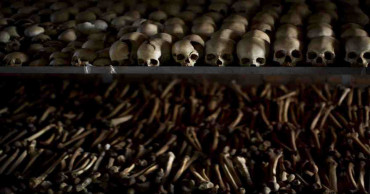
Rwandans remember 1994 genocide with somber events
Rwandans have begun a solemn commemoration of the 1994 genocide in which more than 800,000 Tutsi and moderate Hutu who tried to protect them were killed.
President Paul Kagame on Thursday laid a wreath at a memorial site where more than 250,000 people are buried in the capital, Kigali. The ceremony marked the beginning of a week of somber events.
Read: Seeing Bucha atrocities is turning point for media, viewers
Kagame said he opposes any attempts to rewrite the history of the 1994 genocide against the Tutsi. The killings were perpetrated by extremist Hutu over a period of 100 days.
4 years ago

Roofs ripped off houses as another cyclone hits Madagascar
Cyclone Emnati crashed into the southeastern coast of Madagascar in the early hours of Wednesday, ripping roofs off houses and raising fears of flooding and food shortages in a region still recovering from the destruction inflicted by another tropical storm just weeks ago.
More than 30,000 people were moved to safe accommodation before Emnati arrived and Madagascar's National Office for Risk and Disaster Management estimates more than 250,000 people could be impacted by the latest cyclone.
There were no immediate reports of deaths or injuries from Emnati, but local authorities reported extensive damage to houses and other buildings in at least one southeastern city.
Read:Congo court sentences dozens to death over UN expert murders
Madagascar, an island off the east coast of Africa renowned for its wildlife and unspoiled natural treasures, has now been hit by four major tropical storms in the last month, killing nearly 200 people already and compounding issues of food insecurity. A drought in the south of the country left around 400,000 at risk of starvation last year, according to the U.N. World Food Program.
A string of aid agencies warned that Emnati will be a double blow for the eastern and southeastern regions that were hit by Cyclone Batsirai early this month. Batsirai ultimately left more than 120 people dead and displaced 143,000. More than 20,000 houses were destroyed or damaged by Batsirai, the U.N. Office for the Coordination of Humanitarian Affairs said, and more than 21,000 people remain displaced.
The U.N. humanitarian office said before Emnati arrived that it was in “a race against time” to protect people again.
Emnati made landfall around midnight local time in the district of Manakara Atsimo in the southeast, with average sustained winds of 135 kph (84 mph) and gusts as strong as 190 kph (118 mph), Madagascar’s Department of Meteorology said. Six regions in the southeast are on red alert, most of them already hard-hit by Batsirai.
“We can’t go out so it’s hard to see what happened but from what I can see from the gendarmerie barracks, there’s a lot of damage. Many houses no longer have roofs,” said Lt. Col. Harinaivo Randriamihajamanana, the commander of the Gendarmerie Group in the Fitovinany region and based in the city of Manakara. “We have not received any calls because the telephone communication has been very disrupted. We have had no electricity and water since yesterday (Tuesday) morning.”
The Emnati system had weakened as it worked its way over the Indian Ocean toward Madagascar, the meteorology department said, but it warned that flooding was still likely.
Manakara resident Gabriel Filiastre said his family joined others in taking refuge inside the main hall of a hotel where he works as Emnati hit.
Read:Soldiers declare military junta in control in Burkina Faso
“My house is completely flooded," Filiastre said. "We couldn’t sleep inside. It’s a wooden house. I saw a lot of houses around our house that are destroyed. For us, this cyclone did more damage than the one before.”
“Even in the hotel there is a lot of damage. One of the walls collapsed ... the roof tiles have been blown away and some of the ceilings of the rooms have collapsed. We need help."
The U.N. World Food Program and other aid organizations have warned of the risk of critical food shortages due to crops being destroyed and transport links disrupted. Forecasters have also predicted eight to 12 more cyclones in the Madagascar region before the cyclone season normally ends in May.
Emnati is expected to cross the southeastern part of Madagascar and spin out to sea again, according to the meteorology department, meaning it should miss mainland Africa, where previous cyclones have also caused deaths and destruction.
4 years ago
.jpg)
Congo court sentences dozens to death over UN expert murders
A military court in Congo has condemned about 50 people to death nearly five years after the murders of United Nations investigators Michael Sharp and Zaida Catalan in central Congo’s Kasai region.
The President of the Kasai Occidental Military Court, Brig. Gen. Jean-Paulin Ntshayokolo said Saturday that of the 54 defendants, one officer is sentenced to 10 years for violating orders and two others were acquitted.
Those sentenced to death will serve out life sentences, as Congo has observed a moratorium on the death penalty since 2003.
Sharp of the United States and Catalan of Sweden were assassinated on March 12, 2017 in the Kasai Central region while on a field visit with representatives of Kamwina Nsapu, a militia active in Kasai whose customary chief Jean-Pierre Mponde was killed by Congolese army troops in August 2016.
Sharp, the panel’s coordinator and expert on armed groups, and Catalan, a humanitarian expert, embarked on the field visit from Kananga, the provincial capital of Kasai Central, toward the locality of Bunkonde. The two U.N. experts were investigating the violence in Kasai on behalf of the U.N. Security Council. Their bodies were then found in a shallow grave two weeks later.
READ: After suicide bombing, Congo officials fear more attacks
The Congolese government obtained a cellphone video showing them being killed and blame members of the Kamwina Nsapu militia.
Col. Jean de Dieu Mambweni was sentenced to 10 years Saturday of failing to assist a person in danger. No other military leaders were sentenced.
The military court, however, acquitted journalist Trudon Raphaël Kapuku and police officer Honoré Tshimbamba. Both were arrested separately in 2018 and have spent 4 years in prison.
Thomas Fessy, Human Rights Watch’s senior researcher on Congo, said that despite the verdicts, there are still more questions than answers nearly five years after these murders.
“The investigation and ultimately this trial have failed to uncover the full truth about what happened. Congolese authorities, with U.N. support, should now investigate the critical role that senior officials may have played in the murders,” he said via Twitter.
Sweden’s Minister of Foreign Affairs, Ann Linde, also said investigations must continue.
“Crucial that investigation concerning others involved continues to further uncover truth and bring justice. We encourage authorities to fully cooperate with the U.N. mechanism,” she said via Twitter.
4 years ago

Soldiers declare military junta in control in Burkina Faso
More than a dozen mutinous soldiers declared Monday on state television that a military junta had seized control of Burkina Faso after detaining the democratically elected president following a day of gunbattles in the capital of the West African country.
The military coup in a nation that was once a bastion of stability was the third of its kind in the region in the last 18 months, creating upheaval in some of the countries hardest hit by Islamic extremist attacks.
Capt. Sidsore Kaber Ouedraogo said the Patriotic Movement for Safeguarding and Restoration “has decided to assume its responsibilities before history.” The soldiers put an end to President Roch Marc Christian Kabore’s presidency because of the deteriorating security situation and the president’s inability to manage the crisis, he said.
It was not immediately known where Kabore was, and the junta spokesman said only that the coup had taken place “without any physical violence against those arrested, who are being held in a safe place, with respect for their dignity.”
A soldier in the mutiny, who spoke on condition of anonymity due to the sensitivity of situation, told The Associated Press that Kabore had submitted his resignation.
The new military regime said it had suspended Burkina Faso’s constitution and dissolved the National Assembly. The country’s borders were closed, and a curfew was in effect from 9 p.m. to 5 a.m.
Ouedraogo said that the country’s new leaders would work to establish a calendar “acceptable to everyone” for holding new elections without giving further details.
After the televised announcement, crowds took to the streets, cheering and honking car horns in support of the takeover. People hoped that the coup would ease the devastation they have endured since jihadist violence spread across the country.
“This is an opportunity for Burkina Faso to regain its integrity. The previous regime sunk us. People are dying daily. Soldiers are dying. There are thousands of displaced,” said Manuel Sip, a protester in downtown Ouagadougou. The army should have acted faster in ousting the president, he said.
After the overthrow of strongman Blaise Compaore in 2014, several people told the AP they no longer cared if they had a democratically elected leader. They just wanted to live in peace.
The communique read aloud on state broadcaster RTB was signed by the country’s apparent new military leader, Lt. Col. Paul Henri Sandaogo Damiba. He sat beside the spokesman without addressing the camera during the announcement.
Read: At least 6 reported dead in crush at African Cup soccer game
United Nations Secretary-General Antonio Guterres called on coup leaders to lay down their arms. He reiterated the U.N.’s “full commitment to the preservation of the constitutional order” in Burkina Faso and support for the people in their efforts “to find solutions to the multifaceted challenges facing the country,” U.N. spokesman Stephane Dujarric said.
The U.N. chief said the military takeover was part of “an epidemic of coups around the world and in that region.”
The U.S. State Department in a statement expressed deep concern about the dissolution of the government, suspension of the constitution and the detention of government leaders. “We condemn these acts and call on those responsible to deescalate the situation, prevent harm to President Kaboré and any other members of his government in detention, and return to civilian-led government and constitutional order,” spokesperson Ned Price said.
In a statement, Kabore’s political party accused the mutinous soldiers of trying to assassinate the president and another government minister and said the presidential palace in Ouagadougou remained surrounded by “heavily armed and hooded men.”
The coup “is a signal of frustration and exasperation on the heels of a growing struggle to stem the threat of militants, cope with the degraded security structure, and an attempt to restore faith in the institution of the military,” said Laith Alkhouri, CEO of Intelonyx Intelligence Advisory, which provides intelligence analysis.
Gunfire erupted early Sunday when soldiers took control of a major military barracks in the capital. In response, civilians rallied in a show of support for the rebellion but were dispersed by security forces firing tear gas. On Monday, groups of people celebrated again in the streets of the capital after reports of Kabore’s capture.
Kabore was elected in 2015 after the popular uprising that ousted Compaore. Kabore was reelected in November 2020, but frustration has been growing at his inability to stem the jihadist violence. Attacks linked to al-Qaida and the Islamic State group have killed thousands and displaced more than an estimated 1.5 million people.
The military has suffered losses since the extremist violence began in 2016. In December, more than 50 security forces were killed and nine more died in November.
Mutinous soldiers told the AP that the government was out of touch with troops. Among their demands are more forces in the battle against extremists and better care for the wounded and the families of the dead.
Read: 4 killed, 1 hurt in ‘ambush’ shooting at house party near LA
About 100 military members have planned the takeover since August, according to one of the mutinous soldiers.
The West African regional bloc known as ECOWAS said in a statement that it was following events in Ouagadougou with “great concern.” The bloc has already suspended Mali and Guinea over military coups. Those coup leaders appear in no hurry to return their countries to civilian rule.
Burkina Faso has also seen its share of coup attempts and military takeovers, although it experienced a period of relative stability under Compaore, who ruled for 27 years until his ouster in 2014.
In 1987, Compaore came to power by force. And in 2015, soldiers loyal to him attempted to overthrow the transitional government put into place after his ouster. The army was ultimately able to put the transitional authorities back in power, who led again until Kabore won an election and took office.
4 years ago
.jpg)
At least 6 reported dead in crush at African Cup soccer game
At least six people died in a crush outside a stadium hosting a game at Africa’s top soccer tournament in Cameroon on Monday, a local government official said, realizing fears over the capacity of the country to stage the continent’s biggest sports event.
Naseri Paul Biya, the governor of the central region of Cameroon, said there could be more deaths.
“We are not in position to give you the total number of casualties,” he said.
Also read: 4 killed, 1 hurt in ‘ambush’ shooting at house party near LA
The crush happened as crowds struggled to get access to Olembe Stadium in the capital city of Yaounde to watch the host country play Comoros in a last 16 knockout game in the African Cup of Nations.
Officials at the nearby Messassi hospital said they received at least 40 injured people, who were rushed to the hospital by police and civilians. The officials said the hospital wasn’t capable of treating all of them.
“Some of the injured are in desperate condition,” said Olinga Prudence, a nurse. “We will have to evacuate them to a specialized hospital.”
People were seen lying motionless on their backs near an entrance to the stadium in the aftermath of the crush. A man knelt next to one of the victims and appeared to be trying to resuscitate the victim. Shoes, caps and colorful wigs — part of some of the fans’ game costumes — were strewn on the ground.
Witnesses said children were among those caught up in the crush. The witnesses said it happened when stadium stewards closed the gates and stopped allowing people in. It was not immediately clear if the crush happened before or during the game.
Also read: 8 dead, several injured at Astroworld Festival in Houston
Soccer officials said around 50,000 people had tried to attend the match. The stadium has a capacity of 60,000 but it was not meant to be more than 80% full for the game due to restrictions on the size of the crowd because of the coronavirus pandemic.
The Confederation of African Football, which runs the African Cup, said in a statement it was aware of the incident.
“CAF is currently investigating the situation and trying to get more details on what transpired,” it said. “We are in constant communication with Cameroon government and the Local Organizing Committee.”
One of the federation’s top officials, general secretary Veron Mosengo-Omba, went to visit injured fans in the hospital, the statement said.
Cameroon is hosting the African Cup for the first time in 50 years. The Central African nation was meant to host the tournament in 2019 but the event was taken away from it that year and awarded to Egypt because of serious concerns with Cameroon’s preparations, particularly the readiness of its stadiums.
Olembe Stadium was one of the venues that was under scrutiny. It is the main stadium for the monthlong tournament and will stage three more games, including the final on Feb. 6.
Monday’s incident was the second serious blow to the country in the space of a day, after at least 17 people died when a fire set off a series of explosions at a nightclub in Yaounde on Sunday.
Following that incident, Cameroon President Paul Biya urged the country to be on guard while it hosts its biggest national sports event in a half century.
Cameroon won Monday’s game 2-1 to move on to the quarterfinals.
4 years ago

Burkina Faso’s President Kabore is held by mutinous soldiers
Burkina Faso’s President Roch Marc Christian Kabore is being held by mutinous soldiers, two of the soldiers told The Associated Press by phone early Monday. They did not say where Kabore is being held, but said he is in a safe place.
Gunshots were heard late Sunday night near the president’s residence and in the early hours of Monday a battle took place at the presidential palace while a helicopter flew overhead. The roads of the capital were empty Sunday night except for checkpoints heavily guarded by mutinous soldiers.
State news station RTB was heavily guarded on Monday morning.
Read: US draws down Ukraine embassy presence as war fears mount
Fighting began on Sunday when soldiers took control of the Lamizana Sangoule military barracks in the capital, Ouagadougou. Civilians drove into town in a show of support for the rebellion but were broken up by security forces firing tear gas. The mutiny came a day after a public demonstration calling for Kabore’s resignation, the latest in a series of anti-Kabore protests as anger has mounted over his government’s handling of the Islamic insurgency.
The government has not made any statements since Sunday when Minister of Defense Aime Barthelemy Simpore told state broadcaster RTB that a few barracks had been affected by unrest not only in Ouagadougou but in other cities, too. He denied, however, that the president had been detained by the mutineers, even though Kabore’s whereabouts was unknown.
“Well, it’s a few barracks. There are not too many,” Simpore said.
Kabore had been leading Burkina Faso since being elected in 2015 after a popular uprising ousted longtime strongman President Blaise Compaore who was in power for nearly three decades. Kabore was reelected in November 2020 for another five-year term, however, frustration has been growing at his inability to stem the spread of jihadist violence across the country. Attacks linked to al-Qaida and the Islamic State group are escalating, killing thousands and displacing more than an estimated 1.5 million people.
The military has suffered losses since the extremist violence began in 2016. In December more than 50 security forces were killed in the Sahel region and nine security forces were killed in the Center North region in November.
Read: Oxford High School reopening nearly 2 months after shooting
Angry mutinous soldiers told the AP that the government was disconnected from its forces in the field and that their colleagues were dying and they wanted military rule. The soldiers put a man on the phone who said that they were seeking better working conditions for Burkina Faso’s military amid the escalating fight against Islamic militants. Among their demands are increased manpower in the battle against extremists and better care for those wounded and the families of the dead.
4 years ago
.jpg)
Gunfire near home of Burkina Faso’s leader after army mutiny
Gunfire rang out late Sunday near the home of Burkina Faso’s embattled President Roch Marc Christian Kabore, raising the specter that a military coup might still be under way after mutinous soldiers seized a military base earlier in the day.
Government officials had sought to reassure people that the situation was under control even as shots rang out for hours at the army base. But by day’s end anti-government protesters supporting the mutineers also had set fire to a building belonging to Kabore’s party.
It was not immediately known whether Kabore was at home but several people in the area told The Associated Press that in addition to gunfire they could hear helicopters hovering overhead.
A mutinous soldier also told AP by phone that heavy fighting was under way near the presidential palace, a claim that could not immediately be independently corroborated.
Sunday’s mutiny came one day after the latest public demonstration calling for Kabore’s resignation as anger has mounted over the government’s handling of the Islamic insurgency. Anti-government protesters lent public support to the mutinous soldiers, prompting security forces to use tear gas to disperse crowds in the capital.
Read:Extremist attack in Burkina Faso kills at least 20
The West African regional bloc known as ECOWAS, which already has suspended Mali and Guinea in the past 18 months over military coups, issued a statement of support for Burkina Faso’s embattled president and urged dialogue with the mutineers.
Defense Minister Aime Barthelemy Simpore told state broadcaster RTB that a few barracks had been affected by unrest not only in the capital of Ouagadougou but in other cities, too. He denied, however, that the president had been detained by the mutineers, even though Kabore’s whereabouts remained unknown.
“Well, it’s a few barracks. There are not too many,” Simpore said. “In some of these barracks, the calm has already returned. So that’s it for the moment. As I said, we are monitoring the situation.”
A news headline on the state broadcaster described the gunfire as “acts of discontent by soldiers.”
“Contrary to some information, no institution of the republic has been targeted,” the headline continued.
At the Lamizana Sangoule military barracks in the capital, however, angry soldiers shot into the air Sunday, directing their anger over army casualties at the president. About 100 motorcycles later left the base, chanting in support of the mutineers, but were stopped when security forces deployed tear gas.
The soldiers put a man on the phone with The Associated Press who said that they were seeking better working conditions for Burkina Faso’s military amid the escalating fight against Islamic militants. Among their demands are increased manpower in the battle against extremists and better care for those wounded and the families of the dead. The mutinous soldiers also want the military and intelligence hierarchy replaced, he said.
There were signs Sunday that their demands were supported by many in Burkina Faso who are increasingly distressed by the attacks blamed on al-Qaida and Islamic State-linked groups. Thousands have died in recent years from those attacks and around 1.5 million people have been displaced.
“We want the military to take power,” said Salif Sawadogo as he tried to avoid tear gas on the streets of Ouagadougou. “Our democracy is not stable.”
Kabore first took office in 2015, winning the election held after longtime President Blaise Compaore was ousted in a popular uprising.
Still, Kabore has faced growing opposition since his reelection in November 2020 as the country’s Islamic extremism crisis has deepened. Last month he fired his prime minister and replaced most of the Cabinet, but critics have continued calling for his resignation.
On Sunday, protesters who supported the army mutiny said they had had enough of Kabore even though the next presidential election isn’t until 2025. Demonstrator Aime Birba said the violence under Kabore has been unlike anything Burkina Faso experienced during the nearly three decades Compaore was in power.
“We are currently under another form of dictatorship,” he said. “ A president who is not able to take security measures to secure his own people is not a president worthy of the name.”
Earlier this month, authorities had arrested a group of soldiers accused of participating in a foiled coup plot. It was not immediately known whether there was any connection between those soldiers and the ones who led a mutiny Sunday. Military prosecutors said nine soldiers and two civilians were being held in connection with the plot.
West Africa has seen a spate of military coups in West Africa over the past 18 months, causing the regional bloc known as ECOWAS to suspend two member states simultaneously for the first time since 2012.
In August 2020, a mutiny at a Malian military barracks led to the democratically elected president being detained. He later announced his resignation on national television, and the junta leader there doesn’t want new elections for four more years.
In September 2021, Guinea’s president also was overthrown by a military junta that remains in power to this day.
Read: Jihadis expand control to new Burkina Faso fronts
Burkina Faso, too has seen its share of coup attempts and military takeovers. In 1987, Compaore came to power by force. And in 2015, soldiers loyal to him attempted to overthrow the transitional government put into place after his ouster. The army was ultimately able to put the transitional authorities back in power, who led again until Kabore won an election and took office.
4 years ago

Mali's ex-President Ibrahim Boubacar Keita dies at 76
Ibrahim Boubacar Keita, the former president of Mali who took office in a landmark election held after a destabilizing coup only to be ousted in another military takeover nearly seven years later, has died. He was 76.
Keita, known to Malians by his initials IBK, had been in declining health since his forced resignation in August 2020, and had sought medical treatment in Dubai, United Arab Emirates, shortly after his release from junta custody.
The transitional government, which is still led by the man who ousted Keita from power 18 months ago, issued a statement saying that his death Sunday in Bamako followed “a long illness.”
Read:Nigeria attacks: Hundreds reported killed as bandits target villages
“The government of the Republic of Mali and the Malian people salute the memory of the late great,” the statement said, adding that funeral details would come later.
The news comes as the turbulent West African nation faces a deepening political crisis, with coup leader Col. Assimi Goita having no immediate plans for a return to democracy as initially promised.
Keita won Mali's historic 2013 presidential election held after an earlier coup in 2012 and a subsequent French-led military intervention the following year to oust Islamic extremists from power in the country's north. But only seven years later, Keita himself was ousted by another military takeover following months of public demonstrations against his presidency.
Keita had three years left in his final term when mutinous soldiers detained him at his residence in August 2020 after firing shots outside the house. Hours later, he appeared in a midnight broadcast on state television, telling Malians he would resign immediately.
“I wish no blood to be shed to keep me in power,” Keita said at the time. “I have decided to step down from office.”
The country has descended into further chaos since his departure. Goita last year launched a second coup, throwing out the civilian transitional leaders and making himself president.
West African regional leaders imposed tough economic sanctions earlier this month after Goita indicated that Mali's next presidential election won't be held until 2026, after initially agreeing to an election by the end of next month. The measures halted commercial flights from most other countries in the regional bloc known as ECOWAS and froze the Malian government's assets in commercial banks.
A protest movement against Keita’s presidency in 2020 saw tens of thousands demonstrate in the streets in the months leading up to his overthrow. As discontent with his leadership mounted, Keita had tried to make concessions to his critics, saying he was even open to redoing the vote. But those overtures were swiftly rejected by opposition leaders, who said they wouldn't stop short of Keita’s departure.
Support for Keita also tumbled amid criticism of his government’s handling of the Islamic insurgency, which significantly expanded into central Mali during his tenure. A wave of particularly deadly attacks in the north in 2019 prompted the government to close its most vulnerable outposts as part of a reorganization aimed at stemming the losses.
Keita signed a peace agreement with the former rebels, but it was never fully implemented, prolonging the instability.
In the 2013 election, Keita had emerged from a field of more than two dozen candidates to win Mali’s first democratic election after a 2012 coup — a landslide victory with more than 77% of the vote. He also enjoyed broad support from former colonizer France and other Western allies. In 2018, Keita was reelected to a second term after receiving 67% of the vote.
“I will remember him as a cultured man, a great patriot and a committed pan-Africanist,” tweeted Niger's former President Mahamadou Issoufou, who led the neighboring country throughout Keita's presidency as the two nations faced the growing regional threat posed by Islamic extremists. “I lose in him a friend and a comrade.”
Read: 17 al-Shabab militants killed in foiled attack in central Somalia
Born in 1945, Keita hailed from the town of Koutiala in what is now southern Mali. He studied in Bamako, Dakar, Senegal, and Paris, earning a master’s degree in history with postgraduate studies in politics and international relations before entering politics.
His early posts included being ambassador to neighboring Ivory Coast and diplomatic adviser to President Alpha Oumar Konare, who took office in 1992. Keita then served as prime minister from 1994 to 2000, and later as president of the National Assembly from 2002 to 2007.
He is survived by his wife, Aminata Maiga Keita, and their four children.
4 years ago