europe
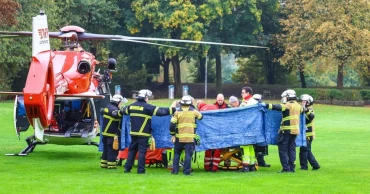
Newly elected German mayor found with serious stab wounds
The newly elected mayor of a town in western Germany was found with life-threatening wounds on Tuesday, and Chancellor Friedrich Merz said she was the victim of “an abhorrent act.”
Iris Stalzer was elected as mayor of Herdecke on Sept. 28. She is a member of the center-left Social Democrats, the junior party in Germany’s conservative-led national government.
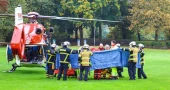
Stalzer was found at her home with life-threatening wounds shortly before 1 p.m. Tuesday, police and prosecutors said in a statement. She was taken to a hospital by helicopter.
They didn’t comment on the nature of the wounds, but the leader of the Social Democrats’ parliamentary group in Berlin, Matthias Miersch, told reporters that “we heard a few minutes ago that newly elected Mayor Iris Stalzer was stabbed in Herdecke.”
Merz wrote on social media that “we fear for the life of Mayor-elect Iris Stalzer and hope for her full recovery.”
The statement from investigators said that they are “investigating in all directions” and that “a family background also cannot be ruled out at present.”
Stalzer, who beat a candidate from Merz's center-right Christian Democrats in a runoff vote to win election, is due to take office on Nov. 1. Herdecke is a town of about 23,000 people in western Germany's Ruhr region, between the cities of Hagen and Dortmund.
Stalzer's website says she is 57 and married with two teenage children. It says she has spent almost her whole life in Herdecke and has worked as a lawyer specializing in labor law.
7 months ago
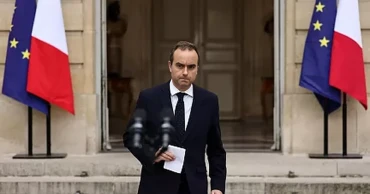
France faces new political turmoil as PM Lecornu resigns after just 26 days
France has plunged into another political crisis after Prime Minister Sébastien Lecornu resigned on Monday, only 26 days after taking office.
Lecornu’s resignation, coming just a day after he announced his cabinet, makes him the third French prime minister to step down since December. He was appointed last month after the fall of François Bayrou’s government, which collapsed when parliament rejected his budget proposal.
Following his resignation, President Emmanuel Macron asked Lecornu to present a plan for “stability for the country” by Wednesday evening. The unexpected move followed a day of turmoil that saw French stocks tumble amid concerns over political uncertainty.
Lecornu’s newly announced cabinet faced immediate criticism from nearly all parties in the National Assembly, which threatened to reject it. The appointment of former finance minister Bruno Le Maire as defense minister particularly fueled tensions. Le Maire later withdrew his name in an attempt to ease the crisis.
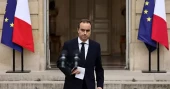
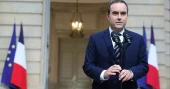
In a brief statement outside the prime minister’s residence, Lecornu blamed “partisan appetites” and political divisions for his decision, saying parties were unwilling to compromise. “I was ready for dialogue, but all sides acted as if they had absolute majorities,” he said.
President Macron now faces tough choices — either appointing another prime minister, dissolving the National Assembly to call for new elections, or, though least likely, stepping down himself.
France’s politics have remained unstable since July 2024, when Macron’s party lost its majority in snap elections, leading to a fragmented parliament and repeated government collapses.
Lecornu, a former armed forces minister, was France’s fifth prime minister in less than two years.
Source: BBC
7 months ago
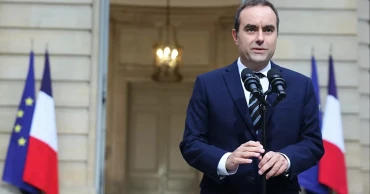
French Prime Minister resigns after only 2 weeks in office
France’s new prime minister Sébastien Lecornu resigned Monday, just a day after naming his government and after only two weeks in office.
The French presidency said in a statement that President Emmanuel Macron has accepted his resignation.
Source: AP
7 months ago
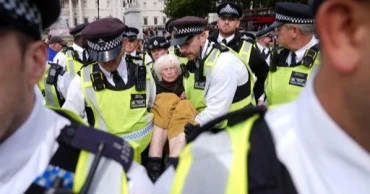
UK to impose restrictions on repeated protests after 500 arrests at pro-Palestinian vigil
The UK government announced Sunday that police will receive stronger powers to limit repeated protests, following nearly 500 arrests at a pro-Palestinian demonstration linked to a banned organization.
The Home Office said authorities will now be able to consider the “cumulative impact of frequent protests” on local communities when setting conditions for marches and rallies.
Home Secretary Shabana Mahmood emphasized that while the right to protest is fundamental, it must be balanced against residents’ safety. “Large, repeated protests can leave sections of our country, particularly religious communities, feeling unsafe, intimidated and scared to leave their homes,” she said.
Pro-Palestinian protests have been frequent since Israel’s military offensive in Gaza, which has claimed more than 67,000 Palestinian lives, according to the Gaza Health Ministry under Hamas. While mostly peaceful, some protests have been criticized for spreading antisemitism. Certain chants, including “From the river to the sea, Palestine will be free,” have alarmed members of the Jewish community. A few protesters have been arrested for supporting Hamas, which is banned in the UK.
Authorities had urged the public to avoid gatherings following Thursday’s attack on a synagogue in Manchester that killed two Jewish men. Despite this, about 1,000 people gathered Saturday in Trafalgar Square to protest the government’s ban on Palestine Action, a direct-action group labeled a terrorist organization.
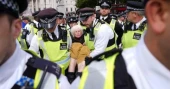
Police said 488 people were arrested for supporting the outlawed group, with additional arrests for other offenses. Since July, more than 2,000 people have been detained at protests linked to Palestine Action, and over 130 face terrorism-related charges.
The conflict in Gaza stems from Hamas’ October 7, 2023 attack on southern Israel, which killed over 1,200 people and took 251 hostages. On Saturday, Hamas indicated it was willing to return remaining hostages and the bodies of the dead under a US-brokered peace plan proposed by President Donald Trump.
7 months ago
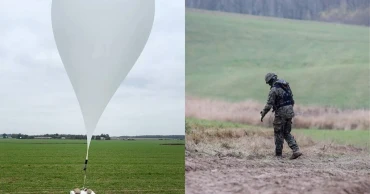
Smuggling balloons force temporary shutdown of airport in Lithuania
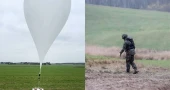
Up to 25 small hot-air balloons, some confirmed to be carrying smuggled cigarettes, entered Lithuanian airspace late Saturday, forcing authorities to close Vilnius Airport for several hours, officials said Sunday.
The incident disrupted around 30 flights and affected some 6,000 passengers before operations resumed at 4:50 a.m. local time, according to Lithuania’s National Crisis Management Center.
Border police later recovered 11 of the balloons and seized nearly 18,000 packs of smuggled cigarettes in various locations across Vilnius County, said Darius Buta, a spokesperson for the border service.
Two of the balloons reportedly flew directly over the capital’s airport, while others reached areas surrounding the city between 8:45 p.m. Saturday and 4:30 a.m. Sunday.
Authorities said the balloons originated from Belarus and were used by smugglers to ferry cigarettes into the European Union — a growing trend as such balloons are cheaper than drones.
The intrusion came amid heightened security concerns in the Baltics, following recent airspace violations that some NATO officials suspect were tests by Moscow to gauge the alliance’s response.
Lithuania, which borders Russian ally Belarus, has already faced several drone incursions this year, including one carrying an explosive device that crashed at a military training ground in July. In response, the Lithuanian parliament authorized the armed forces to shoot down any unmanned aircraft violating its airspace.
“Both smuggling balloons and drones are criminal activities, but not provocations or acts of sabotage,” Buta said, noting that similar incidents were also reported in August.
Last year, Lithuanian authorities intercepted 966 smuggling balloons from Belarus, compared to 544 so far this year.
7 months ago
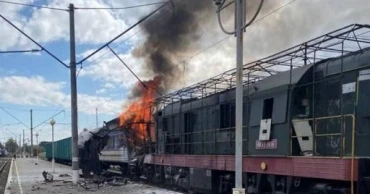
Russian drone strike kills one, injures dozens at Ukrainian railway station
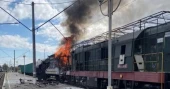
At least one person was killed and over 30 injured as Russian drones struck a railway station in the northeastern Ukrainian city of Shostka on Saturday, intensifying attacks on the country’s transport and energy infrastructure ahead of winter.
Ukrainian President Volodymyr Zelenskyy called the strike “savage,” saying drones targeted two passenger trains in quick succession — a local commuter service and one bound for Kyiv — during an evacuation. Authorities later found the body of a 71-year-old man in a damaged carriage.
Ukraine’s deputy prime minister Oleksiy Kuleba said the second strike hit as rescuers were helping passengers, describing it as a “double-tap” attack — a tactic often used to target emergency responders.
The assault knocked out power in Shostka and nearby areas, while further Russian drones and missiles overnight hit Ukraine’s energy network, damaging gas facilities near Chernihiv and affecting tens of thousands of homes.
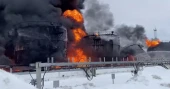
Ukraine’s military said it intercepted 73 out of 109 drones launched overnight. Meanwhile, Ukrainian drones struck Russia’s Kirishi oil refinery near St. Petersburg, causing explosions and a fire — the latest in a series of attacks on one of Russia’s largest refineries.
Separately, French photojournalist Antoni Lallican, 37, was killed in a Russian drone strike near Druzhkivka in eastern Ukraine, becoming the 14th reporter to die since the invasion began in 2022.
8 months ago

Tens of thousands protest Israel’s war in Gaza across Southern Europe
Tens of thousands of people took to the streets of Barcelona on Saturday to protest Israel’s war in Gaza, as similar demonstrations are planned in Spain, Italy, and Portugal.
Authorities estimated around 70,000 protesters filled Barcelona’s central boulevard, Passeig de Gracia, many carrying Palestinian flags and holding signs reading “Stop the Genocide” and “Hands off the flotilla.” Families and people of all ages joined the march. The protests follow widespread anger after Israel intercepted a humanitarian aid flotilla from Barcelona attempting to break the blockade of Gaza. Over 450 activists, including more than 40 Spaniards and a former Barcelona mayor, were removed from the flotilla this week.
Italy saw more than two million people participate in a nationwide one-day strike on Friday in solidarity with Gaza residents. In Spain, support for Palestinians has surged, with Prime Minister Pedro Sánchez condemning the destruction in Gaza as “genocide” and calling for Israeli sports teams to be banned from international competitions.
Protests are also underway in Rome, organized by Palestinian groups, unions, and students, with marches planned from Porta San Paolo to San Giovanni. Demonstrations are scheduled later in Lisbon, Madrid, and other Spanish cities. Athens will see a protest Saturday, with a larger one expected Sunday alongside a pro-Israel rally.
The conflict began in October 2023 after a Hamas attack killed roughly 1,200 people and left 251 hostages. Israel’s military response has since killed over 67,000 and wounded nearly 170,000 in Gaza, according to the Hamas-run Health Ministry, figures widely cited by U.N. agencies and independent experts.
8 months ago

Munich Airport reopens after second drone-related closure in 24 hours
Germany's Munich Airport reopened Saturday morning after authorities shut it down the night before for the second time in less than 24 hours after two additional drone sightings, officials said.
The closures are the latest after mysterious drone overflights in the airspace of European Union member countries.
The airport, one of Germany's largest, reopened gradually beginning at 7 a.m. (0500 GMT) Saturday. Planes typically begin taking off at 5 a.m.
Federal police said two drone sightings were confirmed shortly before 11 p.m. Friday near the airport's north and south runways, the agency said in a statement Saturday. The drones flew away before they could be identified.
Delays were expected to continue throughout Saturday, the airport said in a statement. At least 6,500 passengers were impacted by the overnight closure Friday into Saturday.
The previous closure, Thursday night into Friday, affected almost 3,000 passengers.
Authorities were not immediately able to provide any information about who was responsible for the overflights.
The incident was the latest in a series of incidents of mysterious drone sightings over airports as well as other critical infrastructure sites in several European Union member countries. Drones also were spotted overnight in Belgium above a military base.
A drone incident in Oslo, the capital of Norway, which is a NATO member but not part of the EU, also affected flights there late last month.
It wasn’t immediately clear who has been behind the flyovers. European authorities have expressed concerns that they’re being carried out by Russia, though some experts have noted that anybody with drones could be behind them. Russian authorities have rejected claims of involvement, including in recent drone incidents in Denmark.
Alexander Dobrindt, Germany’s interior minister said he and some European counterparts would discuss the drone incursions, and a “drone detection and defense plan” at a meeting this weekend in Munich.
“We are in a race between drone threat and drone defense. We want to and must win this race,” he said in the western city of Saarbrücken, where he joined German Chancellor Friedrich Merz and French President Emmanuel Macron at a ceremony to mark the 35th anniversary of Germany’s reunification.
8 months ago
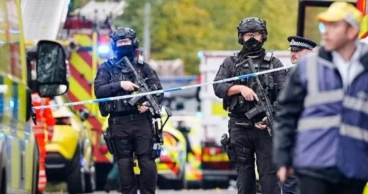
6 questioned over Manchester synagogue attack
Police in Britain are questioning six people arrested on suspicion of terrorism following Thursday’s deadly attack on a synagogue in Manchester that left two people dead.
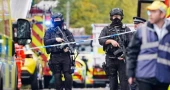
The suspect, Jihad Al-Shamie, 35, was shot dead by police outside the Heaton Park Congregation Synagogue after he rammed his car into pedestrians, stabbed several people, and tried to storm the building during Yom Kippur, Judaism’s holiest day.
Two worshippers — Melvin Cravitz, 66, and Adrian Daulby, 53 — were killed in the attack.
Police said Daulby was accidentally shot by an armed officer as he and others tried to barricade the synagogue to stop Al-Shamie from entering. Three other men remain hospitalized with serious injuries.
Authorities said Al-Shamie, a British citizen of Syrian origin, was wearing a fake explosives belt and may have been influenced by extremist Islamist ideology. He had been out on bail over an alleged rape case but had not been charged.
Six suspects, three men and three women aged between 18 and their 60s, were detained across Greater Manchester as investigators work to determine whether Al-Shamie acted alone.
The attack has rattled Britain’s Jewish community and reignited debate over antisemitism and pro-Palestinian activism. Antisemitic incidents have risen sharply since the Israel-Hamas war began last year, according to the Community Security Trust.
Chief Rabbi Ephraim Mirvis blamed an “unrelenting wave of Jew hatred” both online and on the streets.
Prime Minister Keir Starmer urged restraint and asked protest organizers to postpone demonstrations planned for the weekend, saying they should “recognize and respect the grief of British Jews.”
Police in London also called for the cancellation of a protest against the government’s recent ban on Palestine Action, now listed as a terrorist organization. But organizers said the rally would go ahead, while expressing sympathy for victims of the synagogue attack.
8 months ago
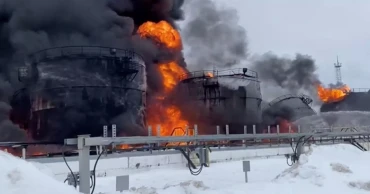
Russia launches largest strike of war on Ukraine’s gas facilities
Russia carried out its biggest attack of the war overnight, targeting natural gas facilities operated by Ukraine’s state-owned Naftogaz Group, Ukrainian officials said Friday.
Ukraine’s air force reported that Russia launched 381 drones and 35 missiles, aiming to damage the country’s power and gas infrastructure ahead of winter and undermine public morale.
Naftogaz CEO Serhii Koretskyi described the strike as “deliberate terror against civilian facilities” with no military purpose, saying the attacks were meant to disrupt the heating season and deprive Ukrainians of warmth.
The northeastern Kharkiv and central Poltava regions saw 35 missiles, including ballistic types, and 60 drones targeting gas extraction and processing sites, some sustaining severe damage.
Russia’s Defense Ministry said its forces struck Ukraine’s military-industrial complex and related energy infrastructure, claiming all targets were hit. Ukraine has reported that Russian attacks on power grids and rail networks are intended to weaponize winter.
In Poltava, an 8-year-old child and two women were injured, and blasts shattered about half the windows of the historic St. Nicholas Church.
Ukraine has retaliated with domestic long-range drones, striking Russia’s Orsk oil refinery and briefly halting operations at the Azot chemical plant in Berezniki. Russia said it shot down 20 Ukrainian drones, mostly over the Black Sea.
Prime Minister Yulia Svyrydenko said the strikes aim to terrorize civilians and disrupt essential services during winter.
8 months ago