europe

Trump begins UK state visit amid protests, trade and security talks on agenda
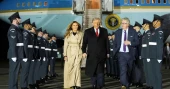
US President Donald Trump on Wednesday began a two-day state visit to the United Kingdom, marked by royal pageantry and political protests, as both sides seek to reaffirm the trans-Atlantic alliance despite sharp policy differences.
King Charles III welcomed Trump and First Lady Melania Trump at Windsor Castle with a carriage procession, honor guards and a state banquet. Trump is the first US president to be invited for a second state visit to Britain.
On Thursday, Trump will hold talks with Prime Minister Keir Starmer at Chequers, the premier’s country retreat. The agenda includes trade negotiations, technology partnerships and security issues. Nvidia CEO Jensen Huang and OpenAI chief Sam Altman are expected to join the US delegation, with reports of major US investments in UK data centers.
Tensions remain over Ukraine and Gaza. While Starmer seeks to ensure continued US backing for Kyiv, Trump has downplayed recent Russian actions in Poland. Starmer has also pledged UK recognition of a Palestinian state at the UN, a move at odds with Washington.
In London, police are bracing for large-scale demonstrations, with around 50 groups expected to rally against Trump’s visit. The Metropolitan Police said 1,600 officers will be deployed. London Mayor Sadiq Khan criticized Trump’s policies, accusing him of stoking division.
Despite protests, Windsor displayed a festive mood with US and UK flags lining the streets as crowds gathered to witness the ceremony.
Trump said trade talks will continue during his stay, as both sides aim to build on earlier tariff agreements covering autos and aerospace while seeking progress on pharmaceuticals, steel and aluminum.
8 months ago
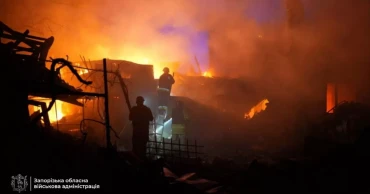
Zelenskyy urges European air defense system after Russian strikes injure 13 in Ukraine
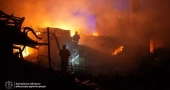
Russian forces launched overnight rocket attacks on the southern Ukrainian city of Zaporizhzhia, injuring 13 people, including two children, officials said Tuesday. President Volodymyr Zelenskyy urged European leaders to safeguard the continent by establishing a robust air defense network.
More than three and a half years into Russia’s full-scale invasion, strikes on civilian areas and the ongoing fighting along the roughly 1,000-kilometer front line have shown no sign of slowing. A peace settlement remains distant despite months of U.S.-led diplomatic efforts. Ultimatums from U.S. President Donald Trump for Moscow to engage with proposals to halt the fighting have passed without visible effect.
Zelenskyy said on Telegram that in the past two weeks alone, Russia has launched over 3,500 drones, more than 2,500 powerful glide bombs, and nearly 200 missiles at targets across Ukraine. Glide bombs, dropped from jets behind the front line, and drone swarms continue to challenge Ukrainian defenses. While glide bombs are not highly accurate, they create large craters, and Ukraine currently lacks an effective countermeasure.
Russian drones have also reached Polish territory, prompting NATO to strengthen air defenses in Europe. Zelenskyy called for a multilayered European air defense system, emphasizing that the technologies exist but require investment, commitment, and decisive action from partners.
In Zaporizhzhia, the rocket attacks damaged over 20 apartment buildings and started fires, according to regional head Ivan Fedorov. He said municipal workers were still repairing damage from strikes on Aug. 30 when the latest attacks occurred.
In retaliation, Ukraine has deployed long-range drones against strategic targets inside Russia, including oil refineries, depots, and terminals. These strikes have contributed to gasoline shortages in Russia despite its status as the world’s second-largest oil exporter. Ukraine’s General Staff reported that overnight attacks targeted an oil refinery in the Saratov region, causing explosions and a fire.
8 months ago
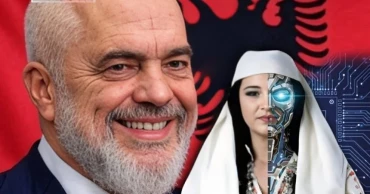
Albania introduces world’s first AI minister to curb corruption, says PM Rama
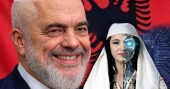
In a world where politicians are often accused of being "heartless," Albania has embraced the label by appointing an artificial intelligence as a minister.
This is not a minister for AI, but rather a cabinet member entirely created by AI. Known by a single name, Diella—which means “sun” in Albanian—she was unveiled by Prime Minister Edi Rama on Thursday, shortly after he began his fourth term following May’s election victory.
The appointment, however, is symbolic. Albania’s constitution requires that ministers must be adult citizens deemed mentally competent.
Even so, Rama highlighted the advantages of a digital minister. Diella cannot leak sensitive information, will never be implicated in a financial scandal, and the only “power” she consumes is electricity. She has been tasked with overseeing public procurement, with Rama pledging to make Albania “a country where public tenders are 100% free of corruption.”
"We're working with a brilliant team, which is not only Albanian but also international, to come out with the first full AI model in public procurement," Rama told the BBC. "Not only will we wipe out every potential influence on public biddings – we will also make the process much faster, much more efficient and totally accountable."
Diella is not entirely new to public service. She first appeared as a virtual assistant on the e-Albania portal, helping citizens apply for official documents. Rama noted that she has already "helped more than a million applications." But he envisions far more, saying Albania can “leapfrog” larger nations still bound by “traditional ways of working.”
Reactions have been mixed. The opposition Democratic Party dismissed the initiative as “ridiculous” and “unconstitutional.” Others see potential. Aneida Bajraktari Bicja of Balkans Capital observed that Rama “often mixes reform with theatrics,” but added the AI initiative “could be constructive if it develops into real systems that improve transparency and trust in public procurement.”
Experts also see promise. Dr Andi Hoxhaj of King’s College London said, "AI is still a new tool – but if it is programmed correctly, when you put a bid in online, you can see clearly and more closely if a company meets the conditions and the criteria." He stressed that Albania’s EU accession push makes tackling corruption vital: "There's a lot at stake. The main precondition from the EU has been to address corruption. If [Diella] is a vehicle or mechanism that could be used towards that goal, it's worth exploring."
Rama admits there is an element of showmanship in appointing an AI minister but insists there is also substance. "It puts pressure on other members of the cabinet and national agencies to run and think differently. This is the biggest advantage I'm expecting from this minister," he said.
For now, Diella may be the only “minister” in the world who is powered by code rather than politics—but her presence could be a sign of things to come.
8 months ago
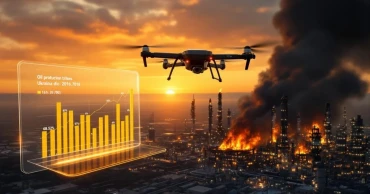
Ukrainian Drones Strike Russia’s Major Oil Refinery, Fire Erupts
Ukrainian drones overnight struck one of Russia’s largest oil refineries, sparking a fire at the Kirishi facility in Leningrad region, according to Ukrainian military and Russian officials.
The Kirishi refinery, run by Surgutneftegas, produces about 17.7 million metric tons of crude annually, ranking among Russia’s top three by output. Ukrainian authorities said such attacks aim to weaken Moscow’s war effort.
Ukraine’s General Staff reported explosions and fire at the facility, sharing images of smoke and flames against the night sky. Leningrad Governor Alexander Drozdenko said three drones were shot down, with falling debris causing the blaze, which was later extinguished. No casualties were reported.
The Russian Defense Ministry said at least 80 Ukrainian drones were intercepted over Russia, occupied Crimea, and the Sea of Azov. Russian officials have not commented on the refinery damage.
The strike comes amid a wave of Ukrainian drone attacks on Russian energy infrastructure, contributing to gasoline shortages in parts of the country. Russian authorities have temporarily halted gasoline exports, imposing a full ban until Sept. 30 and partial restrictions until Oct. 31.
Separately, the Leningrad region saw a fatal railway accident when a diesel locomotive derailed, killing the driver. Another explosion along railway tracks in Oryol region killed three people, including a National Guard member. Investigations are ongoing to determine possible sabotage.
Now in its fourth year, the Ukraine-Russia conflict has increasingly seen drones as a key weapon, raising concerns over further escalation beyond Ukrainian borders.
8 months ago
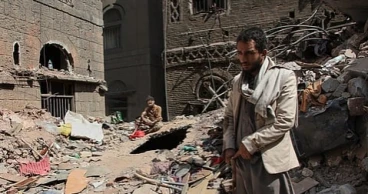
Israeli airstrikes in Yemen damage homes, leave families struggling in Sanaa
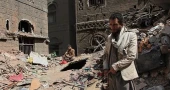
Israeli airstrikes targeting Iran-backed Houthi rebels in Yemen have severely damaged residential areas in the capital, Sanaa, leaving families living amid ruins with little hope of assistance from local authorities.
According to the Houthi-run health ministry, Wednesday’s strikes killed 46 people, including 11 women and five children, and injured 165 others. Eleven journalists were also among the dead. Most casualties were reported in Sanaa, where dozens of homes in central neighborhoods, including Tahrir, sustained extensive damage.
The strikes followed a Houthi-launched drone attack on a southern Israeli airport, which breached Israel’s air defenses and injured one person. Houthi officials also reported damage to a military headquarters, a fuel station in Sanaa, a government facility in Hazm, and Yemen’s National Museum. Footage from Sanaa showed shattered walls, debris, and destroyed interiors in residential buildings.
Residents told UNB that they cannot afford repairs and have received no assistance from authorities. Um Talal, a mother of two sons and a daughter, described her damaged home, saying, “Everything was lost in the blink of an eye. Authorities haven’t even called us to this day.” Despite the destruction, she said the family plans to rebuild what they can and continue living there.
Shopkeeper Khaled al-Dabeai said the blasts terrified residents, causing widespread panic, and knocked products off store shelves. Another resident, Ahmed al-Wasabi, said his family narrowly escaped when part of their house was destroyed.
Israel has repeatedly launched airstrikes in response to Houthi missile and drone attacks, which the rebels say are acts of solidarity with Palestinians amid the ongoing Gaza conflict. Houthi leader Mahdi al-Mashat vowed to continue attacks, warning Israelis to “stay alarmed since the response is coming for sure.”
The strikes highlight the ongoing human cost of Yemen’s civil war, exacerbating the plight of civilians already struggling amid years of conflict and economic hardship.
8 months ago
Widening Protests Challenge Serbia’s Populist President Vucic
Serbia is facing its most intense wave of protests in decades as demonstrators challenge President Aleksandar Vucic’s decade-long populist rule, raising concerns over political stability and human rights.
The unrest began after a deadly canopy collapse at Novi Sad railway station on Nov. 1, 2024, which killed at least 16 people, highlighting alleged state negligence and corruption. Initially led by university students, the protests have expanded nationwide, drawing citizens frustrated with rising living costs and government impunity. Demonstrators are demanding accountability, transparency, and early elections.
Authorities have responded with escalating force, deploying riot police, plainclothes officers, and parapolice units reportedly led by pro-Vucic soccer hooligans. Protesters have faced beatings, arbitrary arrests, and the use of tear gas, stun grenades, and sonic devices, prompting condemnation from human rights groups. In turn, demonstrators have staged sit-ins, occupied university halls, and blocked major roads, sustaining a cycle of confrontation.
Vucic, who rose to power from his nationalist beginnings under former strongman Slobodan Milosevic, has dismissed protesters as “terrorists” backed by Western powers. While offering dialogue, he has refused to call early elections and has replaced over 100 teachers and university staff with loyalists.
8 months ago
Anti-Israel protests turn Spanish Vuelta cycling race into diplomatic flashpoint
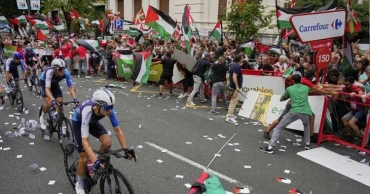
Protests against Israel’s military campaign in Gaza have disrupted Spain’s Vuelta cycling race, drawing international attention and sparking a diplomatic dispute between Madrid and Tel Aviv.
Hundreds of demonstrators, waving Palestinian flags, gathered along the race route, including in Rosana Prieto’s small village in northwestern Spain, aiming to broadcast their message to global television audiences. During one incident, a protester’s proximity to the cyclists caused a crash, though no riders from the Israeli-owned team, Israel Premier Tech, were injured. Over the past 10 days, five stages have been interrupted or shortened, and more than 20 protesters detained.
Spain’s government has tacitly endorsed the demonstrations. Prime Minister Pedro Sánchez has condemned Israel’s actions in Gaza as “genocide,” while Foreign Minister José Manuel Albares supports expelling the Israeli team from the race. Government spokesperson Pilar Alegría, who also oversees sports, said neutrality was impossible in the face of widespread death and destruction.
The protests have heightened tensions with Israel. Prime Minister Benjamin Netanyahu criticized the Spanish measures as “antisemitic” and a “blatant genocidal threat.” Meanwhile, Spanish activists are sending humanitarian aid by ship to Gaza, aiming to breach Israel’s naval blockade.
The unrest has affected riders and teams. Cyclists voted to quit if safety risks persisted, though Israel Premier Tech has continued competing while removing its team name from uniforms to reduce attention. Some riders reported threats from protesters, including flagpole strikes and tacks on the course.
Political analysts say the Vuelta protests reflect growing public anger over Spain’s stance on Gaza, with Sánchez leveraging grassroots movements to strengthen Spain’s opposition to Israel. Authorities plan a heavy security presence, including 1,500 police officers, for the race’s final stage in Madrid this Sunday.
8 months ago
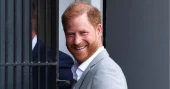
Prince Harry makes surprise visit to Ukraine in support of wounded troops
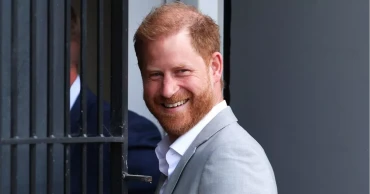
Britain’s Prince Harry has made an unannounced visit to Ukraine to express solidarity with wounded service members amid Russia’s ongoing full-scale invasion.
Harry’s representatives confirmed his arrival in Kyiv on Friday but withheld details of his schedule citing security concerns. It marks his second trip to Ukraine since 2022, following an earlier visit to Lviv in April.
“We cannot stop the war but what we can do is do everything we can to help the recovery process,” Harry told the Guardian while traveling by train to the capital.
A veteran of the British Army who served in Afghanistan, Harry is the founder of the Invictus Games — a Paralympic-style competition for injured veterans worldwide. Ukraine is currently bidding to host the games in 2029.
Earlier this week, the Archewell Foundation — established by Harry and his wife Meghan — announced a $500,000 donation to projects supporting injured children in Gaza and Ukraine. The funds will go to the World Health Organization for medical evacuations and to develop prosthetics for severely wounded youth.
According to the Guardian, Harry will meet Ukrainian Prime Minister Yulia Svyrydenko, spend time with around 200 veterans, and visit the National Museum of the History of Ukraine in the Second World War.
His trip coincides with British Foreign Secretary Yvette Cooper’s visit to Kyiv, where she unveiled new U.K. sanctions targeting Russia’s oil revenues and military supplies.
Harry’s appearance in Ukraine follows a four-day stay in the U.K., where he met his father, King Charles III, for the first time in 19 months — a move seen as a step toward mending strained royal ties.
The visit comes less than a week after Russia launched its largest aerial assault on Ukraine since the 2022 invasion.
8 months ago
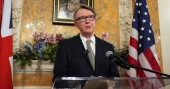
Starmer sacks UK ambassador to US over Epstein links
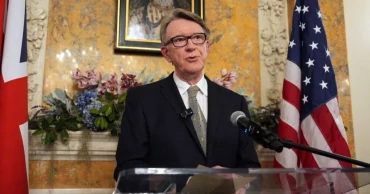
British Prime Minister Keir Starmer on Thursday dismissed the UK’s ambassador to the United States, Peter Mandelson, following revelations of his close ties with convicted pedophile Jeffrey Epstein.
The move came after the publication of a series of emails Mandelson sent to Epstein, Foreign Office Minister Stephen Doughty told Parliament.
“In light of the additional information in emails written by Peter Mandelson, the prime minister has asked the foreign secretary to withdraw him as ambassador,” the Foreign Office said in a statement.
It added that the emails demonstrated Mandelson’s relationship with Epstein was “materially different from that known at the time of his appointment.”
On Wednesday, The Sun newspaper published emails in which Mandelson urged Epstein to “fight for early release” shortly before the disgraced financier was sentenced to 18 months in prison in 2008 for soliciting prostitution from a minor.
In one message, Mandelson told Epstein, “I think the world of you,” ahead of his sentence in June 2008.
The disclosures followed the release by Democrats on the US House Oversight Committee of a 50th birthday album compiled for Epstein in 2003, when he was still a wealthy and influential figure. In a handwritten note in the album, Mandelson referred to Epstein as “my best pal.”
8 months ago
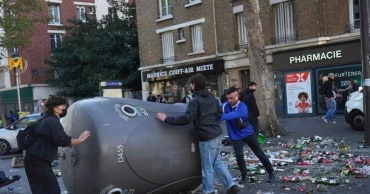
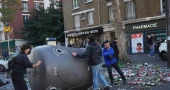
French police detain 250 as protests flare during Macron’s new PM’s first day
Protesters blocked roads, set fires and clashed with police in Paris and other French cities on Wednesday, piling pressure on President Emmanuel Macron and testing new Prime Minister Sébastien Lecornu on his first day in office.
France’s Interior Ministry said 250 people were arrested in the early hours of the nationwide demonstrations, called against budget cuts and other grievances.
Despite a massive deployment of 80,000 police, protesters created widespread disruptions. In Rennes, a bus was torched, while fire damage to electrical cables in the southwest halted one train line and disrupted another, authorities said.
The “Block Everything” movement, which spread online over the summer, urged citizens to strike, march and obstruct traffic. Although the call fell short of completely shutting down the country, protests spread from Marseille in the south to Lille and Caen in the north, and from Nantes and Rennes in the west to Lyon and Grenoble in the southeast.
Paris police reported 159 arrests by noon, with protesters attempting to block the city’s beltway and hurling objects at officers. Nearly 100 others were detained in other regions.
The unrest comes after the collapse of Macron’s previous government on Monday, when then-Prime Minister François Bayrou lost a parliamentary confidence vote. Lecornu, sworn in Tuesday, now faces a turbulent political climate marked by growing anger over spending cuts.
Protesters said they were defending public services against privatization and accused Macron’s government of ignoring ordinary people’s struggles. Some warned the anger could grow into a wider social movement, recalling the “Yellow Vest” protests of 2018–2019.
Interior Minister Bruno Retailleau accused far-left groups of hijacking the demonstrations and seeking violent confrontations with police. He said small organized groups dressed in black were responsible for much of the unrest.
Macron’s minority government has faced repeated waves of protests in recent years — from pension reform anger in 2022 to riots in 2023 following a police shooting of a teenager. The latest unrest signals further instability for Lecornu’s new government.
8 months ago