europe
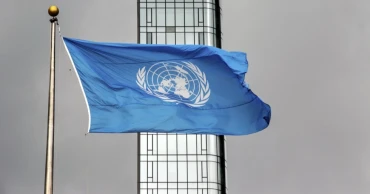
France, UK, Germany to restore UN sanctions on Iran by August
The United Kingdom, France, and Germany have agreed to reimpose tough United Nations sanctions on Iran by the end of August if no tangible progress is made on reviving a nuclear deal, according to two European diplomats.
Ambassadors from the three countries met at Germany’s U.N. Mission on Tuesday to discuss the matter. The issue was also raised in a phone call Monday between U.S. Secretary of State Marco Rubio and the foreign ministers of the three European nations, U.S. officials said.
Following the call, the State Department said the parties discussed “ensuring Iran does not develop or obtain a nuclear weapon.”
The U.K., France, and Germany are parties to the 2015 nuclear agreement with Iran. The deal, from which U.S. President Donald Trump withdrew during his first term, offered sanctions relief in return for restrictions and monitoring of Iran’s nuclear program. The deal includes a “snapback” provision allowing the reimposition of U.N. sanctions if Iran fails to comply.
UN rapporteur urges global action to stop ‘Genocide’ in Gaza
French Foreign Minister Jean-Noel Barrot told reporters in Brussels that the three nations would be justified in reapplying sanctions. “Without a firm, tangible, and verifiable commitment from Iran, we will do so by the end of August at the latest,” he said, according to Reuters.
Iranian Foreign Minister Abbas Araghchi said Tehran would resume nuclear talks if there were guarantees against future attacks on its nuclear sites, citing Israeli and U.S. strikes. President Masoud Pezeshkian said recent U.S. airstrikes severely damaged facilities, leading Iran to suspend cooperation with the IAEA.
Iran’s U.N. Mission declined to comment.
10 months ago
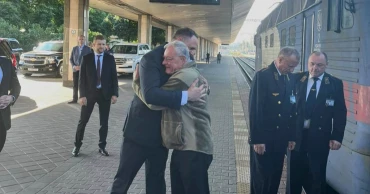
Trump envoy visits Kyiv as US pledges Patriot missiles to Ukraine
U.S. President Donald Trump’s special envoy for Ukraine and Russia, retired Lt. Gen. Keith Kellogg, arrived in Kyiv on Monday, a senior Ukrainian official confirmed, amid growing anticipation of a potential shift in Washington’s approach to the war.
Trump recently promised a “major statement” on Russia, expressing frustration with President Vladimir Putin’s continued attacks. Though Trump once praised Putin as a willing negotiator, he has since condemned Moscow’s intensifying strikes on civilians.
“I am very disappointed with President Putin, I thought he was somebody that meant what he said," Trump said Sunday. "He’ll talk so beautifully and then he’ll bomb people at night. We don’t like that.”
Trump also confirmed the U.S. is sending Patriot air defense missiles to Ukraine, with the European Union covering the cost. However, the EU cannot directly purchase weapons under its treaties, so member countries are funding them through the European Peace Facility.
Russian drone and missile attacks kill at least 2 in Ukraine
Ukraine continues to face relentless Russian drone and missile strikes, with June recording the highest civilian casualties in three years—232 killed and 1,343 injured, according to the UN.
Republican Senator Lindsey Graham said the war is reaching an “inflection point” as Trump shows renewed commitment. “One of the biggest miscalculations Putin has made is to play Trump,” Graham said.
Talks in Kyiv will focus on defense, weapons, and cooperation, said Andrii Yermak, head of Ukraine’s presidential office.
Meanwhile, NATO Secretary-General Mark Rutte is set to meet Trump and top U.S. officials in Washington.
Russia launched fresh strikes early Monday, killing two in Sumy region, while Ukraine intercepted dozens of drones overnight.
10 months ago

Hungary's oldest library battles beetle infestation threatening 100,000 historic books
One of Hungary’s most historic institutions is racing against time to protect its priceless collection of books from a destructive beetle infestation.
At the 1,000-year-old Pannonhalma Archabbey — a UNESCO World Heritage site and one of Hungary’s oldest centers of learning — around 100,000 centuries-old, handbound books are being removed from the library shelves. The goal is to halt the spread of the drugstore beetle, a tiny insect known to feed not only on dried foods but also on the gelatin and starch adhesives used in bookbinding.
The infestation, discovered during routine cleaning, has affected nearly a quarter of the abbey’s 400,000 volumes. Library staff found layers of dust and boreholes in book spines and pages — telltale signs of beetle damage. “We’ve never seen an infestation of this scale,” said Zsófia Edit Hajdu, the project’s lead conservator. “The entire collection must be treated simultaneously.”
The library holds an irreplaceable trove of treasures: Hungary’s first book catalog, a complete 13th-century Bible, 19 codices, and hundreds of pre-printing press manuscripts. While the most fragile items are stored separately and remain safe, any loss is deeply felt. “Even if a book is replaceable, its cultural essence is not,” said library director Ilona Ásványi.
Pope Leo XIV celebrates mass at church tied to his Augustinian roots
To combat the insects, the books are being placed in sealed, oxygen-free bags filled with nitrogen for six weeks, a method designed to kill the beetles. Each book will then be inspected, cleaned, and, if necessary, restored.
Abbey officials suspect that rising temperatures linked to climate change may have worsened the infestation. “Insects are thriving in warmer climates, and this allows them to reproduce faster,” said Hajdu.
For the monks and librarians at Pannonhalma, preserving the collection is more than a duty — it’s a sacred obligation. “According to the Rule of Saint Benedict, monastery property is to be treated as sacred,” Ásványi said. “We take that responsibility seriously.”
10 months ago
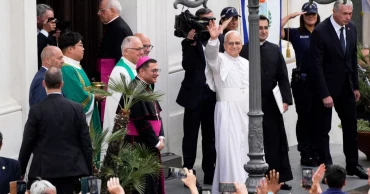
Pope Leo XIV celebrates mass at church tied to his Augustinian roots
Pope Leo XIV on Sunday called for “merciful compassion” toward the world’s poor and victims of tyranny and war as he celebrated Mass at St. Thomas of Villanova church in Castel Gandolfo, which holds special spiritual significance for his Augustinian religious order.
While on summer vacation at the papal estate south of Rome, Leo resumed the tradition of papal visits to Castel Gandolfo and marked the occasion with a Mass at the local parish.
St. Thomas of Villanova, a 16th-century Spanish Augustinian friar, educator, and regional superior of the order, is also the patron saint of Villanova University near Philadelphia—Leo’s alma mater. Known for his commitment to the poor, Thomas gave away his wealth to those in need.
In his homily, Pope Leo reflected on the parable of the Good Samaritan, urging Catholics to embrace empathy and to act “with the same merciful compassion as God.”
Danish military using robotic sailboats for surveillance in Baltic and North seas
“How we look at others is what counts, because it shows what is in our hearts,” he said. “We can look and walk by, or we can look and be moved with compassion.”
He emphasized this in the context of those “stripped, robbed and pillaged, victims of tyrannical political systems, of an economy that forces them into poverty, and of wars that kill their dreams and their very lives.”
From the beginning of his papacy, Leo has identified strongly as an Augustinian and regularly incorporates the teachings of St. Augustine into his addresses.
Rev. Tadeusz Rozmus, the parish priest, said Leo’s return “filled the town with joy,” and highlighted the pope’s spiritual connection to St. Thomas of Villanova.
10 months ago
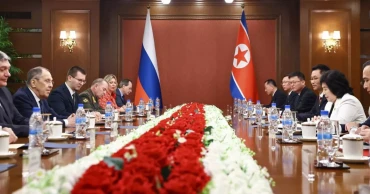
Russia warns US, South Korea and Japan against forming security alliance targeting North Korea
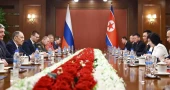
Russian Foreign Minister Sergey Lavrov on Saturday cautioned the United States, South Korea, and Japan against forming a security alliance targeting North Korea, as he wrapped up a visit aimed at strengthening Russia’s growing military and diplomatic ties with Pyongyang.
Lavrov arrived in North Korea’s eastern city of Wonsan on Friday to meet with his North Korean counterpart Choe Son Hui.
The two officials held talks on deepening cooperation between the two countries, which have seen increasingly close relations amid shared opposition to Western influence.
North Korea has reportedly been supplying Russia with ammunition and even troops to support its war in Ukraine. In return, Pyongyang is believed to be receiving military and economic assistance from Moscow—a partnership that has sparked concern in Washington, Seoul, and Tokyo, particularly over the potential transfer of sensitive technology that could boost North Korea’s nuclear and missile capabilities.
Speaking after his meeting with Choe, Lavrov condemned what he called the growing military buildup by the U.S., South Korea, and Japan near North Korea.
"We warn against turning these partnerships into alliances directed against anyone—be it North Korea or Russia,” Lavrov said, according to Russian state-run news agency Tass.
The warning comes amid intensifying trilateral military cooperation among the U.S., South Korea, and Japan, which held joint air drills on Friday involving U.S. nuclear-capable bombers near the Korean Peninsula.
Top military officials from the three nations also met in Seoul, urging North Korea to stop its destabilizing activities and ongoing weapons development.
North Korea routinely condemns such military exercises as rehearsals for invasion, claiming that its nuclear weapons program is a necessary deterrent against U.S. hostility.
Lavrov voiced support for North Korea’s stance, saying the country’s nuclear program is the product of its own scientific development and reflects legitimate security concerns. “We understand why North Korea is pursuing nuclear capabilities and respect its right to self-defense,” he said.
During their talks, Choe reiterated North Korea’s unwavering support for Russia’s war in Ukraine, calling the bilateral relationship an “invincible alliance.”
Lavrov expressed appreciation for what he described as North Korea’s contribution to Russia’s defense efforts, including the deployment of troops to counter a Ukrainian incursion in the Kursk border region.
Lavrov also praised North Korea’s new Wonsan-Kalma coastal resort, where the meeting was held, and promoted the idea of boosting tourism between the two nations.
“We believe Russian tourists will be increasingly interested in visiting here, and we will work to support that—especially through air travel,” Lavrov said.
The Wonsan-Kalma zone is part of North Korean leader Kim Jong Un’s strategy to develop tourism as a way to revitalize the country’s struggling economy.
However, North Korea’s strict border controls and limited engagement with Western countries continue to hinder the sector’s prospects.
10 months ago
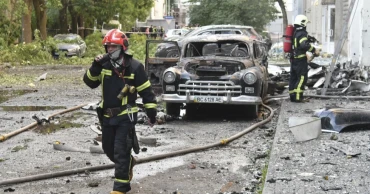
Russian drone and missile attacks kill at least 2 in Ukraine
At least two people were killed and several others injured as Russia launched a massive overnight drone and missile assault on Ukraine, continuing a heightened campaign of aerial attacks that has further diminished hopes for ending the war now in its fourth year.
In the southwestern Chernivtsi region, two people died and 14 were injured when Russian forces struck the Bukovina area with four drones and a missile, according to regional Governor Ruslan Zaparaniuk. The fatalities reportedly occurred due to falling debris from a downed drone.
Elsewhere, six people were wounded in a drone strike on Ukraine’s western Lviv region, Governor Maksym Kozytskyi confirmed. In the northeastern city of Kharkiv, eight drones and two missiles struck overnight, leaving three people injured, said Mayor Ihor Terekhov.
Ukraine’s air force reported that Russia launched a total of 597 drones and decoys, along with 26 cruise missiles, during the attack. Of these, Ukrainian defenses managed to shoot down 319 drones and 25 cruise missiles, while 258 decoy drones were likely neutralized through electronic jamming.
The overnight barrage follows a series of record-setting drone attacks in recent weeks. Earlier this week, Russia fired over 700 drones and decoys in a single night, targeting Lutsk near the Polish border—an area critical for receiving foreign military supplies. In response to the escalation, Poland’s air force scrambled fighter jets near its border with Ukraine.
US selling weapons to NATO allies for Ukraine support
Russia's intensified long-range strikes appear to be part of a broader strategy aimed at overwhelming Ukraine's defenses, coinciding with renewed Russian efforts to break through positions along the 1,000-kilometer (620-mile) front line.
Meanwhile, Russia’s Defense Ministry claimed to have shot down 33 Ukrainian drones overnight.
10 months ago

US selling weapons to NATO allies for Ukraine support
President Donald Trump has confirmed that the United States is selling weapons to NATO allies, who are then supplying them to Ukraine as it faces intensifying Russian missile and drone attacks.
“We’re sending weapons to NATO, and NATO is paying for those weapons, 100%,” Trump told NBC on Thursday. “The weapons that are going out are going to NATO, and then NATO is going to be giving those weapons (to Ukraine), and NATO is paying for those weapons."
Secretary of State Marco Rubio, speaking from Kuala Lumpur on Friday, explained that deploying existing U.S.-made weapons from NATO allies in Europe is faster than sending them directly from U.S. factories. “It’s a lot faster to move something, for example, from Germany to Ukraine,” he said.
Ukraine urgently needs more U.S.-made Patriot air defense systems. President Volodymyr Zelenskyy said Thursday that Ukraine is seeking 10 additional Patriot systems. Germany has pledged two, and Norway one.
Russia launches record drone attack on Ukraine
Meanwhile, Russia launched a drone attack on Kharkiv early Friday, injuring nine and damaging a maternity hospital. Another drone strike in Odesa also injured nine. “There is no silence in Ukraine,” Zelenskyy said.
In response, Kyiv is launching the “Clear Sky” project—an interceptor drone system with a $6.2 million investment to counter Russian Shahed drones.
Zelenskyy said his recent talks with Trump have been “very constructive,” as Ukraine pushes its allies to speed up promised military support.
10 months ago
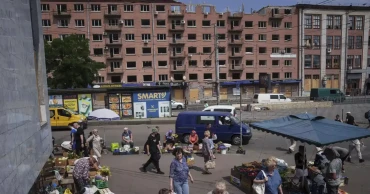
Russian drone strike hits Kharkiv, damages maternity hospital
A wave of Russian drone attacks struck central Kharkiv on Friday, injuring nine people and damaging a maternity hospital, according to Ukrainian officials.
Kharkiv Mayor Ihor Terekhov said mothers and their newborns were being relocated to another facility. He did not confirm whether anyone in the hospital was among the injured.
The assault comes amid a surge in Russia’s use of long-range Shahed drones, often combined with missiles and powerful glide bombs, prompting renewed calls to strengthen Ukraine’s air defenses as the war drags on into its third year.
“There is no silence in Ukraine,” President Volodymyr Zelenskyy said in response to the attack, noting that Kyiv and several other regions have faced an uptick in drone strikes in recent weeks.
The U.N. human rights mission in Ukraine reported that June saw the highest number of civilian casualties in the past three years—232 people killed and 1,343 injured. Russia reportedly launched 10 times more drones and missiles last month compared to June 2024.
Russia launches record drone attack on Ukraine
Meanwhile, fierce fighting continues along the roughly 1,000-kilometer front line, where thousands of troops on both sides have been killed since Russia's full-scale invasion began in February 2022.
Zelenskyy urged Western allies to follow through on military support commitments made during a summit in Rome on Thursday. He specifically appealed for more U.S.-made Patriot air defense systems and interceptor drones to defend against the growing Shahed drone threat. According to reports, Russia aims to ramp up drone production to 1,000 units per day.
Zelenskyy described recent discussions with U.S. President Donald Trump as “very constructive,” though U.S. policy on further military aid remains unclear. He also signaled a possible diplomatic reshuffle, indicating that Defense Minister Rustem Umerov may replace Oksana Markarova as Ukraine's ambassador to Washington.
Ukraine has requested 10 additional Patriot systems. Zelenskyy noted that Germany has agreed to purchase two and Norway one, all of which are expected to be transferred to Ukraine.
Speaking to NBC, Trump said the U.S. is supplying weapons to NATO allies, who are in turn providing them to Ukraine. However, he did not confirm whether Patriot systems were part of the deal. Trump added that he would make “a major statement” on Russia next Monday, though he offered no details. Zelenskyy continues to call for tougher sanctions on Moscow.
In the U.S., a bipartisan sanctions bill is gaining momentum in the Senate. Spearheaded by Republican Sen. Lindsey Graham and Democrat Sen. Richard Blumenthal, the proposal would impose a 500% tariff on imports from countries that continue buying Russian energy exports, such as China and India.
In response to repeated aerial attacks on Kyiv, Ukrainian authorities announced the launch of a new initiative called “Clear Sky,” aimed at boosting drone defense capabilities.
The project, with a budget of 260 million hryvnias (around $6.2 million), includes investments in interceptor drones, mobile response units, and operator training.
Zelenskyy emphasized the need for international support to scale up production of these domestically developed interceptor drones. “Our scientists and engineers have found a solution,” he said. “Now we need financing. Then we will intercept.”
10 months ago
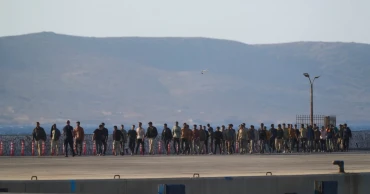
Hundreds of Libya-bound migrants shifted from Crete to mainland Greece
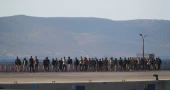
More than 500 migrants were brought to the mainland port of Lavrio, near Athens, on Thursday after being intercepted south of Crete, as Greek authorities move to tackle a sharp rise in Mediterranean crossings originating from Libya.
The group, mainly composed of young men, had been traveling on a fishing trawler that was stopped by Greek officials. They were transferred overnight to a bulk carrier and later brought ashore with the assistance of service vessels.
Kenya's president says 'enough is enough' and vows to end anti-government protests
The migrants are now being sent to detention facilities near the capital.
Officials ordered the transfer to the mainland as reception centers on Crete have reached full capacity. The island has seen a daily influx of around 500 new arrivals since the weekend.
On Wednesday, Prime Minister Kyriakos Mitsotakis announced a three-month suspension of asylum procedures for migrants arriving by sea from North Africa. The decision—focused on Crete—comes amid growing diplomatic tensions between the European Union and Libya over migration cooperation.
Earlier this week, EU delegates were turned away from eastern Libya due to a disagreement over the format of planned discussions on stemming migrant flows.
Authorities on Crete are struggling to cope with the escalating situation, relying on temporary facilities to shelter migrants, most of whom are reportedly from Somalia, Sudan, Egypt, and Morocco.
10 months ago
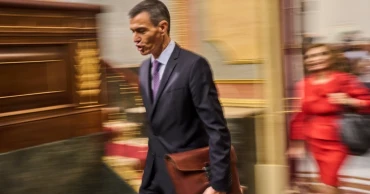
Spain's PM announces anti-graft measures as corruption inquiries ensnare his party
Spanish Prime Minister Pedro Sánchez presented anti-corruption measures in response to the mounting corruption cases involving his Socialist Party, and again said he would not step down from office.
Speaking in parliament Wednesday at an extraordinary session about a corruption probe involving a former Socialist Party official, the Spanish leader took responsibility for his poor judgement but repeatedly said he would not step down, calling himself “an honest politician” with “the pride of leading an exemplary party.”
“I will not throw in the towel,” Sánchez said.
The left-wing Spanish leader spoke about a week after a Supreme Court judge ordered the pretrial detention of Santos Cerdán, a former aide to the prime minister and previously the third-most senior member of the Socialist Party, over allegations that he received kickbacks for public works contracts.
On Wednesday, Sánchez presented 15 anti-corruption measures, including bringing more transparency to political and public financing, and working with the Organization for Economic Co-operation and Development to crack down on graft. Other measures involved blacklisting companies found guilty of corruption, using artificial intelligence to oversee public procurement contracts, and sanctioning political parties involved in graft.
The move immediately drew ridicule from opposition leader Alberto Núñez Feijóo, leader of the conservative People’s Party, who urged Sánchez to take responsibility for his party’s actions, report what he knew and call early elections.
Malaysian PM warns Southeast Asia that trade war is not ‘passing storm’
“It’s not that it’s the only decent way out,” Feijóo said, “but you have no alternative.”
A former Sánchez minister is also ensnared in the corruption investigation involving Cerdán, who has denied the allegations. Facing separate corruption or misconduct probes are the prime minister's former attorney general, brother and wife, all of whom have denied wrongdoing. Sánchez himself has not been accused in any of the cases.
Over the weekend, an official that Sánchez had just promoted as part of his Socialist Party’s shake-up resigned over sexual misconduct allegations.
The Spanish leader has been in power since 2018 and leads a minority coalition government with leftwing allies. His government has been unable to pass legislation and in recent weeks, its future has looked increasingly uncertain amid the corruption probes.
10 months ago