europe
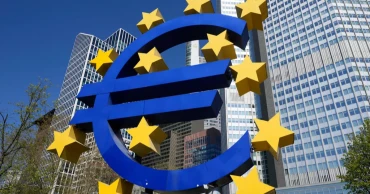
Eurozone inflation falls to 1.9% as US tariff fears grow
Inflation in the 20 countries that use the euro fell to 1.9 per cent in May from 2.2 per cent in April, clearing the way for more rate cuts from the European Central Bank to support growth in the face of US President Donald Trump's tariff offensive.
Lower energy prices helped bring consumer prices in May to below the ECB's 2 per cent target for the first time since September. Increasing signs that inflation is back under control after a painful outbreak in 2021-23 leaves room for the ECB to turn its attention to worries about the impact of a slew of new import taxes on EU goods in the US that threaten to slow Europe's export-oriented economy.
Reductions in the ECB's benchmark rate, currently at 2.25 per cent, lower borrowing costs throughout the economy, making it easier to buy things on credit and stimulating economic activity and investment. Higher rates combat inflation, but for the moment that battle appears to have been won.
Asian markets rise as US stock indexes near records amid easing trade tensions
The ECB's rate-setting council meets on Thursday under bank President Christine Lagarde to determine the next step on rates. Analysts expect a cut of a quarter percentage point and for Lagarde to indicate that at least one more cut is possible at future meetings.
Trump has raised tariffs on steel, aluminium and autos from almost all trading partners to 25 per cent, and has now said he will raise the rate to 50 per cent on steel, as well as proposing a 20 per cent tariff on all European Union goods.
That last tariff has been paused ahead of a July 14 deadline pending negotiations with EU officials.
Worries about the impact of tariffs on growth led the European Union's executive commission to cut its growth forecast for the 20 euro member countries this year to 0.9 per cent from 1.3 per cent in its fall 2024 forecast.
1 year ago
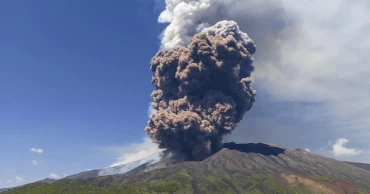
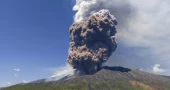
Sicily's Mount Etna erupts with columns of smoke and ash
Sicily’s Mount Etna put on a fiery show Monday, sending a cloud of smoke and ash several kilometers (miles) into the air, but officials said the activity posed no danger to the population.
The level of alert due to the volcanic activity was raised at the Catania airport, but no immediate interruptions were reported. An official update declared the ash cloud emission had ended by the afternoon.
Guatemala's volcano erupts, prompting evacuations
Italy’s INGV National Institute of Geophysics and Volcanology said the spectacle on Europe’s most active volcano was caused when part of the southeast crater collapsed, resulting in hot lava flows. It was the 14th eruptive phase in recent months.
The area of danger was confined to the summit of Etna, which was closed to tourists as a precaution, according to Stefano Branca, an INGV official in Catania.
Sicily’s president, Renato Schifani, said lava flows emitted in the eruption had not passed the natural containment area “and posed no danger to the population.”
Volcano erupts in southwestern Iceland after a nearby town and spa are evacuated
The event was captured in video and photos that went viral on social media. Tremors from the eruption were widely felt in the towns and villages on Mount Etna's flanks, Italian media reported.
The video showed tourists running along a path on the flank of the vast volcano with smoke billowing some distance in the background. Excursions are popular on Etna, which is some 3,300 meters (nearly 11,000 feet) high, with a surface area of some 1,200 square kilometers (about 460 square miles).
1 year ago

Explosions caused 2 bridges in western Russia to collapse, 7 people were killed, officials say
Explosions caused two bridges to collapse and derailed two trains in western Russia overnight, officials said Sunday, without saying what had caused the blasts. In one of the incidents, seven people were killed and dozens were injured.
The first bridge, in the Bryansk region on the border with Ukraine, collapsed on top of a passenger train on Saturday, causing the casualties. The train's driver was among those killed, state-run Russian Railways said.
Hours later, officials said a second train derailed when the bridge beneath it collapsed in the nearby Kursk region, which also borders Ukraine.
Explosion at Iranian Port tied to missile fuel kills 25, injures 800
In that collapse, a freight train was thrown off its rails onto the road below as the explosion collapsed the bridge, local acting Gov. Alexander Khinshtein said Sunday. The crash sparked a fire, but there were no casualties, he said.
Russia’s Investigative Committee, the country’s top criminal investigation agency, said in a statement that explosions had caused the two bridges to collapse, but did not give further details. Several hours later, it edited the statement, which was posted on social media, to remove the words “explosions” but did not provide an explanation.
The committee said that it would be investigating the incidents as potential acts of terrorism.
Rescue workers cleared debris from both sites, while some of those injured were transported to Moscow for treatment. Photos posted by government agencies in Bryansk appeared to show train carriages ripped apart and lying amid fallen concrete from the collapsed bridge. Other footage on social media was apparently taken from inside vehicles on the road that had managed to avoid driving onto the bridge before it collapsed.
Bryansk regional Gov. Alexander Bogomaz announced three days of mourning for the victims, starting Monday.
Damage to railway tracks was also found Sunday by inspectors working on the line elsewhere in the Bryansk region, Moscow Railway said in a statement. It did not say whether the damage was linked to the collapsed bridges.
In the past, some officials have accused pro-Ukrainian saboteurs of attacking Russia’s railway infrastructure. The details surrounding such incidents, however, are limited and cannot be independently verified.
Ukraine’s military intelligence, known by the Ukrainian abbreviation GUR, said Sunday that a Russian military freight train carrying food and fuel had been blown up on its way to Crimea. It did not claim the attack was carried out by GUR or mention the bridge collapses.
Russia and Ukraine swap hundreds more prisoners hours after a massive attack on Kyiv
The statement said Moscow's key artery with the Russian-occupied Zaporizhzhia region and Crimea has been destroyed.
Russia forces have been pushing into the region of Zaporizhzhia in eastern Ukraine since Moscow's full-scale invasion in February 2022. Russia took Crimea and annexed it in 2014.
1 year ago
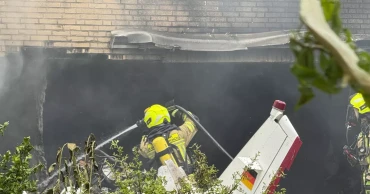
A small plane crashes into the terrace of a house in Germany, 2 people are dead
A small plane crashed into the terrace of a residential building in western Germany on Saturday and two people were killed, police said.
The crash happened in Korschenbroich, near the city of Mönchengladbach and not far from the Dutch border.
Four killed in US military-contracted plane crash in Philippines
The plane hit the terrace of the building and a fire broke out. Police said two people died and one of them was probably the plane's pilot, German news agency dpa reported. It wasn't immediately clear whether the other person had been on the plane or on the ground.
Officials had no immediate information on the cause of the crash.
1 year ago
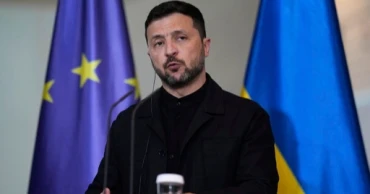
A Russian missile strike kills a child and injures another, a Ukrainian official says
A Russian missile hit a front-line region in Ukraine on Saturday, killing a child and injuring another, a Ukrainian official said as uncertainty remains as to whether Kyiv diplomats will attend a new round of peace talks proposed by Moscow for early next week in Istanbul.
More than 200 Ukrainian POWs have died in Russian prisons
Russian troops launched some 109 drones and five missiles across Ukraine overnight and into Saturday, the Ukrainian air force said. Three of the missiles and 42 drones were destroyed by air defenses, while another 30 drones failed to reach their targets without causing damage, it said.
A 9-old girl was killed in a strike on the front-line village of Dolynka in the Zaporizhzhia region, and a 16-year-old was injured, Zaporizhzhia’s Gov. Ivan Fedorov said.
“One house was destroyed. The shockwave from the blast also damaged several other houses, cars, and outbuildings,” Fedorov wrote on Telegram.
Moscow did not comment on the latest attack.
Meanwhile, 14 people were injured after Ukrainian drones struck apartment buildings on Saturday in the Russian town of Rylsk and the village of Artakovo in the western Kursk region, local acting Gov. Alexander Khinshtein said.
Four children were among those injured in the two attacks, which also sparked several fires, he said.
On Friday, Andrii Yermak, a top adviser to Ukraine's president said Kyiv was ready to resume direct peace talks with Russia in Istanbul on Monday but that the Kremlin should provide a promised memorandum setting out its position on ending the more than three-year war, before the two delegations sit down to negotiate.
Speaking late Friday, Ukrainian President Volodymyr Zelenskyy said that Russia was “undermining diplomacy” by withholding the document.
Russia and Ukraine swap hundreds more prisoners hours after a massive attack on Kyiv
“For some reason, the Russians are concealing this document. This is an absolutely bizarre position. There is no clarity about the format,” Zelenskyy wrote on Telegram.
Moscow previously said it would share its memorandum during the talks.
1 year ago
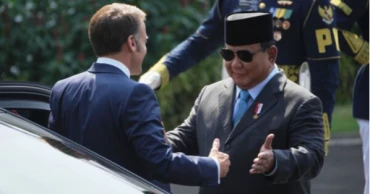
France's Macron presses ahead on his South Asia tour with talks in Indonesia
The French president met with his Indonesian counterpart on Wednesday as Emmanuel Macron continued his week-long trip to Southeast Asia focused on strengthening regional ties in an increasingly unstable global landscape.
Macron and France's first lady Brigitte Macron arrived in Indonesia’s capital, Jakarta, on Tuesday evening for the second stop in his tour after Vietnam, where Macron signed a deal to sell Hanoi 20 Airbus planes.
On arrival, Macron had warm words for Indonesian President Prabowo Subianto, describing him as a brother and “a great friend of mine.”
Military cooperation between Indonesia, Southeast Asia’s largest economy, and France grew in recent years, starting in 2019 when Subianto became defense minister. He and Macron met last November on the sidelines of the G20 summit in Brazil, where they discussed Indonesia’s plans to buy fighter jets and submarines from France.
French President Macron to make state visit to UK in July
Indonesia finalized an order for 42 French Dassault Rafale fighter jets in January 2024, with the first delivery expected in early 2026. The Asian nation also announced the purchase of two French Scorpene Evolved submarines and 13 Thales ground control interception radars.
Five of the radar systems are expected to be installed in Indonesia's new capital, Nusantara.
Indonesian Defense Minister Sjafrie Sjamsoeddin told reporters after welcoming Macron that the visit is aimed at strengthening "defense cooperation between Indonesia and France,”
On Wednesday, Subianto hosted the Macrons in a ceremony at Merdeka Palace in Jakarta before the two leaders went in for a bilateral meeting.
Afterward, the two presidents oversaw the signing of more than a dozen agreements, including a letter of intent for Indonesia to purchase of strategic weapons systems, especially fighter planes and submarines.
The developments "can open a new perspective with new orders for Rafales, Scorpènes, and light frigates, along with consolidated joint exercises,” Macron said at a joint news conference.
Subianto said that France is one of Indonesia’s main partners “in the modernization of defense equipment, including in the development of the defense industry through joint production and technology transfer.”
The two also discussed global issues, particularly the wars in Ukraine and the Middle East.
Indonesia is seeking to upgrade and modernize its arsenal and strengthen its domestic defense industry. Subianto crisscrossed the globe after becoming defense minister, traveling to China, France, Russia, Turkey and the United States in a bid to acquire new military weapon systems as well as surveillance and territorial defense capabilities.
Macron urges Gaza ceasefire during Cairo visit
The Indonesian Air Force currently operates a mix of fighter jets made in various countries, including the United States, Russia and Britain. Some of those aircraft have reached or will soon reach their end-of-life phase and need to be replaced or upgraded.
The two countries also signed agreements on trade, investment, energy, critical minerals and forestry.
Macron was also to meet with ASEAN's Secretary-General Kao Kim Hourn and speak at Jakarta State University.
On Thursday, Macron and his wife are to visit Borobudur, a 9th century Buddhist temple in the center of Indonesia’s Java island, and a military academy before heading to Singapore, where the French leader will speak at Asia’s top defense conference, the annual Shangri-La Dialogue.
1 year ago
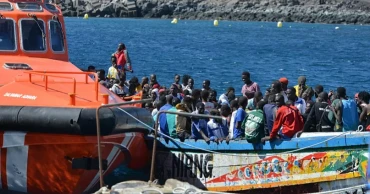
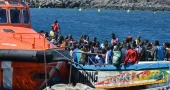
Seven dies when boat carrying migrants capsizes while arriving to Spain's Canary Islands
Spanish emergency services say four women and three girls died when a small boat carrying migrants capsized while arriving to port at one of Spain’s Canary Islands on Wednesday.
Spain's maritime rescue service, which located the boat some 6 miles (9.6 kilmoters) from shore, said the boat tipped over as rescuers started removing minors as it arrived at a dock on the island of El Hierro.
Israeli forces raid West Bank foreign exchange shops; one killed, dozens injured
The movement of people on the boat caused it to tip and then turn over, dumping the occupants into the water, the service said.
Emergency services for the Canary Islands said four women, a teenage girl and two younger girls perished in the accident. One of the girls was found by a rescue diver.
Local media reports said the small boat appeared to be packed with over 100 people. Spanish rescuers and members of the Red Cross pulled people out of the water.
The Spanish archipelago located off Africa’s western coast has for years been a main route for migrants who risk their lives in dinghies and rubber boats unfit for long journeys in the open sea. Thousands have been known to die on the way to European territory.
ASEAN opens summit with Gulf nations and China amid US tariffs threat
Nearly 47,000 people who made the crossing last year reached the archipelago, surpassing previous records for a second time. Most were citizens of Mali, Senegal and Morocco, with many boarding boats to Spain from the coast of Mauritania.
1 year ago
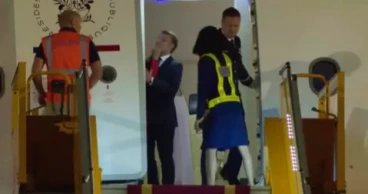
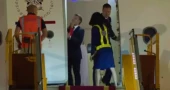
Macron ‘pushed’ by wife on plane; he says they were joking
French President Emmanuel Macron has dismissed speculation around a viral video showing his wife, Brigitte Macron, seemingly pushing him away as they landed in Vietnam, saying the couple was simply joking.
The footage, which quickly gained attention in France, captured the first lady placing both hands on Macron’s face — one over his mouth and nose, the other on his jaw — just as the airplane door opened in Hanoi on Sunday. Macron briefly turned his head, then smiled and waved after noticing the camera.
French media, including Le Parisien, speculated over the exchange, with headlines questioning whether it was a "slap or squabble." Macron addressed the buzz on Monday, saying the moment was exaggerated and taken out of context.
French President Macron to make state visit to UK in July
“We were just joking,” he told reporters. “People are blowing this up as if it’s some global catastrophe.”
The president, who met Brigitte when she was his high school drama teacher, said the couple was sharing a lighthearted moment before beginning their Southeast Asia tour. His office echoed the explanation, calling it a moment of "playful bonding" that conspiracy theorists had seized on.
Brigitte, dressed in red, later descended the airplane stairs beside her husband, opting not to take his offered arm.
Macron also used the incident to highlight how easily misinformation can spread in the digital era, urging the public to “calm down” over the harmless exchange.
1 year ago
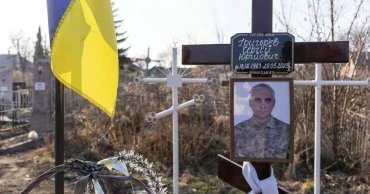
More than 200 Ukrainian POWs have died in Russian prisons
“Everything will be all right.”
Ukrainian soldier Serhii Hryhoriev said this so often during brief phone calls from the front that his wife and two daughters took it to heart. His younger daughter, Oksana, tattooed the phrase on her wrist as a talisman.
Even after Hryhoriev was captured by the Russian army in 2022, his anxious family clung to the belief that he would ultimately be OK. After all, Russia is bound by international law to protect prisoners of war.
When Hryhoriev finally came home, though, it was in a body bag.
A Russian death certificate said the 59-year-old died of a stroke. But a Ukrainian autopsy and a former POW who was detained with him tell a different story about how he died – one of violence and medical neglect at the hands of his captors.
Hryhoriev is one of more than 200 Ukrainian POWs who have died while imprisoned since Russia’s full-scale invasion three years ago. Abuse inside Russian prisons was likely a contributing factor in many of these deaths, according to officials from human rights groups, the U.N., the Ukrainian government and a Ukrainian medical examiner who has performed dozens of POW autopsies.
The officials say the prison death toll adds to evidence that Russia is systematically brutalizing captured soldiers. They say forensic discrepancies like Hryhoriev's, and the repatriation of bodies that are mutilated and decomposed, point to an effort to cover up alleged torture, starvation and poor health care at dozens of prisons and detention centers across Russia and occupied Ukraine.
Russian authorities did not respond to requests for comment. They have previously accused Ukraine of mistreating Russian POWs — allegations the U.N. has partially backed up, though it says Ukraine's violations are far less common and severe than what Russia is accused of.
‘Alive and well’
Hryhoriev joined the Ukrainian army in 2019 after he lost his job as an office worker at a high school. When the war began three years later, he was stationed with other soldiers in Mariupol, an industrial port city that was the site of a fierce battle — and far from his home in the central Poltava region.
On April 10, 2022, Hryhoriev called his family to reassure them that “everything will be all right.” That was the last time they ever spoke to him.
Two days later, a relative of a soldier in Hryhoriev’s unit called to say the men had been captured. After Mariupol fell to Russia, more than 2,000 soldiers defending the city became Russian prisoners.
Soon his family got a call from the International Committee of the Red Cross, which confirmed he was alive and officially registered as a POW, guaranteeing his protection under the Geneva Conventions. “We were told: ‘that means everything is fine … Russia has to return him,’” Hryhoriev’s wife, Halyna, recalled.
In August 2022, she received a letter from him, that addressed her by a nickname. “My dear Halochka,” he wrote. “I am alive and well. Everything will be all right.”
Russia and Ukraine swap hundreds more prisoners hours after a massive attack on Kyiv
Desperate for more information, his daughter Oksana, 31, scoured Russian social media accounts, where videos of Ukrainian POWs regularly appeared. Eventually, she saw him in one — looking gaunt and missing teeth. His gray hair was cropped very short, framing gentle features now partially covered by a beard.
In the video, likely shot under duress, Hryhoriev said to the camera: “I’m alive and well.”
“But if you looked at him, you could see that wasn’t true,” Oksana said.
The truth was dismal, said Oleksii Honcharov, a 48-year-old Ukrainian POW who was detained with him.
Honcharov lived in the same prison barracks as Hryhoriev starting in the fall of 2022. Over a period of months, he witnessed Hryhoriev absorb the same severe punishment as every other POW at the Kamensk-Shakhtinsky Correctional Colony in southwest Russia.
“Everyone got hit -- no exceptions,” said Honcharov, who was repatriated to Ukraine in February as part of a prisoner swap. “Some more, some less, but we all took it.”
Honcharov endured months of chest pain while in captivity. Even then, the beatings never stopped, he said, and sometimes they began after his pleas for medical care, which were ignored.
“Toward the end, I could barely walk,” said Honcharov, who was diagnosed with tuberculosis once back in Ukraine – an increasingly common ailment among returning POWs.
A 2024 U.N. report found that 95% of released Ukrainian POWs had endured “systematic” torture. Prisoners described beatings, electric shocks, suffocation, sexual violence, prolonged stress positions, mock executions, and sleep deprivation.
“This conduct could not be more unlawful,” said Danielle Bell, the U.N.’s top human rights monitor in Ukraine.
The report also said some Russian POWs were mistreated by Ukrainian forces during their initial capture -- including beatings, threats and electric shocks. But the abuse stopped once Russian POWs were moved to official Ukrainian detention centers, the report said.
Hryhoriev was physically strong and often outlasted younger prisoners during forced exercises, Honcharov recalled. But over time, he began showing signs of physical decline: dizziness, fatigue and, eventually, an inability to walk without help.
Yet despite his worsening condition, prison officials provided only minimal health care, Honcharov said.
Piecing together how POWs died
In a bright, sterile room with the sour-sweet smell of human decomposition, Inna Padei performs autopsies on Ukrainian soldiers repatriated by Russia, as well as civilians exhumed from mass graves. Hundreds of bodies zipped up in black plastic bags have been delivered in refrigerated trucks to the morgue where she works in Kyiv, the capital of Ukraine.
Those who died in battle are still wearing military fatigues and often have obvious external wounds. The bodies of former POWs are dressed in prison uniforms and are often mutilated and decomposed.
It is the job of Padei and other forensic experts to piece together how soldiers like Hryhoriev died. These reports are often the only reliable information the soldiers’ families get — and they will be used by Ukraine, along with testimony from former POWs, to bring war crimes charges against Russia at the International Criminal Court.
The body of a former POW recently examined by Padei had an almond-sized fracture on the right side of its skull. That suggested the soldier was struck by a blunt object – a blow potentially strong enough to have killed him instantly, or shortly after, she said.
“These injuries may not always be the direct cause of death,” Padei said, “but they clearly indicate the use of force and torture against the servicemen.”
Earlier this year, Amnesty International documented widespread torture of Ukrainian POWs in Russia. Its report was especially critical of Russia's secrecy regarding the whereabouts and condition of POWs, saying it refused to grant rights groups or health workers access to its prisons, leaving families in the dark for months or years about their loved ones.
Russia launches biggest drone attack on Ukraine since start of war
Of the more than 5,000 POWs Russia has repatriated to Ukraine, at least 206 died in captivity, including more than 50 when an explosion ripped through a Russian-controlled prison barracks, according to the Ukrainian government. An additional 245 Ukrainian POWs were killed by Russian soldiers on the battlefield, according to Ukrainian prosecutors.
The toll of dead POWs is expected to rise as more bodies are returned and identified, but forensic experts face significant challenges in determining causes of death.
In some cases, internal organs are missing. Other times, it appears as if bruises or injuries have been hidden or removed.
Ukrainian officials believe the mutilation of bodies is an effort by Russia to conceal the true causes of death. Extreme decomposition is another obstacle, officials say.
“They hold the bodies until they reach a state where nothing can be determined,” said Petro Yatsenko, a spokesperson for the Ukrainian government agency in charge of POW affairs.
Ukrainian President Volodymyr Zelenskyy has said the prompt exchange of POWs must be part of any ceasefire agreement, along with the return of thousands of Ukrainian civilians, including children forcibly deported to Russia. A major prisoner exchange between Russia and Ukraine took place over the weekend.
The Associated Press interviewed relatives of 21 Ukrainian POWs who died in captivity. Autopsies performed in Ukraine found that five of these POWs died of heart failure, including soldiers who were 22, 39 and 43. Four others died from tuberculosis or pneumonia, and three others perished, respectively, from an infection, asphyxia and a blunt force head wound.
Padei said cases like these — and others she has seen — are red flags, suggesting that physical abuse and untreated injuries and illness likely contributed to many soldiers' deaths.
“Under normal or humane conditions, these would not have been fatal,” Padei said.
In one autopsy report, coroners said an individual had been electrocuted and beaten just days before dying of heart failure and extreme emaciation. Other autopsies noted that bodies showed signs of gangrene or untreated infections.
“Everything the returned prisoners describe … we see the same on the bodies,” Padei said.
‘Angel in the sky’
Months into Hryhoriev’s detention at the Kamensk-Shakhtinsky prison – and after his daughter saw him in the Russian army’s social media video -- his health deteriorated significantly, according to Honcharov.
But instead of being sent to a hospital, Hryhoriev was moved to a tiny cell that was isolated from other prisoners. Another Ukrainian captive, a paramedic, was assigned to stay with him.
“It was damp, cold, with no lighting at all,” recalled Honcharov.
He died in that cell about a month later, Honcharov said. It was May 20, 2023, according to his Russian death certificate.
Trump says he will call Putin, then Zelenskyy, on Monday to push for Ukraine ceasefire
The Hryhoriev family didn't learn he had died until more than six months later, when a former POW reached out. Then, in March 2024, police in central Ukraine called: A body had arrived with a Russian death certificate bearing Hryhoriev’s name. A DNA test confirmed it was him.
An autopsy performed in Ukraine disputed Russia’s claim that Hryhoriev died of a stroke. It said he bled to death after blunt trauma to his abdomen that also damaged his spleen.
Hryhoriev’s body was handed over to the family last June, and soon after he was buried in his hometown of Pyriatyn.
To honor him, Hryhoriev’s wife and older daughter, Yana, followed Oksana's lead and tattooed their wrists with the optimistic expression he had drilled into them.
“Now we have an angel in the sky watching over us,” Halyna said. “We believe everything will be all right.”
1 year ago

Former Austrian Chancellor Sebastian Kurz Cleared of Perjury Charges by Court
A court in Vienna on Monday acquitted former Austrian Chancellor Sebastian Kurz of making false statements during a parliamentary inquiry into alleged corruption in his administration, overturning a previous ruling that had handed him a suspended prison sentence.
According to the Austria Press Agency, judges at Vienna’s upper state court dismissed Kurz’s conviction after a brief appeal hearing.
Austria's new government takes office after a record 5-month wait
The case focused on Kurz’s testimony before a parliamentary inquiry that examined the coalition government he led from 2017 until 2019. During that period, his conservative Austrian People’s Party governed in partnership with the far-right Freedom Party. The coalition ultimately collapsed in 2019.
Prosecutors had accused the 38-year-old of providing false testimony in June 2020 about his involvement in establishing the state holding company OeBAG and the appointment of his former confidant Thomas Schmid as its head. OeBAG is responsible for managing the government's stakes in various companies.
In February 2024, Kurz was convicted of making false statements regarding the appointment of OeBAG’s supervisory board members, although he was cleared of providing misleading information about Schmid’s appointment. He was sentenced to eight months in prison, suspended.
That conviction followed a four-month trial and marked the first time in over three decades that a former Austrian chancellor had faced trial.
Austrian FM Schallenberg appointed as interim govt leader
Reacting to Monday’s acquittal, Kurz told reporters outside the courtroom, “What came out is what I have always said — namely, that I did not tell untruths to the parliamentary inquiry.” He added, “I now have a long time in (legal) proceedings behind me, and to be honest I'd like to set out my position in detail, but I ask for your understanding that I'm going home to family and my two children first.”
However, the court upheld the conviction of Kurz’s former chief of staff, Bernhard Bonelli, who was found guilty of making a false statement to the same inquiry concerning his and Kurz’s roles in selecting OeBAG supervisory board members. Bonelli received a six-month suspended sentence in 2024. Kurz expressed deep regret over the decision on Bonelli.
Once viewed as a rising star among Europe’s conservatives, Kurz resigned in 2021 following a separate corruption investigation and has since withdrawn from politics. His Austrian People’s Party remains in power under Chancellor Christian Stocker, although the party placed second in the September elections.
Kurz, who rose to prominence on an anti-immigration platform, became the People’s Party leader and then chancellor at just 31 years old in 2017. He ended his first government in 2019 after a video scandal involving then–Vice Chancellor and Freedom Party leader Heinz-Christian Strache, who appeared to offer political favors to a supposed Russian investor.
Kurz returned as chancellor in early 2020 in a new coalition with the Greens but stepped down in October 2021. His resignation followed pressure from the Greens after prosecutors named him a target in a second probe involving suspected bribery and breach of trust — allegations that Kurz has consistently denied.
Speculation has occasionally surfaced about the potential for a political comeback by Kurz.
1 year ago