europe

Ukrainian minister says he fears Russia has 'no red lines' to prevent attacks on nuclear plant
The catastrophic collapse of a dam in southern Ukraine has made Kyiv worried that Russia might stage an attack on the Zaporizhzhia nuclear plant to foment panic and quell Ukrainian advances on the frontline, Ukraine’s energy minister said Monday.
Herman Halushchenko said the destruction of the dam while under Russian control in the Kherson region proved “there are no red lines” for Moscow. He said it warrants the level of alarm Ukraine’s leadership has been raising in recent weeks of an alleged Russian ploy to attack the nuclear plant in a possible false flag operation.
Ukrainian President Volodymyr Zelenskyy alleged last week, citing intelligence reports, that Russian troops placed “objects resembling explosives” atop several power units to “simulate” an attack. Drone and satellite images obtained by the Associated Press showed unidentified white objects on the roof of the plant’s fourth power unit, but Ukrainian leaders have so far been unable to provide further evidence.
Read: Russian mercenary leader Prigozhin's commanders met Putin after short-lived mutiny, pledged loyalty
While Russia accuses Ukraine of bombarding the Kakhovka dam, Kyiv blames Moscow for the attack on the dam in late May, which triggered a humanitarian crisis and caused widespread ecological devastation. An AP investigation found that Moscow had the means and motive to carry out the attack.
Halushchenko said he and Zelenskyy had raised alarms as early as October 2022 that the Russians could plant mines to blow up the Kakhovka dam.
“For many many people it sounded ridiculous … and when it happened everybody understood that there are no red lines for them,” he said in a sit-down interview with The Associated Press. “And of course it’s all connected to the counter-offensive operation, and after Kakhovka, the one tool which they still have is Zaporizhzhia.”
Read: EU must act to stop migration at source: Italian PM
The nuclear plant was seized by Russia in March 2022, in the first weeks of the war in Ukraine, raising fears of a nuclear accident. Over the past year, Russia and Ukraine repeatedly accused each other of shelling the plant.
Ukraine’s military intelligence has claimed for weeks, without providing evidence, that Russia is planning a “large-scale provocation” at the nuclear power plant, Europe’s largest, in the southeast of the country.
Around the same time, Ukraine launched the early phase of its much anticipated counter-offensive last month and has reported steady advances along multiple directions of the 1,500 kilometer (930-mile) frontline. An incident at the plant could halt Ukraine's advance, Zelenskyy has said.
Ukrainian military intelligence reports have said that Russia placed mines on the roof of the nuclear plant, and put remote-controlled and regular anti-personnel mines in technical and machine rooms.
Read: Zelenskyy hails Ukraine's soldiers from a symbolic Black Sea island to mark 500 days of war
Image experts the AP spoke to could not identify the objects that have been seen on the roof.
Jeffrey Lewis, a professor at the Middlebury Institute and satellite image expert, said the objects appeared to be placed on the roof of the unit’s turbine hall, and, if it turns out to be a bomb, is unlikely to cause serious damage to the reactor.
The Russians have cited security concerns in granting only limited access to officials from the International Atomic Atomic Energy Agency. The agency’s Director General Rafael Mariano Grossi said recently that the IAEA had recently gained access to more of the site, including the cooling pond and fuel storage areas.
The Ukrainians had said those areas were mined by the Russians, but the IAEA found they were not, Grossi said. The agency has not yet been given access to inspect the roof of the plant.
Haluschenko noted that the IAEA representatives were not able to access the entire site. “So the Russians allowed them to see only what they decided they could see, and that is the problem," he said.
2 years ago

EU must act to stop migration at source: Italian PM
The European Union must take action to stop migration at the source, rather than focusing on sharing out the migrants who get to Europe, Italian Premier Giorgia Meloni said Monday after meeting Latvian Prime Minister Krisjanis Karins in Riga.
"We agreed on the issue of migration," Meloni said after the meeting, on the eve of the NATO summit in Vilnius.
Read: 10 mn Italians to spend on average 227 euro in summer sales
"Latvia has EU external borders (like Italy).
"(It's necessary) to think about primary movements instead of discussing secondary ones. It's easier.
"In order to be addressed in a unanimous way, migration must be managed at the origin.
Read: Italy govt okays legal entry of 452,000 foreign workers in 3 years
"We are diverse nations. Working together to stop illegal immigration, giving equal rights to those who come to live in our countries when the (migrant) flows are managed, is the best way to address this issue".
She said that after the meeting she would visit a camp where 270 Italian troops are working within the framework of the NATO Enhanced Forward Presence mission.
Read: Six die in fire at elderly care home in Milan
"This demonstrates not only the attention that Italy pays to our allies who are on the border, but also how much we believe that, in terms of defence and security, we must be particularly attentive, focused and lucid at this time," she said.
2 years ago

Russian mercenary leader Prigozhin's commanders met Putin after short-lived mutiny, pledged loyalty
July 11 (AP/UNB)--Just five days after staging a short-lived rebellion, mercenary chief Yevgeny Prigozhin 's commanders met with Russian President Vladimir Putin and pledged loyalty to the government, a senior government spokesman said Monday, the latest twist in a baffling episode that has raised questions about the power and influence both men wield.
The three-hour meeting took place June 29 and involved not only Prigozhin but commanders from his Wagner Group military contractor, Kremlin spokesman Dmitry Peskov said. Putin gave an assessment of Wagner’s actions on the battlefield in Ukraine — where the mercenaries have fought alongside Russian troops — and of the revolt itself.
“The commanders themselves presented their version of what happened. They underscored that they are staunch supporters and soldiers of the head of state and the commander-in-chief, and also said that they are ready to continue to fight for their homeland,” Peskov said.
The confirmation that Putin met face-to-face with Prigozhin, who led troops on a march to Moscow last month to demand a military leadership change, was extraordinary. Though the Russian leader branded Prigozhin a traitor as the revolt unfolded and vowed harsh punishment, the criminal case against the mercenary chief on rebellion charges was later dropped.
Read: Belarus says Wagner chief who staged mutiny is in Russia, raising questions about Kremlin's strategy
Prigozhin has not commented on the Kremlin meeting, and his ultimate fate remains unclear, particularly since Monday's announcement shows much is negotiated behind closed doors. He could still face prosecution for financial wrongdoing or other charges.
Monday's announcement came as Russia’s Defense Ministry published a video featuring military chief Gen. Valery Gerasimov — who was one of the targets of Prigozhin's rebellion. It was the first time Gerasimov has been seen since the revolt.
In the video, Gerasimov is seated at a table with his team, watching a video report from the chief of staff of Russia’s aerospace forces about a missile attack on Russian territory on Sunday. Gerasimov responds by calling for preemptive strikes against missile bases and for improvements in missile defenses.
The twin updates appeared to be another attempt by the Kremlin to show it’s in control after a turbulent period, and to reflect Putin's delicate balance between condemning the biggest threat to his 23-year rule and the man behind it while not alienating a popular figure whose troops scored the biggest battlefield victory for Russia in the past year of the war.
Former Putin speechwriter Abbas Gallyamov told The Associated Press that Putin acknowledges Prigozhin’s patriotism and needs his forces on the front line, while Prigozhin needs Putin to ensure his freedom from prosecution. The two are negotiating as allies, with Prigozhin escaping punishment, Gallyamov said.
Prigozhin “emerged victorious from this rebellion,” Gallyamov said in a Zoom interview from Tel Aviv. “He has shown himself to be the master of the situation.”
Adding to the unusual nature of the meeting was that until very recently, Putin had denied any link between the state and Prigozhin’s forces. Mercenaries are illegal in Russia, but Wagner troops have fought for Russian interests around the globe and played a vital role in the capture of Bakhmut in the war’s longest and bloodiest battle. Putin has confirmed that Prigozhin's companies operated under government contracts.
Read: Ukraine and Russia accuse each other of preparing imminent attack on Europe's biggest nuclear plant
Throughout the war, Prigozhin has criticized decisions made by Russia’s top military brass, leading to tensions with the Kremlin that culminated in the June 24 mutiny.
The rebellion severely weakened Putin’s authority, even though Prigozhin claimed the uprising was not aimed at the president but at removing Defense Minister Sergei Shoigu and Gerasimov. Prigozhin called off his mutiny after a deal was brokered for him to go to Belarus.
Mark Galeotti, an author who heads the consulting firm Mayak Intelligence, said the delicate dance with Prigozhin is “a further compromise on Putin’s part and reflects his unwillingness to take tough and ruthless personnel decisions.”
“He is willing to see Ukrainians bombed by the dozen, but not confront any of the figures in his own circle,” Galeotti wrote in The Spectator.
Tatiana Stanovaya, a senior fellow at the Carnegie Russia Eurasia Center, predicted that some Russian observers would be stunned by the turn of events.
“When you look from the point of view of Russian elite, it’s ridiculous,” she told the AP. “It’s just so unbelievable and just so shocking.”
Days after the revolt, Belarusian President Alexander Lukashenko said Prigozhin was in Belarus. But last week the president said the mercenary chief was in Russia while his troops remained in their camps.
Read: Putin says Russia is 'united as never before' during Shanghai Cooperation Organization meeting
Peskov said that during the June 29 meeting, Putin offered an “assessment” of Wagner’s actions on the battlefield in Ukraine and "of the events of June 24.” The president also “listened to the explanations of the commanders and offered them options for further employment and further use in combat,” the Kremlin spokesman said.
A total of 35 people took part in the meeting, Peskov said. Putin has given options to Prigozhin’s fighters: fight as part of the regular Russian army, retire from service or join Prigozhin in Belarus.
A NATO summit later this week in Lithuania is looking at how to crank up the pressure on Moscow after 16 months of war.
In other developments, a Russian airstrike on a school in southern Ukraine killed seven people as residents gathered to receive humanitarian aid, authorities said, with the governor of Ukraine's Zaporizhzhia region branding the attack "a war crime.”
Gov. Yuriy Malashko said a guided aerial bomb caused an explosion Sunday at a school in Orikhiv, without providing evidence.
Overall, Russia fired on 10 settlements in the province over the course of a day, he said.
Moscow denies it targets civilian locations. Russia has been accused numerous times of doing so and committing other war crimes since the start of its full-scale invasion in February 2022.
In March, the International Criminal Court issued an arrest warrant for Putin for war crimes, accusing him of personal responsibility for the abductions of children from Ukraine.
Investigations are also underway in Ukraine, Estonia, Latvia, Lithuania and Poland. The International Center for the Prosecution of the Crime of Aggression against Ukraine, located in The Hague, is helping with those probes.
Ukraine has launched a counteroffensive to regain occupied land, and on Monday, the deputy defense minister, Hanna Maliar, reported progress.
She said the country’s fighters had reclaimed 10.2 square kilometers (3.9 square miles) of territory in the south and four square kilometers (1.5 square miles) in the east in the past week. The gains, she said on Telegram, included the commanding heights of Bakhmut, where Prigozhin’s forces declared control of the city in May. None of the claims could be independently verified.
2 years ago
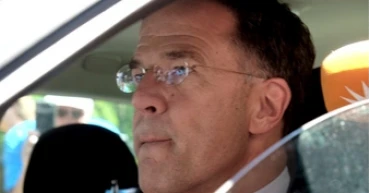
Dutch prime minister says he will leave politics after next election
Dutch Prime Minister Mark Rutte, the Netherlands’ longest serving premier, said Monday he will leave politics after a general election sparked by his government’s resignation.
His decision means the end of more than 13 years in power for the conservative leader sometimes called Teflon Mark because scandals that plagued his four different administrations did not stick to him.
Rutte, the 56-year-old leader of the People’s Party for Freedom and Democracy, or VVD, announced his decision at a hastily arranged parliamentary debate to discuss the fall of his latest governing coalition.
Read: Dutch premier resigns because of deadlock on thorny issue of migration, paving way for new elections
“Yesterday morning I made a decision that I will not be available again as a leader of the VVD. When a new Cabinet takes office after the elections, I will leave politics,” he said.
Rutte called is a “personal decision, regardless of the developments in recent weeks.”
Rutte’s four-party ruling coalition resigned Friday after failing to agree on a package of measures to rein in migration. He said it was a unanimous decision by the four partner parties prompted by “irreconcilable differences.”
Read: Post-LDC era: Dutch support sought for development journey to continue
There was no immediate indication who might replace Rutte as leader of the VVD. The party's parliamentary faction is led by Sophie Hermans, Rutte's former political assistant.
No date has yet been set for the election, but it is not expected before October or November.
Read more: Dutch electronics giant Philips to cut 6,000 jobs worldwide
2 years ago

10 mn Italians to spend on average 227 euro in summer sales
The summer sales are underway in Italy, with a total of 10 million Italians poised to go bargain hunting with an average budget of 227 euros, retailers association Confesercenti said on Saturday.
Read: Italy govt okays legal entry of 452,000 foreign workers in 3 years
Sales shoppers will on average buy just under three products each, although 26.9% will buy four or more and 40.8% one or two, according to a Confesercenti - Ipsos survey on shopping intentions based on interviews with 850 people aged between 18 and 65.
Shoes are the number one sought-after item, with 65% of the sample - and nearly 68% of women - saying saying they would be looking for a pair.
Read: Six die in fire at elderly care home in Milan
Next come t-shirts, tops, bodysuits and tank tops, which were intended purchases for 57.3% of respondents, followed by trousers, jeans, shorts and leggings (53% overall and 61% among men), swimwear (21.5%) and shirts (19.6%).
2 years ago

Zelenskyy hails Ukraine's soldiers from a symbolic Black Sea island to mark 500 days of war
Ukrainian President Volodymyr Zelenskyy marked the 500th day of the war Saturday by hailing the country's soldiers in a video from a Black Sea island that became the symbol of Ukraine’s resilience in the face of the Russian invasion.
Speaking from Snake Island, Zelenskyy honored the Ukrainian soldiers who fought for the island and all other defenders of the country, saying that reclaiming control of the island “is a great proof that Ukraine will regain every bit of its territory.”
“I want to thank — from here, from this place of victory — each of our soldiers for these 500 days,” Zelenskyy said. “Thank you to everyone who fights for Ukraine!”
It was unclear when the video was filmed. Zelenskyy was returning from Turkey on Saturday.
He announced that five commanders of the defense of the Azovstal steel plant, a grueling months-long siege early in the war, were returning on the plane with him.
The sprawling steelworks was the last bastion of resistance as Russian forces took control of the port city of Mariupol. Its defenders became renowned among Ukrainians for holding out in wretched conditions in the plant's tunnels and corridors.
Azovstal's more than 2,000 defenders left the steelworks in mid-May 2022 and were taken into Russian captivity. The five leaders, some of whom were part of the Azov national guard regiment that Russia denounces as neo-Nazi, were freed in a September prisoner swap and taken to Turkey.
Under the exchange, the leaders were to remain in Turkey until the end of the war under the Turkish president's protection. There was no immediate official explanation from Ankara or Kyiv about why they were allowed to return to Ukraine.
"The return of the leaders of the Azovites from Turkey to Ukraine is nothing more than a direct violation of the terms of the existing agreements. Moreover, in this case, the terms were violated by both the Ukrainian side and the Turkish side,” said Kremlin spokesman Dmitry Peskov.
Russian forces took control of Snake Island on Feb. 24, 2022, the day Moscow launched its invasion, in the apparent hope of using it as a staging ground for an assault on Odesa, Ukraine’s biggest port and the headquarters of its navy.
The island took on legendary significance for Ukraine’s resistance, when Ukrainian troops there reportedly received a demand from a Russian warship to surrender or be bombed. The answer supposedly came back, “Go (expletive) yourself.”
The island’s Ukrainian defenders were captured but later freed as part of a prisoner exchange. After the island was taken, the Ukrainian military heavily bombarded the small Russian garrison there, forcing the Russians to pull back on June 30, 2022. The Russian retreat reduced the threat of a seaborne Russian attack on Odesa and helped pave the way for a deal to resume Ukrainian grain exports.
Read: Ukraine and Russia accuse each other of preparing imminent attack on Europe's biggest nuclear plant
“Let the freedom that all our heroes of different times wanted for Ukraine and that must be won right now be a tribute to all those who gave their lives for Ukraine,” Zelenskyy said. “We will definitely win!”
Intense battles continued to rage Saturday in the country's east and south as Ukrainian forces pressed their attacks against multi-layered Russian defenses in the initial stages of their counteroffensive.
Ukraine's interior ministry said that a Russian rocket strike on the town of Lyman killed eight civilians and wounded 13 others early Saturday. Pavlo Kyrylenko, the governor of the eastern Donetsk region, posted images showing some of the dead, including a body lying under a bicycle and body fragments on the pavement next to a damaged vehicle, saying that “the Russian terrorists are continuing to strike civilians in Donetsk.”
Lyman is a few kilometers (miles) from the front line, where Russian troops have recently intensified fighting in the forests of Kreminna.
The U.K. Ministry of Defense said in its latest intelligence update that the eastern town of Bakhmut that was captured by the Russians in May has seen some of the most intense fighting along the front during the last week.
It said that Ukrainian forces have made steady gains to both the north and south of Bakhmut, noting that “Russian defenders are highly likely struggling with poor morale, a mix of disparate units and a limited ability to find and strike Ukrainian artillery.”
Amid the fighting, Russia and Ukraine accused each other of planning to sabotage the Russia-controlled Zaporizhzhia nuclear power plant, which is Europe's largest, fueling fears of a radiation catastrophe. Ukraine's military intelligence claimed Saturday that Russian troops have planted more mines around the plant, a claim that couldn't be independently verified.
Read:Ukraine accuses local man of directing missile strike that killed 10 at popular pizza restaurant
The head of the United Nations nuclear agency, Rafael Mariano Grossi, told The Associated Press on Friday that the International Atomic Energy Agency experts had recently gained access to more of the site, including the cooling pond and fuel storage areas, and found no mines there. Grossi said he was still pushing for access to the rooftops of reactors where Ukrainian officials accused Russia of planting explosives.
On Saturday, Russian Defense Minister Sergei Shoigu was shown visiting firing ranges where volunteer soldiers are being trained, a trip that comes two weeks after an abortive mutiny launched by mercenary chief Yevgeny Prigozhin, whose Wagner troops marched on Moscow in a bid to oust Shoigu.
Prigozhin agreed to end the mutiny, which represented the biggest threat to Russian President Vladimir Putin in his more than two decades in power, in exchange for an amnesty for himself and his troops and permission to move to Belarus. On Saturday, Russian messaging app channels ran comments by one of Wagner's commanders, Anton Yelizarov, who said that the mercenaries had taken leave but would eventually deploy to Belarus.
Pitched battles along the front line in Ukraine are raging as NATO leaders are set to meet in Vilnius for a two-day summit next week to offer more help in modernizing Ukraine’s armed forces, create a new high-level forum for consultations and reaffirm that it will join their alliance one day.
Ahead of the NATO summit, the U.S. has announced that it will provide Ukraine with cluster munitions, a move that President Joe Biden described as a “difficult decision.” Two-thirds of NATO members have banned the munitions, which have a track record of causing many civilian casualties, but the U.S. sees their delivery as a way to help bolster Ukraine's offensive and push through Russian front lines.
Ukrainian Defense Minister Oleksii Reznikov hailed the U.S. move, saying that the delivery of cluster munitions would help the country de-occupy its territories while saving the lives of the Ukrainian soldiers.
Read more: With Russia revolt over, mercenaries' future and direction of Ukraine war remain uncertain
Reznikov vowed that Ukraine would use the munitions only for the de-occupation of its territory and would not fire them at Russia's proper territory. He also noted that the Ukrainian military would not use cluster munitions in urban areas to avoid hurting civilians.
2 years ago

Italy govt okays legal entry of 452,000 foreign workers in 3 years
The government of Premier Giorgia Meloni has given preliminary approval to a new programming document for the legal entry of 452,000 foreign workers in the period 2023-2025.
"For the three-year period 2023-2025, the government envisages a total of 452,000 entries, compared to an identified need of 833,000," with 136,000 entries in 2023, 151,000 in 2024 and 165,000 in 2025, a statement said on Thursday.
Read: Leaders of Italy and Poland say European Union should focus on stopping migration
The provision also extends the categories of worker and production sectors implicated by the so-called 'flows decree' to include electricians and plumbers, bus drivers and workers in the fishing sector.
Read: Six die in fire at elderly care home in Milan
It also reinstates a specific quota for domestic caregivers and social-medical workers, as well as increasing the number of legal entries allowed for seasonal workers in the agricultural and tourism sectors in 2022 to be used against applications made on 'click day' on March 27 for admission to Italy under an earlier decree. (ANSA).
2 years ago

Dutch premier resigns because of deadlock on thorny issue of migration, paving way for new elections
The Dutch government collapsed Friday because of irreconcilable differences within the four-party coalition about how to rein in migration, a divisive issue that has split nations across Europe.
The resignation of Prime Minister Mark Rutte, the longest-serving premier of the nation, means the country will face a general election later this year. Rutte and his government will remain in office in a caretaker capacity until a new ruling coalition is chosen.
"It is no secret that the coalition partners have very different views on migration policy," Rutte told reporters in The Hague. "And today, unfortunately, we have to draw the conclusion that those differences are irreconcilable. That is why I will immediately … offer the resignation of the entire Cabinet to the king in writing"
Opposition lawmakers wasted no time in calling for fresh elections even before Rutte formally confirmed his resignation.
Geert Wilders, leader of the anti-immigration Party for Freedom, tweeted, "Quick elections now." Across the political spectrum, Green Left leader Jesse Klaver also called for elections and told Dutch broadcaster NOS: "This country needs a change of direction."
Rutte had presided over late-night meetings Wednesday and Thursday that failed to result in a deal on migration policy. At one final round of talks Friday evening, the parties decided unanimously that they could not agree and, as a result, could not remain together in the coalition.
The decision underscored ideological divisions that existed from the day the coalition was sworn in just over 18 months ago between parties that do not support a strict crackdown on migration — D66 and fellow centrist party ChristenUnie, or Christian Union — and the two that favor tougher measures — Rutte's conservative People's Party for Freedom and Democracy and the Christian Democrats.
Similar discussions are going on across political divides elsewhere in Europe as migrants fleeing conflict or seeking a better life make perilous sea crossings from northern Africa to reach the continent. Hundreds of thousands of people also have fled the grinding war in Ukraine.
Migration is set to be an essential theme of European Union parliamentary elections next year, but the issue hit early in the Netherlands, a nation that has long been torn between a welcoming international outreach and increasing resistance to foreign influences.
Rutte's coalition tried for months to hash out a deal to reduce the flow of new migrants arriving in the country of nearly 18 million people. Proposals reportedly included creating two classes of asylum — a temporary one for people fleeing conflicts and a permanent one for people trying to escape persecution — and reducing the number of family members who are allowed to join asylum-seekers in the Netherlands.
Last year, hundreds of asylum-seekers were forced to sleep outdoors in squalid conditions near an overcrowded reception center as the number of people arriving in the Netherlands outstripped the available beds. Dutch aid agencies provided assistance.
Just over 21,500 people from outside Europe sought asylum in the Netherlands in 2022, according to the country's statistics office. Tens of thousands more moved to the Netherlands to work and study.
The numbers have put a strain on housing that already was in short supply in the densely populated country.
Rutte's government worked for a law that could compel municipalities to provide accommodations for newly arrived asylum-seekers, but the legislation has yet to pass through both houses of parliament.
The prime minister also promoted European Union efforts to slow migration to the 27-nation bloc. Rutte visited Tunisia last month with his Italian counterpart and the president of the EU's executive commission to offer more than 1 billion euros in financial aid to rescue the North African nation's teetering economy and to stem migration from its shores to Europe.
Rutte's coalition government, the fourth he has led, took office in January 2022 following the longest coalition negotiations in Dutch political history.
The election for the lower house of the Dutch parliament later this year will take place in a polarized and splintered political landscape — there are 20 parties in the 150-seat lower house.
During provincial elections earlier this year, a populist pro-farmer party put Rutte's party into second place. The defeat was seen as a possible incentive for Rutte to do his utmost to hold together his coalition until its term ends in 2025.
2 years ago

Six die in fire at elderly care home in Milan
Six people died and 81 people were admitted to hospital with smoke poisoning after a fire broke out at a residential care home for the elderly in Italy's Milan in the early hours of Friday.
The victims, five women and one man, were aged between 69 and 87 Two women are said to have burned to death in the room where the fire reportedly started from a bed, while the other victims reportedly died from smoke inhalation.
In total, the structure hosted 167 people.
"Six deaths are a very heavy toll," said Milan Mayor Giuseppe Sala, who visited the building with city councillor for security Marco Granelli.
The public prosecutor's office has opened an investigation for multiple manslaughter.
Lombardy Governor Attilio Fontana expressed his condolences to the families of the victims and said the regional authorities had "immediately made themselves available" to help find alternative accommodation for the displaced elderly residents.
2 years ago

Belarus says Wagner chief who staged mutiny is in Russia, raising questions about Kremlin's strategy
The mercenary leader who led a short-lived mutiny against the Kremlin is in Russia and his troops are in their field camps, the president of Belarus said Thursday, raising new questions about the deal that ended the extraordinary challenge to President Vladimir Putin's rule.
Belarusian President Alexander Lukashenko's claim could not be independently verified, and the Kremlin refused to comment on Yevgeny Prigozhin's whereabouts. But Russian media have reported he was recently seen at his offices in St. Petersburg.
Also read: Russian general is believed to be detained in aftermath of Wagner mutiny, AP sources say
It was not clear if Prigozhin's presence in Russia would violate the deal, which allowed the head of the Wagner Group military contractor to move to Belarus in exchange for ending the rebellion and a promise of amnesty for him and his troops. But the reports signaled that the agreement may have allowed him to finalize his affairs in Russia.
Also read: Prigozhin, the mercenary chief urging an uprising against Russia's generals, has long ties to Putin
If that's true, it could suggest the threat posed by Prigozhin has not yet been fully defused and that the Kremlin is treading carefully with him until it can figure out what to do with troops who may still be loyal to him. Putin has said that Wagner troops can join the Russian military, retire from service or move to Belarus.
But much about the the agreement, which was brokered by Lukashenko, remains murky.
Last week, Lukashenko said the mercenary leader was in Belarus, but on Thursday he told international reporters that Prigozhin was in St. Petersburg and could also travel to Moscow if he wishes, while Wagner's troops were in their camps. He did not specify the location of the camps, but Prigozhin's mercenaries fought alongside Russian forces in eastern Ukraine before their revolt and also have bases on Russian territory.
He also said that Prigozhin has been given back the cash and weapons that were confiscated by Russian authorities.
Asked where Prigozhin is, Putin spokesman Dmitry Peskov shrugged off the question, saying that the Kremlin has neither the desire nor the means to track his movements — but reaffirmed that the deal that ended the mutiny envisaged his move to Belarus.
Also read: Wagner and Putin: What really happened?
Lukashenko said his government offered Wagner, which has sent troops around the world to fight for Russia's interests, the use of Belarusian military camps but that the company had not made a final decision.
The Kremlin has played down the fact that Prigozhin escaped punishment for his mutiny while other Putin critics have been met with harsh prison sentences, exile or even death, saying that the deal with the Wagner chief was necessary to avoid massive bloodshed.
The Belarusian leader shrugged off suggestions that Putin might order Prigozhin killed, saying: "If you think that Putin is so vicious and vindictive to finish him off, no, it's not going to happen."
On Wednesday, Russian online newspapers Fontanka and Izvestia posted videos and photos of Prigozhin's opulent mansion in Russia's second-largest city that showed stacks of cash and gold bullion. The images appeared to be part of the authorities' efforts to denigrate Prigozhin, who has postured as an enemy of corrupt elites even though he has owed his wealth to Putin.
A photo hanging in the mansion showed a lineup of decapitated heads. In one published image, an oversized souvenir sledgehammer could also be seen with the inscription "for important negotiations." The sledgehammer has become a symbol of Wagner after reports its troops used the tool to beat defectors to death.
The Russian media also published a collection of selfies that showed him posing in various wigs, fake beards and foreign uniforms, an apparent reflection of Wagner's deployments to Syria and several African countries.
Asked if Prigozhin and his mercenaries would eventually move to Belarus, Lukashenko answered evasively that it would depend on the decisions of the Wagner chief and the Russian government.
The Belarusian leader said he doesn't think the mercenaries' presence in his country would lead to its destabilization and said any Wagner troops there would be required to sign a contract with Belarusian authorities that would outline conditions and limitations of their actions.
Belarusian political analyst Valery Karbalevich argued, however, that Lukashenko could feel uneasy about Wagner's presence on his turf. "If this structure rebelled against its master once, it can do it again and again and march on Minsk instead of marching on Moscow," Karbalevich said.
The Belarusian president dismissed suggestions that the mercenaries could attack Ukraine from Belarusian territory, which Russian troops used as a staging ground ahead of their invasion of Ukraine in February 2022. Moscow has also maintained a military presence in Belarus.
During their short revolt, Prigozhin's mercenaries quickly swept through the southern Russian city of Rostov-on-Don and captured the military headquarters there before marching to within about 200 kilometers (125 miles) of the Russian capital. Prigozhin described it as a "march of justice" to oust his longtime foes — Russian defense minister Sergei Shoigu and the chief of the military's general staff, Gen. Valery Gerasimov, whose handling of the war in Ukraine he criticized.
The Wagner fighters faced little resistance, smashing occasional roadblocks. They also downed at least six helicopters and a command post aircraft, killing at least 10 airmen.
When the deal was struck, the Wagner chief ordered his troops to return to their camps.
The abortive rebellion represented the biggest threat to Putin in his more than two decades in power, exposing his weakness and eroding the Kremlin's authority. It wasn't immediately clear whether Shoigu and Gerasimov retained Putin's favor after vanishing from public view during the mutiny, but so far they have kept their positions.
Lukashenko said he warned Prigozhin that he and his troops would be destroyed if they failed to make a quick deal to end their mutiny and that Belarus would send a brigade to help protect Moscow.
"It was necessary to nip it in the bud. It was very dangerous, as history shows," Lukashenko said.
Asked about the deployment of Russia's tactical nuclear weapons to Belarus, Lukashenko said they are intended to deter any aggression against the country. Putin and Lukashenko both have said that some of them already have been moved to Belarus, and the Belarusian leader reaffirmed Thursday that a "certain number" of them have been flown to Belarus and the rest will be delivered before the year's end.
Lukashenko said that Russia would consult him on any possible use of those weapons, adding that it could only happen in response to an act aggression by NATO against Russia or Belarus.
The Belarusian leader noted that "these weapons serve strictly defensive purposes."
He added: "Don't touch us, and we will never use these deadly weapons."
2 years ago