europe

Leaders of Italy and Poland say European Union should focus on stopping migration
The European Union should put a priority on stopping illegal migration instead of trying to persuade the 27 member nations to share responsibility for people who arrive without authorization, the prime ministers of Italy and Poland said Wednesday.
Italy's right-wing leader, Premier Georgia Meloni, traveled to Warsaw for a meeting with her conservative Polish counterpart, Prime Minister Mateusz Morawiecki. As a country that is one of the first stops for asylum-seekers who cross the Mediterranean Sea to reach Europe, Italy is eager to reduce their number.
Poland and Hungary last week vetoed a statement by EU leaders on priorities for limiting arrivals, and the two countries voted against a June 8 agreement that balanced the obligations of front-line countries against the requirement for other member nations to provide support.
The governments in Warsaw and Budapest insist that preventing people from entering the EU is a better approach. After her talks with Morawiecki, Meloni said she thinks the bloc will never be able to "find a real solution" to the situation once migrants are already in Europe.
"I believe our position is substantially the same. We want to stop illegal immigration," Meloni said. Referring to the Polish government's position, she added, "I cannot not defend someone who defends national interests."
Morawiecki said it was "fundamental" to his government to have the EU's external borders "insulated" and that it also opposed a provision in the June agreement that calls for fining countries that refuse to host a share of asylum-seekers 20,000 euros ($21,400) per person.
Poland has taken in millions of war refugees from Ukraine, some 1.2 million of whom have registered and received the right to live, work, attend school and receive social benefits.
Morawiecki said his government would organize a referendum this year asking Poles for their opinion on accepting migrants who entered the EU illegally. The main ruling party, the conservative Law and Justice, has moved to change Poland's election law to allow the referendum at the same time as the next parliamentary election, expected in the fall.
The agenda for Morawiecki and Meloni's talks included regional security in the face of Russia's war in Ukraine, which is seeking NATO security guarantees. NATO's 31 members have a summit scheduled in Lithuania next week.
The two leaders also addressed a meeting of the European Conservatives and Reformists Group, an alliance of the EU Parliament.
2 years ago

Ukraine and Russia accuse each other of preparing imminent attack on Europe's biggest nuclear plant
Ukraine and Russia accused each other Wednesday of planning to attack one of the world's largest nuclear power plants, which is located in southeastern Ukraine and occupied by Russian troops, but neither side provided evidence to support their claims of an imminent threat.
The Zaporizhzhia Nuclear Power Plant has been a focus of concern since Moscow's forces took control of it and its staff in the early stages of the war. Over the last year, the U.N.'s atomic watchdog repeatedly expressed alarm over the possibility of a radiation catastrophe like the one at Chernobyl after a reactor exploded in 1986.
While Russia and Ukraine regularly traded blame over shelling near the plant that caused power outages, Ukraine has alleged more recently that Moscow might try to cause a deliberate leak in an attempt to derail Kyiv's ongoing counteroffensive in the surrounding Zaporizhzhia region.
Citing the latest intelligence reports, Ukrainian President Volodymyr Zelenskyy alleged Tuesday night that Russian troops had placed "objects resembling explosives" on top of several power units to "simulate" an attack as part of a false flag operation.
Also read: Ukraine’s president tells other countries to act before Russia attacks nuclear plant
The "foreign objects" were placed on the roof of the plant's third and fourth power units, according to a statement from the General Staff of Ukraine's armed forces. "Their detonation should not damage power units but may create a picture of shelling from Ukraine," the statement said.
The International Atomic Energy Agency has officials stationed at the Russian-held plant, which is still run by its Ukrainian staff. IAEA Director General Rafael Mariano Grossi said his agency's most recent inspection of the plant found no mining activities, "but we remain extremely alert."
"As you know, there is a lot of combat, I have been there a few weeks ago, and there is contact there very close to the plant, so we cannot relax," Grossi said during a visit to Japan.
In Russia, Kremlin spokesman Dmitry Peskov raised the specter of a potentially "catastrophic" provocation by the Ukrainian army at the nuclear plant, which is Europe's largest but has its six reactors shut down. It still needs power and qualified staff to operate crucial cooling systems and other safety features.
"The situation is quite tense. There is a great threat of sabotage by the Kyiv regime, which can be catastrophic in its consequences," Peskov said in response to a reporter's question about the plant. He also claimed that the Kremlin was pursuing "all measures" to counter the alleged Ukrainian threat.
Also read: Nuclear watchdog growingly worried over Ukraine plant safety
Grossi said he was aware of both Kyiv's and Moscow's claims and reiterated that "nuclear power plants should never, under any circumstances, be attacked."
"A nuclear power plant should not be used as a military base," he said.
Peskov's comments came after Renat Karchaa, an advisor to Russian state nuclear company Rosenergoatom, said there was "no basis" for Zelenskyy's claims of a plot to simulate an explosion.
"Why would we need explosives there? This is nonsense, (aimed at) maintaining tension around the Zaporizhzhia Nuclear Power Plant," Karchaa said.
Russian media on Tuesday cited Karchaa as saying that Ukraine's military planned to strike the plant early Wednesday with ammunition laced with nuclear waste. As of Wednesday afternoon, there was no indication of such an attack.
Last week, Ukrainian emergency workers held a drill to prepare for a potential release of radiation from the plant. According to the country's emergency services, in case of a nuclear disaster at the plant, approximately 300,000 people would be evacuated from the areas closest to the facility.
Ukrainian officials have said the shut-down reactors are protected by thick concrete containment domes.
Also read: Ukraine: Russia put rocket launchers at nuclear power plant
The International Institute for Strategic Studies said last week that "a Russian attack on Zaporizhzhia would probably not lead to the widespread dispersal of significant amounts of radiation" due to precautionary steps taken by the International Atomic Energy Agency.
However, the think tank noted in an assessment that wind might blow some amount of radiation toward Russia.
2 years ago
NATO again extends Stoltenberg's mandate, happy with a safe pair of hands as the war drags on
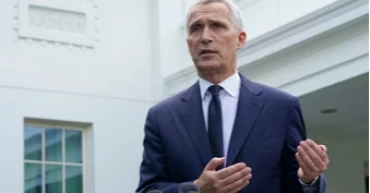
NATO Secretary-General Jens Stoltenberg will stay in office for another year, the 31-nation military alliance decided on Tuesday.
Stoltenberg said in a tweet that he is “honoured by NATO Allies’ decision to extend my term as Secretary General until 1 October 2024.”
“The transatlantic bond between Europe and North America has ensured our freedom and security for nearly 75 years, and in a more dangerous world, our Alliance is more important than ever,” he said.
Stoltenberg, a former Norwegian prime minister, has been NATO’s top civilian official since 2014. His term had been due to expire last year but was extended then to keep a steady hand at the helm after Russia’s full-scale invasion of Ukraine in February 2022.
U.S. President Joe Biden and his NATO counterparts had been due to name a successor when they meet in Vilnius, Lithuania, on July 11-12. But the world’s biggest security organization makes decisions by consensus, and no agreement could be found on a new candidate.
Most NATO countries had been keen to name a woman to the top post, and Danish Prime Minister Mette Frederiksen was thought to be a favorite after a meeting with Biden last month.
The president of the European Commission, Ursula von der Leyen, ruled out her candidacy. Other possible names floated, but never publicly named as in the running, were Dutch Prime Minister Mark Rutte and U.K. Defense Secretary Ben Wallace.
It’s the fourth time Stoltenberg has had his mandate extended. He’s the second-longest serving NATO secretary-general after former Dutch foreign minister Joseph Luns, who spent almost 13 years at the helm from 1971.
Read: Biden’s upcoming European trip is meant to boost NATO against Russia as the war in Ukraine drags on
Quizzed repeatedly in recent weeks over whether he would agree to have his term renewed, Stoltenberg said that he was not seeking to stay and had no plans other than to continue to carry out his duties and wrap his time at the helm in September.
NATO secretaries-general are responsible for chairing meetings and guiding sometimes delicate consultations between the member countries to ensure that compromises are found so that an organization that operates on consensus can continue to function.
They also ensure that decisions are put into action and speak on behalf of all nations with one voice.
Stoltenberg has managed to tread a very fine line, refraining from criticizing members led by more go-it-alone presidents and prime ministers, like former U.S. President Donald Trump, Turkish President Recep Tayyip Erdogan or Hungarian Prime Minister Viktor Orban.
With NATO’s historical adversary, Russia, locked in a war with Ukraine, the process of naming a new secretary-general has become highly politicized.
Poland opposes the next secretary-general coming from a Nordic state after Stoltenberg’s long tenure, and that of his predecessor, Anders Fogh Rasmussen from Denmark. Polish officials wanted someone from a Baltic state. Estonian Prime Minister Kaja Kallas was a preferred candidate.
Read: US, NATO had no involvement in Wagner's 'short-lived' revolt in Russia: Biden
But other countries are wary of accepting a nominee from the Baltics or Poland, given what appears to be their unconditional support for Ukraine, including on NATO membership, which the U.S. and Germany, among others, insist should not happen before the war ends.
In naming Fogh Rasmussen, a former Danish premier, their 12th secretary general in 2009, NATO’s leaders signaled that they wanted a government leader or president at the head of their organization. This has made the path almost impossible for Wallace.
Read more: Erdogan says no change in Turkey's stance on Sweden's NATO membership
2 years ago

King of the Netherlands apologizes for country's role in slavery on 150th anniversary of abolition
King Willem-Alexander of the Netherlands apologized Saturday for his country's role in slavery and asked for forgiveness during a historic speech greeted by cheers and whoops at an event to commemorate the anniversary of the abolition of slavery in Dutch colonies.
The king's speech followed Dutch Prime Minister Mark Rutte's apology late last year for the country's role in the slave trade and slavery. The public expressions of remorse are part of a wider reckoning with colonial histories in the West that the Black Lives Matter movement spurred in recent years.
In his emotional address, Willem-Alexander referred back to the prime minister's apology as he told a crowd of invited guests and onlookers: "Today, I stand before you. Today, as your king and as a member of the government, I make this apology myself. And I feel the weight of the words in my heart and my soul."
Riots in Belgium, Netherlands after Morocco win at World Cup
The king said he has commissioned a study into the exact role of the royal House of Orange-Nassau in slavery in the Netherlands.
"But today, on this day of remembrance, I ask forgiveness for the clear failure to act in the face of this crime against humanity," he added.
Willem-Alexander's voice appeared to break with emotion as he completed his speech before laying a wreath at the country's national slavery monument in an Amsterdam park.
Some people want action to back up the words.
"Honestly, I feel good, but I am still looking forward to something more than just apologies. Reparations, for example," Doelja Refos, 28, said.
"I don't feel like we're done. We're definitely not there yet," Refos added.
Study in the Netherlands: Scholarship Opportunities for Bangladeshi Students
Former lawmaker John Leerdam told Dutch broadcaster NOS that he felt tears running down his cheeks as the king apologized. "It's a historic moment and we have to realize that," he said.
Slavery was abolished in Suriname and the Dutch colonies in the Caribbean on July 1, 1863, but most of the enslaved laborers were forced to continue working on plantations for another decade. Saturday's commemoration and speech started a year of events to mark the 150th anniversary.
Research published last month showed that the king's ancestors earned the modern-day equivalent of 545 million euros ($595 million) from slavery, including profits from shares that were effectively given to them as gifts.
When Rutte apologized in December, he stopped short of offering compensation to descendants of enslaved people.
Instead, the government is establishing a 200 million-euro ($217 million) fund for initiatives that tackle the legacy of slavery in the Netherlands and its former colonies and to improve education about the topic.
That isn't enough for some in the Netherlands. Two groups, Black Manifesto and The Black Archives, organized a protest march before the king's speech Saturday under the banner "No healing without reparations."
Bangladesh Film Archive signs MoU with RedOrange of Netherlands to collect 1971 war footage
"A lot of people including myself, my group, The Black Archives, and the Black Manifesto say that (an) apology is not enough. An apology should be tied to a form of repair and reparatory justice or reparations," Black Archives director Mitchell Esajas said.
Marchers wore colorful traditional clothing in a Surinamese celebration of the abolition of slavery. Enslaved people were banned from wearing shoes and colorful clothes, organizers said.
"Just as we remember our forefathers on this day, we also feel free, we can wear what we want, and we can show the rest of the world that we are free." Regina Benescia-van Windt, 72, said.
The Netherlands' often brutal colonial history has come under renewed and critical scrutiny in the aftermath of the killing of George Floyd, a Black man, in the U.S. city of Minneapolis on May 25, 2020, and the Black Lives Matter movement.
A groundbreaking 2021 exhibition at the national museum of art and history took an unflinching look at slavery in Dutch colonies. In the same year, a report described the Dutch involvement in slavery as a crime against humanity and linked it to what the report described as ongoing institutional racism in the Netherlands.
The Dutch first became involved in the trans-Atlantic slave trade in the late 1500s and became a major trader in the mid-1600s. Eventually, the Dutch West India Company became the largest trans-Atlantic slave trader, according to Karwan Fatah-Black, an expert in Dutch colonial history and an assistant professor at Leiden University.
BEMEA seeks more collaboration with Netherlands to enhance RMG industry’s competitiveness
Authorities in the Netherlands aren't alone in saying sorry for historic abuses.
In 2018, Denmark apologized to Ghana, which it colonized from the mid-17th century to the mid-19th century. King Philippe of Belgium has expressed "deepest regrets" for abuses in Congo. In 1992, Pope John Paul II apologized for the church's role in slavery. Americans have had emotionally charged disputes over taking down statues of slaveholders in the South.
In April, King Charles III for the first time signaled support for research into the U.K. monarchy's ties to slavery after a document showed an ancestor with shares in a slave-trading company, a Buckingham Palace spokesperson said.
Charles and his eldest son, Prince William, have expressed their sorrow over slavery but haven't acknowledged the crown's connections to the trade.
During a ceremony that marked Barbados becoming a republic two years ago, Charles referred to "the darkest days of our past and the appalling atrocity of slavery, which forever stains our history." English settlers used African slaves to turn the island into a wealthy sugar colony.
Willem-Alexander acknowledged that not everybody in the Netherlands supports apologies, but he called for unity.
"There's no blueprint for the process of healing, reconciliation and recovery," he said. "Together, we are in uncharted territory. So let's support and guide each other."
2 years ago
Sánchez visits Kyiv on the day Spain starts EU presidency to underline bloc’s support for Ukraine
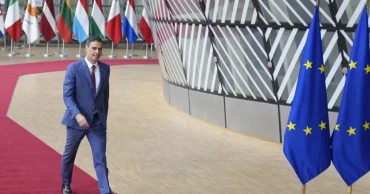
Prime Minister Pedro Sánchez started Spain’s six-month presidency of the European Union with a lightning visit to Kyiv on Saturday to underline the bloc’s support of Ukraine in the face of the invasion by Russia.
Sánchez arrived in the Ukrainian capital by train from Poland.
The Spanish government said he would address Ukraine’s parliament at 0830 GMT (4:30 a.m. EDT) and then meet with Ukrainian President Volodymyr Zelenskyy. The two will give a news conference around 1030 GMT (6:30 a.m. EDT).
Zelenskyy announced the visit Thursday in an address to European leaders gathered for a summit in Brussels. He highlighted the symbolism of the visit and the importance of the next six months for Europe. He added that it was the moment to begin negotiations for Ukraine’s entry into the EU.
Speaking Friday in Brussels, Sánchez said, “The war in Ukraine will be one of the great priorities of our presidency, with the focus being on guaranteeing the unity (on the issue) among all member states.”
Read: Ukraine recaptures village as Russian forces hold other lines, fire on fleeing civilians elsewhere
This was Sánchez’s third time in Kyiv since Russia launched its full-scale invasion in February 2022.
Sánchez will return to Madrid by Sunday, when he meets with the European Council President Charles Michel, a day before the arrival of European Commission President Ursula von der Leyen and the college of EU commissioners.
Besides Ukraine, Spain hopes to make progress on several major EU issues during its presidency, which ends on Dec. 31.
Sánchez believes that the EU will finalize a controversial pact on migration despite lingering differences within the 27-nation group with Poland and Hungary still evident on Friday.
Earlier this month, EU countries a breakthrough on asylum law reform, sealing an agreement on a plan to share responsibility for migrants entering Europe without authorization. Only Poland and Hungary voted against.
EU lawmakers have warned that this may be the last chance to solve the issue before EU-wide elections in a year’s time, when migration is likely to be a hot-button issue once again.
The rotating presidency comes as Spain faces an early general election on July 23, which polls shows could oust Sánchez’s leftist coalition government and replace it with a conservative administration, or even a coalition with the extreme right, and follow a trend happening in much of Europe.
Read: Russian missile strike in Ukraine's south, shelling in east kill at least 6 people
Sánchez has said that he wants to focus on rebuilding intra-European supply chains to avoid shortages and guarantee energy sovereignty. This would include establishing European dominance in the fields of artificial intelligence and digital security.
Spain also hopes the EU-Latin America summit set for July 17-18 in Brussels, the first in eight years, will represent “a qualitative leap” in relations between the two regions and will lead to a powerful investment agenda with Latin American and Caribbean nations.
Spain also wants to make EU progress on the green transition and electricity market reform. Spain has significant experience in the sector as it forges ahead with solar, wind power and green hydrogen installations at an unprecedented rate.
Read more: Top UN court allows a record 32 countries to intervene in Ukraine's genocide case against Russia
2 years ago

France faces 5th night of rioting over teen's killing by police, signs of subsiding violence
Young rioters clashed with police late Saturday and early Sunday and targeted a mayor's home with a burning car as France faced a fifth night of unrest sparked by the police killing of a teenager, but overall violence appeared to lessen compared to previous nights.
Police made 719 arrests nationwide by early Sunday after a mass security deployment aimed at quelling France's worst social upheaval in years.
The fast-spreading crisis is posing a new challenge to President Emmanuel Macron's leadership and exposing deep-seated discontent in low-income neighborhoods over discrimination and lack of opportunity.
Read: Fiery protests grip France for 3rd night over deadly police shooting of a teenager
The 17-year-old whose death Tuesday spawned the anger, identified by his first name Nahel, was laid to rest Saturday in a Muslim ceremony in his hometown of Nanterre, a Paris suburb where emotion over his loss remains raw.
As night fell over the French capital, a small crowd gathered on the Champs-Elysees for a protest over Nahel's death and police violence but met hundreds of officers with batons and shields guarding the iconic avenue and its Cartier and Dior boutiques. In a less-chic neighborhood of northern Paris, protesters set off volleys of firecrackers and lit barricades on fire as police shot back with tear gas and stun grenades.
A burning car hit the home of the mayor of the Paris suburb of l'Hay-les-Roses overnight. Several schools, police stations, town halls and stores have been targeted by fires or vandalism in recent days but such a personal attack on a mayor's home is unusual.
Skirmishes erupted in the Mediterranean city of Marseille but appeared less intense than the night before, according to the Interior Ministry. A beefed-up police contingent arrested 55 people there.
Nationwide arrests were somewhat lower than the night before, which Interior Minister Gerald Darmanin attributed to "the resolute action of security forces."
Some 2,800 people have been detained overall since Nahel's death on Tuesday. The mass police deployment has been welcomed by some frightened residents of targeted neighborhoods and shopowners whose stores have been ransacked — but it has further frustrated those who see police behavior as the core of France's current crisis.
The unrest took a toll on Macron's diplomatic standing. German President Frank-Walter Steinmeier's office said Macron phoned Saturday to request a postponement of what would have been the first state visit by a French president to Germany in 23 years. Macron had been scheduled to fly to Germany on Sunday.
Hundreds of French police and firefighters have been injured in the violence that erupted after the killing, though authorities haven't released injury tallies of protesters. In French Guiana, an overseas territory, a 54-year-old died after being hit by a stray bullet.
On Saturday, France's justice minister, Dupond-Moretti, warned that young people who share calls for violence on Snapchat or other apps could face legal prosecution. Macron has blamed social media for fueling violence.
The violence comes just over a year before Paris and other French cities are due to host Olympic athletes and millions of visitors for the summer Olympics, whose organizers were closely monitoring the situation as preparations for the competition continue.
At a hilltop cemetery in Nanterre, hundreds stood along the road Saturday to pay tribute to Nahel as mourners carried his white casket from a mosque to the burial site. His mother, dressed in white, walked inside the cemetery amid applause and headed toward the grave. Many of the men were young and Arab or Black, coming to mourn a boy who could have been them.
This week, Nahel's mother told France 5 television that she was angry at the officer who shot her son at a traffic stop, but not at the police in general.
Read: France will deploy 40,000 police officers to quell violence that followed deadly police shooting
"He saw a little Arab-looking kid. He wanted to take his life," she said. Nahel's family has roots in Algeria.
Video of the killing showed two officers at the window of the car, one with his gun pointed at the driver. As the teenager pulled forward, the officer fired once through the windshield. The officer accused of killing Nahel was given a preliminary charge of voluntary homicide.
Thirteen people who didn't comply with traffic stops were fatally shot by French police last year, and three this year, prompting demands for more accountability. France also saw protests against police violence and racial injustice after George Floyd's killing by police in Minnesota.
The reaction to the killing was a potent reminder of the persistent poverty, discrimination and limited job prospects in neighborhoods around France where many residents trace their roots to former French colonies — like where Nahel grew up.
"Nahel's story is the lighter that ignited the gas. Hopeless young people were waiting for it. We lack housing and jobs, and when we have (jobs), our wages are too low," said Samba Seck, a 39-year-old transportation worker in the Paris suburb of Clichy-sous-Bois.
Clichy was the birthplace of weeks of riots in 2005 that shook France, prompted by the death of two teenagers electrocuted in a power substation while fleeing from police. One of the boys lived in the same housing project as Seck.
New violence targeted his town this week. As he spoke, the remains of a burned car stood beneath his apartment building, and the town hall entrance was set alight in rioting Friday.
"Young people break everything, but we are already poor, we have nothing," he said. Still, he said he understood the rioters' anger, adding that "young people are afraid to die at the hands of police."
Read more: Macron's govt ignites firestorm of anger in France with unpopular pension reforms
2 years ago

Russian attacks in Ukraine leave 3 killed, 17 wounded. Spain highlights European support for Kyiv
Ukrainian officials reported more civilian casualties from Russian shelling in the country’s east and south on Saturday, as Spanish Prime Minister Pedro Sánchez began a visit to Kyiv as a show of continuing support from Madrid and the European Union for Ukraine’s fight to dislodge invading Russian forces.
In an address to Ukraine’s parliament that received several standing ovations, Sánchez said, “We’ll be with you as long as it takes.”
“I am here to express the firm determination of the European (Union) and Europe against the illegal and unjustified Russian aggression to Ukraine,” he said on the day that Spain took over the six-month rotating presidency of the 27-nation EU.
Read: Ukraine accuses local man of directing missile strike that killed 10 at popular pizza restaurant
At a later news conference with President Volodymyr Zelenskyy, Sanchez announced Spain would deliver more heavy weaponry to Ukraine including four Leopard tanks and armored personnel carriers, as well as a portable field hospital. He also said Spain will provide an additional 55 million euros to help with reconstruction needs.
Elsewhere in Ukraine, regional officials reported that at least three civilians were killed and 17 wounded by Russian shelling on Friday and overnight in the front-line eastern Donetsk region, where fierce battles are raging, Donetsk Gov. Pavlo Kyrylenko said.
The Ukrainian General Staff reported that fierce clashes continued in three areas in Donetsk where it said Russia has massed troops and attempted to advance. It named the outskirts of three cities — Bakhmut, Lyman and Marinka — as front-line hot spots.
Five people including a child were wounded on Friday and overnight in the Kherson region in the south, regional Gov. Oleksandr Prokudin said. Prokudin said that Russian forces launched 82 artillery, drone, mortar shell and rocket attacks on the province, which is cut in two by a stretch of the 1,500-kilometer (930 mile) front line and still reeling from flooding unleashed by the collapse earlier this month of a major Dnipro river dam.
In the northeastern Kharkiv region, Russian shelling over the previous day wounded a 57-year-old civilian man, said Gov. Oleh Syniehubov. In the Sumy region farther west, a teenage boy was hurt in a strike from across the Russian border, the local military administration reported.
Referring to possible peace talks, Sanchez said that “only Ukraine can set the terms and times for peace negotiations. Other countries and regions are proposing peace plans. Their involvement is much appreciated, but, at the same time, we can’t accept them entirely.
“This is a war of aggression, with an aggressor and a victim. They cannot be treated equally and ignoring the rules should in no way be rewarded. That is why that is why we support President Zelenskyy’s peace formula,” Sánchez added.
Zelenskyy at the news conference expressed frustration about the lack of clarity over Western training for Ukrainian fighter pilots. He said Western allies have not yet set a timetable to train pilots on U.S.-made F-16s despite their expressions of readiness. “I think that some partners are delaying this process, why they do this I have no idea,” he said.
Read: With Russia revolt over, mercenaries' future and direction of Ukraine war remain uncertain
He also renewed Ukraine’s claim that Russia is prepared to cause a potential nuclear catastrophe at the Moscow-held Zaporizhzhia nuclear power plant as Ukraine continues to make steady advances along the front line.
“Russia is technically ready to provoke a local explosion at the station that could cause an emission of dangerous substances in the air. We are clearly communicating, we discussed the need with our partners so everyone understands why Russia is doing this,” he said.
The introduction of F-16s to the war could give Ukraine a much needed edge over Russia, which currently enjoys air superiority.
Read more: Russian mercenary chief says his forces are rebelling, some left Ukraine and entered Russia city
2 years ago

Why social media is being blamed for fueling the riots in France
Social media companies are once again under scrutiny, this time in France as the country's president blames TikTok, Snapchat and other platforms for helping fuel widespread riots over the fatal police shooting of a 17-year-old driver.
On Friday, French President Emmanuel Macron accused social media of playing a "considerable role" in encouraging copycat acts of violence as the country tries to tamp down protests that surfaced long-simmering tensions between police and young people in the country.
French Interior Minister Gerald Darmanin said police made 917 arrests on Thursday alone. More than 300 police officers have also been injured attempting to quell the rioting over the death of the teenager, who is of north African descent and has only has been identified by his first name, Nahel.
Macron, who in tandem castigated video games for the rioting, said the French government would work with social media sites to take down "the most sensitive content" and identify users who "call for disorder or exacerbate the violence."
600 arrested and 200 police officers hurt on France’s 3rd night of protests over teen’s killing
WHY IS THE FRENCH GOVERNMENT CONCERNED?
A French official, speaking anonymously in line with the presidency's customary practices, cited an example of the name and address of the police officer who shot at Nahel being published on social media. A prison officer also has seen his professional card going online, the official said, suggesting it could put the person's life and family at risk.
During his speech on Friday, Macron did not specify what type of content he viewed as "sensitive," but he said he expected "a spirit of responsibility" from the social media platforms.
Talks between the government and social media platform, including Snapchat and Twitter, have started with the aim to speed up the process to remove content inciting to violence, the official said. The French government is also pushing for identifying people who launch calls for violence but it's still at the "discussion" stage.
Fiery protests grip France for 3rd night over deadly police shooting of a teenager
Darmanin said that in a meeting with social networks, he'd delivered a warning that they can't allow themselves to be used as channels for calls to violence.
"They were very cooperative," he said. "We'll see tonight if they really are."
Darmanin said on Friday that French authorities will provide social media companies with "as much information as possible" so that, in return, they get identities of people who incite violence, adding that authorities will "pursue every person who uses these social networks to commit violent acts."
He also said that the country will take "all necessary measures if we become aware that social networks, whoever they are, don't respect the law."
WHAT DOES FRENCH LAW SAY?
France has a law against cyber harassment. Online threats of crimes, like rape and murder, as well as online insults can be prosecuted.
But in reality, it's very rare.
France will deploy 40,000 police officers to quell violence that followed deadly police shooting
In 2020, the country's parliament approved a bill that would compel platforms and search engines to remove prohibited content within 24 hours. A year later, a French court convicted 11 of 13 people charged with harassing and threatening a teenager who harshly criticized Islam in online post. But the people charged were only those who could be tracked down.
WHAT ARE SOCIAL MEDIA SITES SAYING?
Rachel Racusen, spokesperson for Snapchat, one of the social media platforms Macron blamed for contributing to the upheaval, said that since Tuesday, it has increased its moderation to detect and act on content related to the riots in France.
"Violence has devastating consequences and we have zero tolerance for content that promotes or incites hatred or violent behavior on any part of Snapchat," Racusen said. "We proactively moderate this type of content and when we find it, we remove it and take appropriate action. We do allow content that is factually reporting on the situation."
May Day: World’s workers rally, France sees pension anger
But many of the others are keeping mum. TikTok as well as Meta, which owns Facebook and Instagram, did not immediately reply for comment on Friday. Twitter answered only with an automated reply of a poop emoji, as it has done for months under Elon Musk's tenure.
HOW DO SOCIAL MEDIA PLATFORMS TYPICALLY RESPOND?
Social media platforms like TikTok, Snapchat and Twitter often police people calling for violence because it can go against their policies.
But they also remove material posted on their platforms in order to comply with local laws and government requests, some of which can be controversial. A recent example was Twitter's decision in May to censor speech at the behest of Turkey's government in the leadup of the country's presidential elections.
Snapchat says on its website that it cooperates with law enforcement and government agencies to fulfill "valid requests" for information that can help during investigations.
The company receives many requests year-round. Its latest transparency report for the second half of 2022 showed it received the most requests from the U.S. government, followed by the United Kingdom, Canada and Germany. Officials in France put in 100 emergency requests for user information that includes some identifiers for accounts, such as email address and phone number. The company said it produced "some data" in 54% of those requests.
During the same period, TikTok's transparency report showed it got far less requests — under 20 — from the French government. It removed or restricted content — or accounts — for 86% of those requests.
France's Macron heckled by crowd angry over pensions
Hany Farid, a digital forensics expert at the University of California, Berkeley who stepped down in January from TikTok's U.S. content advisory council, said if a government asks for a specific piece of content to be taken down because it violates local law, most platforms will comply.
But he said the feasibility of requests also depends on the platform, as well as the breadth and rationale for the request. If a government "asks for a broad takedown of tens of thousands of pieces of content, then this may be met with more resistance," Farid said.
Emma Llansó, director of the Center for Democracy & Technology's Free Expression Project, says that although it's appropriate for online services to remove speech that legitimately incites violence, they should tread carefully, especially on requests that can be sweeping and overly broad.
During passionate political debate and public outcry, Llansó said people might use very heated language or "use allusions to violence" without having any intent to actually incite or commit violent acts.
"What the young people in France are doing right now is protesting against state violence, which is a crucial kind of political activity," Llansó said. "And so, how social media companies respond in this moment is really influential over people being able to find their political voice. It's an incredibly difficult line to walk."
2 years ago

600 arrested and 200 police officers hurt on France’s 3rd night of protests over teen’s killing
Protesters erected barricades, lit fires and shot fireworks at police who responded with tear gas and water cannons in French streets overnight as tensions grew over the deadly police shooting of a 17-year-old that has shocked the nation. More than 600 people were arrested and at least 200 police officers injured as the government struggled to restore order on a third night of unrest.
Armored police vehicles rammed through the charred remains of cars that had been flipped and set ablaze in the northwestern Paris suburb of Nanterre, where a police officer shot the teen identified only by his first name, Nahel. On the other side of Paris, protesters lit a fire at the city hall of the suburb of Clichy-sous-Bois and set a bus depot ablaze in Aubervilliers.
In several Paris neighborhoods, groups of people hurled firecrackers at security forces. The police station in the city’s 12th district was attacked, while some shops were looted along Rivoli street, near the Louvre museum, and at the Forum des Halles, the largest shopping mall in central Paris.
In the Mediterranean port city of Marseille, police sought to disperse violent groups in the city center, regional authorities said.
President Emmanuel Macron planned to leave an EU summit in Brussels, where France plays a major role in European policymaking, to return to Paris and hold an emergency security meeting Friday.
READ: Fiery protests grip France for 3rd night over deadly police shooting of a teenager
Some 40,000 police officers were deployed to quell the protests. Police detained 667 people, the interior minister said; 307 of those were in the Paris region alone, according to the Paris police headquarters.
Around 200 police officers were injured, according to a national police spokesperson. No information was available about injuries among the rest of the population.
Interior Minister Gerald Darmanin on Friday denounced what he called a night of “rare violence.” His office described the arrests as a sharp increase on previous operations as part of an overall government efforts to be “extremely firm” with rioters.
The government has stopped short of declaring a state of emergency — a measure taken to quell weeks of rioting around France that followed the accidental death of two boys fleeing police in 2005.
The police officer accused of pulling the trigger Tuesday was handed a preliminary charge of voluntary homicide after prosecutor Pascal Prache said his initial investigation led him to conclude “the conditions for the legal use of the weapon were not met.” Preliminary charges mean investigating magistrates strongly suspect wrongdoing but need to investigate more before sending a case to trial.
The detained police officer’s lawyer, speaking on French TV channel BFMTV, said the officer was sorry and “devastated.” The officer did what he thought was necessary in the moment, attorney Laurent-Franck Lienard told the news outlet.
“He doesn’t get up in the morning to kill people,” Lienard said of the officer, whose name has not been released as per French practice in criminal cases. “He really didn’t want to kill.”
The shooting captured on video shocked France and stirred up long-simmering tensions between police and young people in housing projects and other disadvantaged neighborhoods.
READ: France will deploy 40,000 police officers to quell violence that followed deadly police shooting
The teenager’s family and their lawyers haven’t said the police shooting was race-related and they didn’t release his surname or details about him.
Still, anti-racism activists renewed complaints about police behavior.
“We have to go beyond saying that things need to calm down,” said Dominique Sopo, head of the campaign group SOS Racisme. “The issue here is how do we make it so that we have a police force that when they see Blacks and Arabs, don’t tend to shout at them, use racist terms against them and in some cases, shoot them in the head.”
Race was a taboo topic for decades in France, which is officially committed to a doctrine of colorblind universalism. But some increasingly vocal groups argue that this consensus conceals widespread discrimination and racism.
Deadly use of firearms is less common in France than in the United States, although 13 people who didn’t comply with traffic stops were fatally shot by French police last year. This year, another three people, including Nahel, have died under similar circumstances. The deaths have prompted demands for more accountability in France, which also saw protests against racial injustice after George Floyd’s killing by police in Minnesota.
In Nanterre, a peaceful march Thursday afternoon in honor of Nahel was followed by escalating confrontations, with smoke billowing from cars and garbage bins set ablaze.
Tensions rose in places across France throughout the day. In the usually tranquil Pyrenees town of Pau in southwestern France, a Molotov cocktail was thrown at a police office, national police said. Vehicles were set on fire in Toulouse and a tramway train was torched in a suburb of Lyon, police said. Some towns, such as Clamart on the French capital’s southwest suburbs and Neuilly-sur-Marne in the eastern suburbs, imposed precautionary overnight curfews.
Bus and tram services in the Paris area shut as a precaution, and many tram lines remained shut for Friday morning rush hour.
READ: Sudan violence likely to push over 1 million refugees out of the African country by October, UN says
The unrest extended as far as Belgium’s capital Brussels, where about a dozen people were detained during scuffles related to the shooting in France and several fires were brought under control.
Prache, the Nanterre prosecutor, said officers tried to stop Nahel because he looked so young and was driving a Mercedes with Polish license plates in a bus lane. He allegedly ran a red light to avoid being stopped then got stuck in traffic.
Both officers said they drew their guns to prevent him from fleeing. The officer who fired the shot said he feared he and his colleague or someone else could be hit by the car, according to Prache.
The scenes in France’s suburbs echoed 2005, when the deaths of 15-year-old Bouna Traoré and 17-year-old Zyed Benna led to three weeks of riots, exposing anger and resentment in neglected housing projects. The boys were electrocuted after hiding from police in a power substation in Clichy-sous-Bois.
2 years ago

Fiery protests grip France for 3rd night over deadly police shooting of a teenager
French protesters erected barricades, lit fires and shot fireworks at police in the streets of some French cities early Friday morning as tensions mounted over the deadly police shooting of a 17-year-old that has shocked the nation.
Armored police vehicles rammed through the charred remains of cars that had been flipped and set ablaze in the northwestern Paris suburb of Nanterre, where a police officer shot the teen who is only being identified by his first name, Nahel. On the other side of Paris, protesters lit a fire at the city hall of the suburb of Clichy-Sous-Bois.
In the Mediterranean port city of Marseille, police sought to disperse violent groups in the city center, regional authorities said.
Tens of thousands of police officers have been deployed to quell the protests, which have gripped the country three nights in a row. On Thursday, 100 people had been arrested by midnight, according to a national police spokesperson. The number was expected to rise as arrests underway were being tallied.
The police officer accused of pulling the trigger Tuesday was handed a preliminary charge of voluntary homicide after prosecutor Pascal Prache said his initial investigation led him to conclude “the conditions for the legal use of the weapon were not met.”
The detained police officer’s lawyer, speaking on French TV channel BFMTV, said the officer was sorry and “devastated.” The officer did what he thought was necessary in the moment, attorney Laurent-Franck Lienard told the news outlet.
“He doesn’t get up in the morning to kill people,” Lienard said of the officer, whose name has not been released. “He really didn’t want to kill. But now he must defend himself, as he’s the one who’s detained and sleeping in prison.”
Tensions started to rise in Nanterre following a peaceful march Thursday afternoon in honor of Nahel, with smoke billowing from cars and garbage bins set ablaze despite government appeals for calm and vows that order would be restored.
Interior Minister Gerald Darmanin said the number of officers in the streets would reach 40,000, with 5,000 deployed in the Paris region alone.
“The professionals of disorder must go home,” Darmanin said. While there’s no need yet to declare a state of emergency — a measure taken to quell weeks of rioting in 2005 — he added: “The state’s response will be extremely firm.”
Tensions had started to rise throughout Thursday.
In the usually tranquil Pyrenees town of Pau in southwestern France, a Molotov cocktail was thrown at a new police office, national police said. Vehicles were set on fire in Toulouse and a tramway train was torched in a suburb of Lyon, police said. Paris police said its officers made 40 arrests, some on the margins of the largely peaceful memorial march for the teen and others elsewhere.
Bus and tram services in the Paris area shut down before sunset as a precaution to safeguard transportation workers and passengers.
Read: France will deploy 40,000 police officers to quell violence that followed deadly police shooting
The town of Clamart, home to 54,000 people in the French capital’s southwest suburbs, said it was taking the extraordinary step of imposing an overnight curfew through Monday, citing “the risk of new public order disturbances.” The mayor of Neuilly-sur-Marne announced a similar curfew in that town in the eastern suburbs.
The unrest extended even to Brussels, the EU administrative home and Belgian capital city, where about a dozen people were detained during scuffles related to the shooting in France. Police spokeswoman Ilse Van de Keere said that several fires were brought under control and that at least one car was burned.
The shooting captured on video shocked France and stirred up long-simmering tensions between police and young people in housing projects and other disadvantaged neighborhoods.
The teenager’s family and their lawyers haven’t said the police shooting was race-related and they didn’t release his surname or details about him.
Still, anti-racism activists renewed their complaints about police behavior.
“We have to go beyond saying that things need to calm down,” said Dominique Sopo, head of the campaign group SOS Racisme. “The issue here is how do we make it so that we have a police force that when they see Blacks and Arabs, don’t tend to shout at them, use racist terms against them and in some cases, shoot them in the head.”
Prache, the Nanterre prosecutor, said officers tried to stop Nahel because he looked so young and was driving a Mercedes with Polish license plates in a bus lane. He allegedly ran a red light to avoid being stopped then got stuck in traffic. Both officers involved said they drew their guns to prevent him from fleeing.
The officer who fired a single shot said he feared he and his colleague or someone else could be hit by the car, according to Prache. The officers said they felt “threatened” as the car drove off.
He said two magistrates are leading the investigation, as is common in France. Preliminary charges mean investigating judges strongly suspect wrongdoing but need to investigate more before sending the case to trial.
On Wednesday night, as violence raged in the streets for a second night, protesters shot fireworks and hurled stones at police in Nanterre, who fired repeated volleys of tear gas.
As demonstrations spread to other towns, police and firefighters struggled to contain protesters and extinguish blazes. Schools, police stations, town halls and other public buildings were damaged from Toulouse in the south to Lille in the north, with most of the damage in the Paris suburbs, according to a national police spokesperson.
Fire damaged the town hall in the Paris suburb of L’Ile-Saint-Denis, not far from the country’s national stadium and the headquarters of the Paris 2024 Olympics.
Darmanin said 170 officers had been injured in the unrest but none of the injuries was life-threatening. The number of civilians injured was not immediately released.
The scenes in France’s suburbs echoed 2005, when the deaths of 15-year-old Bouna Traoré and 17-year-old Zyed Benna led to three weeks of riots, exposing anger and resentment in neglected, crime-ridden suburban housing projects. The two boys were electrocuted after hiding from police in a power substation in the Paris suburb of Clichy-sous-Bois.
French President Emmanuel Macron held an emergency security meeting Thursday about the violence.
“These acts are totally unjustifiable,” Macron said at the beginning of the meeting, which aimed at securing hot spots and planning for the coming days “so full peace can return.”
Deadly use of firearms is less common in France than in the United States, though several people have died or sustained injuries at the hands of French police in recent years, prompting demands for more accountability. France also saw protests against racial profiling and other injustice in the wake of George Floyd’s killing by police in Minnesota.
A police spokesperson said 13 people who didn’t comply with traffic stops were fatally shot by police last year. This year, three people, including Nahel, have died in similar circumstances.
2 years ago