europe

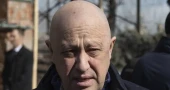
Russia says Wagner Group's leader will move to Belarus after his rebellious march challenged Putin
The greatest challenge to Russian President Vladimir Putin in his more than two decades in power fizzled out relatively peacefully Saturday after the rebellious mercenary commander who ordered his troops to march on Moscow abruptly reached a deal with the Kremlin to go into exile and sounded the retreat.
The dramatic if brief revolt shifted the landscape for the Kremlin and the 16-month-old war in Ukraine and prompted Russia to pull soldiers back from the battlefield to defend the capital, a stunning recognition of the threat posed by Wagner Group soldiers under the command of Yevgeny Prigozhin.
Under the deal announced by Kremlin spokesman Dmitry Peskov, Prigozhin will go to neighboring Belarus and charges of mounting an armed rebellion will be dropped. The government said it also would not prosecute fighters who took part, while those who did not join in were to be offered contracts by the Defense Ministry.
Putin had vowed earlier to punish those behind the armed uprising led by his onetime protege, whose forces seized a key military facility in southern Russia before advancing on the capital. In a televised speech to the nation, he called the rebellion a “betrayal” and “treason.”
In allowing Prigozhin and his forces to go free, Peskov said, Putin’s “highest goal” was “to avoid bloodshed and internal confrontation with unpredictable results.”
Moscow had braced for the arrival of the Wagner forces by erecting checkpoints with armored vehicles and troops on the city’s southern edge. Red Square was shut down, and the mayor urged motorists to stay off some roads.
About 3,000 Chechen soldiers were pulled from fighting in Ukraine and rushed there early Saturday, state television in Chechnya reported, signaling the Kremlin’s desperation as the Wagner troops advanced to, according to Prigozhin, just 200 kilometers (120 miles) from Moscow.
But after the deal was struck, Prigozhin announced that he had decided to retreat to avoid “shedding Russian blood.” His troops were ordered back to their field camps in Ukraine, where they have been fighting alongside Russian regular soldiers.
Prigozhin has demanded the ouster of Defense Minister Sergei Shoigu, long the target of his withering criticism for his conduct of the war in Ukraine. On Friday, he accused forces under Shoigu's command of attacking Wagner camps and killing “a huge number of our comrades.”
Prigozhin did not say whether the Kremlin had responded to his demand. Peskov said the issue could not have been discussed during the negotiations, which were conducted by the president of Belarus, and is the “exclusive prerogative of the commander in chief.”
If Putin were to agree to Shoigu’s ouster, it could be politically damaging for the president after he branded Prigozhin a backstabbing traitor.
Early Saturday, Prigozhin’s private army appeared to control the military headquarters in Rostov-on-Don, a city 660 miles (over 1,000 kilometers) south of Moscow, which runs Russian operations in Ukraine, Britain’s Ministry of Defense said.
Read: After day of drama, Wagner chief orders troops to halt march on Moscow
A nighttime video from the city posted on Russian messaging app channels showed people cheering Wagner troops as they left Rostov-on-Don. Prigozhin was seen riding in one of the vehicles, and people greeted him and some ran to shake his hand as he lowered the window. The regional governor later said that all of the troops had left the city.
Wagner troops and equipment also were in Lipetsk province, about 360 kilometers (225 miles) south of Moscow.
Authorities declared a “counterterrorist regime” in Moscow and its surrounding region, enhancing security and restricting some movement. On the southern outskirts, troops erected checkpoints, arranged sandbags and set up machine guns. Crews dug up sections of highways to slow the march.
Moscow Mayor Sergei Sobyanin declared Monday a non-working day for most residents as part of the heightened security, a measure that remained in effect even after the retreat.
The dramatic developments came exactly 16 months after Russia launched its full-scale invasion of Ukraine, Europe’s largest conflict since World War II, which has killed tens of thousands, displaced millions and reduced cities to rubble.
Ukrainians hoped the Russian infighting would create opportunities for their army to take back territory seized by Russian forces.
Ben Barry, senior fellow for land warfare at the International Institute for Strategic Studies, said that even with a deal, Putin’s position has probably been weakened and “these events will have been of great comfort to the Ukrainian government and the military.”
Ukrainian President Volodymyr Zelenskyy said late Saturday, shortly before Prigozhin announced his retreat, that the march exposed weakness in the Kremlin and “showed all Russian bandits, mercenaries, oligarchs” that it is easy to capture Russian cities “and, probably, arsenals.”
Switching into Russian in his daily video address, Zelenskyy said “the man from the Kremlin” was “very afraid.” He repeated his calls for the West to supply Ukraine with F-16 fighter jets and ATACMS tactical ballistic missiles.
Prigozhin had vowed earlier that his fighters, whom he said number some 25,000, would not surrender because “we do not want the country to live on in corruption, deceit and bureaucracy.”
“Regarding the betrayal of the motherland, the president was deeply mistaken. We are patriots of our homeland,” he said in an audio message on his Telegram channel.
He posted video of himself at the military headquarters in Rostov-on-Don and claimed his forces had taken control of the airfield and other military facilities in the city without any deaths or even “a single gunshot.”
Russian media, however, reported that several helicopters and a military communications plane were downed by Wagner troops. The Kremlin referred a question about the losses to the Defense Ministry, which has not commented.
The short-lived rebellion came as Russia is “fighting the toughest battle for its future,” Putin said, with the West piling sanctions on Moscow and arming Ukraine.
“The entire military, economic and information machine of the West is waged against us,” Putin said.
Read: Wagner forces advance toward Moscow despite Putin's warning
State-controlled TV networks led their newscasts with Putin’s statement and reported the tense situation in Rostov-on-Don. Broadcasters also carried statements from top Russian officials and lawmakers voicing support for Putin, condemning Prigozhin and urging him to back down.
Chechen strongman Ramzan Kadyrov, who in the past has sided with Prigozhin in his criticisms of Russia’s military, also expressed support for Putin’s “every word.”
“The mutiny needs to be suppressed,” Kadyrov said.
Wagner troops have played a crucial role in the Ukraine war, capturing the eastern city of Bakhmut, an area where the bloodiest and longest battles have taken place. But Prigozhin has increasingly criticized the military brass, accusing it of incompetence and of starving his troops of munitions.
In announcing the rebellion, Prigozhin accused Russian forces of attacking the Wagner camps in Ukraine with rockets, helicopter gunships and artillery. He alleged that Gen. Valery Gerasimov, chief of the General Staff, ordered the attacks following a meeting with Shoigu in which they decided to destroy the military contractor.
The Defense Ministry denied attacking the camps.
The 62-year-old Prigozhin, a former convict, has longstanding ties to Putin and won lucrative Kremlin catering contracts that earned him the nickname “Putin’s chef.”
He gained attention in the U.S. when he and a dozen other Russian nationals were charged with operating a covert social media campaign aimed at fomenting discord ahead of Donald Trump’s 2016 presidential election victory. Wagner has sent military contractors to Libya, Syria, several African countries and eventually Ukraine.
The rebellion appeared likely to further hinder Moscow’s war effort in Ukraine, as Kyiv’s forces probed Russian defenses in the initial stages of a counteroffensive.
Orysia Lutsevych, the head of the Ukraine Forum at the Chatham House think tank in London, said the infighting could create confusion and potential division among Russian military forces.
“Russian troops in Ukraine may well now be operating in a vacuum, without clear military instructions, and doubts about whom to obey and follow,″ Lutsevych said. “This creates a unique and unprecedented military opportunity for the Ukrainian army.”
Read more: Russia's Wagner boss says more than 20,000 of his troops died in Bakhmut battle
2 years ago

After day of drama, Wagner chief orders troops to halt march on Moscow
The head of the Wagner force said Saturday he has ordered his mercenaries to halt their march on Moscow and retreat to their field camps in Ukraine to avoid shedding Russian blood.
The announcement from Yevgeny Prigozhin appeared to defuse a growing crisis. Moscow had braced for the arrival of the private army led by the rebellious commander. And President Vladimir Putin had vowed he would face harsh consequences.
Prigozhin said that while his men are just 200 kilometers (120 miles) from Moscow, he decided to turn them back to avoid “shedding Russian blood.”
He didn’t say whether the Kremlin has responded to his demand to oust Defense Minister Sergei Shoigu. There was no immediate comment from the Kremlin.
The announcement follows a statement from the office of Belarusian President Alexander Lukashenko saying that he had negotiated a deal with Prigozhin after previously discussing the issue with Putin.
Prigozhin has accepted Lukashenko’s offer to halt the Wagner group’s advance and further steps to de-escalate the tensions, Lukashenko’s office said, adding that the proposed settlement contains security guarantees for Wagner troops. It didn’t elaborate.
Moscow on Saturday erected checkpoints with armored vehicles and troops on its southern edge, Red Square was shut down and the mayor urged motorists to stay off some roads as the Russian capital braced for the arrival of a private army led by a rebellious mercenary commander.
President Vladimir Putin vowed harsh consequences for organizers of the armed uprising led by his onetime protege, Yevgeny Prigozhin, who brought his forces out of Ukraine, seized a key military facility in southern Russia and advanced toward Moscow.
Read: Wagner forces advance toward Moscow despite Putin's warning
Prigozhin's actions represented the most significant challenge to Putin's leadership in his more than two decades in power.
In a televised speech to the nation, Putin called the rebellion a “betrayal” and “treason.”
“All those who prepared the rebellion will suffer inevitable punishment,” Putin said. “The armed forces and other government agencies have received the necessary orders.”
Authorities declared a “counterterrorist regime” in the capital and its surrounding region, enhancing security and restricting some movement.
On the southern outskirts, troops erected checkpoints, arranged sandbags and set up machine guns.
Moscow Mayor Sergei Sobyanin warned that traffic could be restricted in parts of the capital. He declared Monday a non-working day for most residents.
Crews dug up sections of highways to slow the march of the Wagner mercenary army. Access to Red Square was closed, two major museums were evacuated and a park was shut.
Prigozhin's private army appeared to control the military headquarters in Rostov-on-Don, a city 660 miles (over 1,000 kilometers) south of Moscow that runs Russian operations in Ukraine, Britain’s Ministry of Defense said.
Wagner troops and equipment also were in Lipetsk province, about 360 kilometers (225 miles) south of Moscow, where authorities “are taking all necessary measures to ensure the safety of the population," said regional Gov. Igor Artamonov, via Telegram. He did not elaborate.
Read: Prigozhin, the mercenary chief urging an uprising against Russia's generals, has long ties to Putin
The dramatic developments came exactly 16 months after Russia launched its full-scale invasion of Ukraine, Europe’s largest conflict since World War II, that has killed tens of thousands, displaced millions and reduced cities to rubble.
Ukrainians hoped the Russian infighting would create opportunities for its army to take back territory seized by Russian forces.
Ukrainian President Volodymyr Zelenskyy said Moscow was suffering “full-scale weakness” and that Kyiv was protecting Europe from “the spread of Russian evil and chaos.”
The Federal Security Service, or FSB, called for Prigozhin’s arrest Friday night after he declared the armed rebellion.
2 years ago

Wagner forces advance toward Moscow despite Putin's warning
Russian President Vladimir Putin on Saturday vowed harsh punishment for the organizers of an armed rebellion spearheaded by mercenary chief Yevgeny Prigozhin, who led his troops out of Ukraine and advanced toward Moscow.
Putin denounced the uprising as “a stab in the back" in an address to the nation. It was the biggest threat to his leadership in over two decades in power.
As Prigozhin’s forces rolled toward the capital, military trucks and armored vehicles were seen in several parts of Moscow. On its southern edge, troops erected checkpoints, arranged sandbags and put up machine guns.
Authorities declared a “counterterrorist regime” in the capital and its surrounding region, enhancing security and restricting some movement.
Moscow Mayor Sergei Sobyanin urged residents not to drive and said key city services were on high readiness. He declared Monday to be a nonworking day for most residents except publice servants and some industrial enterprises.
Crews also dug up parts of highways in an apparent bid to slow the march of the Wagner mercenary army. Access to Red Square was closed, two major museums were evacuated and a park was shut.
Prigozhin's private army appeared to control the military headquarters in Rostov-on-Don, a city 660 miles (over 1,000 kilometers) south of Moscow that runs Russian operations in Ukraine, Britain’s Ministry of Defense said.
Wagner troops and equipment also were in Lipetsk province, about 360 kilometers (225 miles) south of Moscow, where authorities “are taking all necessary measures to ensure the safety of the population," said regional Gov. Igor Artamonov, via Telegram. He did not elaborate.
The dramatic developments came exactly 16 months after Russia launched its full-scale invasion of Ukraine, Europe’s largest conflict since World War II, that has killed tens of thousands, displaced millions and reduced cities to rubble.
Ukrainians hoped the Russian infighting would create opportunities for its army to take back territory seized by Russian forces.
Ukrainian President Volodymyr Zelenskyy said Moscow is suffering “full-scale weakness” and that Kyiv was protecting Europe from “the spread of Russian evil and chaos.”
In his speech, Putin called the actions by Prigozhin, whom he did not mention by name, a “betrayal” and “treason.”
“All those who prepared the rebellion will suffer inevitable punishment,” Putin said. “The armed forces and other government agencies have received the necessary orders.”
Russia’s security services, including the Federal Security Service, or FSB, called for Prigozhin’s arrest Friday night after he declared the armed rebellion.
Prigozhin said his fighters would not surrender, as “we do not want the country to live on in corruption, deceit and bureaucracy.”
“Regarding the betrayal of the motherland, the president was deeply mistaken. We are patriots of our homeland,” he said in an audio message on his Telegram channel.
Prigozhin’s private army has been fighting alongside regular Russian troops in Ukraine. His goals weren’t immediately clear, but the rebellion marks an escalation in his struggle with Russian military leaders, whom he accused of botching the war in Ukraine and hobbling his forces in the field.
“This is not a military coup, but a march of justice,” Prigozhin said.
Prigozhin said he had 25,000 troops under his command and urged the army not to offer resistance.
He posted video of himself at the military headquarters in Rostov-on-Don and claimed his forces had taken control of the airfield and other military facilities in the city. Other videos on social media showed military vehicles, including tanks, on the streets.
“We didn’t kill a single person on our way,” Prigozhin said in one of his several messages posted as the day went on, adding that his forces seized the military headquarters “without a single gunshot.” His claims could not be independently verified. The Russian authorities haven’t reported any casualties so far, either.
The rebellion comes as Russia is “fighting the toughest battle for its future,” Putin said, with the West piling sanctions on Moscow and arming Ukraine.
“The entire military, economic and information machine of the West is waged against us,” Putin said.
A Muscovite who gave only his first name of Khachik called the situation “scary.” Another man who didn’t want to be identified at all denounced Prigozhin’s move as a betrayal and said he supports the Defense Ministry.
State-controlled TV networks led their newscasts with Putin’s statement and reported the tense situation in Rostov-on-Don. Some showed social media videos of residents denouncing Wagner troops.
Broadcasters also carried statements from top officials and lawmakers voicing support for Putin and condemning Prigozhin.
In announcing the rebellion, Prigozhin said he wanted to punish Defense Minister Sergei Shoigu after he accused Russian government forces of attacking Wagner field camps in Ukraine with rockets, helicopter gunships and artillery. He claimed that “a huge number of our comrades got killed.”
Prigozhin said his forces shot down a Russian military helicopter that fired on a civilian convoy, but there was no independent confirmation of that.
He alleged that Gen. Valery Gerasimov, chief of the General Staff, ordered the attacks following a meeting with Shoigu, where they decided to destroy Wagner.
The Defense Ministry denied attacking the Wagner camps.
The 62-year-old Prigozhin, a former convict, has long ties to the Russian leader and won lucrative Kremlin catering contracts that earned him the nickname “Putin's chef.”
He gained attention in the U.S. when he and a dozen other Russian nationals were charged with operating a covert social media campaign aimed at fomenting discord ahead of Donald Trump’s 2016 presidential election victory. He formed the Wagner mercenary group, which sent military contractors to Libya, Syria, several African countries and eventually Ukraine.
After Putin’s address, in which he called for unity, officials sought to reiterate their allegiance to the Kremlin and urged Prigozhin to back down.
Vyacheslav Volodin, speaker of the lower house of parliament, said lawmakers “stand for the consolidation of forces″ and support Putin.
Foreign Ministry spokeswoman Maria Zakharova echoed that, saying in a Telegram post that “we have one commander in chief. Not two, not three. One.″
Ramzan Kadyrov, the strongman leader of the Chechnya region who used to side with Prigozhin in his criticism of the military, also expressed his full support of Putin's “every word.”
“The mutiny needs to be suppressed," Kadyrov said.
While the outcome of the confrontation was still unclear, it appeared likely to further hinder Moscow’s war effort as Kyiv’s forces probed Russian defenses in the initial stages of a counteroffensive.
Wagner forces have played a crucial role, capturing the eastern city of Bakhmut, an area where the bloodiest and longest battles have taken place. But Prigozhin has increasingly criticized the military brass, accusing it of incompetence and of starving his troops of munitions.
Zelenskyy noted the rebellion in his Telegram channel and said “anyone who chooses the path of evil destroys himself.”
“For a long time, Russia used propaganda to mask its weakness and the stupidity of its government. And now there is so much chaos that no lie can hide it,” he said.
Prigozhin's actions could have significant implications for the war. Orysia Lutsevych, the head of the Ukraine Forum at the Chatham House think tank in London, said the infighting will create confusion and potential division among Russian military forces.
“Russian troops in Ukraine may well now be operating in a vacuum, without clear military instructions, and doubts about whom to obey and follow,″ Lutsevych said. “This creates a unique and unprecedented military opportunity for the Ukrainian army.”
Ukrainian soldier Andrii Kvasnytsia, attending a funeral for a comrade, said Prigozhin’s intentions toward Ukraine might be worse than Putin’s, but that the infighting would still benefit the country.
Prigozhin, whose feud with the Defense Ministry dates back years, had refused to comply with a requirement that his forces sign contracts with the ministry before July 1. He said Friday he was ready for a compromise but “they have treacherously cheated us.”
In Washington, the Institute for the Study of War said “the violent overthrow of Putin loyalists like Shoigu and Gerasimov would cause irreparable damage to the stability of Putin’s perceived hold on power.”
Western countries monitored developments closely. U.S. Secretary of State Antony Blinken spoke with his counterparts in the other G7 countries and the European Union’s foreign affairs representative, his spokesman said, adding that Blinken “reiterated that support by the United States for Ukraine will not change.”
Latvia and Estonia, two NATO countries that border Russia, said they were increasing security at their borders.
The Kremlin said Putin spoke by phone with the leaders of Turkey, Belarus, Kazakhstan and Uzbekistan about the events.
Although there was speculation that Putin had left Moscow, his spokesman Dmitry Peskov denied it.
2 years ago
Prigozhin, the mercenary chief urging an uprising against Russia's generals, has long ties to Putin
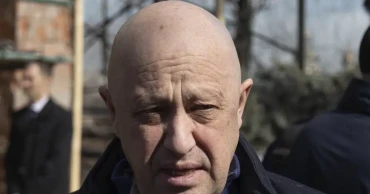
Once a low-profile businessman who benefited from having President Vladimir Putin as a powerful patron, Yevgeny Prigozhin moved into the global spotlight with Russia’s war in Ukraine.
As the leader of a mercenary force who depicts himself as fighting many of the Russian military’s toughest battles in Ukraine, the 62-year-old Prigozhin has now moved into his most dangerous role yet: preaching open rebellion against the leadership of the country's military.
Prigozhin, owner of the Kremlin-allied Wagner Group, has escalated what have been months of scathing criticism of Russia’s conduct of the war by calling Friday for an armed uprising to oust the defense minister. Russian security services reacted immediately, opening a criminal investigation and urging Prigozhin’s arrest.
In a sign of how seriously the Kremlin took Prigozhin’s threat, riot police and the National Guard scrambled to tighten security at key facilities in Moscow, including government agencies and transport infrastructure, Tass reported. Prigozhin, a onetime felon, hot-dog vendor and longtime associate of Putin, urged Russians to join his “march to justice.”
‘PUTIN’S CHEF’
Prigozhin and Putin go way back, with both born in Leningrad, what is now known as St. Petersburg.
During the final years of the Soviet Union, Prigozhin served time in prison — 10 years by his own admission — although he does not say what it was for.
Afterward, he owned a hot dog stand and then fancy restaurants that drew interest from Putin. In his first term, the Russian leader took then-French President Jacques Chirac to dine at one of them.
“Vladimir Putin saw how I built a business out of a kiosk, he saw that I don’t mind serving to the esteemed guests because they were my guests,” Prigozhin recalled in an interview published in 2011.
His businesses expanded significantly to catering and providing school lunches. In 2010, Putin helped open Prigozhin’s factory that was built on generous loans by a state bank. In Moscow alone, his company Concord won millions of dollars in contracts to provide meals at public schools. He also organized catering for Kremlin events for several years — earning him the nickname “Putin’s chef” — and has provided catering and utility services to the Russian military.
In 2017, opposition figure and corruption fighter Alexei Navalny accused Prigozhin’s companies of breaking antitrust laws by bidding for some $387 million in Defense Ministry contracts.
MILITARY CONNECTION
Prigozhin also owns the Wagner Group, a Kremlin-allied mercenary force that has come to play a central role in Putin’s projection of Russian influence in trouble spots around the world.
The United States, European Union, United Nations and others say the mercenary force has involved itself in conflicts in countries across Africa in particular. Wagner fighters allegedly provide security for national leaders or warlords in exchange for lucrative payments, often including a share of gold or other natural resources. U.S. officials say Russia may also be using Wagner’s work in Africa to support its war in Ukraine.
In Ukraine, Prigozhin’s mercenaries have become a major force in the war, fighting as counterparts to the Russian army in battles with Ukrainian forces.
That includes Wagner fighters taking Bakhmut, the city where the bloodiest and longest battles have taken place. By last month, Wagner Group and Russian forces appeared to have largely won Bakhmut, a victory with strategically slight importance for Russia despite the cost in lives. The U.S. estimates that nearly half of the 20,000 Russian troops killed in Ukraine since December were Wagner fighters in Bakhmut. His soldiers-for-hire included inmates recruited from Russia’s prisons.
WHAT IS THE GROUP’S REPUTATION?
Western countries and United Nations experts have accused Wagner Group mercenaries of committing numerous human rights abuses throughout Africa, including in the Central African Republic, Libya and Mali.
In December 2021, the European Union accused the group of “serious human rights abuses, including torture and extrajudicial, summary or arbitrary executions and killings,” and of carrying out “destabilizing activities” in the Central African Republic, Libya, Syria and Ukraine.
Some of the reported incidents stood out in their grisly brutality.
In November 2022, a video surfaced online that showed a former Wagner contractor getting beaten to death with a sledgehammer after he allegedly fled to the Ukrainian side and was recaptured. Despite public outrage and a stream of demands for an investigation, the Kremlin turned a blind eye to it.
RAGING AGAINST RUSSIA’S GENERALS
As his forces fought and died en masse in Ukraine, Prigozhin raged against Russia’s military brass. In a video released by his team last month, Prigozhin stood next to rows bodies he said were those of Wagner fighters. He accused Russia’s regular military of incompetence and of starving his troops of the weapons and ammunition they needed to fight.
“These are someone’s fathers and someone’s sons,” Prigozhin said then. “The scum that doesn’t give us ammunition will eat their guts in hell.”
CRITICIZING THE BRASS
Prigozhin has castigated the top military brass, accusing top-ranking officers of incompetence. His remarks were unprecedented for Russia’s tightly controlled political system, in which only Putin could air such criticism.
Earlier this month, Putin reaffirmed his trust in the Russian military’s General Staff, Gen. Valery Gerasimov, by putting him in direct charge of the Russian forces in Ukraine, a move that some observers also interpreted as an attempt to cut Prigozhin down to size. Prigozhin somewhat toned down his harangues against the military leadership after that, but remained defiant.
Asked recently about a media comparison of him with Grigory Rasputin, a mystic who gained fatal influence over Russia’s last czar by claiming to have the power to cure his son’s hemophilia, Prigozhin snapped: “I don’t stop blood, but I spill blood of the enemies of our Motherland.”
A ‘BAD ACTOR’ IN THE US
Prigozhin earlier gained more limited attention in the U.S., when he and a dozen other Russian nationals and three Russian companies were charged in the U.S. with operating a covert social media campaign aimed at fomenting discord ahead of Donald Trump’s 2016 election victory.
They were indicted as part of special counsel Robert Mueller’s investigation into Russian election interference. The U.S. Treasury Department has sanctioned Prigozhin and associates repeatedly in connection with both his alleged election interference and his leadership of the Wagner Group.
After the 2018 indictment, the RIA Novosti news agency quoted Prigozhin as saying, in a clearly sarcastic remark: “Americans are very impressionable people; they see what they want to see. I treat them with great respect. I’m not at all upset that I’m on this list. If they want to see the devil, let them see him.”
The Biden White House in that episode called him “a known bad actor,” and State Department spokesman Ned Price said Prigozhin’s “bold confession, if anything, appears to be just a manifestation of the impunity that crooks and cronies enjoy under President Putin and the Kremlin.”
AVOIDING CHALLENGES TO PUTIN
As Prigozhin grew more outspoken against the way Russia’s conventional military conducted fighting in Ukraine, he continued to play a seemingly indispensable role for the Russian offensive, and appeared to suffer no retaliation from Putin for his criticism of Putin’s generals.
Media reports at times suggested Prigozhin’s influence on Putin was growing and he was after a prominent political post. But analysts warned against overestimating his influence with Putin.
“He’s not one of Putin’s close figures or a confidant,” said Mark Galeotti of University College, London, who specializes in Russian security affairs, speaking on his podcast “In Moscow’s Shadows.”
“Prigozhin does what the Kremlin wants and does very well for himself in the process. But that’s the thing — he is part of the staff rather than part of the family,” Galeotti said.
2 years ago

Both sides suffer heavy casualties as Ukraine strikes back against Russia, UK assessment says
Russia and Ukraine are suffering high numbers of military casualties as Ukraine fights to dislodge the Kremlin's forces from occupied areas in the early stages of its counteroffensive, British officials said Sunday.
Russian losses are probably at their highest level since the peak of the battle for Bakhmut in March, U.K. military officials said in their regular assessment.
According to British intelligence, the most intense fighting has centered on the southeastern Zaporizhzhia province, around Bakhmut and further west in Ukraine's eastern Donetsk province. While the update reported that Ukraine was on the offensive in these areas and had "made small advances," it said that Russian forces were conducting "relatively effective defensive operations" in Ukraine's south.
Also read: Putin meets with African leaders in Russia to discuss Ukraine peace plan, but no visible progress
The Ukrainian military said in a regular update Sunday morning that over the previous 24 hours Russia had carried out 43 airstrikes, four missile strikes and 51 attacks from multiple rocket launchers. According to the statement by the General Staff, Russia continues to concentrate its efforts on offensive operations in Ukraine's industrial east, focusing attacks around Bakhmut, Avdiivka, Marinka and Lyman in the country's Donetsk province, with 26 combat clashes taking place.
Donetsk regional Gov. Pavlo Kyrylenko said that two civilians were killed, with a further three wounded in the past day.
Ukrainian officials said Russian forces also launched airstrikes on other regions of the east and south of the country.
One civilian was killed and four more wounded in Kherson province as a result of Russia's attacks, said regional Gov. Oleksandr Prokudin, while Zaporizhzhia regional Gov. Yurii Malashko said one person was wounded in Russian attacks that hit 20 settlements in the province.
Also read: 110 million people forcibly displaced as Sudan, Ukraine wars add to world refugee crisis, UN says
Vladimir Rogov, an official with the Moscow-appointed administration in the partially occupied Zaporizhzhia region, said Sunday that Ukrainian forces had taken control of the village of Piatykhatky on the Zaporizhzhia battlefront.
Serhiy Bratchuk, spokesperson of the regional government in the southwestern Odesa province, said Ukrainian forces destroyed a "very significant" ammunition depot near the Russian-occupied port city of Henichesk in nearby Kherson province.
"Our armed forces dealt a good blow in the morning," Bratchuk said in a video message on Sunday morning, posted to his Telegram channel.
Western analysts and military officials have cautioned that Ukraine's counteroffensive to dislodge the Kremlin's forces from occupied areas, using Western-supplied advanced weapons in attacks along the 1,000-kilometer (600-mile) front line could last a long time.
A group of African leaders have carried out a self-styled "peace mission" to both Ukraine and Russia in recent days to try to help end their nearly 16-month-old war, but the visit ended on Saturday with no immediate signs of progress.
Also read: Ukraine recaptures village as Russian forces hold other lines, fire on fleeing civilians elsewhere
Meanwhile, the death toll from flooding following the destruction of the Kakhovka dam has risen to 16 in Ukrainian-held territory, Ukraine's interior ministry said late Saturday, while Russian officials said 29 people died in territories controlled by Moscow.
Massive flooding from the destruction of the dam on June 6 devastated towns along the lower Dnieper River in the Kherson region, a front line in the war. Russia and Ukraine accuse each other of causing the breach.
2 years ago

Putin meets with African leaders in Russia to discuss Ukraine peace plan, but no visible progress
Russian President Vladimir Putin on Saturday met with a group of leaders of African countries who traveled to Russia on a self-styled “peace mission” the day after they went to Ukraine, but the meeting ended with no visible progress.
The seven African leaders — the presidents of Comoros, Senegal, South Africa and Zambia, as well as Egypt’s prime minister and top envoys from the Republic of Congo and Uganda — visited Ukraine on Friday to try to help end the nearly 16-month-old war.
The African leaders then traveled to St. Petersburg on Saturday to meet with Putin who was attending Russia's showpiece international economic forum.
Details about the delegation's proposals were thin.
Foreign Minister Sergey Lavrov said after the three-hour meeting that the Africans' peace plan consisted of 10 elements, but “was not formulated on paper.”
“The peace initiative proposed by African countries is very difficult to implement, difficult to compare positions,” Kremlin spokesman Dmitry Peskov said. But ”President Putin has shown interest in considering it.”
“He spoke about our position. Not all provisions can be correlated with the main elements of our position, but this does not mean that we do not need to continue working,” Peskov said.
“The main conclusion, in my opinion, from today’s conversation is that our partners from the African Union have shown an understanding of the true causes of the crisis that was created by the West, and have shown an understanding that it is necessary to get out of this situation on the basis of addressing these underlying causes,” Lavrov said.
Russia says that it was effectively forced to send troops into Ukraine because it was threatened by Ukraine's desire to join NATO and by the country's support from the United States and Western Europe.
Speaking at the economic forum on Friday, Putin declared that the first Russian tactical nuclear weapons have been deployed to Belarus, describing the move as a deterrent against Western efforts to defeat Russia in Ukraine. He previously said that the deployment would begin in July.
Asked if he could order the use of battlefield nuclear weapons in Ukraine, Putin said that there was no need for that but noted that Moscow could use its nuclear arsenals in case of a “threat to the Russian statehood.”
“In that case, we will certainly use all the means that the Russian state has. There should be no doubt about that," he said.
Read: Energy cooperation has been the backbone of Bangladesh-Russia economic relations: Ambassador
The mission to Ukraine, the first of its kind by African leaders, comes in the wake of other peace initiatives — such as one by China — and carries particular importance for Africa, which relies on food and fertilizer deliveries from Russia and Ukraine. The war has impeded exports from one of the world’s most important breadbaskets.
“This conflict is affecting Africa negatively,” South African President Cyril Ramaphosa said at a news conference alongside Ukrainian President Volodymyr Zelenskyy and four other African leaders after their closed-door talks on Friday.
Ramaphosa and others acknowledged the intensity of the hostilities but insisted all wars must come to an end and emphasized their willingness to help expedite that.
“I do believe that Ukrainians feel that they must fight and not give up. The road to peace is very hard,” he said, adding that “there is a need to bring this conflict to an end sooner rather than later.”
The delegation, including Presidents Macky Sall of Senegal and Hakainde Hichilema of Zambia, represent a cross-section of African views on the war.
Read:Ukraine brands Russia ‘terrorist state’ to open hearings in case against Russia at top UN court
South Africa, Senegal and Uganda have avoided censuring Moscow over the conflict, while Egypt, Zambia and Comoros voted against Russia last year in a U.N. General Assembly resolution condemning Moscow’s invasion.
Many African nations have long had close ties with Moscow, dating back to the Cold War when the Soviet Union supported their anti-colonial struggles.
Speaking during Friday's news conference, Comoros President Azali Assoumani floated the idea of a “road map” to peace, prompting questions from Zelenskyy who sought a clarification and insisted he didn’t want “any surprises” from their visit with Putin.
Chances for peace talks look dim as Ukraine and Russia take sharply different stands. Ukraine demands that Russia withdraws its troops from all its occupied territories as a condition for peace talks. The Kremlin, in turn, wants Ukraine to recognize the Crimean Peninsula, which Moscow illegally annexed from Ukraine in 2014, as part of Russia and acknowledge other land gains it has made.
China presented its own peace proposal at the end of February. Ukraine and its allies largely dismissed the plan, as the warring sides look no closer to a cease-fire.
The African peace mission comes as Ukraine launches a counteroffensive to dislodge the Kremlin’s forces from occupied areas, using Western-supplied advanced weapons in attacks in several sections of more than the 1,000-kilometer (600-mile) front line.
Read:Russia claims Ukraine is launching major attacks; Kyiv accuses Moscow of misinformation
In the village of Blahodatne, taken by Ukrainian forces in the counteroffensive six days ago, soldiers said they have orders to keep advancing and not retreat, indicating long grueling battles ahead in the direction where Russians have built up dense lines of fortifications.
“Morale is really strong because the guys know they’re moving forward to liberate their lands,” said a Ukrainian soldier with the callsign Skripal (Violinist). “We have an order not to retreat and to move forward, so we’re trying."
Village roads are punctured with craters, buildings are caved in and bullet holes peppered nearly every residence. Inside a cultural center, a Ukrainian commander with the call sign “Lermontov” said that they’d captured many Russian soldiers during the liberation of the village and showed journalists four bodies whom he said were Russian fighters who had been recruited from prisons.
2 years ago

Turkish leader says his economic views are same but he'll accept finance minister's approach
Turkish President Recep Tayyip Erdogan said his economic policies have not changed but he suggested in comments published Wednesday that his finance minister will have leeway to move away from an unconventional approach that many have blamed for a worsening cost-of-living crisis.
Erdogan, who was reelected to a third term last month, appointed Mehmet Simsek, an internationally respected banker who served in the Cabinet previously, as treasury and finance minister. He also picked Hafize Gaye Erkan, a former U.S.-based bank executive, to head the central bank, the first woman hold the role.
While the appointments signaled a shift in the longtime Turkish leader's views on how to stimulate the economy, lingering uncertainty over Erdogan’s position and an apparent move to loosen government controls of foreign currency exchanges led Turkey’s currency to plunge to record lows against the U.S. dollar last week.
Erdogan said he had accepted Simsek’s request for a fresh economic program but that his personal stance on keeping interest rates low amid rising inflation was unchanged.
“Some of our friends should not fall into the error of (asking) ‘Is the president going to make a serious change (concerning) interest rate policy?’ I remain in the same position,” Erdogan said while returning from a state visit to Azerbaijan on Tuesday. “We accepted that (Simsek) should take the necessary steps rapidly and effortlessly with the central bank.”
Read: Turkey appoints first female central bank governor
Turkey's state-run Anadolu Agency and other media reported his comments on Wednesday.
Critics blame the cost-of-living crisis on Erdogan’s unorthodox interest rate policy, which runs contrary to conventional economic thinking that raising rates will combat inflation. Central banks elsewhere, including the U.S. Federal Reserve and the European Central Bank, have increased borrowing costs to bring down spikes in consumer prices.
Asked if Erkan’s appointment as the new governor of the Central Bank of Turkey was his idea, Erdogan said Simsek had pitched the idea to him.
“We thought we would have a woman administrator for the central bank for once and we took this step. Of course, we told her of our expectations,” he said.
Read: US says ‘the time is now’ for Sweden to join NATO and for Turkey to get new F-16s
“We hope that with these steps neither our treasury and finance minister nor our central bank will let us down,” he added.
Erkan replaced Sahap Kavcioglu, who as the bank’s governor oversaw a series of rate cuts since 2021.
She was a managing director at the Goldman Sachs investment banking company and worked at San Francisco-based First Republic Bank, holding the post of co-CEO for six months in 2021. JPMorgan Chase took over the failed bank after U.S. regulators seized it in May.
Read: Voters in Turkey return to polls to decide on opposing presidential visions
2 years ago

Erdogan says no change in Turkey's stance on Sweden's NATO membership
Turkish President Recep Tayyip Erdogan has said that NATO should not bet on his country approving Sweden's application to join the Western military alliance before a July summit because the Nordic nation has not fully addressed his security concerns.
Sweden and Finland applied for membership together following Russia's invasion of Ukraine last year. Finland became NATO's 31st member in April after the Turkish parliament ratified its request, but Turkey has held off approving Sweden's bid.
Also read: US says ‘the time is now’ for Sweden to join NATO and for Turkey to get new F-16s
NATO wants to bring Sweden into the fold by the time the leaders of member nations meet for a summit in Lithuania's capital on July 11-12. Speaking to journalists on his way back from a state visit to Azerbaijan on Tuesday, Erdogan said Turkey's attitude to the accession was not "positive."
Turkey's state-run Anadolu Agency and other media reported Erdogan's comments as senior officials from NATO, Sweden, Finland and Turkey met in Ankara on Wednesday. The officials discussed what Finland and Sweden have done to address Turkey's concerns over alleged terrorist organizations.
Erdogan said the Turkish delegation at the meeting "will give this message: 'This is our president's opinion, don't expect anything different at Vilnius,'" Lithuania's capital.
Turkey's government accuses Sweden of being too lenient toward groups that Ankara says pose a security threat, including militant Kurdish groups and people associated with a 2016 coup attempt.
Also read: Erdogan says no support for Sweden's NATO bid
A series of separate demonstrations in Stockholm, including a protest by an anti-Islam activist who burned the Quran outside the Turkish Embassy, also angered Turkish officials.
Speaking in Sweden's parliament, Swedish Prime Minister Ulf Kristersson called the Ankara meeting "very important." Kristersson reiterated that his government had done what it promised in an agreement last year that was intended to secure Turkey's ratification of the country's NATO membership.
However, Erdogan remained unsatisfied. He said he told NATO Secretary-General Jens Stoltenberg last week, "If you expect us to respond to Sweden's expectations, first of all, Sweden must destroy what this terrorist organization has done." He was referring to the Kurdistan Workers' Party, or PKK, a group that has waged a separatist insurgency in Turkey.
Erdogan said that pro-Kurdish and anti-NATO rallies also took place in Stockholm during his meeting with with Stoltenberg in Istanbul.
A statement issued by the Turkish presidency after Wednesday's said the parties "held consultations on the activities of terrorist groups in Sweden based on concrete examples." It said they agreed to continue working on further steps.
Also read: Erdogan might approve Finland’s NATO bid, ‘shock’ Sweden
Stoltenberg said his chief of staff, who attended the meeting, reported that it took place in a "constructive atmosphere."
"Some progress has been made, and we will continue to work for the ratification of Sweden as soon as possible," he said.
Asked whether NATO would be able to admit Sweden before the Vilnius summit, Stoltenberg replied, "It is still possible. I cannot guarantee it, of course."
NATO requires the unanimous approval of all existing members to expand, and Turkey and Hungary are the only countries that have not yet ratified Sweden's request to join. Erdogan said he planned to attend the July summit in Lithuania unless "extraordinary" circumstances arise.
On Tuesday, U.S. Secretary of State Antony Blinken said after meeting with Stoltenberg that it was "time to welcome Sweden" into the alliance, arguing that Stockholm had "an important and I think very appropriate process on its accession to address appropriate concerns of other allies."
Sweden has amended its constitution and strengthened its anti-terror laws since it applied to join NATO just over a year ago. This week, the Swedish government also decided to extradite a Turkish citizen resident in Sweden who was convicted for drug offenses in Turkey in 2013.
Sweden and Finland applied to become NATO members in the wake of Russia's invasion of Ukraine, abandoning decades of nonalignment.
2 years ago

Greece: 32 migrants dead, more than 100 rescued after fishing vessel capsizes
At least 32 people have died off the coast of southern Greece after a fishing boat carrying dozens of migrants capsized and sank, authorities said Wednesday.
A large search and rescue operation was launched in the area. Authorities said 104 people have been rescued so far following the nighttime incident some 75 kilometers (46 miles) southwest of Greece's southern Peloponnese region.
Also Read: At least 39 migrants dead in bus crash in Panama
Four of the survivors were hospitalized with symptoms of hypothermia. It was unclear how many passengers might remain missing at sea after the 32 bodies were recovered, the Greek coast guard said.
Six coast guard vessels, a navy frigate, a military transport plane, an air force helicopter, several private vessels and a drone from the European Union border protection agency, Frontex, were taking part in the ongoing search.
Also Read: Migrant boat breaks up off Italian coast, killing nearly 60
The Italy-bound boat is believed to have sailed from the Tobruk area in eastern Libya. The Italian coast guard first alerted Greek authorities and Frontex about the approaching vessel on Tuesday.
Smugglers are increasingly taking larger boats into international waters off the Greek mainland to try to avoid local coast guard patrols.
Also Read: Death toll from Greece train crash rises to 57
On Sunday, 90 migrants on a U.S.-flagged yacht were rescued in the area after they made a distress call.
Separately Wednesday, a yacht with 81 migrants on board was towed to a port on the south coast of Greece's island of Crete after authorities received a distress call.
Also Read: Greece: 3 dead after boat with migrants hits rocks
2 years ago
Food prices are squeezing Europe. Now Italians are calling for a pasta protest
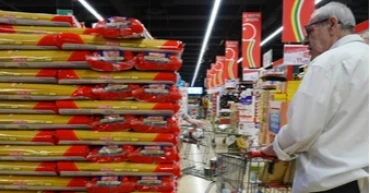
When it comes to skyrocketing pasta prices, Italians are crying: Basta!
They have had enough after the cost of the staple of every Italian table soared by twice the rate of inflation. One consumer advocate group is calling for a weeklong national pasta strike starting June 22 after the Rome government held a crisis meeting last month and decided not to intervene on prices.
“The macaroni strike is to see if keeping pasta on the shelves will bring down the prices, in the great Anglo-Saxon tradition of boycotting goods,” said Furio Truzzi, president of the group, Assoutenti. “The price of pasta is absolutely out of proportion with production costs.”
Grocery prices have risen more sharply in Europe than in other advanced economies — from the U.S. to Japan — driven by higher energy and labor costs and the impact of Russia's war in Ukraine. That is even though costs for food commodities have fallen for months from record highs, including wheat for the flour used to make pasta.
Stores and suppliers have been accused of profit-padding “greedflation," but economists say retail profits have been stable and the problem comes down to the higher cost to produce food.
Feeling the pressure, some governments in Europe have capped prices on staples or pushed for agreements with grocery stores to bring down costs, something that's popular with the public but can actually make food prices worse.
Shoppers like Noée Borey, a 26-year-old picking up groceries at a chain store in Paris, said she is all for setting ceilings for some food to help low-income workers and students.
She buys less meat and opts for less expensive grocery stores.
“Inevitably, all the products I buy have gone up by 20%, whether it’s butter or berries," Borey said. “I’m not buying cherries anymore because they cost 15 euros a kilo" (about $8 a pound).
Read: Italy declares state of emergency as migrant numbers surge
The French government reached a three-month agreement with supermarket chains for them to cut prices on hundreds of staples and other foods, which is expected to be extended through the summer. Britain — where food inflation has reached 45-year highs — is discussing a similar move.
Countries like Hungary, with the highest food inflation in the European Union, and Croatia have mandated price controls for items like cooking oil, some pork cuts, wheat flour and milk.
The Italian government says it will strengthen price monitoring by working more closely with the country's 20 regions but won't impose such limits.
Spain has avoided price controls but abolished all value-added tax on essential products and halved tax on cooking oil and pasta to 5%.
The measures come as food banks are seeing soaring demand in some countries.
“Things are not getting better, they are getting worse for people,” said Helen Barnard of the Trussell Trust, a charity that operates more than half of the food banks in the United Kingdom.
Spending much more to buy essentials like milk, pasta and fresh vegetables to “top up” donations received from supermarkets is a struggle for Anna Sjovorr-Packham, who runs several community food pantries serving discounted groceries to some 250 families in south London.
"While the demand from families hasn’t gone up hugely, the cost has, and that’s been really difficult to support,” she said.
Prices for food and non-alcoholic drinks have actually fallen in Europe, from 17.5% in the 20-country euro area in March to a still-painful 15% in April. It comes as energy prices — key to growing and transporting what we eat — have dropped from record highs last year. But economists say it will be many months before prices in stores settle back down.
Read: Deadly shipwreck in Italy must trigger action to save lives: UN
In comparison, U.S. food prices rose 7.7% in April from a year earlier, 8.2% in Japan and 9.1% in Canada. They hit 19% in the U.K.
The numbers play into expectations that the European Central Bank will raise interest rates again this week to counter inflation, while the U.S. Federal Reserve is expected to skip a hike.
In Europe, turning to price controls plays to voters, who get constant reminders of the inflation every time they hit the checkout counter, said Neil Shearing, group chief economist for Capital Economics. But he said such changes should be reserved for instances of supply shocks, like war.
Such controls could actually make food inflation worse by increasing demand from shoppers but discouraging new supply, he said.
“The current food price shock does not warrant such intervention," Shearing said.
While pasta remains one of the most affordable items in many grocery baskets, the symbolism hits the Italian psyche hard and comes as families are absorbing higher prices across the board, from sugar to rice, olive oil and potatoes.
Italian families of four are spending an average of 915 euros ($984) more a year on groceries, an increase of nearly 12%, for a total of 7,690 euros a year, according to Assoutenti. A full one-third of Italians have reduced grocery store spending, according to SWG pollsters, and nearly half are shopping at discount stores.
But even discounts are not what they used to be, and it's toughest for pensioners.
“Before, you could get two packs (of pasta) for 1 euro," said Carlo Compellini, a retiree who was shopping in central Rome. “Now with 2 euros, you get three packs.”
Inflation is putting little indulgences out of reach for many, creating a new divide between the haves and have-nots.
The recent opening of a Sacher Café in Trieste, an Italian city whose Austro-Hungarian roots are evident in its stately architecture, led the mayor to a much-ridiculed response recalling for many an out-of-touch remark attributed to Marie Antoinette.
Asked about complaints that a slice of the famed Viennese chocolate cake was too pricey at nearly 10 euros, Mayor Roberto Dipiazza responded, “If you have money, go. If you don’t, watch.”
Read more: FAO keen to work for modernisation of agriculture sector
2 years ago